Unlocking the Cell's Communication Code
The Structural Secret of G Protein Activation
Introduction
Imagine your body as a bustling metropolis where billions of messages are constantly being delivered: your heart beats faster when you're excited, your pupils adjust to changing light, and your senses transmit information about your environment. The sophisticated communication network that makes all this possible relies on specialized proteins that act as molecular messengers. At the heart of this system are G protein-coupled receptors (GPCRs)—the cell's signal translators—and their partners, heterotrimeric G proteins. These proteins form a critical communication pathway that translates external signals into cellular actions, a process that depends on a fundamental molecular event: nucleotide exchange. Recent breakthroughs have finally revealed the exquisite structural mechanisms behind this process, solving a mystery that has puzzled scientists for decades 1 5 .
The activation of G proteins represents one of the most fundamental molecular switches in biology. When this process goes awry, it can lead to conditions ranging from blindness to cardiovascular disease and cancer. Understanding exactly how G proteins work at the atomic level doesn't just satisfy scientific curiosity—it opens doors to designing smarter medications with fewer side effects.
In this article, we'll explore the fascinating molecular machinery that makes cellular signaling possible, focusing on the latest structural discoveries that have transformed our understanding of these essential proteins.
G Protein Basics: The Molecular Switches of Life
Heterotrimeric G proteins are sophisticated molecular switches that reside inside our cells, waiting to be activated by external signals. They consist of three subunits—alpha (α), beta (β), and gamma (γ)—that work together to transmit messages from the cell surface to its interior. In their inactive state, the Gα subunit holds tightly to a molecule called GDP (guanosine diphosphate) and remains complexed with the Gβγ partners. When activated, GDP is exchanged for GTP (guanosine triphosphate), triggering a cascade of events that ultimately changes cell behavior .
The diversity of G proteins is staggering: humans possess 21 different Gα variants encoded by 16 genes, 6 Gβ subunits from 5 genes, and 12 Gγ subunits. This molecular repertoire allows for approximately 700 possible Gαβγ combinations, each with specialized functions tailored to specific signals and cell types.
G proteins don't work alone—they partner with G protein-coupled receptors (GPCRs), which are embedded in the cell membrane. GPCRs form the largest family of membrane receptors in humans, with approximately 800 different types that respond to everything from light and odors to hormones and neurotransmitters. Remarkably, about 34% of all pharmaceutical drugs target these receptors, highlighting their medical importance 4 .
When a external signal (such as a hormone or photon of light) activates a GPCR, it changes shape, allowing it to interact with the G protein waiting inside the cell. This interaction triggers the exchange of GDP for GTP on the Gα subunit, setting in motion the entire signaling cascade.

Key Concepts and Theories: The Nucleotide Exchange Process
For years, scientists hypothesized that GPCRs catalyze nucleotide exchange by physically prying apart the two key domains of the Gα subunit: the Ras domain (which contains the nucleotide-binding pocket) and the helical domain (which acts like a lid over the nucleotide). This model suggested that receptors force these domains apart, exposing the nucleotide-binding site and allowing GDP to escape 1 .
While domain separation appears necessary for nucleotide release, recent research reveals it's not the whole story. Molecular dynamics simulations demonstrated that the Ras and helical domains separate spontaneously and frequently even without receptor binding—yet GDP remains stubbornly bound. This discovery pointed to a more sophisticated mechanism where GPCRs trigger internal rearrangements that weaken its grip on GDP 1 5 .
At the heart of the affinity switch is the α5 helix, a critical structural element that connects the receptor-binding interface to the nucleotide-binding pocket. When a GPCR engages with the C-terminus of the Gα subunit, it triggers dramatic rearrangements in this helix—a 5.7-Å translation and 60° rotation away from the nucleotide-binding site .
Structural Elements in G Protein Activation
| Structural Element | Function | Role in Nucleotide Exchange |
|---|---|---|
| Ras domain | Contains nucleotide-binding pocket | Maintains primary interactions with GDP |
| Helical domain | Acts as lid over nucleotide | Must rotate away to allow nucleotide escape |
| α5 helix | Connects receptor to nucleotide site | Transmits activation signal via rotation/translation |
| β6-α5 loop | Contacts guanine ring of GDP | Disruption weakens nucleotide affinity |
| Switch I/II regions | Change conformation upon activation | Stabilize GTP-bound state |
Experimental Insights: Molecular Dynamics Simulations and Beyond
To unravel the mystery of nucleotide exchange, researchers employed molecular dynamics (MD) simulations—sophisticated computational methods that simulate the movements of atoms and molecules over time. These simulations allowed scientists to observe molecular processes that occur too rapidly for experimental observation, providing unprecedented insight into the dynamic behavior of G proteins 1 5 .
The research team conducted an impressive 66 simulations of heterotrimeric G proteins with and without bound GPCRs, each lasting up to 50 microseconds. These simulations included various states: nucleotide-bound, nucleotide-free, and receptor-bound complexes.
The simulations revealed something remarkable: the Ras and helical domains separated frequently and spontaneously even in the absence of receptors and with GDP still bound. This domain separation—reaching up to 30 Å—created an open conformation that cleared an exit pathway for nucleotide release. However, despite this opening, GDP remained firmly bound throughout multi-microsecond simulations 1 .
This finding was groundbreaking because it demonstrated that domain separation, while necessary, wasn't sufficient for nucleotide release.
Experimental Techniques in Nucleotide Exchange Research
| Technique | Principle | Application in G Protein Research |
|---|---|---|
| Molecular Dynamics (MD) Simulations | Computationally models atomic movements | Revealed spontaneous domain separation and α5 helix rearrangements |
| Double Electron-Electron Resonance (DEER) Spectroscopy | Measures distances between spin labels | Confirmed domain separation in solution |
| X-ray Crystallography | Determines atomic structures from crystal diffraction | Provided high-resolution structures of GPCR-G protein complexes |
| Cryo-Electron Microscopy (cryo-EM) | Images frozen hydrated molecules with electrons | Determined structures of large complexes like Ric-8A-Gα |
| Protein Engineering | Creates specific mutations to test hypotheses | Validated functional importance of specific structural elements |
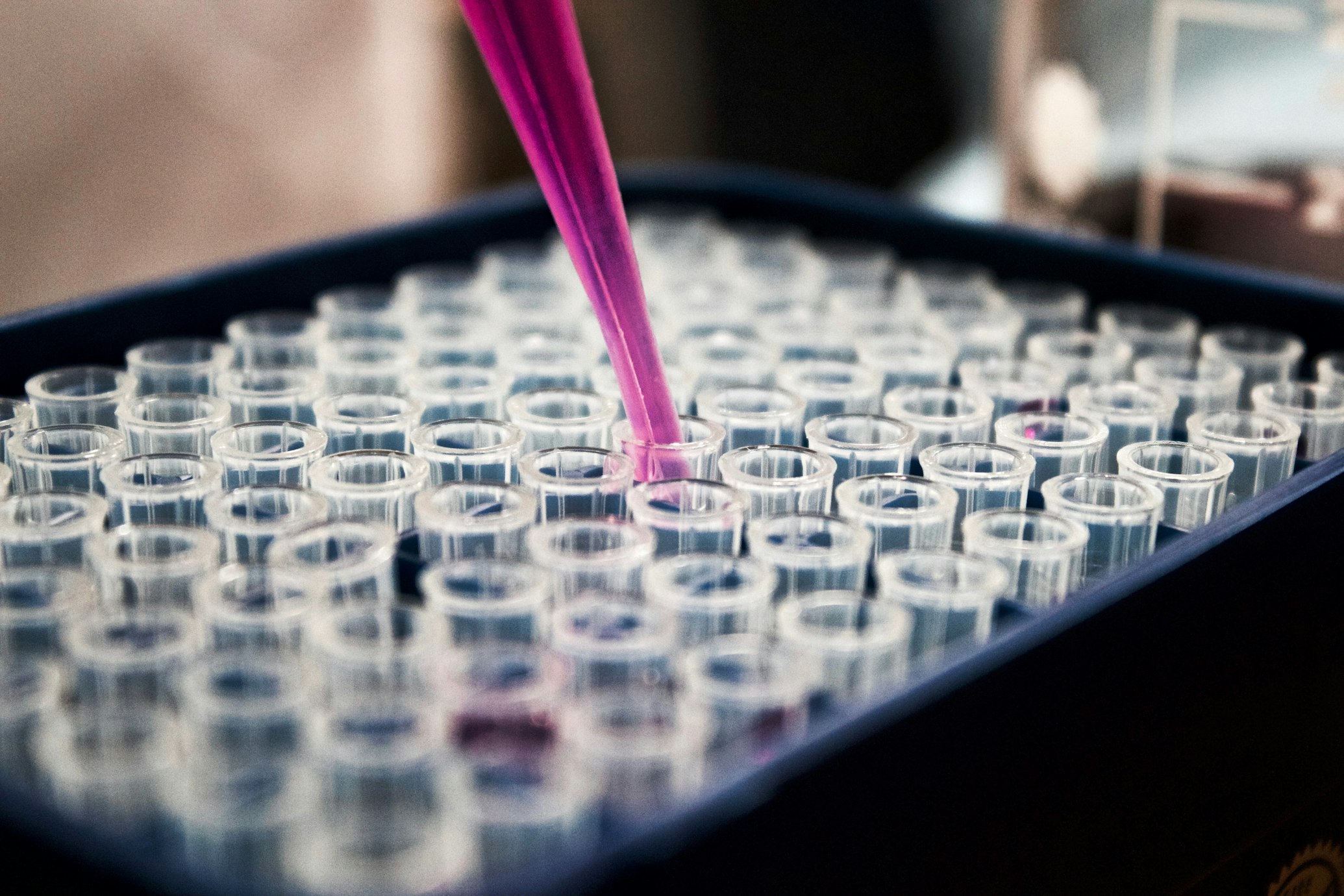

The Scientist's Toolkit: Research Reagent Solutions
Studying the intricate process of nucleotide exchange requires specialized reagents and techniques. Here are some of the essential tools that enable discoveries in this field:
Molecular Dynamics Software
Advanced computational packages allow researchers to simulate atomic-level movements of G proteins over microsecond timescales 1 .
DEER Spectroscopy Probes
Spin-labeled cysteine variants of G proteins enable distance measurements between specific domains 1 .
Engineered Nanobodies
Stable antibody fragments help stabilize specific conformational states for structural studies 3 .
Casein Kinase II
Phosphorylation of exchange factors enhances their GEF activity, providing biochemical tools 3 .
GTP Analogs
Non-hydrolyzable GTP analogs allow researchers to trap G proteins in their active state.
GPCRdb
Comprehensive database provides reference data and analysis tools for GPCR research 4 .
Conclusion
The structural basis for nucleotide exchange in heterotrimeric G proteins represents a fascinating story of molecular intricacy and scientific discovery. What initially appeared to be a simple mechanical prying apart of protein domains has revealed itself to be a far more sophisticated process involving spontaneous dynamics and allosteric regulation. The emerging paradigm suggests that GPCRs don't force change upon reluctant G proteins but rather capitalize on inherent dynamics, stabilizing low-affinity states that enable nucleotide release 1 5 .
This understanding has profound implications for drug discovery and our fundamental knowledge of cellular signaling. By comprehending the precise molecular mechanisms behind nucleotide exchange, scientists can design more precise pharmaceuticals that modulate specific aspects of G protein activation rather than bluntly activating or inhibiting entire receptors.
As research continues, particularly on alternative exchange factors like Ric-8A and the expanding universe of GPCR signaling, our understanding of these essential molecular switches will continue to evolve 3 . What remains clear is that the elegant solution nature has devised for transmitting signals across membranes represents one of the most sophisticated molecular mechanisms in biology—one that we are only beginning to fully understand and appreciate.
References
1 Citation for molecular dynamics simulations and domain separation
2 Additional reference
3 Citation for Ric-8A and alternative exchange mechanisms
4 Citation for GPCR database and structural resources
5 Citation for experimental validation techniques
6 Additional reference
7 Citation for therapeutic applications
Citation for G protein composition and classification