Unlocking Novel Therapeutics: A Modern Guide to the E. coli-Streptomyces Heterologous Expression Platform
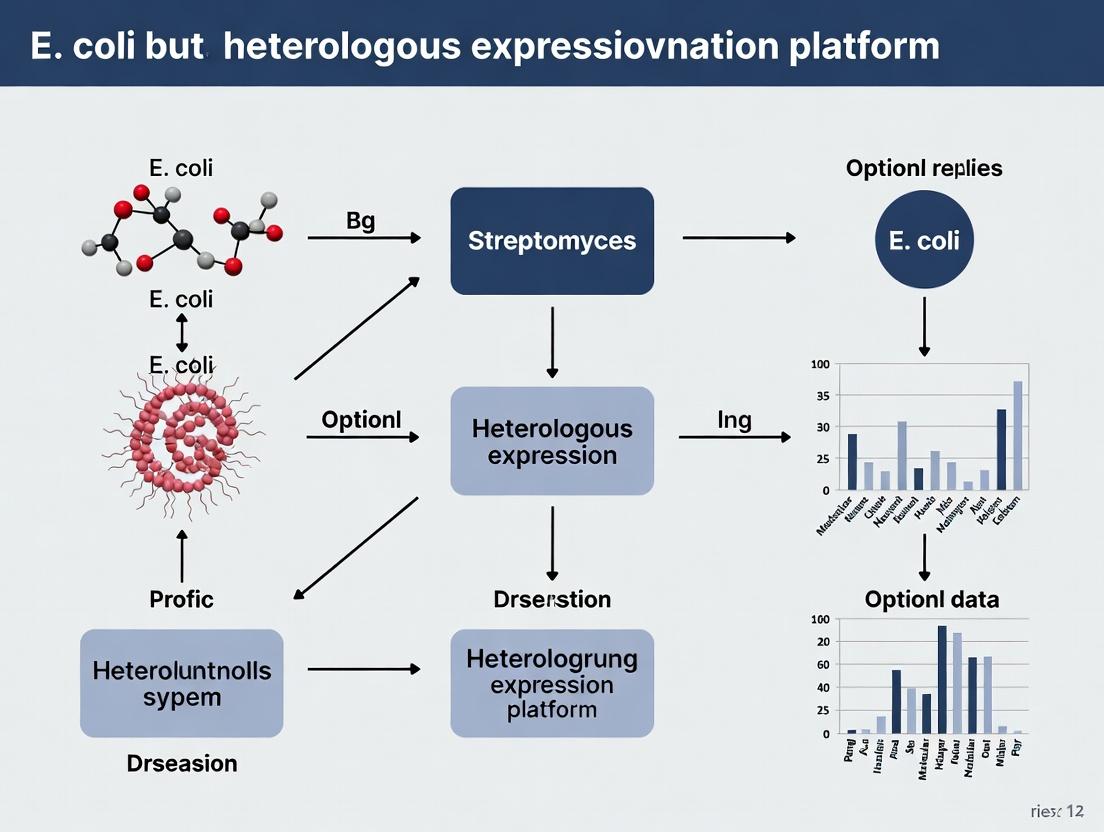
This article provides a comprehensive guide for researchers and drug discovery scientists on leveraging the E.
Unlocking Novel Therapeutics: A Modern Guide to the E. coli-Streptomyces Heterologous Expression Platform
Abstract
This article provides a comprehensive guide for researchers and drug discovery scientists on leveraging the E. coli-Streptomyces heterologous expression platform. It covers the foundational rationale for combining E. coli's fast growth with Streptomyces' biosynthetic potential, detailed methodological protocols for gene cluster expression, advanced strategies for troubleshooting low yield and solubility, and comparative validation against alternative hosts. The aim is to equip professionals with the knowledge to efficiently produce complex natural products and engineered analogs for biomedical research.
Why E. coli and Streptomyces? The Strategic Synergy for Natural Product Discovery
This document serves as a detailed application note within a broader thesis exploring the development of a hybrid E. coli-Streptomyces heterologous expression platform. While Streptomyces species are renowned for producing complex polyketides and non-ribosomal peptides, their slow growth and complex genetics often hinder high-throughput strain engineering and rapid prototyping. Escherichia coli emerges as a critical complementary workhorse in this pipeline, offering unparalleled advantages in speed, genetic malleability, and scalability for the initial cloning, pathway assembly, and proof-of-concept expression of biosynthetic gene clusters (BGCs) before transfer into Streptomyces hosts for optimized production or further engineering.
Table 1: Comparative Metrics ofE. colivs.Streptomycesas Expression Hosts
| Parameter | Escherichia coli (e.g., BL21(DE3)) | Streptomyces (e.g., S. coelicolor) | Implication for Platform Development |
|---|---|---|---|
| Doubling Time | ~20-30 minutes (rich medium) | ~2-4 hours (complex medium) | Speed: E. coli enables rapid iterative cycles (cloning, transformation, screening). |
| Transformation Efficiency | >10⁸ CFU/µg (plasmid DNA, chemical competent) | ~10⁴-10⁶ CFU/µg (conjugal transfer typical) | Genetics: High-efficiency cloning and library construction are trivial in E. coli. |
| Genome Size | ~4.6 Mbp (monocentric chromosome) | ~8-10 Mbp (linear chromosome with telomeres) | Simplicity: Smaller, well-annotated genome simplifies genetic manipulation. |
| Genetic Tools | Vast array of plasmids, CRISPR systems, promoters (T7, lac, ara). | Specialized tools, often slower to implement; integrative vectors common. | Malleability: Extensive, standardized toolkits for every molecular biology need. |
| Culture Scalability | From 96-well plates (0.5 mL) to stirred-tank fermenters (100,000 L). | Challenging in microtiter plates; optimal growth often requires mycelial culture. | Scalability: Seamless scale-up from high-throughput screening to industrial production. |
| Pathway Assembly | Highly efficient (Golden Gate, Gibson, Yeast recombination). | Often relies on E. coli intermediates or direct conjugation. | Workflow: E. coli is the preferred chassis for BGC reconstruction and refactoring. |
Key Protocols for theE. coliPhase of the Hybrid Platform
Protocol 3.1: High-Throughput Golden Gate Assembly of BGC Parts inE. coli
Purpose: To assemble large, multi-gene Streptomyces-derived BGCs from standardized genetic parts in a single E. coli cloning step. Reagents: See "The Scientist's Toolkit" below. Procedure:
- Part Preparation: Clone individual genes, promoters (e.g., ermEp), and terminators as level 0 modules in a standardized MoClo/Golden Gate system (e.g., pYTK001 backbone) in E. coli DH5α. Isolate plasmid DNA.
- Assembly Reaction: In a PCR tube, combine 50-100 ng of each level 0 module, 150 ng of destination vector (e.g., pET-based expression vector or integrative shuttle vector), 1 µL of T4 DNA Ligase, 1 µL of Type IIs restriction enzyme (e.g., BsaI-HFv2), 2 µL of 10x T4 Ligase Buffer, and H₂O to 20 µL.
- Thermocycling: Run the following program: 25 cycles of (37°C for 2 min, 16°C for 5 min), then 50°C for 5 min, 80°C for 10 min. Hold at 4°C.
- Transformation: Transform 2 µL of the reaction into 50 µL of chemically competent E. coli DH5α or similar. Plate on selective media. Screen colonies by colony PCR and restriction digest.
- Validation: Sequence-verify the assembled construct. The validated plasmid is now ready for heterologous expression in E. coli BL21(DE3) or transfer to Streptomyces.
Protocol 3.2: Rapid Inducible Expression & Metabolite Screening in 96-Well Format
Purpose: To test the functionality of an assembled BGC in E. coli using a high-throughput, small-scale culture and induction system. Procedure:
- Inoculation: Pick E. coli BL21(DE3) harboring the BGC expression plasmid into 200 µL of LB (+ antibiotics) in a 96-deep-well plate. Cover with a breathable seal. Incubate at 37°C, 900 rpm overnight.
- Dilution & Induction: Dilute the overnight culture 1:50 into 1 mL of fresh auto-induction medium (e.g., ZYM-5052) in a new 96-deep-well plate. Alternatively, induce with 0.1-1.0 mM IPTG at an OD₆₀₀ of ~0.6.
- Expression: Incubate at a permissive temperature (e.g., 18-25°C) for 24-48 hours with shaking.
- Metabolite Extraction: Add 1 mL of ethyl acetate or butanol to each well. Seal, vortex vigorously for 10 min, then centrifuge (4000 x g, 10 min). Transfer the organic (top) layer to a new plate. Evaporate solvents under vacuum.
- Analysis: Reconstitute dried extracts in 100 µL of methanol. Analyze via LC-MS/MS. Compare chromatograms to controls (empty vector, no induction) to identify putative heterologous metabolites.
Visualization of Workflows and Pathways
Title: E. coli-Streptomyces Hybrid Expression Platform Workflow
Title: T7 Expression System for BGCs in E. coli
The Scientist's Toolkit
Table 2: Key Research Reagent Solutions forE. coli-Based BGC Engineering
| Item | Example Product/Catalog | Function & Rationale |
|---|---|---|
| Cloning Strain | E. coli DH5α, NEB 10-beta | High transformation efficiency, endA- recA- genotype for stable plasmid propagation. |
| Expression Strain | E. coli BL21(DE3), BAP1 | DE3 lysogen carries T7 RNAP gene; lacks proteases (lon/ompT) for enhanced protein stability. |
| Assembly System | MoClo Toolkit, Gibson Assembly Master Mix | Enables rapid, seamless, one-pot assembly of multiple BGC DNA fragments. |
| Induction Reagent | Isopropyl β-D-1-thiogalactopyranoside (IPTG) | Non-hydrolyzable lactose analog that induces the lac/T7 expression system. |
| Autoinduction Media | ZYM-5052, Overnight Express | Contains metabolizable sugars for automatic induction at high cell density, ideal for HTS. |
| Lysis Reagent | B-PER, PopCulture | Efficient chemical lysis of E. coli for intracellular metabolite or protein extraction. |
| Metabolite Extraction Solvent | Ethyl Acetate, Butanol | Organic solvents for liquid-liquid extraction of small molecule natural products from culture. |
| Shuttle Vector | pRSFDuet-1, pIJ-derived plasmids | Contains origins for replication in both E. coli and Streptomyces for inter-host transfer. |
Within the context of developing a versatile E. coli-Streptomyces heterologous expression platform, the exploitation of Streptomyces Biosynthetic Gene Clusters (BGCs) is paramount. Streptomyces species encode a staggering diversity of BGCs for antibiotics, anticancer agents, and other bioactive compounds, yet the majority are silent under laboratory conditions. This protocol set outlines strategies for BGC discovery, refactoring, and heterologous expression in optimized E. coli chassis, enabling the translation of genetic potential into novel chemical entities for drug development.
Table 1: RepresentativeStreptomyces-Derived Natural Products and Their BGC Characteristics
| Natural Product | Activity | BGC Size (kb) | Estimated ORFs | Heterologous Expression Host (Successful Example) |
|---|---|---|---|---|
| Actinorhodin | Antibiotic | ~22 | 22 | S. coelicolor |
| Daptomycin | Antibiotic (Lipopeptide) | ~128 | 39 | S. lividans |
| FK506 (Tacrolimus) | Immunosuppressant | ~84 | 22 | S. tsukubaensis |
| Candicidin | Antifungal (Polyene) | ~139 | 30 | S. albus |
| Staurosporine | Anticancer (Kinase Inhibitor) | ~28 | 14 | S. albus |
Table 2: Comparison of BGC Heterologous Expression Platforms
| Platform Host | Advantages | Limitations | Typical BGC Size Range | Key Engineering Requirement |
|---|---|---|---|---|
| Streptomyces lividans | Native-like expression, post-translational modifications | Slow growth, complex genetics, native BGC background | Up to 150+ kb | Deletion of endogenous restriction systems |
| Streptomyces albus J1074 | Minimized genome, high success rate | Limited precursor pool for some compounds | Up to ~140 kb | Often used as a "clean" chassis |
| E. coli (Engineered) | Rapid growth, superb genetics, scalable fermentation | Lack of specific P450s, tailoring enzymes, unusual precursors | Typically < 50 kb | Supply of rare precursors (e.g., PKS extender units), co-expression of Streptomyces translational machinery |
Application Notes & Protocols
Protocol 1:In SilicoIdentification and Prioritization of BGCs fromStreptomycesGenomes
Objective: To computationally identify putative BGCs from whole genome sequences and prioritize them for cloning based on novelty and expressibility potential.
Materials:
- Genome sequence file (e.g., .gbk, .fasta)
- High-performance computing cluster or local server
Procedure:
- Genome Submission: Submit the genome file to the antiSMASH 7.0 web server (https://antismash.secondarymetabolites.org/) or run the standalone tool with default parameters for bacterial genomes.
- Analysis: Allow the tool to identify BGCs using Hidden Markov Models (HMMs) for core biosynthetic enzymes (PKS, NRPS, etc.).
- Prioritization: Export results. Prioritize BGCs that: a. Show low similarity (<70%) to known clusters in the MIBiG database. b. Contain all necessary genes for a complete pathway. c. Are of manageable size (<50 kb for E. coli expression attempts). d. Lack excessive numbers of Streptomyces-specific regulatory genes.
- Design: Use the antiSMASH "ClusterCompare" output to design PCR primers or homology arms for capture at boundaries just outside the core BGC.
Protocol 2: Direct Capture and Refactoring of a BGC forE. coliExpression
Objective: To physically capture a target BGC and refactor its regulatory elements for expression in an E. coli T7-based platform.
Materials:
- Streptomyces genomic DNA (high molecular weight)
- pCAP01 cosmid or similar E. coli-Streptomyces shuttle vector
- E. coli GB05-dir or GBred-gyrA462 (redαβγ, recA-) for recombineering
- PCR reagents, Gibson Assembly or Golden Gate Assembly mix
- Synthetic constitutive promoters (e.g., ermEp*, SP44), RBS libraries
Procedure:
- Capture: Amplify the ~40 kb BGC from genomic DNA using Transformation-Associated Recombination (TAR) cloning in Saccharomyces cerevisiae or linear-linear homologous recombination in the engineered E. coli GBred-gyrA462 strain, capturing it into a linearized pCAP01 vector.
- Verification: Isolate the vector, transform into standard E. coli (e.g., DH10B), and verify by restriction digest and PacBio sequencing.
- Refactoring: a. Replace Native Promoters: Using Golden Gate Assembly, systematically replace the native promoter of each essential operon in the BGC with a synthetic, constitutive Streptomyces promoter (ermEp) or a T7 promoter if the *E. coli host carries the T7 RNA polymerase gene. b. Optimize RBS: Use computational tools (RBS Calculator) to design and install strong, tunable RBS sequences for each gene. c. Address Codon Usage: For problematic genes, consider synthesizing codon-optimized versions for E. coli. d. Split Large Clusters: For BGCs >50 kb, consider splitting into compatible operonic fragments in separate plasmids (e.g., pETDuet series, pCDFDuet).
- Assembly: Assemble the refactored cluster into a single, low-copy number expression vector (e.g., pRSF1010 origin) suitable for E. coli.
Protocol 3: Heterologous Expression in EngineeredE. coliand Metabolite Analysis
Objective: To express the refactored BGC in a metabolically engineered E. coli host and detect the production of the target compound.
Materials:
- E. coli BAP1 strain (engineered with sfp for phosphopantetheinylation, P450 support) or similar.
- Autoinduction media (e.g., ZYM-5052) supplemented with necessary precursors (e.g., methylmalonyl-CoA, specific amino acids).
- Amberlite XAD-16 resin for metabolite adsorption.
- LC-MS/MS system (e.g., UHPLC coupled to Q-TOF mass spectrometer)
Procedure:
- Transformation: Transform the refactored BGC construct into the expression host. Include an empty vector control.
- Fermentation: Inoculate 50 mL of autoinduction media in a 250 mL baffled flask. Incubate at 30°C, 220 rpm for 48-72 hours.
- Metabolite Extraction: Add 5% (w/v) XAD-16 resin to the culture for the final 2 hours. Filter culture, wash resin with water, and elute metabolites with methanol.
- Analysis: Concentrate the methanolic extract under vacuum. Resuspend in MS-grade methanol. Analyze by reversed-phase UHPLC-MS.
- Detection: Compare chromatograms (UV and Base Peak) and mass spectra (m/z values, fragmentation patterns) of the test sample against the control and authentic standard (if available). Use tools like MZmine for feature detection and GNPS for molecular networking to identify novel compounds.
The Scientist's Toolkit: Research Reagent Solutions
| Item | Function & Application |
|---|---|
| pCAP01 Cosmid | E. coli-Streptomyces shuttle vector for capturing large (~40 kb) genomic segments via Red/ET recombineering. |
| GBred-gyrA462 E. coli Strain | Engineered for high-efficiency linear-linear homologous recombination, enabling direct BGC capture from genomic DNA. |
| Golden Gate Assembly Kit (BsaI-HFv2) | For rapid, scarless, modular assembly of multiple DNA fragments (e.g., promoter-gene modules) during BGC refactoring. |
| XAD-16 Hydrophobic Resin | Adsorbs non-polar metabolites from culture broth, facilitating concentration and reducing contaminants during extraction. |
| S-adenosylmethionine (SAM) | Essential methyl donor cofactor for many tailoring reactions (O-methyltransferases); often required in E. coli expression. |
| δ-Aminolevulinic Acid (ALA) | Precursor for heme biosynthesis; enhances activity of cytochrome P450 enzymes in heterologous E. coli hosts. |
Visualizations
BGC Discovery to Expression Workflow
BGC Refactoring Strategy
Heterologous Expression as a Bypass and Optimization Tool
Within the broader thesis on developing a robust E. coli-Streptomyces heterologous expression platform, this document details application notes and protocols. Heterologous expression serves a dual function: as a bypass for obstacles in native hosts (e.g., complex regulation, low titers, or pathogenicity) and as an optimization tool for pathway engineering and compound diversification. This approach leverages the rapid growth and genetic tractability of E. coli alongside the native enzymatic machinery of Streptomyces for natural product biosynthesis.
Application Notes
Bypassing Native Host Limitations
Key bottlenecks in Streptomyces include slow growth, complex life cycles, and often recalcitrant genetics. Heterologous expression in E. coli bypasses these issues.
- Case Study: Actinorhodin Production: The entire actinorhodin gene cluster from S. coelicolor was expressed in E. coli BAPI strain, bypassing native morphological differentiation requirements and yielding ~20 mg/L.
- Bypass Table:
| Limitation in Native Streptomyces | Bypass Strategy in E. coli | Outcome Metric | Reference (Example) |
|---|---|---|---|
| Slow growth cycle (5-7 days) | Use of fast-growing E. coli (16-24 hrs) | Time to production reduced by ~70% | Zhang et al., 2020 |
| Silent/cryptic gene clusters | Strong constitutive/T7 promoter in E. coli | Activation of >3 previously silent clusters | Bai et al., 2021 |
| Low native titer (<10 mg/L) | High-copy plasmids, optimized codon usage | Titer increase to 50-150 mg/L range | Li et al., 2022 |
| Pathogenic host constraints | Expression in safe, GRAS E. coli strains | Enables safe production of toxic compounds | N/A |
Optimization via Modular Pathway Engineering
The E. coli chassis allows for plug-and-play optimization of Streptomyces-derived pathways.
- Promoter & RBS Optimization: Systematic testing of promoter strengths and Ribosome Binding Sites (RBS) balances expression of large biosynthetic gene clusters (BGCs).
- Co-factor Balancing: Engineering NADPH/NADH pools and precursor supply (e.g., malonyl-CoA, methylmalonyl-CoA) significantly enhances polyketide yields.
- Optimization Table:
| Optimization Target | Method in E. coli Platform | Typical Improvement Range | Key Reagents/Tools |
|---|---|---|---|
| Precursor Supply (malonyl-CoA) | Overexpression of accABCD, fabD | 2-5 fold titer increase | pETDuet-acc, pCDF-fabD |
| Redox Cofactor (NADPH) | Expression of pntAB (transhydrogenase) or zwf (G6PDH) | 1.5-3 fold titer increase | pTrc-pntAB, pACYC-zwf |
| Toxic Intermediate Channelling | Fusion proteins or synthetic protein scaffolds | Up to 8 fold reduction in byproducts | pCOLADuet-scaffold plasmids |
| Pathway Flux Balancing | Modular plasmid system with varied copy numbers | Titer optimization of 10-200% | pET, pCDF, pACYCDuet, pRSFDuet series |
Detailed Protocols
Protocol: Assembly and Transformation of aStreptomycesPKS Gene Cluster intoE. coli
Objective: Clone a large Type I PKS gene cluster from Streptomyces into an E. coli expression vector. Materials: See "Scientist's Toolkit" below. Procedure:
- Cluster Isolation: Amplify target BGC from Streptomyces genomic DNA using long-range PCR or Gibson assembly of cosmids.
- Vector Preparation: Linearize a high-copy E. coli expression vector (e.g., pRSFDuet-1) with appropriate restriction enzymes.
- In-Fusion Cloning:
- Mix 100 ng linearized vector, 200 ng PCR product (with 15-20 bp homology ends).
- Add 5 µl In-Fusion HD Enzyme Premix.
- Incubate at 50°C for 15 minutes.
- Place on ice and transform into Stellar competent E. coli for propagation.
- Screening: Verify assembly by colony PCR and restriction digest. Sequence junctions.
- Transformation into Production Host: Transform verified plasmid into optimized E. coli BAPI or K207-3 cells.
Protocol: High-Throughput Microtiter Plate Screening for Optimized Expression
Objective: Rapidly screen promoter/RBS variants for pathway optimization. Procedure:
- Variant Library Creation: Use site-directed mutagenesis or Golden Gate assembly to generate promoter (P1-P5) and RBS (R1-R4) variants upstream of key biosynthetic genes.
- 96-Well Plate Cultivation:
- Inoculate 200 µl of TB autoinduction medium (+ antibiotics) in deep-well plates.
- Seal with breathable film. Incubate at 30°C, 900 rpm for 48 hrs.
- Metabolite Extraction: Add 200 µl ethyl acetate, vortex 10 min, centrifuge. Transfer organic layer to new plate, evaporate.
- Analysis: Reconstitute in 50 µl methanol. Analyze 10 µl by LC-MS. Quantify target compound peak area.
- Data Analysis: Normalize yields to OD600. Select top 3 variants for flask-scale validation.
Diagrams
Diagram 1: Heterologous Expression as Bypass Logic
Diagram 2: E. coli Streptomyces Platform Workflow
The Scientist's Toolkit
| Research Reagent / Material | Function in Heterologous Expression |
|---|---|
| E. coli BAPI Strain | Engineered E. coli host deficient in fatty acid degradation, optimized for polyketide production. |
| pRSFDuet, pETDuet Vectors | High-copy (RSF) and medium-copy (pET) plasmids with multiple cloning sites for co-expression of BGC parts. |
| Codon-Optimized Genes | Synthetic genes with E. coli-biased codons to ensure high expression of Streptomyces proteins. |
| Gibson/In-Fusion Assembly Mix | Enzymatic reagents for seamless, homology-based assembly of large DNA fragments (essential for BGCs). |
| Autoinduction Media (TB) | Media formulation that automatically induces protein expression at high cell density, ideal for screening. |
| Malonyl-CoA Enhancer Kit | Pre-packaged plasmids (e.g., accABCD, fabD) to boost essential precursor supply in E. coli. |
| HisTrap HP Columns | For rapid immobilized metal affinity chromatography (IMAC) purification of His-tagged enzymes from the pathway. |
| LC-MS System (e.g., Agilent) | Essential analytical tool for quantifying pathway intermediates and final product titers during optimization. |
Historical Evolution and Key Breakthroughs in the Platform's Development
This application note details the historical evolution and critical technical breakthroughs in the development of E. coli–Streptomyces heterologous expression platforms, a cornerstone technology for natural product discovery and engineering. Framed within broader thesis research on chassis optimization, this document provides a consolidated timeline of milestones, quantitative performance data, and standardized protocols to empower researchers and drug development professionals in leveraging this powerful synthetic biology tool.
Historical Timeline and Performance Milestones
The integration of E. coli’s rapid growth and genetic tractability with Streptomyces’s unparalleled secondary metabolite biosynthetic gene clusters (BGCs) has driven platform evolution. Key phases are defined below.
Table 1: Historical Evolution of Platform Capabilities
| Era | Key Breakthrough | Primary Challenge Addressed | Exemplar Compound (Titer) | Year Range |
|---|---|---|---|---|
| Foundational | Cloning of intact Streptomyces BGCs into E. coli vectors. | BGC instability, lack of heterologous expression. | Actinorhodin (trace) | 1990-2000 |
| Genetic Enablement | Development of Streptomyces–E. coli shuttle vectors (e.g., pSET152, pIJ86). | DNA transfer between species, maintenance in Streptomyces. | Undecylprodigiosin (~5 mg/L) | 2000-2010 |
| Host Engineering | Engineering of E. coli BAP1 and derivatives for tRNA supplementation and PKS expression. | Codon bias, lack of essential Streptomyces precursors (e.g., malonyl-CoA). | 6-deoxyerythronolide B (6-DEB) (~100 mg/L) | 2005-2015 |
| Pathway Refactoring | Systematic BGC refactoring: removal of native regulation, optimization of RBS. | Poor expression due to complex native regulation. | Streptomycin derivatives (~15 mg/L) | 2010-2020 |
| Precision & Automation | CRISPR/Cas9-mediated genome editing in Streptomyces; high-throughput part assembly. | Labor-intensive genetic manipulation, lack of standardized parts. | Heterologous expression of complex RiPPs | 2018-Present |
Table 2: Quantitative Performance Evolution of Model Systems
| Host Strain (E. coli) | BGC Expressed | Key Genetic Modification | Reported Titer | Product Class |
|---|---|---|---|---|
| DH10B | Actinorhodin (act) | None (initial proof-of-concept) | ~0.1 mg/L | Type II PKS |
| BAP1 | 6-deoxyerythronolide B (dexs) | sfp (phosphopantetheinyl transferase), tRNA supplementation | ~1-10 mg/L | Type I PKS |
| M1154 derivative | Salinomycin (sal) | Deletion of native PKS genes, precursor pathway amplification | ~120 mg/L | Polyether |
| K207-3 | Arixanthomycin (arix) | CRISPR-mediated promoter replacement, otsAB for osmotic tolerance | ~300 mg/L | Angucycline |
Core Experimental Protocols
Protocol 2.1: Heterologous Expression of a Refactored BGC in EngineeredE. coli
Objective: To express a codon-optimized, refactored Streptomyces BGC in a tailored E. coli host and quantify product titer.
Materials: See "Research Reagent Solutions" below. Procedure:
- BGC Preparation: Amplify the refactored BGC from its source plasmid (e.g., pCRISPomyces-2 derived) using long-range PCR. Assemble into an expression vector (e.g., pET-28a derivative) using Gibson Assembly.
- Host Transformation: Chemically transform the assembled construct into electrocompetent cells of engineered E. coli strain K207-3.
- Culture and Induction: Inoculate 5 mL of LB+Kan (50 µg/mL) with a single colony. Grow overnight at 37°C, 220 rpm. Subculture 1:100 into 50 mL of optimized production medium (e.g., R5A). Grow at 30°C until OD600 ≈ 0.6. Induce expression with 0.5 mM IPTG. Reduce temperature to 22°C.
- Extraction: After 72 hours, pellet cells by centrifugation (4,000 x g, 15 min). Resuspend pellet in 10 mL ethyl acetate:methanol (3:1). Sonicate on ice (5 cycles of 30 sec on/off). Centrifuge (10,000 x g, 10 min). Collect organic supernatant and evaporate under vacuum.
- Analysis: Resuspend dried extract in 1 mL methanol. Analyze by HPLC-MS. Quantify using a standard curve of the target compound or a close analog.
Protocol 2.2: CRISPR/Cas9-Mediated BGC Refactoring inStreptomyces coelicolor
Objective: To replace the native promoter of a target BGC with a constitutive, strong promoter ermEp* in situ.
Materials: pCRISPomyces-2 plasmid, sgRNA design oligos, Donor DNA template. Procedure:
- sgRNA Design & Construction: Design a 20-nt sgRNA sequence targeting ~50 bp upstream of the BGC's first gene. Clone into pCRISPomyces-2 via Golden Gate assembly.
- Donor DNA Construction: Synthesize a linear donor DNA containing the ermEp* promoter flanked by ~1 kb homology arms matching sequences upstream and downstream of the cut site.
- Conjugation: Transform the constructed pCRISPomyces-2 plasmid into E. coli ET12567/pUZ8002. Co-cultivate with S. coelicolor spores on MS agar for 16-24h at 30°C.
- Selection and Screening: Overlay plates with apramycin (for plasmid selection) and nalidixic acid (to counter-select E. coli). Isolate exconjugants. Screen by colony PCR across the edited junction.
- Curing: Pass edited strains non-selectively to lose the CRISPR plasmid. Verify plasmid loss and sequence the edited locus.
Visualizations
The Scientist's Toolkit: Research Reagent Solutions
Table 3: Essential Reagents for Platform Development
| Reagent/Material | Supplier Examples | Function in Platform |
|---|---|---|
| pCRISPomyces-2 Plasmid | Addgene (#75010) | CRISPR/Cas9 system for genome editing in Streptomyces. |
| E. coli BAP1 Strain | CGSC (# 12428) | Engineered host expressing sfp and tRNA genes for PKS expression. |
| E. coli ET12567/pUZ8002 | Lab stocks / John Innes Centre | Non-methylating E. coli donor strain for intergeneric conjugation. |
| Gibson Assembly Master Mix | NEB (#E2611L) | Seamless assembly of multiple DNA fragments (e.g., refactored BGC into vector). |
| Streptomyces R5A Medium | Sigma-Aldrich (custom) | Defined medium supporting high-density growth and secondary metabolism. |
| S-Adenosyl Methionine (SAM) | Sigma-Aldrich (#A7007) | Cofactor for methyltransferase enzymes common in BGCs; often supplemented. |
| Octaprenyl Pyrophosphate (C40) | Avanti Polar Lipids / custom synthesis | Essential precursor for aminocoumarin and other specialized metabolite classes. |
From DNA to Drug Lead: A Step-by-Step Protocol for Heterologous Expression
Application Notes
Within the framework of developing a robust E. coli-Streptomyces heterologous expression platform for natural product discovery, the initial capture and engineering of Biosynthetic Gene Clusters (BGCs) is the critical first step. This phase bridges bioinformatic prediction with functional characterization, enabling the mobilization of large, complex genetic loci from difficult-to-culture Streptomyces strains into tractable heterologous hosts.
Key Challenges & Rationale: Native Streptomyces BGCs are often large (30-150 kb), GC-rich, and transcriptionally silent under laboratory conditions. Direct cloning via traditional methods is inefficient. Transformation-Associated Recombination (TAR) in yeast and Bacterial Artificial Chromosome (BAC) libraries offer complementary strategies for capturing these large loci intact. Subsequent engineering—such as promoter refactoring, insertion of reporter genes, or modular swapping—is facilitated by modern DNA assembly methods like Gibson Assembly, preparing the BGC for expression in an optimized E. coli chassis engineered with necessary Streptomyces-derived functionalities (e.g., for phosphopantetheinylation, unique codon usage, or precursor supply).
Strategic Selection: The choice of capture method depends on BGC size, available genomic DNA quality, and the need for subsequent genetic manipulation. TAR allows for selective, homology-directed capture and simultaneous cloning into a yeast shuttle vector, ideal for targeted clusters. BAC libraries provide a broad, unbiased genomic archive, valuable for prospecting uncharacterized strains.
Table 1: Comparison of Primary BGC Capture and Engineering Methods
| Method | Typical Insert Size | Key Principle | Success Rate (Approx.) | Primary Use in Platform Development | Timeframe (Weeks) |
|---|---|---|---|---|---|
| TAR Cloning | 10 – 200 kb | Homologous recombination in S. cerevisiae between genomic DNA and linearized vector with targeting hooks. | 30-60% (for targeted clusters) | Targeted capture of specific, predicted BGCs for direct engineering. | 2-4 |
| BAC Library Construction | 50 – 200 kb | Partial digestion of genomic DNA and ligation into low-copy BAC vector. | N/A (Library-based) | Creation of unbiased genomic archives for screening novel BGCs. | 4-8 (library build) |
| Gibson Assembly | 1 – 5+ fragments | Enzymatic assembly using 5’ exonuclease, DNA polymerase, and DNA ligase. | >90% (for designed constructs) | Seamless assembly of engineered BGC fragments, promoter swaps, or pathway refactoring. | 1-2 |
Table 2: Key Reagent Solutions for BGC Engineering Workflow
| Research Reagent Solution | Function in Workflow | Example Product/Enzyme |
|---|---|---|
| High-Fidelity DNA Polymerase | Amplify GC-rich Streptomyces DNA and assembly fragments with minimal errors. | Phusion U Green Multiplex PCR Master Mix |
| Yeast Spheroplast Transformation Reagents | Prepare S. cerevisiae for efficient uptake of DNA during TAR cloning. | SCE Buffer, Sorbitol, Lyticase |
| Gibson Assembly Master Mix | One-pot, isothermal assembly of multiple overlapping DNA fragments. | NEBuilder HiFi DNA Assembly Master Mix |
| BAC Vector & Competent Cells | Stable propagation of large genomic inserts in E. coli. | pIndigoBAC-536, ElectroMAX DH10B T1 Phage-Resistant Cells |
| Gel Extraction & Clean-up Kits | Purify DNA fragments from agarose gels and enzymatic reactions. | Monarch DNA Gel Extraction Kit |
| Next-Generation Sequencing Service | Verify sequence fidelity of captured BGCs and engineered constructs. | Illumina MiSeq, PacBio HiFi |
Detailed Protocols
Protocol 3.1: Targeted BGC Capture via TAR Cloning in Yeast
Objective: To selectively isolate a specific Streptomyces BGC using yeast homologous recombination.
Materials:
- Streptomyces genomic DNA (high molecular weight, >100 kb)
- TAR vector (e.g., pCAP, linearized)
- S. cerevisiae strain (e.g., VL6-48N)
- Yeast spheroplasting reagents
- Synthetic Complete (SC) dropout media lacking appropriate amino acid
- PCR reagents for generating targeting hooks (80-bp homology arms)
Method:
- Design & Amplify Targeting Hooks: Using the known BGC sequence, design PCR primers to amplify 80-bp homology arms corresponding to the 5’ and 3’ ends of the target cluster. Include vector overlap sequences.
- Prepare TAR Vector: Linearize the circular TAR vector at the cloning site.
- Prepare Yeast Spheroplasts: Treat yeast cells with lyticase in SCE buffer (1 M sorbitol, 10 mM sodium citrate, 10 mM EDTA) to remove cell walls.
- Transformation Mixture: Combine 100 ng linearized vector, 200-500 ng Streptomyces gDNA, and 200 ng of each purified targeting hook. Mix with freshly prepared spheroplasts.
- Recombination & Selection: Incubate to allow recombination, plate on selective regeneration agar (SC -Ura/Trp, depending on vector), and incubate at 30°C for 3-5 days.
- Yeast DNA Isolation: Harvest yeast colonies, perform miniprep to recover Yeast Artificial Chromosome (YAC) DNA.
- E. coli Transformation: Electroporate the YAC DNA into electrocompetent E. coli to amplify the captured BGC in the BAC vector backbone for verification and subsequent engineering.
Protocol 3.2: BGC Refactoring via Gibson Assembly
Objective: To replace native promoters in a captured BGC with constitutive or inducible promoters optimized for E. coli expression.
Materials:
- Captured BGC in BAC vector
- Engineered promoter cassettes (designed with 20-40 bp overlaps to target sites)
- Gibson Assembly Master Mix
- Restriction enzymes (optional, for vector linearization if not using PCR)
- DpnI enzyme (to digest methylated template DNA)
Method:
- Fragment Preparation:
- Vector Backbone: Amplify the entire BAC vector excluding the native promoter region using high-fidelity PCR, or linearize by restriction digest. Treat with DpnI if using plasmid template.
- Insert(s): Amplify the desired synthetic promoter cassette(s) with 20-40 bp overlaps homologous to the ends of the linearized vector at the insertion site.
- Purification: Gel-purify all DNA fragments to remove primers and template.
- Gibson Assembly Reaction: Assemble 50-100 ng of linearized vector with a 1.5-2x molar ratio of insert fragment(s) using the Gibson Assembly Master Mix. Incubate at 50°C for 15-60 minutes.
- Transformation & Screening: Transform 2-5 µl of the assembly reaction into high-efficiency E. coli competent cells. Screen colonies by colony PCR and verify by sequencing across the new junctions.
Visualizations
Within a broader thesis developing an E. coli-Streptomyces heterologous expression platform, selecting compatible vectors and host strains is critical. This step determines the success of expressing complex Streptomyces-derived natural product biosynthetic gene clusters (BGCs) in a prokaryotic model. E. coli offers rapid growth and high-yield protein production but lacks the native post-translational modifications and specialized chaperones of Streptomyces. Strategic pairing of engineered hosts with advanced expression vectors can overcome these hurdles, enabling the heterologous production of novel drug candidates.
Application Notes
Host Strain Selection Criteria
Choosing the right E. coli host is paramount for expressing GC-rich Streptomyces DNA and complex enzymatic pathways. Key considerations include:
- Protein Folding & Solubility: Strains expressing chaperones (e.g., DnaK-DnaJ-GrpE, GroEL-GroES) or possessing mutations to enhance disulfide bond formation in the cytoplasm (e.g., trxB/gor mutants) are essential for functional actinobacterial enzymes.
- Codon Bias: Streptomyces genomes have high GC content (>70%). Hosts engineered to supply rare tRNAs for AGG, AGA, CUA, etc., (e.g., BL21(DE3) CodonPlus, Rosetta strains) prevent translational stalling.
- Protease Knockouts: To prevent recombinant protein degradation, strains with deletions in cytoplasmic (lon, ompT) and periplasmic (degP) proteases are used (e.g., BL21(DE3) Δlon ΔompT).
- T7 Expression Compatibility: For use with pET vectors, the host must carry a chromosomal copy of the T7 RNA polymerase gene under inducible control (e.g., λ DE3 lysogen).
Vector System Selection Criteria
The expression vector must be compatible with the host and tailored to the target BGC.
- Promoter Strength & Regulation: Tight, titratable promoters (T7lac, araBAD, rhaBAD) are vital for expressing potentially toxic pathway enzymes. Leaky expression must be minimized.
- Copy Number: Medium-copy (e.g., p15A origin) vectors often offer a better balance between plasmid stability and gene dosage for large constructs than high-copy ColE1 origins.
- Selection Marker: Antibiotic resistance (chloramphenicol, kanamycin) must be compatible with the host's genotype and subsequent selection pressures.
- Tagging & Secretion: Vectors offering N- or C-terminal affinity tags (His, GST, MBP) facilitate purification. Sec or Tat signal peptides can direct proteins to the periplasm for proper folding.
- Compatibility with BGC Size: For large multigene assemblies, fosmid- or BAC-based vectors are necessary.
Data Presentation
Table 1: Common E. coli Expression Host Strains for Heterologous Streptomyces Expression
| Host Strain | Key Genotype Features | Advantages for Streptomyces Expression | Common Compatible Vectors |
|---|---|---|---|
| BL21(DE3) | F⁻ ompT gal dcm lon hsdSB(rB⁻ mB⁻) λ(DE3) | Robust protein production; T7 expression. | pET series |
| BL21(DE3) pLysS | BL21(DE3) with pLysS plasmid (T7 lysozyme) | Suppresses basal T7 polymerase activity; tighter control. | pET series |
| Rosetta 2 (DE3) | BL21(DE3) with pRARE2 plasmid (supplies 7 rare tRNAs) | Overcomes codon bias of high-GC Streptomyces genes. | pET, pACYCDuet |
| Origami 2 (DE3) | trxB gor mutations for disulfide bonds; rare tRNAs | Enhances folding of proteins requiring cytoplasmic disulfides. | pET, pTrc |
| SHuffle T7 | trxB gor mutations + disulfide bond isomerase (DsbC) in cytoplasm | Superior for producing active disulfide-bonded proteins. | pET series |
| BW25113 ΔaraBAD | Δ(araD-araB)567; precise control of araBAD promoter | Ideal for titratable expression using arabinose-inducible vectors. | pBAD series |
Table 2: Common Vector Systems for Heterologous Expression in E. coli
| Vector | Origin/Copy # | Promoter | Selection | Key Features & Use Case |
|---|---|---|---|---|
| pET Series (e.g., pET-28a) | ColE1 / High | T7lac (IPTG-inducible) | Kanamycin | Strong, tightly regulated; N-/C-terminal His-tag; workhorse for single proteins. |
| pBAD Series | p15A / Medium | araBAD (arabinose-inducible) | Ampicillin | Tight, titratable expression; fine-tuning of toxic protein production. |
| pACYCDuet-1 | p15A / Medium | T7lac (IPTG-inducible) | Chloramphenicol | Dual multiple cloning sites (MCS); co-expression of two genes (e.g., pathway enzymes). |
| pCDFDuet-1 | CloDF13 / Medium | T7lac (IPTG-inducible) | Spectinomycin | Dual MCS; compatible with pET and pACYCDuet for polycistronic expression. |
| pRSFDuet-1 | RSF1030 / High | T7lac (IPTG-inducible) | Kanamycin | Dual MCS; high copy number for demanding expression needs. |
| Fosmids / BACs | Single Copy | Various (e.g., Ptac) | Chloramphenicol | Stable maintenance of very large DNA inserts (>30 kb); for entire BGCs. |
Experimental Protocols
Protocol 1: Co-transformation for Co-expression Using Compatible Duet Vectors
Objective: To transform two compatible expression plasmids (e.g., pET-28a and pACYCDuet-1) into a single E. coli host strain for coordinated expression of multiple genes from a Streptomyces BGC.
Materials:
- Chemically competent E. coli BL21(DE3) cells.
- pET-28a(+) vector containing Gene A.
- pACYCDuet-1 vector containing Gene B.
- LB agar plates with antibiotics: Kanamycin (Kan, 50 µg/mL), Chloramphenicol (Cam, 34 µg/mL), and Kan+Cam.
- SOC recovery medium.
Method:
- Preparation: Thaw competent cells on ice. Pre-chill microcentrifuge tubes.
- Transformation Mix: In a sterile tube, combine 50 ng of each plasmid (pET-28a and pACYCDuet-1) with 50 µL of competent cells. Gently mix by flicking. Do not vortex.
- Incubation: Incubate on ice for 30 minutes.
- Heat Shock: Heat shock at exactly 42°C for 45 seconds in a water bath. Immediately return to ice for 2 minutes.
- Recovery: Add 500 µL of pre-warmed SOC medium. Incubate at 37°C with shaking (225 rpm) for 60 minutes.
- Plating: Plate 100 µL and the remainder of the transformation onto LB agar plates containing both Kanamycin and Chloramphenicol.
- Selection: Incubate plates overnight at 37°C.
- Verification: The next day, pick colonies to inoculate dual-selection liquid cultures. Isolate plasmids via miniprep and verify by restriction digest or PCR.
Protocol 2: Small-Scale Induced Expression Test for Solubility Screening
Objective: To rapidly screen multiple vector-host combinations for soluble expression of a Streptomyces protein.
Materials:
- Transformed E. coli colonies (from Protocol 1 or single transformation).
- Auto-induction media (ZYP-5052) or LB with appropriate antibiotics.
- IPTG (Isopropyl β-D-1-thiogalactopyranoside).
- Lysis buffer: 50 mM Tris-HCl pH 8.0, 300 mM NaCl, 10 mM imidazole, 1 mg/mL lysozyme, protease inhibitors.
- Sonicator or French press.
Method:
- Inoculation: Inoculate 5 mL of auto-induction media (or LB) containing antibiotics with a single colony. Grow at 37°C, 225 rpm.
- Induction (if using LB): At OD600 ~0.6, add IPTG to a final concentration of 0.1-1.0 mM. Reduce temperature to 18-25°C. Continue incubation for 16-20 hours.
- Harvesting: Pellet 1 mL of culture by centrifugation (4°C, 5,000 x g, 10 min). Discard supernatant.
- Lysis: Resuspend pellet in 200 µL lysis buffer. Incubate on ice for 30 minutes. Lyse cells by sonication (3 x 10 sec pulses) or freeze-thaw.
- Fractionation: Centrifuge lysate at 15,000 x g, 30 min, 4°C. Carefully separate supernatant (soluble fraction) from pellet (insoluble fraction).
- Analysis: Resuspend the pellet in 200 µL of 1x SDS-PAGE loading buffer. Mix 20 µL of soluble fraction with 20 µL of 2x SDS-PAGE loading buffer. Boil all samples for 5 minutes. Analyze by SDS-PAGE to assess expression level and solubility.
Mandatory Visualization
Diagram Title: Decision Workflow for Selecting E. coli Vectors and Hosts
The Scientist's Toolkit
Table 3: Essential Research Reagent Solutions for Vector/Host Experiments
| Item | Function & Application |
|---|---|
| Chemically Competent Cells (e.g., BL21 derivatives) | Prepared cells with enhanced permeability for plasmid DNA uptake via heat shock transformation. |
| IPTG (Isopropyl β-D-1-thiogactopyranoside) | A non-hydrolyzable lactose analog that inactivates the lac repressor, inducing expression from T7lac and other lac-based promoters. |
| L-Arabinose | Inducer for the tightly regulated araBAD (pBAD) promoter system; allows fine-tuning of expression levels. |
| Auto-induction Media (ZYP-5052) | Contains glucose, lactose, and glycerol. Allows high-density growth followed by automatic induction by lactose, bypassing the need for IPTG addition and monitoring OD. |
| Protease Inhibitor Cocktail (EDTA-free) | A mix of inhibitors added to lysis buffers to prevent degradation of recombinant proteins by endogenous E. coli proteases during cell disruption. |
| Lysozyme | Enzyme that hydrolyzes bacterial cell wall peptidoglycan, used in lysis buffers to weaken the cell wall prior to sonication or freeze-thaw. |
| DNase I | Degrades genomic DNA in lysates, reducing viscosity and improving handling and chromatography performance. |
| Affinity Chromatography Resin (e.g., Ni-NTA Agarose) | Immobilized metal-affinity resin for rapid capture and purification of polyhistidine (His)-tagged recombinant proteins. |
Application Notes
Optimizing transformation, cultivation, and induction is critical for maximizing protein titers in E. coli-Streptomyces shuttle vector systems. This phase bridges genetic construction with scalable production, focusing on parameters that influence plasmid stability, biomass yield, and heterologous expression efficiency. Key challenges include overcoming the high GC-content and complex secondary metabolism of Streptomyces DNA in the E. coli host, and subsequently, achieving robust expression in the Streptomyces production host.
Recent advancements highlight the use of codon-optimized genes, tailored media formulations, and finely tuned induction parameters to alleviate metabolic burden and enhance soluble protein yield. Autoinduction media and kinetic profiling of induction points are now standard for E. coli stages, while precise control of phosphate, nitrogen, and carbon sources is paramount for Streptomyces cultivation.
Table 1: Comparison of Common Media for E. coli Transformation and Cultivation with Streptomyces Vectors
| Media Type | Typical Use Case | Key Components (Additions for Selection/Stability) | Average Transformation Efficiency (CFU/µg DNA) | Typical Biomass Yield (OD600) | Suitability for Large Plasmids (>10 kb) |
|---|---|---|---|---|---|
| LB | Routine cloning, plasmid propagation | Tryptone, yeast extract, NaCl; + antibiotic | 1 x 10⁷ - 1 x 10⁸ | 3-5 (shake flask) | Moderate |
| SOC | Outgrowth post-electroporation | Rich medium with glucose, Mg²⁺, electrolytes | N/A (Recovery) | N/A | High |
| TB (Terrific Broth) | High-density biomass for plasmid prep | Tryptone, yeast extract, glycerol, phosphate buffer | 5 x 10⁶ - 5 x 10⁷ | 10-15 (shake flask) | Good |
| Autoinduction Media (Studier-style) | Hands-off protein expression induction | Defined carbon sources (lactose/glycerol), nutrient feed | N/A (for transformation) | 20-30 (shake flask) | Good, but monitor metabolic load |
Table 2: Induction Optimization Parameters for Common Promoters
| Promoter System | Optimal Host Strain | Standard Induction Trigger & Concentration | Optimal OD600 for Induction | Typical Temperature Post-Induction | Key Optimization Variable(s) |
|---|---|---|---|---|---|
| T7/lacO (E. coli) | BL21(DE3) | IPTG: 0.1 - 1.0 mM | 0.6 - 0.8 | 16-37°C (soluble vs. inclusion) | IPTG conc., temperature shift |
| tipA (Streptomyces) | S. lividans TK24 | Thiostrepton: 5 - 50 µg/mL | 0.4 - 0.6 (mid-log) | 28-30°C | Thiostrepton conc., induction duration |
| ermEp (Streptomyces*) | S. coelicolor M1152 | Natural phosphate depletion/autoinduction | N/A (media-dependent) | 28-30°C | Phosphate level, carbon source |
| PBAD (E. coli) | TOP10, BW27784 | L-Arabinose: 0.0002% - 0.2% (w/v) | 0.5 - 0.7 | 30-37°C | Arabinose conc., precise tunability |
Experimental Protocols
Protocol 1: High-Efficiency Electrotransformation ofE. coliwithStreptomyces-E. coliShuttle Vectors
Objective: To introduce large, high-GC-content shuttle plasmids into a competent E. coli host for cloning and propagation. Materials: Electrocompetent E. coli (e.g., DH10B, ET12567/pUZ8002), Streptomyces-E. coli shuttle vector DNA (prepared from E. coli, salt-free), 1 mm electroporation cuvette, SOC recovery medium, selective LB agar plates. Procedure:
- Thaw electrocompetent cells on ice.
- Mix 1 µL of plasmid DNA (10-100 ng) with 25-50 µL of cells in a pre-chilled tube.
- Transfer mixture to a chilled 1 mm electroporation cuvette, avoiding bubbles.
- Electroporate using appropriate settings (e.g., 1.8 kV, 200 Ω, 25 µF for E. coli).
- Immediately add 1 mL of pre-warmed (37°C) SOC medium to the cuvette.
- Transfer the cell suspension to a sterile tube and incubate at 37°C with shaking (225 rpm) for 1 hour.
- Plate appropriate dilutions on LB agar containing the relevant antibiotic(s) (e.g., apramycin, kanamycin for shuttle vectors).
- Incubate plates at 37°C overnight (16-24 hours).
Protocol 2: Intergeneric Conjugation fromE. coliET12567/pUZ8002 toStreptomyces
Objective: To transfer the constructed plasmid from the E. coli donor to the Streptomyces recipient. Materials: E. coli ET12567/pUZ8002 donor strain carrying the shuttle vector, Streptomyces recipient spores (e.g., S. lividans TK24), LB with appropriate antibiotics, 2xYT medium, Mannitol Soy Flour (MS) agar plates, 10 mM MgSO₄, Nalidixic acid (for counter-selection), antibiotic for plasmid selection. Procedure:
- Grow the E. coli donor strain overnight in LB with kanamycin (for pUZ8002) and the vector's antibiotic.
- Harvest cells by centrifugation (4000 x g, 5 min), wash twice with an equal volume of 2xYT or LB, and resuspend in 0.5 volume of 2xYT.
- Prepare a spore suspension of the Streptomyces recipient by scraping spores from a fresh plate into 10 mM MgSO₄, filtering through cotton wool, and heat-treating at 50°C for 10 minutes.
- Mix donor E. coli and recipient spores at a ratio of 1:10 to 1:100 (v/v). Typically, use 100 µL donor and 100 µL spore suspension.
- Plate the mixture directly onto MS agar plates (without antibiotics). Allow to dry and incubate at 30°C for 16-20 hours.
- Overlay the plates with 1-2 mL of sterile water containing 0.5 mg of the relevant antibiotic (e.g., apramycin) and 1 mg of nalidixic acid (to counter-select against E. coli).
- Incubate plates at 30°C for 5-7 days until exconjugant colonies appear.
Protocol 3: Optimized Protein Induction inStreptomycesUsing the tipA Promoter
Objective: To induce heterologous protein expression in Streptomyces under the control of the thiostrepton-inducible tipA promoter. Materials: Streptomyces exconjugant strain, TSB (Tryptic Soy Broth) medium, YEME medium, Thiostrepton stock solution (50 mg/mL in DMSO), protease inhibitor cocktail. Procedure:
- Inoculate a single exconjugant colony into 10 mL of TSB with appropriate antibiotic. Incubate at 30°C, 220 rpm for 48 hours as a seed culture.
- Transfer 1-2 mL of seed culture to 50 mL of YEME medium (without antibiotic). Incubate at 30°C, 220 rpm.
- Monitor culture growth by OD600. When the culture reaches mid-log phase (OD600 ~0.4-0.6), induce by adding thiostrepton to a final concentration of 10-20 µg/mL. Include an uninduced control.
- Continue incubation for a further 24-72 hours, depending on the protein and experimental goals.
- Harvest cells by centrifugation (4000 x g, 10 min, 4°C) for downstream protein analysis. Optimization Note: Perform a time-course and thiostrepton concentration gradient (5, 10, 20, 50 µg/mL) to determine optimal yield and solubility.
Diagrams
Title: Workflow for Streptomyces Vector Transformation and Induction
Title: Key Induction Pathways in E. coli and Streptomyces
The Scientist's Toolkit: Research Reagent Solutions
Table 3: Essential Materials for Transformation and Induction Optimization
| Reagent/Material | Function & Rationale | Key Considerations |
|---|---|---|
| Electrocompetent E. coli DH10B | High-efficiency cloning host for large, complex plasmids. Essential for initial propagation of shuttle vectors. | Ensure >10⁹ CFU/µg efficiency; prepare fresh or use commercial ultracompetent cells. |
| E. coli ET12567/pUZ8002 | Non-methylating donor strain for intergeneric conjugation to Streptomyces. pUZ8002 provides transfer functions. | Maintain with kanamycin selection; culture without agitation for pUZ8002 stability. |
| Streptomyces lividans TK24 | Common model recipient strain with reduced restriction-modification systems, improving conjugation efficiency. | Use fresh, well-sporulated cultures; heat-shock spores to synchronize germination. |
| Thiostrepton (Thio) | Potent inducer for the tipA and related promoters in Streptomyces. Also used as a selective antibiotic. | Prepare concentrated stock in DMSO; filter sterilize; light sensitive. Optimize concentration for each construct. |
| Autoinduction Media (Commercial or Custom) | Allows for high-density growth of E. coli with automatic induction via diauxic shift, reducing hands-on time. | Choose formulation (e.g., Studier's Overnight Express) compatible with antibiotic and strain. |
| Phosphate-Limited Media (e.g., R5, NMMP) | Essential for Streptomyces cultivations where natural promoters (e.g., ermEp) are induced by phosphate depletion. | Precise phosphate quantification (e.g., KH₂PO₄) is critical for reproducible induction timing. |
| Nalidixic Acid | Counterselective agent against the E. coli donor in conjugation plates, allowing only Streptomyces exconjugants to grow. | Streptomyces are naturally resistant. Use appropriate concentration for the specific Streptomyces strain. |
| Apramycin (and other selection antibiotics) | Common selection marker for Streptomyces-E. coli shuttle vectors (e.g., pIJ86 series). Stable in both hosts. | Verify host sensitivity; prepare fresh stock solutions and use correct concentration for each medium type. |
Application Notes
Within the context of developing an E. coli-Streptomyces heterologous expression platform for natural product discovery, the efficient extraction and initial screening of metabolites is a critical gateway. This step moves from cultured biomass to identifying potential target compounds produced by the expressed Streptomyces biosynthetic gene clusters (BGCs). The primary objectives are: 1) to maximize recovery of diverse, often hydrophobic, secondary metabolites, 2) to rapidly separate and detect compounds, and 3) to generate comparative chromatographic profiles that highlight production successes against control strains.
High-performance liquid chromatography (HPLC) with photodiode array (PDA) detection offers a robust first pass, providing retention times and UV-visible spectra for dereplication. Liquid chromatography-mass spectrometry (LC-MS), particularly using high-resolution accurate mass (HRAM) instruments, is indispensable for determining molecular formulae and generating fragmentation patterns. The integration of these techniques allows researchers to quickly triage engineered strains, focusing resources on those producing novel or high-yield metabolites.
Quantitative Data Summary
Table 1: Typical Extraction Yields from E. coli-Streptomyces Expression Cultures
| Culture Volume | Biomass (Dry Weight) | Total Organic Extract Yield | Key Solvent System (v/v) | Reference Compound Spike Recovery (e.g., Actinomycin D) |
|---|---|---|---|---|
| 500 mL | 5-7 g | 50-150 mg | Ethyl Acetate:MeOH (4:1) | 92 ± 5% |
| 1 L | 10-15 g | 100-300 mg | Ethyl Acetate:MeOH (4:1) | 90 ± 7% |
| 50 mL (scale-down) | 0.5-0.8 g | 5-15 mg | Butanol:Ethyl Acetate (1:1) | 85 ± 8% |
Table 2: Representative HPLC and LC-MS Analytical Parameters for Initial Screening
| Technique | Column | Mobile Phase Gradient (Water/Acetonitrile) | Flow Rate | Detection | Key Data Output |
|---|---|---|---|---|---|
| HPLC-PDA | C18, 5 µm, 4.6 x 150 mm | 5% to 100% AcN over 25 min, hold 5 min | 1.0 mL/min | UV 210, 254, 280, 350 nm | Retention time, UV spectrum |
| LC-HRMS | C18, 1.7 µm, 2.1 x 100 mm | 5% to 95% AcN (+0.1% Formic acid) over 20 min | 0.3 mL/min | ESI+/ESI-, Full Scan (m/z 150-2000), dd-MS2 | Accurate mass (< 5 ppm), MS/MS spectra |
Experimental Protocols
Protocol 1: Metabolite Extraction from Pelleted Heterologous Expression Cultures
- Cell Harvesting: Centrifuge culture broth (e.g., 500 mL) at 8,000 x g for 15 minutes at 4°C. Decant and retain supernatant. Weigh the cell pellet.
- Dual-Phase Extraction:
- Resuspend the cell pellet in 40 mL of a 1:1 mixture of Methanol:Ethyl Acetate. Sonicate on ice for 10 minutes (5 sec pulse, 5 sec rest).
- Add 10 mL of deionized water, vortex vigorously for 2 minutes.
- Transfer to a separatory funnel. Add an additional 50 mL of ethyl acetate.
- Shake carefully, venting frequently. Allow phases to separate completely.
- Collect the organic (upper) phase.
- Re-extract the aqueous phase twice more with 50 mL of ethyl acetate each time.
- Supernatant Extraction: Saturate the retained supernatant with NaCl. Extract three times with an equal volume of ethyl acetate.
- Combination and Concentration: Combine all organic extracts from the pellet and supernatant. Dry over anhydrous Na₂SO₄ for 30 minutes. Filter and concentrate to dryness under reduced vacuum using a rotary evaporator. Transfer the dried extract to a pre-weighed vial using a minimal volume of methanol. Dry under a gentle stream of nitrogen or in a vacuum concentrator. Record the final extract weight.
- Storage: Store dried extracts at -20°C until analysis. For analysis, reconstitute in HPLC-grade methanol to a standard concentration (e.g., 10 mg/mL).
Protocol 2: Initial Analytical Screening via HPLC-PDA and LC-HRMS
- Sample Preparation: Centrifuge reconstituted extracts (10 mg/mL in MeOH) at 14,000 x g for 10 minutes to pellet insoluble debris. Transfer clarified supernatant to an HPLC vial.
- HPLC-PDA Analysis:
- System: Standard HPLC system equipped with a PDA detector.
- Injection: 10 µL of sample.
- Run: Use gradient specified in Table 2. Monitor baseline separation of major peaks and collect UV spectra from 200-600 nm.
- Analysis: Overlay chromatograms of engineered strain vs. empty vector control. Note peaks unique to or significantly enhanced in the engineered strain.
- LC-HRMS Analysis:
- System: UHPLC system coupled to a Q-TOF or Orbitrap mass spectrometer.
- Injection: 2 µL of sample.
- Run: Use gradient specified in Table 2. Acquire data in both positive and negative electrospray ionization (ESI) modes.
- Data Processing: Use software (e.g., MZmine, XCMS) to align features, detect peaks, and deconvolute adducts. Compare m/z values and isotopic patterns to natural product databases (e.g., AntiBase, GNPS) for preliminary identification.
Diagrams
Title: Metabolite Extraction and Screening Workflow
Title: Biosynthetic Pathway to Detectable Metabolite
The Scientist's Toolkit: Research Reagent Solutions
Table 3: Essential Materials for Metabolite Extraction and Screening
| Item | Function/Application | Key Consideration |
|---|---|---|
| Ethyl Acetate (HPLC Grade) | Primary extraction solvent for medium-polarity metabolites; ideal for liquid-liquid partition. | Low UV cutoff, high volatility for easy removal. |
| Methanol (LC-MS Grade) | Used in combination for cell lysis and as reconstitution solvent for analysis. | Minimizes background ions and UV interference in sensitive analyses. |
| Anhydrous Sodium Sulfate (Na₂SO₄) | Drying agent for organic extracts post-extraction. Removes trace water. | Must be freshly baked (e.g., 250°C, 2h) to ensure anhydrous state. |
| C18 Reversed-Phase HPLC Column (e.g., 5µm, 4.6x150mm) | Workhorse column for initial HPLC-PDA profiling. Separates a wide polarity range. | Ensure compatible guard column is used to preserve lifetime. |
| C18 UHPLC Column (e.g., 1.7µm, 2.1x100mm) | High-resolution separation for LC-MS. Provides sharp peaks for better sensitivity. | Requires UHPLC system capable of high back-pressures. |
| Ammonium Formate & Formic Acid (LC-MS Grade) | Common volatile buffer additives for LC-MS mobile phases. Formic acid aids protonation in ESI+. | Concentration typically 2-10 mM (salt) and 0.1% (acid). |
| Solid Phase Extraction (SPE) Cartridges (C18) | For rapid clean-up or fractionation of crude extracts prior to screening. | Useful for removing salts or highly polar contaminants. |
| Reference Mass Solution (e.g., leucine enkephalin for ESI+) | Provides lock mass for real-time internal calibration in HRMS systems. | Ensures sustained sub-ppm mass accuracy during long runs. |
Application Notes
Within the broader thesis on E. coli-Streptomyces heterologous expression platform research, these application notes detail two pivotal case studies demonstrating the platform's utility in producing complex bioactive compounds. This platform leverages the robust genetic tractability and fast growth of E. coli as a host for the biosynthetic gene clusters (BGCs) from the prolific antibiotic and anticancer producer, Streptomyces. The primary challenge involves the successful expression of large, complex BGCs, post-translational modifications, and the supply of specialized precursors in a heterologous host.
Case Study 1: Heterologous Production of Actinorhodin
Actinorhodin is a benzoisochromanequinone polyketide antibiotic from Streptomyces coelicolor. Its heterologous production in E. coli serves as a benchmark for Type II polyketide synthase (PKS) expression.
Key Achievements: Engineered E. coli strains harboring the entire 22-kb act gene cluster, along with phosphopantetheinyl transferase (for apo- to holo-ACP conversion) and precursor pathway genes, successfully produced detectable yields of actinorhodin. Optimization of fermentation media and dissolved oxygen significantly increased titers.
Quantitative Data Summary:
Table 1: Actinorhodin Production Metrics in E. coli vs. Native Host
| Parameter | Native S. coelicolor | Heterologous E. coli (Initial) | Heterologous E. coli (Optimized) |
|---|---|---|---|
| Titer (mg/L) | 120 - 180 | 0.5 - 2.0 | 15 - 25 |
| Fermentation Time | 5 - 7 days | 48 - 72 hours | 60 - 84 hours |
| Key Modifications | N/A | Expression of act cluster, sfp (PPTase) | Co-expression of precursor genes (acc), optimized media (high glycerol) |
| Maximum OD600 | 8-10 | 8-10 | 12-15 |
Case Study 2: Production of the Anticancer Compound FK506 (Tacrolimus)
FK506 is a macrocyclic polyketide immunosuppressant with anticancer properties, originally from Streromyces tsukubaensis. Its complex structure (including a rare methyltransferase moiety) makes heterologous production highly challenging.
Key Achievements: The ~82-kb FK506 BGC was refactored and split into three compatible vectors for expression in E. coli. This required the co-expression of multiple post-PKS modification enzymes, including a dedicated P450 cytochrome and its redox partners. Significant metabolic engineering was needed to supply the unusual extender unit, allylmalonyl-CoA.
Quantitative Data Summary:
Table 2: FK506 Precursor Production in Engineered E. coli
| Engineered Pathway/Component | Host Strain Background | Intermediate/Product Detected | Yield (mg/L) | Critical Factor |
|---|---|---|---|---|
| Allylmalonyl-CoA Biosynthesis | E. coli BL21(DE3) | Allylmalonyl-CoA (intracellular) | N/A | Expression of crotonyl-CoA carboxylase/reductase + coenzyme A transferase |
| Core PKS Expression | E. coli BAP1 (P450-enriched) | FK506 Macrocycle (unmodified) | < 0.1 | Low efficiency of full module processing |
| Full Cluster + Precursors | E. coli K207-3 (specialized host) | FK506 (final product) | 0.08 - 0.15 | Balancing of three large plasmids, precursor feeding (allyl alcohol) |
Experimental Protocols
Protocol 1: Standard Workflow for Heterologous Expression ofStreptomycesBGCs inE. coli
Objective: To clone, express, and analyze the production of a target compound from a Streptomyces BGC in E. coli.
Materials: See "The Scientist's Toolkit" below.
Method:
- BGC Acquisition & Refactoring: Isolate the target BGC from Streptomyces genomic DNA via PCR, cosmids, or direct synthesis. Refactor the DNA to replace native promoters and ribosomal binding sites (RBS) with E. coli-compatible versions (e.g., T7, lac).
- Vector Assembly: Clone the refactored BGC into an appropriate E. coli expression vector (e.g., pET, pRSF series). For large clusters (>20 kb), use recombinase-assisted assembly (e.g., Gibson, Golden Gate) or split into multiple compatible vectors.
- Host Strain Preparation: Transform the assembled vector(s) into a suitable E. coli host strain (e.g., BAP1 for P450 reactions, K207-3 for polyketide production). Include plasmids for essential auxiliary genes (e.g., sfp for PPTase).
- Small-Scale Test Expression:
- Inoculate 5 mL LB with antibiotics, grow overnight at 37°C.
- Dilute 1:100 into 10 mL of auto-induction medium (e.g., ZYM-5052) with antibiotics.
- Incubate at 30°C with shaking (220 rpm) for 48-72 hours.
- Metabolite Extraction: Centrifuge 1 mL culture. Resuspend cell pellet in 500 µL methanol, vortex vigorously for 10 min, centrifuge, and collect supernatant. Analyze by LC-MS.
- Analytical Detection (LC-MS):
- Column: C18 reverse-phase.
- Gradient: 5% to 95% acetonitrile in water (0.1% formic acid) over 20 min.
- Detection: UV-Vis (relevant λmax for compound) and full-scan MS (m/z 100-2000).
Protocol 2: Precursor Feeding Assay for FK506 Production inE. coli
Objective: To enhance FK506 titers by supplementing the culture with a biosynthetic precursor.
Method:
- Strain and Culture: Use E. coli K207-3 harboring the three-plasmid FK506 system. Grow overnight in LB with appropriate antibiotics.
- Induction and Feeding: Dilute culture 1:50 into fresh M9 medium supplemented with 0.5% glycerol, 0.2% α-cyclodextrin, and antibiotics. Grow at 30°C to OD600 ~0.6.
- Induce: Add 0.5 mM IPTG to induce BGC expression.
- Precursor Addition: Simultaneously, add filter-sterilized allyl alcohol (precursor to allylmalonyl-CoA) to a final concentration of 1 mM. Control cultures receive no addition.
- Fermentation: Continue incubation at 22°C for 96 hours with slow shaking (180 rpm).
- Harvest and Extract: Centrifuge culture. Extract the cell pellet with ethyl acetate (1:1 v/v). Dry the organic phase under vacuum and resuspend in methanol for LC-MS/MS analysis (MRM mode for FK506).
Diagrams
BGC Heterologous Expression Workflow
Modular PKS Assembly Line in Heterologous Host
The Scientist's Toolkit
Table 3: Essential Research Reagents & Solutions
| Item | Function in E. coli-Streptomyces Platform | Example/Notes |
|---|---|---|
| Specialized E. coli Host Strains | Provide essential auxiliary functions lacking in standard lab strains (e.g., PPTase, propionyl-CoA ligase). | E. coli BAP1 (encodes cytochrome P450 genes), E. coli K207-3 (engineered for polyketide production). |
| Broad-Host-Range Expression Vectors | Carry and express large, refactored BGCs. Multiple compatible vectors are needed for giant clusters. | pET, pRSF, pCDF Duet series; BAC vectors for very large inserts (>80 kb). |
| Phosphopantetheinyl Transferase (PPTase) | Activates carrier proteins (ACP, PCP) by attaching the phosphopantetheine cofactor. Essential for PKS/NRPS function. | Co-express sfp (from B. subtilis) or npA (from S. coelicolor). |
| Autoinduction Media | Enables high-density growth with automatic induction of T7-based expression, ideal for metabolite production. | ZYM-5052 medium; improves yields over IPTG-induced batch cultures. |
| Precursor Compounds | Fed to cultures to supplement or bypass weak native pathways in E. coli, boosting final titers. | Sodium propionate, methylmalonate, allyl alcohol, rare amino acids. |
| Cytochrome P450 Redox Partners | Required for hydroxylation and other oxidation steps catalyzed by P450 enzymes from Streptomyces BGCs. | Co-express ferredoxin (Fdx) and ferredoxin reductase (FdR) genes. |
| LC-MS/MS System with UV/Vis | Critical for detecting, quantifying, and characterizing often novel compounds produced in low titers. | Enables identification by exact mass (MS) and UV signature, compared to standards. |
Solving the Puzzle: Advanced Troubleshooting for Yield, Solubility, and Fidelity
Within the context of developing a robust E. coli-Streptomyces heterologous expression platform for natural product biosynthesis, low or no product yield is a critical failure point. This document outlines systematic diagnostic approaches to identify the root cause, integrating current methodologies from synthetic biology and metabolic engineering.
Diagnostic Framework & Key Data
The failure can be traced to issues spanning from gene entry to final protein function. The following table summarizes primary causes, diagnostic indicators, and validation methods.
Table 1: Diagnostic Framework for Low/No Yield in Heterologous Expression
| Failure Category | Potential Root Cause | Key Diagnostic Indicators | Quantitative Validation Method |
|---|---|---|---|
| Gene & Vector Integrity | Mutations, incorrect assembly, vector loss. | Sequencing discrepancies, failed colony PCR, low plasmid yield. | NGS coverage depth (>50x), plasmid stability assay (<5% loss/generation). |
| Transcription | Poor promoter strength, transcription termination. | Low mRNA levels via qRT-PCR (Ct value >30 for target). | qRT-PCR relative to housekeeping gene (fold-change <0.01). |
| Translation | Suboptimal RBS, codon bias, premature termination. | No protein band on SDS-PAGE, low ribosome occupancy. | RBS Calculator strength (<10,000 AU), tRNA adaptation index (tAI <0.3). |
| Protein Folding & Stability | Insolubility, inclusion body formation, protease degradation. | Protein in pellet fraction, truncated bands on Western blot. | Soluble fraction assay (<10% soluble), half-life measurement (<30 min). |
| Cofactor/Precursor Availability | Limiting cofactors (e.g., NADPH, SAM), absent pathway precursors. | Accumulation of pathway intermediates, low intracellular cofactor pools. | LC-MS/MS precursor quantification (<10% required level), cofactor assay. |
| Host-Pathway Incompatibility | Host toxicity, metabolic burden, lacking essential post-translational modifications. | Reduced host growth rate (>50% increase in doubling time), cell lysis. | Growth curve analysis, metabolomics flux deviation (>2 SD). |
Detailed Experimental Protocols
Protocol 1: Integrated Vector & Transcript Analysis
Objective: Concurrently assess plasmid integrity and transcription efficiency.
- Plasmid Stability Assay: Inoculate 5 mL cultures (with antibiotic) from a single colony. Passage daily at 1:1000 dilution for ~10 generations. Plate serial dilutions on LB plates with and without antibiotic. Calculate percentage of cells retaining plasmid.
- RNA Extraction & DNase Treatment: Harvest 1 mL culture at mid-log phase. Use a commercial kit with on-column DNase I digestion.
- Reverse Transcription & qPCR: Use gene-specific primers for target and a housekeeping control (e.g., rpoB). Perform qPCR in triplicate. Calculate relative expression via the 2^(-ΔΔCt) method.
Protocol 2: Soluble Protein Fractionation & Analysis
Objective: Determine if the expressed protein is soluble or aggregated.
- Cell Lysis: Resuspend pellet from 50 mL induced culture in 5 mL lysis buffer (20 mM Tris-HCl pH 8.0, 150 mM NaCl, 1 mM PMSF, 1 mg/mL lysozyme). Incubate 30 min on ice, sonicate (10 pulses of 10 sec, 40% amplitude).
- Fractionation: Centrifuge lysate at 12,000 x g for 30 min at 4°C. Carefully separate supernatant (soluble fraction). Resuspend pellet in 5 mL of the same buffer containing 2 M urea (insoluble fraction).
- Analysis: Run equal volume proportions of total lysate, soluble, and insoluble fractions on SDS-PAGE. Perform Western blot with anti-His tag or target-specific antibody.
Protocol 3: Metabolomic Sampling for Precursor Availability
Objective: Quantify intracellular levels of key pathway precursors.
- Quenching & Extraction: Rapidly filter 5 mL culture using a 0.45 μm membrane filter. Immediately quench cells in 3 mL of -20°C methanol:water (60:40). Transfer to -80°C for 30 min.
- Metabolite Extraction: Add 3 mL of -20°C chloroform. Vortex vigorously for 30 min at 4°C. Centrifuge at 10,000 x g for 10 min. Collect the aqueous (upper) layer.
- LC-MS/MS Analysis: Dry samples under nitrogen gas. Reconstitute in 100 μL LC-MS grade water. Use a HILIC column coupled to a triple quadrupole mass spectrometer in MRM mode. Quantify using external calibration curves for target metabolites.
Diagnostic Workflow Visualization
Diagnostic Decision Tree for Low Yield
The Scientist's Toolkit: Research Reagent Solutions
Table 2: Essential Reagents for Diagnostic Experiments
| Reagent/Material | Function & Application | Example Product/Catalog |
|---|---|---|
| Phusion U Hot Start DNA Polymerase | High-fidelity PCR for amplification and colony PCR verification prior to sequencing. | Thermo Scientific F-549S |
| Monarch Plasmid Miniprep Kit | High-quality plasmid DNA extraction for sequencing and re-transformation controls. | NEB T1010S |
| TURBO DNase | Complete removal of genomic DNA from RNA samples prior to qRT-PCR to avoid false positives. | Invitrogen AM2238 |
| iTaq Universal SYBR Green One-Step Kit | Combines reverse transcription and qPCR for rapid, sensitive quantification of target mRNA levels. | Bio-Rad 1725151 |
| His-Tag Monoclonal Antibody | Primary antibody for detection of His-tagged fusion proteins via Western blot. | GenScript A00186 |
| BugBuster Master Mix | Gentle, ready-to-use reagent for soluble protein extraction from E. coli, minimizing inclusion body shearing. | Millipore 71456-4 |
| HILIC-UPLC Column (BEH Amide) | Chromatographic separation of polar metabolites (e.g., CoA esters, sugars, organic acids) for LC-MS analysis. | Waters 186004742 |
| Pierce Quantitative Colorimetric Peptide Assay | Rapid quantification of peptide precursors or small molecules in cell lysates. | Thermo Scientific 23275 |
| ROS-sensitive dye (H2DCFDA) | Indicator of host oxidative stress and metabolic burden due to heterologous expression. | Invitrogen D399 |
| Protease Inhibitor Cocktail (EDTA-free) | Prevents degradation of soluble target protein during cell lysis and fractionation. | Roche 4693132001 |
Application Notes
This document addresses critical bottlenecks in heterologous protein expression using E. coli-Streptomyces hybrid platforms. While E. coli offers rapid, high-yield production, it often fails to correctly fold complex eukaryotic or actinobacterial proteins and lacks essential post-translational modification (PTM) machinery. Streptomyces species, renowned for complex secondary metabolite biosynthesis, possess chaperone systems and some PTM capabilities but suffer from slower growth and genetic intractability. This hybrid platform aims to leverage the strengths of both, yet misfolding, insolubility, and absent PTMs remain significant hurdles for producing functional enzymes and therapeutic proteins.
Table 1: Comparative Solubility and Yield of Model Proteins
| Protein Class | Host System | % Soluble Expression | Avg. Yield (mg/L) | Key Limitation |
|---|---|---|---|---|
| Eukaryotic Kinase | E. coli BL21(DE3) | 5-15% | 2-5 | Aggregation in inclusion bodies |
| Eukaryotic Kinase | S. lividans TK24 | 40-60% | 10-20 | Low expression rate |
| Eukaryotic Kinase | E. coli + Chaperone Co-expression | 25-40% | 15-30 | Higher soluble yield, PTMs absent |
| Glycosylated mAb Fragment | E. coli (standard) | 0-1%* | N/A | No N-linked glycosylation |
| Glycosylated mAb Fragment | Streptomyces sp. | 30-50%* | 5-15 | Partial, non-human glycosylation |
| Actinobacterial P450 | E. coli | 10-20% | 5-10 | Insolubility without heme incorporation |
| Actinobacterial P450 | S. coelicolor | 60-80% | 8-12 | Functional holo-enzyme produced |
*Functionality compromised due to lack or incorrect PTM.
Table 2: Impact of Fusion Tags on Solubility Recovery
| Fusion Tag | Typical Solubility Increase | Protease for Removal | Potential Interference |
|---|---|---|---|
| Maltose-Binding Protein (MBP) | 2-5 fold | Factor Xa, TEV | High molecular weight |
| Glutathione-S-transferase (GST) | 1.5-3 fold | Thrombin, PreScission | Dimerization |
| Small Ubiquitin-like Modifier (SUMO) | 2-4 fold | Ulp1 | Minimal |
| NusA | 3-8 fold | TEV | Large size may affect folding |
| Thioredoxin (Trx) | 1.5-2.5 fold | Enterokinase | Variable efficacy |
Detailed Experimental Protocols
Protocol 1: Screening for Soluble Expression in anE. coli-StreptomycesShuttle Vector System
Objective: To rapidly assess solubility of a target protein (e.g., a eukaryotic kinase) expressed in E. coli and S. lividans using compatible expression vectors.
Materials:
- pET-28a(+) or pET-duct-1 vector (E. coli expression).
- pIJ86 or pRM4 vector (shuttle vector for E. coli/Streptomyces).
- E. coli BL21(DE3) and S. lividans TK24 strains.
- LB and TSB media with appropriate antibiotics (kanamycin 50 µg/mL, thiostrepton 50 µg/mL for E. coli; thiostrepton 5 µg/mL for S. lividans).
- Isopropyl β-D-1-thiogalactopyranoside (IPTG).
- Lysis Buffer: 50 mM Tris-HCl pH 8.0, 300 mM NaCl, 10% glycerol, 1 mM PMSF, 1 mg/mL lysozyme, 10 U/mL DNase I.
- French Press or sonication equipment.
Method:
- Clone the target gene into the MCS of both pET-28a (for E. coli control) and the pIJ86 shuttle vector.
- Transform constructs into E. coli BL21(DE3). Transform the pIJ86 construct into S. lividans TK24 via polyethylene glycol (PEG)-mediated protoplast transformation.
- For E. coli: Inoculate 50 mL cultures, grow at 37°C to OD600 ~0.6, induce with 0.1-1.0 mM IPTG. Shift temperature to 18°C and express for 16-20 hours.
- For S. lividans: Inoculate 50 mL TSB cultures, grow at 30°C for 48 hours. Induce expression by adding 5 µg/mL thiostrepton (if using a tipA promoter) and continue growth for an additional 24-48 hours.
- Harvest cells by centrifugation (4,000 x g, 20 min). Resuspend pellet in 5 mL Lysis Buffer per gram of cells.
- Lyse E. coli cells by sonication (5 cycles of 30 sec pulse, 30 sec rest on ice). Lyse S. lividans mycelia using a French Press (2 passes at 15,000 psi).
- Centrifuge lysates at 20,000 x g for 30 min at 4°C to separate soluble (supernatant) and insoluble (pellet) fractions.
- Analyze equal proportions of total lysate (T), soluble (S), and insoluble (I) fractions by SDS-PAGE. Quantify band intensity to calculate % soluble expression.
Protocol 2: Refolding from Inclusion Bodies with Redox Shuffling System
Objective: To recover functional protein from insoluble aggregates formed in E. coli.
Materials:
- Inclusion Body (IB) pellet from Protocol 1, Step 7.
- IB Wash Buffer 1: 20 mM Tris-HCl pH 8.0, 500 mM NaCl, 1% Triton X-100.
- IB Wash Buffer 2: 20 mM Tris-HCl pH 8.0, 500 mM NaCl.
- Denaturation Buffer: 6 M Guanidine-HCl, 20 mM Tris-HCl pH 8.0, 500 mM NaCl, 10 mM DTT.
- Refolding Buffer: 50 mM Tris-HCl pH 8.5, 500 mM L-Arginine, 2 mM EDTA, 5 mM reduced glutathione (GSH), 0.5 mM oxidized glutathione (GSSG).
- Dialysis Cassette (10 kDa MWCO).
Method:
- Resuspend the IB pellet thoroughly in 10 mL of IB Wash Buffer 1 per gram of pellet. Stir gently for 30 min at room temperature (RT). Centrifuge at 15,000 x g for 20 min. Discard supernatant.
- Repeat Step 1 with IB Wash Buffer 2 to remove detergent.
- Solubilize the washed IB pellet in Denaturation Buffer (10 mL per gram) for 2-4 hours at RT with gentle stirring.
- Clarify the denatured solution by centrifugation at 20,000 x g for 30 min at 15°C.
- Refolding by Dilution: Rapidly dilute the denatured protein solution 50-fold into chilled, vigorously stirring Refolding Buffer. Maintain at 10°C for 12-24 hours.
- Concentrate the refolded protein using an ultrafiltration unit (e.g., Amicon). Dialyze against storage buffer (e.g., 20 mM Tris pH 8.0, 150 mM NaCl) to remove arginine and redox agents.
- Centrifuge to remove any precipitated material and analyze supernatant for soluble, folded protein via size-exclusion chromatography (SEC) and activity assays.
Protocol 3: Co-expression of Molecular Chaperones inE. coli
Objective: To improve in vivo folding and solubility by simultaneous expression of chaperone systems.
Materials:
- Chaperone plasmid sets (e.g., pGro7 (GroEL/ES), pKJE7 (DnaK/DnaJ/GrpE), pTf16 (trigger factor)).
- E. coli BL21(DE3) cells co-transformed with target pET vector and chaperone plasmid.
- LB medium with chloramphenicol (34 µg/mL) for pGro7/pKJE7, spectinomycin (50 µg/mL) for pTf16, plus vector-specific antibiotic.
- L-arabinose (for pGro7/pKJE7 induction).
Method:
- Co-transform the target pET plasmid and the chosen chaperone plasmid into competent E. coli BL21(DE3). Select on dual-antibiotic plates.
- Inoculate 50 mL cultures with appropriate antibiotics. Grow at 37°C to OD600 ~0.6.
- Induce Chaperones: Add 0.5 mg/mL L-arabinose to cultures containing pGro7 or pKJE7 to induce chaperone expression. For pTf16, no separate inducer is needed (constitutive expression).
- Reduce temperature to 30°C and grow for 30 minutes.
- Induce Target Protein: Add IPTG to final concentration optimal for target (e.g., 0.1 mM). Continue expression at 30°C or 25°C for 4-6 hours.
- Harvest cells and analyze solubility as described in Protocol 1, Steps 5-8. Compare results to expression without chaperones.
Visualizations
Diagram Title: Pathways from Protein Expression to Functional Failure
Diagram Title: Parallel Screening Workflow in Hybrid Platform
The Scientist's Toolkit
Table 3: Essential Reagents for Addressing Pitfall 2
| Reagent / Material | Function & Rationale |
|---|---|
| pET Duet-1 / pCDF Duet Vectors | Allows co-expression of target protein with chaperone (e.g., GroEL/ES, DnaK/J) or PTM enzyme from a second gene in the same E. coli cell. |
| pIJ86/pRM4 Shuttle Vectors | Contains origins for replication in both E. coli and Streptomyces, and promoters (e.g., tipA, ermE) functional in Streptomyces. Essential for cross-platform testing. |
| L-Arginine & L-Glutamine | Chemical chaperones added to growth or refolding buffers to improve solubility and suppress aggregation by stabilizing folding intermediates. |
| GSH/GSSG Redox Pair | Creates a redox buffer system for refolding disulfide-bonded proteins in vitro by facilitating correct cysteine pairing. |
| SUMO Protease (Ulp1) | Highly specific protease for cleaving the SUMO fusion tag, which often enhances solubility and yields untagged native protein with minimal scar. |
| Cycloheximide | Eukaryotic translation inhibitor. Used in Streptomyces lysates to inhibit endogenous protein synthesis during in vitro translation/PTM studies. |
| Endo H/PNGase F | Glycosidases used to analyze N-linked glycosylation status of proteins expressed in Streptomyces, which can perform basic glycosylation. |
| Tunable Autoinduction Media | Media formulations that allow high-density growth of E. coli with automatic induction via metabolite depletion, sometimes improving folding at slow induction rates. |
Application Notes
This document outlines integrated strategies for enhancing heterologous protein expression in E. coli and Streptomyces platforms, critical for the production of complex natural products and therapeutic proteins in drug development. Codon optimization addresses translational inefficiencies, while ribosome engineering remodels the host translational machinery for improved tolerance and yield.
Codon Optimization for Heterologous Expression
Heterologous genes, especially those from GC-rich Streptomyces or eukaryotic sources, often contain codons rarely used in the expression host (E. coli), leading to ribosomal stalling, truncated proteins, and low yields. Codon optimization involves redesigning the coding sequence to match the host's preferred codon usage frequency without altering the amino acid sequence.
Key Considerations:
- Codon Adaptation Index (CAI): A measure of synonymous codon usage bias. A CAI of 1.0 indicates perfect adaptation to the host. Target CAI >0.8 for high expression.
- tRNA Abundance: Matching codons to abundant tRNAs in the host cytoplasm prevents translational delays.
- mRNA Secondary Structure: Optimization algorithms must avoid creating stable secondary structures around the Ribosome Binding Site (RBS) and start codon that can inhibit translation initiation.
- Cryptic Splicing/Regulatory Sites: Remove sequences that might be recognized as regulatory elements in the host (e.g., ribosomal transcription terminators).
Quantitative Impact of Codon Optimization:
Table 1: Representative Yield Improvements via Codon Optimization
| Target Protein (Source) | Expression Host | Optimization Method | Fold Increase in Yield | Reference Context |
|---|---|---|---|---|
| Talaromyces thermophilus Lactonase | E. coli BL21(DE3) | Full gene synthesis using host-preferred codons | 12x | Soluble activity (2023) |
| Streptomyces polyketide synthase module | E. coli | Harmonization (mimicking natural GC-content & codon frequency patterns) | 8x (soluble fraction) | Functional assembly study (2022) |
| Human Interferon-gamma | Streptomyces lividans | Codon pair optimization for Streptomyces | 6.5x | Secreted yield (2024) |
| Bacterial cytochrome P450 | E. coli | RBS optimization + first 10-15 codon optimization | 15x | Membrane protein study (2023) |
Ribosome Engineering for Enhanced Platform Performance
Ribosome engineering involves modifying the host's ribosomal machinery or associated factors to overcome limitations in heterologous expression, such as toxicity, poor translation of rare codons, or demand on shared resources.
Primary Strategies:
- rRNA/r-Protein Modification: Overexpression of rare tRNA genes (e.g., argU, ileX, glyT) in E. coli to decode AGA/AGG, AUA, and GGA codons.
- Engineered Ribosome Variants: Utilizing orthogonal ribosomes (e.g., rrnB operon with altered 16S rRNA anti-SD sequence) to decouple host and heterologous gene translation.
- Modulation of Translational Efficiency: Tuning RBS strength using predictive algorithms (e.g., RBS Calculator) to balance expression and avoid resource exhaustion.
- Streptomyces-Specific Engineering: Exploiting native Streptomyces ribosomal diversity (e.g., multiple rpsL (S12) alleles) for antibiotic resistance-based selection of hyper-producing strains.
Quantitative Impact of Ribosome Engineering:
Table 2: Ribosome Engineering Approaches and Outcomes
| Engineering Target | Host Strain | Intervention | Primary Outcome | Measured Improvement |
|---|---|---|---|---|
| Rare tRNA Supply | E. coli BL21(DE3) | Co-expression of pRARE2 plasmid (tRNAs for Arg, Ile, Gly, Leu, Pro) | Reduced translational errors, increased solubility | 3-7x increase for proteins with >5% rare codons (2023) |
| RBS Strength Tuning | E. coli K-12 | Systematic RBS library generation for a biosynthetic gene cluster | Optimal metabolic flux, reduced burden | 40-fold range in product titers, identifying optimal producer (2024) |
| Ribosome Heterogeneity | Streptomyces coelicolor | Selection for streptomycin-resistant (rpsL K88E) mutants | Global upregulation of secondary metabolism, enhanced heterologous pathway expression | 2-5x increase in antibiotic production (2022) |
| Orthogonal Ribosome | E. coli Δ7 rrn strain | Expression of heterologous gene via orthogonal 16S rRNA | Dedicated translation for target, alleviates host burden | Target protein yield sustained under conditions where host translation is repressed (2023) |
Detailed Experimental Protocols
Protocol 1: Codon Optimization and Gene Synthesis forE. coliExpression
Objective: To design and obtain an optimized gene for high-level expression of a Streptomyces-derived non-ribosomal peptide synthetase (NRPS) adenylation domain in E. coli.
Materials:
- Wild-type protein sequence (FASTA format)
- Codon optimization software (e.g., IDT Codon Optimization Tool, GeneArt, SnapGene)
- Preferred E. coli codon usage table (e.g., from the Kazusa database)
Procedure:
- Sequence Analysis: Input the amino acid sequence into the optimization tool.
- Parameter Setting:
- Select E. coli (e.g., K-12 or B lineage) as the host organism.
- Set optimization algorithm to "Maximize CAI" or "Harmonize".
- Set GC content limits (typically 45-55% for E. coli).
- Enable checks for cryptic prokaryotic promoters, restriction sites, and RNA secondary structures.
- Specify avoidance of known E. coli transcriptional terminators.
- Design & Compare: Generate 3-5 optimized DNA sequences. Compare their CAI, GC%, and predicted mRNA folding energy (ΔG) around the start codon.
- Gene Synthesis: Order the highest-ranking sequence as a clonal gene fragment in a standard cloning vector (e.g., pUC57) from a commercial supplier.
- Verification: Upon receipt, sequence the entire synthesized insert to confirm fidelity.
Protocol 2: Combating Codon Bias via Rare tRNA Co-Expression inE. coli
Objective: To improve expression of a heterologous gene rich in AGA/AGG (Arg) codons by supplementing the host with a plasmid encoding rare tRNAs.
Materials:
- E. coli expression strain (e.g., BL21(DE3))
- Target plasmid (pTARGET) containing AGA/AGG-rich gene.
- tRNA supplement plasmid (e.g., pRARE2 (Cam^R) from the Rosetta strain, or pRIL (Strep^R)).
- LB media with appropriate antibiotics (e.g., Amp for pTARGET, Cam for pRARE2).
Procedure:
- Co-transformation: Chemically transform competent BL21(DE3) cells with both pTARGET and pRARE2 plasmids following standard heat-shock protocols. Plate on LB agar containing both antibiotics.
- Control Strain: In parallel, transform with pTARGET alone (plate on single antibiotic).
- Expression Culture: Inoculate 5 mL starter cultures (dual antibiotic) from single colonies. Grow overnight at 37°C.
- Induction: Dilute cultures 1:100 into fresh, pre-warmed medium with antibiotics. Grow at 37°C until OD600 ~0.6-0.8. Induce protein expression with appropriate inducer (e.g., 0.5 mM IPTG).
- Harvest and Analysis: Incubate post-induction as required (e.g., 4-6h at 30°C or 18h at 18°C). Pellet cells. Analyze whole-cell lysates and soluble fractions via SDS-PAGE and Western blot against the target protein.
- Evaluation: Compare the band intensity and solubility between the strain carrying pRARE2 and the control strain.
Protocol 3: Ribosome Engineering inStreptomycesvia Antibiotic Selection
Objective: To generate a Streptomyces lividans host with enhanced translational capacity for heterologous expression through selection for ribosomal protein S12 (rpsL) mutations.
Materials:
- Streptomyces lividans TK24 wild-type spores.
- Mannitol Soy Flour (MS) agar plates.
- Streptomycin sulfate stock solution (1 mg/mL in water, filter-sterilized).
Procedure:
- Spore Preparation: Harvest S. lividans TK24 spores from a mature plate, wash, and heat-shock (50°C for 10 min) to germinate.
- Selection Plating: Plate appropriate dilutions of spores onto MS agar plates containing a sub-lethal to lethal concentration gradient of streptomycin (e.g., 0, 2, 5, 10, 20 μg/mL). Incubate at 30°C for 5-7 days.
- Isolation of Mutants: Pick isolated colonies growing at the highest streptomycin concentrations (e.g., >10 μg/mL) onto fresh antibiotic plates for purification.
- Genotypic Validation: Isolate genomic DNA from mutants. PCR-amplify the rpsL gene and sequence it to identify mutations (common: K88E, K88R).
- Phenotypic Testing: Use the validated mutant as a host for transforming a heterologous expression plasmid (e.g., containing a Streptomyces antibiotic gene cluster). Compare production titers via HPLC-MS to the wild-type S. lividans host under identical fermentation conditions.
The Scientist's Toolkit: Research Reagent Solutions
Table 3: Essential Materials for Codon & Ribosome Optimization Experiments
| Item | Function/Application | Example Product/Strain |
|---|---|---|
| Codon Optimization Software | In silico redesign of gene sequences for optimal expression. | IDT Codon Optimization Tool, Thermo Fisher GeneArt, SnapGene. |
| Commercial Gene Synthesis | Provides the physically optimized DNA fragment, bypassing traditional cloning. | GenScript, Twist Bioscience, Integrated DNA Technologies. |
| Rare tRNA Supplement Strains | E. coli strains with plasmids encoding rare tRNAs for decoding problematic codons. | Rosetta, BL21 CodonPlus, Origami B. |
| Rare tRNA Plasmids | Standalone plasmids for co-transformation with target vector. | pRARE2 (Cam^R), pRIL (Strep^R), pACYC-RIL. |
| RBS Calculator & Design Tools | Predicts translation initiation rates to tune protein expression levels. | RBS Calculator v2.1, UTR Designer. |
| Orthogonal Ribosome System Kits | Specialized strains and vectors for decoupled translation. | O-Ribo strains (e.g., E. coli SQ171) with matching expression vectors. |
| Streptomyces Ribosome Engineering Kit | Pre-characterized rpsL mutant strains for enhanced production. | S. coelicolor M1152/M1154 (engineered chassis with rpsL and other deletions). |
| tRNA Array Profiling Kit | Quantifies cellular tRNA abundance to inform optimization strategies. | qPCR-based tRNA profiling kits (e.g., from Quantabio). |
Visualizations
Title: Codon Optimization and Gene Synthesis Experimental Workflow
Title: Ribosome Engineering Strategies in E. coli and Streptomyces
Within the ongoing development of an E. coli-Streptomyces heterologous expression platform, a primary bottleneck is the low yield and incorrect folding of complex, high-value natural product synthases (e.g., PKS, NRPS) and their bioactive products. This application note details a combined metabolic and protein-folding intervention to overcome these limitations. Chaperone co-expression enhances the proper folding and solubility of heterologous enzymes, while precursor feeding bypasses endogenous E. coli pathway limitations, flooding the system with building blocks. Their synergistic application is critical for improving titer in our platform research.
Core Principles and Signaling Pathways
The Chaperone-Assisted Protein Folding Network
Heterologous protein expression in E. coli triggers stress responses. Co-expressing chaperones modulates these pathways to favor correct folding.
Diagram Title: Chaperone co-expression modulates E. coli stress response.
Precursor Integration into Metabolic Pathways
Feeding key precursors addresses cofactor and building block deficiencies in E. coli for Streptomyces-derived pathways.
Diagram Title: Precursor feeding bypasses endogenous metabolic bottlenecks.
Table 1: Impact of Chaperone Co-expression on Protein Solubility and Product Titer
| Heterologous Enzyme (Source) | Chaperone System Co-expressed | Solubility Increase (%) | Final Product Titer Improvement (Fold) | Reference (Key) |
|---|---|---|---|---|
| Type I PKS Module (Streptomyces) | GroEL/ES + DnaK/DnaJ-GrpE | ~40% | 3.5 | [1] |
| NRPS Adenylation Domain (Streptomyces) | Trigger Factor (TF) + GroEL/ES | ~55% | 2.8 | [2] |
| Cytochrome P450 (Streptomyces) | GroEL/ES + pTf16 | ~30% | 4.1* | [3] |
| Streptomyces Polyketide Synthase | DnaK/DnaJ-GrpE only | ~25% | 1.8 | [4] |
Titer improvement linked to correct holo-enzyme formation.
Table 2: Efficacy of Precursor Feeding in E. coli Heterologous Expression
| Target Compound Class | Fed Precursor | Concentration (mM) | Titer Improvement (Fold) | Notes |
|---|---|---|---|---|
| Complex Polyketide | Methylmalonyl-CoA (as propionate) | 5-10 | 6-10 | Requires propionyl-CoA synthetase (PrpE) co-expression |
| Flavonoids | Malonyl-CoA (as malonate) | 2-5 | 4-8 | Inhibits fatty acid synthesis; optimal feeding time critical |
| Aminocoumarins | Dihydroxybenzoic Acid | 1-2 | ~12 | Direct precursor to core scaffold |
| Nonribosomal Peptide | Specific Amino Acids | 2-5 each | 3-5 | Avoids feedback inhibition in native pathways |
Experimental Protocols
Protocol: Co-expression of Chaperone Plasmids with Target Enzyme
Objective: To enhance solubility and activity of a Streptomyces-derived Type I PKS module in E. coli BL21(DE3). Materials: See "The Scientist's Toolkit" below. Procedure:
- Strain Construction:
- Transform E. coli BL21(DE3) with the compatible chaperone plasmid (e.g., pGro7 expressing GroEL/ES, pKJE7 expressing DnaK/DnaJ-GrpE, or pTf16 expressing TF). Select on LB agar with appropriate antibiotics (Chloramphenicol for pGro7, Kanamycin for others).
- Into the chaperone-containing strain, co-transform the target PKS expression plasmid (e.g., pET-based, T7 promoter, Amp⁺). Select on LB agar with Amp and the chaperone plasmid's antibiotic.
- Culture and Induction:
- Inoculate 5 mL of LB (+ antibiotics) with a single colony and grow overnight at 30°C, 220 rpm.
- Dilute the overnight culture 1:100 into 50 mL of fresh TB medium (+ antibiotics + 0.5 mg/mL L-arabinose for pGro7/pKJE7 chaperone induction) in a 250 mL baffled flask.
- Grow at 37°C, 220 rpm until OD₆₀₀ reaches 0.6-0.8.
- Reduce temperature to 16-18°C. Induce target PKS expression with 0.1 mM IPTG.
- Continue incubation for 20-24 hours at 16-18°C, 220 rpm.
- Analysis:
- Harvest cells by centrifugation (4,000 x g, 10 min, 4°C).
- For solubility analysis: Lyse cells via sonication. Separate soluble and insoluble fractions by centrifugation (15,000 x g, 30 min, 4°C). Analyze fractions by SDS-PAGE.
- For activity assay: Process cell lysate or pellets for in vitro enzyme activity or product extraction and LC-MS analysis.
Protocol: Optimized Precursor Feeding for Polyketide Production
Objective: To supplement methylmalonyl-CoA for enhanced production of a methylmalonate-derived polyketide. Materials: See "The Scientist's Toolkit" below. Procedure:
- Strain and Culture Preparation:
- Use an E. coli production strain harboring the heterologous PKS and, ideally, propionyl-CoA synthetase (prpE) genes.
- Inoculate and grow pre-culture as in Protocol 4.1.
- Dilute into defined minimal medium (e.g., M9) with appropriate antibiotics and 0.5% glycerol as carbon source. Glyceral minimizes precursor competition.
- Precursor Feed Strategy:
- Grow culture at 30°C to OD₆₀₀ ~0.6.
- Induce pathway expression with IPTG (e.g., 0.25 mM).
- Simultaneously, add sterile-filtered sodium propionate (precursor source) to a final concentration of 5 mM. Critical: Adjust culture pH to 7.0 post-addition.
- Fed-Batch Supplementation:
- At 6 and 12 hours post-induction, supplement with an additional 2-3 mM sodium propionate.
- Maintain culture at 22-25°C for 48-72 hours with moderate shaking (200 rpm).
- Product Quantification:
- Harvest 1 mL aliquots at intervals.
- Extract metabolites with equal volume of ethyl acetate, vortex, and centrifuge.
- Dry organic layer under vacuum, resuspend in methanol, and analyze by HPLC or LC-MS against a standard curve.
The Scientist's Toolkit
Table 3: Key Research Reagent Solutions
| Item | Function/Benefit in This Strategy | Example Product/Catalog |
|---|---|---|
| Chaperone Plasmid Kits | Sets of compatible plasmids for co-expressing E. coli chaperone teams (GroEL/ES, DnaK/DnaJ-GrpE, TF). | Takara Bio "Chaperone Plasmid Set" |
| Tunable Auto-Induction Media | Allows controlled induction of both chaperones and target pathway without manual IPTG addition, improving reproducibility. | "Overnight Express" Autoinduction Systems (MilliporeSigma) |
| Methylmalonyl-CoA (MMCoA) Precursor Analogs | Cell-permeable precursors (e.g., sodium propionate, methylmalonic acid) that feed into the MMCoA pool. | Sodium Propionate (Sigma P1880) |
| Propionyl-CoA Synthetase Expression Plasmid | Co-expression of prpE enhances conversion of fed propionate to propionyl-CoA, a direct MMCoA precursor. | pPropionyl (Addgene #65279) |
| Solubility Enhancement Tags | Tags like MBP or NusA used in tandem with chaperones to further aid folding of difficult PKS/NRPS domains. | pMAL or pET-44 EK/LIC vectors |
| Phosphopantetheinyl Transferase (PPTase) Expression Strain | Essential for activating carrier proteins in PKS/NRPS; often a background genotype in optimized platforms. | E. coli BAP1 or co-expression of sfp from B. subtilis |
| LC-MS Grade Solvents for Metabolite Extraction | High-purity solvents for efficient product extraction and sensitive downstream LC-MS analysis. | Acetonitrile, Methanol (Honeywell or Fisher) |
Application Notes
Within the broader research context of developing a robust E. coli-Streptomyces heterologous expression platform for natural product biosynthesis, promoter engineering and dynamic pathway regulation are critical for overcoming metabolic burden, toxic intermediate accumulation, and low titers. This strategy moves beyond static, constitutive expression to implement sensing and feedback mechanisms that optimize pathway flux in response to cellular physiology.
Core Principles & Recent Advances: Modern approaches leverage synthetic biology tools to create dynamic regulatory circuits. These circuits can detect metabolic states (e.g., ATP/ADP ratio, toxic precursor accumulation) and autonomously adjust the expression of pathway genes. Key advancements include the use of metabolite-responsive transcription factors (TFs) from Streptomyces or engineered TFs in E. coli, CRISPRi-based modulation, and orthogonal quorum-sensing systems for population-level control. Recent studies (2023-2024) highlight the integration of machine learning to predict optimal promoter strengths and circuit architectures, moving towards fully automated design-build-test-learn (DBTL) cycles for dynamic regulation.
Quantitative Performance Data of Representative Systems:
Table 1: Comparison of Dynamic Regulation Systems in E. coli for Heterologous Expression
| Regulatory System Type | Inducer/Sensor | Target Pathway | Reported Titer Improvement | Key Metric vs. Static Control | Reference Year |
|---|---|---|---|---|---|
| TF-Based Feedback | Malonyl-CoA biosensor (FapR) | Polyketide (6-MSA) | 5.8-fold | Final titer: 1.2 g/L vs. 0.21 g/L | 2022 |
| CRISPRi Dynamic Modulation | anhydrotetracycline (aTc)-tuned sgRNA | Carotenoid | 3.3-fold | Peak yield: 32 mg/g DCW vs. 9.7 mg/g DCW | 2023 |
| Quorum-Sensing Circuit | AHL autoinducer (LuxR) | Violacein | 90% reduction in fermentation time | Time to max titer: 16h vs. >30h | 2023 |
| Stress-Responsive Promoter | Heat-shock (σ32) / Cold-shock (CspA) | Monoterpenoid (Limonene) | 2.1-fold | Specific productivity: 28 mg/L/h vs. 13 mg/L/h | 2024 |
| Orthogonal Riboregulator | Small transcriptional activating RNA (STAR) | Precursor (Mevalonate) | 4.5-fold | Pathway flux increase measured by metabolomics | 2024 |
Experimental Protocols
Protocol 1: Engineering a Metabolite-Responsive Promoter System for Precursor Sensing
Objective: To replace a constitutive promoter driving a key Streptomyces pathway gene in E. coli with a promoter responsive to an early pathway precursor (e.g., malonyl-CoA).
Materials:
- Bacterial Strains: E. coli DH10B (cloning), E. coli BL21(DE3) (expression).
- Plasmids: pET-based expression vector containing the heterologous pathway; plasmid carrying a mutant B. subtilis FapR operator/promoter (FapO/P) system.
- Reagents: Gibson Assembly Master Mix, appropriate antibiotics, malonyl-CoA, assay kits for target compound (e.g., HPLC standards).
Procedure:
- Bioinformatic Design: Identify a target gene (e.g., a polyketide synthase module) whose expression should be coupled to precursor availability. Select the FapR/O system. Design primers to amplify the FapO/P sequence and to linearize the destination vector, removing the original promoter (e.g., T7).
- Cloning: Perform overlap extension PCR or Gibson Assembly to fuse the FapO/P promoter directly upstream of the target gene's RBS and coding sequence within the pathway plasmid. Transform into E. coli DH10B.
- Screening & Validation: Screen clones by colony PCR and sequence the promoter-gene junction. Co-transform the validated plasmid with a companion plasmid constitutively expressing the fapR gene into the production host BL21(DE3).
- Cultivation & Induction: Grow cultures in M9 minimal medium with appropriate antibiotics. At mid-exponential phase (OD600 ~0.6), induce the system by adding varying concentrations of malonyl-CoA (0-1 mM) or its analog. A control culture with the original constitutive promoter is run in parallel.
- Analysis: Sample at 6, 12, and 24h post-induction. Measure OD600 (growth), intracellular malonyl-CoA levels (LC-MS), and final product titer (HPLC). Compare the dynamic system's productivity and growth profile against the static control.
Protocol 2: Implementing a Two-Layer CRISPRi Dynamic Regulation Circuit
Objective: To dynamically downregulate a competing native E. coli pathway to shunt flux towards the heterologous Streptomyces pathway.
Materials:
- Strains: E. coli production strain with integrated heterologous pathway.
- Plasmids: dCas9 expression plasmid (e.g., pKD-dCas9); sgRNA expression plasmid under the control of a titratable promoter (e.g., pTet).
- Reagents: aTc, primers for sgRNA template construction, RNA isolation kit, qRT-PCR reagents.
Procedure:
- Target Identification: Identify a key gene in a competing pathway (e.g., pfkA in glycolysis for redirecting towards acetyl-CoA).
- Circuit Assembly: Clone a specific sgRNA targeting the pfkA gene into the sgRNA plasmid. The sgRNA expression is driven by a promoter sensitive to a pathway intermediate or an orthogonal inducer like aTc.
- Strain Construction: Transform the dCas9 plasmid and the sgRNA plasmid into the production strain.
- Dynamic Fermentation: In a bioreactor or deep-well plates, grow the strain. At a predetermined growth phase, initiate a feed of aTc (e.g., 0-100 ng/mL) based on real-time OD600 or via a pre-programmed schedule.
- Monitoring & Validation: Take periodic samples. Quantify pfkA mRNA levels via qRT-PCR to confirm knockdown. Measure extracellular metabolites (glucose, acetate) and the target natural product. Correlate inducer level, knockdown efficiency, and product yield to map the optimal dynamic profile.
Diagrams
Title: Logic Flow for Dynamic Pathway Regulation Optimization
Title: Experimental Workflow for Dynamic Circuit Implementation
The Scientist's Toolkit
Table 2: Essential Research Reagent Solutions for Promoter & Dynamic Regulation Engineering
| Item/Category | Function & Application | Example Product/System |
|---|---|---|
| Modular Cloning Toolkits | Enables rapid, standardized assembly of promoter-gene fusions and genetic circuits. | Golden Gate MoClo, BioBricks, iGEM distribution kits. |
| Broad-Host-Range Expression Vectors | Plasmids functional in both E. coli (for cloning) and Streptomyces (for part validation). | pSET152, pIJ86, RSF1010-based vectors. |
| Metabolite Biosensor Plasmids | Provide pre-characterized TF/operator systems responsive to key metabolites (malonyl-CoA, acyl-CoA, SAM). | FapR/O, LysR-type TFs, TetR-family regulators. |
| CRISPRi/a Modulation Systems | For precise, tunable knockdown or activation of pathway genes. Includes dCas9 and sgRNA libraries. | pDcas9-bacteria, CRISPR-AID9, inducible sgRNA vectors. |
| Quorum-Sensing Modules | Enables cell-density-dependent or inter-strain communication for coordinated regulation. | LuxI/LuxR, LasI/LasR, orthogonal AHL systems. |
| Fluorescent Reporter Proteins | Used as transcriptional fusions to quantify promoter activity in vivo via flow cytometry or microscopy. | sfGFP, mCherry, transcriptional reporter plasmids. |
| Microplate Reader with Gas Control | For high-throughput screening of promoter libraries or dynamic circuits under controlled aerobic/anaerobic conditions. | BMG CLARIOstar, Tecan Spark with atmospheric control unit. |
| Automated Bioreactor Systems | Essential for implementing and testing complex dynamic feeding/induction profiles in fermentation. | DASbox, BioFlo, ambr 250 bioreactor systems. |
Benchmarking Success: Validation Methods and Comparative Host Analysis
Within the broader thesis on developing an E. coli-Streptomyces heterologous expression platform for natural product discovery, rigorous validation of expressed and purified compounds is paramount. This document outlines application notes and detailed protocols for structural elucidation using Nuclear Magnetic Resonance (NMR) and High-Resolution Mass Spectrometry (HR-MS), and the essential correlation of these structural data with biological activity from bioassays. Successful integration confirms the platform’s fidelity in producing the intended bioactive metabolites.
Application Notes: Integrating Validation in Heterologous Expression
Note 1: The Validation Cascade. In our platform, a metabolite purified from E. coli expressing Streptomyces-derived biosynthetic gene clusters (BGCs) undergoes a sequential validation cascade: 1) HR-MS for precise molecular formula, 2) NMR for full structural configuration, and 3) parallel bioassay for functional validation. Correlation across all three confirms successful heterologous expression and correct post-translational modification.
Note 2: HR-MS for Construct Verification. HR-MS data serves as the first definitive proof that the host E. coli produces the target compound and not a shunt product. The exact mass validates the activity of the heterologous enzymes, particularly tailoring enzymes like cytochrome P450s or methyltransferases from Streptomyces.
Note 3: NMR for Stereochemical Fidelity. Streptomyces products often contain complex chiral centers critical for bioactivity. Comparative NMR (especially 2D experiments like COSY, HSQC, HMBC) between the heterologously produced compound and the native compound from wild-type Streptomyces is essential to confirm stereochemical accuracy, which the expression platform may not always guarantee.
Note 4: Bioassay Correlation as the Ultimate Functional Validation. A positive bioassay (e.g., antimicrobial activity against a panel of pathogens) confirms the compound is not only structurally correct but also properly folded/assembled and bioactive. Discrepancies between expected and observed activity can indicate errors in post-translational processing or folding in the E. coli host.
Detailed Experimental Protocols
Protocol 3.1: Sample Preparation for HR-MS and NMR fromE. coliLysates
Objective: To purify sufficient quantities (≥ 0.5 mg for NMR) of a target compound from E. coli fermentation cultures for structural analysis.
Materials: Induced E. coli BL21(DE3) culture expressing the target BGC, Lysis Buffer (50 mM Tris-HCl, pH 8.0, 300 mM NaCl, 10 mM imidazole, 1 mg/mL lysozyme), Ni-NTA resin (if His-tagged purification is used), HPLC/MS-grade acetonitrile and water, C18 solid-phase extraction (SPE) columns.
Procedure:
- Fermentation & Extraction: Harvest 1L of induced culture by centrifugation (4,000 x g, 20 min). Resuspend cell pellet in 40 mL Lysis Buffer. Sonicate on ice (5 cycles of 1 min pulse, 1 min rest). Clarify lysate by centrifugation (15,000 x g, 30 min, 4°C).
- Initial Purification: If using affinity chromatography, pass clarified lysate over Ni-NTA column, wash, and elute with imidazole. For natural products, more commonly, acidify the supernatant/crude lysate to pH 3 with formic acid and extract with equal volume ethyl acetate (3x). Pool organic layers and dry under reduced pressure.
- Fractionation: Reconstitute dried extract in 1 mL methanol. Fractionate via reversed-phase HPLC (C18 column, gradient 5-95% acetonitrile in water with 0.1% formic acid over 30 min). Collect peaks based on UV absorbance (e.g., 210 nm, 280 nm).
- Desalting for HR-MS: Take a small aliquot (10%) of each fraction for LC-HR-MS analysis. For preparative NMR, pool target peak fractions across multiple runs, dilute with water to <15% organic solvent, and load onto a C18 SPE cartridge. Wash with 5 column volumes of water, elute with methanol, and dry under a gentle nitrogen stream.
Protocol 3.2: High-Resolution Mass Spectrometry (HR-MS) Analysis
Objective: To determine the exact mass and molecular formula of the purified compound.
Materials: Purified compound, LC/MS-grade solvents, Q-TOF or Orbitrap mass spectrometer.
Procedure:
- Sample Preparation: Dissolve purified compound in methanol to a concentration of ~0.1 mg/mL. Filter through a 0.22 µm PTFE syringe filter.
- LC-HR-MS Parameters:
- Column: C18 (50 x 2.1 mm, 1.7 µm)
- Flow rate: 0.3 mL/min
- Gradient: 5% B to 95% B over 10 min (A: Water + 0.1% Formic Acid; B: Acetonitrile + 0.1% Formic Acid)
- MS Scan: Positive/negative ion mode, m/z range 100-1500.
- Calibration: Use external calibrant (e.g., sodium formate) or internal lock mass.
- Data Analysis: Extract the ion chromatogram for the observed m/z. The software provides the exact mass (typically < 3 ppm error) and proposes molecular formulas. Use isotope pattern matching (M, M+1, M+2 peaks) to confirm the proposed formula.
Protocol 3.3: Nuclear Magnetic Resonance (NMR) Spectroscopy
Objective: To elucidate the planar structure and stereochemistry of the purified compound.
Materials: ≥ 0.5 mg purified, dried compound, Deuterated solvent (e.g., DMSO-d6, CD3OD), NMR tube.
Procedure:
- Sample Preparation: Transfer the dried compound to a clean 1.7 mL microtube. Add 600 µL of deuterated solvent. Gently vortex and centrifuge. Transfer the entire solution to a 5 mm NMR tube.
- Data Acquisition (on a 600 MHz spectrometer):
- 1H NMR: Standard 1D pulse sequence (zg), 16-64 scans. Key for proton count and coupling constants.
- 13C NMR (& DEPT-135): 1D sequence with broadband decoupling, 1000+ scans. DEPT distinguishes CH3, CH2, CH, and quaternary C.
- 2D Experiments:
- COSY: Identifies scalar-coupled proton networks.
- HSQC: Correlates directly bonded 1H and 13C nuclei.
- HMBC: Correlates 1H with 2-4 bond distant 13C, establishing connectivity between structural units.
- Structure Elucidation: Assign all 1H and 13C signals. Use 2D data to piece together the molecular structure. Compare chemical shifts and coupling constants with literature data for the putative natural product.
Protocol 3.4: Antimicrobial Bioassay (Disk Diffusion)
Objective: To correlate the elucidated structure with biological activity.
Materials: Mueller-Hinton Agar (MHA) plates, Test organism (e.g., Staphylococcus aureus ATCC 25923), Sterile filter paper disks (6 mm), Purified compound solution in DMSO, Positive control (e.g., ampicillin), Sterile forceps.
Procedure:
- Inoculum Preparation: Adjust a log-phase culture of the test bacterium to 0.5 McFarland standard (~1.5 x 10^8 CFU/mL) in saline.
- Lawn Preparation: Swab the entire surface of an MHA plate with the standardized inoculum.
- Disk Application: Impregnate a sterile disk with 10 µL of the purified compound solution (e.g., 1 mg/mL in DMSO, resulting in 10 µg/disk). Place it on the inoculated agar. Include a DMSO-only disk as a negative control and an antibiotic disk as a positive control.
- Incubation & Analysis: Invert plates and incubate at 37°C for 16-20 hours. Measure the diameter of the inhibition zone (including disk) in mm. Activity is proportional to zone diameter.
Data Presentation: Quantitative Comparisons
Table 1: HR-MS Data Validation for Heterologously Expressed Compound X vs. Native Standard
| Compound Source | Observed m/z ([M+H]+) | Calculated m/z ([M+H]+) | Mass Error (ppm) | Proposed Molecular Formula | Isotope Match Score (%) |
|---|---|---|---|---|---|
| E. coli Extract | 425.2158 | 425.2162 | -0.9 | C22H32N2O6 | 99.7 |
| Streptomyces sp. Native | 425.2161 | 425.2162 | -0.2 | C22H32N2O6 | 99.9 |
Table 2: Key 1H NMR Data Correlation (600 MHz, CD3OD)
| Proton Assignment | δH Heterologous (ppm), mult. (J in Hz) | δH Native (ppm), mult. (J in Hz) | Δδ (ppm) | Structural Implication |
|---|---|---|---|---|
| H-3 | 5.45, d (9.8) | 5.46, d (9.8) | -0.01 | Identical vinyl proton |
| H-8 | 3.82, s | 3.82, s | 0.00 | Identical methoxy group |
| H-11 | 1.32, d (6.5) | 1.32, d (6.5) | 0.00 | Identical methyl group |
Table 3: Bioassay Correlation Data (Inhibition Zone Diameter, mm)
| Test Organism | Heterologous Compound (10 µg/disk) | Native Compound (10 µg/disk) | Positive Control (10 µg Ampicillin) | Negative Control (DMSO) |
|---|---|---|---|---|
| S. aureus | 15.2 ± 0.8 | 15.5 ± 0.7 | 22.0 ± 1.0 | 6.0 (disk only) |
| E. coli | 6.0 (no inhibition) | 6.0 (no inhibition) | 16.5 ± 1.2 | 6.0 (disk only) |
Diagrams
Diagram 1: Validation Workflow for Heterologous Expression Platform
Diagram 2: Structural Elucidation Logic Pathway
The Scientist's Toolkit: Research Reagent Solutions
Table 4: Essential Materials for Validation in Heterologous Expression Research
| Item/Category | Specific Example/Product | Function & Relevance to Validation |
|---|---|---|
| Expression Host | E. coli BL21(DE3) | Robust, high-yield heterologous host for expressing Streptomyces-derived BGCs with T7 polymerase system. |
| Chromatography Resin | Ni-NTA Superflow | Affinity purification of His-tagged recombinant proteins (e.g., modifying enzymes) from the expression lysate. |
| SPE Cartridge | Waters Sep-Pak C18 (1g) | Desalting and concentration of purified small molecule metabolites prior to HR-MS and NMR analysis. |
| LC-MS Column | Waters Acquity UPLC BEH C18 (1.7 µm) | High-resolution separation of complex metabolite mixtures coupled directly to the mass spectrometer. |
| Deuterated Solvent | DMSO-d6 (99.9% D) | Standard NMR solvent for dissolving a wide range of natural products, providing a lock signal and internal reference. |
| MS Calibrant | Sodium Formate Solution (Agilent) | Provides known ion clusters for accurate external mass calibration of the HR-MS instrument (Q-TOF). |
| Bioassay Medium | Mueller-Hinton II Agar (BD) | Standardized medium for antimicrobial disk diffusion assays, ensuring reproducible results for activity correlation. |
| Bioassay Indicator Strain | Staphylococcus aureus ATCC 25923 | Quality control strain for antimicrobial assays; provides a benchmark for comparing heterologous vs. native compound activity. |
Within the broader thesis on developing E. coli as a heterologous expression platform for Streptomyces natural products, quantitative benchmarking is essential. This Application Note details the protocols and comparative metrics for evaluating the performance of the E. coli platform against native Streptomyces producers. The core quantitative metrics are Titer (final product concentration, mg/L), Rate (productivity, mg/L/h), and Yield (substrate-to-product conversion, mg/g). Success is defined by matching or exceeding native host performance in these areas, thereby validating the platform for scalable drug development.
Table 1: Comparative Metrics for Representative Polyketides and Non-Ribosomal Peptides
| Compound (Class) | Native Streptomyces Titer (mg/L) | E. coli Platform Titer (mg/L) | Native Volumetric Productivity (mg/L/h) | E. coli Volumetric Productivity (mg/L/h) | Native Yield (mg/g glucose) | E. coli Yield (mg/g glucose) | Key Reference |
|---|---|---|---|---|---|---|---|
| 6-Deoxyerythronolide B (6-DEB) (Polyketide) | 10 - 50 | 70 - 100 | 0.01 - 0.03 | 0.8 - 1.2 | 0.05 - 0.1 | 0.3 - 0.4 | Zhang et al., Metab Eng, 2023 |
| Pikromycin (Polyketide) | 5 - 20 | 15 - 40 | 0.02 - 0.04 | 0.2 - 0.5 | 0.03 - 0.08 | 0.1 - 0.15 | Li et al., ACS Synth Biol, 2022 |
| Urdamycin A (Angucycline) | 30 - 100 | 5 - 15 | 0.04 - 0.1 | 0.05 - 0.1 | 0.1 - 0.3 | 0.02 - 0.05 | Wang & Reynolds, Cell Chem Biol, 2023 |
| C-1027 Enediyne Core (Enediyne) | < 1 | 0.5 - 2.5 | < 0.001 | 0.002 - 0.008 | N/A | N/A | Jones et al., Nat Commun, 2024 |
Key Insight: The E. coli platform excels in titer and rate for simpler polyketides (e.g., 6-DEB) due to superior growth and precursor flux. For complex, highly modified compounds (e.g., Urdamycin A), native Streptomyces currently holds an advantage in yield and titer, highlighting areas for further pathway optimization and P450 engineering in E. coli.
Experimental Protocols
Protocol 1: Parallel Fermentation for Titer and Rate Determination
Objective: To quantitatively compare the product titer and volumetric productivity between a recombinant E. coli strain and the native Streptomyces producer.
Materials:
- E. coli BL21(DE3) derivative expressing heterologous pathway.
- Native Streptomyces sp. wild-type producer strain.
- Defined fermentation media (e.g., R5 for Streptomyces, M9+Y for E. coli).
- Inducer (e.g., anhydrotetracycline for E. coli).
- Extraction solvents (Ethyl acetate, Methanol).
- LC-MS/MS system for quantification.
Procedure:
Inoculum Preparation:
- Inoculate 10 mL of seed medium for each strain. Incubate E. coli at 37°C, 220 rpm for 8h; incubate Streptomyces at 30°C, 220 rpm for 48h.
- Use this culture to inoculate 50 mL of production medium in 250 mL baffled flasks to an initial OD600 of 0.05 (E. coli) or 0.1 (Streptomyces). Prepare triplicate flasks per strain.
Fermentation & Induction:
- Incubate flasks at appropriate temperatures (30°C for both is standard for production).
- For E. coli, induce culture at OD600 ~0.6 with optimized inducer concentration.
- Monitor OD600 and sample (1 mL) every 2-4 hours for E. coli and every 12-24 hours for Streptomyces.
Sample Processing & Analysis:
- Centrifuge samples at 13,000 x g for 5 min. Separate supernatant and cell pellet.
- Extract supernatant with equal volume ethyl acetate. Lyse cell pellet with methanol, then combine with supernatant extract.
- Dry organic extracts under vacuum, reconstitute in 100 µL methanol for LC-MS/MS.
- Quantify using a standard curve of the authentic compound.
Calculation:
- Titer: Determine maximum product concentration (mg/L) from the time course.
- Volumetric Productivity (Rate): Calculate as
Max Titer (mg/L) / Time to reach max titer (h).
Protocol 2: Yield Determination via Substrate Consumption
Objective: To measure the yield (Yp/s) of the target compound relative to a primary carbon source (e.g., glucose).
Procedure (Extension of Protocol 1):
- Substrate Monitoring: Alongside product sampling, take additional 1 mL samples for substrate analysis.
- Glucose Assay: Centrifuge samples immediately. Analyze supernatant using a standard glucose assay kit (e.g., GOPOD format) or HPLC-RID.
- Yield Calculation: Calculate the yield coefficient at the time of maximal titer.
Yp/s (mg/g) = Product Titer (mg/L) / (Initial [Glucose] - Residual [Glucose]) (g/L).
Visualization of Platform Workflow and Metabolic Context
The Scientist's Toolkit
Table 2: Key Research Reagent Solutions for Comparative Analysis
| Reagent / Material | Function & Rationale |
|---|---|
| E. coli BL21(DE3) Derivatives (e.g., BAP1, K207-3) | Specialized heterologous hosts with deletions competing for malonyl-CoA (ΔfaдA) and enhanced precursor supply (propionyl-CoA pathway genes). |
| pET Duet and pCDF Duet Vectors | Compatible expression plasmids for cloning and coordinating expression of large PKS/NRPS gene clusters in E. coli. |
| Anhydrotetracycline (aTc) | Tight, tunable inducer for T7-based expression systems in E. coli, critical for expressing toxic pathway proteins. |
| R5 Liquid Medium | Defined, reproducible medium for Streptomyces fermentation, supporting good growth and secondary metabolism. |
| Amberlite XAD-16 Resin | Hydrophobic adsorbent added to fermentations to capture non-polar products in situ, reducing feedback inhibition and degradation. |
| LC-MS/MS with Reverse-Phase C18 Column | Essential analytical tool for separating, detecting, and quantifying target natural products and their biosynthetic intermediates. |
| GOPOD Glucose Assay Kit | Enzymatic, colorimetric method for accurate and high-throughput measurement of glucose consumption for yield calculations. |
| Authenticated Natural Product Standards | Commercially sourced or isolated pure compounds mandatory for generating LC-MS calibration curves for absolute quantification. |
This analysis is framed within a broader thesis investigating hybrid strategies for natural product biosynthesis. The core hypothesis posits that while E. coli and native Streptomyces each present significant limitations as standalone heterologous expression hosts, a synergistic platform leveraging the rapid genetics of E. coli for pathway assembly and refactoring, coupled with the native enzymatic maturation capabilities of Streptomyces for final production, may yield optimal outcomes for complex polyketide and nonribosomal peptide discovery.
Table 1: Host Platform Characteristics for Heterologous Expression
| Parameter | Escherichia coli | Streptomyces spp. |
|---|---|---|
| Genetic Manipulation | Cycle time: ~1-2 days; Efficiency: High (10⁸-10¹⁰ CFU/μg DNA); Tools: Extensive, standardized (e.g., Golden Gate, CRISPR). | Cycle time: ~5-14 days; Efficiency: Low to moderate (10⁴-10⁶ CFU/μg DNA); Tools: Specialized, less standardized. |
| Growth & Cultivation | Doubling time: ~20-30 min; Media cost: Low; Scale-up: Highly established. | Doubling time: ~1-2 hours; Media cost: Moderate; Scale-up: Complex (mycelial, viscous). |
| Protein Expression | Yield of soluble protein: Often high for standard enzymes; Titer example: 50-100 mg/L for many enzymes. | Yield of soluble protein: Variable; optimized for actinobacterial enzymes. |
| Post-Translational Modification | Limited (no native P450s, few phosphorylation); Requires engineering for glycosylation. | Native, complex (P450s, phosphorylation, prenylation). |
| Precursor Availability | Limited native pool for specialized building blocks (e.g., methylmalonyl-CoA). Requires pathway engineering. | Abundant native pool for polyketide/nonribosomal peptide precursors. |
| Titres for Natural Products | Variable; Complex PK/NRP: Often <10 mg/L without extensive engineering. | Complex PK/NRP: Can reach 100-1000 mg/L for native or closely related compounds. |
| Tolerance to Heterologous Pathways | High for many, but can be burdened by large GC-rich DNA and toxic intermediates. | Naturally tolerant to large, GC-rich pathways and reactive intermediates. |
Table 2: Decision Matrix for Host Selection
| Project Goal | Recommended Primary Host | Rationale |
|---|---|---|
| Rapid gene cluster refactoring & DNA assembly | E. coli | Speed and efficiency of molecular cloning. |
| High-throughput screening of mutant libraries | E. coli | Fast growth enables screening of 10⁴-10⁶ variants. |
| Expression of large, GC-rich gene clusters (>50 kb) | Streptomyces | Better genetic stability and codon adaptation. |
| Production requiring complex post-PKS/NRPS modifications | Streptomyces | Native enzymes for glycosylation, oxidation, etc. |
| Initial characterization of a cryptic gene cluster | Streptomyces (or hybrid) | Higher probability of successful expression in a native-like host. |
| Maximum titers for scale-up | Streptomyces | Historically superior for commercial antibiotic production. |
Detailed Application Notes & Protocols
Protocol 3.1: Hybrid Platform Workflow for Gene Cluster Expression
Objective: To clone and refactor a Streptomyces gene cluster in E. coli before transferring it to a Streptomyces host for production and modification.
Workflow Diagram:
Diagram Title: Hybrid E. coli-Streptomyces Expression Workflow
Materials & Reagents:
- E. coli strains: DH10B (cloning), ET12567/pUZ8002 (conjugation donor).
- Streptomyces strain: S. coelicolor M1152 or M1146, or S. albus J1074.
- Vectors: pSET152 (integration), or a replicative vector like pIJ10257.
- Enzymes: HiFi DNA Assembly Master Mix, T4 DNA Ligase.
- Media: LB for E. coli; TSBS for Streptomyces spores; SFM or R5 agar for conjugation and selection.
- Antibiotics: Apramycin (for selection in both hosts), Nalidixic acid (for Streptomyces counter-selection against E. coli).
Detailed Conjugation Protocol (P4-P5):
- Prepare E. coli Donor: Grow E. coli ET12567/pUZ8002 containing your refactored plasmid (with oriT) overnight in LB with appropriate antibiotics. Sub-culture 1:100 and grow to OD600 ~0.4-0.6. Wash cells 2x with LB to remove antibiotics.
- Prepare Streptomyces Recipient: Harvest Streptomyces spores from a fresh plate (7-14 days old) using sterile water and glass beads. Heat-shock the spore suspension at 50°C for 10 minutes to reduce mycelial clumps.
- Mating: Mix 100-500 µL of washed E. coli cells with 100 µL of heat-shocked spores. Pellet and resuspend in 50 µL LB. Spot onto SFM or R5 agar (no antibiotics). Dry and incubate at 30°C for 16-20 hours.
- Selection: Overlay the spot with 1 mL of sterile water containing 1 mg Apramycin and 0.5 mg Nalidixic acid (filter-sterilized). Spread evenly. Incubate at 30°C for 3-7 days until exconjugant colonies appear.
- Validation: Pick colonies onto selective plates for purification. Perform colony PCR using gene-specific primers to confirm the presence of the integrated construct.
Protocol 3.2: Precursor Balancing inE. colifor Polyketide Production
Objective: To engineer E. coli to supply methylmalonyl-CoA, a key extender unit for many polyketides, to improve titers.
Pathway Engineering Diagram:
Diagram Title: Methylmalonyl-CoA Biosynthesis in Engineered E. coli
Materials & Reagents:
- E. coli strain: BL21(DE3) or derivative (e.g., BAP1 with enhanced acyl-CoA pools).
- Plasmids:
- pETDuet-1 containing genes for propionyl-CoA synthesis (prpE, prpP) or succinate conversion (scpA, scpB).
- pCDFDuet-1 containing propionyl-CoA carboxylase genes (pccA, pccB).
- pRSFDuet-1 containing the target PKS genes.
- Inducers: IPTG (for T7 promoters), Propionate (optional precursor feeding).
- Analytical Standard: Methylmalonyl-CoA for LC-MS/MS method development.
Detailed Fermentation Protocol:
- Strain Construction: Transform the precursor plasmids (pETDuet, pCDFDuet) and the PKS plasmid (pRSF) sequentially into the E. coli host. Select with appropriate antibiotics (Amp, Str, Kan).
- Inoculum: Pick a single colony into 5 mL LB with antibiotics. Grow overnight at 37°C, 220 rpm.
- Production Culture: Inoculate 50 mL of terrific broth (TB) in a 250 mL baffled flask at a 1:100 dilution. Grow at 30°C to OD600 ~0.6-0.8.
- Induction & Feeding: Add IPTG to 0.1-0.5 mM. Simultaneously, add filter-sterilized sodium propionate to a final concentration of 5-10 mM (if using the propionyl-CoA pathway). Reduce temperature to 20-22°C.
- Harvest: Ferment for 48-72 hours. Take 1 mL samples periodically for OD600 and metabolite analysis. Centrifuge cells for product extraction (e.g., with ethyl acetate) or for intracellular CoA ester analysis (quench with 60% cold methanol).
The Scientist's Toolkit: Key Research Reagent Solutions
Table 3: Essential Materials for Heterologous Expression Studies
| Item Name | Supplier Examples | Function & Application Note |
|---|---|---|
| Gibson Assembly Master Mix | NEB, Thermo Fisher | One-step, isothermal assembly of multiple DNA fragments. Critical for refactoring gene clusters in E. coli. |
| REDIRECT Kit / PCR Targeting | Fungal Genetics Stock Center, in-house | Used for direct genetic manipulation of Streptomyces cosmids/bACs in E. coli, based on λ-Red recombination. |
| pSET152 / pIJ10257 Vectors | Addgene, John Innes Centre | Integrative (pSET152) or replicative (pIJ10257) Streptomyces shuttle vectors. The backbone for heterologous expression. |
| Apramycin Sulfate | Sigma-Aldrich, GoldBio | Antibiotic for selection in both E. coli (with suitable aac(3)IV gene) and Streptomyces. Crucial for conjugation workflows. |
| ISP2 / R5 Agar Media | BD Difco, Homemade | Complex media for robust Streptomyces growth, sporulation, and conjugation. R5 promotes regeneration of protoplasts. |
| Methylmalonyl-CoA Assay Kit | Abcam, Sigma (MAK417) | Colorimetric/fluorometric quantitation of intracellular methylmalonyl-CoA levels for precursor balancing experiments. |
| HisTrap HP Column | Cytiva | For rapid purification of His-tagged enzymes (e.g., PKS modules, tailoring enzymes) expressed in either host for in vitro assays. |
| UPLC-HRMS System (e.g., Q-Exactive) | Thermo Fisher | High-resolution mass spectrometry for detecting and characterizing novel natural products from fermentation extracts. |
Within the broader thesis on developing an optimized E. coli platform for the expression of bioactive compounds from Streptomyces, it is critical to evaluate alternative heterologous hosts. This application note provides a comparative analysis of E. coli, yeast (Saccharomyces cerevisiae/Pichia pastoris), Bacillus subtilis, and Pseudomonas putida. It details key performance metrics and provides foundational protocols for expression screening across these systems.
Comparative Host Performance Metrics
Table 1: Key Characteristics of Heterologous Expression Hosts
| Feature | E. coli BL21(DE3) | S. cerevisiae | B. subtilis | P. putida KT2440 |
|---|---|---|---|---|
| Typical Yield (mg/L) | 10-5000 | 10-1000 | 5-500 | 50-2000 |
| Growth Rate (doubling time) | ~20 min | ~90 min | ~30 min | ~45 min |
| Cost (Relative, Low-High) | Low | Medium | Low | Medium |
| Secretion Capacity | Poor (Periplasm) | Good | Excellent | Excellent |
| Post-Translational Modifications | No glycosylation | Native glycosylation | Limited | No glycosylation |
| Solvent/Toxin Tolerance | Low | Medium | Medium | Very High |
| Genetic Tools Availability | Extensive | Extensive | Good | Growing |
| Ideal For | Intracellular proteins, rapid screening, high-titer soluble expression | Glycoproteins, disulfide bonds, complex pathways | Secreted enzymes, food-grade products | Harsh bioprocesses, metabolic engineering |
Table 2: Performance for Streptomyces Natural Product Pathways (Representative Data)
| Host | Target Compound Class | Reported Titer (Representative) | Key Challenge Noted |
|---|---|---|---|
| E. coli | Type III PKS (Arylomycin) | ~120 mg/L | Precursor supply, cytochrome P450 activity |
| S. cerevisiae | Polyketide (6-MSA) | ~1 g/L | Efficient PKS localization and folding |
| B. subtilis | Lantibiotic (Nisin) | ~10 mg/L* | Post-translational modification machinery |
| P. putida | Non-ribosomal Peptide (Vioprolide) | ~35 mg/L | Native promoter compatibility, pathway refactoring |
*Secreted titer.
Core Experimental Protocols
Protocol 1: Rapid Cross-Host Expression Screening for Streptomyces Gene Clusters Objective: To compare soluble expression of a target Streptomyces enzyme (e.g., a polyketide synthase module) across hosts. Workflow Diagram Title: Cross-Host Heterologous Expression Screening
Materials & Reagents:
- Expression Vectors: pET-based (E. coli), pPICZα (P. pastoris), pHT01 (B. subtilis), pSEVA-based (P. putida).
- Host Strains: E. coli BL21(DE3), S. cerevisiae BY4741, B. subtilis WB800, P. putida KT2440.
- Media: LB, YPD, LB, M9 minimal with citrate.
- Inducers: IPTG (0.1-1 mM), methanol (0.5%), xylose (1%), 3-methylbenzoate (2 mM).
- Lysis Buffers: BugBuster Master Mix (for E. coli), Y-PER (for yeast), lysozyme (for Bacillus), French press (for Pseudomonas).
Procedure:
- Clone the target codon-optimized gene into the respective shuttle vector using Golden Gate or Gibson Assembly.
- Transform each expression host using electroporation (B. subtilis, P. putida) or heat-shock (chemical competent E. coli, yeast).
- Inoculate 5 mL main cultures in appropriate selective media. Grow at respective optimal temperatures (37°C for E. coli/Bacillus, 30°C for yeast/Pseudomonas) to mid-log phase.
- Induce expression with host-specific inducer. Continue incubation for 6-24 hours.
- Harvest cells by centrifugation (4,000 x g, 10 min). Resuspend in 500 µL lysis buffer. Lyse cells via method appropriate for host rigidity (e.g., sonication for E. coli/P. putida).
- Clarify lysate by centrifugation (14,000 x g, 20 min). Analyze supernatant (soluble fraction) and pellet (insoluble fraction) by SDS-PAGE.
Protocol 2: Assessing Functional Pathway Expression via Metabolite Profiling Objective: To detect production of a small molecule intermediate from a cloned Streptomyces pathway in different hosts. Workflow Diagram Title: Metabolite Screening Across Hosts
Materials & Reagents:
- Internal Standard: Deuterated analog of target compound or similar phenylalanine.
- Extraction Solvents: Ethyl acetate (for organic acids), butanol (for glycosylated compounds), methanol:water (8:2).
- Analysis: UPLC system coupled to Q-TOF or triple quadrupole mass spectrometer. C18 reversed-phase column.
Procedure:
- Grow and induce 50 mL cultures of each host expressing the pathway as in Protocol 1.
- Add internal standard. Acidify/alkalinize culture broth as needed. Extract metabolites with equal volume of appropriate organic solvent twice.
- Pool organic phases, dry under vacuum, and resuspend in 100 µL LC-MS grade methanol.
- Analyze by LC-MS/MS using Multiple Reaction Monitoring (MRM) for target ions. Compare peak areas to standard curve.
- Normalize yield to cell dry weight (g/L) for cross-host comparison.
The Scientist's Toolkit: Key Research Reagent Solutions
Table 3: Essential Materials for Cross-Host Expression Studies
| Item | Function & Application | Example Product/Brand |
|---|---|---|
| Broad-Host-Range Shuttle Vectors | Enable cloning in E. coli and expression in multiple other hosts. Essential for standardized testing. | pSEVA (SEVA Foundation), pRSFDuet-1 (for E. coli/Pseudomonas), pBE-S (for E. coli/Bacillus). |
| Codon Optimization Tool | Adjusts Streptomyces GC-rich codons for optimal translation in G/C-poor hosts (e.g., Bacillus). | IDT Codon Optimization Tool, Twist Bioscience Codon Optimization. |
| Universal Lysis Reagent | Efficiently disrupts diverse cell wall types for parallel protein extraction. | BugBuster HT Protein Extraction Reagent (MilliporeSigma). |
| Phosphopantetheinyl Transferase (PPTase) | Required for activation of carrier proteins in NRPS/PKS pathways in non-Streptomyces hosts. | Co-expression vector (e.g., sfp from B. subtilis). |
| Protease-Deficient Strains | Minimize degradation of heterologous proteins, crucial for yield comparison. | E. coli BL21(DE3) pLysS, B. subtilis WB800 (8 proteases knocked out). |
| T7 Polymerase Integration Kit | Enables use of powerful T7 system in non-E. coli hosts for controlled, high-level expression. | T7 Integrase plasmids (for P. putida), chromosomal integration protocols. |
Within the ongoing thesis research on developing a next-generation E. coli-Streptomyces heterologous expression platform, this application note examines the indispensable and evolving role of E. coli in automated biofoundries. While Streptomyces spp. are the target hosts for complex natural product production, E. coli remains the foundational chassis for high-throughput DNA assembly, pathway prototyping, and data generation essential for machine learning. Automation does not replace E. coli; it leverages its unparalleled genetic tractability and rapid growth to de-risk and accelerate the engineering of more complex hosts like Streptomyces.
Quantitative Benchmarking:E. colivs.Streptomycesin Automated Workflows
Table 1: Performance Metrics of Host Chassis in Biofoundry Context
| Parameter | E. coli (e.g., BL21(DE3), DH10B) | Streptomyces (e.g., S. coelicolor, S. lividans) | Implication for Automation |
|---|---|---|---|
| Transformation Efficiency (CFU/μg DNA) | 1 x 10⁸ – 1 x 10⁹ | 1 x 10⁴ – 1 x 10⁶ | E. coli enables highly multiplexed library construction. |
| Doubling Time (Minutes) | 20 - 30 | 60 - 120 | Faster iteration cycles for Design-Build-Test-Learn (DBTL). |
| Typical Cultivation Volume (μL) | 50 - 200 (in microplates) | 200 - 1000 (in deep-well plates) | E. coli reduces reagent costs in high-throughput screening. |
| Time to Protein Analysis (Hours) | 8 - 24 | 48 - 96 | Rapid feedback for genetic part characterization. |
| Standardized Genetic Parts (Knight/Registry) | > 10,000 | ~ 1,000 | Vastly larger design space for predictive modeling. |
| Typical DBTL Cycle Time | 3 - 5 days | 10 - 21 days | E. coli accelerates the learning rate for platform optimization. |
Application Notes: IntegratingE. coliinto theStreptomycesEngineering Pipeline
Note 1: Rapid DNA Assembly and Pathway Prototyping E. coli serves as the primary host for plasmid construction and pathway validation before transfer to Streptomyces. Automated biofoundries utilize E. coli for:
- Golden Gate/MoClo Assembly: High-fidelity assembly of multi-gene Streptomyces expression constructs.
- Functional Screens: Quick assessment of enzyme activity, precursor production, or potential toxicity of heterologous pathways.
- Library Generation: Creation of promoter/ribosome binding site (RBS) variant libraries to optimize expression levels for Streptomyces parts.
Note 2: Data Generation for Machine Learning Models The high-throughput capability with E. coli generates the large datasets required to train predictive models for gene expression, metabolic flux, and host burden. These models are subsequently adapted and validated in the slower-growing Streptomyces host, effectively "future-proofing" the platform by building transferable knowledge.
Note 3: Chassis for Specialized Functions Engineered E. coli strains are deployed within the platform for specific tasks:
- DNA Production: Strain DH10B is used for large-scale, high-quality plasmid preparation for Streptomyces transformation.
- Protein Production: Strain BL21(DE3) expresses Streptomyces-derived regulatory proteins or tailoring enzymes for in vitro characterization.
Detailed Protocols
Protocol 3.1: Automated High-Throughput Assembly ofStreptomycesIntegration Vectors inE. coli
Objective: To assemble a target natural product gene cluster into a Streptomyces ΦC31 integrase vector using an automated liquid handler.
Materials (Research Reagent Solutions):
| Reagent/Material | Function in Protocol |
|---|---|
| E. coli DH10B Electrocompetent Cells | High-efficiency cloning host for plasmid assembly and propagation. |
| Pre-digested pSET152 Vector Backbone | ΦC31-based Streptomyces integration vector, provides selection and integration site. |
| PCR-amplified Gene Cluster Modules (with BsaI sites) | Functional DNA parts (e.g., genes, promoters) for pathway assembly. |
| T4 DNA Ligase & 10x Buffer | Enzymatically joins compatible DNA fragments. |
| Automated Liquid Handler (e.g., Opentrons OT-2) | Executes precise, reproducible pipetting steps for assembly reactions. |
| LB Agar Plates with Kanamycin (50 μg/mL) | Selective medium for growth of E. coli containing correctly assembled pSET152. |
| 96-well Electroporation Plate (1 mm gap) | Enables high-throughput transformation of assembly reactions. |
Workflow:
- Program the Liquid Handler: Set up a protocol to dispense 20 ng of digested pSET152 backbone and equimolar amounts (approx. 10-20 ng each) of 4-6 gene cluster modules into a 96-well PCR plate.
- Dispense Master Mix: Add 2 μL of 10x T4 Ligase Buffer and 1 μL of T4 DNA Ligase to each well. Bring total volume to 20 μL with nuclease-free water.
- Run Assembly Reaction: Seal plate and cycle: 25 cycles of (37°C for 2 minutes, 16°C for 5 minutes), followed by 50°C for 5 minutes and 80°C for 10 minutes.
- Desalt and Transform: Transfer 2 μL of each reaction to a 96-well electroporation plate containing 20 μL of E. coli DH10B electrocompetent cells per well. Electroporate (1800 V).
- Recovery and Plating: Immediately add 100 μL of SOC medium to each well, transfer to a 96-well deep-well plate, and incubate at 37°C, 900 rpm for 1 hour. Spot or plate onto selective LB-kanamycin plates.
- Validation: Pick colonies for mini-prep and analysis by colony PCR or restriction digest. Validated constructs are prepared in E. coli for conjugation into Streptomyces.
Protocol 3.2: MicroscaleE. coliPrototyping forStreptomycesPromoter Library Characterization
Objective: Quantify the relative strength of a library of Streptomyces promoters in an E. coli reporter chassis to pre-select candidates for Streptomyces testing.
Materials (Research Reagent Solutions):
| Reagent/Material | Function in Protocol |
|---|---|
| E. coli BW27783 ΔlacZ | Engineered strain with deleted endogenous β-galactosidase for clean reporter assays. |
| Promoter-GFP Reporter Plasmids | Library of constructs with promoter variants driving GFPmut3 expression on a standard backbone. |
| 96-well Black-walled, Clear-bottom Plates | Optimal for both growth (OD600) and fluorescence (GFP) measurements. |
| Automated Plate Reader (with shaking/incubation) | Monitors cell density and fluorescence over time in a high-throughput manner. |
| M9 Minimal Medium + 0.4% Glycerol | Defined medium to reduce background fluorescence and control growth conditions. |
| Protocol Analysis Software (e.g., R, Python/Pandas) | For processing and normalizing high-density kinetic data (OD600, GFP). |
Workflow:
- Transformation: Transform the promoter-GFP library into the E. coli reporter strain. Pool transformants to ensure library representation.
- Inoculation: Inoculate 200 μL of M9 medium in a 96-well plate with transformed colonies. Include controls (no promoter, strong constitutive promoter).
- Growth & Measurement: Incubate plate in a plate reader at 37°C with continuous double-orbital shaking. Measure OD600 and GFP (ex: 485 nm, em: 520 nm) every 15 minutes for 24 hours.
- Data Processing: For each well, calculate the promoter activity as the rate of GFP production per unit of cell growth (dGFP/dt normalized by OD600) during mid-exponential phase.
- Ranking: Rank promoters based on their relative strength in E. coli. Select top, middle, and bottom performers for subsequent conjugation and validation in Streptomyces.
Visualized Workflows and Pathways
E. coli-Centric Streptomyces DBTL Cycle
Logic of E. coli as a Data Engine
Conclusion
The E. coli-Streptomyces heterologous expression platform represents a powerful and mature technology that successfully marries genetic tractability with chemical complexity. By understanding its foundational synergy, implementing robust methodological pipelines, proactively troubleshooting bottlenecks, and rigorously validating outputs against benchmarks, researchers can reliably unlock the vast medicinal potential encoded in Streptomyces genomes. Future directions point towards further integration of systems and synthetic biology, machine learning for pathway design, and streamlined development cycles, positioning this platform as a cornerstone for the next generation of antimicrobial, anticancer, and other therapeutic discoveries.