The Whole is Greater
How Systems Biology Is Revolutionizing Our Understanding of Life
Of Elephants and Blind Men: A New Way of Seeing Biology
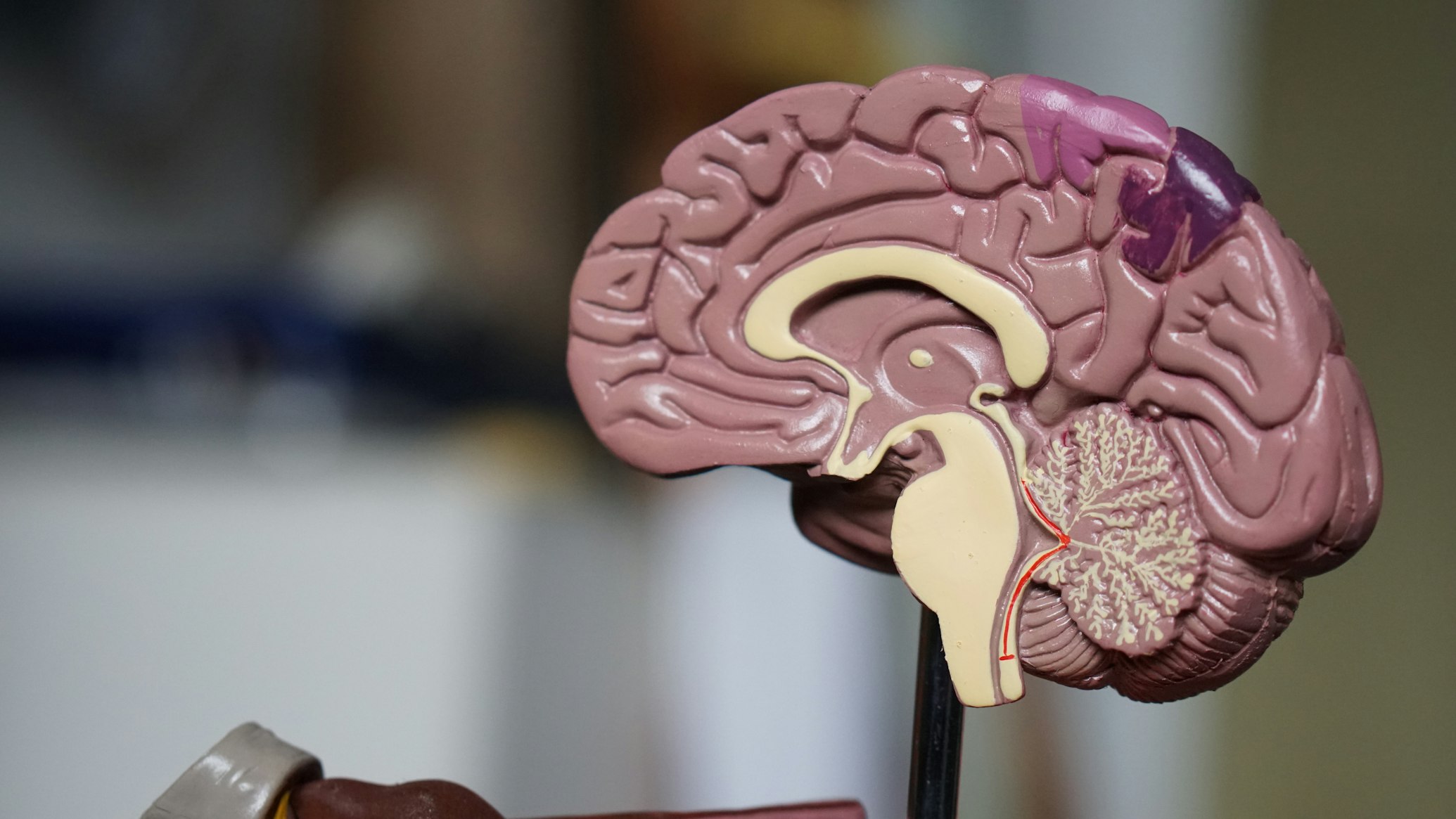
Imagine six blind men encountering an elephant for the first time. One touches the trunk and declares the elephant is like a thick snake. Another feels the leg and believes it's like a tree trunk. A third touches the ear and thinks it's a fan. Each man examines his isolated part with precision, yet none comprehends the magnificent whole elephant. For decades, biology faced a similar challenge—scientists became experts on individual genes, proteins, or cells but struggled to understand how they worked together to create life 1 .
This limitation sparked a revolution in biological thinking—the emergence of systems biology. Unlike traditional approaches that study biological components in isolation, systems biology investigates how all these pieces interact and function together as complex, dynamic systems 3 . It's the science of putting the elephant back together, of understanding how countless molecular interactions give rise to the miraculous phenomenon we call life.
At its core, systems biology recognizes that our bodies are essentially "networks of networks" 1 . From the intricate dance of molecules within a cell to the coordinated functions of organs working in concert, life operates through complex, multi-layered interactions.
By studying these systems holistically—often using powerful computational tools and massive datasets—scientists can now begin to predict how biological systems behave, how they respond to changes, and why they sometimes fail in disease 1 3 .
The timing of this paradigm shift is no accident. The completion of the Human Genome Project provided biology with its first comprehensive parts list. Yet, as Ron Germain of NIH's Laboratory of Systems Biology noted, despite this wealth of genomic data, predicting immune system behavior remained elusive 9 . Biology was rich in components but poor in understanding of their interactions. Systems biology emerged to bridge this critical gap, transforming how we approach health, disease, and the very fundamentals of life itself.
More Than Just Parts: The Core Concepts of Systems Biology
From Reductionism to Holism
For centuries, the dominant approach in biology was reductionism—the idea that complex systems could be understood by breaking them down into their constituent parts and studying each piece in isolation 7 . This approach produced remarkable discoveries, from the structure of DNA to the identification of individual genes and proteins. But it had limitations—just as knowing every ingredient in a cake doesn't tell you how to bake one, cataloging biological molecules doesn't reveal how they work together to create living organisms 3 .
Systems biology doesn't discard reductionism but builds upon it by embracing holism—the principle that "the whole is something over and above its parts and not just the sum of them all," as Aristotle observed centuries ago 7 . This perspective recognizes that biological systems exhibit emergent properties—characteristics that only appear when components interact as a whole, much as consciousness emerges from networks of neurons rather than residing in any single brain cell 3 7 .
| Aspect | Reductionist Approach | Systems Biology Approach |
|---|---|---|
| Focus | Individual components | Interactions between components |
| Method | Isolate and study parts | Study parts in context |
| Goal | Understand precise mechanisms | Understand system behavior |
| View of complexity | Something to eliminate | Essential feature to study |
| Typical methods | Controlled experiments | Computational modeling, high-throughput technologies |
Networks, Omics, and Integration
Biological systems are fundamentally composed of networks—intricate webs of interactions between genes, proteins, metabolites, and other molecules 1 . Unlike simple chains of cause and effect, these networks feature feedback loops, redundancy, and adaptability that give biological systems their resilience and complexity 1 3 .
Genomics
Study of complete DNA sequences
Transcriptomics
Analysis of RNA expression patterns
Proteomics
Comprehensive study of proteins
The rise of multi-omics technologies has been crucial for systems biology. The term "omics" refers to fields that characterize large collections of biological molecules—genomics (genes), transcriptomics (RNA molecules), proteomics (proteins), metabolomics (metabolites), and more 1 . Multi-omics integrates data across these various layers to construct comprehensive pictures of biological systems 1 .
This integration requires computational modeling to make sense of the enormous datasets 1 3 . Scientists create mathematical representations of biological systems that can simulate their behavior under various conditions. These models allow researchers to test hypotheses and make predictions about how a system might respond to a drug or how a mutation might disrupt normal cellular function 1 .
A Revolution in Action: The Discovery of the Immune System's Peacekeepers
The power of systems biology is best understood through a concrete example—one so significant it earned the 2025 Nobel Prize in Physiology or Medicine. The story begins with what seemed like a simple question: Why doesn't our immune system attack our own bodies?
The Timeline of Discovery
1995 - Shimon Sakaguchi
Identified a previously unknown class of immune cells (later called regulatory T cells) characterized by CD25 surface protein that prevents autoimmune attacks 2 8 .
The Experimental Journey
For decades, immunologists knew that the immune system could distinguish between foreign invaders and the body's own tissues, but the mechanisms remained mysterious. Early theories proposed "suppressor T cells" that might inhibit immune responses, but the idea fell out of favor due to lack of conclusive evidence 8 .
Shimon Sakaguchi revived this line of inquiry through meticulous experiments in mice. His approach was systematic: instead of looking at immune cells as a uniform population, he carefully characterized subpopulations based on surface proteins 8 .
Sakaguchi's team focused on CD4+ T cells (often called helper T cells) and noticed that a subset carrying an additional surface protein, CD25, seemed to have unique properties 8 .
- Separated CD4+ T cells into those with and without CD25
- Transferred these cell populations into mice that lacked their own immune systems
- Observed that mice receiving CD4+ cells without CD25 rapidly developed autoimmune diseases
- Confirmed that adding back the CD25+ cells prevented these autoimmune manifestations 8
Parallel to Sakaguchi's work, Mary Brunkow and Fred Ramsdell were studying an intriguing mouse strain known as "scurfy mice" 8 . These mice developed severe autoimmune symptoms: scaly skin, swollen lymph nodes, and premature death.
Using genetic mapping techniques, they:
In 2003, Sakaguchi built upon both discoveries, demonstrating that the Foxp3 gene specifically governed the development and function of the regulatory T cells he had identified eight years earlier 2 4 .
This integration of cellular immunology with genetics exemplified the systems biology approach—connecting different levels of biological organization to reveal a comprehensive picture of how immune tolerance works.
The discovery explained peripheral immune tolerance—the backup system that keeps self-reactive immune cells in check even after they leave their site of development in the thymus 2 . These regulatory T cells act as security guards, constantly monitoring other immune cells and preventing them from attacking the body's own tissues 2 8 .
The Scientist's Toolkit: Technologies Powering the Systems Biology Revolution
Systems biology relies on sophisticated technologies that allow researchers to collect comprehensive data about biological systems. Here are some key tools transforming the field:
| Tool/Reagent | Function | Applications in Systems Biology |
|---|---|---|
| mRNA Sequencing | Measures which genes are active in cells by sequencing RNA molecules 5 . | Identifying how genetic programs change in different cell types, during disease, or in response to treatments 5 . |
| Mass Spectrometry | Precisely identifies and quantifies proteins in biological samples 5 . | Characterizing the proteome—the complete set of proteins in a cell or tissue—revealing which proteins interact and how they're modified 5 9 . |
| Flow/Mass Cytometry | Analyzes physical and chemical characteristics of individual cells as they flow past lasers 5 . | Measuring multiple proteins simultaneously in single cells, defining cell subtypes, and tracking rare cell populations like regulatory T cells 5 . |
| Live-Cell Imaging | Visualizes and tracks molecules within living cells over time using fluorescent tags 5 . | Studying dynamic processes in real time, including protein movement, cell division, and signaling events 5 . |
| Computational Models | Mathematical simulations of biological processes using specialized software 9 . | Testing hypotheses about system behavior, predicting responses to perturbations, and integrating data across different biological layers 3 9 . |
Computational Integration
These technologies generate massive datasets that require advanced computational methods to interpret. As Martin Meier-Schellersheim, head of the Computational Biology Unit at NIAID, explains, sophisticated software tools like Simmune enable researchers to construct and simulate realistic multiscale biological processes that would be impossible to understand through intuition alone 9 .
The Future is Integrated: Where Systems Biology Is Taking Us
The implications of systems biology extend far beyond the laboratory, promising to transform how we approach human health and disease. The recognition of regulatory T cells in immune tolerance, for instance, has opened new therapeutic avenues. Scientists are now developing treatments that manipulate these cells to combat autoimmune diseases, improve organ transplantation, and enhance cancer immunotherapy 8 . More than 200 clinical trials are underway investigating therapies based on these principles 8 .
Looking forward, systems biology approaches are driving the development of personalized medicine. By integrating diverse data types—from genomic information to proteomic profiles and environmental exposures—researchers can build increasingly sophisticated models that predict an individual's health risks and treatment responses 1 .
The concept of the digital twin represents the ultimate expression of this approach—creating a virtual replica of a patient that can be used to test treatments computationally before administering them physically 1 .
The field continues to evolve with new methodological developments, including the integration of deep learning with traditional modeling, multi-scale models that connect molecular events to tissue-level phenomena, and advanced single-cell analyses that reveal the diversity within biological systems . As these technologies mature, systems biology promises to deliver what its pioneers envisioned: a comprehensive, predictive understanding of the complex networks that constitute life itself.
Collaborative Science
Perhaps the greatest legacy of systems biology is how it has transformed scientific culture itself. The field demands collaboration across traditionally separate disciplines—molecular biologists working alongside mathematicians, engineers partnering with clinicians, and physicists tackling biological problems 1 9 . This collaborative spirit reflects the very nature of the systems they study—reminding us that in science, as in biology, the whole can indeed be greater than the sum of its parts.