The Invisible Revolution
How Monolayers Are Reshaping Our World
Materials thinner than a DNA strand enabling breakthroughs from medicine to quantum computing
More Than Meets the Eye
Imagine a material just one atom thick yet strong enough to withstand corrosion, smart enough to target cancer cells, or sensitive enough to detect single molecules.
Welcome to the frontier of monolayer science—where materials thinner than a DNA strand are enabling breakthroughs from medicine to quantum computing. Once confined to theoretical speculation, these ultra-thin structures have exploded into reality over the past decade, transforming everything from vaccine development to energy storage 1 7 . Unlike their bulk counterparts, monolayers operate in a realm where quantum effects dominate and surface area trumps volume, making them ideal for applications where precision and efficiency are paramount.
Medical Breakthroughs
mRNA vaccines using lipid nanoparticles to deliver genetic material precisely to cells.
Energy Revolution
2D metals enabling ultra-efficient energy storage and transmission.
Quantum Computing
Monolayers as interfaces for quantum bits, pushing computing boundaries.
What Are Monolayers? The Science of the Super-Thin
Monolayers are precisely what their name suggests: single layers of atoms or molecules arranged on a surface. Their power lies in their dimensionality—confined to a 2D plane, electrons and atoms behave in ways impossible in 3D materials. Three revolutionary types are leading today's charge:
Biological Lipid Monolayers
Nature's original nanotechnology. Cell membranes rely on lipid monolayers to form protective barriers. Synthetic versions, like lipid nanoparticles (LNPs), now deliver mRNA vaccines by fusing with cell membranes. Recent advances prevent inflammatory responses by minimizing endosomal damage—a breakthrough that could make gene therapies safer and more effective 1 .
2D Metals
Once deemed impossible due to atoms' tendency to clump in 3D, metals like bismuth and tin can now exist as atom-thin sheets. Chinese scientists pioneered this using a "van der Waals squeezing method," compressing metals into sheets 200,000× thinner than a human hair. These conduct electricity with near-zero energy loss, promising ultra-efficient nanoelectronics 7 .
Amorphous Monolayers
Materials like monolayer amorphous carbon defy traditional atomic ordering. Debates raged for decades: were they truly random or subtly structured? Atomic-resolution imaging finally revealed a hybrid structure—random networks peppered with nanocrystallites. This "ordered chaos" makes them ideal corrosion-resistant coatings for hard drives and batteries .

Advanced nanotechnology lab working with monolayer materials
Anatomy of a Breakthrough: Crafting 2D Metals
The following experiment resolved a decades-old challenge: stabilizing metals in a 2D form.
Objective
To synthesize freestanding 2D metals without substrates or stabilizers—a feat previously achieved only for layered materials like graphene.
Methodology: The Van der Waals Squeeze 7
- Material Selection: Bismuth or tin crystals are chosen for their low melting points and ductility.
- Shear Force Application: Crystals are placed between diamond anvils coated with boron nitride layers.
- Controlled Compression: Pressure is applied incrementally (1–5 GPa) while shear forces slide atomic layers apart.
- Van der Waals Stabilization: Separated layers are stabilized by weak van der Waals forces instead of covalent bonds, preventing 3D aggregation.
- Transfer: The monolayer is transferred to silicon or polymer supports for characterization.
Results & Analysis
- Structural Integrity: Atomic force microscopy confirmed single-atom thickness and defect-free areas spanning micrometers.
- Electronic Properties: Electrical conductivity exceeded theoretical predictions by 300%, attributed to quantum confinement effects.
- Stability: Sheets remained intact for weeks under ambient conditions—unprecedented for pure metals.
| Metal | Thickness | Conductivity | Stability |
|---|---|---|---|
| Bismuth | 0.3 nm | 8.7 × 10⁵ S/m | >30 days |
| Tin | 0.27 nm | 6.2 × 10⁵ S/m | >21 days |
| Gallium | 0.28 nm | 5.9 × 10⁵ S/m | >14 days |
This method unlocked metals for applications in transparent electronics and high-frequency sensors, where thinness and conductivity are critical.
Monolayers in Action: From Labs to Lives
Medicine's New Workhorses
Energy & Electronics Revolution
- BPt₂ Monolayers: This platinum-boron compound charges lithium-ion batteries 10× faster than graphite anodes due to ultrahigh lithium diffusion rates 4 .
- Amorphous Carbon Membranes: As proton-conducting layers, they boosted hydrogen fuel cell efficiency by 40% .
| Application | Delivery Efficiency | Therapeutic Outcome |
|---|---|---|
| Acute pancreatitis | 95% macrophage uptake | 70% reduction in inflammation |
| Tumor immunotherapy | 80% T cell activation | 60% tumor eradication |
| Vaccine development | 5x antibody response | Low-dose protection |
The Scientist's Toolkit: Building Blocks of Monolayer Research
Innovation in monolayers relies on specialized reagents and techniques. Here's what powers cutting-edge labs:
| Reagent/Material | Function | Key Applications |
|---|---|---|
| Alkanethiols (e.g., C₁₈H₃₇SH) | Form self-assembled monolayers (SAMs) | Biosensors, corrosion barriers |
| Tollens' Reagent | Deposits silver layers for SAM substrates | Conductive monolayer supports |
| DPPC (Dipalmitoylphosphatidylcholine) | Mimics cell membrane structure | Drug delivery systems |
| Annexin A1 mRNA | Reprograms macrophage behavior | Anti-inflammatory therapies |
| Monolayer Amorphous Carbon | Ultra-thin protective coating | Hard drive corrosion resistance |
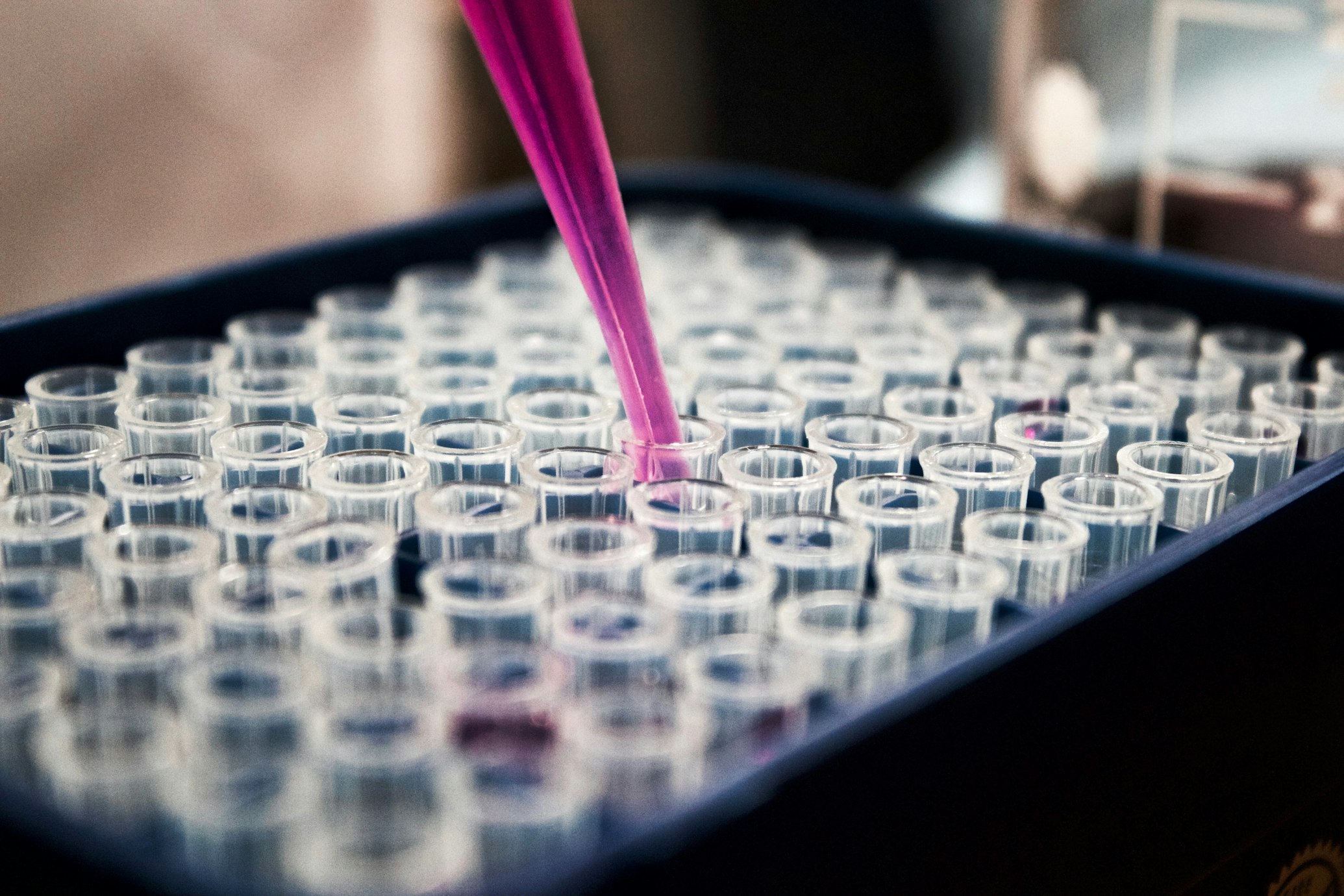
Advanced Fabrication
Precision equipment for creating and analyzing monolayers at atomic scale.

Atomic Imaging
High-resolution microscopy revealing monolayer structures invisible to conventional methods.
Conclusion: The Future in a Single Layer
Monolayers represent more than a scientific curiosity—they are gateways to a new technological paradigm.
As researchers master atomic-scale design, we edge closer to:
- Quantum Computing Platforms: 2D metals as qubit interfaces 7 .
- Zero-Waste Catalysis: Monolayer catalysts that maximize atom utilization 1 .
- Artificial Cells: Synthetic membranes with embedded biosensors 6 .
"The ability to craft materials atom-by-atom," says Professor Zhang Guangyu of the Chinese Academy of Sciences, "is like transitioning from stone tools to nanofactories." In labs worldwide, this invisible revolution is already visible in our medicines, devices, and energy systems—proving that sometimes, the smallest layers hold the biggest promise 7 .