The Digital Alchemist
How a Web-Based Textbook Revolutionized Molecular Simulation
Once confined to supercomputing labs, molecular simulation has become accessible to scientists worldwide through an innovative web-based textbook initiative.
Introduction: Simulating Reality, One Atom at a Time
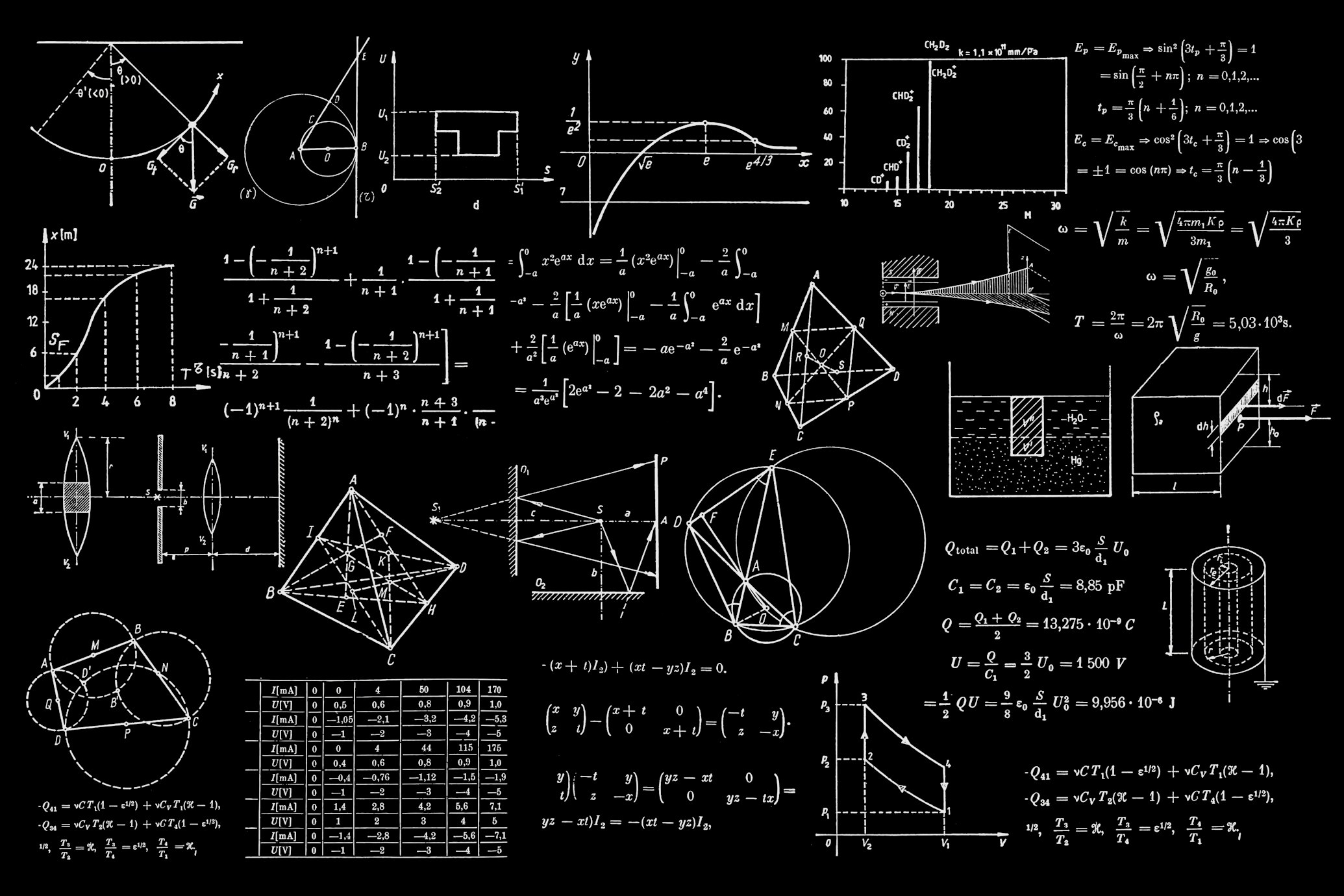
Imagine holding the building blocks of reality in your hands—not metaphorically, but through precise digital reconstructions that predict how molecules dance, bond, and transform. This is the power of molecular simulation, a field that has quietly revolutionized drug discovery, materials science, and quantum computing.
At the heart of this revolution lies an unexpected hero: a web-based textbook born from a 1998 National Science Foundation initiative at Princeton University. This digital resource transformed molecular simulation from an elite specialization into a democratized science, enabling breakthroughs from carbon-neutral concrete to COVID-19 mutation analysis 1 4 6 .
Molecular simulation allows us to explore what laboratory experiments cannot—peering into femtosecond-scale chemical reactions or predicting material behavior under extreme conditions. By combining physics-based models with computational algorithms, scientists create "digital twins" of molecular systems, accelerating discovery while reducing laboratory costs. The transition from printed manuals to interactive web resources marked a paradigm shift, making cutting-edge methodologies accessible to researchers in remote institutions and developing nations alike 4 8 .
Key Concepts and Theories: The Foundations of Digital Matter
Molecular Dynamics (MD)
Uses Newton's laws of motion to simulate atomic movements over time, capturing dynamic processes like protein folding or drug binding.
Monte Carlo (MC)
Relies on probabilistic sampling to explore molecular configurations, ideal for calculating thermodynamic properties like free energy.
Coarse-Grained (CG)
Simplifies complex systems by grouping atoms into "pseudo-beads," enabling simulations of large-scale systems like cell membranes.
Force Fields: The Rulebooks of Virtual Atoms
Simulations rely on mathematical potentials that dictate how atoms interact:
- Bonded Potentials: Control bond lengths, angles, and dihedrals via harmonic springs (e.g., Equation: E = kₗ(r - r₀)²) 5 8 .
- Non-Bonded Potentials: Govern van der Waals and electrostatic forces using functions like the Lennard-Jones potential (Equation: uᴸᴶ(r) = 4ε[(σ/r)¹² - (σ/r)⁶]), where ε defines interaction strength and σ sets atomic size 5 .
- Specialized Models: Water molecules often use rigid-body constraints (e.g., TIP3P model) to reduce computational cost, allowing larger simulation time steps 8 .
The AI Revolution in Simulation
Allegro-FM: An AI model from USC that simulates billions of atoms simultaneously, enabling the design of carbon-capturing concrete. It achieves quantum-mechanical accuracy at 1/1000th the computational cost of traditional methods 6 .
Hybrid Quantum-Classical Methods: Techniques like DMET-SQD leverage today's quantum computers (e.g., IBM's 32-qubit systems) to simulate molecular fragments, achieving chemical accuracy within 1 kcal/mol for drug candidates 9 .
| Method | Time Scale | Spatial Scale | Key Applications |
|---|---|---|---|
| Molecular Dynamics | Picoseconds to milliseconds | 10²–10⁶ atoms | Protein dynamics, drug binding |
| Monte Carlo | N/A (no time dimension) | 10³–10⁶ atoms | Thermodynamic properties, phase equilibria |
| Coarse-Grained | Nanoseconds to seconds | >10⁶ atoms | Membrane formation, polymer assembly |
In-Depth Look: The SLAC Cyclobutanone Experiment
The Blind Prediction Challenge
In 2025, SLAC National Accelerator Laboratory orchestrated a groundbreaking experiment to resolve a persistent debate: Which quantum simulation methods accurately predict light-driven molecular transformations? The subject was cyclobutanone, a small organic molecule that rearranges its structure when exposed to ultraviolet light—a process relevant to photodynamic therapies and solar energy storage 7 .

Methodology: Theory Meets Ultrafast Science
- Blind Predictions: Fifteen theoretical teams simulated cyclobutanone's photo-rearrangement without prior experimental data, using methods ranging from time-dependent density functional theory (TD-DFT) to multireference configuration interaction (MRCI).
- Ultrafast Electron Diffraction (MeV-UED): At SLAC's Linac Coherent Light Source, researchers hit cyclobutanone gas with UV light, then probed its transformation using electron pulses lasting millionths of a billionth of a second. Scattered electrons generated diffraction patterns revealing atomic positions with picometer precision 7 .
- Key Measured Parameters:
- Bond Cleavage Timescales: How quickly carbon-carbon bonds break after photoexcitation.
- Electron-Nuclear Correlations: Whether electron motions precede or follow nuclear rearrangement.
| Simulation Method | Predicted Cleavage Time (fs) | Observed Time (fs) | Electron Motion Accuracy |
|---|---|---|---|
| TD-DFT | 180 ± 25 | 195 ± 15 | Low (missed key correlations) |
| MRCI | 205 ± 30 | 195 ± 15 | High |
| CASSCF | 170 ± 20 | 195 ± 15 | Medium |
Results and Analysis:
The MeV-UED data revealed that only 4 of 15 methods correctly predicted the 195-femtosecond bond cleavage time. Crucially, most simulations underestimated electron-nuclear coupling—a quantum effect where electron redistribution guides atomic motions. The best-performing method (MRCI) explicitly modeled entangled electron pairs, highlighting the need for advanced correlation models in photochemistry 7 .
"This blind challenge proves that experimental benchmarks are essential for evolving simulation accuracy. You can't improve models without rigorous validation."
The Scientist's Toolkit: Essential Resources for Molecular Simulation
| Tool | Function | Example Applications |
|---|---|---|
| Density Functional Theory (DFT) | Computes electronic structures using quantum mechanics | Predicting reaction pathways, material band gaps |
| Open Molecules 2025 Dataset | 100M+ quantum chemistry calculations for training AI models | Drug design, battery material discovery 2 |
| Architector Software | Predicts 3D structures of metal complexes | Rare-earth catalyst design, carbon capture materials 2 |
| CHARMM/AMBER Force Fields | Predefined parameter sets for biomolecules | Protein folding, ligand-binding studies 8 |
| Qiskit/Tangelo Libraries | Quantum algorithm interfaces for DMET-SQD methods | Hybrid quantum-classical drug discovery 9 |
Best Practices for Reliable Simulations
- Force Field Validation: Always test parameters against experimental data (e.g., density, diffusion coefficients) before full-scale runs 8 .
- Sampling Adequacy: For free energy calculations, ensure simulations exceed the slowest process timescale (e.g., >1 μs for protein conformational changes) 8 .
- Error Mitigation: In quantum simulations, use gate twirling and dynamical decoupling to suppress hardware noise 9 .
Conclusion: Simulating a Collaborative Future
The web-based molecular simulation textbook pioneered at Princeton in 1998 ignited a democratization of computational science. Today, platforms like the Open Molecules 2025 database and AI-driven simulators like Allegro-FM build on this legacy, enabling researchers worldwide to tackle grand challenges—from designing self-healing materials to neutralizing viral threats. As quantum computers and AI reshape the field's horizon, the textbook's core vision remains: Simulation is not a replacement for experiment, but a lens to focus collective insight on the atomic-scale mysteries of our world 4 6 9 .
The next frontier? Interactive simulation textbooks where students manipulate live MD trajectories or tweak force fields to see real-time effects—an evolution that promises to train a new generation of digital alchemists.
