Ray Wu: The DNA Sequencer Who Fed the World
The untold story of the scientific pioneer who revolutionized genetics and fought global hunger
The Unsung Hero of Modern Genetics
In the vast tapestry of scientific history, certain names shine brightly while others remain woven subtly in the background, essential yet overlooked. Such is the story of Ray Wu (1928-2008), a pioneering geneticist whose foundational contributions to DNA sequencing paved the way for modern genetics, yet whose name remains largely unknown outside scientific circles. This Cornell University professor not only developed the first method for sequencing DNA but also dedicated his later career to solving global hunger through genetic engineering of rice. His dual legacy—both as a brilliant researcher and a devoted mentor—continues to shape biology today 1 3 .
"You have to look at the important things in your life... I feel strongly about the Chinese saying of '民以食為天' (Food is the fundamental need for human society), and for this, rice is the most important staple food worldwide."
Wu's story is one of quiet perseverance, scientific excellence, and profound generosity. While others received Nobel Prizes for building upon his work, Wu continued pushing scientific boundaries without seeking accolades. His journey from Beijing to Cornell, from medical biochemistry to plant genetic engineering, reveals a man constantly driven by curiosity and compassion. As we explore his remarkable contributions, we discover how one scientist's work can simultaneously advance fundamental science and address pressing human needs 1 2 .
The DNA Sequencing Pioneer
Breaking Biology's Code
Long before the Human Genome Project made DNA sequencing a household term, Ray Wu was wrestling with how to decode genetic information. In 1970, while many scientists were still discovering the basics of gene structure, Wu published a groundbreaking paper in the Journal of Molecular Biology that would change biology forever 2 3 .
His innovation was the primer-extension approach—a method that used DNA polymerase to add radioactive nucleotides to the end of a single-stranded DNA fragment. By carefully analyzing the resulting labeled oligonucleotides, Wu could determine the exact sequence of nucleotides for the first time in history. Though he started with just a short stretch of 12 nucleotides from bacteriophage lambda DNA, this breakthrough established the fundamental principle that would eventually allow scientists to read entire genomes 2 .
1968
Nucleotide Composition Analysis
Wu determined composition but not order of nucleotides, setting the stage for his sequencing breakthrough.
1970
Primer-Extension Method
Wu's landmark achievement: first determination of both composition and order of DNA sequences.
1975
Sanger's Plus-Minus Sequencing
Frederick Sanger improved upon Wu's method with his plus-minus approach to DNA sequencing.
1977
Gilbert's Chemical Method
Walter Gilbert developed an alternative chemical sequencing method, sharing the Nobel with Sanger.
Wu's method was so foundational that it was described in Methods in Enzymology Vol. 68—a volume that became known as the "Bible of Recombinant DNA" among molecular biologists in the late 1970s and early 1980s. Despite his pivotal contribution, history would often overlook Wu's breakthrough in favor of later refinements by Frederick Sanger and Walter Gilbert, who would share a Nobel Prize for their sequencing methods in 1980 1 2 .
The Fifth Business of DNA Sequencing
Scientific progress often follows a curious pattern: breakthrough discoveries are made by teams or individuals who don't always receive appropriate credit. As described by historian Lisa Onaga, Wu played the role of "Fifth Business" in the drama of DNA sequencing—a term coined by novelist Robertson Davies to describe those who are "neither Hero nor Heroine, Confidante nor Villain, but which were nonetheless essential to bring about the Recognition or dénouement" 2 .
Primer-Extension Principle
Wu's innovative approach using DNA polymerase to extend primers remains fundamental to sequencing technologies even today.
Foundation of Genomics
The DNA sequencing methods Wu pioneered laid the groundwork for the entire field of genomics and modern genetic analysis.
Wu himself was aware of this oversight. In 2007, when the journal Science published a colorful poster entitled "The Evolution of DNA Sequencing Technologies" that failed to mention his contributions, Wu protested the dismissal of his seminal work. His early papers from 1968-1974 (at least 19 before Sanger's first sequencing publication) established the principles that would underlie all sequencing technologies to come 2 .
What makes Wu's contribution particularly remarkable is that the primer-extension principle he developed remains fundamental to sequencing technologies even today. While the specific methods have evolved through first-, second-, and third-generation sequencing platforms, the core concept of using DNA polymerase to extend primers continues to underpin modern genetic analysis 2 .
Inside Wu's Groundbreaking Experiment
Decoding Lambda Phage's Cohesive Ends
Wu's seminal 1970 experiment focused on determining the sequence of the cohesive ends of bacteriophage lambda DNA—a virus that infects E. coli bacteria. These cohesive ends were known to be single-stranded stretches that allowed the viral DNA to circularize inside host cells, but their exact sequences remained unknown 2 3 .
Step-by-Step Methodology
Wu's experimental approach was elegant in its design:
Sample Preparation
Wu started with purified bacteriophage lambda DNA, which naturally contains short, single-stranded protruding ends at both terminals.
Primer Extension
He used E. coli DNA polymerase to "repair" the single-stranded region by adding radioactive nucleotides to the 3'-end.
Labeling
The newly synthesized DNA strands became radioactively labeled, allowing for subsequent detection and analysis.
Separation & Analysis
The radioactive oligonucleotides were isolated and their sequences determined through careful analysis.
Revolutionary Results and Analysis
Wu successfully determined the first eight of twelve nucleotides in the right-hand protruding strand of lambda DNA: CGCCGCCC. This achievement marked the first time in history that both the composition and order of DNA nucleotides had been determined experimentally 2 .
| DNA Source | Sequence Determined | Length (nucleotides) | Method Used |
|---|---|---|---|
| Bacteriophage lambda | CGCCGCCC | 8 | Primer extension with DNA polymerase |
| Bacteriophage lambda | Additional sequences later determined | 12+ | Improved primer extension methods |
The scientific importance of this breakthrough cannot be overstated. Prior to Wu's work, scientists could determine nucleotide composition but not their specific order. His method provided the key to unlocking genetic information encoded in DNA sequences—information that would eventually allow scientists to understand how genes function, how they're regulated, and how mutations contribute to disease 2 3 .
This initial breakthrough might seem modest by today's standards—eight nucleotides compared to the three billion in the human genome—but it represented a quantum leap in molecular biology. Wu had developed a general method that could be extended to sequence longer stretches of DNA, paving the way for everything from genetic engineering to personalized medicine 2 3 .
The Scientist's Toolkit: Research Reagent Solutions
Wu's pioneering work was made possible by carefully selected laboratory reagents and materials. The following table details key research solutions used in his foundational experiments:
| Reagent/Material | Function in Experiment | Specific Application in Wu's Work |
|---|---|---|
| E. coli DNA polymerase | Enzyme that synthesizes DNA molecules | Used to add nucleotides to the 3' end of single-stranded DNA |
| Radioactive nucleotides | Labeling newly synthesized DNA | Enabled detection of sequenced fragments |
| Bacteriophage lambda DNA | Source of genetic material for sequencing | Provided the cohesive ends whose sequences were determined |
| Nucleases (DNases) | Enzymes that digest DNA into smaller fragments | Broke down labeled DNA for sequence analysis |
| Chromatography materials | Separation of oligonucleotides by size | Isolated radioactive fragments for sequence determination |
This toolkit may appear simple compared to today's automated sequencing platforms, but these reagents formed the foundation of molecular biology for decades. Wu's careful selection and application of these materials demonstrated how innovative experimental design could overcome technical limitations 2 3 .
From DNA to Rice: Wu's Pivot to Feeding Humanity
A Conviction to Serve Human Needs
In the mid-1980s, after having established himself as a pioneer in DNA biochemistry and molecular biology, Wu made a surprising decision. He shifted his research focus from medical and mammalian genetics to plant genetic engineering—specifically, to improving rice varieties. When colleagues asked why he would make such a dramatic change, Wu replied with characteristic humility: "You have to look at the important things in your life. After some thinking, I feel strongly about the Chinese saying of '民以食為天' (Food is the fundamental need for human society), and for this, rice is the most important staple food worldwide, so I decided to change my work into rice. You can say it is a conviction" 1 .
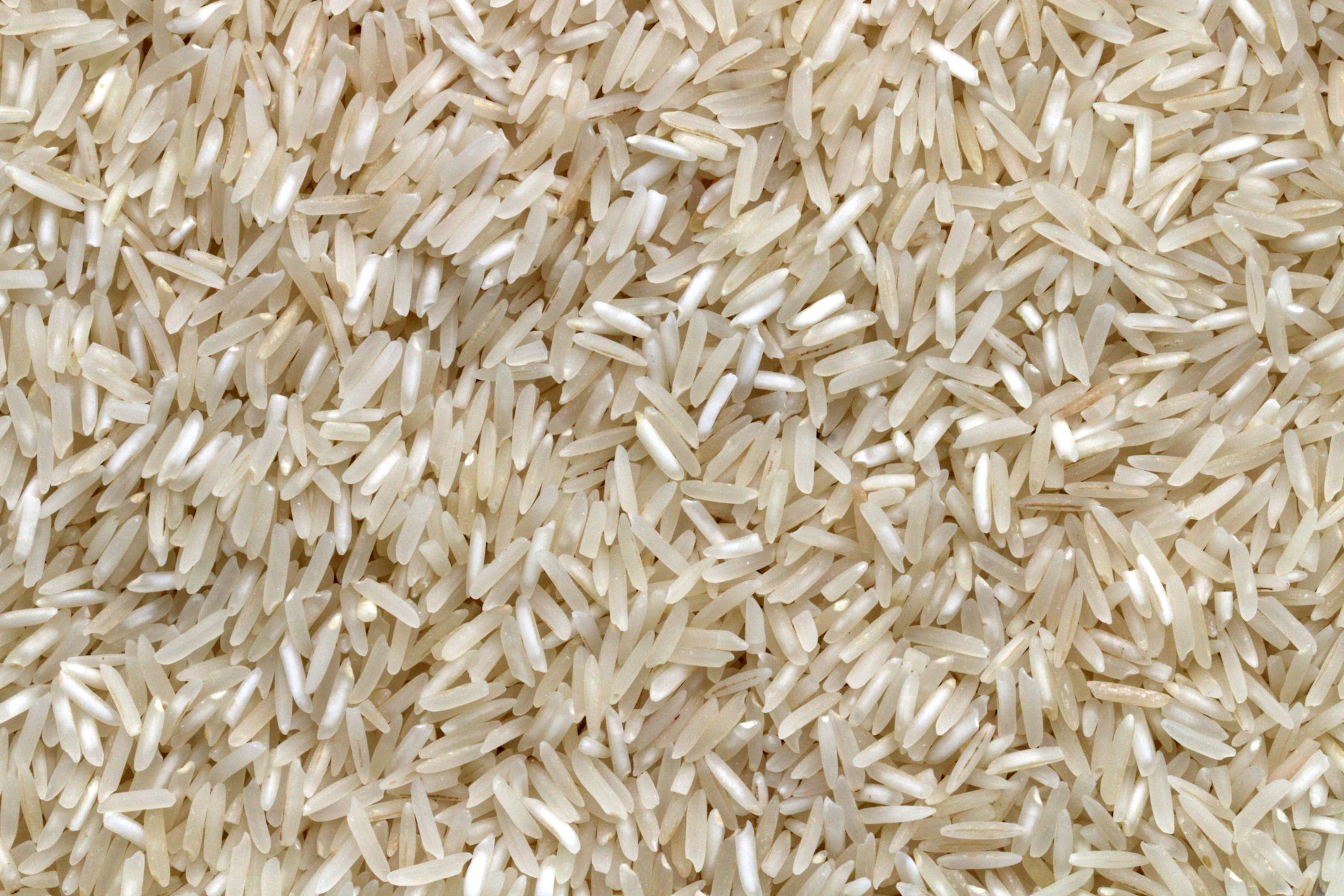
Rice Genetic Engineering
Wu developed efficient transformation systems for rice that allowed for genetic engineering of desirable traits like pest resistance, drought tolerance, and salt tolerance.
This transition wasn't merely philosophical; Wu made significant contributions to plant biotechnology. He developed efficient transformation systems for rice that allowed for the genetic engineering of desirable traits. His work led to rice plants resistant to pests, drought, and salt—characteristics increasingly valuable in a world facing climate change and population growth 1 3 .
Founding ABRC and Advancing Agricultural Biotechnology
Wu's commitment to addressing global food security extended beyond his laboratory at Cornell. At the request of Yuan Lee, then president of Academia Sinica, Wu helped establish the Agricultural Biotechnology Research Center (ABRC) in Taiwan. This institution would become a leading center for plant science research in Asia 1 .
Under Wu's guidance, ABRC developed strong research programs focused on plant stress biology—helping crops withstand environmental challenges. His vision for ABRC was characteristically practical: to ensure that research results "from Lab bench can effectively benefit the whole world, sooner than later" 1 .
Wu's agricultural work demonstrated the same innovative spirit he brought to DNA sequencing. He recognized that the recombinant DNA techniques he helped pioneer could address not just scientific questions but human needs. This application-focused approach was somewhat unusual for academic scientists of his stature, but it reflected Wu's deep commitment to using science as a force for good 1 3 .
The Mentor: Cultivating Scientific Talent
The CUSBEA Program
Beyond his laboratory research, Wu's most lasting legacy may be his role as a mentor and advocate for young scientists. In 1982, he initiated the China-United States Biochemistry Examination and Application (CUSBEA) Program, which brought 425 outstanding Chinese students to the United States for graduate education over its eight-year history 1 4 .
This program emerged during a unique historical period when China was beginning to reopen to the West but had limited opportunities for international study. Wu recognized the potential of China's brightest students and created a pathway for them to receive world-class scientific training. The impact was profound: many CUSBEA participants became leaders in various fields of life science, dramatically strengthening scientific capacity both in China and abroad 4 .
Wu's commitment to this program went far beyond its administration. He maintained personal relationships with many participants, following their careers and providing guidance long after they completed their degrees. This personal touch characterized Wu's approach to mentorship—he invested not just in scientific projects but in people 4 .
Nurturing Nobel Talent
Wu's mentorship extended beyond the CUSBEA program to his own laboratory at Cornell. Among his graduate students was Jack Szostak, who would later receive the Nobel Prize in Physiology or Medicine in 2009 for his work on telomeres. Szostak's achievement reflects Wu's ability to identify and nurture exceptional scientific talent 2 3 .
Mentorship Philosophy
Colleagues and students remembered Wu as a generous mentor who offered "thoughtful advice and even-tempered judgment." His "can do" attitude toward solving both scientific and human relationship problems, always with respect for others and without anger or prejudice, set the highest standard for all his colleagues 1 .
Legacy and Continuing Impact
Ray Wu passed away on February 10, 2008, but his influence continues through the institutions he built, the scientists he trained, and the scientific trajectories he established 1 3 .
The Ray Wu Memorial Fund established by his students and friends continues his legacy of supporting young scientists. The annual Ray Wu Prize recognizes excellence in life science research by graduate students in mainland China, Hong Kong, Taiwan, and Singapore—inspiring Asia's most promising young Ph.D. students to become future leaders in life sciences 3 4 .
Similarly, the Chinese Biological Investigators Society (formerly the Ray Wu Society) continues to promote professional interactions and collaborations among Chinese scholars worldwide. These organizations ensure that Wu's commitment to scientific excellence and mentorship continues to bear fruit .
| Award/Honor | Establishment Year | Purpose |
|---|---|---|
| Ray Wu Prize for Excellence | 2008 | Recognizes outstanding graduate students in life sciences |
| Ray Wu Award | Unknown | Honors CBIS members who made fundamental discoveries |
| Ray Wu Graduate Fellowship | 1999 | Supports biology graduate students at Cornell University |
Wu's scientific contributions also continue to reverberate through modern biology. The DNA sequencing methods he pioneered laid the foundation for the entire field of genomics, while his work on rice genetic engineering anticipated today's efforts to develop climate-resilient crops. His career exemplifies how fundamental research and practical application can inform and enhance each other 1 2 3 .
The Enduring Spirit of Scientific Generosity
Ray Wu's story offers more than just a historical account of scientific progress; it provides a model of how to conduct science with both rigor and generosity. His willingness to pivot from established research areas to emerging challenges, his dedication to mentoring the next generation, and his quiet perseverance despite inadequate recognition—all these qualities represent science at its best.
As we continue to face global challenges from climate change to food security to pandemics, we need more scientists like Ray Wu: researchers who combine technical brilliance with moral conviction, who see beyond publication records to human needs, and who invest as much in their students as in their experiments.
The DNA sequencer who fed the world leaves behind a challenge for all scientists:
How will your work not only advance knowledge but serve humanity? How will you help the next generation of scholars? And how will you persist when recognition is slow to come? Ray Wu's life offers compelling answers to these questions—answers that continue to inspire scientists around the world.