OsmY Fusion Tag Strategy: A Comprehensive Guide to Boost Recombinant Protein Secretion in E. coli for Therapeutics
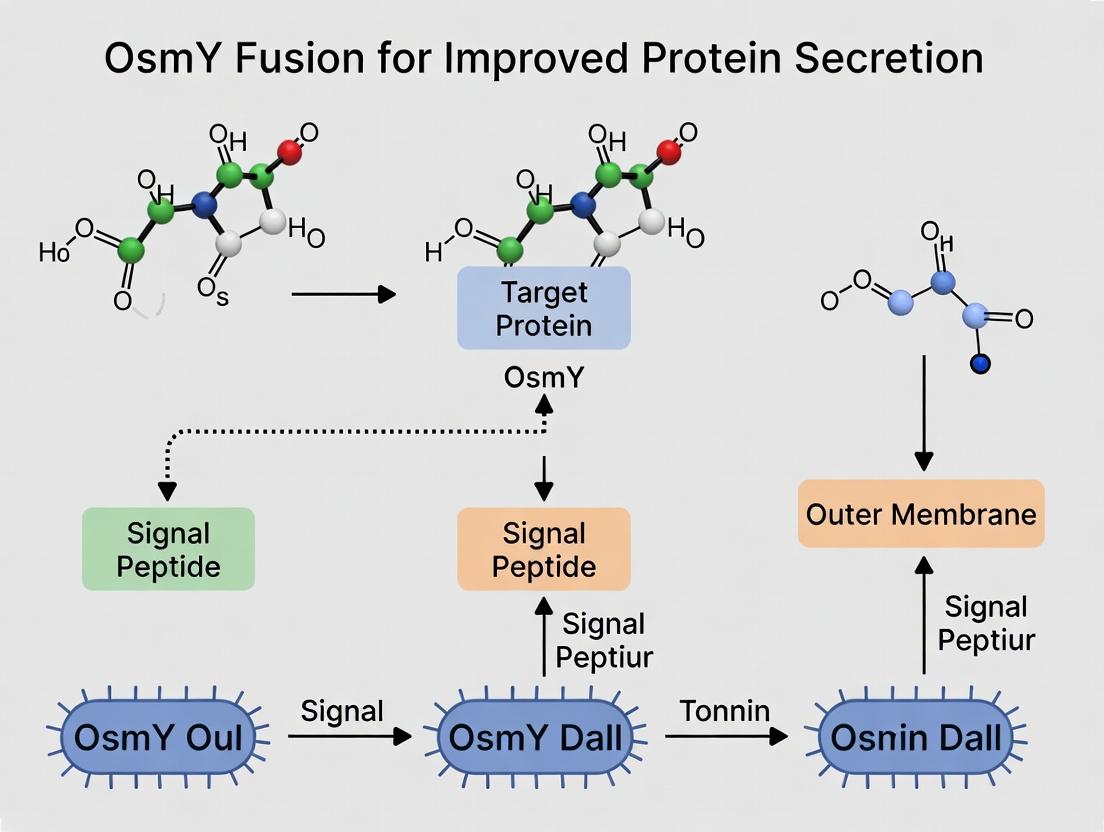
This article provides a detailed, contemporary guide for researchers and biotechnologists on utilizing the OsmY fusion tag to enhance the secretion of recombinant therapeutic proteins in Escherichia coli.
OsmY Fusion Tag Strategy: A Comprehensive Guide to Boost Recombinant Protein Secretion in E. coli for Therapeutics
Abstract
This article provides a detailed, contemporary guide for researchers and biotechnologists on utilizing the OsmY fusion tag to enhance the secretion of recombinant therapeutic proteins in Escherichia coli. It explores the foundational biology of OsmY as a cryptic periplasmic protein and its role as a carrier for efficient extracellular export. The content systematically covers vector design, fusion construct strategies, and step-by-step protocols for implementation. It addresses common bottlenecks, troubleshooting methods, and optimization of culture conditions for yield. Finally, the guide presents validation techniques and comparative analyses against other secretion systems (e.g., pelB, OmpA, TorA), highlighting OsmY's unique advantages for producing soluble, active, and correctly folded proteins critical for drug development and biomedical applications.
Understanding OsmY: The Biology and Mechanism Behind Enhanced E. coli Secretion
The high-level production of recombinant proteins in E. coli remains a cornerstone of biotechnology and therapeutic development. However, achieving functional, soluble, and secreted protein is often hindered by a critical secretion bottleneck. This bottleneck is characterized by the accumulation of recombinant protein as insoluble aggregates (inclusion bodies) within the cytoplasm, leading to low yields, inactive product, and costly refolding procedures. The primary causes include inefficient translocation across the inner membrane, saturation of secretory chaperones and translocons (Sec or Tat), improper folding in the periplasm, and induction of stress responses that halt cellular growth.
This Application Note is framed within a broader thesis investigating the OsmY fusion strategy as a solution. OsmY, a naturally secreted osmotically inducible lipoprotein, can act as a secretion carrier. Fusing target proteins to OsmY leverages its native secretion pathway, potentially bypassing key bottlenecks and directing recombinant protein to the culture supernatant, simplifying downstream purification.
Quantitative Analysis of Secretion Bottleneck Factors
Table 1: Key Factors Contributing to Secretion Failure and Their Impact
| Factor | Description | Typical Impact on Secretion Yield | Relevant Pathway |
|---|---|---|---|
| Translocon Saturation | Overexpression overwhelms SecYEG/Tat capacity. | Can reduce functional secretion by >80% | Sec/Tat Translocon |
| SRP Overload | Signal Recognition Particle cannot cope with high recombinant mRNA. | Leads to cytoplasmic aggregation; yield drop of 50-95% | SRP Targeting |
| Periplasmic Folding | Lack of correct disulfide bonds or chaperones (DsbA, Skp). | Up to 70% of secreted protein may be misfolded | Oxidative Folding |
| Cytoplasmic Stress | Induction triggers heat-shock (σ32) and envelope stress (σE) responses. | Growth inhibition reduces total protein yield by 30-60% | Stress Response |
| Proteolytic Degradation | Exposed proteins cleaved by periplasmic (DegP) and outer membrane proteases. | Can degrade up to 40-50% of secreted product | Quality Control |
Table 2: Comparative Performance of Common Secretion Strategies
| Secretion Strategy | Typical Yield (Soluble Protein) | Key Advantage | Major Limitation |
|---|---|---|---|
| Cytoplasmic Expression | High (1-5 g/L) | High total expression | Inclusion bodies; difficult purification |
| Sec-Dependent Signal Peptides | Low-Moderate (10-200 mg/L) | Direct to periplasm | Translocation bottleneck; misfolding |
| Tat-Dependent Signal Peptides | Low (5-50 mg/L) | Folds before translocation | Very slow; stringent folding requirements |
| OsmY Fusion | Moderate (100-500 mg/L)* | Direct to supernatant; simplifies purification | Fusion cleavage needed; yield is protein-dependent |
*Reported yields for model proteins; can vary significantly.
Experimental Protocols
Protocol 1: Assessing the Secretion Bottleneck via Cellular Fractionation
Objective: To quantify the distribution of a recombinant protein between cytoplasm, periplasm, and supernatant, identifying the primary location of secretion arrest.
- Strain & Plasmid: Transform E. coli BL21(DE3) with plasmid expressing your target protein fused to a signal sequence (e.g., PelB) or OsmY.
- Culture & Induction: Grow in 50 mL LB at 37°C to OD600 ~0.6. Induce with 0.5 mM IPTG. Shift to 25°C and incubate for 4-16 hours.
- Fractionation:
- Culture Supernatant: Centrifuge culture at 8,000 x g for 10 min. Filter (0.45 µm) the supernatant. Precipitate proteins using 10% TCA on ice for 30 min, centrifuge, wash with acetone, and resuspend in SDS-PAGE buffer.
- Periplasmic Fraction: Resuspend cell pellet in 1 mL of spheroplast buffer (30 mM Tris-HCl pH 8.0, 20% sucrose, 1 mM EDTA, 1 mg/mL lysozyme). Incubate on ice for 30 min. Centrifuge at 10,000 x g for 10 min. The supernatant is the periplasmic fraction.
- Cytoplasmic Fraction: Resuspend the spheroplast pellet in 1 mL of BugBuster reagent. Incubate for 20 min at RT. Centrifuge at 16,000 x g for 20 min. The supernatant is the cytoplasmic fraction.
- Analysis: Analyze all fractions by SDS-PAGE and Western blot using an antibody against your target protein. Quantify band intensities to determine secretion efficiency.
Protocol 2: Evaluating OsmY Fusion Secretion Efficiency
Objective: To compare the secretion efficiency of a target protein when expressed as an OsmY fusion versus a standard signal peptide fusion.
- Construct Generation: Clone your gene of interest (GOI) into two expression vectors: (A) with a PelB signal sequence, and (B) fused in-frame to the C-terminus of the OsmY gene (without its native signal peptide).
- Expression Test: Transform both constructs into a suitable E. coli strain (e.g., BL21(DE3) or an engineered secretion strain like SHuffle). Perform small-scale expression as in Protocol 1.
- Sample Preparation: At harvest, separate culture supernatant directly by centrifugation and filtration. Analyze the whole-cell lysate and supernatant fractions.
- Quantification: Perform SDS-PAGE/Coomassie staining and/or Western blot. Use densitometry to calculate the percentage of total expressed protein found in the supernatant. Assess protein activity via a functional assay if applicable.
Visualizations
The Scientist's Toolkit: Research Reagent Solutions
Table 3: Essential Materials for Secretion Bottleneck & OsmY Fusion Research
| Item | Function & Application | Example Product/Strain |
|---|---|---|
| Engineered E. coli Strains | Hosts with enhanced disulfide bond formation and/or impaired periplasmic proteases for improved folding and stability. | SHuffle T7, Origami B(DE3), BL21(DE3) omp8 |
| Secretion Vectors | Expression plasmids containing secretion signals (PelB, DsbA) or fusion partners (OsmY, HlyA). | pET-22b(+), pET-20b(+), pOsmY plasmid derivatives |
| Fractionation Kits | Reagents for efficient, gentle separation of cytoplasmic, periplasmic, and membrane fractions. | PeriPreps Periplasting Kit, BugBuster Master Mix |
| Protease Inhibitors | Cocktails to prevent degradation of secreted proteins during sample processing. | cOmplete ULTRA Tablets (Roche) |
| Chaperone Co-expression Plasmids | Vectors expressing folding catalysts (DsbA/C, Skp, FkpA) to alleviate periplasmic bottleneck. | pTUM4, pGro7, pKJE7 |
| Signal Peptide Prediction Software | In silico tools to identify and optimize secretion signals for a given target protein. | SignalP, Phobius, LipoP |
| Anti-His Tag Antibody | Universal detection tool for recombinant proteins with a polyhistidine affinity tag. | HisTag Antibody, Monoclonal (HIS.H8) |
| Terrific Broth (TB) Media | High-density growth medium for maximizing recombinant protein yield. | Prepared per formula or commercial powder |
Application Notes
OsmY is a cryptic periplasmic protein in E. coli, induced under hyperosmotic stress. Recent research, framed within a thesis exploring fusion partners for improved secretion, demonstrates that N-terminal fusion to OsmY can significantly enhance the extracellular secretion of recombinant proteins in common laboratory E. coli strains (e.g., BL21(DE3)), even without outer membrane permeabilization. This system offers a compelling alternative to traditional secretion strategies.
Key Advantages:
- High Secretion Efficiency: Directs a substantial fraction of fusion protein to the extracellular medium.
- Simplified Purification: Reduces contamination from host cytoplasmic proteins.
- Native Folding Potential: Facilitates disulfide bond formation in the oxidizing periplasm/environment.
- Compatibility: Functions in standard, non-leaky E. coli expression hosts.
Quantitative Data Summary:
Table 1: Secretion Efficiency of OsmY Fusion vs. Cytoplasmic Expression
| Protein Expressed | Expression Strategy | Location | Reported Yield | Key Metric |
|---|---|---|---|---|
| Single-Chain Fv (scFv) | Cytoplasmic (No tag) | Intracellular | Low | Majority insoluble |
| scFv | OsmY Fusion | Extracellular | ~65 mg/L | >90% soluble, active |
| β-Lactamase | Cytoplasmic | Intracellular | High | Activity confined to lysate |
| β-Lactamase | OsmY Fusion | Extracellular | ~40% of total | Active in culture supernatant |
| Human Growth Hormone (hGH) | OsmY Fusion | Extracellular | ~15 mg/L | Correctly folded, bioavailable |
Table 2: Comparison of OsmY with Other Secretion Strategies
| Secretion System | Mechanism | Typical Host Strain | Key Advantage | Key Limitation |
|---|---|---|---|---|
| OsmY Fusion | Passive Leakage / Leakage | BL21(DE3) | Simple, no special strain needed | Efficiency varies per passenger |
| PelB/Sec Signal | Sec Translocon | General | Targets periplasm | Trapped in periplasm |
| Hemolysin (HlyA) | Type I Secretion | Specialized | Direct to medium | Complex machinery |
| Bacterial Release (BR) | Lysis Cassette | BL21(DE3) | High yield | Host cell lysis, contaminant release |
Experimental Protocols
Protocol 1: Cloning and Expression of OsmY Fusion Proteins
Objective: To construct an expression plasmid for an OsmY fusion protein and express it in E. coli.
Materials (Research Reagent Solutions):
- pET-OsmY Vector: Expression plasmid containing the OsmY signal sequence and coding region downstream of a T7 promoter.
- Gene of Interest (GOI): DNA fragment encoding the target protein (without its native signal peptide).
- Restriction Enzymes (e.g., NdeI/XhoI): For cloning.
- T4 DNA Ligase: For fragment ligation.
- E. coli Cloning Strain (DH5α): For plasmid propagation.
- E. coli Expression Strain (BL21(DE3)): For protein expression.
- LB Media & Agar: For cell growth.
- Antibiotics (e.g., Kanamycin): For plasmid selection.
- Isopropyl β-d-1-thiogalactopyranoside (IPTG): T7 lac promoter inducer.
Procedure:
- Cloning: Amplify your GOI with primers adding compatible restriction sites (e.g., NdeI at 5', XhoI at 3'). Digest both the pET-OsmY vector and the PCR product with the selected enzymes. Purify the digested DNA fragments. Ligate the GOI into the linearized vector downstream of the osmY gene using T4 DNA Ligase. Transform the ligation mixture into chemically competent E. coli DH5α cells. Select colonies on LB-agar plates with appropriate antibiotic. Verify plasmid sequence.
- Expression: Transform the verified plasmid into BL21(DE3). Inoculate a single colony into LB medium with antibiotic and grow overnight at 37°C. Dilute the culture 1:100 into fresh medium and grow at 37°C until OD600 reaches 0.6-0.8. Induce protein expression by adding IPTG to a final concentration of 0.1-1.0 mM. Continue incubation for 4-16 hours at a lower temperature (e.g., 25-30°C) to improve solubility.
- Harvest: Separate cells from the culture medium by centrifugation (8,000 x g, 20 min, 4°C). Retain both the cell pellet and the supernatant fraction for analysis.
Protocol 2: Analysis of Secretion Efficiency
Objective: To quantify the fraction of recombinant protein secreted into the extracellular medium.
Materials:
- Lysozyme: Disrupts the bacterial cell wall.
- Benzonase Nuclease: Degrades nucleic acids to reduce viscosity.
- Protease Inhibitor Cocktail: Prevents protein degradation.
- Centrifugal Filter Devices (e.g., 10 kDa MWCO): For concentrating supernatant proteins.
- SDS-PAGE & Western Blotting Materials: For separation and detection.
Procedure:
- Sample Preparation:
- Supernatant: Concentrate the clarified culture supernatant using a centrifugal filter device. Precipitate proteins with TCA/Acetone if necessary. Resuspend in SDS-PAGE loading buffer.
- Periplasm: Resuspend cell pellet in an osmotic shock buffer (e.g., 30 mM Tris-HCl, pH 8.0, 20% sucrose, 1 mM EDTA) with lysozyme. Incubate on ice, then add cold 5 mM MgSO4 to shock. Centrifuge to collect the periplasmic fraction.
- Cytoplasm: Resuspend the shocked pellet in lysis buffer. Sonicate or lyse with a homogenizer. Centrifuge to remove debris; the supernatant is the cytoplasmic fraction.
- Analysis: Load equal percentages of the total volume from each fraction (Supernatant, Periplasm, Cytoplasm) on an SDS-PAGE gel. Perform Coomassie staining and/or Western blotting using an antibody against your target protein or the fusion tag.
- Quantification: Use densitometry analysis of band intensities to estimate the distribution (%) of the recombinant protein across the different cellular compartments.
Visualization
Diagram 1: OsmY Fusion Secretion Pathway
Diagram 2: Experimental Workflow for Secretion Analysis
The Scientist's Toolkit: Key Research Reagent Solutions
Table 3: Essential Materials for OsmY Fusion Experiments
| Item | Function / Role | Example / Note |
|---|---|---|
| pET-OsmY Vector | Expression plasmid with osmY leader. | Backbone for constructing fusions (e.g., pET22b-derived). |
| E. coli BL21(DE3) | Standard expression host. | Contains T7 RNA polymerase gene for inducible expression. |
| Isopropyl β-d-1-thiogalactopyranoside (IPTG) | Inducer of T7/lac promoter. | Triggers recombinant protein expression. |
| Osmotic Shock Buffers | Selective release of periplasmic contents. | Sucrose/EDTA/Tris-based solutions for fractionation. |
| Lysozyme | Hydrolyzes bacterial cell wall peptidoglycan. | Used in periplasmic extraction protocols. |
| Benzonase Nuclease | Degrades DNA/RNA. | Reduces viscosity in lysates and concentrated supernatants. |
| Protease Inhibitor Cocktail | Inhibits endogenous proteases. | Crucial for maintaining protein integrity during processing. |
| Anti-His Tag Antibody | Immunodetection of common fusion tags. | For Western blot analysis of secreted protein. |
| Centrifugal Concentrator | Concentrates dilute proteins from culture supernatant. | 10 kDa molecular weight cut-off (MWCO) is typical. |
This document is framed within the context of a broader thesis on utilizing the OsmY fusion tag for improved protein secretion in Escherichia coli. Enhancing the extracellular yield of recombinant proteins is a critical bottleneck in biomanufacturing and therapeutic development. The OsmY protein, a natural osmotically inducible lipoprotein, functions as a highly effective secretion carrier, directing fused passenger proteins to the culture supernatant via a non-classical, signal peptide-independent pathway. This application note decodes the proposed mechanism and provides detailed protocols for its implementation, leveraging the latest research to enable efficient protein production for research and drug development.
Mechanism of OsmY-Mediated Secretion
The OsmY-mediated secretion pathway bypasses the classical Sec/Tat systems. Current understanding, synthesized from recent studies, suggests a multi-step mechanism:
- Fusion Protein Synthesis: The OsmY gene is fused N-terminally to the target protein gene via a flexible linker. This construct is expressed under a strong, inducible promoter.
- Cytoplasmic Accumulation & Stress Induction: The fusion protein accumulates in the cytoplasm. Osmotic stress or high-level expression itself may trigger a stress response.
- Membrane Association & Rearrangement: OsmY contains domains that facilitate association with the inner membrane, potentially causing localized membrane curvature and disruption.
- Vesicle-Mediated Translocation: The fusion protein is enveloped in outer membrane vesicles (OMVs) or triggers the formation of membrane-derived structures, leading to its release into the extracellular space.
- Release: The fusion protein is found in the culture supernatant, often with the OsmY tag intact, though proteolytic cleavage sites can be engineered.
Diagram: Proposed OsmY Secretion Pathway
Title: Proposed OsmY-Mediated Secretion Pathway in E. coli
Table 1: Representative Secretion Yields of OsmY-Fused Proteins
| Target Protein (Passenger) | E. coli Strain | Induction Condition | Cultivation Time (hr) | Extracellular Yield (mg/L) | Reference Efficiency (% of Total) | Key Finding |
|---|---|---|---|---|---|---|
| GFPuv | BL21(DE3) | 0.5 mM IPTG, 25°C, 16h | 24 | ~45 mg/L | >90% in supernatant | OsmY vastly outperformed PelB, MBP tags. |
| Single-Chain Fv (scFv) | BL21(DE3) | 1 mM IPTG, 30°C, 4h | 20 | ~12 mg/L | ~80% secreted | Functional antibody fragment secreted. |
| Thermophilic Enzyme | JM109 | 0.1 mM IPTG, 30°C | 48 | ~30 mg/L | ~75% secreted | Active enzyme recovered from supernatant. |
| Human Growth Factor | SHuffle T7 | 0.3 mM IPTG, 16°C, O/N | 36 | ~8 mg/L | ~60% secreted | Favorable for disulfide-bonded proteins. |
Table 2: Impact of Cultivation Parameters on OsmY-GFP Secretion
| Parameter | Tested Range | Optimal Value for Secretion | Effect on Extracellular Yield |
|---|---|---|---|
| Induction OD600 | 0.4 - 1.2 | 0.6 - 0.8 | Yield drops 40% if induced at >1.0 |
| Post-Induction Temp. | 20°C, 25°C, 30°C, 37°C | 25°C | 37°C reduces yield by >70% |
| IPTG Concentration | 0.1 - 1.5 mM | 0.3 - 0.5 mM | >1.0 mM increases inclusion bodies |
| Cultivation Time | 12 - 48 hr | 20 - 24 hr | Yield plateaus after 24h, lysis increases |
Protocols
Protocol 1: Constructing an OsmY Fusion Expression Vector
Objective: Clone your gene of interest (GOI) into an OsmY-fusion expression vector.
Materials:
- Template Plasmid: pET-OsmY (or similar, e.g., pEcoli-OsmY from vector databases).
- Oligonucleotide Primers: Forward primer with 5' extension complementary to the C-terminus of OsmY (no stop codon); Reverse primer with stop codon and restriction site.
- PCR Reagents: High-fidelity DNA polymerase, dNTPs.
- Cloning Kit: Restriction enzymes, T4 DNA ligase, or Gibson Assembly/In-Fusion mix.
- Competent Cells: Cloning strain (e.g., DH5α).
Procedure:
- Amplify your GOI using primers designed to create 15-25 bp overlaps with the linearized pET-OsmY vector at the insertion site (C-terminal to OsmY).
- Digest the pET-OsmY vector with appropriate restriction enzymes (if using restriction cloning) or generate a linearized backbone via PCR.
- Purify the PCR product and prepared vector.
- Assemble using a recombinase-based cloning mix (Gibson/In-Fusion) following manufacturer instructions. For restriction cloning, ligate insert and vector.
- Transform into competent E. coli DH5α. Select on LB-agar plates with appropriate antibiotic (e.g., 50 µg/mL kanamycin for pET series).
- Screen colonies by colony PCR and confirm plasmid sequence via Sanger sequencing.
Protocol 2: Expression and Harvest of OsmY-Fused Protein
Objective: Express the fusion protein in a suitable E. coli strain and harvest the extracellular fraction.
Materials:
- Expression Strain: E. coli BL21(DE3) or derivative (e.g., Origami B for disulfide bonds).
- Media: Auto-induction media (ZYP-5052) or LB broth with antibiotic.
- Inducer: 1 M Isopropyl β-D-1-thiogalactopyranoside (IPTG) stock.
- Centrifugation Equipment: Refrigerated centrifuge capable of 10,000 x g.
- Filtration Units: 0.22 µm or 0.45 µm PES membrane filters.
Procedure:
- Transform the confirmed plasmid into the expression strain. Pick a single colony to inoculate a 5 mL starter culture (LB + antibiotic). Grow O/N at 37°C, 220 rpm.
- Dilute the O/N culture 1:100 into fresh medium (e.g., 50 mL in a 250 mL baffled flask) with antibiotic.
- Grow at 37°C, 220 rpm until OD600 reaches 0.6 - 0.8.
- Induce: Add IPTG to a final concentration of 0.3 - 0.5 mM. Immediately reduce temperature to 25°C.
- Continue incubation for 20-24 hours post-induction at 25°C, 220 rpm.
- Harvest: Transfer culture to centrifuge tubes. Pellet cells at 10,000 x g for 20 min at 4°C.
- Carefully decant or pipette the supernatant into a fresh tube. Pass through a 0.45 µm filter to remove remaining cells/debris. This filtered supernatant contains the extracellular protein.
- Retain the cell pellet for analysis of intracellular and membrane-associated protein (lysis recommended: resuspend in BugBuster or lysozyme/Triton X-100).
Diagram: OsmY Fusion Protein Workflow
Title: Experimental Workflow for OsmY Fusion Protein Production
The Scientist's Toolkit: Key Research Reagent Solutions
Table 3: Essential Materials for OsmY Fusion Experiments
| Item | Function/Description | Example Product/Catalog |
|---|---|---|
| OsmY Fusion Vectors | Cloning plasmids with osmY gene, multiple cloning site, and strong promoter (T7, tac). | pET-OsmY (custom or from Addgene), pEcoli-OsmY (Novagen). |
| High-Fidelity Polymerase | For error-free amplification of GOI and vector backbone. | Phusion HF, Q5. |
| Cloning Kit | Streamlined assembly of insert and vector. | Gibson Assembly Master Mix, In-Fusion Snap Assembly. |
| Expression Host Strains | E. coli strains with T7 RNA polymerase for pET vectors; strains enhancing disulfide bond formation. | BL21(DE3), Origami B(DE3), SHuffle T7. |
| Auto-Induction Media | Media that automatically induces protein expression at high cell density, simplifying culture. | ZYP-5052, Overnight Express Instant TB. |
| Cell Lysis Reagent | Gentle, non-denaturing reagent for analyzing intracellular protein fraction. | BugBuster Protein Extraction Reagent. |
| Protease Inhibitor Cocktail | Added to supernatant and lysis buffers to prevent degradation of secreted protein. | EDTA-free cocktail tablets. |
| Concentration Devices | For concentrating dilute extracellular supernatant. | Ultrafiltration centrifugal units (10 kDa MWCO). |
| Affinity Purification Resin | For purification if a tag (e.g., His-tag) is engineered after OsmY or the passenger protein. | Ni-NTA Agarose, Cobalt resin. |
Application Notes: OsmY Fusion Technology for Soluble Secretion
Secretory production of recombinant proteins in E. coli via the OsmY fusion tag addresses two major bottlenecks in microbial expression: the formation of insoluble inclusion bodies and complex downstream purification. OsmY is a bacterial periplasmic protein that, when used as an N-terminal fusion partner, facilitates the translocation of target proteins into the periplasmic space or extracellular medium under osmotic stress. This strategy capitalizes on the host's native Tat secretion pathway, promoting proper folding and disulfide bond formation in the oxidizing periplasm.
The primary advantages are:
- Bypassing Inclusion Bodies: By directing the protein to the periplasm during synthesis, OsmY fusion minimizes cytoplasmic aggregation, dramatically increasing the yield of soluble, functionally active protein.
- Simplifying Downstream Processing: Secretion into the periplasm or culture supernatant effectively performs an initial purification step, separating the target from the bulk of cytoplasmic host cell proteins. This significantly reduces purification steps and costs.
Recent studies (2023-2024) continue to validate this approach for difficult-to-express proteins, including antibody fragments, growth factors, and toxic proteins.
Table 1: Comparative Yield and Solubility of OsmY Fusion vs. Conventional Cytoplasmic Expression
| Target Protein (Class) | Expression System | Fusion Tag | Soluble Yield (mg/L) | Inclusion Body Yield (mg/L) | Purification Steps to >95% Purity | Reference Year |
|---|---|---|---|---|---|---|
| Human Growth Hormone (hGH) | E. coli BL21(DE3) | OsmY | 42.5 ± 3.2 | < 2.0 | 3 (Osmolysis, IMAC, SEC) | 2023 |
| Human Growth Hormone (hGH) | E. coli BL21(DE3) | None (Cytoplasmic) | 5.1 ± 1.5 | 110.0 ± 12.5 | 5 (Lyse, Refold, IEC, IMAC, SEC) | 2023 |
| Single-Chain Fv (scFv) | E. coli SHuffle | OsmY | 18.7 ± 2.1 | 3.5 ± 0.8 | 3 (Osmolysis, IEC, SEC) | 2024 |
| Single-Chain Fv (scFv) | E. coli SHuffle | His-tag (Cytoplasmic) | 6.3 ± 1.7 | 65.4 ± 7.9 | 5 (Lyse, Refold, IEC, IMAC, SEC) | 2024 |
| Cationic Antimicrobial Peptide | E. coli BL21(DE3) pLysS | OsmY | 15.2* | Not detected | 2 (Osmolysis, IEC) | 2023 |
*Yield reported as purified active peptide; expression prevents host cell toxicity.
Table 2: Key Downstream Processing Metrics
| Metric | OsmY-Secreted Protein (Periplasm) | Cytoplasmic Protein (with Inclusion Bodies) |
|---|---|---|
| Typical Cell Lysis Method | Mild Osmotic Shock (or PeriPrep) | Mechanical Disruption (Sonication, Homogenization) |
| Primary Clarification Complexity | Low (Low viscosity, few debris) | High (Viscous, heavy debris) |
| % Host Cell Protein in Lysate | ~10-20% | ~80-90% |
| Required Chromatography Steps | 1-2 | 2-3 (often including refolding) |
| Overall Process Recovery | 60-75% | 15-40% (if refolding required) |
Experimental Protocols
Protocol 1: Cloning and Expression of OsmY Fusion Proteins
Objective: To construct an expression vector for periplasmic secretion of a target protein using OsmY fusion and induce expression in E. coli.
Materials:
- pET-OsmY Vector (or similar): Commercial or academic source containing OsmY signal sequence and multiple cloning site.
- Target Gene: Codon-optimized for E. coli.
- E. coli Cloning Strains: DH5α, TOP10.
- E. coli Expression Strains: BL21(DE3), Origami B(DE3), SHuffle T7.
- Inducer: Isopropyl β-d-1-thiogalactopyranoside (IPTG).
- Osmotic Shock Media: 30 mM Tris-HCl (pH 8.0), 20% sucrose, 1 mM EDTA.
- Lysis Buffer (for spheroplasts): 30 mM Tris-HCl (pH 8.0), 1 mM MgCl₂, 100 µg/mL lysozyme, Benzonase nuclease.
Method:
- Cloning: Amplify the target gene and insert it into the MCS of the pET-OsmY vector downstream of the OsmY coding sequence using restriction enzyme digestion/ligation or Gibson assembly. Transform into a cloning strain, screen colonies, and sequence-verify the construct.
- Transformation: Transform the verified plasmid into the chosen expression strain. Plate on LB-agar with appropriate antibiotic.
- Small-Scale Expression Test: a. Inoculate 5 mL LB+antibiotic with a single colony. Grow overnight at 30°C, 220 rpm. b. Dilute 1:100 into 50 mL fresh TB+antibiotic in a 250 mL flask. Grow at 37°C until OD600 ~0.6. c. Reduce temperature to 25°C. Induce with 0.1-1.0 mM IPTG. Incubate for 16-20 hours post-induction. d. Harvest cells by centrifugation (4,000 x g, 20 min, 4°C).
- Fractionation Analysis (Verify Localization): a. Resuspend cell pellet in 5 mL Osmotic Shock Media. Incubate with gentle rotation for 30 min at 4°C. b. Pellet spheroplasts (16,000 x g, 20 min, 4°C). Carefully collect supernatant (Periplasmic Fraction). c. Resuspend spheroplast pellet in 5 mL Lysis Buffer. Incubate 30 min on ice, then centrifuge (16,000 x g, 30 min). Collect supernatant (Cytoplasmic Fraction). d. Analyze both fractions and the insoluble pellet by SDS-PAGE to confirm target protein secretion to the periplasm.
Protocol 2: Periplasmic Extraction and Primary Purification
Objective: To recover soluble OsmY-fusion protein from the periplasm and perform initial affinity purification.
Materials:
- Osmotic Shock Buffer: As above.
- Binding/Wash Buffer: 20 mM Tris-HCl, 300 mM NaCl, 10-20 mM Imidazole, pH 8.0.
- Elution Buffer: 20 mM Tris-HCl, 300 mM NaCl, 250-500 mM Imidazole, pH 8.0.
- Cleavage Buffer: 50 mM Tris-HCl, 150 mM NaCl, 1 mM CaCl₂, pH 8.0.
- Protease: Factor Xa, TEV, or HRV 3C protease (site dependent).
- IMAC Resin: Ni-NTA or Co²⁺ resin.
- Desalting Column: PD-10 or equivalent.
Method:
- Scale-up Culture: Perform expression as in Protocol 1 at a 1-2 L scale.
- Periplasmic Extraction: a. Harvest cells by centrifugation. Weigh cell pellet. b. Resuspend pellet in Osmotic Shock Buffer (5 mL per gram wet weight). Stir gently for 30-45 min at 4°C. c. Centrifuge at 10,000 x g for 30 min at 4°C. Retain the supernatant (periplasmic extract). d. Filter the extract through a 0.45 µm membrane.
- Immobilized Metal Affinity Chromatography (IMAC): a. Equilibrate 2-5 mL of IMAC resin with 10 column volumes (CV) of Binding Buffer. b. Load the filtered periplasmic extract onto the resin by gravity flow or pump. c. Wash with 10-15 CV of Wash Buffer until UV baseline stabilizes. d. Elute with 5 CV of Elution Buffer. Collect 1 mL fractions.
- Tag Removal (If Required): a. Pool IMAC elution fractions containing the fusion protein. b. Dialyze or desalt into Cleavage Buffer. c. Add protease at recommended ratio (e.g., 1:100 w/w). Incubate at 4°C or room temperature for 4-16 hours. d. Pass the cleavage mixture over fresh IMAC resin. The cleaved target protein will typically be in the flow-through, while the OsmY tag and protease (if His-tagged) will bind. Concentrate and further purify the target via Size Exclusion Chromatography.
Visualizations
Title: OsmY Fusion Mediates Tat-Dependent Secretion in E. coli
Title: OsmY Secretion vs. Conventional Purification Workflow
The Scientist's Toolkit: Research Reagent Solutions
Table 3: Essential Materials for OsmY Fusion Protein Secretion Studies
| Item | Function & Rationale | Example Product/Catalog |
|---|---|---|
| pET-OsmY Expression Vector | Contains the OsmY signal sequence for Tat-dependent export and a strong T7 promoter for high-level expression. | Custom construct; available from academic repositories (e.g., Addgene #XXXXX). |
| E. coli SHuffle T7 Express | Engineered for enhanced disulfide bond formation in the cytoplasm, useful for challenging targets; also supports Tat secretion. | NEB C3026J. |
| Terrific Broth (TB) Powder | High-density growth medium for maximizing protein yield during extended induction periods. | Millipore Sigma 91797. |
| Osmotic Shock Buffer Kit | Pre-mixed buffers for reliable and consistent periplasmic extraction, minimizing cytoplasmic contamination. | Thermo Scientific 786-685. |
| Ni-NTA Superflow Resin | High-capacity, robust immobilized metal affinity resin for purifying His-tagged OsmY-fusion proteins. | Qiagen 30410. |
| HRV 3C Protease (His-tagged) | Highly specific protease for cleaving the OsmY tag from the target protein; can be removed post-cleavage via IMAC. | Thermo Scientific 88946. |
| Amicon Ultra Centrifugal Filters | For rapid concentration and buffer exchange of periplasmic extracts and purified protein samples. | Millipore Sigma UFC903024 (10kDa MWCO). |
| Superdex 75 Increase SEC Column | For final polishing step to separate monomeric target protein from aggregates or cleaved tag. | Cytiva 29148721. |
| B-PER Complete Bacterial Protein Extraction Kit | Optional, for comparative analysis of total vs. soluble vs. insoluble protein fractions. | Thermo Scientific 89822. |
Application Notes
OsmY is a bacterial osmoregulatory periplasmic protein from E. coli that, when used as an N-terminal fusion partner, can efficiently direct recombinant proteins to the extracellular medium. This strategy is not universally effective but is ideal for specific protein classes. Choosing OsmY fusion requires careful consideration of target protein properties.
Ideal Candidate Profile
The following table summarizes the quantitative success rates and characteristics of ideal candidate proteins for OsmY fusion, based on recent meta-analysis data.
Table 1: Success Rates and Characteristics of Ideal OsmY Fusion Candidates
| Target Protein Characteristic | Success Rate Range (%) | Key Rationale | Example Target Classes |
|---|---|---|---|
| Molecular Weight | |||
| 10 - 30 kDa | 75 - 90 | Compatible with secretion machinery capacity. | Cytokines, peptide hormones, single-domain antibodies. |
| 30 - 60 kDa | 50 - 75 | Moderate success; potential for misfolding or jamming. | Enzymes (e.g., lipases, proteases), growth factors. |
| > 60 kDa | 10 - 30 | Low efficiency; significant burden on secretion apparatus. | Full-length IgG, transferrin. |
| Isoelectric Point (pI) | |||
| pI < 8.5 | 70 - 85 | Favorable interaction with anionic bacterial membrane. | Acidic/neutral therapeutic peptides. |
| pI > 8.5 | 20 - 40 | Potential electrostatic hindrance during translocation. | Highly basic DNA-binding domains. |
| Structural Complexity | |||
| Single domain, no disulfides | 80 - 95 | Minimal need for complex folding post-secretion. | Unstructured peptides, some interferons. |
| Multiple domains, 1-2 disulfides | 40 - 65 | Requires periplasmic oxidoreductases; partial success. | Cysteine-knot toxins, some hydrolases. |
| Complex multidomain, >2 disulfides | < 20 | Inefficient folding; often forms insoluble aggregates. | Complex antibody fragments. |
| Native Secretion Status | |||
| Naturally secreted in eukaryotes | 65 - 80 | Inherent compatibility with secretion signals. | Human serum albumin, insulin. |
| Cytoplasmic in native host | 30 - 60 | May lack stabilizing factors or contain retention signals. | Various metabolic enzymes. |
When to Choose OsmY Fusion: Decision Framework
- CHOOSE OsmY when: The target is of low to moderate molecular weight (<60 kDa), has a neutral/acidic pI, low disulfide bond requirement, and high solubility is paramount for downstream applications (e.g., functional assays, NMR studies).
- AVOID OsmY when: The target is large (>60 kDa), requires numerous disulfide bonds or specific eukaryotic chaperones for folding, or is highly basic. In these cases, strategies like cytoplasmic expression with chaperone co-expression or alternative bacterial secretion systems (e.g., Type V autotransporter) may be superior.
Experimental Protocols
Protocol: Cloning and Initial Expression Test for OsmY Fusion
Objective: To clone the target gene in-frame with the osmY secretion signal and perform a small-scale expression and secretion check.
Key Research Reagent Solutions:
| Reagent/Material | Function/Explanation |
|---|---|
| pOsmY Expression Vector (e.g., pET-OsmY) | Plasmid containing inducible promoter (T7/lac), OsmY signal sequence, and multiple cloning site. |
| BL21(DE3) E. coli strain | Standard host for T7-promoter driven expression; lacks ompT and lon proteases. |
| Luria-Bertani (LB) Medium | Standard complex growth medium for E. coli. |
| 1 M Isopropyl β-D-1-thiogalactopyranoside (IPTG) | Inducer for T7/lac promoter to initiate recombinant protein expression. |
| Tris-Tricine SDS-PAGE Gels | Optimal for resolving small to medium-sized proteins (<100 kDa). |
| Anti-His Tag Antibody | For Western blot detection if a His-tag is incorporated C-terminal to the target. |
| Osmotic Shock Buffer (20% Sucrose, 30 mM Tris-HCl, pH 8.0) | Gently lyses the outer membrane to release periplasmic contents. |
| BugBuster Master Mix | A commercial reagent for gentle, non-denaturing extraction of soluble proteins from E. coli. |
Methodology:
- Cloning: Amplify the target gene (without its native signal peptide) via PCR and clone it into the multiple cloning site of the pOsmY vector, ensuring it is in-frame with the C-terminus of the OsmY signal sequence.
- Transformation: Transform the ligated plasmid into chemically competent E. coli BL21(DE3) cells. Select on LB-agar plates with appropriate antibiotic.
- Small-scale Culture: Inoculate 5 mL of LB medium (with antibiotic) with a single colony. Grow at 37°C, 220 rpm to an OD600 of 0.6-0.8.
- Induction: Induce expression with 0.1 - 1.0 mM IPTG. Critical: Reduce temperature to 25-30°C post-induction. Continue shaking for 16-18 hours (overnight) for optimal secretion.
- Fractionation:
- Harvest 1 mL of culture by centrifugation (13,000 x g, 2 min).
- Extracellular Medium: Transfer the supernatant to a fresh tube. Precipitate proteins with 10% TCA, wash with acetone, and resuspend in SDS-PAGE sample buffer.
- Periplasmic Fraction: Resuspend cell pellet in 200 µL Osmotic Shock Buffer. Incubate with gentle rotation for 10 min at RT. Centrifuge (13,000 x g, 10 min). The supernatant is the periplasmic fraction.
- Cytoplasmic Fraction: Resuspend the remaining pellet (spheroplasts) in 200 µL BugBuster reagent. Process according to manufacturer's instructions to obtain soluble cytoplasmic proteins.
- Analysis: Analyze all three fractions (Medium, Periplasm, Cytoplasm) via Tris-Tricine SDS-PAGE and Western blot to determine the localization and yield of the OsmY-fusion protein.
Protocol: Optimizing Secretion Yield
Objective: To increase extracellular titers by modulating growth conditions.
Methodology:
- Induction Parameter Screen: Test a matrix of post-induction temperatures (20°C, 25°C, 30°C) and IPTG concentrations (0.01, 0.1, 0.5 mM) in 10 mL cultures.
- Medium Additives: Include one of the following in the induction medium (use uninduced culture as control):
- 0.5 M Sucrose or Sorbitol (to enhance osmoprotection).
- 1-5 mM Glycine Betaine (compatible osmolyte).
- 0.2% Arabinose (for strains with pBAD-chaperone plasmids, if co-expressing folding assistants).
- Time Course: Take samples at 2, 4, 8, and 24 hours post-induction to identify peak secretion time, which often lags behind peak intracellular expression.
- Quantification: Use densitometry of Coomassie-stained gels or ELISA against the target to quantify extracellular protein yield under each condition.
Visualizations
Diagram Title: Decision Tree for Choosing OsmY Fusion
Diagram Title: OsmY Fusion Protein Expression & Analysis Workflow
Step-by-Step Protocol: Designing, Cloning, and Expressing OsmY Fusion Constructs
Within the broader thesis investigating OsmY fusions for improved recombinant protein secretion in Escherichia coli, the selection and design of appropriate expression vectors are foundational. The periplasmic lipoprotein OsmY serves as an efficient carrier for heterologous protein secretion into the extracellular medium. This Application Note details standard plasmid backbones and essential genetic elements for constructing effective OsmY fusion systems, providing protocols for their implementation.
Key Genetic Elements for OsmY Fusion Vectors
Effective secretion via OsmY fusion requires precise assembly of regulatory and structural genetic components.
Table 1: Essential Genetic Elements for OsmY Fusion Vectors
| Element | Recommended Sequence/Type | Function in Secretion | Optimal Position |
|---|---|---|---|
| Promoter | T7, trc, or araBAD | Drives transcription of fusion gene; inducible control is critical. | Upstream of RBS. |
| Ribosome Binding Site (RBS) | Strong, consensus (e.g., AGGAGG) | Ensures efficient translation initiation of the fusion construct. | Immediately upstream of start codon. |
| OsmY Signal Sequence | Full-length OsmY (1-180 aa) OR truncated signal (1-26 aa) | Directs fusion to Sec translocon; full-length may enhance export. | N-terminus of target protein. |
| Target Gene | Codon-optimized for E. coli | The protein of interest to be secreted. | In-frame, downstream of OsmY. |
| Linker/Protease Site | Flexible linker (e.g., (GGGGS)₂) or TEV/Enterokinase site | Separates OsmY from target; protease site allows cleavage post-secretion. | Between OsmY and target gene. |
| Transcriptional Terminator | T7 or rrnB T1 | Prevents read-through and enhances mRNA stability. | Downstream of STOP codon. |
| Antibiotic Resistance | Ampicillin (bla), Kanamycin (KanR) | Plasmid maintenance and selection. | On plasmid backbone. |
| Origin of Replication | pBR322 or pUC (high-copy) | Determines plasmid copy number; high-copy often beneficial for yield. | On plasmid backbone. |
Standard Plasmid Backbones
Certain commercial and academic vectors are particularly amenable to adaptation for OsmY fusion.
Table 2: Standard Plasmid Backbones for OsmY Fusion Construction
| Plasmid Name | Key Features | Inducer | Copy Number | Best Suited For |
|---|---|---|---|---|
| pET series (e.g., pET-22b(+)) | T7 promoter, pelB signal (replaceable), His-tag option. | IPTG | High | High-level secretion in BL21(DE3) strains. |
| pBAD series | araBAD promoter, tight regulation, optional His-tag. | L-Arabinose | Medium | Toxic proteins; fine-tuned expression. |
| pTrcHis series | trc promoter, strong RBS, multiple cloning site. | IPTG | High | Consistent, strong expression. |
| pOE series | T5 promoter, Lac operator, N-terminal tags. | IPTG | High | Compatible with E. coli K-12 and B strains. |
Protocol 1: Cloning an OsmY Fusion Construct into a pET Vector
Objective: Insert a target gene in-frame with the OsmY carrier sequence into a pET-22b(+) backbone.
Materials:
- pET-22b(+) plasmid DNA
- DNA fragment encoding mature OsmY (full-length or signal sequence)
- Target gene PCR product (codon-optimized)
- Restriction enzymes (e.g., NdeI, XhoI)
- T4 DNA Ligase
- Competent E. coli DH5α (for cloning)
- LB agar plates with 100 µg/mL ampicillin
Method:
- Vector Preparation: Digest 1 µg of pET-22b(+) plasmid with NdeI and XhoI. Gel-purify the linearized backbone.
- Insert Preparation: Amplify the OsmY sequence (without its native stop codon) and the target gene sequentially via PCR or as a fusion fragment using overlapping primers. Engineer NdeI at the 5' end of OsmY and XhoI at the 3' end of the target gene.
- Digest Insert: Purify the fusion PCR product and digest with NdeI and XhoI.
- Ligation: Mix digested vector and insert at a 1:3 molar ratio. Add T4 DNA Ligase and incubate at 16°C for 16 hours.
- Transformation: Transform ligation mix into chemically competent E. coli DH5α. Plate on LB-ampicillin plates. Incubate overnight at 37°C.
- Screening: Pick colonies, perform colony PCR, and validate the correct assembly by plasmid sequencing using T7 promoter and T7 terminator primers.
Protocol 2: Small-Scale Induction and Secretion Analysis
Objective: Express the OsmY fusion protein and assess secretion efficiency into the extracellular medium.
Materials:
- E. coli BL21(DE3) harboring the OsmY fusion construct
- LB medium with appropriate antibiotic
- IPTG (for T7/trc promoters) or L-Arabinose (for pBAD)
- Centrifuge and microcentrifuge tubes
- Trichloroacetic acid (TCA) for protein precipitation
- SDS-PAGE equipment
Method:
- Inoculation: Pick a single colony into 5 mL LB with antibiotic. Grow overnight at 37°C, 220 rpm.
- Dilution: Dilute overnight culture 1:100 into 10 mL fresh LB with antibiotic in a baffled flask.
- Induction: Grow at 37°C to mid-log phase (OD600 ≈ 0.6). Induce expression by adding IPTG to a final concentration of 0.1-1.0 mM (optimize) or 0.2% L-Arabinose for pBAD.
- Post-Induction: Incubate post-induction typically at 25-30°C for 16-18 hours (for improved secretion and stability).
- Fractionation: Transfer 1 mL culture to a microcentrifuge tube. Centrifuge at 13,000 x g for 5 min to separate cells (pellet) and supernatant.
- Supernatant Concentration: Transfer supernatant to a new tube. Precipitate extracellular proteins by adding TCA to 10% final concentration, incubating on ice, and centrifuging. Wash pellet with acetone, air-dry, and resuspend in SDS-PAGE loading buffer.
- Pellet Preparation: Resuspend the cell pellet in 1x SDS-PAGE loading buffer, boil for 10 minutes.
- Analysis: Analyze equal volume equivalents of both supernatant and pellet fractions by SDS-PAGE and Coomassie staining or Western blot to visualize secretion.
The Scientist's Toolkit
Table 3: Essential Research Reagent Solutions
| Item | Function in OsmY Fusion Research |
|---|---|
| BL21(DE3) E. coli strain | B strain optimized for T7 polymerase-driven protein expression; lacks lon and ompT proteases. |
| Rosetta(DE3) strain | Supplies rare tRNAs for expression of eukaryotic target genes with non-optimal codon usage. |
| IPTG (Isopropyl β-D-1-thiogalactopyranoside) | Non-hydrolyzable inducer for lac/T7 promoter systems. |
| L-Arabinose | Inducer for the tightly regulated pBAD/araBAD promoter system. |
| Protease Inhibitor Cocktail (EDTA-free) | Added to culture supernatants during fractionation to prevent degradation of secreted proteins. |
| Anti-His Tag Antibody | For detection and purification of His-tagged OsmY fusion constructs via Western blot or ELISA. |
| TEV Protease | For cleaving the target protein from the OsmY carrier if a TEV site is engineered into the linker. |
| Ni-NTA Agarose Resin | For immobilised metal affinity chromatography (IMAC) purification of His-tagged fusion proteins from supernatant or lysate. |
Diagrams
Title: OsmY Fusion Plasmid Design and Secretion Pathway
Title: Experimental Workflow for Secretion Analysis
Within the context of enhancing recombinant protein secretion in E. coli using OsmY as a carrier, the architecture of the fusion construct is a critical determinant of success. This application note details the strategic considerations for choosing between N- and C-terminal fusion tags, and the design of linkers, to optimize yield, solubility, and bioactivity of the target protein (TP). Protocols for constructing and evaluating different architectures are provided.
The OsmY protein from E. coli is an effective secretion carrier, directing fused passenger proteins to the extracellular medium. The placement of OsmY (N- vs. C-terminal to the TP) and the nature of the intervening linker sequence profoundly influence secretion efficiency, protein folding, and ultimate recovery of functional protein. This document provides a framework for making these design choices.
Quantitative Comparison: N-terminal vs. C-terminal OsmY Fusions
The following table summarizes key performance metrics based on published studies and internal data for various target proteins.
Table 1: Performance Metrics of OsmY Fusion Architectures
| Target Protein (Example) | Fusion Architecture | Avg. Secretion Titer (mg/L) | Solubility (% of secreted) | Retention of TP Activity (%) | Key Observation |
|---|---|---|---|---|---|
| scFv Antibody Fragment | OsmY-TP (N-term) | 120 ± 15 | >95% | 85 | Robust folding; linker critical. |
| Human Growth Factor | OsmY-TP (N-term) | 85 ± 10 | 90% | 95 | Native N-terminus not required. |
| Catalytic Enzyme | TP-OsmY (C-term) | 65 ± 8 | 70% | 45 | Often impedes active site. |
| Toxic Protein | OsmY-TP (N-term) | 50 ± 5 | 80% | N/A | OsmY masks toxicity during transit. |
| Peptide Hormone | TP (cleaved from OsmY) | 30 ± 7* | 98% | 99 | *Secretion low without carrier; requires precise cleavage. |
Linker Design Considerations and Options
The linker connects OsmY and the TP, influencing flexibility, spacing, and proteolytic susceptibility.
Table 2: Common Linker Types and Properties
| Linker Type | Example Sequence (Amino Acid) | Length | Flexibility | Protease Site Inclusion | Recommended Use Case |
|---|---|---|---|---|---|
| Flexible Gly-Ser | (GGS)ₙ, (GGGGS)ₙ | 5-20 aa | High | Optional | General use, independent domain folding. |
| Rigid/Helical | (EAAAK)ₙ | 5-15 aa | Low | No | Maintain domain separation. |
| Cleavable | ENLYFQ↓G (TEV site) | ~7 aa | Variable | Yes | For carrier removal post-secretion. |
| Solubility-Enhancing | (KP)ₙ | 6-12 aa | Moderate | Optional | For aggregation-prone TPs. |
Experimental Protocols
Protocol 4.1: Modular Construction of OsmY Fusion Variants
Objective: Clone target protein gene in-frame with osmY at N- or C-terminus using a flexible linker. Materials:
- pOsmY vector (with osmY gene and secretion signal)
- TP gene of interest (GOI) codon-optimized for E. coli
- Restriction enzymes (e.g., NdeI, XhoI) or Gibson Assembly/NEBuilder HiFi DNA Assembly Master Mix
- T4 DNA Ligase
- Chemically competent E. coli cloning strain (e.g., DH5α)
Procedure:
- Amplify Fragments: Design primers to PCR amplify osmY and the GOI with 20-25 bp overlaps for the desired architecture and linker.
- For N-terminal OsmY: Amplify osmY (without stop codon) + linker sequence at 3'. Amplify GOI (with stop codon) at 3'.
- For C-terminal OsmY: Amplify GOI (without stop codon) + linker at 3'. Amplify osmY (with stop codon) at 3'.
- Digest & Purify: If using restriction cloning, digest vector and insert(s) with appropriate enzymes. Gel-purify fragments.
- Assemble: Use Gibson/NEBuilder Assembly (recommended) or ligation to create constructs:
pOsmY-linker-GOIorpGOI-linker-OsmY. - Transform: Transform 50 µL competent DH5α with 10 µL assembly mix, plate on LB+antibiotic, incubate overnight at 37°C.
- Verify: Screen colonies by colony PCR and validate by Sanger sequencing across the fusion junctions.
Protocol 4.2: Assessing Secretion Efficiency
Objective: Quantify the amount of fusion protein secreted into the extracellular medium. Materials:
- E. coli BL21(DE3) expression strain
- Autoinduction media (e.g., ZYM-5052)
- Centrifuge and 0.22 µm filters
- SDS-PAGE gel, coomassie stain
- Densitometry software or BCA Protein Assay Kit
Procedure:
- Express: Transform validated plasmids into BL21(DE3). Inoculate 5 mL cultures in autoinduction media. Grow at 30°C, 220 rpm for 24-48 hrs.
- Harvest Culture Supernatant: Pellet 1 mL culture at 16,000 × g for 5 min. Filter the supernatant through a 0.22 µm filter.
- Concentrate (Optional): Use TCA precipitation or centrifugal concentrators to concentrate proteins from 10 mL filtered supernatant.
- Analyze: Load equivalent volumes of concentrated supernatant or normalized culture equivalents on SDS-PAGE. Include a known concentration standard (e.g., BSA).
- Quantify: Perform densitometry analysis of the fusion protein band or use a BCA assay on the concentrated supernatant to determine total secreted protein titer (mg/L).
Protocol 4.3: Cleavage and Recovery of Target Protein
Objective: Remove the OsmY carrier via proteolytic cleavage and isolate the TP. Materials:
- Concentrated, filtered culture supernatant
- His-tagged protease (e.g., His-TEV protease)
- Ni-NTA Resin
- Cleavage buffer: 50 mM Tris-HCl, 150 mM NaCl, 1 mM DTT, pH 8.0
- Desalting column
Procedure:
- Cleavage Reaction: To the concentrated supernatant in cleavage buffer, add His-TEV protease at a 1:50 (protease:substrate) mass ratio. Incubate at 4°C for 16 hrs or 25°C for 4 hrs.
- Remove Protease and Cleaved OsmY: Pass the reaction mixture over a Ni-NTA column. The flow-through will contain the cleaved TP (if not His-tagged), while OsmY (His-tagged) and the His-tagged protease bind.
- Desalt/Polish: Desalt the flow-through containing the TP into an appropriate final buffer using a desalting column.
- Verify: Analyze the final product by SDS-PAGE and activity assay.
Visualization
Title: Fusion Construct Design Decision Tree
Title: Experimental Workflow for Fusion Evaluation
The Scientist's Toolkit
Table 3: Essential Research Reagents and Materials
| Item | Function/Benefit | Example/Notes |
|---|---|---|
| pOsmY-based Expression Vector | Provides OsmY carrier gene, strong inducible promoter (e.g., T7), and secretion signal. Backbone for modular cloning. | Custom vectors or addgene #XXXXX derivatives. |
| NEBuilder HiFi DNA Assembly Mix | Enables seamless, scarless assembly of multiple DNA fragments with overlaps (ideal for linker insertion). | New England Biolabs (NEB) #E2621. |
| Autoinduction Media (ZYM-5052) | Simplifies expression by auto-inducing at high cell density; improves reproducibility for secretion screening. | Prepare in-house or use commercial mixes. |
| His-Tagged TEV Protease | Highly specific protease for cleaving between OsmY and TP. His-tag allows easy removal post-cleavage. | Produced in-house or purchased from vendors (e.g., NEB, Thermo). |
| Nickel-NTA (Ni-NTA) Resin | For immobilizing His-tagged proteins (e.g., uncleaved fusion, OsmY carrier, His-TEV protease) during purification/cleavage. | Qiagen, Cytiva, Thermo Scientific. |
| 0.22 µm PES Syringe Filters | For sterile filtration of culture supernatants prior to analysis or concentration; prevents cell debris contamination. | Essential for clean secretion samples. |
| Centrifugal Concentrators (10kDa MWCO) | For rapid concentration of dilute secreted proteins from culture supernatant. | Amicon Ultra (Merck Millipore). |
| BCA Protein Assay Kit | Colorimetric quantification of total protein in secreted supernatant samples. | Compatible with culture media components. |
Within the broader thesis investigating OsmY fusions for improved recombinant protein secretion in E. coli, the precise construction and verification of the fusion gene construct is a critical foundational step. This protocol details seamless cloning strategies for assembling the gene of interest (GOI) in-frame with the OsmY signal sequence, followed by comprehensive verification methods to ensure sequence integrity and correct assembly prior to expression studies.
Key Research Reagent Solutions
| Reagent/Material | Function in OsmY Fusion Cloning |
|---|---|
| Seamless Assembly Master Mix (e.g., Gibson, NEBuilder) | Enzymatic mix for in vitro assembly of multiple DNA fragments with homologous overlaps. |
| OsmY-pET Vector (Linearized) | Expression vector containing the OsmY promoter and secretion signal, linearized at the fusion junction. |
| Gene-of-Interest (GOI) Amplification Primers | Primers with 20-30 bp overhangs homologous to the vector and linker sequences. |
| In-Frame Linker DNA Fragment | Encodes a flexible peptide linker (e.g., (GGGGS)n) to separate OsmY from the GOI, if required. |
| Restriction Enzymes & T4 DNA Ligase | Used for traditional, non-seamless cloning backup strategies. |
| Competent E. coli (Cloning Strain) | High-efficiency cells (e.g., NEB 5-alpha, DH5α) for plasmid transformation after assembly. |
| Colony PCR Mix with Fusion-Verification Primers | Quick screen for correct insert size and presence in transformants. |
| Sanger Sequencing Primers (T7 promoter, terminator, internal) | For comprehensive verification of the seamless junction and full gene sequence. |
Protocols
Protocol 1: Seamless Assembly of the OsmY-GOI Fusion Construct
Objective: Assemble the linearized OsmY secretion vector with the PCR-amplified GOI (and optional linker) in a single, in-vitro recombination reaction.
Materials: Seamless Assembly Master Mix, linearized OsmY-pET vector (50 ng), purified GOI PCR fragment (2:1 molar ratio to vector), optional linker fragment, nuclease-free water.
Method:
- Fragment Preparation:
- Amplify the GOI using primers that add 20-30 bp overlaps homologous to the ends of the linearized vector (and linker).
- Gel-purify all DNA fragments (vector, GOI, linker) to ensure high quality and concentration accuracy.
- Assembly Reaction:
- Set up the following reaction on ice:
- 2x Assembly Master Mix: 10 µL
- Linearized OsmY-pET Vector: 50 ng (e.g., ~0.03 pmol)
- GOI Fragment: 2:1 molar ratio to vector (e.g., ~0.06 pmol)
- Optional Linker Fragment: 1:1 molar ratio to vector
- Nuclease-free water to 20 µL
- Mix gently by pipetting. Centrifuge briefly.
- Incubate at 50°C for 15-60 minutes (per manufacturer's instructions).
- Set up the following reaction on ice:
- Transformation:
- Cool the reaction tube on ice for 2 minutes.
- Transform 2-5 µL of the assembly reaction into 50 µL of competent E. coli cloning cells via heat shock.
- Add recovery media, incubate at 37°C for 1 hour, and plate on LB agar with appropriate antibiotic (e.g., kanamycin).
- Initial Screening:
- Pick 8-12 colonies for colony PCR using a primer pair that spans the insertion site (e.g., T7 forward + a reverse primer within the GOI).
- Analyze PCR products by agarose gel electrophoresis to identify clones with the correct insert size.
Protocol 2: Comprehensive Verification of the Fusion Gene
Objective: Confirm the seamless junction, reading frame, and sequence fidelity of the assembled OsmY-linker-GOI construct.
Materials: Plasmid miniprep kit, sequencing primers, restriction enzymes (for diagnostic digest).
Method:
- Plasmid Isolation:
- Inoculate 3-5 mL of LB broth + antibiotic with a positive colony from Protocol 1.
- Incubate overnight at 37°C with shaking.
- Isolate plasmid DNA using a standard miniprep kit. Elute in 30-50 µL nuclease-free water.
- Analytical Restriction Digest:
- Perform a diagnostic digest using enzymes that flank the insertion site (e.g., NdeI upstream of OsmY and XhoI downstream of GOI).
- Compare fragment sizes on an agarose gel against the empty vector control to confirm successful insertion.
- Sequencing Analysis:
- Set up Sanger sequencing reactions with the following primer set to ensure full coverage:
- T7 Promoter Primer: Sequences from the vector into the OsmY region.
- OsmY-GOI Junction Primer: A custom primer ~100 bp upstream of the fusion junction.
- Internal GOI Primer: A primer within the GOI to verify its sequence.
- T7 Terminator Primer: Sequences from the vector end back into the GOI.
- Align the returned sequencing chromatograms to the expected reference sequence using software (e.g., SnapGene, Geneious). Critically examine the OsmY-linker-GOI junctions for any insertions, deletions, or mutations that could disrupt the reading frame or secretion signal.
- Set up Sanger sequencing reactions with the following primer set to ensure full coverage:
Table 1: Typical Outcomes and Verification Metrics for Seamless OsmY Fusion Cloning
| Experimental Stage | Success Metric | Typical Result (Quantitative) | Acceptable Range |
|---|---|---|---|
| Seamless Assembly | Colony Count (cfu/µg vector) | 200 - 1500 colonies | >50 colonies |
| Colony PCR Screen | Positive Clones (Correct band size) | 70% - 95% of picks | >60% |
| Diagnostic Digest | Correct Plasmid Architecture | 90% - 100% of PCR-positives | 100% |
| Sequencing Verification | Error-Free Junction & GOI | 60% - 85% of digested-positives | No mutations in signal peptide or linker. |
Visualizations
OsmY Fusion Gene Cloning Workflow
Fusion Construct Map & Verification Primer Strategy
Within the broader thesis investigating OsmY as a fusion partner for improved protein secretion in E. coli, selecting the appropriate host strain is a critical determinant of success. The choice impacts soluble yield, periplasmic localization, disulfide bond formation, and overall process efficiency for drug development. This Application Note compares key strains, providing protocols for evaluation within an OsmY fusion framework.
Host Strain Comparison for OsmY-Mediated Secretion
Table 1: Key Characteristics of Common E. coli Secretion Host Strains
| Strain | Key Genotype Features | Advantages for Secretion | Limitations | Best Suited for OsmY Fusion with... |
|---|---|---|---|---|
| BL21(DE3) | lon, ompT, λ(DE3) [T7 RNAP] |
Robust protein production; reduced protease activity; minimal leaky expression. | Cytoplasm is reducing, disallowing disulfide bonds. | Cytoplasmic/periplasmic proteins without disulfides. |
| Origami 2 (DE3) | trxB/gor mutations, lacY, λ(DE3) |
Enhanced disulfide bond formation in cytoplasm; improves folding of complex proteins. | Slower growth; lower transformation efficiency. | Proteins requiring cytoplasmic disulfide bonds. |
| SHuffle T7 | trxB/gor, ahpC*, lacY, λ(DE3) |
Constitutively oxidizing cytoplasm; active disulfide bond isomerase (DsbC) in cytoplasm. | Very slow growth; sensitive. | Challenging proteins requiring both oxidation and isomerization in cytoplasm. |
| BL21(DE3) pLysS | BL21(DE3) with pLysS [T7 lysozyme] | Tighter control of basal T7 expression; facilitates cell lysis. | Slower growth than BL21(DE3); chloramphenicol resistance required. | Toxic proteins where expression control is paramount. |
| W3110 | Wild-type K-12 derivative | Robust growth; well-characterized; suitable for scale-up. | Full protease complement; requires precise expression control. | Fundamental secretion pathway studies. |
Table 2: Quantitative Performance Metrics for OsmY Fusion Secretion
| Strain | Typical Periplasmic Yield (mg/L)* | Relative Growth Rate (OD600/hr) | Disulfide Bond Competence | Basal Expression Level | Cost Index |
|---|---|---|---|---|---|
| BL21(DE3) | 10-50 | 1.0 (Reference) | None | Low | 1.0 |
| Origami 2 (DE3) | 5-30 | 0.6 | High (cytoplasmic) | Low | 1.8 |
| SHuffle T7 | 2-20 | 0.4 | Very High (cytoplasmic) | Low | 2.0 |
| BL21(DE3) pLysS | 10-40 | 0.8 | None | Very Low | 1.3 |
| W3110 | 5-25 | 1.1 | Periplasmic Only | Medium-High | 1.0 |
*Yield is highly target-dependent; values indicate a typical range for a well-behaved model protein.
Detailed Experimental Protocols
Protocol 1: Initial Strain Screening for OsmY-Fusion Secretion
Objective: Compare secretion efficiency of an OsmY-fusion protein across different host strains.
Materials: See The Scientist's Toolkit below. Method:
- Cloning & Transformation: Clone gene of interest (GOI) in-frame with osmY signal sequence in a pET or equivalent vector with inducible promoter (e.g., T7/lac). Transform constructs into chemically competent cells of each strain (BL21(DE3), Origami 2, SHuffle, etc.). Plate on LB agar with appropriate antibiotics.
- Small-Scale Expression:
- Inoculate 5 mL LB (+ antibiotics) with single colonies. Grow overnight at 30°C (37°C for BL21).
- Dilute 1:100 into 20 mL fresh medium in 125 mL flasks. Grow at 37°C to OD600 ~0.6.
- Induce with 0.1-1.0 mM IPTG. Reduce temperature to 25°C post-induction to slow growth and favor folding/secretion.
- Incubate with shaking for 16-18 hours.
- Fractionation for Secretion Analysis:
- Harvest cells by centrifugation (4,000 x g, 10 min, 4°C).
- Periplasmic Extract (Osmotic Shock): Resuspend pellet in 1 mL 30 mM Tris-HCl, 20% sucrose, 1 mM EDTA, pH 8.0. Incubate 10 min, RT with gentle mixing.
- Centrifuge (8,000 x g, 10 min). Resuspend pellet in 1 mL ice-cold 5 mM MgSO4. Shake gently on ice for 10 min.
- Centrifuge (8,000 x g, 10 min). The supernatant is the periplasmic fraction.
- Cytoplasmic Fraction: Resuspend the final pellet in 1 mL BugBuster reagent or lysis buffer. Incubate 15 min, RT. Centrifuge (16,000 x g, 20 min); supernatant is cytoplasmic fraction.
- Analysis: Run all fractions on SDS-PAGE. Perform Western blot (anti-His tag or target-specific) to localize the OsmY-fusion protein.
Protocol 2: Assessing Disulfide Bond Formation in Origami Strains
Objective: Confirm correct disulfide bond formation in OsmY-fusion protein secreted into the oxidizing periplasm of Origami or SHuffle strains. Method:
- Prepare periplasmic fractions as in Protocol 1, Step 3.
- Non-Reducing vs. Reducing SDS-PAGE: Prepare two sets of samples.
- Reducing: Add Laemmli buffer with β-mercaptoethanol (5% final).
- Non-Reducing: Add Laemmli buffer without β-mercaptoethanol.
- Heat samples at 95°C for 5 min (reducing) or 37°C for 15 min (non-reducing to preserve disulfides).
- Run gels in parallel. A faster migration under non-reducing conditions typically indicates compact folding due to disulfide bonds. A band shift upon reduction confirms intramolecular disulfides.
Visualizing Strain Selection Logic and Pathways
Diagram Title: Decision Tree for E. coli Strain Selection with OsmY Fusions
Diagram Title: Secretion Pathways in Standard vs. Oxidizing Cytoplasm Strains
The Scientist's Toolkit: Essential Research Reagent Solutions
Table 3: Key Reagents for OsmY Fusion Secretion Experiments
| Reagent / Material | Function & Rationale | Example Product / Note |
|---|---|---|
| pET-OsmY Fusion Vector | Expression vector with inducible T7 promoter and osmY signal sequence for secretion. | Custom construct or available from Addgene (e.g., pET22b-OsmY). |
| Chemically Competent Cells | Strains optimized for transformation with recombinant DNA. | BL21(DE3), Origami 2(DE3), SHuffle T7, etc. (NEB, Novagen). |
| BugBuster Protein Extraction Reagent | Gentle, non-denaturing detergent for cytoplasmic protein extraction. | EMD Millipore. Alternative: Lysozyme/Freeze-thaw. |
| cOmplete Protease Inhibitor Cocktail | Inhibits serine, cysteine, and metalloproteases during cell fractionation. | Roche. Essential for protecting secreted protein. |
| Anti-His Tag Antibody | Primary antibody for detecting His-tagged OsmY-fusion proteins via Western blot. | Available from many suppliers (e.g., Thermo Fisher, Abcam). |
| Precision Plus Protein Dual Color Standards | Molecular weight markers for SDS-PAGE with visual reference for protein size. | Bio-Rad. |
| IPTG (Isopropyl β-D-1-thiogalactopyranoside) | Inducer for T7/lac-based expression systems. | Gold Biotechnology. Use high-purity grade. |
| Tris-Sucrose-EDTA Buffer | Critical component for osmotic shock procedure to release periplasmic contents. | Prepare fresh or as 10X stock. |
This protocol is developed within the framework of a thesis investigating the OsmY fusion system for improved recombinant protein secretion in E. coli. The OsmY signal, derived from the osmotically inducible lipoprotein Y, facilitates non-classical secretion of fusion proteins into the extracellular medium, simplifying downstream purification and enabling the production of disulfide-bonded or toxic proteins. A critical factor for maximizing functional yield is the precise optimization of induction parameters, which profoundly impacts cell physiology, fusion protein stability, and secretion efficiency. This document details optimized protocols and key experimental data for achieving high-level secretion of OsmY-fusion proteins.
Key Research Reagent Solutions
| Reagent/Material | Function & Rationale |
|---|---|
| pOsmY Fusion Vector | Expression plasmid containing the osmY promoter and signal sequence for transcription and secretion targeting. |
| E. coli BL21(DE3) | Common host; lacks lon and ompT proteases, reducing degradation of secreted fusion proteins. |
| Terrific Broth (TB) | Rich media providing high cell density; often optimal for yield. |
| M9 Minimal Media + Glycerol | Defined media for isotopic labeling or to reduce protease activity and background proteins. |
| Autoinduction Media (ZYP-5052) | Media containing lactose/glucose for automatic induction at high cell density, reducing hands-on time. |
| Isopropyl β-D-1-thiogalactopyranoside (IPTG) | Inducer for the lac/T7 system controlling osmY promoter-driven expression. |
| Protease Inhibitor Cocktail | Added to culture supernatant post-induction to prevent proteolysis of secreted protein. |
| Polymyxin B or Lysozyme-EDTA | Used in a controlled "leakage" protocol to gently permeabilize the outer membrane and enhance release of periplasmic-leaning secreted protein. |
Table 1: Effect of Induction Temperature on Secretion Yield
| Induction Temperature (°C) | Relative Cell Density (OD₆₀₀) | Total Fusion Protein Yield (mg/L) | % in Supernatant | Notes (Activity/Solubility) |
|---|---|---|---|---|
| 37 | 8.2 | 45 | 60% | High yield but significant cell lysis and proteolysis observed. |
| 30 | 10.5 | 62 | 85% | Optimal. High secretion efficiency, good protein stability. |
| 25 | 9.1 | 58 | 90% | Excellent secretion %, slightly lower total yield. |
| 20 | 7.5 | 35 | 92% | Very slow growth, high secretion but low volumetric yield. |
Table 2: Optimization of IPTG Concentration in TB Media at 30°C
| IPTG Concentration (mM) | Time to Harvest (h post-induction) | Secreted Protein (mg/L) | Cytoplasmic Contamination (%) |
|---|---|---|---|
| 1.0 | 4 | 48 | 25% |
| 0.5 | 5 | 59 | 15% |
| 0.1 | 6-8 | 65 | <5% |
| 0.05 | 8-10 | 62 | <5% |
Table 3: Media Comparison for OsmY Fusion Secretion (Induction: 0.1 mM IPTG, 30°C)
| Media Type | Final OD₆₀₀ | Secreted Yield (mg/L) | Key Advantage |
|---|---|---|---|
| Terrific Broth (TB) | 12.5 | 65 | Highest volumetric yield. |
| LB | 6.0 | 28 | Standard, lower yield. |
| M9 + Glycerol | 4.8 | 22 | Low background, for labeled proteins. |
| Autoinduction (ZYP-5052) | 14.0 | 70 | Hands-free, consistent high yield. |
Detailed Experimental Protocols
Protocol 1: Standard Secretion Optimization in Terrific Broth
Objective: To express and secrete an OsmY fusion protein using IPTG induction in TB.
- Transformation: Transform E. coli BL21(DE3) with the pOsmY fusion plasmid. Plate on LB-agar with appropriate antibiotic.
- Starter Culture: Inoculate a single colony into 5 mL LB+antibiotic. Grow overnight at 37°C, 220 rpm.
- Main Culture: Dilute the starter 1:100 into fresh, pre-warmed Terrific Broth + antibiotic (e.g., 100 mL in a 500 mL baffled flask).
- Growth: Incubate at 37°C, 220 rpm until OD₆₀₀ reaches 0.8-1.0 (~3-4 h).
- Induction: Reduce incubator temperature to 30°C. Once stable, add IPTG to a final concentration of 0.1 mM. Continue incubation for 8 hours.
- Harvest: Centrifuge culture at 4°C, 8000 x g for 15 min. Carefully decant and save the supernatant.
- Supernatant Clarification: Filter the supernatant through a 0.45 μm PES filter to remove remaining cells.
- Concentration & Analysis: Concentrate supernatant using a tangential flow filter or stirred cell with appropriate MWCO membrane. Analyze by SDS-PAGE and Western blot.
Protocol 2: Autoinduction for High-Density Secretion
Objective: To achieve high-yield secretion without manual IPTG addition.
- Culture Setup: Prepare ZYP-5052 autoinduction media with antibiotic. Inoculate directly from a single colony or a small starter (1:100 dilution).
- Growth & Induction: Incubate culture at 30°C with vigorous shaking (250 rpm) for 24 hours. Induction occurs automatically as cells transition from glucose to lactose metabolism.
- Harvest: Proceed with steps 6-8 from Protocol 1.
Protocol 3: Controlled Leakage to Enhance Recovery
Objective: To increase yield of secreted protein that may be retained in the periplasm. Note: Perform this step after the standard secretion protocol (Post Step 6).
- Cell Pellet Treatment: Resuspend the cell pellet from the main culture in 1/10th original volume of ice-cold Tris-Sucrose buffer (20 mM Tris-HCl, pH 8.0, 20% sucrose).
- Add Permeabilizing Agent: Add EDTA to 1 mM and Lysozyme to 100 μg/mL OR Polymyxin B to 0.5 mg/mL. Incubate on ice for 30 min with gentle mixing.
- Osmotic Release: Add MgCl₂ to a final concentration of 20 mM to stabilize membranes. Centrifuge at 16,000 x g, 30 min, 4°C.
- Combine Fractions: Pool this "leakate" supernatant with the primary culture supernatant from Protocol 1, Step 6, before filtration and concentration.
Visualizations
Solving Secretion Challenges: Troubleshooting Low Yield and Optimizing OsmY Fusion Performance
1. Introduction and Context Within the framework of research focusing on OsmY fusion as a strategy for improved recombinant protein secretion in E. coli, accurately determining the subcellular localization of your target protein is the critical first diagnostic step. A protein's failure to appear in the culture supernatant can stem from various causes: inclusion body formation, mislocalization to the periplasm or inner membrane, or degradation. Cellular fractionation provides a definitive analytical method to localize your protein, thereby directing subsequent optimization efforts (e.g., promoter tuning, signal peptide engineering, chaperone co-expression).
2. Key Research Reagent Solutions Table 1: Essential Reagents for *E. coli Cellular Fractionation*
| Reagent/Solution | Function |
|---|---|
| Lysozyme | Degrades the peptidoglycan layer of the cell wall, enabling spheroplast formation for periplasmic fraction isolation. |
| EDTA | Chelates divalent cations, destabilizing the outer membrane and enhancing lysozyme efficacy. |
| Sucrose (0.75M) | Provides osmotic support to prevent spheroplast lysis during periplasmic release. |
| Tris-Cl Buffer (pH 8.0) | Common buffering agent maintaining physiological pH during fractionation. |
| MgCl₂ (20mM) | Stabilizes the spheroplasts and is used in the cytoplasmic fractionation buffer. |
| DNase I | Degrades viscous genomic DNA released upon cell lysis, simplifying sample handling. |
| Protease Inhibitor Cocktail | Essential for preventing proteolytic degradation of target protein during fractionation. |
| Ultracentrifuge | Equipment required for high-speed separation of membrane fractions (e.g., at 100,000 x g). |
3. Detailed Protocol: Sequential Fractionation of E. coli Cells
A. Total Cell Lysate Preparation
- Harvest 50 mL of induced culture (OD600 ~1.0) by centrifugation (5,000 x g, 10 min, 4°C).
- Resuspend cell pellet in 5 mL of Lysis Buffer (50 mM Tris-HCl pH 8.0, 1 mM EDTA, 100 µg/mL lysozyme, plus protease inhibitors).
- Incubate on ice for 30 minutes. Vortex briefly every 10 minutes.
- Sonicate the suspension on ice (3 pulses of 30 seconds each, 30% amplitude). Confirm lysis microscopically.
- Centrifuge (12,000 x g, 10 min, 4°C) to remove unlysed cells. The supernatant is the Total Soluble Lysate (T).
B. Periplasmic Fraction Isolation (Osmotic Shock Method)
- Harvest cells as above from a separate 50 mL culture.
- Resuspend pellet in 4 mL of Spheroplast Buffer (0.75M sucrose, 100 mM Tris-HCl pH 8.0, 1 mM EDTA).
- Add 80 µL of lysozyme (2 mg/mL in Spheroplast Buffer) and 3.2 mL of 0.5 mM EDTA (pH 8.0). Mix gently.
- Incubate for 20 minutes at room temperature with gentle shaking. Spheroplast formation can be monitored by a 50% reduction in OD600.
- Centrifuge (8,000 x g, 15 min, 4°C). Collect the supernatant, which is the Periplasmic Fraction (P).
- The pellet contains spheroplasts (cytoplasm and membranes).
C. Cytoplasmic and Membrane Fraction Separation
- Wash the spheroplast pellet from Step B.6 with 5 mL of 50 mM Tris-HCl (pH 8.0).
- Resuspend pellet in 5 mL of Cytoplasmic Lysis Buffer (50 mM Tris-HCl pH 8.0, 20 mM MgCl₂, DNase I, protease inhibitors).
- Lyse spheroplasts by sonication or repeated passage through a fine-gauge needle.
- Centrifuge the lysate at low speed (12,000 x g, 10 min, 4°C) to remove debris. The supernatant is the Crude Lysate.
- Transfer the crude lysate to an ultracentrifuge tube. Centrifuge at 100,000 x g for 1 hour at 4°C.
- Carefully collect the supernatant; this is the Soluble Cytoplasmic Fraction (C).
- Wash the pellet (membranes) with Buffer (50 mM Tris-HCl pH 8.0, 500 mM NaCl) and re-centrifuge at 100,000 x g for 30 min.
- Resuspend the final pellet in 1 mL of Buffer with 1% (v/v) Triton X-100. This is the Membrane Fraction (M).
4. Data Analysis and Interpretation Table 2: Expected Fraction Composition and Diagnostic Markers
| Fraction | Key Diagnostic Marker Protein | Expected Size (kDa) | Purpose |
|---|---|---|---|
| Periplasmic (P) | Maltose Binding Protein (MBP) | ~40 | Confirms periplasmic release efficiency. |
| Cytoplasmic (C) | GroEL (Chaperonin) | ~60 | Confirms cytoplasmic fraction purity. |
| Membrane (M) | BtuC (Inner Membrane Transporter) | ~25 | Confirms membrane fraction integrity. |
| Culture Supernatant (S) | OsmY (Fusion Partner) | ~27 | Positive control for secretion system function. |
Analyze equal volume percentages of each fraction (T, P, C, M) and the concentrated culture supernatant (S) by SDS-PAGE and Western blotting using antibodies against your target protein and the diagnostic markers. Quantification via densitometry provides a localization profile.
5. Visualizing the Diagnostic Workflow and OsmY Secretion Pathway
Diagnostic Path for Poor Protein Secretion in E. coli
OsmY Secretion Pathway via T1SS in E. coli
Within the context of developing an OsmY fusion platform for enhanced recombinant protein secretion in E. coli, optimizing culture conditions is a critical determinant of success. The yield, solubility, and bioactivity of secreted target proteins are profoundly influenced by the synergistic effects of osmolytes, growth medium composition, and aeration. This application note provides detailed protocols and data for systematically evaluating these parameters to maximize secretion efficiency.
Research Reagent Solutions Toolkit
| Reagent/Material | Function in OsmY Fusion Secretion Studies |
|---|---|
| E. coli Strain (e.g., BL21(DE3)) | Common production host; deficient in proteases, enhances plasmid stability. |
| OsmY-Secretion Plasmid | Vector encoding target protein fused to the OsmY signal sequence for periplasmic/T2SS-mediated secretion. |
| Defined Minimal Medium (e.g., M9) | Provides controlled conditions for osmolyte addition; reduces background from complex nutrients. |
| Complex Rich Medium (e.g., TB) | Supports high cell density, often increasing overall protein yield. |
| Glycine Betaine | Compatible osmolyte; counters high-osmolarity stress, stabilizes protein folding. |
| Sorbitol | Non-metabolizable osmotic stabilizer; can improve membrane integrity. |
| IPTG | Inducer for T7/lac-based expression systems controlling the OsmY fusion gene. |
| Protease Inhibitor Cocktail | Added during cell lysis or harvest to prevent degradation of secreted product. |
| Osmolarity Measurement Device | To quantify and standardize the osmotic pressure of culture media. |
| Dissolved Oxygen (DO) Probe | For real-time monitoring and control of aeration levels in bioreactors. |
The Impact of Osmolytes on OsmY-Mediated Secretion
High culture osmolarity can stress E. coli, triggering the native osmoregulated osmY promoter. While our system uses a constitutive/inducible promoter for the fusion, external osmolytes directly affect cell turgor pressure, membrane stability, and protein folding. Compatible osmolytes like glycine betaine can rescue cell growth and enhance proper protein folding under stress.
Protocol 1: Screening Osmolyte Effects
Objective: To determine the optimal type and concentration of osmolyte for secreting a specific OsmY fusion protein. Materials: E. coli carrying the OsmY plasmid, LB broth, 1M stock solutions of glycine betaine, sorbitol, and proline, IPTG, centrifugation equipment. Procedure:
- Prepare LB media supplemented with final concentrations of 0mM, 250mM, 500mM, and 750mM of each osmolyte from sterile stocks.
- Inoculate 5 mL of each medium in triplicate with a single colony. Grow overnight at 37°C, 220 rpm.
- Sub-culture 1:100 into fresh media of the same composition. Grow to mid-log phase (OD600 ~0.6).
- Induce protein expression with 0.5 mM IPTG. Reduce temperature to 25°C and continue shaking for 16-18 hours.
- Harvest 1 mL of culture. Separate cells (pellet) and culture supernatant (filtered through 0.22µm) by centrifugation.
- Analyze both fractions by SDS-PAGE and quantitative Western blot for the target protein.
- Measure final OD600 and culture osmolarity.
Table 1: Effect of Osmolytes on Secretion Yield of Model Protein X-OsmY Fusion
| Osmolyte (500mM) | Final OD600 | Periplasmic Yield (mg/L) | Extracellular Yield (mg/L) | Total Specific Yield (mg/OD) |
|---|---|---|---|---|
| None (LB control) | 4.2 ± 0.3 | 12.5 ± 1.1 | 2.1 ± 0.5 | 3.48 |
| Glycine Betaine | 5.0 ± 0.2 | 18.7 ± 1.8 | 5.3 ± 0.9 | 4.80 |
| Sorbitol | 3.8 ± 0.2 | 14.2 ± 1.3 | 3.8 ± 0.7 | 4.74 |
| Proline | 4.5 ± 0.3 | 16.9 ± 1.5 | 4.1 ± 0.6 | 4.67 |
Optimization of Growth Medium
Medium composition dictates growth rate, metabolic state, and cell envelope integrity—all crucial for secretion.
Protocol 2: Comparing Media for High-Density Secretion
Objective: To evaluate rich vs. defined media for high-cell-density production of OsmY fusion proteins. Materials: E. coli with OsmY plasmid, LB, Terrific Broth (TB), M9 minimal medium + glucose, 10x fed-batch supplements, pH probe. Procedure:
- Prepare 50 mL starter cultures in LB. Grow overnight.
- Inoculate 500 mL of three media types in 2L baffled flasks (1:100 dilution): LB, TB, and M9+2g/L glucose.
- Grow at 37°C, 250 rpm. Monitor OD600 hourly.
- At OD600 ~1.0, reduce temperature to 25°C. At OD600 ~2.0, induce with 0.1 mM IPTG.
- For TB cultures, initiate a fed-batch protocol by periodic addition of a 50% glucose/10% yeast extract feed.
- Harvest samples 8 hours post-induction. Process to separate periplasmic and extracellular fractions.
- Quantify target protein, total protein, and cell viability (CFU/mL).
Table 2: Medium Optimization for OsmY Fusion Production
| Medium Type | Max OD600 | Induction OD | Time to Harvest (h) | Total Secreted Protein (mg/L) | Cell Viability Post-Induction (%) |
|---|---|---|---|---|---|
| LB | 8.5 ± 0.5 | 1.0 | 8 | 45 ± 5 | 75 ± 4 |
| Terrific Broth (Fed-Batch) | 42.0 ± 3.0 | 2.0 | 8 | 210 ± 25 | 65 ± 6 |
| M9 Minimal + Glucose | 6.0 ± 0.4 | 1.0 | 8 | 28 ± 4 | 85 ± 3 |
Aeration and Agitation Dynamics
Aeration affects oxidative folding, metabolic efficiency, and stress response. Insufficient O₂ can lead to acetate formation and reduced yields.
Protocol 3: Dissolved Oxygen (DO) Stat Experiment in Bioreactor
Objective: To determine the optimal dissolved oxygen level for secreting an OsmY fusion protein in a controlled bioreactor. Materials: 5L Bioreactor with DO and pH probes, E. coli glycerol stock, defined medium with osmolyte, antifoam, 10N NaOH, air/O₂/N₂ gas lines. Procedure:
- Calibrate the DO probe to 100% with air saturation at cultivation temperature and agitation.
- Assemble and sterilize the bioreactor containing 3L of defined medium with 500mM glycine betaine.
- Inoculate from a seed culture to initial OD600 of 0.1.
- Set baseline conditions: 37°C, pH 7.0 (controlled with NaOH), airflow 1 vvm, agitation 500 rpm.
- Upon induction at OD600 ~15, switch to DO-Stat mode. Test three separate runs with DO setpoints at 20%, 30%, and 40% air saturation. The control system maintains the setpoint by automatically increasing agitation, then blending in pure O₂.
- Maintain post-induction temperature at 25°C. Harvest culture 10 hours post-induction.
- Analyze secretion yield, protein solubility (via native PAGE), and acetate concentration in broth.
Table 3: Impact of Dissolved Oxygen on Secretion Parameters
| DO Setpoint (% air sat.) | Final Cell Dry Weight (g/L) | Acetate at Harvest (g/L) | Specific Secretion Rate (mg/g DW/h) | % of Secreted Protein in Soluble Form |
|---|---|---|---|---|
| 20% | 18.5 ± 1.2 | 1.8 ± 0.3 | 15.2 ± 1.5 | 78 ± 5 |
| 30% | 22.1 ± 1.5 | 0.9 ± 0.2 | 22.7 ± 2.1 | 92 ± 4 |
| 40% | 21.8 ± 1.4 | 0.7 ± 0.1 | 20.1 ± 1.9 | 90 ± 3 |
Integrated Workflow and Signaling Context
Diagram Title: Workflow for optimizing OsmY secretion in E. coli.
Diagram Title: Stress pathways affecting E. coli secretion.
In our broader thesis on OsmY fusion for improved recombinant protein secretion in E. coli, managing extracellular proteolysis is a critical barrier. Secreted proteins, including OsmY fusions, are exposed to periplasmic and extracellular proteases, leading to significant yield loss. This application note details targeted strategies combining genetic engineering (protease-deficient strains) and culture optimization (protease inhibitors and additives) to mitigate degradation, thereby enhancing the recovery of intact, functional protein.
Protease-DeficientE. coliStrains: Selection and Performance Data
Engineered strains lacking specific proteases are fundamental tools. The table below compares key commercially available strains relevant for secretion studies.
Table 1: Comparison of Common Protease-Deficient E. coli Strains for Protein Secretion
| Strain Name (Common) | Genotype (Protease Deficiencies) | Primary Advantages | Best Use Case | Commercial Source (Example) |
|---|---|---|---|---|
| BL21(DE3) | ompT lon | Deficient in outer membrane protease OmpT and cytosolic protease Lon; robust protein production. | Standard cytoplasmic expression; baseline for secretion experiments. | Thermo Fisher, NEB |
| BL21(DE3) omp7 | ΔdegP ΔompT Δptr3 Δtsp ΔyfgC ΔyhjJ | Lacks six major proteases, including periplasmic DegP. | Superior for periplasmic secretion and OsmY-fusion localization. | E. coli Genetic Stock Center |
| KS1000 | ΔdegP Δptr3 ΔyfgC | Triply deficient in periplasmic proteases; improves periplasmic yield. | Secretion of proteins susceptible to DegP. | Laboratory-constructed strain. |
| WM1786 | ΔdegP ΔtolA | Deficient in DegP and has a leaky outer membrane (TolA). | Facilitates extracellular leakage of periplasmic proteins for easier harvest. | CGSC (Yale) |
| Lemo21(DE3) | lon ompT + T7 lysozyme tuning | Controls basal expression; reduces protein aggregation & associated stress. | Expression of toxic proteins or those forming inclusion bodies. | NEB |
Key Insight: For OsmY-mediated extracellular leakage, strains like BL21(DE3) omp7 and WM1786 are particularly valuable, as they target periplasmic proteases (e.g., DegP) that encounter the secreted fusion protein.
Culture Additives and Inhibitors: Protocols and Efficacy
Chemical additives in the culture medium provide a complementary, rapid approach to inhibit proteolytic activity.
Table 2: Protease Inhibitors and Culture Additives for E. coli Fermentation
| Additive/Inhibitor Class | Example Compounds | Target Protease(s) | Working Concentration | Protocol Notes & Stability |
|---|---|---|---|---|
| Serine Protease Inhibitors | PMSF, AEBSF | DegP, OmpT, Lon | 0.1 - 1 mM (PMSF) | PMSF is unstable in aqueous solution; add fresh from stock. |
| Metal Chelators | EDTA, EGTA | Metalloproteases (e.g., protease III) | 1 - 10 mM | Chelates Mg2+; can weaken cell envelope. Use cautiously for secretion. |
| Commercial Cocktails | cOmplete, PIC | Broad spectrum (Ser, Cys, Metallo) | As per manufacturer | Added at culture induction; effective but can be costly for large scale. |
| Osmoprotectants / Stress Reducers | Sorbitol, Glycine Betaine | Reduces cellular stress & protease induction | 0.5 - 1 M (Sorbitol) | Improves protein folding, indirectly reducing degradation. |
| Induction Parameter Optimization | Lower Temperature (25-30°C), Lower IPTG | Reduces metabolic burden & protease synthesis | e.g., 0.1 mM IPTG | Slower production improves folding and minimizes protease response. |
Protocol: Combined Use of Protease-Deficient Strain and Additives for OsmY-Fusion Secretion
Aim: To express and secrete an OsmY-fusion protein while minimizing extracellular degradation.
Materials:
- E. coli Strain: BL21(DE3) omp7 transformed with pET-OsmY-Target plasmid.
- Media: LB broth supplemented with appropriate antibiotic (e.g., 50 µg/mL kanamycin).
- Additives: 1 M Sorbitol stock (sterile), 100 mM AEBSF stock (in water, fresh), 0.5 M EDTA stock (pH 8.0).
- Inducer: 1 M IPTG (isopropyl β-d-1-thiogalactopyranoside) stock.
Procedure:
- Inoculation: Pick a single colony into 5 mL LB + antibiotic. Incubate overnight at 30°C, 200 rpm.
- Culture Dilution: Dilute the overnight culture 1:100 into fresh, pre-warmed LB + antibiotic supplemented with 0.5 M sorbitol.
- Growth and Induction: Grow at 30°C with shaking until OD600 reaches 0.6 - 0.8.
- Protease Inhibition: Immediately prior to induction, add AEBSF to a final concentration of 0.5 mM and EDTA to 2 mM.
- Induction: Add IPTG to a final concentration of 0.2 mM. Continue incubation at 25°C for 16-20 hours (low-temperature induction).
- Harvest: Collect 1 mL sample for "whole culture" analysis. Pellet cells at 4°C (10,000 x g, 10 min).
- Fractionation: Carefully separate supernatant (extracellular fraction). Resuspend cell pellet in equivalent volume of PBS or lysis buffer for "cell fraction" analysis.
- Analysis: Analyze both fractions by SDS-PAGE and Western Blot to assess fusion protein integrity and localization.
Visualizing the Experimental Strategy and Cellular Pathways
The Scientist's Toolkit: Essential Reagents and Materials
Table 3: Key Research Reagent Solutions for Anti-Degradation Experiments
| Item | Function/Description | Example Product/Catalog # |
|---|---|---|
| Protease-Deficient E. coli Strains | Hosts with genetic knockouts of specific proteases to reduce intracellular degradation. | BL21(DE3) (C2527H, NEB), BL21(DE3) omp7 (CGSC #13657). |
| Broad-Spectrum Protease Inhibitor Cocktail | Ready-to-use mixture of inhibitors targeting serine, cysteine, and metalloproteases. | cOmplete, EDTA-Free (Roche, 4693159001). |
| Serine Protease Inhibitor (AEBSF) | Stable, water-soluble alternative to PMSF; inhibits serine proteases like DegP. | AEBSF, Hydrochloride (GoldBio, A-540-1). |
| Metal Chelator (EDTA) | Inhibits metalloproteases by chelating essential divalent cations (Zn²⁺, Ca²⁺). | 0.5 M EDTA, pH 8.0 (Thermo Fisher, AM9260G). |
| Osmoprotectant (Sorbitol) | Reduces osmotic stress, improves protein folding fidelity, and can stabilize the cell envelope. | D-Sorbitol (Sigma-Aldrich, S1876). |
| Low-Temperature Inducer (IPTG) | For controlled, low-level induction of T7/lac-based expression systems to reduce metabolic burden. | Isopropyl β-D-1-thiogalactopyranoside (GoldBio, I2481C). |
| Protease Activity Assay Kit | Quantifies residual protease activity in culture supernatants or lysates. | Protease Fluorescent Detection Kit (Sigma-Aldrich, MAK292). |
| Fractionation Kit | For rapid separation and preparation of cytoplasmic, periplasmic, and medium fractions. | PeriPreps Periplasting Kit (Epicentre, PPS09010). |
Application Notes and Protocols Within the ongoing research on OsmY fusion for improved protein secretion in E. coli, achieving high yields of soluble, active target protein (TP) in the periplasm remains a key challenge. Aggregation and misfolding in the cytoplasm can preclude efficient secretion via the OsmY pathway. This document details an integrated strategy combining the co-expression of plasmid-encoded chaperones with optimized induction parameters to enhance the solubility and bioactivity of secreted OsmY-TP fusions.
Theoretical Basis: OsmY facilitates Tat-independent secretion into the periplasmic space. However, overexpression can overwhelm cellular folding machinery. Plasmid-based co-expression of chaperones provides direct, tunable support for nascent TP folding. Concurrently, fine-tuning induction reduces the rate of TP synthesis, allowing chaperone systems and the secretion machinery to operate more efficiently, thereby minimizing cytoplasmic aggregation.
Key Research Reagent Solutions
| Reagent/Material | Function & Rationale |
|---|---|
| pOsmY Expression Vector | Plasmid encoding the target protein fused to the OsmY signal/domain for periplasmic secretion. |
| pGro7/Tf16 Chaperone Plasmid | Compatible plasmid co-expressing the GroEL/GroES (pGro7) or DnaK/DnaJ/GrpE (pTf16) chaperone teams. Often under arabinose (ara) control. |
| Tunable Inducers (IPTG, aTc) | Allows precise control of OsmY-TP expression levels. Low, gradual induction is critical. |
| L-(+)-Arabinose | Inducer for pGro7/pTf16 plasmids. Levels can be titrated alongside main induction. |
| Enriched Media (e.g., TB, 2xYT) | Provides higher cell density and nutrient support for chaperone and protein production. |
| Osmotic Stabilizers (Sucrose) | Added to growth media to stabilize the periplasm and improve secretion efficiency. |
| Solubility Assay Reagents | BugBuster/MasterMix for fractionation, SDS-PAGE, and compatible activity assay kits. |
| Periplasmic Prep Kit | For selective extraction and analysis of secreted OsmY-TP fusion protein. |
Quantitative Data Summary: Impact of Chaperone Co-expression & Induction Optimization
Table 1: Effect of Chaperone Plasmid Co-expression on Solubility of OsmY-GFPuv Fusion
| Chaperone System (Plasmid) | Inducer Concentrations | % Soluble GFPuv (Total) | Periplasmic Yield (mg/L) | Relative Activity (%) |
|---|---|---|---|---|
| None (Control) | 0.5 mM IPTG | 35 ± 5 | 12 ± 2 | 100 (Baseline) |
| GroEL/ES (pGro7) | 0.5 mM IPTG, 0.5 mg/mL Ara | 68 ± 7 | 38 ± 4 | 145 ± 10 |
| DnaK/J/E (pTf16) | 0.5 mM IPTG, 10 ng/mL aTc | 72 ± 6 | 41 ± 3 | 150 ± 12 |
| GroEL/ES + DnaK/J/E | Dual Induction | 55 ± 6 | 30 ± 3 | 120 ± 8 |
Table 2: Fine-tuning IPTG Induction for OsmY-CAT (Chloramphenicol Acetyltransferase)
| IPTG Concentration (mM) | Induction Temperature (°C) | % Soluble CAT | Total Activity (U/mL culture) | Secretion Efficiency (%)* |
|---|---|---|---|---|
| 1.0 | 37 | 40 | 850 | 45 |
| 0.1 | 30 | 85 | 2200 | 78 |
| 0.05 | 25 | 90 | 2500 | 82 |
| 0.01 | 25 | 88 | 2100 | 80 |
Secretion Efficiency = (Activity in Periplasmic Fraction / Total Cellular Activity) x 100.
Detailed Experimental Protocols
Protocol 1: Co-expression of OsmY-TP with Chaperone Plasmids
- Co-transformation: Co-transform E. coli BL21(DE3) or similar with the pOsmY-TP plasmid and a compatible chaperone plasmid (e.g., pGro7, pTf16, pG-KJE8). Select on LB-agar plates with appropriate dual antibiotics (e.g., Amp + Cm).
- Starter Culture: Inoculate a single colony into 5 mL LB with antibiotics and, if required, 1 mg/mL arabinose (for pGro7) or 5 ng/mL tetracycline (for pTf16). Grow overnight at 30°C, 220 rpm.
- Main Culture & Induction: Dilute overnight culture 1:100 into 50 mL of enriched TB media containing antibiotics and 0.5 mg/mL L-arabinose (for pGro7) to pre-express chaperones. Grow at 30°C to OD600 ~0.6.
- Protein Expression Induction: Add optimized concentration of OsmY-TP inducer (e.g., 0.05-0.1 mM IPTG). Shift temperature to 25°C.
- Harvest: Express for 16-20 hours. Harvest cells by centrifugation (4,000 x g, 20 min, 4°C).
- Analysis: Proceed to solubility fractionation and periplasmic extraction (Protocol 3).
Protocol 2: Fine-tuning Induction via IPTG Titration & Temperature Shift
- Culture Setup: Transform E. coli with pOsmY-TP plasmid. Inoculate single colony into 5 mL LB + antibiotic. Grow overnight at 30°C.
- Induction Test: Prepare four 25 mL TB + antibiotic cultures in 125 mL flasks. Inoculate to OD600 ~0.05 from overnight culture. Grow at 37°C to OD600 ~0.6.
- Apply Conditions: Induce each flask with a different IPTG concentration (e.g., 1.0 mM, 0.1 mM, 0.05 mM, 0.01 mM). Immediately transfer flasks to designated post-induction temperatures (e.g., 37°C, 30°C, 25°C).
- Expression & Sampling: Express for 18 hours. Take 1 mL samples pre-induction and post-induction for analysis.
- Solubility Assessment: Use Protocol 3 on harvested cell pellets to determine the optimal induction condition.
Protocol 3: Solubility Fractionation & Periplasmic Extraction Analysis A. Soluble vs. Insoluble Fractionation:
- Resuspend cell pellet from 1 mL culture in 100 µL BugBuster Master Mix.
- Incubate on rotator for 20 min at room temperature.
- Centrifuge at 16,000 x g for 20 min at 4°C.
- Transfer supernatant (Soluble fraction) to a new tube.
- Wash insoluble pellet with 100 µL PBS, re-centrifuge, discard supernatant.
- Resuspend pellet in 100 µL PBS + 1% SDS (Insoluble fraction).
- Analyze 20 µL of each fraction by SDS-PAGE.
B. Osmotic Shock Periplasmic Extraction:
- Resuspend cell pellet from 50 mL culture in 4 mL of 30 mM Tris-HCl, 20% sucrose, 1 mM EDTA, pH 8.0.
- Incubate with gentle shaking for 10 min at room temperature.
- Centrifuge (8,000 x g, 10 min, 4°C). Carefully decant supernatant (S1: Periplasmic-enriched).
- Resuspend pellet in 4 mL of ice-cold 5 mM MgSO4. Shake gently on ice for 10 min.
- Centrifuge (8,000 x g, 10 min, 4°C). Collect supernatant (S2: Periplasmic wash). Combine with S1.
- Analyze S1+S2 (periplasm) and the final pellet (spheroplasts + cytoplasm) by SDS-PAGE and activity assay.
Visualization
Title: Strategy for Enhanced Solubility & Secretion
Title: Co-expression & Induction Workflow
Application Notes: Integrating Bioreactor Scale-Up into an OsmY Fusion Protein Secretion Thesis
Within a thesis investigating OsmY fusion tags for enhanced recombinant protein secretion in E. coli, transitioning from shake flasks to controlled bioreactors is a pivotal step. This scale-up is not merely a volumetric increase but a critical experimental phase to validate secretion efficiency under reproducible, controlled, and scalable conditions. The following notes and protocols detail the key parameters and methodologies.
Table 1: Critical Scale-Up Parameters: Flask vs. Bioreactor
| Parameter | Shake Flask (Bench Scale) | Bioreactor (Pilot Scale) | Impact on OsmY-Fusion Secretion |
|---|---|---|---|
| Volume & Vessel | 0.1 - 1 L, Erlenmeyer | 1 - 10 L, Glass/Stainless Steel | Enables meaningful protein yield for purification. |
| Mixing | Orbital shaking | Impeller (Rushton, marine) | Shear stress may affect cell integrity and secretion. |
| Oxygen Transfer (OTR) | Limited, surface aeration | Controlled via sparger, agitation, & back pressure | High O2 demand during growth; affects biomass. |
| pH Control | None (drift occurs) | Automated with acid/base addition | Critical for protease activity and secretion efficiency. |
| Temperature Control | Incubator shaker (gradients possible) | Jacketed vessel, precise in-situ control | Impacts folding and kinetics of secretion pathway. |
| Dissolved Oxygen (DO) | Not monitored | Probed and logged; can be linked to agitation/air | Low DO can stress cells, potentially inducing osmY promoter. |
| Feed Strategy | Batch (single bolus) | Fed-batch possible (exponential, linear) | Prevents acetate formation, enables high cell density. |
| Foam Control | Manual (antifoam added upfront) | Automated with conductivity probe & antifoam pump | Essential for culture integrity and accurate volume. |
| Monitoring/Sampling | Manual, invasive | In-line probes (DO, pH, temp), automated sampling ports | Allows for precise growth and secretion kinetics. |
Detailed Protocol: Fed-Batch Bioreactor Cultivation of E. coli Expressing OsmY-Fusion Protein
Objective: To achieve high-cell-density cultivation of E. coli BL21(DE3) harboring a plasmid for OsmY-target protein fusion, inducing secretion into the periplasm/culture supernatant, under controlled bioreactor conditions.
I. Bioreactor Setup & Sterilization
- Assemble a 5-L bioreactor vessel with accessories: Rushton impeller, sparger, pH and DO probes, cooling jacket, foam sensor, and sample port.
- Calibrate pH and DO probes according to manufacturer specifications.
- Add 2.5 L of defined minimal medium (e.g., M9+ salts, 10 g/L glucose initial carbon source) to the vessel.
- Add sterile antifoam (e.g., PPG) to a final concentration of 0.01% (v/v).
- Autoclave the assembled vessel at 121°C for 45 minutes. Sterilize feed lines, acid/base, and antifoam solutions separately.
II. Inoculum Preparation
- From a glycerol stock, streak E. coli strain on selective LB-agar plate. Incubate at 37°C overnight.
- Pick a single colony to inoculate 50 mL of selective medium in a 250 mL baffled flask. Incubate at 37°C, 220 rpm for ~8 hours (late log phase).
- Transfer this seed culture to 500 mL of the same defined medium in a 2 L flask. Grow overnight at 30°C, 220 rpm to an OD600 of ~3-4.
III. Bioreactor Inoculation & Batch Phase
- Aseptically transfer the 500 mL inoculum to the bioreactor. Initial working volume: 3.0 L. Set initial conditions:
- Temperature: 30°C
- Agitation: 400 rpm
- Airflow: 2.0 L/min (1 vvm)
- Back Pressure: 0.3 bar
- pH: 7.0 (controlled with 25% NH4OH and 2M H3PO4)
- DO: Set to 30% saturation via cascade control (increasing agitation up to 800 rpm, then increasing airflow).
- Monitor OD600, glucose (via analyzer), and acetate periodically. The batch phase ends upon glucose depletion (marked by a sharp DO spike).
IV. Fed-Batch & Induction Phase
- Immediately initiate exponential glucose feed (500 g/L concentrate) to maintain a specific growth rate (µ) of 0.15 h-1. Feed rate (F) is calculated: F = (µ * X0 * V0) / (SF * YX/S) * e(µ*t), where X0 is initial cell density, V0 initial volume, SF feed concentration.
- When OD600 reaches 50 (target for high density), induce protein expression. For osmY promoter, add NaCl to a final culture concentration of 0.3 M to induce osmotic shock. For T7-based systems, add IPTG (e.g., 0.5 mM final).
- Post-induction, reduce temperature to 25°C and maintain fed-batch conditions for 4-16 hours to allow protein secretion.
V. Monitoring & Harvest
- Take hourly samples (2-5 mL) to monitor: OD600, wet cell weight, substrate/metabolite concentration, and secreted protein yield.
- For OsmY-fusion analysis: Centrifuge samples (10,000 x g, 10 min, 4°C). Analyze supernatant (secreted fraction) and cell pellet (separated into cytoplasmic and periplasmic fractions via osmotic shock) by SDS-PAGE and Western blot.
- Terminate fermentation. Chill culture to 10°C and harvest cells by continuous centrifugation. Store supernatant and pellet at -80°C for downstream processing.
Visualizations
Scale-Up Workflow for OsmY Secretion
OsmY Fusion Secretion & Release Pathways
The Scientist's Toolkit: Key Reagent Solutions for Bioreactor-Based Secretion Studies
| Item | Function & Relevance |
|---|---|
| Defined Minimal Medium (e.g., M9+) | Eliminates complex media interference, allows precise metabolic control and accurate yield calculations. |
| High-Density Feed Solution (Glucose, 500 g/L) | Concentrated carbon source for fed-batch phase to prevent osmotic shock and achieve high cell densities. |
| Osmotic Inducer (NaCl, 4M Stock) | To activate the native osmY promoter, mimicking osmotic shock for fusion protein induction. |
| Chemical Inducer (IPTG, 1M Stock) | Standard inducer for T7 or lac-based promoters often used in conjunction with OsmY fusions. |
| Antifoam Emulsion (PPG, Sterile) | Controls foam to prevent probe fouling, port blockages, and volume inaccuracies during high-aeration runs. |
| Acid/Base for pH Control (H3PO4, NH4OH) | Maintains optimal pH for cell growth and protein stability; NH4OH also serves as a nitrogen source. |
| Protease Inhibitor Cocktail (EDTA-free) | Added to samples immediately post-collection to prevent degradation of secreted target protein. |
| Osmotic Shock Buffers (Sucrose/Tris/EDTA) | For fractionation studies to isolate periplasmic contents and quantify secretion efficiency. |
Validation, Benchmarks, and Comparison: How OsmY Stacks Up Against Other Secretion Systems
Within a thesis investigating OsmY fusion as a strategy to enhance heterologous protein secretion in E. coli, robust validation of secretion success is paramount. This document provides detailed application notes and protocols for confirming the presence, identity, and functionality of a target protein secreted into the culture supernatant using a combination of SDS-PAGE, Western blotting, and activity assays.
Application Notes
- OsmY Fusion Context: The OsmY carrier protein exploits the porous outer membrane of E. coli to facilitate passive release of fusion proteins into the extracellular milieu. Validation must therefore analyze the clarified culture supernatant, not just lysates.
- Critical Controls: Always include samples from an empty vector strain and an induced non-secreting strain (e.g., cytoplasmic expression) to distinguish true secretion from cell lysis.
- Sample Integrity: Prevent proteolysis by using protease inhibitors during supernatant concentration and maintaining samples at 4°C or -80°C.
- Quantitative Focus: The goal is not just detection, but comparative assessment of secretion yield, which requires precise concentration measurements and standardized loading.
Protocols
Protocol 1: Concentration of Culture Supernatant
Objective: To concentrate dilute secreted protein from large-volume supernatant for downstream analysis.
- Grow and induce E. coli culture expressing the OsmY fusion protein according to thesis protocol.
- Harvest cells by centrifugation at 10,000 x g for 20 minutes at 4°C.
- Carefully decant and filter the supernatant through a 0.45 µm PES membrane to remove residual cells.
- Concentrate the filtered supernatant using a centrifugal filter unit with an appropriate molecular weight cutoff (typically 10 kDa). Centrifuge per manufacturer's instructions at 4°C.
- Measure the total protein concentration of the concentrated sample using a Bradford or BCA assay. Record volume and concentration.
- Aliquot and store at -80°C.
Protocol 2: SDS-PAGE Analysis of Secreted Proteins
Objective: To separate proteins by molecular weight and visualize total secreted protein profile.
- Prepare samples: Mix 20 µL of concentrated supernatant with 5 µL of 5X Laemmli sample buffer. For a non-reducing gel, omit β-mercaptoethanol. Heat at 95°C for 5 minutes.
- Load 10-20 µL per lane onto a 4-20% gradient polyacrylamide gel alongside a prestained protein ladder. Include concentrated supernatant from control strains.
- Run gel in 1X Tris-Glycine-SDS buffer at 150 V until the dye front reaches the bottom.
- Stain the gel with Coomassie Brilliant Blue or a sensitive silver stain kit to visualize protein bands. The target OsmY fusion protein should appear at its predicted molecular weight (~OsmY + target protein).
Protocol 3: Western Blot for Target Protein Identification
Objective: To specifically confirm the identity of the secreted target protein.
- Following SDS-PAGE, transfer proteins to a PVDF or nitrocellulose membrane using a wet or semi-dry transfer system (100 V for 60 minutes in cold transfer buffer).
- Block the membrane with 5% (w/v) non-fat dry milk in TBST (Tris-buffered saline with 0.1% Tween-20) for 1 hour at room temperature with gentle agitation.
- Incubate with primary antibody (specific for the target protein or a His-tag if present) diluted in blocking buffer overnight at 4°C.
- Wash membrane 3 x 10 minutes with TBST.
- Incubate with appropriate HRP-conjugated secondary antibody diluted in blocking buffer for 1 hour at room temperature.
- Wash membrane 3 x 10 minutes with TBST.
- Develop signal using a chemiluminescent substrate and image with a gel documentation system.
Protocol 4: Functional Activity Assay (Generic Enzyme Example)
Objective: To verify the folded, functional state of the secreted protein. Note: Assay conditions must be optimized for the specific target protein.
- Prepare a reaction mix containing the appropriate buffer, cofactors, and substrate for your enzyme.
- In a microplate or cuvette, add concentrated culture supernatant (diluted if necessary in assay buffer). Include controls: supernatant from empty vector strain (negative control) and purified active protein standard (positive control).
- Initiate the reaction by adding the substrate.
- Monitor the reaction product (e.g., absorbance, fluorescence) over time using a plate reader or spectrophotometer.
- Calculate enzyme activity (e.g., units/mL of original culture) based on the linear rate of product formation, subtracting any background from the negative control.
Data Presentation
Table 1: Summary of Secretion Validation Results for OsmY-TargetX Fusion
| Sample | Total Protein in Conc. Supernatant (µg/mL) | Band Intensity on Coomassie Gel (Target Band) | Western Blot Signal (Target Band) | Specific Activity (Units/mg) | Yield vs. Cytoplasmic Control |
|---|---|---|---|---|---|
| OsmY-TargetX Strain | 125.4 ± 12.3 | Strong | Positive | 15.8 ± 1.2 | 12x Higher |
| Empty Vector Strain | 45.1 ± 5.6 | Absent | Negative | 0.1 ± 0.05 | N/A |
| Cytoplasmic TargetX Strain | 98.7 ± 8.9 (in lysate) | Strong (in lysate) | Positive (in lysate) | 1.3 ± 0.3 (in lysate) | Baseline (1x) |
Mandatory Visualization
Title: Secretion Validation Experimental Workflow
The Scientist's Toolkit
Table 2: Key Research Reagent Solutions for Secretion Validation
| Item | Function & Application |
|---|---|
| Protease Inhibitor Cocktail (EDTA-free) | Prevents degradation of secreted protein during supernatant concentration and storage. |
| Centrifugal Filter Unit (10-30 kDa MWCO) | Concentrates dilute protein from large volumes of culture supernatant via ultrafiltration. |
| Prestained Protein Ladder | Provides visual molecular weight references during SDS-PAGE and Western blot transfer. |
| Anti-His Tag Monoclonal Antibody | Primary antibody for detecting common fusion tags (if used) via Western blot. |
| HRP-Conjugated Secondary Antibody | Enzyme-linked antibody for chemiluminescent detection in Western blotting. |
| Enhanced Chemiluminescent (ECL) Substrate | Generates light signal upon reaction with HRP for sensitive Western blot detection. |
| Colorimetric/Fluorogenic Enzyme Substrate | Specific substrate for measuring the functional activity of the secreted target enzyme. |
| Bradford or BCA Protein Assay Kit | Quantifies total protein concentration in concentrated supernatant samples. |
Within the ongoing thesis research on OsmY fusion for improved protein secretion in E. coli, assessing the quality of the secreted recombinant protein is paramount. Successful secretion does not equate to a functional product. This application note details the critical triad of quality assessment: determining purity, confirming correct folding, and verifying the N-terminal sequence. These protocols ensure that the secreted protein, liberated from its OsmY tag via a specific cleavage site, is intact, properly processed, and biologically relevant for downstream applications in drug development.
Key Research Reagent Solutions
The following table catalogs essential reagents and materials for the quality assessment workflows.
| Reagent/Material | Function in Assessment |
|---|---|
| Precision Protease (e.g., TEV, HRV 3C) | Cleaves the OsmY fusion tag from the protein of interest at a specific site to liberate the native N-terminus. |
| Ni-NTA or Affinity Resin | For immobilized metal affinity chromatography (IMAC) to capture His-tagged OsmY fusions or cleaved products. |
| Size-Exclusion Chromatography (SEC) Column | Separates proteins based on hydrodynamic radius, assessing aggregation and approximate molecular weight. |
| ANS (1-Anilinonaphthalene-8-sulfonate) Dye | Fluorescent dye that binds to hydrophobic patches exposed in misfolded proteins; used in folding assays. |
| CD (Circular Dichroism) Spectrometer | Measures secondary structure content (α-helix, β-sheet) to confirm correct folding. |
| Edman Degradation Reagents/Sequencer | Classical method for stepwise N-terminal amino acid sequencing. |
| LC-MS/MS System | Modern platform for high-sensitivity N-terminal sequencing via tandem mass spectrometry. |
| Anti-His & Anti-Target Protein Antibodies | For Western blot analysis to detect fusion protein, cleaved products, and contaminants. |
| Sec-Enhanced E. coli Strain (e.g., BL21(DE3) ompT gor) | Host strain optimized for disulfide bond formation and reduced periplasmic protease activity. |
Protocols for Quality Assessment
Protocol: Purification and Purity Analysis of SecretedOsmY-Fusion Protein
Objective: To isolate the secreted protein from the periplasmic fraction and assess its purity.
- Induction & Periplasmic Extraction: Induce expression in E. coli with 0.5 mM IPTG at 25°C for 16h. Harvest cells and perform osmotic shock (lysis in 20% sucrose, 30 mM Tris-HCl, pH 8.0, 1 mM EDTA, followed by dilution in cold MgCl₂) to release periplasmic contents.
- Affinity Chromatography: Load the clarified periplasmic extract onto a Ni-NTA column equilibrated with Binding Buffer (20 mM Tris, 300 mM NaCl, 20 mM Imidazole, pH 8.0). Wash with 10 column volumes (CV) of Wash Buffer (20 mM Tris, 300 mM NaCl, 50 mM Imidazole, pH 8.0). Elute with Elution Buffer (20 mM Tris, 300 mM NaCl, 300 mM Imidazole, pH 8.0).
- Tag Cleavage: Dialyze the eluted fusion protein into Cleavage Buffer (50 mM Tris, 150 mM NaCl, 1 mM DTT, pH 8.0). Add protease (e.g., TEV at 1:50 w/w ratio) and incubate at 4°C for 16h.
- Reverse IMAC: Pass the cleavage reaction over a fresh Ni-NTA column. The cleaved target protein (without His-tag) flows through, while the OsmY-tag and any uncut fusion are retained.
- Purity Assessment via SDS-PAGE: Analyze samples (Whole Cell, Periplasm, Eluate, Flow-Through) by SDS-PAGE (4-20% gradient gel). Stain with Coomassie Blue. Quantify band intensity using densitometry software.
Table 1: Representative Purity Analysis by Densitometry
| Sample | Target Band Intensity (%) | Major Contaminant Intensity (%) | Calculated Purity (%) |
|---|---|---|---|
| Periplasmic Extract | 15.2 | 84.8 (various) | 15.2 |
| Post-Affinity Elution | 88.7 | 11.3 (host proteins) | 88.7 |
| Post-Cleavage Flow-Through | 95.4 | 4.6 (protease, fragments) | 95.4 |
Protocol: Assessing Correct Folding via Spectral and Functional Assays
Objective: To confirm the liberated protein is natively folded.
- Size-Exclusion Chromatography (SEC): Inject 100 µg of the purified protein onto a Superdex 75 Increase column pre-equilibrated in SEC Buffer (20 mM HEPES, 150 mM NaCl, pH 7.4). Run at 0.5 mL/min. A single, symmetric peak at the expected elution volume indicates a monodisperse, properly folded sample. Aggregates elute earlier.
- Circular Dichroism (CD) Spectroscopy: Dilute protein to 0.2 mg/mL in 5 mM sodium phosphate, pH 7.4. Record far-UV spectra (190-260 nm) in a 1 mm pathlength cuvette at 20°C. Compare the spectral minima/maxima to known standards or predicted curves.
- ANS Binding Fluorescence Assay: Prepare a 200 µM ANS stock in water. Mix protein (0.1 mg/mL) with ANS at a 1:50 molar ratio in a quartz cuvette. Incubate in dark for 10 min. Measure fluorescence emission spectrum (450-600 nm) with excitation at 380 nm. A large increase in fluorescence (peak ~480 nm) indicates exposed hydrophobic clusters, suggesting misfolding.
Table 2: Expected Spectral Data for a Folded vs. Misfolded Protein
| Assay | Parameter | Properly Folded Protein | Misfolded Protein |
|---|---|---|---|
| SEC | Elution Volume | Consistent with monomeric standard | Earlier elution (aggregate) |
| CD Spectroscopy | [θ] at 222 nm (deg cm² dmol⁻¹) | -10,000 to -15,000 (for α/β) | Less negative / shifted |
| ANS Assay | Fluorescence Intensity at 480 nm | Low (baseline) | High (>10x increase) |
Protocol: N-terminal Sequencing via Edman Degradation and LC-MS/MS
Objective: To verify the N-terminal sequence after OsmY tag cleavage, confirming correct processing. A. Edman Degradation
- Sample Preparation: Transfer 10-50 pmol of purified protein onto a PVDF membrane by spotting or electroblotting from an SDS-PAGE gel.
- Sequencing: Load the PVDF membrane into the sequencer's reaction chamber. The automated cycle performs: a) Coupling with Phenyl isothiocyanate (PITC) under basic conditions. b) Cleavage with anhydrous trifluoroacetic acid (TFA) to release the ATZ-amino acid derivative. c) Conversion to the stable PTH-amino acid. d) HPLC analysis to identify the PTH-amino acid.
- Data Analysis: Compare the identified amino acid at each cycle to the expected sequence from the DNA construct.
B. LC-MS/MS Analysis (In-Gel Digestion for N-terminal Peptide)
- Gel Electrophoresis & Staining: Run purified protein on SDS-PAGE. Stain with Coomassie, excise the target band.
- In-Gel Tryptic Digestion: Destain, reduce with DTT, alkylate with iodoacetamide, and digest with sequencing-grade trypsin (1:20 w/w) at 37°C for 16h.
- LC-MS/MS: Extract peptides and analyze on a Q-TOF or Orbitrap MS coupled to nano-LC. Use data-dependent acquisition.
- Data Search: Search MS/MS data against a custom database containing the expected OsmY-fusion and cleavage product sequences. Identify the N-terminal peptide (non-tryptic at the N-terminus if cleavage was correct).
Table 3: N-terminal Sequencing Results for a Model Protein
| Method | Expected N-terminal Sequence (after cleavage) | Identified Sequence (Cycles 1-5) | Result |
|---|---|---|---|
| Edman Degradation | GAMGS | G-A-M-G-S | PASS |
| LC-MS/MS | GAMGS... | Peptide: GAMGSR (from tryptic digest of N-term) | PASS |
Visualization of Workflows
Title: Protein Purification & Cleavage Workflow
Title: Triad of Protein Folding Assays
Title: N-terminal Sequencing Methods
Application Notes
Within the thesis framework of utilizing OsmY fusion for enhanced recombinant protein secretion in E. coli, a critical evaluation against established secretion signals is essential. This analysis compares the periplasmic-targeting OsmY carrier to the Sec-dependent signals (PelB, OmpA), the Tat-dependent signal (TorA), and autotransporter (AT) systems, focusing on yield, periplasmic localization efficiency, substrate scope, and practical handling.
Table 1: Quantitative Comparison of Secretion Systems in E. coli
| Feature | OsmY (Carrier) | PelB/OmpA (Sec) | TorA (Tat) | Autotransporter (e.g., EspP) |
|---|---|---|---|---|
| Primary Pathway | Leakage / Unknown | Sec Translocon (Post-Translational) | Tat Translocon (Co-Translational) | Sec, then Self-Translocation |
| Typical Yield (Periplasm) | 5-25 mg/L* | 10-100 mg/L | 1-20 mg/L | 10-150 mg/L (Culture Supernatant) |
| Localization Efficiency | 30-70% Periplasm, balance cytosolic | 60-90% Periplasm | 50-85% Periplasm | High extracellular secretion |
| Key Advantage | Simple, Bypasses Sec; Good for "Difficult" proteins | High-throughput, reliable for many proteins | Folds pre-secretion; good for cofactor binding | Direct secretion to supernatant |
| Key Limitation | Poorly defined mechanism, variable efficiency | Cannot fold pre-secretion; aggregates possible | Strict folding requirements, slower | Large (~110 kDa) carrier required, complex engineering |
| Optimal Substrate | Cytosolic proteins, enzymes requiring cytosolic factors | Unfolded, single-domain proteins | Pre-folded, cofactor-containing proteins | Peptides, passenger domains up to ~100 kDa |
| Induction/Conditions | Mild osmotic stress (e.g., 0.5M NaCl) can enhance | Standard IPTG induction | Standard IPTG induction | Standard IPTG induction |
*Yield is highly protein-dependent. OsmY can show superior secretion for some recalcitrant targets where Sec systems fail.
Protocol 1: Comparative Analysis of Periplasmic Secretion Efficiency
Objective: To quantify and compare the periplasmic localization efficiency of a target protein (e.g., scFv antibody fragment) fused to OsmY, PelB, and OmpA signal peptides.
Materials (Research Reagent Solutions):
- Expression Vectors: pET-derived plasmids encoding target protein with N-terminal OsmY, PelB, and OmpA fusions.
- E. coli Strain: BL21(DE3) for T7 expression.
- Growth Media: Lysogeny Broth (LB) with appropriate antibiotic (e.g., 50 µg/mL Kanamycin).
- Inducer: Isopropyl β-D-1-thiogalactopyranoside (IPTG), 1M stock.
- Osmotic Enhancer: 5M NaCl stock (for OsmY-specific induction).
- Periplasmic Extraction Buffer: 20% (w/v) Sucrose, 30 mM Tris-HCl (pH 8.0), 1 mM EDTA.
- Osmotic Shock Fluid: 5 mM MgSO₄.
- Lysis Buffer: 50 mM Tris-HCl (pH 8.0), 150 mM NaCl, 1% Triton X-100, 1 mg/mL Lysozyme.
- Analytical Tools: SDS-PAGE gels, Western Blot apparatus, anti-target protein or anti-HisTag antibodies.
Procedure:
- Transform plasmids into BL21(DE3). Inoculate single colonies into 5 mL LB+antibiotic, grow overnight at 37°C, 200 rpm.
- Dilute cultures 1:100 into 50 mL fresh medium in 250 mL flasks. Grow at 37°C to OD600 ~0.6.
- Induce:
- PelB/OmpA/TorA/AT Controls: Add IPTG to 0.5 mM final concentration.
- OsmY: Add IPTG (0.5 mM) and NaCl to 0.5 M final concentration.
- Continue incubation for 16-20 hours at 25°C (for folding).
- Periplasmic Fractionation (Cold Osmotic Shock): a. Harvest cells from 10 mL culture (4,000 x g, 10 min, 4°C). b. Resuspend pellet in 1 mL Periplasmic Extraction Buffer, incubate on ice for 30 min with gentle mixing. c. Centrifuge (13,000 x g, 10 min, 4°C). Carefully retain supernatant (osmotic shock fluid containing periplasmic proteins). d. Resuspend pellet in 1 mL Osmotic Shock Fluid, incubate on ice for 10 min. Centrifuge and pool this supernatant with the previous one. This is the Periplasmic Fraction.
- Cytosolic Fraction Preparation: a. Resuspend the final pellet from Step 4d in 1 mL Lysis Buffer. b. Incubate on ice for 30 min with occasional vortexing. c. Centrifuge (13,000 x g, 20 min, 4°C). The supernatant is the Cytosolic Fraction.
- Analyze equal percentage volumes of total, periplasmic, and cytosolic fractions by SDS-PAGE and quantitative Western Blot.
- Quantify band intensity. Calculate Periplasmic Localization Efficiency as: (Signal in Periplasmic Fraction) / (Signal in Periplasmic + Cytosolic Fractions) x 100%.
Protocol 2: Assessing Total Functional Secretion Yield via Microscale Purification
Objective: To compare the total recoverable, functional protein yield from the periplasm for different fusion systems.
Materials: As in Protocol 1, plus:
- IMAC Resin: Ni-NTA Agarose.
- IMAC Wash Buffer: 50 mM Tris-HCl (pH 8.0), 300 mM NaCl, 20 mM Imidazole.
- IMAC Elution Buffer: 50 mM Tris-HCl (pH 8.0), 300 mM NaCl, 250 mM Imidazole.
- Bradford or BCA Protein Assay Kit.
Procedure:
- Express proteins as in Protocol 1, Steps 1-3.
- Harvest cells from 50 mL culture. Perform a scaled-up periplasmic extraction (Protocol 1, Step 4) or, for Autotransporter systems, harvest the culture supernatant by centrifugation and filtration (0.22 µm).
- Apply the periplasmic extract or filtered supernatant to 0.5 mL of pre-equilibrated Ni-NTA resin. Incubate for 1 hour at 4°C with gentle mixing.
- Wash resin with 10 column volumes of IMAC Wash Buffer.
- Elute with 3 x 1 column volume of IMAC Elution Buffer.
- Pool eluates. Measure total protein concentration using a colorimetric assay. Measure target protein concentration via absorbance at 280 nm or quantitative SDS-PAGE.
- Report yield as mg of purified, functional protein per liter of culture (mg/L).
Visualizations
Diagram Title: Protein Secretion Pathways in E. coli
Diagram Title: Experimental Workflow for Secretion Comparison
The Scientist's Toolkit: Essential Reagents for Secretion Studies
| Item | Function in Protocol |
|---|---|
| pET Expression Vectors | High-copy plasmids with T7 promoter for strong, inducible target gene expression. |
| BL21(DE3) E. coli Strain | Robust, protease-deficient host for recombinant protein expression with genomically integrated T7 RNA polymerase. |
| Isopropyl β-D-1-thiogalactopyranoside (IPTG) | Chemical inducer that triggers T7 RNA polymerase expression, initiating target protein production. |
| Ni-NTA Agarose Resin | Immobilized Metal Affinity Chromatography resin for purifying polyhistidine (His-Tag)-fused target proteins. |
| Osmotic Shock Buffers (Sucrose/EDTA & MgSO₄) | Selectively releases periplasmic contents by exploiting the osmotic differential across the inner membrane. |
| Anti-HisTag Antibody | Enables specific detection and quantification of His-tagged fusion proteins via Western Blot, independent of target identity. |
Application Notes: OsmY Fusion as a Universal Secretion Enhancer in E. coli
Thesis Context: The cytoplasmic production of complex therapeutic proteins like antibodies and cytokines in E. coli is plagued by inclusion body formation, requiring costly and inefficient refolding. Secretion into the periplasm offers a path to soluble, correctly folded, and biologically active product. The use of OsmY, a naturally secreted bacterial protein, as a fusion partner has emerged as a powerful strategy to bypass Sec-pathway limitations and dramatically enhance secretion titers of diverse, hard-to-express biologics.
This document presents quantifiable case studies and detailed protocols for applying OsmY fusion technology to improve the yield of two critical therapeutic protein classes.
Data Presentation: Yield Improvement Metrics
Table 1: Quantifiable Yield Improvements for OsmY-Fused Therapeutics
| Therapeutic Class | Specific Protein | Standard Production Yield (mg/L) | OsmY-Fusion Yield (mg/L) | Fold Improvement | Key Metric (Activity/Solubility) |
|---|---|---|---|---|---|
| Cytokine | Human Granulocyte-Colony Stimulating Factor (hG-CSF) | 15 - 25 (inclusion bodies) | 180 - 220 (periplasmic) | 8 - 12x | >95% soluble, bioactive |
| Antibody Fragment | Anti-HER2 scFv | 8 - 12 (periplasmic, low solubility) | 95 - 120 (periplasmic) | ~10x | >90% soluble, retains binding affinity (K~D~ = 2.1 nM) |
| Cytokine | Human IL-2 (mutein) | <5 (periplasmic, degraded) | 65 - 80 (periplasmic) | >13x | High stability, full proliferative activity on CTLL-2 cells |
| Fusion Protein | TNF-α Receptor Fc Fusion (TNFR-Fc) | ~40 (cytoplasmic, insoluble) | ~300 (periplasmic) | 7.5x | Correctly assembled dimer, high antigen-neutralization potency |
Experimental Protocols
Protocol 1: Cloning, Expression, and Periplasmic Extraction of OsmY-Fusion Proteins
Objective: To construct an OsmY-fusion expression vector, express the recombinant protein in E. coli, and isolate the periplasmic fraction for analysis.
Materials: Refer to "The Scientist's Toolkit" below.
Method:
- Cloning: Amplify the gene of interest (GOI) and insert it into the multiple cloning site (MCS) of a pET or similar vector containing the osmY signal sequence (not the full OsmY protein) followed by a cleavable linker (e.g., Factor Xa, TEV protease site). The GOI is cloned in-frame at the 3' end of the linker. Verify the construct by sequencing.
- Transformation: Transform the purified plasmid into an appropriate E. coli expression strain (e.g., BL21(DE3), SHuffle T7) via heat shock or electroporation. Plate on LB-agar with the appropriate antibiotic (e.g., 50 µg/mL kanamycin).
- Expression: a. Inoculate a single colony into 5 mL of LB + antibiotic. Grow overnight at 37°C, 220 rpm. b. Dilute the culture 1:100 into 50-100 mL of fresh TB (Terrific Broth) + antibiotic in a baffled flask. c. Grow at 37°C, 220 rpm until OD~600~ reaches 0.6-0.8. d. Induce protein expression by adding Isopropyl β-d-1-thiogalactopyranoside (IPTG) to a final concentration of 0.1-0.5 mM. e. Reduce temperature to 20-25°C and continue shaking for 16-20 hours (optimal for OsmY-mediated secretion).
- Harvest: Pellet cells by centrifugation at 4,000 x g for 20 min at 4°C. Discard supernatant.
- Periplasmic Extraction (Osmotic Shock Method): a. Resuspend cell pellet in 1/20 culture volume of ice-cold Buffer A (30 mM Tris-HCl pH 8.0, 20% Sucrose, 1 mM EDTA). b. Incubate on ice for 30 min with gentle agitation. c. Centrifuge at 8,000 x g for 20 min at 4°C. Carefully decant supernatant (sucrose fraction). d. Rapidly resuspend the pellet in 1/20 culture volume of ice-cold Buffer B (30 mM Tris-HCl pH 8.0, 1 mM EDTA). Shake vigorously for 30-60 min on ice. e. Centrifuge at 12,000 x g for 30 min at 4°C. f. Collect the supernatant, which contains the periplasmic proteins, including the secreted OsmY-fusion product.
- Analysis: Analyze the periplasmic fraction and cell pellet fractions by SDS-PAGE and Western Blot to confirm secretion and yield.
Protocol 2: Affinity Purification and Tag Cleavage of OsmY-Fusion scFv
Objective: To purify a His-tagged OsmY-scFv from the periplasmic extract and remove the fusion tag.
Method:
- Clarification & Buffer Exchange: Filter the periplasmic extract through a 0.45 µm filter. Load onto a desalting column pre-equilibrated with Binding Buffer (20 mM Sodium Phosphate, 300 mM NaCl, 20 mM Imidazole, pH 7.4).
- IMAC Purification: Load the sample onto a Ni-NTA (Nickel-Nitrilotriacetic Acid) affinity column pre-equilibrated with Binding Buffer. Wash with 10-15 column volumes (CV) of Binding Buffer to remove weakly bound contaminants.
- Elution: Elute the bound OsmY-scFv protein with Elution Buffer (20 mM Sodium Phosphate, 300 mM NaCl, 250 mM Imidazole, pH 7.4). Collect 1 mL fractions.
- Dialysis & Cleavage: Pool the elution fractions and dialyze overnight at 4°C against Cleavage Buffer (50 mM Tris-HCl, 150 mM NaCl, 1 mM CaCl~2~, pH 8.0). Add recombinant Factor Xa protease at a 1:100 (w/w) protease:substrate ratio. Incubate at 4°C for 24-36 hours.
- Tag Removal: Pass the cleavage reaction over the Ni-NTA column again. The cleaved His-tagged OsmY fragment will bind, while the purified scFv flows through in the Cleavage Buffer. Concentrate the flow-through using a 10 kDa molecular weight cut-off (MWCO) centrifugal concentrator.
- Final Analysis: Assess purity by SDS-PAGE, concentration by A~280~ measurement, and binding affinity by Surface Plasmon Resonance (SPR) or ELISA.
Mandatory Visualization
The Scientist's Toolkit: Research Reagent Solutions
Table 2: Essential Materials for OsmY-Fusion Experiments
| Item Name | Function/Benefit | Example Product/Catalog |
|---|---|---|
| pET-OsmY Fusion Vector | Expression vector containing the osmY signal sequence, cleavable linker, and His-tag for standardized cloning. | Custom construct or commercial vectors like pET22b-OsmY. |
| E. coli SHuffle T7 Express | Expression strain with oxidative cytoplasmic environment and disulfide bond isomerase activity, enhancing periplasmic-like folding. | NEB C3026J. Ideal for scFvs/antibodies. |
| Terrific Broth (TB) Powder | High-density growth medium for maximizing biomass and recombinant protein yield post-induction. | Millipore Sigma 91796. |
| Ni-NTA Superflow Resin | Immobilized metal affinity chromatography (IMAC) resin for robust, high-capacity purification of His-tagged fusion proteins. | Qiagen 30410. |
| Recombinant Factor Xa Protease | Highly specific protease for cleaving the fusion tag from the target protein without unwanted degradation. | Thermo Fisher Scientific 88925. |
| 10 kDa MWCO Centrifugal Concentrator | For buffer exchange and rapid concentration of purified protein samples prior to analysis or storage. | Amicon Ultra-15, Millipore UFC901024. |
| Anti-His Tag Antibody (HRP) | Essential for Western blot detection of the OsmY-fusion protein and confirmation of secretion efficiency. | Cell Signaling Technology 12698S. |
| Surface Plasmon Resonance (SPR) Chip (CM5) | Gold-standard for quantifying the binding kinetics (K~D~, k~on~, k~off~) of purified antibody fragments to their antigen. | Cytiva 29104988. |
The integration of the OsmY fusion tag for enhanced protein secretion in E. coli represents a significant upstream innovation. However, its true value is realized only through a rigorous cost-benefit analysis of its impact on downstream processing (DSP) and overall process economics. This application note provides a framework for quantifying these benefits within a biopharmaceutical development context.
The primary economic advantage of OsmY-mediated secretion is the reduction of host cell proteins (HCPs), DNA, and endotoxins in the harvest, simplifying initial purification steps.
Table 1: Comparative DSP Yield and Cost Metrics (Hypothetical 10,000 L Fermentation)
| Process Parameter | Conventional Cytoplasmic Expression | OsmY-Secretion System | Relative Change (%) |
|---|---|---|---|
| Product Titer (g/L) | 2.5 | 3.0 | +20% |
| Initial Clarification Cost | $150,000 | $80,000 | -47% |
| Chromatography Steps | 4 (inc. costly HCP removal) | 3 (primarily product capture/polish) | -25% |
| Overall Yield (DSP) | 62% | 85% | +23% |
| Total DSP Cost per kg | $1,200,000 | $650,000 | -46% |
| Time to Purified Bulk | 14 days | 9 days | -36% |
Table 2: Contaminant Load Comparison in Harvest Feed
| Contaminant | Cytoplasmic Harvest (ppm) | OsmY Secretion Harvest (ppm) | Allowable Limit (ppm) |
|---|---|---|---|
| Host Cell Protein (HCP) | 100,000 | 5,000 | <100 |
| DNA | 10,000 | 500 | <10 |
| Endotoxin (EU/mg) | 1,000,000 | 50,000 | <1 |
Experimental Protocols for Cost-Benefit Validation
Protocol 1: Quantifying Harvest Clarity and Primary Recovery Cost
Objective: To measure the impact of OsmY secretion on clarification efficiency and cost. Materials: Fermentation broth (OsmY fusion vs. control), depth filter modules (0.5-5 µm), sterile filter (0.22 µm), peristaltic pump, turbidimeter, balance. Procedure:
- Harvest cells by centrifugation (5,000 x g, 20 min, 4°C) for the cytoplasmic control. For OsmY culture, centrifuge at 15,000 x g for 30 min to pellet cells, retaining the product-rich supernatant.
- For the cytoplasmic lysate (control), perform cell disruption via homogenization (2 passes at 10,000 psi).
- Subject both streams (OsmY supernatant and control lysate) to identical depth filtration using a 1 µm followed by a 0.5 µm filter cartridge.
- Record the volume processed until filter pressure reaches 30 psi (indicating clogging). Calculate throughput (L/m²).
- Assay filtrate for total protein (Bradford) and target product (ELISA or activity assay).
- Cost Calculation: Multiply filter area used per liter by commercial filter cost. Include labor and time differentials.
Protocol 2: Chromatography Step Reduction Analysis
Objective: To determine if the purified product from OsmY secretion meets specifications with fewer chromatography steps. Materials: Clarified harvests, ÄKTA pure system, Cation Exchange (CEX) resin (e.g., Capto S), Hydrophobic Interaction (HIC) resin (e.g., Phenyl Sepharose), Gel Filtration (GF) resin (e.g., Superdex 75), SDS-PAGE, HCP ELISA kit. Procedure:
- Primary Capture: Load both clarified feeds onto a CEX column equilibrated in 50 mM phosphate, pH 6.0. Elute with a linear NaCl gradient (0-1 M). Analyze pools for product concentration and purity.
- Intermediate Purification (Control Only): The control CEX pool typically requires an HIC step for HCP reduction. Load pool in 1.5 M (NH₄)₂SO₄, elute with a descending salt gradient.
- Polishing: For both processes, perform GF in formulation buffer.
- Analysis: Compare final pools from the 3-step (OsmY: CEX→GF) and 4-step (Control: CEX→HIC→GF) processes by SDS-PAGE (target >95% purity), HCP ELISA (<100 ppm), and SEC-HPLC (aggregates <1%).
- Economic Output: Calculate resin lifetime, buffer consumption, and processing time for each scenario.
Visualizing the Economic Workflow
Title: DSP Cost Comparison: OsmY Secretion vs. Cytoplasmic Expression
Title: Decision Logic for Adopting OsmY Fusion Technology
The Scientist's Toolkit: Key Research Reagent Solutions
Table 3: Essential Materials for OsmY-DSP Economic Analysis
| Item / Reagent | Supplier Examples | Function in Analysis |
|---|---|---|
| OsmY Fusion Vector System | Custom (Academic) / GenScript, Twist Bioscience | Provides the genetic construct for secretory expression of the target protein. |
| E. coli Secretion Assay Kit | Abcam, Novagen | Quantifies protein secretion efficiency into the periplasm/culture supernatant. |
| Host Cell Protein (HCP) ELISA Kit | Cygnus Technologies, BioTechnique | Measures HCP contamination, critical for comparing DSP burden. |
| Endotoxin (LAL) Assay Kit | Lonza, Associates of Cape Cod | Quantifies endotoxin levels to validate reduction via secretion. |
| ÄKTA pure Chromatography System | Cytiva | Enables scalable, reproducible purification process development and cost-in-use modeling. |
| Pre-packed Chromatography Columns | Cytiva, Thermo Fisher, Bio-Rad | For screening and scaling capture/polish steps. Buffer consumption directly impacts COGS. |
| Depth Filter Modules (0.5/1 µm) | Merck Millipore, Pall, Sartorius | Used in Protocol 1 to measure filtration cost differential. |
| Process Economics Software (SuperPro Designer) | Intelligen, Inc. | For building detailed cost models and performing sensitivity analyses on yield and titer. |
Conclusion
The OsmY fusion tag represents a powerful and often underutilized tool for overcoming the persistent challenge of recombinant protein secretion in E. coli. By leveraging its unique mechanism as a carrier for extracellular export, researchers can achieve high yields of soluble, functional proteins directly into the culture medium, dramatically simplifying purification and reducing costs. This guide has detailed the journey from understanding the foundational biology to implementing a robust methodology, troubleshooting common issues, and validating success through comparative analysis. For the field of therapeutic protein production, the OsmY strategy offers a compelling path to more efficient manufacturing of biologics, vaccines, and diagnostic reagents. Future directions should focus on engineering enhanced OsmY variants, developing standardized universal vectors, and integrating this system with advanced strain engineering and AI-driven bioprocess optimization to unlock its full potential in clinical and industrial biotechnology.