Molecular Computing for Combinatorial Optimization: A New Paradigm for Drug Discovery and Biomedical Research
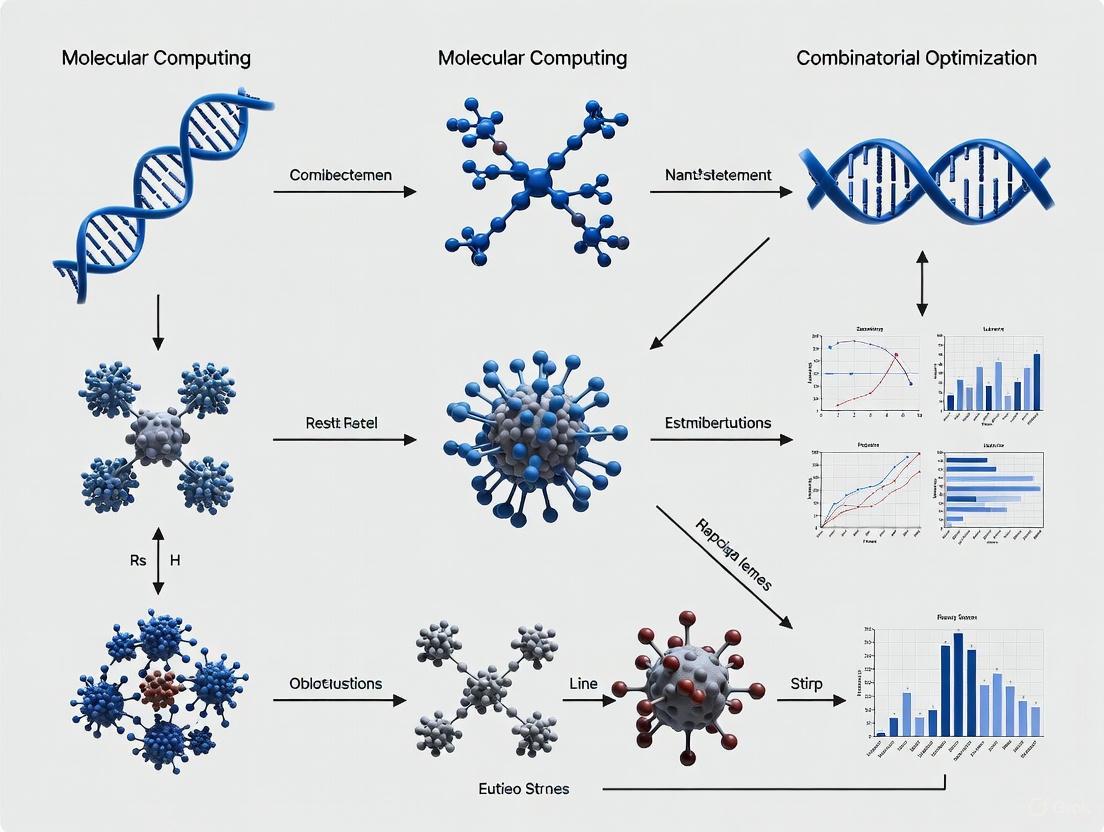
Combinatorial optimization problems are central to many challenges in drug discovery and biomedicine, yet often intractable for classical computers.
Molecular Computing for Combinatorial Optimization: A New Paradigm for Drug Discovery and Biomedical Research
Abstract
Combinatorial optimization problems are central to many challenges in drug discovery and biomedicine, yet often intractable for classical computers. This article explores the emerging field of molecular computing as a powerful alternative. We cover the foundational principles of using DNA, enzymes, and molecular logic gates for computation, detail specific methodologies for solving problems like the 0-1 knapsack and binary integer programming, and analyze current challenges such as error rates and development complexity. The article also provides a comparative analysis against other next-generation computing paradigms, validating molecular computing's unique potential for ultra-fast, energy-efficient processing of complex biological data to accelerate therapeutic development.
The Foundations of Molecular Computing: From Adleman's Experiment to Modern Paradigms
Molecular computing represents a radical departure from traditional silicon-based electronics, utilizing biological and synthetic molecules—including DNA, RNA, proteins, or engineered chemical structures—to perform computational tasks conventionally handled by semiconductor devices [1]. This emerging paradigm exploits the unique properties of molecular systems to create computational platforms with potentially unprecedented energy efficiency and processing capabilities, particularly for specialized applications in optimization, cryptography, and biomedical research [2] [1].
The driving impetus behind molecular computing research stems from fundamental physical limitations confronting silicon-based technologies. As semiconductor components approach atomic scales, they face increasing challenges related to heat dissipation, quantum effects, and energy consumption [2]. Molecular computing offers a promising pathway to overcome these constraints by harnessing molecular-scale phenomena for information processing, potentially enabling ultra-dense, energy-efficient computational systems capable of solving problems intractable to classical computers [2] [1].
Molecular Computing for Combinatorial Optimization
Combinatorial optimization problems, characterized by their NP-hard complexity, present significant challenges across fields including logistics, healthcare, manufacturing, and drug discovery [3]. These problems require finding optimal solutions from finite sets of possibilities, with computational demands that grow exponentially with problem size using classical approaches [3] [4].
Molecular computing shows particular promise for tackling such optimization challenges through massively parallel processing capabilities. DNA computing, for instance, leverages the predictable base-pairing properties and self-assembly of nucleotide sequences to explore multiple solution pathways simultaneously [1]. This inherent parallelism enables molecular systems to evaluate combinatorial spaces more efficiently than sequential silicon processors for specific problem classes, potentially delivering dramatic reductions in computational time and energy consumption [1].
The application of molecular computing to combinatorial optimization is further enhanced by its compatibility with biological environments, suggesting potential for direct computational operations within cellular systems or biomedical diagnostics where traditional electronics face integration challenges [2] [1].
Market Landscape and Growth Projections
The molecular computing sector is experiencing rapid expansion, driven by increasing demand for high-performance, energy-efficient computing solutions across multiple industries. Current market analysis reveals substantial growth trajectories and shifting application priorities.
Table 1: Molecular Computing Market Size Projections
| Year | Market Size (USD Billion) | Growth Rate | Primary Drivers |
|---|---|---|---|
| 2024 | $4.50 | - | Initial market penetration |
| 2025 | $5.15 | 14.44% | Increased R&D investment |
| 2034 | $17.47 | 14.53% CAGR | Commercial adoption in healthcare & security |
Table 2: Molecular Computing Market Share by Technology and Application (2024)
| Category | Segment | Market Share | Key Characteristics |
|---|---|---|---|
| Technology | DNA Computing | 45% | Massively parallel processing, high-density data storage |
| Synthetic Polymer/Supramolecular | Growing at ~20% CAGR | Modularity, flexibility for specialized applications | |
| Application | Drug Discovery & Molecular Modeling | 35% | Complex molecular simulation, compound optimization |
| Cryptography & Data Security | 22% CAGR | Advanced encryption, secure data processing | |
| Component | Molecular Hardware | 40% | Physical molecular computing systems |
| Platforms & Integrated Systems | Highest CAGR | Complete computational solutions | |
| End-User | Academic & Research Institutes | 38% | Fundamental research and development |
| Pharmaceutical & Biotechnology Companies | Fastest growing | Drug discovery, personalized medicine |
Geographically, North America dominated the global molecular computing market in 2024 with a 42% share, while the Asia-Pacific region is projected to witness the most rapid growth during the forecast period [1]. This expansion is fueled by substantial investments from both public and private sectors, including significant funding from DARPA, NIH, NSF, and corporate entities such as Microsoft Research, IBM Research, Ginkgo Bioworks, and Twist Bioscience Corporation [1].
Experimental Protocols in Molecular Computing
Protocol: Implementing DNA-Based Combinatorial Optimization
Principle: DNA strands encode candidate solutions, with molecular biology techniques performing parallel operations to identify optimal configurations through sequence complementarity and enzymatic processing [1].
Materials:
- Synthetic DNA oligonucleotides
- Restriction enzymes and ligases
- Polymerase Chain Reaction (PCR) equipment
- Gel electrophoresis apparatus
- DNA sequencing reagents
- Buffer solutions (Tris-EDTA, etc.)
Procedure:
Problem Encoding: Design DNA sequences representing variables and constraints of the optimization problem. Ensure complementary regions between compatible solution components.
Solution Library Generation: Combine DNA strands in appropriate buffer conditions. Allow self-assembly through complementary base pairing to generate a diverse pool of potential solutions.
Parallel Computation: Incubate the DNA library with restriction enzymes that cleave invalid solutions, preserving only logically consistent combinations.
Solution Amplification: Perform PCR to amplify remaining DNA molecules representing valid solutions to detectable levels.
Result Extraction: Separate DNA molecules by gel electrophoresis, extract bands of interest, and sequence to decode optimal solutions.
Validation: Confirm results through multiple independent experiments and control reactions without problem constraints to verify selection specificity.
Protocol: Lanthanide-Based Molecular Logic Systems
Principle: Trivalent lanthanide ions (e.g., Eu³⁺, Tb³⁺) exhibit unique photophysical properties that implement Boolean logic operations through controlled luminescence outputs in response to chemical inputs [2].
Materials:
- Lanthanide salts (e.g., EuCl₃, TbCl₃)
- Organic ligands (e.g., β-diketones, macrocyclic chelators)
- Input analytes (protons, metal ions, anions)
- Spectrofluorometer
- Buffer solutions at varying pH
- Deoxygenation system (for oxygen-sensitive systems)
Procedure:
Molecular Gate Design: Synthesize lanthanide complexes with carefully selected organic ligands that function as molecular logic gates.
Input Response Characterization: Excite the lanthanide complex at the ligand absorption wavelength (typically UV) while monitoring characteristic lanthanide emission bands.
Logic Operation: Introduce chemical inputs (H⁺, metal ions, etc.) that modulate the antenna effect or energy transfer pathways within the complex.
Output Measurement: Record changes in luminescence intensity, lifetime, or spectral distribution as logic outputs.
Cascade Configuration: Connect multiple logic gates by using the output of one gate as input for subsequent gates.
Validation: Verify truth tables for all logic operations and assess response reproducibility across multiple experimental replicates.
Computational Design of Molecular Qubits
Advanced computational methods enable precise prediction and optimization of molecular qubits for quantum information processing, which shares conceptual foundations with molecular computing [5].
Table 3: Key Parameters in Molecular Qubit Design
| Parameter | Influence on Qubit Performance | Computational Prediction Method |
|---|---|---|
| Zero-Field Splitting (ZFS) | Determines precise energy levels for qubit control | First-principles quantum calculations |
| Crystal Field Geometry | Affects spin structures and ZFS | Density functional theory (DFT) |
| Host Crystal Electric Fields | Modulates ZFS and coherence times | Ab initio molecular dynamics |
| Coherence Time | Information processing duration | Spin dynamics simulations |
Protocol: Computational Prediction of Molecular Qubit Properties
Principle: Quantum mechanical simulations predict key magnetic properties of molecular qubits, enabling rational design without extensive synthetic experimentation [5].
Computational Materials:
- Quantum chemistry software (e.g., VASP, Q-Chem, ORCA)
- High-performance computing resources with GPU acceleration
- Crystal structure data of host materials
- Pseudopotentials for molecular systems
Procedure:
System Modeling: Construct atomic-scale models of molecular qubits within their host crystal environments, including coordination geometry.
Electronic Structure Calculation: Perform density functional theory (DFT) calculations to determine ground state electronic configurations.
Magnetic Property Prediction: Compute zero-field splitting parameters and g-tensors using relativistic DFT approaches.
Environmental Effect Analysis: Quantify how crystal field modifications tune qubit properties through electrostatic interactions.
Coherence Time Estimation: Calculate decoherence pathways and predict qubit lifetime through dynamics simulations.
Validation: Compare computational predictions with experimental measurements of model compounds to refine calculation parameters.
The Scientist's Toolkit: Essential Research Reagents
Table 4: Key Research Reagent Solutions for Molecular Computing
| Reagent/Material | Function | Application Examples |
|---|---|---|
| DNA Oligonucleotides | Information encoding and processing | DNA-based logic gates, combinatorial optimization |
| Trivalent Lanthanide Ions | Luminescent centers for photonic logic | Molecular logic gates, sensing systems |
| Organic Ligand Systems | Molecular recognition and signal transduction | Input detection, qubit design |
| Restriction Enzymes | Biological computation operators | DNA-based solution filtering |
| Polymerase Chain Reaction | Molecular signal amplification | Result readout enhancement |
| Synthetic Polymers | Engineered computational substrates | Supramolecular computing systems |
Workflow Visualization
Molecular Computing Workflow
Molecular Logic Gate Operation
Future Perspectives
Molecular computing continues to evolve through interdisciplinary collaborations spanning chemistry, materials science, computer engineering, and biology. The integration of artificial intelligence with molecular computing represents a particularly promising direction, with AI algorithms accelerating the design of molecular circuits and optimizing reaction pathways [1]. As the field advances, molecular computing systems are poised to transition from laboratory demonstrations to practical implementations in specialized applications where their unique advantages—including massive parallelism, energy efficiency, and bio-compatibility—offer transformative potential over conventional computing paradigms [2] [1].
The ongoing convergence of molecular computing with quantum technologies [5] [4] and advanced nanotechnology suggests a future computational landscape where heterogeneous systems combine the strengths of multiple paradigms to address challenges beyond the reach of any single approach. For combinatorial optimization research specifically, molecular computing offers complementary capabilities to classical and quantum methods, potentially enabling hierarchical optimization strategies that distribute computational tasks across platforms according to their respective strengths [3] [4].
Combinatorial optimization problems, such as the Hamiltonian Path Problem (HPP), are central to fields including logistics, network design, and drug discovery. The HPP asks whether a given graph contains a path that visits each vertex exactly once. As this problem is NP-complete, solving it for large instances with conventional silicon-based computers becomes computationally intractable [6].
In 1994, Leonard M. Adleman pioneered a radical solution—using molecules of DNA as computational tools [6]. His landmark experiment demonstrated that the tools of molecular biology could be used to solve a computationally hard problem, launching the field of DNA computing. This approach leverages the inherent parallelism and high information density of biochemistry, potentially offering a path to overcoming the limitations of classical computers for specific problem classes highly relevant to scientific research, including molecular simulation and drug discovery [7] [8].
This application note details Adleman's experimental protocol, summarizing the quantitative data and providing a modern perspective on its implications for researchers using combinatorial optimization in their work.
Experimental Protocol and Workflow
Adleman's methodology translated the abstract steps of a non-deterministic algorithm for HPP into a series of standardized molecular biology techniques [6]. The following sections and visualizations detail this process.
Computational and Molecular Workflow
The figure below illustrates the high-level bridge between the computational algorithm and the wet-lab procedures.
Diagram 1: The high-level, five-step algorithm implemented by Adleman to solve the Directed Hamiltonian Path Problem.
Detailed Molecular Biology Protocol
The following diagram and table provide a detailed view of the molecular techniques used to execute the algorithm.
Diagram 2: The detailed molecular biology workflow used to physically execute the computation.
Table 1: Core Experimental Protocol for DNA-Based HPP Solving
| Experimental Step | Key Reagents & Materials | Technical Execution & Critical Parameters | Objective & Computational Analog |
|---|---|---|---|
| 1. Graph Encoding | Custom-synthesized 20-mer oligonucleotides (Oi for vertices, O(i->j) for edges) [6] | O(i->j) is constructed from the 3' 10-mer of Oi and the 5' 10-mer of Oj. For vin and v_out, the full 20-mer is used. | Represent the graph structure in a form amenable to molecular manipulation. |
| 2. Path Generation | T4 DNA ligase; ^O_i (complementary splint oligonucleotides) [6] | 50 pmol each of ^Oi and O(i->j) are mixed in a ligation reaction. Splints align compatible edges for ligation into longer DNA paths. | Step 1: Generate a massive pool of random paths through the graph in parallel. |
| 3. Path Selection (vin/vout) | PCR primers: O0 and ^O6 [6] | Standard polymerase chain reaction (PCR) is performed. Only molecules starting with O0 and ending with the sequence complementary to ^O6 are amplified. | Step 2: Filter the path library, keeping only paths that begin at vin and end at vout. |
| 4. Path Selection (Length) | Agarose gel electrophoresis setup [6] | PCR product is size-separated on a gel. The band corresponding to 140 bp (7 vertices * 20 bp/vertex) is excised and DNA is extracted. | Step 3: Isolate paths composed of exactly n vertices (for n=7). |
| 5. Path Selection (Vertex Cover) | Magnetic beads conjugated with ^O1, ^O2, ..., ^O_5 [6] | Product is made single-stranded and incubated sequentially with beads for each vertex. Only molecules hybridizing to all ^O_i are retained. | Step 4: Affinity purify paths that contain all vertices of the graph at least once. |
| 6. Detection | PCR reagents; agarose gel [6] | The final product is amplified by PCR and analyzed by gel electrophoresis. A visible band confirms the existence of a Hamiltonian path. | Step 5: Detect if any DNA molecules survived the selection process. |
Key Research Reagent Solutions
The experiment's success hinged on a precise set of molecular tools. The table below catalogs the essential "research reagent solutions."
Table 2: Essential Research Reagents and Their Functions in Adleman's Experiment
| Reagent / Material | Function in the Experiment |
|---|---|
| Custom Oligonucleotides (Oi, O(i->j), ^O_i) | Encode the graph's vertices (Oi), edges (O(i->j)), and serve as splints (^O_i) for ligation or capture probes during purification. The 20-mer length was chosen to ensure specific hybridization [6]. |
| T4 DNA Ligase | Enzymatically joins the O(i->j) oligonucleotides that are aligned adjacently on the ^Oi splint molecules, thereby creating full DNA strands representing paths in the graph [6]. |
| Taq DNA Polymerase & PCR Reagents | Amplifies specific DNA sequences exponentially. Used after initial ligation and after gel extraction to enrich for DNA molecules encoding paths that meet specific criteria (correct start/end points) [6]. |
| Agarose Gel Electrophoresis System | Separates DNA molecules by size. This allows for the physical isolation of DNA paths of the correct length (e.g., 140 bp for a 7-vertex path) from shorter or longer incorrect paths [6]. |
| Biotin-Avidin Magnetic Beads System | Used for affinity purification. Biotinylated ^O_i probes are bound to avidin-coated magnetic beads. These are used to sequentially select for DNA paths that contain a specific vertex sequence [6]. |
Results and Data Analysis
Adleman successfully applied this protocol to solve a 7-vertex, 14-edge instance of the HPP [6]. The key quantitative data and results from the experiment and its subsequent analysis are summarized below.
Table 3: Summary of Experimental Parameters and Results
| Parameter | Value / Observation in Adleman's Experiment | Notes and Implications |
|---|---|---|
| Graph Size | 7 vertices, 14 edges [6] | Demonstrated proof-of-concept. Scalability to larger graphs is limited by physical constraints like reaction volumes and error rates. |
| Oligonucleotide Size | 20-mer per vertex [6] | A subsequent study found that 18-mer oligonucleotides could be used for an 8-vertex graph, indicating that size can be optimized based on graph characteristics [9]. |
| Oligonucleotide Quantity | 50 pmol per oligonucleotide in ligation [6] | Vast excess (~3×10^13 molecules per edge). Highlights the massive parallelism, where a single correct molecule could, in theory, suffice. |
| Expected Product Size | 140 bp [6] | Corresponds to a double-stranded DNA molecule encoding a path of 7 vertices (7 × 20 bp/vertex). |
| Final Detection | Visible band after final PCR and gel electrophoresis [6] | Confirmed the presence of DNA molecules satisfying all constraints, thus answering "Yes" to the HPP instance. |
| Analysis Technique | "Graduated PCR" [6] | A diagnostic method to "print" the path by performing PCR with primers of increasing distance, revealing the sequence of vertices in the path. |
Adleman's experiment was a landmark demonstration that DNA could be used as a substrate for computation. It proved that the massive parallelism and high information density of biochemistry (approximately 1 bit per cubic nanometer [7]) could be harnessed to solve problems that challenge conventional silicon-based architectures.
While subsequent research has highlighted scalability challenges, including error-prone biochemical reactions and complex output analysis, the core principles remain influential. The field has evolved into molecular programming and the development of biosensors, with modern approaches exploring hybrid systems [8]. For researchers in drug development and other fields grappling with complex optimization problems, Adleman's work stands as a foundational proof-of-concept. It underscores the potential of alternative computing paradigms to tackle problems in combinatorial optimization, from molecular simulation to the analysis of genetic and protein interaction networks, inspiring ongoing research into more robust and scalable molecular computing solutions.
Molecular computing represents a paradigm shift in information processing, leveraging biological and chemical systems to solve complex computational problems. For researchers in combinatorial optimization and drug development, three core principles underpin its transformative potential: Massive Parallelism, which allows for the simultaneous exploration of vast solution spaces; Ultra-Dense Data Encoding, which stores information at the molecular level; and Bio-Compatibility, which enables seamless integration with biological systems for therapeutic applications. These principles allow molecular computers to address challenges that are intractable for classical silicon-based systems, such as high energy consumption, the von Neumann bottleneck, and the combinatorial explosion of computational problems [8]. This document provides detailed application notes and experimental protocols to guide the implementation of these principles in research settings.
Application Notes & Quantitative Data
The following tables summarize key quantitative metrics and materials for molecular computing applications, providing researchers with a clear comparison of the performance and components of different technologies.
Table 1: Performance Metrics of Molecular Computing Paradigms
| Computing Paradigm | Theoretical/ Achieved Data Density | Parallelism Scale | Energy Efficiency | Key Applications |
|---|---|---|---|---|
| DNA Data Storage | 1 billion TB/gram (theoretical) [10] | Massive parallel synthesis & sequencing [11] | Negligible power for archival storage [11] | Long-term archival security, cultural heritage preservation [10] |
| Microdroplet-based Molecular Computing (Ising Model) | Not primarily for storage | Programmable interactions across droplet arrays [8] | High; powered by chemical reactions [8] | Combinatorial optimization, solving NP-hard problems [8] |
| Molecular Logic Systems | Molecular-scale logic gates [2] | Parallel signal processing via luminescence [2] | High; operates on optical signals [2] | Biosensing, diagnostics, environmental monitoring [2] |
Table 2: DNA Data Storage: Market Growth and Technical Projections
| Metric | 2024/2025 Value | 2034 Projection | Notes |
|---|---|---|---|
| Global Market Size | USD 80.12 Mn (2024) [12] | USD 44,213.05 Mn [12] | Compound Annual Growth Rate (CAGR) of 88.01% (2025-2034) [12] |
| Dominant Storage Type | Synthetic DNA (55% share in 2024) [12] | Valued for precision, scalability, and control [12] | |
| Dominant End User | IT & Cloud Service Providers (50% share in 2024) [12] | ||
| Fastest Growing End User | Healthcare & Life Sciences [12] | Driven by need for genomic and patient data storage [12] |
Table 3: The Scientist's Toolkit - Key Research Reagent Solutions
| Item / Reagent | Function / Application |
|---|---|
| Programmable Microdroplet Arrays | Core hardware for implementing Ising models; droplets act as artificial spins for solving combinatorial optimization problems [8]. |
| Non-Canonical Amino Acids (ncAAs) | Expanded set of building blocks for programmable biology; enable design of biologics with enhanced stability, precision, and new-to-nature functions [13]. |
| Trivalent Lanthanide Ions | Key components in molecular logic systems; their unique photophysical properties enable implementation of Boolean logic operations for sensing and diagnostics [2]. |
| Memristive Crossbar Arrays (CBAs) | Hardware for electric current-based graph computing (EGC); represent complex, non-Euclidean graph structures for optimization and machine learning [14]. |
| DNA Synthesis Platform (e.g., Semiconductor-based) | High-throughput, parallel synthesis of DNA sequences for data encoding; converts digital data into physical DNA molecules [10]. |
Experimental Protocols
Protocol: Solving Combinatorial Optimization via a Programmable Microdroplet Ising Machine
This protocol details the use of a microdroplet array to find the ground state of an Ising model, a method applicable to problems like protein folding and drug interaction modeling [8].
I. Principle A combinatorial optimization problem is mapped onto a 2D Ising model, where the state of each microdroplet (e.g., concentration of a chemical species) represents an artificial spin. The system evolves through programmed chemical interactions to find the low-energy configuration, which corresponds to the optimal solution [8].
II. Materials
- Microfluidic droplet generator
- Chemical reagents for droplet formation (oil phase, aqueous phase)
- Fluorescent or colorimetric reporters for spin state visualization
- Programmable syringes/pumps for droplet loading
- Microscopy setup for time-lapse monitoring
- Custom software for problem mapping and result interpretation
III. Procedure
- Problem Encoding: Formulate the target optimization problem (e.g., maximum cut, traveling salesperson) as an Ising Hamiltonian. Define the coupling coefficients (J_ij) between spins [8].
- Droplet Array Preparation: Generate a uniform array of microdroplets using a microfluidic device. Each droplet will represent a single spin in the Ising lattice.
- Droplet-Droplet Interaction Programming: Implement the coupling coefficients J_ij by establishing chemical communication channels between droplet pairs. This can be achieved through:
- Controlled diffusion of chemical messengers across lipid bilayers.
- Electrically modulated interactions in an emulsion.
- System Evolution and Annealing: Allow the chemical system to undergo reactions and evolve. Apply an external field (e.g., temperature gradient, light pattern) to simulate an annealing process, guiding the system toward its ground state [8].
- State Readout: After the system stabilizes, measure the final state of each droplet (spin). Use fluorescence intensity or color as a proxy for the spin state (+1 or -1).
- Solution Decoding: Translate the measured spin configuration back into the solution space of the original optimization problem.
IV. Data Analysis
- Plot the energy of the system over time to confirm convergence.
- Compare the found solution to known optima for validation.
- Perform multiple runs to assess the robustness and success probability of the computation.
Protocol: Encoding and Retrieving Digital Data in Synthetic DNA
This protocol describes the end-to-end process for using synthetic DNA as an ultra-dense, long-term archival data storage medium [11] [10].
I. Principle Digital binary data (0s and 1s) is converted into a sequence of DNA nucleotides (A, C, G, T) using an encoding algorithm. This sequence is chemically synthesized, stored, and later sequenced to retrieve the original information [11].
II. Materials
- High-performance computing cluster for encoding/decoding
- DNA synthesizer (e.g., semiconductor-based synthesis platform)
- Next-generation sequencing (NGS) machine
- Reagents for DNA synthesis and sequencing
- Protective storage vials (e.g., silica beads) [11]
- Error-correction code algorithms
III. Procedure
- Data Encoding and Oligo Design:
- File Conversion: Convert the digital file into a long binary string.
- Algorithmic Encoding: Use an encoding algorithm (e.g., Huffman coding, Fountain codes) to translate the binary string into a series of DNA nucleotides (A, C, G, T). The algorithm must optimize for homopolymer avoidance and GC-content balance.
- Oligo Design and Indexing: Split the long DNA sequence into short, synthesizable fragments (oligonucleotides, ~100-200 bp). Add redundant error-correction sequences (e.g., Reed-Solomon codes) and unique molecular indexes (barcodes) to each oligo for later reassembly [10].
- DNA Synthesis ("Writing"):
- Use a high-throughput DNA synthesizer to chemically produce the designed oligonucleotides in parallel.
- Pool the synthesized oligos into a single library.
- Storage:
- Data Retrieval and Decoding ("Reading"):
- Sampling and Sequencing: Take a sample from the DNA pool and use a high-throughput sequencer to read the nucleotide sequences of millions of fragments in parallel.
- Data Recovery: Use the molecular barcodes to order the sequences. Apply error-correction algorithms to the sequenced data to identify and fix errors introduced during synthesis or sequencing.
- Binary Conversion: Convert the corrected DNA sequences back into the original binary data and reconstruct the digital file.
IV. Data Analysis
- Calculate the physical data density (bytes/gram of DNA).
- Measure the bit error rate after retrieval.
- Report the total cost, time, and success rate for the complete write-store-read cycle.
Workflow Visualizations
The following diagrams illustrate the core experimental workflows and logical relationships described in the protocols.
Diagram 1: DNA Data Storage and Retrieval Workflow
Diagram 2: Microdroplet-Based Ising Machine Workflow
Molecular computing represents a paradigm shift from traditional silicon-based electronics, leveraging molecules and chemical processes to perform computational tasks. For combinatorial optimization—a class of problems involving finding the best solution from a finite set of possibilities, which is often intractable for classical computers—molecular substrates offer unique advantages. These include massive parallelism, high energy efficiency, and the ability to natively represent and manipulate combinatorial spaces. DNA computing utilizes the predictable base-pairing properties of DNA molecules to process information, enabling the solution of complex problems such as the traveling salesman and SAT problems through parallel molecular operations [15]. Synthetic polymers provide a platform for engineering materials with tailored properties, facilitating exploration of vast chemical spaces relevant to optimization challenges [16]. Molecular logic gates, constructed from DNA, proteins, or other biomolecules, perform fundamental logical operations at the molecular scale, enabling intelligent biosensing and decision-making within biological environments [17] [18]. Together, these substrates form a powerful toolkit for addressing combinatorial optimization problems that remain challenging within conventional computing architectures.
DNA Computing
Core Principles and Advantages
DNA computing exploits the innate information-processing capabilities of deoxyribonucleic acid. Its fundamental principle involves encoding data into sequences of the four nucleotides—adenine (A), thymine (T), cytosine (C), and guanine (G)—and using well-established biochemical reactions, such as hybridization and strand displacement, to manipulate this data [19]. The field was pioneered by Leonard Adleman in 1994, who demonstrated its potential by solving a Hamiltonian path problem using DNA molecules in a test tube [19].
The key advantages of DNA computing for combinatorial optimization are:
- Massive Parallelism: DNA reactions can involve trillions of molecules operating simultaneously, allowing for the exploration of countless solution paths at once [15]. This is particularly advantageous for NP-hard problems where the solution space grows exponentially.
- Ultra-High Storage Density: DNA offers an incredibly dense storage medium, capable of storing exabytes of data per cubic millimeter [15] [19]. This allows compact representation of large problem instances.
- Low Energy Consumption: Biochemical reactions occur at the picowatt scale, making DNA computing vastly more energy-efficient than electronic computers [15] [17].
Application Notes: Solving Combinatorial Optimization Problems
DNA computing has been successfully applied to various combinatorial optimization challenges. Researchers have solved instances of the traveling salesman problem and Sudoku puzzles by representing cities or grid values as unique DNA sequences and implementing constraints through selective hybridization [15]. More recently, a molecular computing approach inspired by the Ising model has been developed for tackling combinatorial optimization, using programmable microdroplet arrays where droplet-droplet interactions encode problem constraints [8].
For decision tree-based classification, a domain where interpretability is crucial, a DNA-based system has been created that modularly embeds classification rules into DNA strand displacement cascades [20]. This system supports cascaded networks exceeding 10 layers and can parallelly compute 13 decision trees in a Random Forest involving 333 unique DNA strands [20]. The system successfully performed disease subtype classification by translating biomarker profiles into molecular instructions for tree traversal, reproducing in-silico predictions with high accuracy [20].
Table 1: Performance Metrics of DNA Computing Systems for Optimization
| System Type | Problem Solved | Key Performance Metrics | Limitations |
|---|---|---|---|
| DNA Strand Displacement Circuits | Decision Tree Classification | 10+ computational layers; 333 DNA strands; <20% leakage; <60 min computation time [20] | Limited operational speed due to chemical kinetics |
| DNA Origami Logic Gates | Nucleic Acid Detection | 80% yield for target detection; toehold-mediated strand displacement for resettability [21] | Reliance on AFM for analysis limits scalability |
| Molecular Ising Machine | Combinatorial Optimization | Programmable droplet-droplet interactions; avoids von Neumann bottleneck [8] | Scalability challenges in droplet array programming |
Protocol: Implementing a DNA-Based Decision Tree System
This protocol outlines the procedure for implementing a DNA-based decision tree for classification tasks, based on the system described by [20].
Materials:
- Purified DNA strands (scaffold and staple strands)
- 1× TAE/Mg²⁺ buffer (40 mM Tris-acetate, 1 mM EDTA, 12.5 mM magnesium acetate)
- Thermal cycler
- Ultrafiltration devices (50 kDa molecular weight cutoff)
- Fluorescence spectrometer or gel electrophoresis apparatus
Procedure:
Node Encoding Molecule Design:
- Design each decision node as a DNA duplex with four distinct domains: Domain 1 (parent node), Domain 2 (current node), Domain 3 (edge identifier), and Domain 4 (child node).
- Implement a toehold-extended filter for each node to suppress leakage, using an 8-nucleotide toehold length and a filter-to-node duplex ratio of 1:5.
Tree Construction:
- For a binary decision tree, design two types of node-encoding molecules for each decision point, representing the two possible paths.
- Assemble the node-encoding molecules in 1× TAE/Mg²⁺ buffer at a final concentration of 100 nM each.
- Anneal the mixture using a thermal cycler with the following program: heat to 95°C for 2 minutes, then cool to 4°C at a rate of -0.1°C every 6 seconds.
Input Introduction and Tree Traversal:
- Design input single-stranded DNA (ssDNA) with two sequence domains: one encoding the current node and the other encoding the connecting edge.
- Introduce input strands at a concentration of 10 nM to initiate the entropy-driven strand displacement cascade.
- Incubate the reaction at room temperature for 60 minutes to allow complete traversal through the decision tree.
Output Detection:
- Monitor the release of output strands via fluorescence measurement using dual-labeled probes.
- Alternatively, analyze results using polyacrylamide gel electrophoresis to visualize the reaction products.
Synthetic Polymers as Computational Substrates
Programmable Polymer Systems for Combinatorial Exploration
Synthetic polymers serve as powerful computational substrates for exploring vast chemical spaces, a capability crucial for combinatorial optimization in materials science. Unlike DNA, which relies on precise base pairing, synthetic polymers exploit the combinatorial diversity of monomeric units to encode and process information [16]. The primary advantage of polymeric systems lies in their ability to efficiently navigate high-dimensional structure-function landscapes, which is essential for designing materials with specific properties.
Recent advances have enabled the creation of an exponentially fast-growing programmable synthetic polymer system using DNA-mediated assembly [22]. This system implements an "active" self-assembly model computationally equivalent to a Push-Down Automaton, capable of constructing linear polymers with exponential growth kinetics—a property that surpasses the capabilities of some Turing-complete molecular systems for specific growth tasks [22]. This demonstrates how synthetic polymers can achieve computational behaviors that defy traditional computational classifications.
Application Notes: Materials Optimization and Discovery
The application of synthetic polymers in combinatorial optimization is particularly prominent in materials discovery and design. By creating combinatorial libraries of polymers and screening them for desired properties, researchers can efficiently navigate the enormous design space of possible monomer combinations [16]. This approach has been successfully applied to optimize polymers for specific characteristics such as ionic conductivity, photoconversion efficiency, shape-memory response, and self-healing capabilities.
The integration of machine learning with combinatorial polymer chemistry has dramatically accelerated this optimization process [16]. ML models trained on either theoretical calculations or experimental data can predict polymer properties, enabling the identification of promising candidates without exhaustive synthesis and testing. Active learning approaches have proven particularly effective, allowing for the identification of self-assembling oligopeptides from only 186 coarse-grained simulations [16].
Table 2: Synthetic Polymer Systems for Combinatorial Optimization
| Polymer System | Computational Model | Key Features | Optimization Applications |
|---|---|---|---|
| Active Self-Assembly Linear Polymer | Push-Down Automaton | Exponential growth in real time; Internal parallel insertion [22] | Logarithmic-time construction of complex shapes |
| Combinatorial Polymer Libraries | Empirical Optimization | High-throughput screening; Structure-function landscape mapping [16] | Materials property optimization (conductivity, efficiency) |
| Machine Learning-Guided Design | Data-Driven Prediction | Active learning; Transfer between simulation and experiment [16] | Efficient navigation of high-dimensional chemical space |
Protocol: Exponentially Fast-Growing Polymer System
This protocol describes the implementation of an exponentially fast-growing programmable synthetic polymer system based on the methodology in [22].
Materials:
- DNA hairpin monomers (Hairpin 1 and Hairpin 2)
- DNA initiator strand
- 1× TAE/Mg²⁺ buffer
- Thermal cycler
- Polyacrylamide gel electrophoresis equipment
- Fluorescent labels for visualization
Procedure:
Monomer Design and Preparation:
- Design hairpin monomers as quadruples of symbols with directionality. For example: Hairpin 1 as (b, e, f, c)+ and Hairpin 2 as (c, a*, e, b)-, where complementary pairs are indicated by asterisks.
- Synthesize and purify DNA hairpins using standard solid-phase synthesis.
- Dissolve hairpins in 1× TAE/Mg²⁺ buffer to a concentration of 100 μM.
System Initialization:
- Mix initiator strand with Hairpin 1 and Hairpin 2 in a molar ratio of 1:10:10.
- Use a total reaction volume of 50 μL in 1× TAE/Mg²⁺ buffer.
- Heat the mixture to 95°C for 2 minutes to denature any secondary structures, then cool rapidly to room temperature.
Exponential Growth Induction:
- Incubate the reaction at constant temperature (25°C) to allow for autonomous polymer growth.
- Monitor growth kinetics by withdrawing aliquots at regular time intervals (e.g., every 30 minutes for 6 hours).
- For division behavior, add a single DNA complex that competes with the insertion mechanism to trigger exponential growth of the polymer population.
Analysis and Characterization:
- Analyze polymer growth using non-denaturing polyacrylamide gel electrophoresis.
- Visualize bands using DNA intercalating dyes or fluorescent labels.
- Quantify band intensities to determine growth rates and polymer size distribution.
Molecular Logic Gates
Fundamentals and Design Principles
Molecular logic gates are computational elements that perform Boolean operations at the molecular scale, processing chemical or physical inputs to produce detectable outputs. These gates represent the fundamental building blocks for constructing more complex molecular computing systems, particularly for combinatorial optimization tasks requiring decision-making at the biological level [17] [18]. The first molecular logic gate was developed by de Silva, establishing the foundation for this field [17].
Molecular logic gates function by exploiting the specific interactions and reactions of molecules. Inputs are typically represented by the presence or absence of specific molecules, ions, or light, while outputs are often optical signals (colorimetric, fluorescent) or electrochemical changes [17]. Unlike electronic logic gates that use electrons as information carriers, molecular logic gates utilize a variety of information carriers including ions, photons, and redox species, contributing to their ultra-low power consumption [17].
Application Notes: Biosensing and Diagnostic Optimization
Molecular logic gates have found significant application in intelligent biosensing and medical diagnostics, where they enable complex pattern recognition and multi-parameter analysis crucial for accurate disease detection and classification. By integrating multiple logic gates, researchers have created systems capable of processing complex biological information for applications such as cancer diagnosis, pathogen identification, and cellular logic analysis [17].
A notable application involves DNA origami-based logic gates for detection of lung cancer biomarkers [21]. Researchers developed triangular DNA origami modules functionalized with edge-specific hybridization sites that emulate Boolean logic operations (YES, AND, and OR gates). These gates successfully detected clinically significant biomarkers for early lung cancer diagnosis (cDNA corresponding to miRNA-155, miRNA-182, and miRNA-197) through target-driven hierarchical self-assembly [21]. The system achieved 80% yield for specific target detection and incorporated toehold-mediated strand displacement for resettable and adaptive functionalities [21].
Another significant advancement is the development of interpretable molecular decision-making systems using DNA-based tree computation [20]. This approach addresses the "black box" problem of connectionist models like neural networks by providing explicit IF-THEN rule statements and traceable decision paths, which is particularly valuable in medical diagnostics where decision interpretability is crucial [20].
Table 3: Performance Comparison of Molecular Logic Gate Types
| Gate Type | Input/Output Signals | Key Advantages | Optimal Applications |
|---|---|---|---|
| DNA-Based Logic Gates | Nucleic acids, fluorescent signals | High programmability; Biocompatibility; Stable operation [17] | Cellular logic analysis; Intelligent diagnostics |
| Protein/Enzyme-Based Gates | Small molecules, ions, colorimetric changes | Natural biological recognition; High specificity [17] | Metabolic pathway monitoring; Point-of-care testing |
| DNA Origami-Based Gates | Structural assembly, AFM visualization | Nanoscale precision; Multiplexed detection [21] | Early cancer diagnosis; Biomarker profiling |
Protocol: DNA Origami Logic Gates for Biomarker Detection
This protocol details the construction of programmable DNA origami logic gates for detection of nucleic acid biomarkers, based on the system described by [21].
Materials:
- M13mp18 scaffold strand (250 μg/mL in 1× TE buffer)
- Staple strands (HPLC purified)
- 1× TAE/Mg²⁺ buffer (40 mM Tris-acetate, 1 mM EDTA, 12.5 mM magnesium acetate)
- Target biomarker sequences (e.g., miRNA-155, miRNA-182, miRNA-197 cDNA)
- Thermal cycler
- Ultrafiltration devices (50 kDa MWCO)
- Atomic force microscope
Procedure:
DNA Origami Triangle Assembly:
- Mix 5 nM M13mp18 scaffold strand with 25 nM of each staple strand in 1× TAE/Mg²⁺ buffer.
- Perform annealing in a thermal cycler using the following program: heat to 95°C for 2 minutes, then anneal from 95°C to 4°C at 6 seconds per 0.1°C (total annealing time: 90 minutes).
- Purify assembled DNA origami triangles from excess staple strands using 50 kDa molecular weight cutoff filters by centrifuging at 5000 × g for 10 minutes at 4°C. Repeat twice with buffer replenishment.
Logic Gate Functionalization:
- For YES gate: Design staple strands along triangle edges with single-stranded DNA overhangs consisting of a 3-nt poly(T) spacer and an 11-12 nt binding site complementary to one half of the target biomarker.
- For AND gate: Functionalize adjacent edges with complementary sequences to different halves of two target biomarkers.
- For OR gate: Design multiple edges with different sequences responsive to different biomarkers but producing the same output structure.
Target Detection and Assembly:
- Incubate functionalized DNA origami triangles (1 nM final concentration) with target biomarker sequences in 1× TAE/Mg²⁺ buffer.
- Allow self-assembly for 1-6 hours at room temperature.
- For multiplexed detection, use orthogonal staple sequences on additional origami units to generate distinct structural outputs for different targets.
Output Readout and Analysis:
- Deposit 10 μL of sample onto freshly cleaved mica surface and allow adsorption for 5 minutes.
- Add additional 1× TAE/Mg²⁺ buffer to both mica surface and cantilever.
- Image assemblies using atomic force microscopy in tapping mode under buffer.
- Alternatively, for higher throughput applications, couple assembly events with optical barcoding or resistive pulse sensing.
The Scientist's Toolkit: Essential Research Reagents and Materials
Table 4: Essential Research Reagents for Molecular Computing Experiments
| Reagent/Material | Function/Application | Key Characteristics | Example Use Cases |
|---|---|---|---|
| M13mp18 Scaffold DNA | Structural backbone for DNA origami | 7-kilobase single-stranded circular DNA [21] | Construction of triangular origami modules for logic gates |
| Staple Strands | Folding and functionalization of DNA origami | 11-12 nt binding sites with poly(T) spacers [21] | Edge-specific hybridization for logic operations |
| TAE/Mg²⁺ Buffer | Reaction medium for DNA nanostructures | 40 mM Tris-acetate, 1 mM EDTA, 12.5 mM magnesium acetate [21] | Maintaining structural stability of DNA assemblies |
| DNA Hairpin Monomers | Building blocks for active self-assembly | Quadruple symbol design with directionality [22] | Exponential growth polymer systems |
| Toehold-Filter Strands | Leakage suppression in DNA circuits | 8-nt toehold length, 1:5 filter-to-node ratio [20] | High-fidelity signal transmission in multi-layer networks |
| Ultrafiltration Devices | Purification of DNA nanostructures | 50 kDa molecular weight cutoff [21] | Removing excess staple strands from origami assemblies |
Methodologies and Real-World Applications in Drug Discovery and Biomedicine
Molecular computing represents a paradigm shift from traditional silicon-based electronics, utilizing biological molecules like DNA to perform computational tasks. Its intrinsic parallelism, ultra-low power consumption, and ability to operate directly in biological environments make it uniquely suited for applications in biosensing, medical diagnostics, and combinatorial optimization [17]. This document details two foundational algorithmic frameworks in the field: the Sticker Model for memory and data manipulation, and DNA-based logic gates for decision-making, providing application notes and detailed experimental protocols for their implementation.
The Sticker Model: Framework and Protocols
Core Principles and Architecture
The Sticker Model is a DNA-based computation framework designed for memory-intensive operations and parallel processing. It separates memory from processing, akin to a Turing machine, using a "test tube" of DNA molecules to represent a virtual memory register [17].
- Data Representation: A single-stranded DNA "library" is synthesized, where each possible bit string is represented by a unique DNA sequence.
- Memory Operations: Short, complementary DNA strands, known as "stickers," are hybridized to specific regions on the library strands to denote a '1' in a particular bit position. The absence of a sticker represents a '0'.
- Processing Model: Computation proceeds through a series of steps that involve selectively attaching (setting a bit to 1) or detaching (setting a bit to 0) stickers from the library strands in parallel, based on the requirements of the algorithm.
Table 1: Sticker Model Data Representation Components
| Component | Description | Function in Computation |
|---|---|---|
| Library Strand | Long single-stranded DNA with multiple non-overlapping regions. | Represents the physical substrate for all possible data strings. |
| Sticker | Short DNA oligonucleotide complementary to a specific region on the library. | Represents a binary '1' when bound to its target region. |
| Memory Complex | A library strand with a specific pattern of stickers hybridized. | Represents a single data record or memory state. |
| Separation Operation | Biochemical process (e.g., affinity purification) to isolate memory complexes based on sticker presence/absence. | Enables conditional operations and flow control. |
Detailed Experimental Protocol
This protocol outlines the steps for implementing a basic Sticker Model operation to manipulate a 2-bit memory space.
A. Reagent Preparation
- Library Strands: Synthesize a library strand with two distinct domains,
Domain_AandDomain_B, each 20 nucleotides long, separated by a spacer. Purify via HPLC. - Sticker Probes: Synthesize complementary stickers for
Domain_A(StickerA) andDomain_B(StickerB). Modify the 5' end of each sticker with a biotin tag for separation steps. - Buffer: Prepare 1X DNA Hybridization Buffer (1M NaCl, 10 mM Tris-HCl, 1 mM EDTA, pH 8.0).
B. Initialization (Writing Data)
- Combine: In a 1.5 mL microcentrifuge tube, mix:
- Library strands: 100 fmol
- 1X DNA Hybridization Buffer to a final volume of 100 µL.
- Denature: Heat the mixture to 95°C for 5 minutes to ensure all library strands are single-stranded.
- Hybridize (Anneal): Cool the tube gradually to 25°C over 60 minutes. To write a specific pattern (e.g.,
A=1,B=0), add a 10x molar excess of StickerA during the cooling step. Omit StickerB.
C. Separation Operation (Reading/Conditional Processing)
- Bind to Solid Support: Transfer the hybridization mixture to a tube containing 100 µL of streptavidin-coated magnetic beads. Incubate at 25°C for 15 minutes with gentle agitation.
- Wash: Place the tube on a magnetic rack to separate beads from supernatant. Remove the supernatant (this contains library strands without Sticker_A, i.e., where
A=0). - Elute Target Strands: Resuspend the beads in 50 µL of deionized water. Heat to 70°C for 5 minutes to denature the biotin-streptavidin bond and release the library strands where
A=1. Immediately place on the magnetic rack and transfer the supernatant containing the target strands to a new tube.
D. Output Detection
- Quantify the results using Quantitative Polymerase Chain Reaction (qPCR) with primers specific to the library strand's constant regions. Alternatively, use gel electrophoresis to confirm the presence and size of the memory complexes.
DNA-based Logic Gates: Framework and Protocols
Core Principles and Architecture
DNA-based logic gates perform Boolean operations (AND, OR, NOT) using molecular interactions, primarily through the mechanism of strand displacement [17] [20]. These gates translate the presence or absence of specific molecular species (inputs) into a detectable signal (output), enabling intelligent decision-making at the molecular level for applications like disease diagnostics [23].
- Inputs: Specific DNA strands (e.g., miRNA biomarkers) or environmental cues (e.g., pH).
- Processing: The binding of input strands to gate complexes triggers a strand displacement reaction, releasing a pre-quenched fluorescent output strand or an activator for a downstream gate.
- Output: A fluorescent signal, a released DNA strand, or another chemically active molecule.
Table 2: Summary of Core DNA Logic Gate Types
| Gate Type | Boolean Function | Mechanism | Typical Application |
|---|---|---|---|
| AND Gate | Output = 1 only if all inputs are 1. | Two or more input strands are required to co-localize and cooperatively displace the output strand. | Detecting a disease-specific combination of multiple biomarkers [23]. |
| OR Gate | Output = 1 if any input is 1. | The gate is designed with multiple, independent toehold domains; any matching input can trigger output release. | Screening for diseases with multiple possible genetic indicators. |
| NOT Gate | Output = 1 only if input is 0. (Inhibition) | The presence of an input strand binds to and sequesters an activator, preventing output generation. | Implementing negative feedback or complex logic circuits. |
| Seesaw Gate | A thresholding and signal amplification gate. | Uses strand displacement to balance and amplify signals, crucial for building large-scale circuits [24]. | Serving as a "neuron" in DNA-based neural networks for pattern classification [24]. |
Detailed Protocol for a DNA AND Gate for Biomarker Detection
This protocol creates an AND gate that produces a fluorescent signal only in the presence of two specific miRNA sequences (e.g., miR-200a and miR-141), mimicking a diagnostic test for breast cancer [23].
A. Gate and Reagent Design
- Input 1 (I1): DNA strand fully complementary to miR-200a.
- Input 2 (I2): DNA strand fully complementary to miR-141.
- AND Gate Complex: A double-stranded DNA structure with the following key features:
- A quenched fluorophore (e.g., TAMRA/BHQ1 or HEX/BHQ1) on the 5' and 3' ends of the output strand.
- Partial single-stranded "toehold" domains for I1 and I2.
- The output strand is displaced only when I1 binds its toehold and initiates a branch displacement process that is completed by I2.
- Buffer: Use 1X TAE/Mg²⁺ Buffer (40 mM Tris, 20 mM Acetic acid, 2 mM EDTA, 12.5 mM Magnesium Acetate, pH 8.0).
B. Experimental Procedure
- Gate Preparation: Anneal the AND gate complex by mixing the component strands in a 1:1.2 ratio (output strand:scaffold strand) in 1X TAE/Mg²⁺ Buffer. Heat to 95°C for 2 minutes and cool slowly to 25°C over 90 minutes.
- Logic Operation:
- In a 96-well plate, combine:
- Annealed AND gate complex: 50 nM
- 1X TAE/Mg²⁺ Buffer to a final volume of 100 µL.
- To the experimental wells, add:
- Condition 1 (0,0): No inputs.
- Condition 2 (1,0): I1 (miR-200a mimic) at 100 nM.
- Condition 3 (0,1): I2 (miR-141 mimic) at 100 nM.
- Condition 4 (1,1): Both I1 and I2 at 100 nM each.
- In a 96-well plate, combine:
- Incubation and Reading: Seal the plate and incubate at 25°C for 4-6 hours. Measure fluorescence intensity (excitation/emission appropriate for the fluorophore, e.g., 555/580 nm for TAMRA) every 30 minutes using a plate reader.
C. Data Analysis
- Plot fluorescence intensity versus time for all four conditions.
- A significant increase in fluorescence should only be observed in Condition 4 (1,1), confirming the AND logic. Other conditions should show minimal signal change, demonstrating low leakage.
Advanced Integrated Framework for Combinatorial Optimization
The true power of molecular computing emerges when the Sticker Model and logic gates are integrated to solve complex problems, such as optimizing molecular structures for drug discovery or finding optimal paths in a network.
Conceptual Framework for a Molecular Optimizer
This framework uses the Sticker Model to represent a population of candidate solutions (e.g., different molecular structures) and DNA logic gates to evaluate their fitness according to a multi-objective function (e.g., combining drug-likeness, binding affinity, and synthetic accessibility) [25].
- Solution Representation: A pool of DNA library strands is initialized, with sticker patterns representing different molecular graphs or chemical structures.
- Parallel Fitness Evaluation: The pool is split and exposed to different DNA logic circuits, each evaluating a specific property (e.g., a gate circuit that fluoresces if a structure violates Lipinski's Rule of Five). The output of these gates is used to separate or mark non-optimal candidates.
- Selection and "Mutation": Strands representing high-fitness candidates are isolated using separation operations. A "mutation" is introduced by selectively removing stickers (flipping bits to 0) or adding new ones (flipping bits to 1) via controlled hybridization and strand displacement, creating a new generation of candidate solutions.
- Iteration: The process of evaluation and selection is repeated for multiple cycles, mimicking an evolutionary algorithm, to converge on an optimal solution.
Table 3: Application in Drug Discovery Optimization
| Optimization Criterion | Molecular Computing Implementation | Silicon-Based Equivalent |
|---|---|---|
| Improve Bioactivity (DRD2) | A logic circuit that releases a strand if a candidate's structure matches a known pharmacophore pattern, tagged for selection. | QSAR (Quantitative Structure-Activity Relationship) models or docking simulations [25]. |
| Maximize Drug-Likeness (QED) | A seesaw gate network that computes a penalty score based on molecular weight, logP, etc., encoded in the sticker pattern. | Calculated scoring functions (e.g., QED score) [25]. |
| Maintain Structural Similarity | A separation operation that isolates strands with a Tanimoto similarity fingerprint above a set threshold (e.g., >0.4) [25]. | Direct fingerprint comparison and calculation in software. |
The Scientist's Toolkit: Research Reagent Solutions
Table 4: Essential Reagents and Materials for Implementation
| Item | Function / Description | Example Vendor / Type |
|---|---|---|
| DNA Oligonucleotides | Custom-synthesized single-stranded DNA for library strands, stickers, and gate components. Require high purity (HPLC or PAGE). | Integrated DNA Technologies (IDT), Twist Bioscience. |
| Fluorophore-Quencher Pairs | For signal output in logic gates. The fluorophore (e.g., TAMRA, HEX) emits light upon separation from the quencher (e.g., BHQ1, BHQ2). | IDT (pre-labeled probes), Sigma-Aldrich (modification chemicals). |
| Magnetic Beads (Streptavidin) | Solid support for separation operations in the Sticker Model. Beads bind to biotinylated stickers or strands. | Thermo Fisher Scientific (Dynabeads). |
| Thermocycler | For precise denaturation and annealing of DNA strands during gate preparation and Sticker Model initialization. | Bio-Rad, Applied Biosystems. |
| Fluorescence Plate Reader | For kinetic measurement of fluorescence output from logic gate reactions in multi-well plates. | Tecan, BioTek. |
| TAE/Mg²⁺ Buffer | Standard buffer for DNA strand displacement reactions. Magnesium ions are crucial for reaction kinetics. | Lab-prepared from stock solutions. |
| Visual DSD Software | A free software tool for designing, simulating, and debugging DNA strand displacement systems in silico [23]. | Microsoft Research. |
The growing computational demands of combinatorial optimization problems, critical to fields like drug development and logistics, have spurred research into unconventional computing paradigms. Among these, molecular computing has emerged as a promising approach that leverages the inherent parallelism of biochemical reactions to solve problems considered intractable for conventional, silicon-based computers. This field was pioneered by Adleman, who in 1994 first used DNA to solve a directed Hamiltonian Path Problem, demonstrating that DNA computers could tackle NP-complete problems with a linearly increasing time complexity, compared to the exponentially increasing time required by a Turing machine [26].
This application note details molecular solutions, specifically based on DNA computing, for two classic combinatorial optimization problems: the 0-1 Knapsack Problem (BKP) and the Binary Integer Programming (BIP) problem. These problems are not only of theoretical interest but also model many industrial situations, including capital budgeting, project selection, and, crucially, resource allocation in drug discovery and development [26] [27]. We frame these solutions within the broader context of molecular computing research, providing detailed protocols and data presentation to facilitate adoption by researchers and scientists.
The 0-1 Knapsack Problem (BKP) and Molecular Formulation
Problem Definition
The 0-1 Knapsack Problem is a fundamental combinatorial optimization problem. Given a set of n items, each with a specific weight w_i and profit p_i, and a knapsack with a maximum weight capacity K, the objective is to select a subset of items that maximizes the total profit without exceeding the knapsack's capacity. Formally, the problem is defined as:
- Maximize: ( \sum{i=1}^{n} pi x_i )
- Subject to: ( \sum{i=1}^{n} wi xi \leq K ), where ( xi \in {0, 1} )
This simple structure models complex real-world decisions, such as selecting a portfolio of drug development projects with limited R&D funding or optimizing compound libraries for high-throughput screening [26].
DNA Computing Model and Algorithm
The molecular solution to the BKP employs a DNA sticker model, an abstract model of molecular computation that provides a random access memory with a lower error rate of hybridization compared to earlier models [26]. In this model, the solution space containing all possible combinations of items is represented in a test tube with "sticker" DNA strands.
Table 1: Key Biological Operations in DNA Computing for BKP
| Operation Name | Biological Implementation | Computational Function |
|---|---|---|
| Annealing | Cooling DNA to allow complementary strands to hybridize. | Initialization of the solution space. |
| Melting | Heating DNA to separate double-stranded DNA into single strands. | Denaturing non-solutions. |
| Amplification | Polymerase Chain Reaction (PCR). | Copying desired DNA strands. |
| Separation | Affinity purification using magnetic beads or gels. | Isolating strands that represent valid solutions. |
The DNA-based algorithm for the BKP operates as follows [26]:
- Solution Space Incubation: A pool of DNA strands is synthesized, with each strand representing a potential combination of items (a potential solution vector
x). - Weight Constraint Enforcement: Through a series of separation steps, strands that represent solutions where the total weight exceeds
Kare removed. This involves selectively destroying DNA strands that encode for invalid combinations. - Profit Maximization: The remaining DNA strands, which all represent valid solutions, are analyzed to identify the one with the maximum total profit. This can be achieved through techniques like gel electrophoresis, which can separate strands by length (if profit is correlated to a physical property) or through sequential affinity purification.
The entire process leverages massive parallelism, as all possible combinations are generated and evaluated simultaneously in the test tube. The reported time complexity for this molecular algorithm is O(n × k), a linear relationship that is highly favorable for large problem instances [26].
Molecular Solutions for Binary Integer Programming (BIP)
Problem Definition and Challenge
Binary Integer Programming is a cornerstone of operational research. A general BIP problem seeks to [27]:
- Maximize: ( \mathbf{c}^T \mathbf{x} )
- Subject to: ( \mathbf{A}\mathbf{x} \leq \mathbf{b} ), where ( x_j \in {0, 1} )
Here, c and b are vectors, A is a matrix of coefficients, and x is the vector of binary decision variables. BIP problems are ubiquitous, from scheduling clinical trials to optimizing manufacturing processes, but they are NP-hard. The execution time for classical algorithms, such as Branch and Bound, increases exponentially with the problem size [27].
DNA Algorithm for BIP (BIP-DNA)
The BIP-DNA algorithm provides a molecular alternative to exhaustive search. The proposed approach uses the sticker model and Adleman-Lipton operations to manage the solution space. The following workflow outlines the key steps for a problem with n variables and m constraints.
The correctness of the BIP-DNA algorithm has been formally proven, demonstrating its capacity to resolve BIP problems with n variables and m constraints [27]. The algorithm is sound (it only returns valid solutions) and complete (it will find a solution if one exists). Its time complexity is also O(n × k), where k is a parameter related to the problem's coefficients, showcasing a linear scaling behavior for a defined problem class [27] [28].
Table 2: BIP-DNA Algorithm Performance Analysis
| Aspect | Classical Approach (e.g., Branch and Bound) | BIP-DNA Molecular Approach |
|---|---|---|
| Time Complexity | Exponential in the worst case. | O(n × k) (Linear). |
| Key Mechanism | Sequential tree search and pruning. | Massive parallel search using DNA strands. |
| Solution Space | Explored sequentially. | All 2^n possibilities generated and processed in parallel. |
| Practical Limit | Limited by exponential time growth. | Limited by laboratory techniques and DNA volume. |
Experimental Protocols for Molecular Computing
Laboratory Protocol for the BKP Solution
This protocol provides a step-by-step guide for a wet-lab experiment to solve a 0-1 Knapsack Problem instance using the sticker model [26].
Step 1: DNA Sequence Design and Synthesis
- Design unique DNA sequences to represent each item
iand its presence (x_i = 1) or absence (x_i = 0) in the knapsack. The "sticker" strands are designed to be complementary to specific regions on longer "memory strands" that represent the entire solution vector. - Synthesize all necessary DNA strands, including the initial memory strands and the sticker strands.
Step 2: Generate Solution Space
- Incubate the memory strands with an excess of all sticker strands in a suitable buffer.
- Use annealing to allow the stickers to bind complementarily to the memory strands. Each resulting double-stranded complex represents one potential solution to the BKP.
Step 3: Apply Weight Constraint
- For each item, use biochemical operations (e.g., using magnetic beads) to separate strands based on the value of
x_i. - For items where the weight
w_iis significant, selectively melt (denature) and wash away the complexes that include the item (x_i=1) if the accumulated weight in a subset exceedsK. This step is iterative and may require careful temperature control and buffer exchange.
Step 4: Identify Maximum-Profit Solution
- Amplify the remaining DNA complexes (which represent valid solutions) using PCR.
- Use gel electrophoresis to separate the complexes by molecular weight. If the profit is encoded in the physical length of the strand (e.g., higher profit adds more length), the solution with the highest molecular weight will correspond to the maximum-profit solution.
- Isolate and sequence the band with the highest molecular weight to decode the exact combination of items.
The Scientist's Toolkit: Key Research Reagents
Table 3: Essential Materials and Reagents for Molecular Computing Experiments
| Reagent / Material | Function in the Experiment |
|---|---|
| Synthetic DNA Oligonucleotides | The fundamental hardware for encoding information and performing computation. |
| DNA Polymerase Enzyme | Used in PCR to amplify DNA strands representing promising or valid solutions. |
| Thermal Cycler | To perform precise annealing, melting, and PCR amplification cycles. |
| Magnetic Beads (e.g., Streptavidin-coated) | For affinity purification and separation of DNA strands based on their sequence. |
| Gel Electrophoresis Apparatus | To separate DNA strands by length for final readout of the solution. |
| Restriction Enzymes | To selectively cut and destroy DNA strands representing invalid solutions. |
Discussion and Future Perspectives
The molecular solutions for the BKP and BIP problems demonstrate a fundamentally different approach to computation. The primary advantage is the massive parallelism inherent in biochemistry, which allows for the evaluation of billions of potential solutions simultaneously. This leads to a linear time complexity, O(n × k), which compares favorably to the exponential growth of classical algorithms for these NP-hard problems [26] [27].
However, several challenges remain for practical, large-scale applications. Current limitations include error rates in biochemical operations (e.g., imperfect hybridization), the physical scalability of producing and managing exponentially large DNA volumes, and the development of efficient readout mechanisms [26]. Future research in molecular computing is likely to focus on improving the reliability and scale of these protocols. Furthermore, the integration of molecular computing with other emerging paradigms, such as quantum-inspired probabilistic computers [29] or AI-driven active learning frameworks [30], could lead to hybrid systems that leverage the strengths of each technology.
For the drug development professional, the potential long-term impact is significant. As these technologies mature, they could revolutionize tasks such as de novo drug design by exploring vast chemical spaces, optimizing clinical trial designs, and solving complex logistical problems in the supply chain, ultimately accelerating the delivery of new therapies to patients.
Drug discovery is inherently a problem of massive combinatorial optimization, from screening vast chemical libraries for target binding to optimizing lead compounds for multiple properties simultaneously. Traditional computational approaches often struggle with the explosive complexity of navigating these high-dimensional search spaces. Emerging computing paradigms, particularly those inspired by and leveraging quantum principles, are now poised to revolutionize this field. These advanced computing architectures offer a fundamental advantage in solving complex optimization problems, promising to dramatically accelerate the identification and optimization of novel therapeutic candidates with greater precision and efficiency than previously possible [31] [4].
This article provides detailed application notes and protocols for integrating these powerful computational methods into key stages of early drug discovery, framed within the context of molecular computing for combinatorial optimization research.
Computing Paradigms for Molecular Optimization
The table below summarizes the core next-generation computing architectures applicable to drug discovery's combinatorial challenges.
Table 1: Computing Architectures for Combinatorial Optimization in Drug Discovery
| Computing Paradigm | Underlying Principle | Key Advantage for Drug Discovery | Representative Application |
|---|---|---|---|
| Ising Machine (Oscillator-based) | Network of coupled oscillators evolving to a synchronized ground state [31]. | High energy efficiency and room-temperature operation; potential for CMOS integration [31]. | Solving max-cut problems for molecular similarity analysis and library design. |
| Quantum Annealing (QA) | Uses quantum fluctuations to find the global minimum of an energy landscape [4]. | Proven speed (~6561x) and accuracy (~0.013%) gains for large, dense problems vs. classical solvers [4]. | Direct solution of complex QUBO formulations for protein folding or binding site prediction. |
| Hybrid Quantum-Classical (HQA) | Integrates quantum and classical solvers to handle problem decomposition [4]. | Superior accuracy and scalability for very large problems (n ≥ 1000); practical for near-term hardware [4]. | Large-scale virtual screening and multi-parameter lead optimization. |
| Instantaneous Quantum Polynomial (IQP) Circuits | Parameterized quantum circuits with minimal depth and efficient classical training [32]. | Uses minimal quantum resources, mitigating noise; demonstrated on 32-qubit systems [32]. | Rapid, resource-efficient in silico scoring of compound-target interactions. |
Application Notes & Protocols
Application Note 1: Accelerated Virtual Screening via Hybrid Quantum Annealing
1. Objective: To rapidly screen ultra-large virtual chemical libraries (>>1 million compounds) to identify hits for a specific protein target by formulating molecular docking as a Quadratic Unconstrained Binary Optimization (QUBO) problem.
2. Background: Virtual screening is a classic combinatorial problem. Classical methods like molecular docking involve computationally scoring each compound in a library, which becomes a bottleneck. This protocol leverages a hybrid quantum-classical annealer to solve a QUBO formulation of the problem, which can simultaneously evaluate countless combinations of molecular interactions [4].
3. Experimental Protocol
Step 1: QUBO Problem Formulation
- Input: 3D structure of the target protein (e.g., from PDB) and a database of small molecules in a standardized format (e.g., SDF).
- Action: Define binary decision variables ( xi ) where ( xi = 1 ) indicates compound ( i ) is selected. Construct the QUBO matrix to represent the objective function:
( \text{H} = -\sumi Ai xi + \sum{i
- Output: A QUBO matrix representing the optimization problem.
Step 2: Problem Decomposition (for Large Libraries)
- Input: Large, dense QUBO matrix from Step 1.
- Action: Use a decomposition algorithm (e.g., QBSolv) to split the large QUBO into smaller sub-problems that can fit on the quantum processing unit (QPU) [4].
- Output: A set of smaller sub-QUBOs.
Step 3: Hybrid Quantum-Classical Solving
- Input: Set of sub-QUBOs.
- Action: Submit the sub-problems to a state-of-the-art quantum annealer (e.g., D-Wave Advantage) using a hybrid sampler (e.g., Leap Hybrid) [4]. The sampler solves the sub-problems and a classical optimizer coordinates the global solution.
- Output: A set of candidate solutions (bitstrings) indicating the top-ranking compounds.
Step 4: Solution Validation and Refinement
- Input: Candidate compound list from Step 3.
- Action: Perform classical, more rigorous molecular dynamics (MD) simulations or free energy calculations on the top ~100-500 hits to validate and rank the candidates.
- Output: A final, high-confidence list of hit compounds for experimental testing.
Diagram: Hybrid Quantum Screening Workflow
Application Note 2: Multi-Objective Lead Optimization with Physics-Inspired Computing
1. Objective: To optimize a lead compound by simultaneously balancing multiple, often competing, properties such as potency, selectivity, and metabolic stability using an Ising machine or another physics-inspired solver.
2. Background: Lead optimization is a multi-parameter challenge. Changing a chemical group to improve one property (e.g., potency) can adversely affect others (e.g., solubility). This protocol uses an Ising machine to find the optimal molecular configuration that best satisfies all desired criteria [31].
3. Experimental Protocol
Step 1: Define the Multi-Objective Optimization Problem
- Input: A lead compound scaffold and a list of R-groups for modification. Define the target profile: e.g., IC50 < 100 nM, logP < 3, no inhibition of CYP3A4.
- Action: For each property, create a cost function. The total cost function is a weighted sum:
H_total = w1 * H_potency + w2 * H_LogP + w3 * H_CYP_inhibition + ..., whereware weights reflecting relative importance. ConvertH_totalinto a QUBO/Ising form.
Step 2: Map to an Ising Machine
- Input: The Ising/QUBO formulation of the multi-objective problem.
- Action: Program the problem onto the hardware. In an oscillator-based Ising machine, this involves configuring the coupling strengths between oscillators to represent the interaction terms (Jij) and local fields (hi) of the Ising model [31]. The system is then allowed to evolve physically.
- Output: The natural evolution of the oscillators toward their synchronized ground state represents the solution to the optimization problem [31].
Step 3: Interpret Solution and Design Compounds
- Input: The ground state configuration from the Ising machine.
- Action: Decode the solution to identify the optimal R-group combinations. Use this to design a focused set of 10-20 final compounds for synthesis and testing.
- Output: A list of proposed analog structures predicted to have an optimal property profile.
Application Note 3: High-Throughput Binding Free Energy Calculation using Nonequilibrium Switching
1. Objective: To accurately and rapidly compute relative binding free energies (RBFE) for a series of analogous compounds to guide lead optimization, using a classical but highly scalable method inspired by nonequilibrium physics.
2. Background: Accurately predicting how a small chemical change affects binding affinity is crucial. Traditional alchemical methods like Free Energy Perturbation (FEP) are computationally expensive. Nonequilibrium Switching (NES) replaces slow equilibrium transformations with many fast, independent, out-of-equilibrium transitions, offering 5-10x higher throughput [33].
3. Experimental Protocol
Step 1: System Preparation
- Input: Structures of the protein and two analogous ligands (Ligand A and Ligand B).
- Action: Using standard molecular dynamics software (e.g., OpenMM, GROMACS), prepare the solvated and equilibrated system for each ligand bound to the target.
Step 2: Configure NES Simulations
- Input: Equilibrated structures for Ligand A and Ligand B.
- Action: Set up hundreds to thousands of independent, short (picosecond-scale) "switching" simulations. Each simulation rapidly transforms Ligand A into Ligand B (forward switch) or vice versa (reverse switch) in the binding site. This is highly parallelizable and ideal for cloud computing [33].
Step 3: Calculate Free Energy Difference
- Input: The work values collected from all the independent switching simulations.
- Action: Use the Crooks Fluctuation Theorem or the Jarzynski equality to calculate the relative binding free energy (ΔΔG) from the distribution of these nonequilibrium work values [33].
- Output: A predicted ΔΔG value for transforming Ligand A to Ligand B.
Step 4: Iterate Across Compound Series
- Action: Repeat the process for all key compound pairs in the lead series to build a quantitative structure-activity relationship.
Diagram: NES for Binding Free Energy
The Scientist's Toolkit: Research Reagent Solutions
Table 2: Essential Computational and Experimental Reagents
| Item / Solution | Function / Description | Example Use Case |
|---|---|---|
| D-Wave Leap Hybrid Solver | A cloud service that automatically decomposes large problems and uses a combination of quantum and classical resources to solve them [4]. | Solving the virtual screening QUBO problem from Protocol 3.1. |
| Charge-Density-Wave Device | An oscillator-based Ising machine hardware that operates at room temperature using quantum materials like tantalum sulfide [31]. | Performing the multi-parameter lead optimization in Protocol 3.2. |
| Cadence NES Suite | Software implementing the Nonequilibrium Switching methodology for relative binding free energy calculations [33]. | Executing the high-throughput RBFE calculations in Protocol 3.3. |
| CETSA (Cellular Thermal Shift Assay) | An experimental method to measure target engagement of drug candidates in intact cells and tissues [34]. | Validating computational predictions of binding from virtual screening. |
| InQuanto Computational Chemistry Platform | A software platform (e.g., from Quantinuum) for modeling chemical problems on quantum computers, using methods like VQE [32]. | Calculating electronic properties of a lead compound for deeper optimization. |
| AutoDock & SwissADME | Classical computational tools for molecular docking and predicting absorption, distribution, metabolism, and excretion properties [34]. | Generating initial data for QUBO formulation and performing final compound filtering. |
Application Note 1: Molecular Qubits for Quantum-Enhanced Optimization
Background and Principle
Molecular qubits represent a transformative approach for quantum information processing, leveraging molecular systems to create quantum bits. Recent research has established erbium-based molecular qubits that function as a nanoscale bridge between magnetic spin states and optical photons [35]. These qubits operate at telecom frequencies (approximately 193.5 THz), making them inherently compatible with existing fiber-optic infrastructure and silicon photonic circuits [35]. This dual nature enables information encoding in magnetic states with optical accessibility, presenting unprecedented opportunities for quantum-enhanced combinatorial optimization in pharmaceutical research.
Performance Metrics and Quantitative Analysis
The table below summarizes key performance characteristics of erbium molecular qubits compared to other emerging platforms:
Table 1: Performance Comparison of Computational Platforms for Optimization Problems
| Platform | Operating Temperature | Energy Efficiency | CMOS Compatibility | Key Application Strength |
|---|---|---|---|---|
| Erbium Molecular Qubits | Cryogenic | Quantum-limited energy use | High (via silicon photonics) | Quantum networking & sensing |
| CDW Oscillator System | Room temperature | High for parallel processing | Demonstrated potential | Combinatorial optimization [31] |
| Classical CMOS | -55°C to 125°C | Standard reference | Native | General purpose computing |
| DNA Computing | Ambient | Extreme efficiency | Limited | Massive parallelism for specific problems [36] |
Table 2: Molecular Qubit Telecom Performance Parameters
| Parameter | Value/Range | Significance |
|---|---|---|
| Operating Frequency | Telecom-band (∼193.5 THz) | Direct fiber-optic network integration [35] |
| Qubit Interface | Optical-magnetic | Bridges light transmission & spin-based computation [35] |
| Physical Scale | Molecular/nanoscale | Enables high-density integration & biological embedding [35] |
| Material System | Erbium in synthetic molecules | Chemical tunability for specific applications [35] |
Protocol 1: Experimental Implementation of Molecular Qubit Characterization
Equipment and Materials
- Cryogenic measurement system with optical access
- Tunable laser source (1450-1650 nm wavelength range)
- Single-photon detectors
- Microwave source and delivery system (for spin control)
- Erbium molecular qubit samples in appropriate matrix
- Silicon photonic test circuits with grating couplers
Procedure: Optical-Magnetic Coherence Characterization
Sample Preparation
- Mount molecular qubit samples in cryostat with temperature control to 4K or lower
- Align optical fibers to grating couplers on silicon photonic circuit
- Verify microwave antenna positioning for spin manipulation
Optical Spectroscopy Measurements
- Sweep laser frequency across erbium transition (1530-1570 nm typical)
- Measure absorption spectrum with resolution ≤1 GHz
- Determine optical transition linewidth and homogeneity
- Execute photon echo experiments to measure optical coherence time (T₂)
Spin State Characterization
- Apply resonant microwave pulses at frequencies determined by DC magnetic field
- Measure Rabi oscillations to calibrate control pulses
- Execute Hahn echo sequence to determine spin coherence time
- Correlate optical and spin state dynamics via pump-probe protocols
Quantum State Readout
- Implement resonant optical excitation for spin-state-dependent fluorescence
- Measure photon counts with single-photon detectors
- Calculate signal-to-noise ratio for single-shot readout fidelity
- Characterize readout duration and decoherence during measurement
Data Analysis and Validation
- Fit optical and spin resonance data to Lorentzian/Gaussian profiles
- Calculate T₁ (energy relaxation) and T₂ (phase coherence) times from exponential decays
- Determine entanglement fidelity via quantum state tomography where possible
- Benchmark performance against requirements for quantum optimization algorithms
Application Note 2: Hybrid Classical-Quantum Optimization Systems
Physics-Inspired Computing Platforms
Beyond fully quantum approaches, hybrid systems leverage unique physical phenomena to solve combinatorial optimization problems more efficiently than classical computers. Charge-density-wave (CDW) devices implemented in materials like tantalum sulfide enable oscillator-based Ising machines that naturally evolve toward low-energy states corresponding to optimal solutions [31]. These systems operate at room temperature and demonstrate compatibility with conventional silicon technology, providing a practical pathway for near-term implementation [31].
Performance Benchmarks for Optimization
Table 3: Optimization Platform Application Characteristics
| Platform Type | Problem Classes Addressed | Time-to-Solution Scaling | Current Scale (Qubits/Nodes) | Power Consumption |
|---|---|---|---|---|
| Molecular Qubit Quantum | Quantum simulation, machine learning | Exponential speedup potential | 10s of qubits (molecular) | Cryogenic system dominated |
| CDW Oscillator Machine | Max-cut, graph partitioning, scheduling | Polynomial improvement | 6+ coupled oscillators demonstrated [31] | Room temperature, efficient |
| DNA Computing | SAT problems, path optimization | Massive parallelism for specific cases | Millions of molecular operations [36] | Ambient, biochemical energy |
| GPU Acceleration | General optimization heuristics | Linear improvement | Thousands of parallel threads | 100s of Watts |
Protocol 2: Integration of Molecular Systems with Silicon Photonics
Equipment and Materials
- Silicon photonic chip with microring resonators or waveguides
- Molecular qubit solution in appropriate solvent
- Microfluidic delivery system with precision pumps
- Optical probe station with alignment capability
- Spectrum analyzer with high resolution (0.01 nm)
- Quantum efficiency measurement apparatus
Procedure: Hybrid Device Fabrication and Testing
Photonic Circuit Characterization
- Measure baseline transmission spectrum of silicon photonic structures
- Characterize quality factors of resonators
- Map temperature tuning response for wavelength alignment
Molecular System Integration
- Design microfluidic channels for targeted molecular deposition
- Flow molecular qubit solution through integration regions
- Control evaporation rate to form uniform molecular films
- Verify molecular alignment and orientation via polarization measurements
Hybrid Device Performance Validation
- Measure coupled system transmission spectrum
- Characterize modified quality factors indicating coupling strength
- Perform time-resolved photoluminescence to measure energy transfer
- Validate quantum coherence preservation in hybrid structure
System-Level Functionality Testing
- Implement basic quantum operations via optical pulses
- Measure fidelity of state transfer between photonic and molecular components
- Characterize operational bandwidth and latency
- Stress-test with representative optimization problems
Research Reagent Solutions
Table 4: Essential Materials for Molecular-Silicon Hybrid Systems
| Reagent/Material | Function | Example Specifications |
|---|---|---|
| Erbium Molecular Qubits | Quantum information processing | Erbium complexes with organic ligands; telecom frequency operation [35] |
| Tantalum Sulfide (1T-TaS₂) | Charge-density-wave substrate | 2D quantum material; room-temperature operation [31] |
| Silicon Photonic Circuits | Classical co-processing | CMOS-compatible; microring resonators; grating couplers |
| DNA Oligonucleotides | Molecular computing elements | Programmable sequences for specific problem encoding [36] |
| Redox-Active Metal Complexes | Molecular switching elements | Ruthenium or iron complexes with tunable oxidation states [36] |
| Quantum Dot Emitters | Photon sources | Size-tuned emission wavelengths; high quantum efficiency |
Visualization: Experimental Workflows and System Architecture
Navigating Challenges and Optimizing Molecular Computing Systems
Application Note: Technical Hurdles in Molecular and Physics-Inspired Computing
The development of novel computing paradigms, notably molecular computing and physics-inspired analog approaches, presents a pathway to solving complex combinatorial optimization problems. These problems, common in domains from telecommunications to drug design, often exceed the efficient processing capabilities of traditional silicon-based technologies [31]. This note details the primary technical challenges—development complexity, error rates, and scalability—and provides a quantitative comparison of emerging platforms.
Table 1: Quantitative Comparison of Computing Platforms for Combinatorial Optimization
| Computing Platform | Key Technical Hurdle (Error) | Error/Performance Metric Reported | Scalability (Number of Components/ Qubits) | Operational Condition | Energy Efficiency / Speed Advantage |
|---|---|---|---|---|---|
| Molecular Computing (DNA-based) [37] | Development Complexity (Bio-engineering) | N/A (Theoretical/Proof-of-concept) | High potential component density (billions/trillions) [37] | Solution-based, room temperature | Superior parallel processing potential [37] |
| Ising Machine (CDW Oscillators) [31] | Physical Implementation & Integration | Evolves to ground state (problem solved) | 6 coupled oscillators demonstrated [31] | Room temperature | Promising for high energy efficiency [31] |
| NISQ Quantum Processors [38] | High Gate Error Rates | Gate error rate (ϵ); Residual error after mitigation (O({\epsilon }^{{\prime} }{N}^{0.5})) [38] | 50+ qubits [38] | Cryogenic (extremely low temperatures) | Probabilistic, limited by noise [38] |
| Fault-Tolerant Quantum Computer (Projected) [39] | Quantum Error Correction Overhead | Magic state infidelity: (7\times{10}^{-5}) (10x better than prior) [39] | Roadmap to scalable universal machine [39] | Cryogenic | Target: Reliable universal computation [39] |
| Probabilistic Computers (p-computers) [29] | Algorithmic & Hardware Co-design | Residual energy scaling exponent (κf) ~0.805 [29] | Direct representation of large spin systems (e.g., 2700 spins) [29] | Conventional (FPGA, CPU) or room-temperature (sMTJ) | Massive parallelism for Monte Carlo algorithms [29] |
Experimental Protocols
Protocol: Constructing a Charge-Density-Wave Ising Machine for Optimization
This protocol details the procedure for fabricating and operating a coupled-oscillator-based Ising machine using a charge-density-wave (CDW) material, capable of solving combinatorial optimization problems at room temperature [31].
- Objective: To solve a maximum cut (max-cut) optimization problem using the natural ground-state evolution of a network of CDW oscillators.
- Principle: The Ising model maps optimization problems onto a system of coupled spins. In this hardware, the phases of coupled electronic oscillators represent spin states. The system naturally evolves to its lowest energy (ground) state, where the synchronized oscillator phases encode the problem solution [31].
Workflow Diagram: CDW Ising Machine Fabrication and Operation
Materials and Equipment:
- Research Reagent Solutions:
- Two-Dimensional Charge-Density-Wave Material (e.g., Tantalum Sulfide): Serves as the active channel material where current oscillations occur. Its quantum properties enable room-temperature operation [31].
- Silicon Substrate with Pre-patterned Electrodes: Provides the base for fabricating the oscillator circuit and ensures compatibility with conventional CMOS technology [31].
- Electron Beam Lithography System: Used for the nanoscale patterning of the CDW material into individual oscillator channels [31].
- Network Analyzer / High-Speed Oscilloscope: For measuring the phase and frequency of the electronic oscillations in each channel [31].
- Research Reagent Solutions:
Procedure:
- Problem Formulation: Define the max-cut problem as a graph. Formulate the corresponding connectivity matrix, where matrix elements represent the coupling weights between graph nodes [31].
- Material Preparation and Patterning: Fabricate the CDW device on a silicon substrate. Use electron beam lithography to pattern the CDW material into multiple, isolated oscillator channels, as shown in the circuit schematic [31].
- Circuit Coupling: Design and implement the coupling circuit between the oscillators. The strength of coupling between each pair of oscillators must be programmed according to the weights in the connectivity matrix derived in Step 1 [31].
- System Evolution: Power on the oscillator network. The system will undergo a transient phase before the oscillators synchronize, reaching a stable configuration that represents the ground state of the mapped Ising problem [31].
- Solution Readout: Measure the final phase (0 or 180 degrees) of each oscillator. These phase values directly correspond to the binary solution (e.g., +1 or -1 spin) of the original optimization problem [31].
Protocol: Applying Quantum Error Mitigation for Scalable Circuit Execution
This protocol outlines the statistical principles of Quantum Error Mitigation (QEM) for obtaining more reliable results from Noisy Intermediate-Scale Quantum (NISQ) devices, focusing on its scaling behavior for larger circuits [38].
- Objective: To mitigate the bias in expected value measurements from a noisy quantum circuit, reducing the scaling of the intrinsic error from linear (O(ϵN)) to sublinear (O({\epsilon }^{{\prime} }{N}^{0.5})), where (N) is the gate number [38].
- Principle: An error mitigation formula (F) is constructed using observables measured from multiple related noisy circuits ((C1, C2, ...)). This formula is designed to cancel out the leading-order noise effects from the result of the primitive circuit (C) [38].
Workflow Diagram: Generalized Quantum Error Mitigation
Materials and Equipment:
- Research Reagent Solutions:
- Noisy Intermediate-Scale Quantum (NISQ) Processor: The physical hardware on which the primitive and mitigation circuits are executed.
- Classical Computer for Control and Analysis: Runs the QEM software stack, compiles circuits, and computes the error mitigation formula.
- Quantum Error Mitigation Software Toolkit: Implements protocols like Probabilistic Error Cancellation (PEC), Zero-Noise Extrapolation (ZNE), and Virtual Distillation (VD) [38].
- Gate Set Tomography or Process Tomography Data: Characterizes the noise model of the NISQ device's gates, which is essential for protocols like PEC [38].
- Research Reagent Solutions:
Procedure:
- Circuit and Noise Characterization: Define the primitive quantum circuit (C) and the target observable (Q). For model-specific protocols like PEC, perform detailed gate-set tomography to characterize the noise channels affecting the quantum hardware [38].
- Mitigation Circuit Generation:
- For Zero-Noise Extrapolation (ZNE): Create a set of circuits (Ci) by intentionally amplifying the native noise of the primitive circuit (C) by factors (ri) (e.g., 1x, 2x, 3x) [38].
- For Probabilistic Error Cancellation (PEC): Find a quasi-probability decomposition representing the ideal gate as a linear combination of noisy operations: ([U] = \sumi qi \mathcal{E}i). The circuits (Ci) are implementations of these noisy operations [38].
- For Virtual Distillation (VD): Create circuits (C1) and (C2) to measure (Tr(Qρ^k)) and (Tr(ρ^k)) respectively, where (k) is the number of state copies [38].
- Data Acquisition: Execute all generated circuits (Ci) on the NISQ processor, collecting a sufficient number of measurement shots for each observable (y{C_i}) to minimize statistical error.
- Result Reconstruction: Apply the appropriate error mitigation formula to the measured data.
The Scientist's Toolkit: Research Reagent Solutions
Table 2: Essential Research Reagents and Materials for Experimental Computing Platforms
| Item | Function/Application | Specific Example/Note |
|---|---|---|
| DNA Oligonucleotides [37] | Fundamental building block for DNA-based molecular computing. Sequences are designed to encode information and perform logic operations via hybridization and strand displacement. | Used in constructing adders/subtractors and implementing enzyme weight-updating algorithms for machine learning [37]. |
| Charge-Density-Wave (CDW) Material [31] | Active material in physics-inspired Ising machines. Exhibits quantum-mechanical oscillations used to represent and evolve spin states in optimization problems. | Tantalum sulfide enables room-temperature operation and potential integration with silicon CMOS technology [31]. |
| Stochastic Magnetic Tunnel Junction (sMTJ) [29] | Physical noise source for generating random bits in hardware-based probabilistic computers (p-computers). | Key nanodevice for building energy-efficient, CMOS-integrated p-computers for Monte Carlo algorithms [29]. |
| Magic States [39] | Special resource states consumed to perform non-Clifford gates (e.g., T-gates) in fault-tolerant quantum computation. | High-fidelity magic states are essential for universal, fault-tolerant quantum computing. Recent records show infidelity of (7\times10^{-5}) [39]. |
| Open Molecular Datasets [40] | Large-scale training data for developing Machine Learning Interatomic Potentials (MLIPs). Enables accurate and fast molecular simulation for drug design and materials science. | OMol25 dataset contains 100M+ molecular snapshots, allowing MLIPs to simulate systems 10x larger than previously possible [40]. |
In computational science, noise is traditionally viewed as a detriment to accurate measurement and performance. However, a paradigm shift is underway, recognizing that carefully engineered stochasticity can serve as a powerful tool for enhancing problem-solving capabilities. This is particularly evident in molecular computing for combinatorial optimization, where stochastic processes provide the necessary exploration mechanisms to escape local minima and discover high-quality solutions to complex problems. This application note explores how controlled stochasticity, implemented through probabilistic computers and specialized algorithms, delivers performance competitive with emerging quantum approaches on challenging optimization problems relevant to drug discovery and bioinformatics. We present quantitative performance comparisons, detailed experimental protocols, and essential research tools to facilitate the adoption of these methods in scientific research.
Theoretical Foundations: Stochasticity Versus Volatility
In computational modeling, it is crucial to distinguish between two distinct types of noise that influence predictive systems: stochasticity and volatility. While both increase the variance of observations, they have opposing effects on optimal learning parameters and require different computational responses [41].
- Stochasticity refers to moment-to-moment observation noise inherent in measuring a stable system. It reduces the informational value of individual observations, requiring a decreased learning rate to prevent overfitting to noise.
- Volatility describes diffusion noise in the latent causes of a system, indicating that the underlying parameters are themselves rapidly changing. This requires an increased learning rate to adapt quickly to new information.
Computational models that successfully dissociate these dueling sources of noise achieve superior performance by adapting their learning dynamics appropriately [41]. This distinction is computationally challenging because both factors increase the overall variance of observations, but they can be distinguished by their differential effects on the autocorrelation of observation sequences.
Applications in Combinatorial Optimization
Probabilistic computers (p-computers) leverage hardware-accelerated stochasticity to solve complex combinatorial optimization problems, serving as a powerful classical alternative to quantum annealing. These systems implement Monte Carlo algorithms through specialized hardware including Field Programmable Gate Arrays (FPGAs), Application-Specific Integrated Circuits (ASICs), and emerging CMOS + stochastic magnetic tunnel junction (sMTJ) technology [29].
Performance on 3D Spin Glasses
The Edwards-Anderson spin glass model on a 3D cubic lattice serves as a canonical benchmark for evaluating optimization algorithms [29]. The Hamiltonian is defined as:
$$H=-{\sum}{i < j}{J}{ij}{\sigma }{i}{\sigma }{j}$$
where σi are Ising spins and Jij are randomly selected coupling weights from {−1, +1}. Performance is measured using residual energy, defined as:
$${\rho }{{{\rm{E}}}}^{{{\rm{f}}}}({t}{{{\rm{a}}}})=\frac{\langle E({t}{{{\rm{a}}}})-{E}{0}\rangle }{n}$$
where E0 is the ground energy, E(ta) is the energy measured after annealing time ta, and n is the number of spins.
Table 1: Performance Scaling of Optimization Algorithms on 3D Spin Glasses
| Algorithm | Hardware | Scaling Exponent (κf) | Key Parameters |
|---|---|---|---|
| Discrete-Time Simulated Quantum Annealing (DT-SQA) | CPU/FPGA (2850 replicas) | 0.805 [29] | R=2850 replicas, β=0.5R |
| Quantum Annealer (QA) | D-Wave Quantum Processor | 0.785 [29] | Native quantum hardware |
| Adaptive Parallel Tempering (APT) with ICM | CPU/FPGA | Superior to DT-SQA [29] | Non-local isoenergetic cluster moves |
| Continuous-Time SQA (CT-SQA) | Classical CPU | 0.51 [29] | Quantum simulation |
Algorithmic Workflows for Enhanced Optimization
Experimental Protocols
Protocol 1: Discrete-Time Simulated Quantum Annealing (DT-SQA) for Combinatorial Optimization
Purpose: To implement quantum-inspired annealing on probabilistic hardware using multiple physical replicas to enhance solution quality.
Materials:
- Probabilistic computing hardware (FPGA or ASIC)
- CPU for control logic
- 3D spin glass problem instances
Procedure:
- Problem Encoding: Map the combinatorial optimization problem to a 3D spin glass Hamiltonian with couplings Jij ∈ {-1, +1}.
- Replica Initialization: Initialize R independent replicas (R = 2850 for competitive performance) with random spin configurations.
- Parameter Setting: Set inverse temperature β = 0.5R to maintain detailed balance.
- Annealing Schedule:
- Linearly decrease the effective temperature from Tmax to Tmin over ta Monte Carlo steps.
- At each temperature, perform spin updates using Metropolis criterion.
- Replica Selection: Apply extreme value theory to select the lowest-energy configuration among all replicas after annealing.
- Performance Measurement: Calculate residual energy ρEf as defined in Equation 2 averaged over multiple problem instances.
Technical Notes: Increasing the number of replicas R improves the scaling exponent κf, with R=2850 achieving performance comparable to quantum annealers [29].
Protocol 2: Adaptive Parallel Tempering with Isoenergetic Cluster Moves (APT-ICM)
Purpose: To overcome energy barriers in complex optimization landscapes through non-local moves and temperature swapping.
Materials:
- FPGA with parallel processing capabilities
- Implementation of isoenergetic cluster move algorithm
Procedure:
- Temperature Ladder: Initialize M replicas at different temperatures T1 < T2 < ... < TM covering the relevant temperature range.
- Parallel Sampling: At each temperature Ti, perform standard Markov Chain Monte Carlo (MCMC) sampling.
- Replica Exchange: Periodically attempt swaps between adjacent temperatures with probability min(1, exp(ΔβΔE)), where Δβ = 1/Tj - 1/Ti and ΔE = E(Xj) - E(Xi).
- Isoenergetic Cluster Moves: Identify clusters of spins with similar energy contributions and perform collective flips while maintaining constant energy.
- Adaptation: Dynamically adjust the temperature ladder based on exchange acceptance rates to maintain optimal swap rates.
- Solution Extraction: Select the lowest energy configuration found across all temperatures and replicas.
Technical Notes: APT with ICM demonstrates superior scaling compared to DT-SQA due to its ability to efficiently traverse complex energy landscapes through non-local moves [29].
Quantitative Performance Analysis
Table 2: Algorithmic Performance Metrics and Hardware Requirements
| Algorithm | Residual Energy Scaling | Hardware Resources | Optimal Application Domain |
|---|---|---|---|
| DT-SQA | ρEf ∝ ta^{-0.805} (R=2850) [29] | R replicas on FPGA/ASIC | Quantum-inspired problems |
| APT with ICM | Favorable scaling vs. DT-SQA [29] | M temperature replicas | Complex energy landscapes |
| Quantum Annealing | ρEf ∝ ta^{-0.785} [29] | Specialized quantum hardware | Native quantum problems |
| Classical Monte Carlo | Inferior to replica-based methods [29] | Standard CPU | Baseline comparisons |
The Scientist's Toolkit: Research Reagent Solutions
Table 3: Essential Research Tools for Stochastic Computing Experiments
| Tool/Platform | Type | Function | Application in Research |
|---|---|---|---|
| FPGA Platforms | Hardware | Massive parallelism for Monte Carlo algorithms | Accelerating DT-SQA and APT algorithms [29] |
| CMOS + sMTJ Technology | Emerging Hardware | Energy-efficient stochastic bit generation | Future low-power p-computer implementations [29] |
| Adaptive Parallel Tempering | Algorithm | Escape local minima via temperature swapping | Complex optimization in molecular docking [29] |
| Isoenergetic Cluster Moves | Algorithm | Non-local collective spin updates | Enhanced sampling in protein folding [29] |
| Kalman Filter | Algorithm | Dissociate stochasticity and volatility | Adaptive learning in predictive models [41] |
| Quantum Annealers | Hardware | Physical implementation of quantum annealing | Benchmarking for classical probabilistic algorithms [29] |
| Monte Carlo Packages | Software | Standardized stochastic sampling | Baseline implementation and validation [29] |
The strategic incorporation of experimental stochasticity represents a powerful approach for enhancing problem-solving capabilities in molecular computing and combinatorial optimization. By implementing discrete-time simulated quantum annealing with multiple replicas and adaptive parallel tempering with non-local moves, researchers can achieve performance competitive with quantum annealing on challenging optimization problems. The experimental protocols and research tools outlined in this application note provide a foundation for leveraging controlled stochasticity in scientific research, particularly in drug discovery and bioinformatics applications where complex optimization landscapes are prevalent.
Application Note
This document provides detailed protocols for integrating machine learning (ML) and artificial intelligence (AI) to model chemical reactions and optimize molecular circuits, with a specific focus on applications in combinatorial optimization research. These approaches enable researchers to overcome traditional limitations in computational chemistry and molecular design, such as the high computational cost of quantum-accurate simulations and the intractable search spaces of combinatorial problems.
AI for Predictive Reaction Modeling
Accurately predicting the outcomes of chemical reactions is a fundamental challenge in molecular computing and drug development. A novel generative AI approach, FlowER (Flow matching for Electron Redistribution), addresses this by incorporating fundamental physical constraints, such as the conservation of mass and electrons, into its predictions [42]. Unlike large language models that can hallucinate impossible outcomes, FlowER uses a bond-electron matrix—a method rooted in 1970s chemistry—to explicitly track all electrons in a reaction, ensuring physically realistic outputs [42]. This system has demonstrated a significant increase in prediction validity and accuracy compared to previous models, making it suitable for mapping out reaction pathways in medicinal chemistry and materials discovery [42].
Machine Learning for Molecular Circuit and Property Optimization
In the realm of molecular circuits and property prediction, ML models are revolutionizing optimization protocols. Two key paradigms are emerging:
- Reinforcement Learning (RL) for Quantum Circuit Ansätze: Designing parameterized quantum circuits (ansätze) for simulating molecular systems is a complex challenge. An RL framework has been developed to learn a problem-dependent quantum circuit mapping, which outputs a circuit for the ground state of a Hamiltonian from a given family of parameterized Hamiltonians [43]. This method constructs both the circuit structure and its parameters as a function of bond distance, enabling the accurate and efficient generation of potential energy curves for molecules without retraining for each geometry [43]. The inherently non-greedy exploration of the RL agent allows it to discover non-intuitive, chemically meaningful circuit structures that greedy algorithms might miss [43].
- Knowledge Distillation for Efficient Material AI: To accelerate materials discovery, researchers are employing knowledge distillation to compress large, complex neural networks into smaller, faster models [44]. These distilled models run faster and can improve performance across different experimental datasets, making them ideal for high-throughput molecular screening without heavy computational power [44]. Furthermore, physics-informed generative AI models are being developed to embed fundamental principles like crystallographic symmetry and periodicity directly into the learning process, ensuring that generated crystal structures are not just mathematically possible but chemically realistic [44].
Quantitative Performance of AI Models
The following tables summarize the performance of key AI models discussed in this note.
Table 1: Performance of AI Models in Chemical Reaction and Property Prediction
| Model Name | Primary Task | Key Innovation | Reported Performance |
|---|---|---|---|
| FlowER [42] | Chemical reaction prediction | Incorporates physical constraints (mass/electron conservation) via bond-electron matrix. | "Massive increase in validity and conservation"; matching or better accuracy versus existing systems. |
| TabPFN [45] | Tabular data prediction (classification/regression) | Transformer-based in-context learning on synthetic data. | Outperformed gradient-boosted decision trees tuned for 4 hours, using only 2.8 seconds of computation. |
| Knowledge-Distilled Models [44] | Molecular property prediction | Compresses large models into smaller, faster versions. | Faster runtimes with maintained or improved performance across different datasets. |
Table 2: Performance in Drug Combination Synergy Prediction (PANC-1 Pancreatic Cancer Cells) [46]
| Modeling Approach | Key Methodology | Experimental Hit Rate (Synergy) | Key Metric |
|---|---|---|---|
| Random Forest (RF) | Avalon-2048 fingerprints combined with regression. | Highest Precision | AUC: 0.78 ± 0.09 |
| Graph Convolutional Network (GCN) | Graph-based learning on molecular structures. | Best Hit Rate | Not Specified |
| Multi-Group Consensus | Combination of models from NCATS, UNC, and MIT. | 51 out of 88 tested combinations showed synergy (58% hit rate). | 307 novel synergistic combinations identified. |
Experimental Protocols
Protocol 1: Predicting Chemical Reaction Outcomes with FlowER
Purpose: To predict the products and mechanistic pathways of a chemical reaction using the physically constrained FlowER model [42].
Workflow:
Procedure:
- Input Preparation: Represent the reactant molecules using Simplified Molecular-Input Line-Entry System (SMILES) strings or an equivalent structural representation.
- Matrix Representation: Convert the reactant structures into a bond-electron matrix. This matrix uses nonzero values to represent bonds or lone electron pairs and zeros to represent their absence, providing a foundation that inherently accounts for atom and electron conservation [42].
- Model Processing: Feed the bond-electron matrix into the pre-trained FlowER model. The model uses a generative flow-matching approach to simulate the electron redistribution that occurs during the reaction [42].
- Constraint Application: The model's architecture explicitly applies the laws of mass and electron conservation throughout the prediction, preventing the generation of physically impossible intermediates or products [42].
- Output Generation: The model outputs the predicted products of the reaction. Furthermore, it can provide the likely mechanistic steps involved in the transformation from reactants to products [42].
Protocol 2: Reinforcement Learning for Quantum Circuit Design
Purpose: To generate a bond-distance-dependent quantum circuit ansatz for calculating molecular potential energy curves using a reinforcement learning (RL) framework [43].
Workflow:
Procedure:
- Problem Definition: Define the family of molecular Hamiltonians,
H^(R), parameterized by a bond distanceRwithin a range[R_min, R_max][43]. - Training Set Selection: Select a limited, discrete set of bond distances within the specified range to use during the training of the RL agent.
- RL Agent Interaction: The RL agent interacts with the environment by selecting quantum gates from a hardware-efficient operator pool to build the circuit ansatz. Its actions are guided by a reward function, typically based on the accuracy of the energy calculation or other physical properties [43].
- Model Training: Train the RL agent on the discrete set of bond distances. The agent learns to associate specific circuit architectures and parameters with each geometry.
- Generalization: After training, the RL agent can generate the quantum circuit
U^(R, θ(R))for any bond distanceRwithin the trained interval, without requiring retraining. This provides a continuous mapping from bond distance to circuit structure and parameters [43].
Protocol 3: AI-Driven Discovery of Synergistic Drug Combinations
Purpose: To employ machine learning models to screen a vast virtual library of drug pairs and experimentally validate top candidates for synergistic activity against cancer cell lines [46].
Workflow:
Procedure:
- Initial High-Throughput Screening (HTS): Conduct a high-throughput experimental screen of a subset of all possible drug combinations (e.g., 496 combinations from 32 selected compounds). Generate dose-response matrices and calculate a synergy score (e.g., Gamma score) for each tested pair [46].
- Training Data Curation: Compile a training dataset that includes the structural information of the compounds (e.g., SMILES strings, molecular fingerprints), their single-agent activity (IC50 values), and the experimentally measured synergy scores [46].
- Model Training and Prediction: Train multiple machine learning models—such as Random Forest, Graph Convolutional Networks, or Deep Neural Networks—on the curated data. Use the trained models to predict synergistic pairs from a much larger virtual library of all possible combinations (e.g., 1.6 million pairs) [46].
- Experimental Validation: Select the top-ranked combinations from the model predictions (e.g., top 30 from each research group) and test them experimentally using the same assay conditions as the initial HTS. Measure the synergy scores to validate the model predictions [46].
- Hit Identification: Confirm synergism based on a pre-defined cutoff for the synergy score (e.g., Gamma score < 0.95). This process can identify hundreds of novel, experimentally validated synergistic combinations [46].
The Scientist's Toolkit: Research Reagent Solutions
Table 3: Essential Computational Tools and Data for AI-Driven Molecular Research
| Tool/Resource | Type | Function in Research |
|---|---|---|
| FlowER [42] | Software Model | Provides physically grounded predictions of chemical reaction outcomes; useful for retrosynthesis and reaction pathway mapping in molecular design. |
| Open Molecules 2025 (OMol25) [40] | Dataset | A massive dataset of 100M+ DFT-calculated molecular snapshots for training Machine Learned Interatomic Potentials (MLIPs) to achieve DFT-level accuracy at dramatically faster speeds. |
| TabPFN [45] | Foundation Model | A transformer-based model for small-to-medium tabular data that performs in-context learning, offering rapid and accurate classification/regression for various molecular properties. |
| Hardware-Efficient Operator Pool [43] | Algorithmic Component | A predefined set of quantum gates native to a specific quantum processor; used by RL agents and adaptive algorithms to build viable quantum circuit ansätze. |
| Bayesian Optimization [47] | Optimization Algorithm | A strategy for the efficient global optimization of black-box functions, particularly useful for tuning the hyperparameters of deep learning models. |
| Radial Basis Function (RBF) Interpolation [48] | Surrogate Model | A hyperparameter-free surrogate model used to reduce the number of costly quantum circuit evaluations during the optimization of Variational Quantum Algorithms (VQAs). |
The convergence of nanotechnology and deoxyribonucleic acid (DNA) synthesis is forging new pathways in molecular computing, particularly for solving complex combinatorial optimization problems. These challenges, common in fields from drug discovery to logistics, involve finding the most efficient solution from a vast number of possibilities and are often intractable for classical computers. Nanotechnology provides the foundational materials and devices, while DNA synthesis offers a mechanism for precise, programmable molecular design. This combination enables the development of novel computing paradigms, such as quantum annealing and in-materia computation, which leverage the unique properties of molecular-scale systems to achieve unprecedented computational speed and energy efficiency. This article details the commercial applications, provides quantitative performance benchmarks, and presents standardized protocols for leveraging these technologies in research.
Commercial Applications and Market Landscape
The commercial ecosystems for nanotechnology and DNA synthesis are experiencing significant growth, driven by their synergistic potential in biotechnology and computing.
Table 1: Global DNA Synthesis Market Forecast
| Year | Market Size (USD Billion) | Compound Annual Growth Rate (CAGR) | Key Drivers |
|---|---|---|---|
| 2024 | 4.56 - 4.98 [49] [50] | ||
| 2025 | 5.19 - 5.97 [49] [50] | 17.5% - 19.8% (2025-2032/34) [49] [50] | Demand for personalized medicine, gene therapies, and CRISPR-based gene editing [49] [50]. |
| 2032 | 16.08 [50] | Advancements in enzymatic synthesis and microfluidics for higher throughput and lower costs [50] [51]. | |
| 2034 | 30.32 [49] |
The nanotechnology landscape is equally dynamic, with innovations emerging from university and national lab research. The National Nanotechnology Initiative in the United States, with historic investments of about $40 billion, has catalyzed economic impacts, with aggregated private sector revenue from nanotech companies nearing $1 trillion [52]. Key innovations poised for commercialization in 2025 include sustainable biopolymer packaging films, sprayable nanofiber scaffolds for wound healing, and nanoclay additives for improved coating barriers [53]. For combinatorial optimization, the development of room-temperature quantum devices, such as the Ising machine based on tantalum sulfide, promises low-power, physics-inspired computing that is compatible with standard silicon technology [31].
Quantitative Performance Benchmarks
Benchmarking studies are critical for evaluating the real-world potential of emerging computing platforms. Recent research demonstrates the advantage of quantum and physics-inspired solvers for large-scale, dense combinatorial optimization problems.
Table 2: Solver Performance Benchmark for Large-Scale Optimization (n ≈ 5000 variables)
| Solver Type | Example Method | Relative Accuracy (%) | Solving Time (seconds) |
|---|---|---|---|
| Quantum Solver (Hybrid) | HQA (Hybrid Quantum Annealer) | ~0.013 [4] | 0.0854 [4] |
| Quantum Solver with Decomposition | QA-QBSolv | ~0.013 [4] | 74.59 [4] |
| Classical Solver with Decomposition | SA-QBSolv (Simulated Annealing) | Less accurate than HQA [4] | 167.4 [4] |
| Classical Solver | IP (Integer Programming) | Can have large optimality gaps (~17.7%) [4] | Can be "significantly longer" or intractable [4] |
The data shows that hybrid quantum solvers can achieve superior accuracy at a fraction of the time required by classical counterparts, with one benchmark showing a ~6561x speedup [4]. This performance is enabled by advances in quantum annealing hardware, which now features over 5000 qubits and enhanced connectivity [4].
Experimental Protocols
Protocol: Solving QUBO Problems using a Hybrid Quantum Annealer
This protocol outlines the process for formulating and solving a combinatorial optimization problem using a state-of-the-art hybrid quantum annealer, as benchmarked in recent studies [4].
- Step 1: Problem Formulation. Define the combinatorial optimization problem as a Quadratic Unconstrained Binary Optimization (QUBO) model. The objective is to minimize the function ( E(\mathbf{x}) = \mathbf{x}^T Q \mathbf{x} ), where (\mathbf{x}) is a vector of binary decision variables, and (Q) is a square matrix of coefficients that defines the problem landscape.
- Step 2: QUBO Decomposition (If Required). For problems exceeding the number of physical qubits, use a decomposition algorithm like QBSolv. This algorithm splits the large QUBO matrix into smaller, tractable sub-problems that can be solved on the quantum processing unit (QPU) [4].
- Step 3: Hybrid Solver Execution. Submit the (sub-)QUBO problem to the hybrid quantum annealer (e.g., D-Wave's Leap Hybrid solver). The hybrid algorithm intelligently partitions the problem between classical and quantum resources to find the lowest energy state, which corresponds to the optimal solution [4].
- Step 4: Solution Validation. The solver returns the solution vector (\mathbf{x}). Validate the solution quality by calculating its energy using the original QUBO formulation and, if applicable, compare against known benchmarks or classical solver outputs.
Protocol: Enzymatic Synthesis of DNA for Data Storage
This protocol describes the enzymatic synthesis of mirror-image L-DNA, a stable nucleic acid enantioform with applications in robust molecular data storage and bioorthogonal systems [51].
- Step 1: Template and Primer Design. In silico design of the desired nucleotide sequence representing the data to be stored. Design and synthesize complementary primers for the enzymatic assembly process.
- Step 2: Enzyme Preparation. Synthesize or procure a mirror-image DNA polymerase. Standard polymerases are incapable of processing L-DNA; a mirror-image version, such as a mirror-image Pyrococcus furiosus (Pfu) DNA polymerase, is required [51].
- Step 3: Enzymatic Assembly. Set up a polymerase chain reaction (PCR)-like assembly using L-deoxynucleotide triphosphates (L-dNTPs) as the building blocks. The mirror-image polymerase will utilize these L-dNTPs to assemble the target L-DNA sequence from the primers and template.
- Step 4: Purification and Validation. Purify the synthesized L-DNA product using standard techniques such as column purification or ethanol precipitation. Validate the sequence fidelity and yield through methods like next-generation sequencing (NGS) adapted for L-DNA or mass spectrometry.
The Scientist's Toolkit: Research Reagent Solutions
Table 3: Essential Reagents and Materials for Molecular Computing Research
| Item | Function/Application | Example/Note |
|---|---|---|
| Quantum Annealer | Solves QUBO formulations of optimization problems by finding the ground state of a physical system [4]. | D-Wave Advantage system; features >5000 qubits and Pegasus topology for enhanced connectivity [4]. |
| Oligonucleotides (Natural Bases) | Building blocks for synthetic genes, DNA-based data storage, and PCR assembly [51]. | Chemically synthesized via phosphoramidite chemistry; available from vendors like IDT and Thermo Fisher Scientific [51]. |
| Unnatural Base Pairs (UBPs) | Expand the genetic alphabet; enable novel hybridization properties and expanded coding capacity for advanced molecular engineering [51]. | e.g., Ds:diol1-Px; incorporated via chemical or enzymatic synthesis to create aptamers with vastly increased affinity [51]. |
| Mirror-Image dNTPs (L-dNTPs) | Substrates for enzymatic synthesis of L-DNA, which is highly resistant to nuclease degradation for robust molecular tools and data storage [51]. | Required for use with mirror-image DNA polymerases [51]. |
| Charge-Density-Wave Material (e.g., Tantalum Sulfide) | Active material in room-temperature Ising machines for energy-efficient, physics-inspired combinatorial optimization [31]. | Enables phase transitions between electrical and vibrational states for computation at room temperature [31]. |
| Nanocellulose | Sustainable nanomaterial used as a carrier for agrochemicals or as a base for flame-retardant aerogels [53]. | Cellulose nanocrystals can create aqueous nano-dispersions for more efficient pesticide delivery [53]. |
Validating Performance and Comparative Analysis with Alternative Computing Paradigms
Within the field of computational science, NP-complete and NP-hard problems represent a class of challenges that are notoriously difficult for classical, silicon-based computers to solve as their size scales. Molecular computing has emerged as a promising alternative, leveraging the inherent parallelism of chemical and biological processes to explore vast solution spaces simultaneously [8]. This application note details recent, benchmarked successes in applying molecular computing paradigms to canonical NP problems. We focus on providing a quantitative summary of performance, detailed experimental protocols for key methodologies, and visual workflow diagrams to serve researchers and scientists in evaluating these novel computational frameworks.
The subsequent sections present case studies on solving the Hamiltonian Path Problem (HPP) via molecular self-assembly, the 3-coloring problem using a DNA probe computing system, and an Ising-model-inspired approach for combinatorial optimization. Each case study includes performance benchmarks against established classical solvers, a description of the underlying mechanism, and a standardized summary of the experimental or methodological setup.
Case Study 1: The Hamiltonian Path Problem (HPP) via Molecular Self-Assembly
Background and Benchmarking Context
The Hamiltonian Path Problem, a classic NP-complete problem, involves determining whether a path exists in a graph that visits each vertex exactly once. It served as the first demonstration of DNA computing in 1994 [54] and remains a benchmark for assessing novel computational models. Recent research has focused on overcoming the high error rates and exponential decrease in yield that plagued early molecular approaches [54].
Performance Data
The table below summarizes the key performance findings and constraints identified for molecular computing approaches to the HPP.
Table 1: Performance Summary for Molecular HPP Solvers
| Computing Approach | Key Performance Metric | Reported Outcome | Primary Limitation / Challenge |
|---|---|---|---|
| Equilibrium Self-Assembly [55] | Required on-target vs. off-target binding energy gap | Success depends on a sufficient energy gap; system-specific. | Exponential proliferation of competing structures; fundamental scaling constraints. |
| Out-of-Equilibrium System [54] | Error rate and scalability | Significant improvement in error correction and scalability. | Requires dynamic control mechanisms (e.g., temperature cycles). |
| DNA Computing (Traditional) [54] | Solution yield with increasing problem size | High error rate leads to exponentially diminishing yields. | Error-prone hybridization; lack of active error correction. |
Protocol: Out-of-Equilibrium HPP Solving with Patchy Particles
This protocol outlines the methodology for an out-of-equilibrium molecular computing system designed for scalable HPP solution [54].
1. Reagent Setup
- Computational Units: Synthesize or procure patchy particles with programmable, directional "lock-key" patches. The specific arrangement and chemistry of the patches encode the graph's connectivity.
- Buffer Solution: Prepare an appropriate aqueous buffer to maintain particle stability and facilitate interactions.
- Thermal Cycler: Set up a device capable of precise dynamic temperature control.
2. Encoding the Problem
- Map each vertex in the target graph to a unique patchy particle.
- Design the patchy particle interactions (via complementary DNA strands or other specific binders) such that a strong, "on-target" binding event is only possible between particles representing connected vertices in the graph. Weaker, "off-target" binding must be suppressed.
3. Computation Execution
- Initialization: Disperse the patchy particles into the reaction chamber within the buffer.
- Annealing & Reaction Cycles: Subject the system to a series of programmed thermal cycles. Each cycle involves:
- A phase at a lower temperature to allow particle binding and chain (candidate path) formation.
- A phase at a higher temperature to dissociate incorrectly formed bonds, providing error correction.
- Stabilization: Utilize energy-driven state change mechanisms to stabilize correctly assembled full-length chains (valid Hamiltonian paths).
4. Solution Readout
- After a predetermined number of cycles, analyze the resulting structures.
- Techniques such as gel electrophoresis can separate self-assembled chains by length. The presence of a full-length chain (containing all particles) indicates the existence of a Hamiltonian path.
- For path identification, sequence the final chain via DNA barcoding on the particles or use fluorescence microscopy if particles are fluorescently labeled.
Workflow Visualization
The following diagram illustrates the logical workflow and state transitions of the out-of-equilibrium computing process.
Case Study 2: The 3-Coloring Problem via DNA Probe Computing
Background and Benchmarking Context
The graph 3-coloring problem, another NP-complete challenge, asks whether a graph's vertices can be colored using only three colors such that no two adjacent vertices share the same color. A breakthrough in solving this problem was achieved using a DNA probe computing system, a realization of a non-Turing computational model known as the "probe machine" [56] [57].
Performance Data
The Electronic Probe Computer (EPC60) has demonstrated superior performance compared to a leading classical solver.
Table 2: Benchmarking EPC60 vs. Gurobi on 3-Coloring Problems [57]
| Graph Instance Size (Vertices) | Solver | Success Rate | Computation Time | Theoretical Complexity |
|---|---|---|---|---|
| 2,000 vertices | EPC60 | 100% (100/100 instances) | 54 seconds | O(1.3289^n) |
| 2,000 vertices | Gurobi | 6% (6/100 instances) | ~15 days (timeout) | Exponential |
| 1,500 vertices | EPC60 | Success | Rapid solution | O(1.3289^n) |
| 1,500 vertices | Gurobi | Failure | >15 days | Exponential |
Protocol: DNA Probe Computing for 3-Coloring
This protocol is based on the "blocking probe" technique to identify all valid solutions for a 3-coloring problem in a massively parallel operation [56].
1. Reagent Setup
- Data Pool Synthesis: Create a data pool containing DNA strands that represent every possible coloring configuration for the entire graph. For a graph with
nvertices, this pool is vast, encompassing 3^n possibilities. - Probe Library Design: Design and synthesize "blocking probes." Each probe is a short DNA strand that is complementary to, and thus can bind to, a specific "forbidden" local configuration—namely, two adjacent vertices (edges) being assigned the same color.
2. Computation Execution
- Parallel Probing: In a single operation, mix the entire data pool with the complete set of blocking probes. Each probe will hybridize to and "block" all solution candidates in the data pool that contain the specific coloring error it is designed to detect.
- Solution Separation: Isolate the DNA strands that remain unbound after the probing process. These unbound strands represent coloring configurations where no adjacent vertices share the same color—the valid solutions to the problem.
3. Solution Readout
- Amplify the isolated solution strands using Polymerase Chain Reaction (PCR).
- Sequence the amplified DNA strands to decode the specific color assigned to each vertex in the valid solutions.
Research Reagent Solutions
Table 3: Key Reagents for DNA Probe Computing
| Reagent / Material | Function in the Experiment |
|---|---|
| DNA Data Pool | A complex library of DNA strands, each encoding a potential full coloring of the graph. Acts as the massive, parallel search space. |
| Blocking Probes | Short, designed DNA strands that bind to and mark invalid solutions. They enforce the problem's constraints by removing non-viable candidates. |
| PCR Reagents | Enzymes (e.g., Taq polymerase), primers, and nucleotides to amplify the minute amount of correct solution DNA for readout. |
| Sequencing Kit | For determining the nucleotide sequence of the final solution strands, thereby decoding the vertex-color assignments. |
Case Study 3: Combinatorial Optimization via Programmable Microdroplet Arrays
Background and Benchmarking Context
Drawing inspiration from the Ising model in statistical mechanics, a molecular computing device has been developed to tackle combinatorial optimization problems [8]. This system uses an array of microdroplets as computational units, with programmable droplet-droplet interactions encoding the problem.
Performance and Application Notes
While specific quantitative benchmarks against classical solvers like Gurobi were not provided in the search results, this approach is noted for its potential to overcome barriers in classical computing, such as high energy consumption, the von Neumann bottleneck, and the combinatorial explosion of problems [8]. It represents a hybrid classical-molecular computing architecture ideal for combinatorial optimization.
Protocol: Ising-Type Optimization with Microdroplet Arrays
1. Reagent Setup
- Microdroplet Generation: Create a stable emulsion containing thousands of microdroplets. The internal state of each droplet (e.g., a chemical concentration or the state of a nano-particle) represents a binary or spin variable (±1).
- Interaction Media: Prepare a continuous phase that allows for controlled interactions between droplets, potentially via diffusive chemical signals or optical forces.
2. Encoding the Problem
- Map the optimization problem (e.g., a maximum cut problem) onto the Ising Hamiltonian:
E_ising(s) = Σ h_i s_i + Σ J_ij s_i s_j, wheres_irepresents the state of a droplet,h_irepresents an external field, andJ_ijrepresents the interaction strength between droplets. - Program the
J_ijinteraction terms by tuning the strength of the coupling (e.g., intensity of an optical trap, concentration of a diffusive mediator) between specific droplet pairs.
3. Computation Execution
- Allow the system to evolve towards its minimum energy state. This process can be driven by:
- Monte Carlo Simulation: A classical computer calculates energy changes and directs state flips.
- Native Physics: The system naturally relaxes, analogous to simulated annealing.
- The system explores the energy landscape in parallel, with all droplets and their interactions contributing simultaneously.
4. Solution Readout
- Use an imaging system (e.g., a microscope with a camera) to read the final state of each microdroplet in the array.
- The configuration of all droplet states corresponds to the found minimum of the Ising Hamiltonian, which is the solution to the encoded optimization problem.
Workflow Visualization
The following diagram illustrates the architecture and data flow of the programmable microdroplet array computer.
Combinatorial optimization problems, common in fields from logistics to drug discovery, are challenging for classical computers as the number of combinations grows exponentially with problem size. This article examines two emerging physics-based computing paradigms—molecular and quantum computing—for solving these problems, with a specific focus on advances that enable operation at room temperature. While much of quantum computing currently requires cryogenic environments, and molecular computing explicitly bridges the quantum and classical worlds to function practically, both approaches leverage physical phenomena to find optimal solutions more efficiently than digital computers. We frame this technical comparison within the context of molecular computing research, providing application notes and experimental protocols for researchers exploring these frontiers.
Fundamental Approaches and Comparative Analysis
Molecular Computing with Charge-Density-Wave Materials
Molecular computing, in the context of this analysis, refers to computational systems that exploit the physical properties of molecular-scale materials to solve optimization problems directly through physical processes. A recent advance demonstrated a physics-inspired computer using a network of coupled oscillators fabricated from a quantum material—two-dimensional tantalum sulfide—which exhibits a charge-density-wave (CDW) phase [31].
This system operates as an Ising machine, designed to solve combinatorial optimization problems by naturally evolving to its lowest energy state. The key achievement is that this device leverages strongly correlated electron-phonon condensate to perform computation, enabling room-temperature operation unlike most current quantum applications [31]. The oscillators, when coupled, synchronize to find the ground state solution to optimization problems, effectively solving challenges like the max-cut problem, which has applications in telecommunications, scheduling, and travel routing [31].
Quantum Computing Approaches
Quantum computing for optimization primarily utilizes two algorithmic approaches: the Quantum Approximate Optimization Algorithm (QAOA) and quantum annealing. Both leverage quantum mechanical phenomena like superposition and entanglement to explore solution spaces differently from classical computers [58] [59].
However, a significant limitation of current quantum hardware is the requirement for extremely low temperatures to maintain quantum coherence. Most quantum processing units (QPUs) based on superconducting qubits operate near absolute zero, creating substantial practical barriers for real-world deployment [31]. Recent research has focused on developing algorithms that minimize quantum resource requirements to make the most of current Noisy Intermediate-Scale Quantum (NISQ) devices, which are constrained by qubit count, connectivity, and coherence times [60] [32].
Table 1: Comparison of Fundamental Computing Approaches
| Feature | Molecular Computing (CDW) | Quantum Computing (NISQ) |
|---|---|---|
| Operating Principle | Electron-phonon condensate in coupled oscillators | Quantum superposition & entanglement |
| Operating Temperature | Room temperature | Near absolute zero (typically <20 mK) |
| Physical Representation | Phase synchronization of oscillators | Qubit states in Ising model |
| Problem Encoding | Max-Cut and other combinatorial problems | QUBO, Ising model, PUBO formulations |
| Hardware Platform | Tantalum sulfide-based oscillators | Superconducting, trapped-ion, photonic systems |
| Energy Efficiency | High (physics-inspired direct computation) | Low (extensive cooling requirements) |
| CMOS Compatibility | Potential for integration with silicon technology | Challenging integration |
Performance and Applications Analysis
Molecular Computing Performance Metrics
The molecular computing approach based on charge-density-wave materials has demonstrated capability in solving combinatorial optimization problems with notable advantages in operational practicality. The UCLA and UC Riverside research team designed a system that processes information using a network of oscillators fabricated from two-dimensional tantalum sulfide, which enables room-temperature operation while maintaining quantum-linked properties [31].
This architecture's special power for parallel computing enables numerous complex calculations to be performed simultaneously. When the oscillators synchronize, the optimization problem is solved as the system reaches its ground state. The technology shows promise for low-power operation while maintaining potential compatibility with conventional silicon technology, which could facilitate integration with existing computing infrastructure [31].
Quantum Computing Performance and Limitations
While quantum computing holds theoretical promise for optimization, current NISQ devices face significant constraints. Quantum algorithms must be designed to use minimal quantum resources—both qubit count and circuit depth—to mitigate the effects of quantum noise [32]. Research at Quantinuum has demonstrated optimization algorithms using Parameterized Instantaneous Quantum Polynomial (IQP) circuits that match the depth of 1-layer QAOA while incorporating corrections that would otherwise require additional layers [32].
This approach benefits from hardware features like all-to-all qubit connectivity and high-fidelity operations available on trapped-ion systems like Quantinuum's H2 processor. In experiments, a 30-qubit instance was solved on the H2 device, with one of 776 shots measuring after 432 two-qubit gates corresponding to the unique optimal solution among over 1 billion (2³⁰) candidates [32].
Table 2: Performance Comparison for Optimization Tasks
| Performance Metric | Molecular Computing | Quantum Computing (Current NISQ) |
|---|---|---|
| Problem Scale Demonstrated | 6×6 connected graph (max-cut) | 32-variable Sherrington-Kirkpatrick |
| Solution Quality | Ground state via oscillator synchronization | Probabilistic with enhancement over 1-layer QAOA |
| Speed Advantage | Parallel processing via physical coupling | Theoretical speedup for specific problem classes |
| Resource Efficiency | High (room temperature operation) | Low (cryogenic requirements) |
| Hardware Scalability | Promising for CMOS integration | Limited by qubit count and connectivity |
| Algorithm Maturity | Experimental prototype | QAOA, VQE, quantum annealing in development |
Experimental Protocols
Protocol for Molecular Computing with CDW Oscillators
Objective: Implement combinatorial optimization using coupled charge-density-wave oscillators to solve a max-cut problem.
Materials and Equipment:
- Tantalum sulfide (2D CDW material) substrate
- Electron-beam lithography system for patterning oscillator network
- Scanning electron microscope for characterization
- Phase-sensitive measurement apparatus
- Signal generator and oscilloscope
- Thermal management system for room-temperature operation
Procedure:
Device Fabrication
- Pattern the coupled oscillator circuit on tantalum sulfide using electron-beam lithography
- Create a 6×6 network of oscillators corresponding to the graph structure of the target max-cut problem
- Verify channel structure and connectivity using scanning electron microscopy
Problem Mapping
- Encode graph edge weights into the coupling strengths between oscillators
- Configure the connectivity matrix to represent the problem constraints
- Initialize oscillator phases randomly
System Evolution
- Allow the coupled oscillator system to evolve naturally toward equilibrium
- Monitor phase synchronization using phase-sensitive measurements
- Record the evolution of the system toward the ground state
Solution Extraction
- Measure the final phase state of each oscillator (0 or 180 degrees)
- Interpret the phase configuration as the solution to the max-cut problem
- Verify solution quality against classical computation where feasible
Validation: Compare solutions to classical solvers for benchmark problems. Assess computation time and energy consumption relative to digital approaches.
Objective: Solve combinatorial optimization problems using quantum algorithms with minimal quantum resource requirements.
Materials and Equipment:
- Quantum processor with all-to-all connectivity (e.g., trapped-ion system)
- Classical optimization routine
- Error mitigation tools (Zero Noise Extrapolation, etc.)
- Circuit compilation and parameter management software
Procedure:
Problem Formulation
- Encode the combinatorial optimization problem as a QUBO or Ising model instance
- For n binary variables, prepare n qubits to represent the problem
Algorithm Selection
- Implement a parameterized IQP circuit warm-started from 1-layer QAOA
- Configure the circuit with up to n(n-1)/2 two-qubit gates for full connectivity
- Initialize parameters based on classical pre-optimization
Hybrid Execution
- Execute the quantum circuit with initial parameters
- Use approximately 20.32n shots for measurement
- Feed results to classical optimizer to update parameters
- Iterate until convergence or satisfactory solution quality is achieved
Error Mitigation
- Apply Zero Noise Extrapolation (ZNE) by intentionally scaling noise
- Use dynamical decoupling techniques to suppress decoherence
- Employ measurement error mitigation through calibration
Solution Interpretation
- Measure the final quantum state multiple times
- Interpret the highest-probability bitstring as the solution
- Assess solution quality against known optima or classical benchmarks
Validation: Compare performance against 1-layer QAOA and classical solvers like simulated annealing. For the Sherrington-Kirkpatrick problem, expect an average speedup of 2^0.31n compared to 2^0.5n for 1-layer QAOA [32].
Research Reagent Solutions and Materials
Table 3: Essential Research Materials for Molecular and Quantum Optimization
| Material/Solution | Function | Application Context |
|---|---|---|
| Tantalum Sulfide (2D) | Charge-density-wave substrate for oscillators | Molecular computing hardware |
| Electron-Beam Lithography System | Patterning nanoscale oscillator networks | Device fabrication |
| Superconducting Qubits | Basic processing units for quantum information | Quantum computing hardware |
| Trapped-Ion Qubits | High-fidelity qubits with all-to-all connectivity | Quantum optimization |
| Parameterized IQP Circuits | Quantum heuristic algorithm with minimal resources | NISQ-era optimization |
| Zero Noise Extrapolation (ZNE) | Error mitigation technique for noisy quantum devices | Quantum algorithm enhancement |
| Phase Measurement Apparatus | Detecting synchronization states in oscillator networks | Molecular computing readout |
| CMOS Integration Platform | Hybrid classical-physical computing interface | System implementation |
Computational Workflows
Molecular Computing Workflow
Quantum Optimization Workflow
Molecular computing based on charge-density-wave materials presents a compelling alternative to quantum computing for combinatorial optimization, particularly due to its room-temperature operation and potential for CMOS integration. While quantum computing offers theoretical advantages for certain problem classes, practical implementation remains challenged by environmental constraints and hardware limitations. The experimental protocols and analytical framework provided here equip researchers to further explore both paradigms, with particular emphasis on advancing molecular computing approaches that bridge quantum phenomena with practical implementation. As both fields evolve, hybrid approaches leveraging the strengths of each paradigm may ultimately provide the most practical path forward for solving complex optimization problems across scientific and industrial domains.
The computational sciences landscape is undergoing a profound transformation, driven by the limitations of classical silicon-based computing in addressing complex combinatorial problems. Within this context, molecular computing has emerged as a promising alternative, demonstrating significant market growth and technological advancement. The global molecular computing market size was valued at USD 4.50 billion in 2024 and is projected to expand from USD 5.15 billion in 2025 to approximately USD 17.47 billion by 2034, representing a robust compound annual growth rate (CAGR) of 14.53% over the forecast period [1].
This growth trajectory is primarily fueled by an increasing demand for ultra-fast, energy-efficient computing solutions capable of solving problems that remain intractable for classical computers. Molecular computing leverages biological and synthetic molecules—including DNA, RNA, proteins, and engineered chemical structures—to perform computational tasks, offering unprecedented parallelism and information density [1]. The technology's potential is particularly evident in domains requiring massive parallel processing of combinatorial possibilities, such as drug discovery, molecular modeling, and cryptographic security.
For researchers focused on combinatorial optimization, the implications are substantial. The molecular computing paradigm enables the exploration of vast solution spaces through inherent physicochemical processes, effectively bypassing the sequential limitations of von Neumann architecture. This capability aligns perfectly with the computational demands of complex research problems in bioinformatics, materials science, and pharmaceutical development [1] [8].
Table 1: Molecular Computing Market Size and Growth Projections
| Metric | 2024 Value | 2025 Value | 2034 Projection | CAGR (2025-2034) |
|---|---|---|---|---|
| Market Size | USD 4.50 billion | USD 5.15 billion | USD 17.47 billion | 14.53% |
Table 2: Quantum Computing in Life Sciences Market Comparison
| Metric | 2024 Value | 2025 Value | 2035 Projection | CAGR (2025-2035) |
|---|---|---|---|---|
| Market Size | USD 220 million | USD 295 million | USD 4.56 billion | 31.2% |
The related field of quantum computing shows even more accelerated growth in specific applications, particularly within life sciences. The global quantum computing in life sciences market was valued at USD 220 million in 2024 and is projected to reach USD 4.56 billion by 2035, growing at a remarkable CAGR of 31.2% from 2025 to 2035 [61]. This parallel growth underscores the broader transition toward next-generation computing paradigms across scientific research domains.
Investment Landscape and Funding Trends
Strategic investments from both public and private sectors are accelerating the development and commercialization of molecular computing technologies. Major technology companies, venture capital firms, and government agencies are recognizing the transformative potential of this field and allocating substantial resources accordingly [1].
Government entities worldwide are providing significant funding through agencies such as DARPA, NIH, and NSF, recognizing molecular computing as a strategic technology with implications for national security, economic competitiveness, and scientific leadership [1]. These public investments are often directed toward fundamental research, infrastructure development, and academic-industry partnerships that advance the technological readiness of molecular computing systems.
Private investment has shown remarkable momentum, with venture capital funding for quantum computing—a related field—surpassing USD 2 billion in 2024, representing a 50% increase from the previous year [62]. The first three quarters of 2025 alone witnessed USD 1.25 billion in quantum computing investments, more than doubling previous year figures [62]. This investment surge reflects growing confidence in the commercial viability of beyond-silicon computing paradigms.
Corporate investment is equally robust, with major technology players including Microsoft Research, IBM Research, Illumina, Ginkgo Bioworks, and Twist Bioscience Corporation actively developing molecular computing capabilities [1]. These companies are leveraging their expertise in complementary domains such as synthetic biology, nanotechnology, and data analytics to advance molecular computing platforms.
A vibrant startup ecosystem is further enriching the investment landscape, with companies like Molecular Assemblies, Catalog DNA Computing, Evonetix, Roswell Biotechnologies, and Synthomics pioneering novel approaches to molecular computation [1]. These specialized firms are driving innovation in DNA synthesis, molecular hardware, and the integration of artificial intelligence with molecular computing systems.
Dominant Application Segments
Drug Discovery and Molecular Modeling
The drug discovery and molecular modeling segment dominates the molecular computing market, capturing a 35% revenue share in 2024 [1]. This dominance stems from the technology's unique capability to simulate molecular interactions and biological processes at unprecedented resolution and speed.
Molecular computing addresses critical bottlenecks in pharmaceutical research by enabling accurate prediction of drug-target binding affinities, optimization of lead compounds, and assessment of ADMET (absorption, distribution, metabolism, excretion, and toxicity) properties [1] [61]. These capabilities directly impact the efficiency and success rate of drug development pipelines, potentially reducing the typical 10-15 year timeline and costs exceeding USD 2 billion per approved drug [61].
The technology is particularly valuable for modeling complex biological systems that exceed the computational limits of classical computers. For combinatorial optimization researchers, molecular computing offers novel approaches to exploring the vast conformational space of biomolecules, predicting protein folding pathways, and identifying optimal molecular structures for therapeutic intervention [8].
Genomics and Precision Medicine
The genomics and precision medicine segment is positioned for rapid expansion, representing the fastest-growing application area with significant implications for combinatorial optimization research [61]. This growth is driven by the exponential increase in genomic data generation and the healthcare industry's transition toward personalized treatment approaches.
Molecular computing enables researchers to analyze complex genomic datasets, identify disease-associated genetic patterns, predict individual patient responses to therapies, and optimize treatment strategies based on multidimensional molecular profiles [61]. For combinatorial optimization, this translates to sophisticated pattern recognition across high-dimensional biological data spaces and the identification of optimal biomarker combinations for disease stratification.
The segment benefits from continuing advancements in DNA sequencing technologies and the growing availability of multi-omics datasets, which provide rich optimization targets for molecular computing approaches [1] [61].
Cryptography and Data Security
The cryptography and data security segment is projected to grow at a 22% CAGR over the forecast period, representing another critical application domain for molecular computing [1]. This growth reflects increasing concerns about data security in a post-quantum computing era and the unique capabilities of molecular approaches for encryption.
Molecular computing systems offer inherent advantages for cryptographic applications through their massive parallelism, ultra-dense information storage, and strong error resistance [1]. These properties enable the execution of highly complex encryption algorithms that exceed the capabilities of traditional silicon-based systems.
For researchers in combinatorial optimization, molecular computing presents novel approaches to cryptographic key generation, secure data transmission, and the development of new encryption paradigms based on molecular processes rather than mathematical complexity alone [1].
Table 3: Dominant Application Segments in Molecular Computing
| Application Segment | Market Share (2024) | Projected CAGR | Key Research Applications |
|---|---|---|---|
| Drug Discovery & Molecular Modeling | 35% | Leading | Molecular simulation, drug-target interaction prediction, lead compound optimization |
| Cryptography & Data Security | Significant | 22% | Complex encryption algorithms, secure data processing, cryptographic key generation |
| Genomics & Precision Medicine | Fastest Growing | Highest CAGR | Genomic pattern recognition, treatment optimization, biomarker identification |
Experimental Protocols for Combinatorial Optimization
Programmable Microdroplet Array Protocol
The programmable microdroplet array represents a cutting-edge experimental platform for solving combinatorial optimization problems using molecular computing principles. This protocol outlines the methodology for implementing Ising model-based computations through controlled molecular interactions [8].
Materials and Equipment:
- Microfluidic droplet generation system
- Functionalized microbeads or molecular units
- Programmable inter-droplet interaction control mechanism
- Microscopy system for droplet observation
- Temperature and environmental control chamber
- Data acquisition and analysis software
Procedure:
- Problem Encoding: Map the combinatorial optimization problem onto an Ising model Hamiltonian, where each variable corresponds to a molecular unit or microdroplet state [8].
- Droplet Array Preparation: Generate a uniform array of microdroplets containing the molecular computing elements using microfluidic techniques.
- Interaction Programming: Establish controlled interactions between droplets through pre-programmed chemical, optical, or electromagnetic coupling to represent the problem constraints [8].
- System Evolution: Allow the molecular system to evolve toward its minimum energy state, corresponding to the optimal solution of the encoded problem.
- State Readout: Measure the final states of individual droplets using fluorescence, absorbance, or other appropriate detection methods.
- Solution Decoding: Interpret the collective droplet states as the solution to the original optimization problem.
This approach leverages the inherent parallelism of molecular interactions to explore combinatorial spaces efficiently, offering potential advantages for problems such as protein folding optimization, molecular structure prediction, and drug candidate screening [8].
DNA-Based Optimization Protocol
DNA computing represents another powerful molecular approach to combinatorial optimization, leveraging the massive parallelism of DNA hybridization and enzymatic processing [1].
Materials and Equipment:
- Synthetic DNA oligonucleotides representing problem variables
- PCR thermocycler for DNA amplification
- Gel electrophoresis apparatus for separation
- DNA sequencing capabilities
- Restriction enzymes and ligases
- Purification columns and buffers
Procedure:
- Problem Representation: Encode the optimization problem variables and constraints as DNA sequences with specific complementarity patterns.
- Library Generation: Synthesize a comprehensive library of DNA strands representing the entire solution space.
- Parallel Computation: Execute hybridization and enzymatic reactions that simultaneously evaluate potential solutions through molecular recognition.
- Solution Selection: Apply separation techniques (e.g., affinity purification, gel electrophoresis) to isolate DNA strands representing optimal solutions.
- Solution Amplification: Use PCR to amplify selected strands for analysis.
- Result Decoding: Sequence the amplified DNA to determine the solution to the original optimization problem.
DNA computing has demonstrated particular promise for optimization problems in bioinformatics, drug discovery, and logistical planning, where its inherent biomolecular compatibility and massive parallelism offer significant advantages [1].
Research Reagent Solutions
Table 4: Essential Research Reagents for Molecular Computing Experiments
| Reagent/Category | Function | Example Applications |
|---|---|---|
| Programmable Microdroplets | Basic computational units for molecular implementations | Ising model computation, optimization problem encoding [8] |
| DNA Oligonucleotides | Information encoding and processing molecules | DNA-based computing, solution space representation [1] |
| Functionalized Microbeads | Controlled interaction platforms | Droplet-droplet coupling, problem constraint implementation [8] |
| Enzymatic Cocktails | DNA manipulation and processing | Solution amplification, strand separation, result readout [1] |
| Supramolecular Assemblies | Modular chemical computing elements | Synthetic polymer computing, reconfigurable logic gates [1] |
| Specialized Buffers | Environment control for molecular stability | Maintaining optimal reaction conditions, error minimization |
Computational Workflows and Signaling Pathways
Molecular Computing Optimization Workflow
The following diagram illustrates the core workflow for implementing combinatorial optimization using molecular computing approaches, highlighting the integration between classical and molecular processing stages.
Microdroplet Computing Logic
This diagram details the logical relationships and decision pathways in programmable microdroplet arrays for solving optimization problems, illustrating the core computational mechanism.
Application Note: Energy Efficiency in Molecular Computing
Molecular computing presents a paradigm shift for overcoming the energy efficiency limitations of conventional silicon-based electronics. As traditional technologies approach their physical limits, molecular-scale components offer a path to ultra-low-power computation.
Competitive Landscape Analysis
The following table compares the energy efficiency characteristics of emerging computing paradigms against conventional hardware.
Table 1: Energy Efficiency Comparison of Computing Paradigms
| Computing Paradigm | Key Energy Efficiency Feature | Reported Efficiency Gain | Technical Basis / Material |
|---|---|---|---|
| Molecular Electronics | Near-zero energy loss electron transport | Theoretically the most efficient electron transport [63] | Air-stable organic molecule (Carbon, Sulfur, Nitrogen) [63] |
| Neuromorphic Computing | Mimics biological brain efficiency | Brain consumes ~0.3 kWh/day; GPU consumes 10-15 kWh/day [64] | Biologically-inspired neuron/synapse models; metal oxide memristors [64] |
| Superconducting Electronics | Ultra-low power switching | Promises 100x to 1,000x lower power than CMOS [64] | Niobium-based Josephson Junctions [64] |
| Algorithmic Optimizations | Reduces computational demands | Shorter training times, reduced hardware requirements [64] | Model pruning, quantization, transfer learning [64] |
Experimental Protocol: Characterizing Molecular Conductance
This protocol outlines the procedure for measuring the electrical conductance of a single molecule, a critical metric for assessing its viability in molecular electronics.
- Objective: To determine the electrical conductance and electron transport efficiency of a novel organic molecule.
- Primary Research Reagent: The molecule under test, specifically an air-stable organic molecule composed primarily of carbon, sulfur, and nitrogen [63].
- Equipment:
- Scanning Tunneling Microscope (STM) with a break-junction module [63].
- Vibration isolation system.
- Signal amplification and data acquisition system.
- Procedure:
- Sample Preparation: The target molecule is synthesized and dissolved in a suitable solvent. A droplet of the solution is placed on a clean metal substrate (e.g., gold) mounted in the STM [63].
- Junction Formation: The STM tip is driven into the substrate and then retracted in a controlled, cyclic manner in the presence of the molecular solution. This process encourages a single molecule to bridge the gap between the tip and the substrate, forming a molecular junction [63].
- Conductance Measurement: As the junction is stretched, the electrical conductance is measured continuously. The measurement is repeated thousands of times to build a conductance histogram [63].
- Data Analysis: The resulting conductance histogram will show a pronounced peak at a conductance value corresponding to the signature of a single molecule. The stability and lack of decay in this signal over increasing molecular length indicate highly efficient, ballistic (lossless) electron transport [63].
Application Note: Molecular Data Storage Density
Molecular data storage leverages chemical structures and mixtures to achieve data densities far surpassing conventional media. This approach uses molecules as the fundamental units of information.
Data Density Metrics and Methods
Different molecular storage strategies offer varying advantages in terms of data density and readout complexity.
Table 2: Data Density and Readout Methods for Molecular Storage
| Storage Method | Information Encoding Principle | Demonstrated Data Volume | Readout Technology |
|---|---|---|---|
| Small-Molecule Mixtures | Presence/Absence of molecules in a mixture represents bits [65]. | 625 bits (25x25 pixel bitmap) [65] | 1H NMR Spectroscopy, Gas Chromatography [65] |
| Sequence-Defined Oligomers | Monomer sequence in a synthetic polymer chain encodes data [65]. | 1089 bits (33x33 pixel QR code) [65] | Tandem Mass Spectrometry [65] |
| DNA Data Storage | Sequence of nucleobases (A, C, G, T) encodes digital data [65]. | High data density; long-term stability [65] | DNA Sequencing [65] |
Experimental Protocol: Encoding and Decoding Data in Molecular Mixtures
This protocol details a method for storing digital information in mixtures of commercially available small molecules, requiring zero synthetic effort [65].
- Objective: To encode a 25x25 pixel black-and-white bitmap image into a mixture of molecules and subsequently retrieve the image via analytical techniques.
- Research Reagent Solutions:
- Encoding Molecules: A set of 8 or more commercially available solvents or chemicals (e.g., DCM, acetone, MeCN), each producing a distinct, non-overlapping signal in 1H NMR or Gas Chromatography. Each molecule represents one bit position [65].
- Reference Molecule: Tetramethylsilane for NMR chemical shift referencing [65].
- Deuterated Solvent: CDCl₃ for NMR spectroscopy [65].
- Equipment:
- Analytical balance and micropipettes for precise mixing.
- NMR spectrometer or Gas Chromatograph.
- Custom or proprietary software for decoding analytical data into a bitmap image [65].
- Procedure:
- Data Binarization: Convert the target image into a 25x25 grid of black (1) and white (0) pixels.
- Molecular Encoding:
- For each row of the image, create a single molecular mixture.
- For every "1" (black pixel) in the row, add the corresponding molecule to the mixture. Omit the molecule for a "0" (white pixel) [65].
- Sample Preparation: Prepare each mixture in an NMR tube with CDCl₃ and TMS, or in a vial suitable for GC analysis.
- Data Readout:
- Acquire a 1H NMR spectrum or GC chromatogram for each mixture.
- Use decoding software to analyze the presence (1) or absence (0) of each molecule's signature peak, reconstructing the binary sequence for each row [65].
- Image Reconstruction: The software assembles the decoded rows to reconstruct the original 25x25 pixel image [65].
Application Note: Parallel Processing for Combinatorial Problems
Molecular computing architectures are inherently suited for massive parallelism, offering significant potential to accelerate complex combinatorial optimization tasks, such as those found in drug discovery.
Parallel Computing Context
High-performance computing (HPC) is a cornerstone of modern combinatorial research. For example, the National Renewable Energy Laboratory's "Kestrel" supercomputer (56 petaflops) advanced over 425 energy research projects in 2024, including molecular modeling for biomass conversion [66]. Specialized workshops like the IEEE PDCO are dedicated to parallel and distributed solutions for combinatorial optimization problems [67]. Molecular computing represents a physical embodiment of these parallel principles.
Experimental Protocol: A Hybrid Workflow for Drug Screening
This protocol describes a multidisciplinary workflow that integrates molecular simulations and virtual screening, running on high-performance computing systems, to solve the combinatorial problem of identifying drug candidates.
- Objective: To efficiently identify potential drug lead compounds from large chemical libraries by leveraging parallel computing for molecular dynamics and virtual screening.
- Research Reagent Solutions (Computational):
- Target Structure: 3D atomic structure of the target macromolecule (e.g., protein), from X-ray crystallography, NMR, or homology modeling [68].
- Compound Library: A digital database of small molecule structures (e.g., ZINC, PubChem).
- Force Field: A set of parameters for molecular mechanics calculations (e.g., CHARMM, AMBER).
- Equipment: A high-performance computing cluster with multiple nodes, parallel CPUs, and GPUs to run simulations and screening tasks concurrently.
- Procedure:
- System Preparation: Prepare the initial structure of the target protein, often placing it in a solvated box with ions. This is a pre-processing step.
- Molecular Dynamics Simulation:
- Parallel Virtual Screening:
- Using the identified binding site, perform molecular docking against millions of compounds in a digital library.
- Distribute the docking of different compound batches across thousands of parallel processes on the HPC cluster [68].
- Post-Processing & Analysis: Collect results from all parallel jobs. Rank compounds based on calculated binding affinity or scoring functions. Select the top-ranking compounds for further experimental validation.
The Scientist's Toolkit: Essential Research Reagents and Materials
Table 3: Key Reagents and Materials for Molecular Computing Research
| Item Name | Function / Application | Key Characteristics |
|---|---|---|
| Air-Stable Organic Molecule | Acts as a highly conductive molecular wire in electronic devices [63]. | Composed of C, S, N; exhibits ballistic electron transport; stable in ambient conditions [63]. |
| Commercial Small Molecules | Serves as bits in molecular mixture data storage [65]. | Commercially available; produces distinct, non-overlapping NMR/GC signals [65]. |
| Metal Oxide Memristor | Functions as an artificial synapse in neuromorphic computers [64]. | Nanoscale device; mimics brain's efficiency; combines memory and processing [64]. |
| Niobium Josephson Junction | The core switching element in ultra-low-power superconducting electronics [64]. | Operates as a superconducting loop; eliminates resistive energy loss [64]. |
| Target Macromolecule Structure | The target for drug screening and design simulations [68]. | 3D structure from experiment or modeling; used for binding site identification [68]. |
Conclusion
Molecular computing represents a transformative shift in tackling combinatorial optimization problems, offering unparalleled parallelism and energy efficiency that are particularly suited for the complex landscape of drug discovery and biomedical research. By harnessing the inherent properties of biological molecules, this paradigm can simulate molecular interactions, screen vast compound libraries, and optimize drug candidates at speeds and scales unattainable by traditional silicon-based computers. While challenges in error correction and system integration remain, the convergence of molecular computing with AI and nanotechnology paints a promising future. The continued maturation of this field is poised to unlock new frontiers in personalized medicine, rapid diagnostics, and the efficient development of novel therapeutics, fundamentally accelerating the pace of biomedical innovation.
References
- 1. Molecular Computing Market Size to Hit USD 17.47 Billion ... [https://www.precedenceresearch.com/molecular-computing-market]
- 2. Enlightening molecular logic: basics, tools and techniques ... [https://pubs.rsc.org/en/content/articlelanding/2025/mh/d5mh00192g]
- 3. Special Issue : Combinatorial Optimization and Applications [https://www.mdpi.com/journal/mathematics/special_issues/LOYTPT4QH4]
- 4. Quantum annealing for combinatorial optimization [https://www.nature.com/articles/s41534-025-01020-1]
- 5. Advanced computer modeling predicts molecular-qubit ... [https://www.anl.gov/article/advanced-computer-modeling-predicts-molecularqubit-performance]
- 6. Molecular Computation of Solutions to Combinatorial ... [https://users.cs.duke.edu/~brd/Teaching/Bio/asmb/current/Readings/New/molecularcomputation/adleman.html]
- 7. Constructing Bio-molecular Databases on a DNA-based ... [https://arxiv.org/abs/0712.1863]
- 8. A molecular computing approach to solving optimization ... [https://www.sciencedirect.com/science/article/pii/S2590238521001090]
- 9. DNA Computing the Hamiltonian Path Problem [https://www.sciencedirect.com/science/article/pii/S1016847823135710]
- 10. DNA Data Encryption for Cybersecurity: The Future of Ultra ... [https://www.linkedin.com/pulse/dna-data-encryption-cybersecurity-future-ultra-dense-andre-7cqme]
- 11. DNA Data Storage: The Future of Archival Systems [https://www.qodequay.com/dna-data-storage-archival-systems?srsltid=AfmBOoqKb-fxUzGuUZZOBbZp3DRcl7NYOoKWSSwz_r2lBg_PUFzThmYy]
- 12. DNA Data Storage Market Size to Hit USD ... [https://www.precedenceresearch.com/dna-data-storage-market]
- 13. How Programmable Biology Could Reshape Biologic Drug ... [https://www.biopharminternational.com/view/how-programmable-biology-could-reshape-biologic-drug-development]
- 14. Next-generation graph computing with electric current ... [https://www.nature.com/articles/s41467-025-63494-z]
- 15. DNA computing: DNA circuits and data storage [https://pubs.rsc.org/en/content/articlelanding/2025/nh/d5nh00459d]
- 16. Machine learning in combinatorial polymer chemistry - PMC [https://pmc.ncbi.nlm.nih.gov/articles/PMC8356908/]
- 17. Intelligent molecular logic computing toolkits: nucleic acid ... [https://pubs.rsc.org/en/content/articlehtml/2025/sc/d5sc06176h]
- 18. Intelligent molecular logic computing toolkits: nucleic acid ... [https://pmc.ncbi.nlm.nih.gov/articles/PMC12548754/]
- 19. What is DNA Computing? 2025 Guide [https://neuroject.com/dna-computing/]
- 20. Interpretable molecular decision-making with DNA-based ... [https://www.nature.com/articles/s41467-025-66610-1]
- 21. Molecular logic gates based on programmable self ... [https://www.nature.com/articles/s41598-025-15119-0]
- 22. Molecular system for an exponentially fast growing ... [https://www.nature.com/articles/s41598-023-35720-5]
- 23. Development of a DNA computing processor for high ... [https://www.sciencedirect.com/science/article/abs/pii/S0956566325009546]
- 24. Supervised learning in DNA neural networks [https://www.nature.com/articles/s41586-025-09479-w]
- 25. Artificial Intelligence in Molecular Optimization - PubMed Central [https://pmc.ncbi.nlm.nih.gov/articles/PMC12112088/]
- 26. Molecular solution to the 0–1 knapsack problem based on ... [https://www.sciencedirect.com/science/article/abs/pii/S0096300306012409]
- 27. Molecular solutions to the binary integer programming ... [https://www.sciencedirect.com/science/article/abs/pii/S0303264705001516]
- 28. Molecular Solutions to the Binary Integer Programming ... [https://pubmed.ncbi.nlm.nih.gov/16229936/]
- 29. Pushing the boundary of quantum advantage in hard ... [https://www.nature.com/articles/s41467-025-64235-y]
- 30. Optimizing drug design by merging generative AI with a ... [https://www.nature.com/articles/s42004-025-01635-7]
- 31. Computer hardware advance solves complex optimization ... [https://cnsi.ucla.edu/august-22-2025-computer-hardware-advance-solves-complex-optimization-problems/]
- 32. Quantinuum Researchers Demonstrate a new Optimization ... [https://www.quantinuum.com/blog/quantinuum-researchers-demonstrate-a-new-optimization-algorithm-that-delivers-solutions-on-h2-quantum-computer]
- 33. Fast, scalable free energy prediction with nonequilibrium ... [https://www.drugtargetreview.com/article/190846/fast-scalable-free-energy-prediction-with-nonequilibrium-switching/]
- 34. Top 5 Drug Discovery Trends 2025 Driving Breakthroughs [https://www.pelagobio.com/cetsa-drug-discovery-resources/blog/drug-discovery-trends-2025/]
- 35. Researchers develop molecular qubits that ... [https://chicagoquantum.org/news/researchers-develop-molecular-qubits-communicate-telecom-frequencies]
- 36. Hybrid Molecular–Electronic Computing Systems and Their ... [https://www.mdpi.com/2079-9292/14/20/3996]
- 37. Molecular Computing and Bioinformatics - PMC [https://pmc.ncbi.nlm.nih.gov/articles/PMC6651761/]
- 38. Error statistics and scalability of quantum error mitigation ... [https://www.nature.com/articles/s41534-023-00707-7]
- 39. Quantinuum Overcomes Last Major Hurdle to Deliver ... [https://www.quantinuum.com/blog/quantinuum-overcomes-last-major-hurdle-to-deliver-scalable-universal-fault-tolerant-quantum-computers-by-2029]
- 40. A Record-Breaking Dataset to Train AI Models has Launched [https://newscenter.lbl.gov/2025/05/14/computational-chemistry-unlocked-a-record-breaking-dataset-to-train-ai-models-has-launched/]
- 41. Computational processes of simultaneous learning ... [https://www.nature.com/articles/s41467-024-53459-z]
- 42. A new generative AI approach to predicting chemical ... [https://news.mit.edu/2025/generative-ai-approach-to-predicting-chemical-reactions-0903]
- 43. Reinforcement learning of quantum circuit architectures for ... [https://arxiv.org/html/2511.16559v1]
- 44. Smarter, faster AI models explored for molecular, materials ... [https://news.cornell.edu/stories/2025/05/smarter-faster-ai-models-explored-molecular-materials-discovery]
- 45. Accurate predictions on small data with a tabular ... [https://www.nature.com/articles/s41586-024-08328-6]
- 46. AI-driven discovery of synergistic drug combinations ... [https://www.nature.com/articles/s41467-025-56818-6]
- 47. A general optimization protocol for molecular property ... [https://pmc.ncbi.nlm.nih.gov/articles/PMC8769690/]
- 48. Efficient online quantum circuit learning with no upfront ... [https://www.nature.com/articles/s42005-025-02423-4]
- 49. DNA Synthesis Market Size to Lead USD ... [https://www.biospace.com/press-releases/dna-synthesis-market-size-to-lead-usd-30-320-million-by-2034]
- 50. DNA Synthesis Market Size, Share | Growth Report [2025- ... [https://www.fortunebusinessinsights.com/dna-synthesis-market-109799]
- 51. DNA synthesis and assembly: From oligonucleotides to ... [https://www.sciencedirect.com/science/article/abs/pii/S1385894725096135]
- 52. Securing U.S. Nanotechnology Leadership Through ... [https://www.nationalacademies.org/news/2025/05/securing-us-nanotechnology-leadership-through-renewed-and-expanded-infrastructure-new-national-academies-report]
- 53. Top 10 nanotechnology innovations for 2025 [https://www.inpart.io/blog/top-10-new-nanotechnology-innovations]
- 54. Out-of-equilibrium molecular computing for efficient ... [https://archive.aps.org/smt/2025/mar-g65/11/]
- 55. Fundamental Scaling Constraints for Equilibrium Molecular ... [https://arxiv.org/abs/2509.20526]
- 56. DNA Probe Computing System for Solving NP-Complete ... [https://arxiv.org/abs/2507.12470]
- 57. Breakthrough in Solving NP-Complete Problems Using ... [https://jeit.ac.cn/en/article/doi/10.11999/JEIT250352?viewType=HTML]
- 58. From Bits to Qubits: How Quantum Optimization is ... [https://www.ultralytics.com/blog/from-bits-to-qubits-how-quantum-optimization-is-reshaping-ai]
- 59. Quantum Computing for Large-scale Network Optimization [https://arxiv.org/html/2509.07773v1]
- 60. Hybrid Quantum-Classical Algorithms for Solving ... [https://hammer.purdue.edu/articles/thesis/Hybrid_Quantum-Classical_Algorithms_for_Solving_Combinatorial_Optimization_and_Material_Science_Problems/29622680]
- 61. Quantum Computing in Life Sciences Market Size & Forecast [https://www.meticulousresearch.com/product/quantum-computing-in-life-sciences-market-6287]
- 62. Quantum Computing Industry Trends 2025: A Year of ... [https://www.spinquanta.com/news-detail/quantum-computing-industry-trends-2025-breakthrough-milestones-commercial-transition]
- 63. Unique molecule may lead to smaller, more efficient ... [https://news.miami.edu/stories/2025/05/unique-molecule-may-lead-to-smaller-more-efficient-computers.html]
- 64. How Can Computing for AI and Other Demands Be More ... [https://viterbischool.usc.edu/news/2025/04/how-can-computing-for-ai-and-other-demands-be-more-energy-efficient/]
- 65. Molecular data storage with zero synthetic effort and simple ... [https://www.nature.com/articles/s41598-022-18108-9]
- 66. High-Performance Computing Advanced More Than 425 ... [https://www.nrel.gov/news/detail/program/2025/high-performance-computing-advanced-more-than-425-energy-research-projects-2024]
- 67. 15th IEEE Workshop on Parallel / Distributed Combinatorics ... [https://pdco2025.sciencesconf.org/]
- 68. A Review on Applications of Computational Methods in Drug ... [https://pmc.ncbi.nlm.nih.gov/articles/PMC7144386/]