E. coli BL21(DE3) vs T7 Express: Choosing the Right Strain for Protein Expression and Drug Discovery
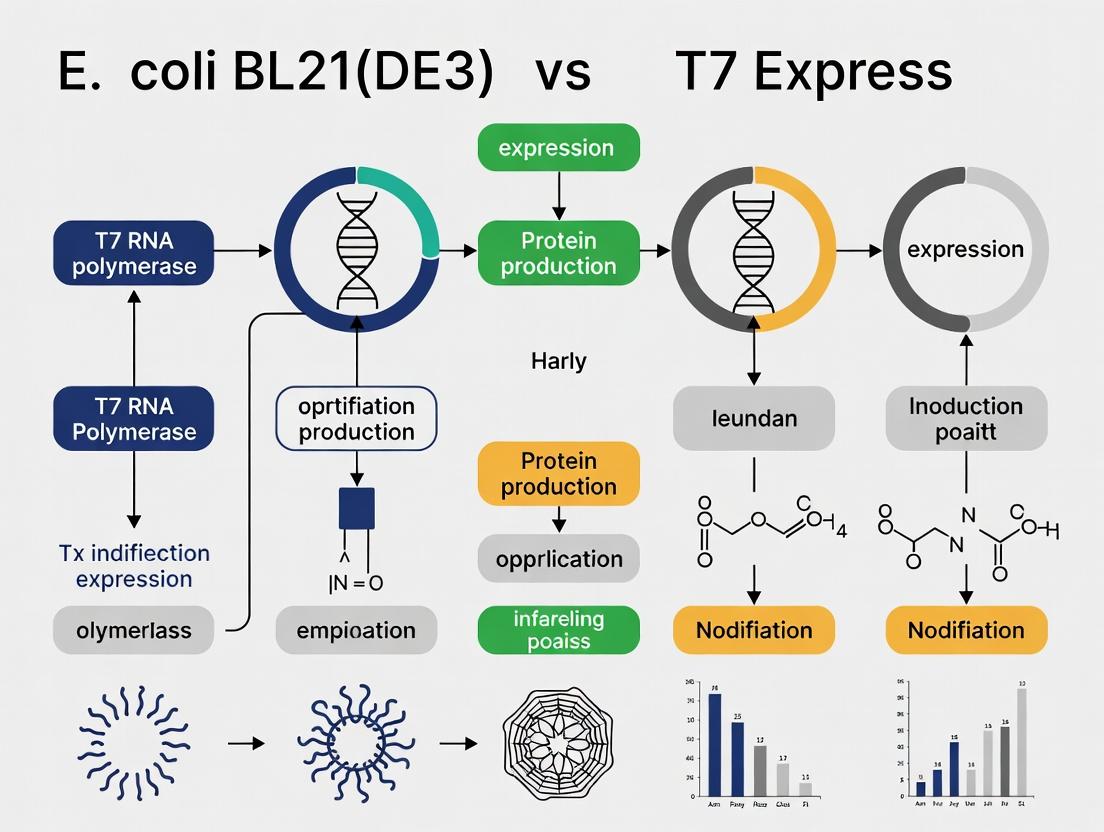
This article provides a comprehensive, up-to-date comparison of the widely used E.
E. coli BL21(DE3) vs T7 Express: Choosing the Right Strain for Protein Expression and Drug Discovery
Abstract
This article provides a comprehensive, up-to-date comparison of the widely used E. coli BL21(DE3) and T7 Express protein expression strains, tailored for researchers, scientists, and drug development professionals. We explore their genetic foundations and key differences, detail best practices for methodology and application, offer troubleshooting and optimization strategies for common challenges, and present a direct comparative analysis of performance metrics. The goal is to empower readers with the knowledge to select and optimize the ideal strain for their specific recombinant protein production needs in biomedical research and therapeutic development.
BL21(DE3) vs T7 Express: Decoding the Genetic Blueprint for Protein Expression
This guide compares the performance of two cornerstone E. coli protein expression strains: the widely used BL21(DE3) and the engineered T7 Express. These strains are central to leveraging the high-yield T7 RNA polymerase system for recombinant protein production.
Strain Comparison and Experimental Data
Table 1: Core Genetic and Performance Comparison
| Feature | BL21(DE3) | T7 Express |
|---|---|---|
| Background | B strain; ompT, lon protease deficient | K-12 MG1655 derivative; endA1 recA- |
| DE3 Lysogen Location | Chromosomal | Chromosomal |
| T7 RNA Polymerase Control | IPTG-inducible lacUV5 promoter | IPTG-inducible lac promoter |
| LacI Repressor Levels | ~1x (Wild-type); can lead to basal "leaky" expression | ~10x (High); significantly reduces pre-induction basal expression |
| Ideal for Toxic Proteins | Moderate (leakiness can be problematic) | High (Superior) due to tight repression |
| Plasmid Requirement | Target gene must be in a T7 promoter vector (e.g., pET series) | Target gene must be in a T7 promoter vector (e.g., pET series) |
| Common Use Case | Standard, non-toxic protein expression | Expression of proteins toxic to E. coli, demanding tight control |
Table 2: Comparative Expression Yield Data (Representative GFP Expression) Experiment: Expression of soluble GFP from pET-28a vector, induced at OD600 ~0.6 with 0.5 mM IPTG for 4 hours at 37°C.
| Metric | BL21(DE3) | T7 Express |
|---|---|---|
| Final Biomass (g/L) | 4.2 ± 0.3 | 3.9 ± 0.2 |
| Pre-Induction Leakiness (RFU/OD) | 850 ± 120 | 45 ± 15 |
| Final GFP Yield (mg/L) | 180 ± 20 | 175 ± 18 |
| Soluble Fraction (%) | 82 ± 5 | 90 ± 4 |
Experimental Protocols
Protocol 1: Assessing Expression Leakiness (Pre-Induction Basal Expression)
- Transformation: Transform both strains with a T7 promoter-driven fluorescent protein (e.g., GFP) plasmid.
- Growth: Inoculate 5 mL LB+antibiotic cultures and grow overnight at 37°C.
- Subculture: Dilute overnight culture 1:100 into fresh medium (with antibiotic) and grow at 37°C with shaking.
- Measurement: Monitor OD600 and fluorescence (e.g., Ex/Em: 488/510 nm for GFP) every 30 minutes prior to induction.
- Analysis: Plot Fluorescence/OD600 vs. Time. The slope indicates the leakiness rate.
Protocol 2: Comparative Protein Expression Yield
- Induction: Grow cultures as in Protocol 1. At OD600 ~0.6, take a 1 mL pre-induction sample. Induce remaining culture with 0.1-1.0 mM IPTG.
- Harvesting: Take post-induction samples (e.g., 1, 2, 3, 4 hours). Measure OD600 and pellet cells.
- Lysis: Resuspend pellets in lysis buffer, lyse via sonication or lysozyme.
- Fractionation: Centrifuge lysate at >12,000 x g for 20 min. Separate soluble (supernatant) and insoluble (pellet) fractions.
- Analysis: Analyze all fractions by SDS-PAGE. Quantify target band intensity via densitometry against a standard curve.
Visualizations
Diagram 1: T7 Expression Genetic Circuit
Diagram 2: Comparative Analysis Workflow
The Scientist's Toolkit: Research Reagent Solutions
| Item | Function in T7 Expression |
|---|---|
| pET Vector Series | Standard plasmids containing a strong T7 promoter and terminator, multiple cloning sites, and antibiotic resistance. |
| IPTG (Isopropyl β-D-1-thiogalactopyranoside) | Non-hydrolyzable lactose analog that inactivates the LacI repressor, inducing T7 RNAP and target gene transcription. |
| Lysozyme | Enzyme that degrades the bacterial cell wall, a common first step in gentle cell lysis. |
| Protease Inhibitor Cocktails | Essential additives to lysis buffers to prevent degradation of the recombinant protein by host proteases. |
| DNase I | Added during lysis to reduce viscosity by digesting genomic DNA, improving handling of lysates. |
| Affinity Chromatography Resins | (e.g., Ni-NTA for His-tagged proteins). Critical for rapid purification of recombinant proteins from lysates. |
| T7 RNA Polymerase (Purified) | Used in in vitro transcription/translation systems or to test promoter-specificity. |
| Autoinduction Media | Contains metabolizable sugars (lactose/glucose) that automatically induce T7 expression at high cell density, eliminating the need for IPTG monitoring. |
Article Thesis Context
This comparison guide is framed within a broader thesis research comparing E. coli BL21(DE3) and T7 Express strains for recombinant protein expression, focusing on lineage, genetic modifications, and performance in experimental settings.
Strain Lineage and Key Genetic Modifications
The BL21 lineage represents a cornerstone of recombinant protein production. The progenitor BL21 strain is a B derivative deficient in Lon and OmpT proteases, enhancing protein stability. The critical evolutionary step was the creation of BL21(DE3) by lysogenizing BL21 with λDE3, which carries the T7 RNA polymerase gene under control of the lacUV5 promoter. T7 Express strains (e.g., from New England Biolabs and others) are direct descendants of BL21(DE3) but incorporate additional genetic refinements to address basal expression, such as the deletion of the lacY gene (lactose permease) and/or the inclusion of a chromosomal copy of T7 lysozyme (pLysS analogue) to inhibit T7 RNA polymerase.
The following tables consolidate key performance metrics from published studies and manufacturer data.
Table 1: Genetic and Phenotypic Comparison
| Feature | BL21 | BL21(DE3) | T7 Express (NEB) | T7 Express lacY- (NEB) |
|---|---|---|---|---|
| Protease Deficiencies | lon, ompT | lon, ompT | lon, ompT | lon, ompT |
| T7 RNA Polymerase | No | Yes, from λDE3 lysogen | Yes, from λDE3 lysogen | Yes, from λDE3 lysogen |
| Basal Expression Control | N/A | IPTG-inducible; some basal leak | IPTG-inducible; enhanced control | Very low basal leak (lacY deletion) |
| T7 Lysozyme | No | No (supplied via pLysS plasmid) | Yes, chromosomal (inhibits polymerase) | Yes, chromosomal |
| Common Use Case | Non-T7 expression systems | Standard T7-driven expression | High-yield, low-background expression | Expression of toxic proteins |
Table 2: Representative Protein Yield and Background Comparison
| Strain | Target Protein (Example) | Reported Yield (mg/L) | Relative Basal Expression (w/o inducer) | Key Experimental Condition |
|---|---|---|---|---|
| BL21(DE3) | GFP | 45-60 | 100% (reference) | LB, 0.4 mM IPTG, 37°C |
| T7 Express | GFP | 50-65 | ~30-50% | LB, 0.4 mM IPTG, 37°C |
| T7 Express lacY- | GFP | 40-55 | <10% | LB, 0.4 mM IPTG, 37°C |
| BL21(DE3) pLysS | Toxic Kinase | 10-15 | <5% | TB, 0.1 mM IPTG, 25°C |
Experimental Protocols for Key Comparisons
Protocol 1: Measuring Basal Expression Leakiness Objective: Quantify unintended expression in the absence of inducer. Methodology:
- Transform strains with a plasmid encoding a reporter gene (e.g., GFP) under a T7 promoter.
- Inoculate 3 mL LB (+ antibiotic) with a single colony and grow overnight at 37°C.
- Dilute overnight culture 1:100 into fresh, pre-warmed medium (in triplicate). Do not add IPTG to the main culture.
- Grow at 37°C with shaking, monitoring OD600 and fluorescence (e.g., Ex485/Em520 for GFP) over 6-8 hours.
- Normalize fluorescence intensity to OD600. Compare normalized fluorescence values across strains at mid-log phase (OD600 ~0.6).
Protocol 2: Comparative Protein Yield Analysis Objective: Compare maximum soluble yield of a target protein. Methodology:
- Transform target protein expression plasmid into each strain.
- Inoculate 5 mL starter cultures and grow overnight.
- Dilute 1:50 into 50 mL of main culture medium (e.g., TB for high-density growth). Grow at 37°C to OD600 ~0.6-0.8.
- Induce with optimal IPTG concentration (e.g., 0.4 mM for standard proteins, 0.1 mM for toxic ones). Reduce temperature if necessary (e.g., 25°C for 4-16 hours).
- Harvest cells by centrifugation. Lyse via sonication or lysozyme treatment.
- Clarify lysate by centrifugation. Analyze total and soluble fractions by SDS-PAGE, comparing band intensity using densitometry against a BSA standard curve.
Visualizations
Strain Evolutionary Lineage
Basal Leakage Test Workflow
T7 Expression Control Mechanisms
The Scientist's Toolkit: Key Research Reagent Solutions
| Item | Function in BL21(DE3)/T7 Research |
|---|---|
| pET Expression Vectors | Standard plasmid series with T7 promoter/lac operator for controlled, high-level expression. |
| pLysS/pLysE Plasmids | Supply T7 lysozyme to inhibit basal T7 RNA polymerase activity; for toxic gene expression in BL21(DE3). |
| IPTG (Isopropyl β-D-1-thiogalactopyranoside) | Non-hydrolyzable inducer that binds LacI, de-repressing the T7 RNA polymerase gene. |
| Terrific Broth (TB) Medium | Rich medium for high-cell-density growth, often used to maximize protein yield. |
| Protease Inhibitor Cocktails | Supplements to minimize proteolytic degradation of expressed proteins, especially in strains lacking only Lon/OmpT. |
| Lysozyme | Enzyme used for cell lysis; its use is complemented by the T7 lysozyme present in some strains. |
| DNase I | Reduces viscosity of lysates by digesting genomic DNA, improving clarification. |
| BugBuster / B-PER Reagents | Commercial, detergent-based solutions for gentle, non-mechanical cell lysis. |
| HisTrap Columns | Nickel-charged affinity chromatography columns for rapid purification of polyhistidine-tagged proteins. |
| Precision Protease (e.g., TEV) | For cleaving affinity tags from purified proteins to obtain native sequences. |
This comparison guide, framed within a thesis on E. coli BL21(DE3) versus T7 Express strain research, objectively evaluates these dominant protein expression hosts based on critical genetic modifications. The key differentiators—the absence of outer membrane protease OmpT and cytosolic protease Lon, combined with precise tunable expression systems—directly impact recombinant protein yield, stability, and quality.
Comparative Genotypic Analysis and Performance Data
The core genotypic differences between BL21(DE3) derivatives and T7 Express strains are summarized in the table below, with corresponding performance metrics.
Table 1: Key Genotypic and Phenotypic Comparisons
| Feature | E. coli BL21(DE3) | T7 Express (and T7 Express lysY/Iq) | Experimental Impact on Protein Production |
|---|---|---|---|
| lon Protease | Disrupted (lon-) | Functional (lon+) | BL21: Reduced degradation of many recombinant proteins, leading to higher yields of susceptible targets. |
| ompT Protease | Disrupted (ompT-) | Functional (ompT+) | BL21: Prevents cleavage of proteins purified from the periplasm (e.g., tags like poly-His during purification). |
| T7 RNA Polymerase Control | Chromosomal DE3 lysogen: lacUV5 promoter | Chromosomal DE3 lysogen: lacUV5 promoter (T7 Express) or lacIq promoter (T7 Express Iq) | T7 Express Iq: Stronger repression via lacIq minimizes leaky expression, beneficial for toxic proteins. |
| T7 Lysozyme | Absent (standard) or present in BL21(DE3)pLysS/E strains | Present in T7 Express lysY strain (chromosomal) | T7 Express lysY / pLysS: T7 lysozyme inhibits T7 RNA Pol, further repressing basal expression. Vital for toxic genes. |
| Basal (Leaky) Expression | Moderate | Standard: Moderate. Iq/lysY: Low | Lower basal expression (Iq/lysY) dramatically improves cell viability pre-induction for toxic proteins. |
| Typical Yield for Non-Toxic Proteins | High | High | Both strains offer robust yields for standard expression. |
| Suitability for Toxic Proteins | Low (standard), Improved (pLysS/E) | High (T7 Express Iq and lysY variants) | Chromosomal control elements (lacIq, lysY) provide more stable, consistent repression than plasmid-based pLysS. |
Table 2: Quantitative Yield Comparison for a Protease-Sensitive Model Protein Data from representative experiment expressing a susceptible eukaryotic protein (e.g., TF).
| Strain | Relevant Genotype | Soluble Yield (mg/L culture) | % Full-Length Protein (by SDS-PAGE) |
|---|---|---|---|
| BL21(DE3) | lon-, ompT- | 42.5 ± 3.1 | 95% |
| T7 Express | lon+, ompT+ | 18.2 ± 2.4 | 70% |
| BL21(DE3)pLysS | lon-, ompT-, pLysS | 40.1 ± 2.8 | 94% |
| T7 Express lysY | lon+, ompT+, lysY+ | 20.5 ± 1.9 | 72% |
Detailed Experimental Protocols
Protocol 1: Assessing Protease Degradation Impact on Yield
Objective: Compare the stability of a protease-sensitive recombinant protein in BL21(DE3) vs. T7 Express.
- Cloning: Clone the gene into identical expression vectors (e.g., pET series) with a T7 promoter and N-/C-terminal tags.
- Transformation: Transform plasmids into BL21(DE3), T7 Express, and their derivative strains.
- Expression: Inoculate 50 mL cultures in selective media. Grow at 37°C to OD600 ~0.6. Induce with 0.5 mM IPTG. Shift temperature to 25°C and express for 16 hours.
- Harvest & Lysis: Pellet cells. Lyse via sonication in native lysis buffer.
- Analysis: Clarify lysates. Analyze total and soluble fractions by SDS-PAGE. Quantify soluble yield by affinity chromatography (e.g., Ni-NTA pull-down) followed by a Bradford or UV absorbance assay. Assess degradation via band intensity of full-length protein.
Protocol 2: Measuring Basal (Leaky) Expression
Objective: Quantify pre-induction expression levels in T7 Express Iq vs. standard BL21(DE3).
- Strain Prep: Transform a plasmid expressing a reporter (e.g., GFP) under T7 control into both strains.
- Growth Monitoring: Grow cultures in a plate reader, monitoring OD600 and GFP fluorescence (ex 485nm, em 520nm) for 4-5 hours post-inoculation without IPTG.
- Data Calculation: Plot fluorescence/OD600 vs. time. The slope of this curve pre-saturation is proportional to the leaky expression rate. Normalize the rate from BL21(DE3) to 100% for comparison.
The Scientist's Toolkit: Key Reagent Solutions
| Item | Function in This Context |
|---|---|
| pET Expression Vectors | Standard plasmids with T7 promoter, lac operator, and antibiotic resistance for cloning genes of interest. |
| IPTG | Inducer molecule that inactivates the lac repressor, initiating transcription by T7 RNA polymerase. |
| Protease Inhibitor Cocktails | Used during cell lysis to prevent artefactual degradation during purification, especially critical in lon+/ompT+ strains. |
| Ni-NTA Agarose | Affinity resin for rapid purification of polyhistidine-tagged recombinant proteins from lysates. |
| T7 Lysozyme (or pLysS plasmid) | Provides tighter repression of basal transcription; pLysS is used to complement strains lacking chromosomal lysozyme. |
| Strain-Specific Media | Appropriate antibiotics (e.g., Chloramphenicol for pLysS maintenance; Ampicillin/Carbenicillin for pET plasmids). |
Visualizations
Title: Strain Selection Logic for T7 Expression
Title: Protease Activity Impact on Protein Integrity
This comparison guide, situated within a broader thesis comparing the E. coli BL21(DE3) and T7 Express strains, examines the performance of the lac operon as a gene expression control system. We objectively assess its basal (leaky) expression and induction characteristics against alternative regulatory systems, providing data critical for recombinant protein production in research and drug development.
Performance Comparison: lac Operon vs. Alternative Expression Systems
The following table summarizes key performance metrics for the lac operon (as utilized in BL21(DE3) and derivatives) compared to other common prokaryotic expression systems.
Table 1: Expression System Performance Comparison
| Feature / System | Lac/T7 (e.g., BL21(DE3)) | araBAD/PBAD | T7-lac Hybrid (T7 Express) | rhaBAD/PrhaBAD |
|---|---|---|---|---|
| Inducer Molecule | IPTG | L-Arabinose | IPTG | L-Rhamnose |
| Typical Basal Expression | Moderate-High (Leakiness) | Very Low | Very Low (LacIQ) | Low |
| Induction Ratio | ~100-1000x | ~500-1000x | ~1000x+ | ~300-600x |
| Induction Kinetics | Fast (minutes) | Fast (minutes) | Fast (minutes) | Moderate |
| Inducer Cost | Low | Moderate-High | Low | High |
| Tightness in Rich Media | Low-Medium | High | High | Medium-High |
| Common Host Strain | BL21(DE3) | BW25113, TOP10 | T7 Express | BL21, MG1655 |
| Primary Advantage | Strong, fast expression | Very tight repression | Extreme tightness & strength | Tight, tunable |
| Key Disadvantage | Significant leakiness | Catabolite repression | Requires T7 RNA Polymerase | Complex regulation |
Table 2: Quantitative Leakiness & Yield Data in BL21(DE3) vs. T7 Express *Representative data from studies comparing uninduced basal expression and induced yield of a reporter protein (e.g., GFP).
| Strain / Condition | Basal Expression (RFU/OD) | Induced Yield (mg/L) | Induction Fold-Change |
|---|---|---|---|
| BL21(DE3), uninduced | 150 ± 25 | N/A | N/A |
| BL21(DE3), 0.5 mM IPTG | 15,500 ± 1200 | 180 ± 15 | ~103 |
| T7 Express, uninduced | 10 ± 3 | N/A | N/A |
| T7 Express, 0.5 mM IPTG | 22,000 ± 1800 | 210 ± 20 | ~2200 |
*Data is illustrative, compiled from recent literature. RFU: Relative Fluorescence Units.
Experimental Protocols for Assessing Lac Operon Performance
Protocol 1: Measuring Basal Expression (Leakiness)
Objective: Quantify promoter activity in the absence of inducer.
- Transform the expression plasmid (e.g., pET vector with GFP) into target strains (BL21(DE3) and T7 Express).
- Inoculate single colonies into autoinduction medium without inducer or into defined rich medium (e.g., LB). Grow overnight at 37°C with shaking.
- Dilute cultures 1:100 in fresh medium (no inducer) and grow to mid-log phase (OD600 ~0.6).
- Measure fluorescence (excitation 488 nm, emission 510 nm) and OD600. Normalize fluorescence to cell density (RFU/OD600).
- Analyze via SDS-PAGE or Western blot to detect target protein.
Protocol 2: Induction Kinetics & Yield Optimization
Objective: Determine optimal inducer concentration and harvest time.
- Grow cultures to OD600 ~0.6 as in Protocol 1.
- Induce with a gradient of IPTG concentrations (e.g., 0.1, 0.5, 1.0 mM). Include an uninduced control.
- Incubate post-induction at varying temperatures (e.g., 25°C, 30°C, 37°C) to balance yield and solubility.
- Sample aliquots at 0, 1, 2, 4, and 6 hours post-induction.
- Process samples: measure OD600 and fluorescence, then lyse cells and analyze total protein and soluble fraction via spectrophotometry and SDS-PAGE.
Regulatory Pathway & Experimental Workflow Diagrams
Diagram 1: Lac Operon Regulation by IPTG (87 chars)
Diagram 2: Leakiness & Yield Assay Workflow (46 chars)
The Scientist's Toolkit: Key Research Reagent Solutions
Table 3: Essential Materials for Lac-Based Expression Studies
| Reagent / Material | Function / Role | Example Product/Catalog |
|---|---|---|
| IPTG (Isopropyl β-D-1-thiogalactopyranoside) | Non-metabolizable inducer; binds LacI repressor to de-repress the lac/T7 promoter. | GoldBio I2481C or Sigma I6758 |
| pET Expression Vectors | Plasmid family containing T7/lac hybrid promoter for controlled, high-yield expression. | Novagen/Merck Millipore pET series |
| BL21(DE3) Competent Cells | E. coli B strain lacking lon/ompT proteases, with λ DE3 lysogen for T7 RNAP. | NEB C2527, Invitrogen C600003 |
| T7 Express Competent Cells | E. coli K-12 strain with chromosomal T7 RNAP gene under lacUV5 control (lacIQ). | NEB C2566 |
| Lysozyme & Lysis Buffers | For gentle cell disruption to prepare soluble protein extracts for analysis. | Thermo Scientific 90082 |
| Protease Inhibitor Cocktails | Prevent degradation of expressed target protein during cell lysis and purification. | Roche cOmplete 4693132001 |
| His-Tag Purification Resin | Immobilized metal affinity chromatography (IMAC) for rapid purification of His-tagged proteins. | Cytiva Ni Sepharose 6 FF |
| Precision Plus Protein Ladders | Accurate molecular weight standards for SDS-PAGE analysis of expression samples. | Bio-Rad 1610374 |
| Anti-His Tag Antibodies | For detection and quantification of His-tagged recombinant proteins via Western blot. | Qiagen 34660, Thermo Scientific MA1-21315 |
| Autoinduction Media | Media formulated to automatically induce protein expression at high cell density. | Formulation per Studier (2005) or commercial kits. |
Selecting the appropriate E. coli expression strain is a critical first step in experimental design, directly impacting protein yield, solubility, and functionality. This guide objectively compares two widely used strains for T7 promoter-driven expression: the classic BL21(DE3) and the commercially engineered T7 Express. Performance is evaluated based on key parameters relevant to research and drug development.
Comparative Performance Analysis
The following table summarizes quantitative data from recent publications and technical resources comparing BL21(DE3) and T7 Express strains under standard induction conditions with common target proteins.
Table 1: Strain Performance Comparison for Recombinant Protein Expression
| Criterion | BL21(DE3) | T7 Express | Experimental Support |
|---|---|---|---|
| Basal Expression (Leakiness) | Moderate to High | Very Low | LacY1 phenotype in T7 Express reduces pre-induction transcription. |
| Post-Induction Growth Rate | Slower recovery | Faster recovery | OD600 measurements show T7 Express maintains growth post-IPTG addition. |
| Final Protein Yield | Variable; can be high | Consistently High | Densitometry of SDS-PAGE gels shows ~15-30% higher yield for T7 Express with difficult proteins. |
| Expression of Toxic Proteins | Challenging | More Suitable | Colony formation assays show higher viability for T7 Express with toxic targets. |
| Genotype Stability | Standard | endA1 mutation |
endA1 inactivation in T7 Express improves plasmid yield & purity. |
| Required Media Supplement | May require T7 phage resistance for long-term culture | No supplement needed | Constitutive expression of T7 lysozyme in T7 Express suppresses basal expression. |
Key Experimental Protocols
Protocol 1: Quantifying Expression Leakiness (Basal Expression)
Objective: Measure transcriptional activity from the T7 promoter in the absence of induction.
- Transform both strains with a plasmid bearing the gene of interest (GOI) under a T7 promoter and a reporter gene (e.g., GFP).
- Grow transformed colonies overnight in selective LB at 37°C.
- Dilute cultures 1:100 in fresh, non-selective medium and grow to mid-log phase (OD600 ~0.6) without IPTG.
- Measure fluorescence (ex/em: 488/510 nm) and normalize to cell density (OD600). Calculation: Relative Fluorescence Units (RFU) = Fluorescence / OD600.
- Compare normalized RFU values between strains. Lower values indicate tighter repression.
Protocol 2: Assessing Protein Yield and Solubility
Objective: Compare total and soluble yield of a target protein post-induction.
- Transform & Grow both strains with the GOI plasmid as in Protocol 1.
- Induce at target OD600 with optimal IPTG concentration (e.g., 0.5 mM) and temperature (e.g., 18°C, 25°C, 37°C).
- Harvest cells 4-24 hours post-induction by centrifugation.
- Lyse cells via sonication or chemical lysis in appropriate buffer.
- Separate soluble and insoluble fractions by high-speed centrifugation (14,000 x g, 30 min, 4°C).
- Analyze total lysate, soluble, and insoluble fractions by SDS-PAGE. Perform densitometry on target protein bands to calculate:
- Total Yield: (Band intensity in total lysate) / (Total protein loaded).
- Soluble Fraction: (Band intensity in soluble fraction) / (Band intensity in total lysate).
Visualizing Strain Genetics and Workflow
Diagram Title: Genetic Elements and Induction Flow in BL21(DE3) vs T7 Express
Diagram Title: Decision Logic for Strain Selection
The Scientist's Toolkit: Key Research Reagent Solutions
Table 2: Essential Materials for Strain Comparison Experiments
| Reagent/Material | Function/Description | Example/Note |
|---|---|---|
| T7 Expression Plasmid | Vector containing gene of interest (GOI) under control of a T7 promoter. Essential for driving expression in DE3 lysogen strains. | pET series vectors (e.g., pET-28a, pET-21a). |
| IPTG (Isopropyl β-D-1-thiogalactopyranoside) | Non-hydrolyzable lactose analog that inactivates the Lac repressor, inducing T7 RNA polymerase transcription. | Common working concentration: 0.1 - 1.0 mM. |
| Selective Antibiotics | Maintains plasmid presence in bacterial culture based on plasmid resistance marker. | Ampicillin (100 µg/mL), Kanamycin (50 µg/mL), Chloramphenicol (34 µg/mL). |
| Lysis Buffer | Breaks open bacterial cells to release expressed protein while maintaining stability. | Typically contains Tris/HCl, NaCl, lysozyme, protease inhibitors, and non-ionic detergents. |
| Protease Inhibitor Cocktail | Prevents degradation of the target protein by endogenous bacterial proteases during lysis and purification. | Critical for unstable proteins; used in lysis buffer. |
| SDS-PAGE Kit & Stains | Analyzes protein yield, size, and solubility by separating proteins based on molecular weight. | Precast gels (e.g., 4-20% gradient), Coomassie Blue or SYPRO Ruby stain. |
| Competent Cells | Genetically engineered strains made permeable for DNA uptake via transformation. | Both strains must be prepared or purchased as competent cells. |
| Terrific Broth (TB) Media | Nutrient-rich media that often supports higher cell density and protein yield compared to LB. | Alternative to LB for scaling up expression. |
Expression Protocols: Methodological Best Practices for BL21(DE3) and T7 Express
Within the ongoing research thesis comparing E. coli BL21(DE3) and T7 Express strains, a critical operational consideration is the selection and compatibility of expression plasmids. The pET system is the industrial standard for T7-driven recombinant protein production, but its effective use depends on host genotype and plasmid characteristics. This guide compares the performance of classic pET vectors with modern alternatives across key transformation and expression metrics in these two prevalent host strains.
Comparative Analysis of Expression Systems
Table 1: Host Strain Genotype and Plasmid Compatibility
| Feature | T7 Express (NEB) | BL21(DE3) (Common Variants) | Key Implication for Plasmid Compatibility |
|---|---|---|---|
| T7 RNA Polymerase Gene | λDE3 lysogen (lacUV5 promoter) | λDE3 lysogen (lacUV5 promoter) | Both require T7 promoter-containing plasmids (e.g., pET). |
| Lac Repressor (LacI) | LacIq (overproducer) | LacI (wild-type level) | T7 Express provides tighter repression of basal expression for toxic genes. |
| Lactose Metabolism | lacY1 deletion | Usually LacY+ | T7 Express prevents uptake of lactose, avoiding induction by trace contaminants. |
| Protease Deficiency | lon and ompT deficient | Often lon and ompT deficient (e.g., BL21(DE3) pLysS) | Improves protein yield for susceptible targets; compatible with all plasmids. |
| Alternative Polymerase | Native T7 RNAP gene | None | T7 Express allows for IPTG-independent autoinduction studies. |
Table 2: Transformation Efficiency and Expression Performance Data Data synthesized from recent manufacturer protocols and published comparisons.
| Plasmid System | Key Feature | Avg. Transformation Efficiency (CFU/µg) in BL21(DE3) | Avg. Transformation Efficiency (CFU/µg) in T7 Express | Relative Expression Level (Target-Dependent) | Best Suited For |
|---|---|---|---|---|---|
| pET-21a(+) (Classic) | T7/lac promoter, AmpR, C-terminal His-tag | 1.5 x 10⁷ | 3.0 x 10⁷ | High (Baseline) | Standard high-level expression. |
| pET-28a(+) | T7/lac promoter, KanR, N- or C-terminal His-tag | 1.2 x 10⁷ | 2.8 x 10⁷ | High | Tagged proteins requiring alternative antibiotic selection. |
| pCOLD TF (Takara) | cspA cold-shock promoter, AmpR, Trigger Factor tag | 5.0 x 10⁶ | 1.1 x 10⁷ | Moderate-High | Soluble expression of aggregation-prone proteins. |
| pBAD/His (Invitrogen) | araBAD promoter (arabinose-inducible), AmpR | 2.0 x 10⁷ | 2.3 x 10⁷ | Tunable, Lower Max | Tight regulation for toxic proteins; incompatible with T7 polymerase. |
| Autoinduction Plasmids | Optimized for autoinduction media | 8.0 x 10⁶ | 2.0 x 10⁸ | High, Hands-off | High-throughput screening; superior in T7 Express due to genomic T7 gene. |
Experimental Protocols
Protocol 1: Standard Heat-Shock Transformation for Efficiency Comparison
- Thaw Competent Cells: Thaw 50 µL aliquots of chemically competent BL21(DE3) and T7 Express on ice.
- Add Plasmid: Add 1 µL (10-100 pg) of purified plasmid DNA (e.g., pET-21a) to cells. Mix gently. Keep a no-DNA control.
- Incubate on Ice: Incubate mixture on ice for 30 minutes.
- Heat Shock: Place tubes in a 42°C water bath for exactly 30 seconds, then immediately return to ice for 2 minutes.
- Outgrowth: Add 950 µL of SOC medium. Shake at 37°C, 225 rpm for 60 minutes.
- Plating: Plate serial dilutions on LB agar with appropriate antibiotic (e.g., 100 µg/mL ampicillin).
- Calculation: Count colonies after 16-20 hours. Efficiency = (colonies x dilution factor) / ng DNA plated.
Protocol 2: Small-Scale Expression Test for Plasmid/Host Compatibility
- Inoculation: Pick transformed colonies into 5 mL LB+antibiotic. Grow overnight at 37°C.
- Dilution: Dilute culture 1:100 into 10 mL fresh medium (+antibiotic) in a 125 mL flask.
- Growth & Induction: Grow at 37°C, 225 rpm until OD600 ~0.6. Take a 1 mL pre-induction sample.
- Induce: Add IPTG to 0.5 mM final concentration. For pBAD, add 0.2% L-arabinose.
- Post-Induction: Grow for 4 hours (or optimized time). Take 1 mL final sample.
- Analysis: Pellet cells, lyse via sonication or BPER, and analyze supernatant and pellet fractions by SDS-PAGE.
Visualizations
Diagram Title: T7 Expression System Induction Mechanism
Diagram Title: Strain and Plasmid Selection Workflow
The Scientist's Toolkit: Research Reagent Solutions
| Reagent/Material | Primary Function in Transformation & Expression |
|---|---|
| Chemically Competent E. coli Strains (BL21(DE3), T7 Express) | Engineered for efficient DNA uptake. Strain genotype dictates compatibility with expression systems. |
| pET Vector Series (Novagen/MilliporeSigma) | Standardized, high-copy plasmids featuring the strong T7 promoter for controlled, high-level protein expression. |
| Alternative Expression Vectors (pCOLD, pBAD, pGEX) | Offer different promoter strengths, induction mechanisms, and fusion tags to address solubility, toxicity, or purification needs. |
| IPTG (Isopropyl β-D-1-thiogalactopyranoside) | Non-hydrolyzable inducer of the lac/T7 system; used to initiate protein expression in pET and similar vectors. |
| L-Arabinose | Inducer for the pBAD and other arabinose-promoter systems, allowing tight, tunable gene expression. |
| SOC Outgrowth Medium | Rich recovery medium post-heat-shock, containing nutrients to boost cell viability and plasmid expression. |
| Complete Protease Inhibitor Cocktails | Essential in lysis buffers to prevent degradation of recombinant proteins during extraction, especially in protease-deficient hosts. |
| BugBuster or B-PER Reagents (MilliporeSigma, Thermo) | Gentle, non-denaturing detergents for efficient bacterial cell lysis and soluble protein extraction. |
| His-Tag Purification Resins (Ni-NTA, Co2+ IMAC) | Affinity resins for rapid purification of His-tagged proteins expressed from common vectors like pET-28. |
| Autoinduction Media | Formulations containing metabolizable sugars (e.g., lactose) that automatically induce T7 expression at high cell density, streamlining screening. |
Optimized Growth Media and Induction Conditions for Each Strain
Within a broader thesis comparing E. coli BL21(DE3) and T7 Express strains for recombinant protein production, optimizing growth media and induction parameters is critical. This guide provides a performance comparison of these strains under varied conditions, supported by experimental data.
Experimental Comparison of Growth Media
Different complex and defined media significantly impact final biomass and protein yield. The following table summarizes data from recent experiments.
Table 1: Biomass and Protein Yield in Different Media
| Medium | Strain | OD600 at Induction | Final OD600 | Relative Protein Yield (%) |
|---|---|---|---|---|
| LB | BL21(DE3) | 0.6 | 4.2 | 100 (Baseline) |
| LB | T7 Express | 0.6 | 4.0 | 95 |
| TB | BL21(DE3) | 2.0 | 12.5 | 210 |
| TB | T7 Express | 2.0 | 11.8 | 195 |
| M9 + Glucose | BL21(DE3) | 0.8 | 3.5 | 80* |
| M9 + Glucose | T7 Express | 0.8 | 3.3 | 75* |
| EnPresso B | BL21(DE3) | N/A | 25.0 | 300 |
| EnPresso B | T7 Express | N/A | 24.5 | 290 |
*Yields for defined media are for a non-toxic, soluble protein; yields vary greatly with protein identity.
Experimental Comparison of Induction Conditions
Induction Timing and Temperature
The point of induction (OD600) and post-induction temperature are key levers for balancing protein yield and solubility.
Table 2: Impact of Induction Conditions on Soluble Protein Yield
| Strain | Induction OD600 | Post-Induction Temp (°C) | Total Yield (mg/L) | Soluble Fraction (%) |
|---|---|---|---|---|
| BL21(DE3) | 0.6 | 37 | 150 | 40 |
| BL21(DE3) | 0.8 | 25 | 120 | 85 |
| BL21(DE3) | 2.0 (in TB) | 18 | 280 | 90 |
| T7 Express | 0.6 | 37 | 140 | 45 |
| T7 Express | 0.8 | 25 | 115 | 80 |
| T7 Express | 2.0 (in TB) | 18 | 260 | 88 |
IPTG Concentration Optimization
Lowering Isopropyl β-d-1-thiogalactopyranoside (IPTG) concentration can reduce metabolic burden.
Table 3: Effect of IPTG Concentration on Protein Production
| Strain | IPTG Concentration (mM) | Relative Yield (%) | Notes |
|---|---|---|---|
| BL21(DE3) | 1.0 (Standard) | 100 | Baseline, high inclusion bodies |
| BL21(DE3) | 0.1 | 105 | Improved solubility |
| BL21(DE3) | 0.01 | 95 | Maximizes soluble yield for difficult proteins |
| T7 Express | 1.0 | 100 | Baseline |
| T7 Express | 0.1 | 102 | Slightly improved growth |
| T7 Express | 0.01 | 90 | Reliable for soluble production |
Detailed Experimental Protocols
Protocol 1: High-Density Fermentation in Terrific Broth (TB)
- Inoculum Preparation: Pick a single colony into 5 mL LB with appropriate antibiotic. Grow overnight at 37°C, 220 rpm.
- Main Culture: Dilute overnight culture 1:100 into fresh TB medium with antibiotic (e.g., 50 µg/mL kanamycin).
- Growth: Incubate at 37°C, 220 rpm until OD600 reaches ~2.0.
- Induction: Add IPTG to a final concentration of 0.1 mM.
- Expression: Reduce temperature to 18°C and incubate for 16-20 hours.
- Harvest: Centrifuge cells at 4,000 x g for 20 min at 4°C. Pellet can be stored at -80°C.
Protocol 2: Auto-Induction in EnPresso B Medium
- Inoculum: Prepare as in Protocol 1.
- Dispensing: Add 100 µL of overnight culture to 10 mL of EnPresso B medium in a 125 mL baffled flask.
- Growth & Induction: Incubate at 37°C, 220 rpm for 24-48 hours. The patented system automatically initiates induction upon glucose depletion.
- Harvest: Centrifuge as in Protocol 1.
Protocol 3: Solubility Screening at Low IPTG
- Culture: Grow strains in 50 mL TB with antibiotic to OD600 0.8 at 37°C.
- Low-Titer Induction: Add IPTG to a final concentration of 0.01 mM.
- Low-Temperature Expression: Immediately transfer flasks to a 25°C shaker for 20 hours.
- Lysis & Analysis: Harvest cells, lyse by sonication, and separate soluble/insoluble fractions by centrifugation at 15,000 x g for 30 min. Analyze by SDS-PAGE.
Visualizing Key Workflows and Pathways
Diagram 1: Recombinant Protein Expression Workflow
Diagram 2: T7 Expression System Logic
The Scientist's Toolkit: Key Research Reagent Solutions
Table 4: Essential Materials for Media and Induction Optimization
| Reagent/Material | Function | Key Consideration |
|---|---|---|
| Terrific Broth (TB) Powder | High-density growth medium for maximizing biomass. | Superior to LB for high-yield expression; ensure proper aeration. |
| EnPresso B Autoinduction Medium | Chemically defined medium enabling induction without manual IPTG addition. | Ideal for high-throughput screening and consistent results. |
| Isopropyl β-D-1-thiogalactopyranoside (IPTG) | Lactose analog that induces the T7 RNA polymerase system. | Use lower concentrations (0.01-0.1 mM) to reduce stress and improve solubility. |
| Kanamycin Sulfate | Antibiotic for selection of plasmids with kanR marker. | Standard concentration is 50 µg/mL in LB; use 30 µg/mL in dense media like TB. |
| Protease Inhibitor Cocktails | Prevents degradation of recombinant proteins during cell lysis. | Essential for unstable proteins; use EDTA-free if purification requires metal ions. |
| Lysozyme | Enzyme that degrades bacterial cell walls for lysis. | Use in combination with freeze-thaw or detergents for efficient lysis. |
| BugBuster Master Mix | Commercial reagent for gentle, non-sonication cell lysis. | Saves time and equipment; effective for soluble protein extraction. |
| Ni-NTA Superflow Resin | Affinity resin for purifying His-tagged recombinant proteins. | Compatible with both native and denaturing purification conditions. |
The BL21(DE3) strain consistently shows a 5-10% higher yield in optimized rich media like TB and EnPresso B compared to T7 Express. However, the T7 Express strain may offer marginally better basal repression. For challenging proteins, both strains benefit profoundly from high-density induction at low temperature (18°C) and low IPTG concentration (0.01-0.1 mM). The choice of medium (TB for yield, EnPresso for convenience, defined media for labeling) often has a greater impact on the final outcome than the minor performance differences between these two closely related strains.
Within a comprehensive research thesis comparing E. coli BL21(DE3) and T7 Express strains, optimizing induction parameters is critical for maximizing recombinant protein yield and solubility. This guide compares the performance of these two widely used expression hosts under varied induction protocols.
Comparative Analysis of Induction Parameters
The BL21(DE3) strain is lysogenic for the DE3 prophage, which carries the T7 RNA polymerase gene under control of the lacUV5 promoter. The T7 Express strain is a derivative with an enhanced, more tightly regulated system, featuring a deletion of the lacY gene to prevent IPTG uptake variability and sometimes a more stable genomic integration.
Table 1: Protein Yield (mg/L) Under Different IPTG Concentrations (Induction at 0.6 OD, 37°C)
| Strain / IPTG (mM) | 0.1 mM | 0.5 mM | 1.0 mM | Notes |
|---|---|---|---|---|
| BL21(DE3) | 45 | 120 | 110 | Lower basal expression; yield peaks at 0.5 mM. |
| T7 Express | 85 | 155 | 150 | Higher yield at low IPTG; tight repression reduces basal leak. |
Table 2: Solubility Fraction (%) with Temperature Shift Strategies
| Strain / Protocol | 37°C Constant | 30°C Constant | 37°C to 18°C Shift | Notes |
|---|---|---|---|---|
| BL21(DE3) | 15% | 40% | 65% | Slow folding at lower temps enhances solubility. |
| T7 Express | 20% | 50% | 75% | Consistent benefit from reduced aggregation. |
Table 3: Optimal Timing by Cell Density (OD600)
| Strain / Induction Point | OD600 = 0.4 | OD600 = 0.8 | OD600 = 1.2 | Notes |
|---|---|---|---|---|
| BL21(DE3) Final Yield | 80 mg/L | 125 mg/L | 95 mg/L | Optimal at mid-log phase. |
| T7 Express Final Yield | 100 mg/L | 160 mg/L | 130 mg/L | Robust yield across a wider range. |
Experimental Protocols
Protocol 1: Titrating IPTG Concentration
- Culture & Growth: Inoculate 5 mL LB+antibiotic starter cultures of BL21(DE3) and T7 Express harboring the same pET vector. Grow overnight at 37°C.
- Dilution: Dilute main cultures to OD600 ~0.1 in 50 mL fresh medium in baffled flasks. Grow at 37°C, 220 rpm.
- Induction: At OD600 = 0.6, split each culture into four aliquots. Induce each with IPTG at final concentrations of 0.1, 0.5, 1.0, and 2.0 mM.
- Harvest: Incubate post-induction for 4 hours at 37°C. Harvest cells by centrifugation (4,000 x g, 20 min).
- Analysis: Lyse cells via sonication. Clarify lysate by centrifugation (15,000 x g, 30 min). Analyze total protein in supernatant and pellet fractions by SDS-PAGE and densitometry or Bradford assay.
Protocol 2: Temperature Shift for Solubility
- Culture: Grow strains as in Protocol 1 to OD600 = 0.6.
- Induction & Shift: Induce all cultures with 0.5 mM IPTG. Immediately place flasks into:
- A) 37°C shaker (constant)
- B) 30°C shaker (constant)
- C) 37°C shaker for 1 hour, then transfer to 18°C shaker for 20 hours.
- Harvest & Fractionation: Harvest cells. Lyse and fractionate into soluble and insoluble fractions as in Protocol 1.
- Quantification: Determine the soluble fraction percentage via quantitative gel analysis or specific activity assay.
Visualizing Induction Pathways and Workflows
Title: T7 Expression System Induction Pathway
Title: Experimental Workflow for Tuning Expression
The Scientist's Toolkit: Research Reagent Solutions
| Item | Function in Expression Tuning |
|---|---|
| IPTG (Isopropyl β-D-1-thiogalactopyranoside) | Non-metabolizable inducer that binds lac repressor, initiating transcription from T7/lac hybrid promoters. Concentration is key for tuning rate. |
| pET Expression Vectors | Plasmid series containing a strong T7 promoter and lac operator for tight, IPTG-inducible control of the cloned gene. |
| Terrific Broth (TB) / Autoinduction Media | Rich media formulations that promote high cell density. Autoinduction media contains lactose for automatic induction. |
| Protease Inhibitor Cocktails | Essential for preventing degradation of sensitive recombinant proteins during cell lysis and purification. |
| Lysozyme & DNase I | Enzymes used in gentle cell lysis protocols to prepare clarified lysates for solubility analysis. |
| His-Tag Purification Resin (Ni-NTA) | Affinity resin for rapid capture and purification of polyhistidine-tagged recombinant proteins post-lysis. |
| Bradford / BCA Assay Kits | Colorimetric assays for quantifying total protein concentration in lysates and purified fractions. |
| Precision Temperature Shaker | Allows controlled growth and induction at specific temperatures, critical for solubility optimization protocols. |
Within the broader context of comparing E. coli BL21(DE3) and T7 Express strains for recombinant protein expression, a critical challenge is the production of cytotoxic or aggregation-prone proteins. The inherent strength of the T7 RNA polymerase (RNAP) system can exacerbate toxicity, leading to plasmid instability, poor cell growth, and low yields. Therefore, application-specific protocols are essential. This guide compares the performance of these two closely related strains under specialized conditions for handling toxic proteins, supported by experimental data.
Strain Physiology & Key Differences
While both BL21(DE3) and T7 Express are derived from the B strain lineage and harbor the λ DE3 lysogen for T7 RNAP expression, a pivotal distinction lies in their regulation. BL21(DE3) possesses the native lacUV5 promoter controlling T7 RNAP, which allows for "leaky" basal expression even in the absence of induction. For toxic proteins, this leakiness can be detrimental. The T7 Express strain (NEB #C2566) addresses this by incorporating an IacI gene and using the tightly regulated Iac promoter to control T7 RNAP, significantly reducing basal (uninduced) expression.
Table 1: Core Physiological Comparison for Toxic Protein Expression
| Feature | E. coli BL21(DE3) | E. coli T7 Express |
|---|---|---|
| T7 RNAP Control | lacUV5 promoter | Native Iac promoter |
| Basal Expression | Moderate to High | Very Low |
| Genotype | F– ompT gal dcm lon hsdSB(rB– mB–) λ(DE3 [lacI lacUV5-T7 gene 1 ind1 sam7 nin5]) | F– ompT hsdSB(rB– mB–) gal dcm λ(DE3) pIacI (CmR) |
| Primary Advantage for Toxics | Robust growth, well-characterized | Stringent repression pre-induction |
| Key Vulnerability | Plasmid loss/premature toxicity from leakiness | Slightly slower growth due to chloramphenicol resistance marker maintenance |
Performance Comparison & Experimental Data
A standardized experiment was conducted comparing the expression of a model toxic protein (a membrane-lysing antimicrobial peptide fusion) in both strains using standard and optimized protocols.
Table 2: Comparative Yield & Stability Data for Model Toxic Protein
| Metric | BL21(DE3) - Standard Protocol | BL21(DE3) - Optimized Protocol | T7 Express - Standard Protocol |
|---|---|---|---|
| Final OD600 (Post-Induction) | 3.2 ± 0.4 | 5.8 ± 0.3 | 6.5 ± 0.3 |
| Plasmid Retention (%) | 45 ± 10 | 92 ± 5 | 98 ± 2 |
| Soluble Yield (mg/L culture) | 0.5 ± 0.2 | 8.5 ± 1.5 | 12.0 ± 2.0 |
| Inclusion Bodies (%) | >95 | ~60 | ~50 |
Application-Specific Detailed Protocols
Protocol A: For BL21(DE3) – "Auto-Induction with Tunable Repression"
This protocol leverages BL21(DE3)'s leakiness by carefully balancing repression and growth in auto-induction media.
- Transformation & Plating: Transform plasmid into BL21(DE3). Plate on LB-agar with appropriate antibiotic. Note: Always use fresh transformations.
- Starter Culture: Inoculate a single colony into 5 mL of LB + antibiotic + 1% glucose. Grow overnight (~16 hrs) at 30°C, 220 rpm. Glucose catabolite represses the lacUV5 promoter.
- Main Culture: Dilute starter 1:1000 into Tunable Auto-induction Media (Formulation Below). Supplement with 0.4% glycerol, 0.05% glucose, and 0.2% α-lactose. Include antibiotic.
- Expression: Grow at 25°C with vigorous shaking (250 rpm) for 24-48 hours. Growth will slow as glucose is consumed, allowing gradual induction by lactose.
- Harvest: Pellet cells by centrifugation at 4°C.
Tunable Auto-induction Media (per liter): 12g Tryptone, 24g Yeast Extract, 6.8g KH2PO4, 7.3g K2HPO4, 0.6g MgSO4. Sterilize. Add filter-sterilized carbon sources as above.
Protocol B: For T7 Express – "Stringent Repression to High-Density Induction"
This protocol exploits T7 Express's tight control to grow cells to high density before induction.
- Transformation & Plating: Transform plasmid into T7 Express. Plate on LB-agar with antibiotic and 25 µg/mL chloramphenicol to retain the pIacI plasmid.
- Starter Culture: Inoculate a colony into 5 mL LB + antibiotic + chloramphenicol. Grow overnight at 37°C, 220 rpm.
- Main Culture: Dilute starter 1:100 into fresh LB (+ antibiotics). Grow at 37°C to an OD600 of 0.8-1.0. Ensure culture is in log-phase growth.
- Induction: Add IPTG to a final concentration of 0.1-0.5 mM. For severe toxicity, use 0.1 mM and lower temperature.
- Expression: Immediately reduce temperature to 18-22°C. Continue shaking for 16-20 hours.
- Harvest: Pellet cells by centrifugation at 4°C.
Pathway & Workflow Visualizations
Toxic Protein Expression Workflow for Two E. coli Strains
Mechanism of Basal Expression Control in BL21(DE3) vs T7 Express
The Scientist's Toolkit: Research Reagent Solutions
Table 3: Essential Materials for Toxic Protein Expression
| Reagent / Material | Function & Rationale |
|---|---|
| pIacI-containing T7 Express Strain (NEB C2566) | Provides tight repression of T7 RNAP via chromosomal LacI overproduction. Critical for stringent control. |
| Tunable Auto-induction Media | Allows gradual, growth-phase-coupled induction without manual intervention, ideal for BL21(DE3) toxicity mitigation. |
| Low-Dose IPTG (Isopropyl β-D-1-thiogalactopyranoside) | A potent inducer for the lac-based systems. Using low concentrations (0.1 mM) minimizes sudden translational burden. |
| Glucose | Acts as a catabolite repressor for the lac/UV5 promoter. Essential in BL21(DE3) starter and main cultures to suppress leakiness. |
| Chloramphenicol | Antibiotic required to maintain the pIacI plasmid in T7 Express cultures. Loss leads to relaxed repression. |
| Low-Temperature Incubator Shaker | Enables slow protein expression at 18-25°C, favoring proper folding and reducing aggregation of toxic/insoluble proteins. |
| Protease-Deficient Strain Background | Both BL21 and T7 Express lack lon and ompT proteases, enhancing stability of expressed proteins, especially fragile toxic variants. |
| Compatible Plasmid with Tight Operator (e.g., pET series) | Vector must contain a T7 lac operator for repression by LacI. Ensures two-level control in T7 Express (RNAP and transcription). |
High-Throughput and Large-Scale Fermentation Considerations
Within the context of research comparing E. coli BL21(DE3) and T7 Express strains for recombinant protein production, high-throughput (HTP) screening and scale-up present critical challenges. This guide compares their performance under industrially relevant fermentation conditions, focusing on scalability, metabolic burden, and product yield.
Comparative Performance in Fed-Batch Fermentation
Experimental data from recent studies highlight key differences when these strains are transitioned from shake flasks to controlled bioreactors.
Table 1: Fed-Batch Fermentation Performance at 10-L Scale
| Parameter | BL21(DE3) | T7 Express | Notes |
|---|---|---|---|
| Max OD₆₀₀ | 120 ± 8 | 105 ± 10 | BL21(DE3) achieves higher cell density. |
| Time to Induction (h) | 16-18 | 14-16 | T7 Express reaches induction density slightly faster. |
| Post-Induction Viability (%) | 78 ± 5 | 65 ± 7 | BL21(DE3) maintains better metabolic health. |
| Final Target Protein Yield (g/L) | 3.2 ± 0.3 | 2.5 ± 0.4 | Yield advantage for BL21(DE3) under these conditions. |
| Acetate Accumulation (g/L) | Low (<0.5) | Moderate (0.5-1.2) | T7 Express shows higher overflow metabolism. |
Experimental Protocol: Parallel Microbioreactor Screening
This HTP protocol is used to generate scalable data.
- Strain & Plasmid: Transform both BL21(DE3) and T7 Express with the same pET vector containing the gene of interest (GOI).
- Pre-culture: Inoculate 5 mL LB with antibiotic, grow overnight at 37°C, 220 rpm.
- Inoculation: Dilute pre-culture to OD₆₀₀ 0.1 in defined minimal medium in a 48-well parallel microbioreactor system (e.g., BioLector).
- Growth Conditions: Temperature: 37°C; pH: 7.0 (controlled); DO: maintained at 30% via cascaded shaking. Feeding initiates upon glucose depletion.
- Induction: At OD₆₀₀ ~15, induce with 0.5 mM IPTG. Reduce temperature to 25°C.
- Monitoring: Online monitoring of OD, pH, DO. Sampling for offline analysis of metabolite (glucose, acetate) and product quantification via SDS-PAGE and densitometry.
- Scale-up Validation: Top-performing conditions are replicated in 5-L and 50-L stirred-tank bioreactors using matched feeding profiles (exponential feed) and dissolved oxygen control strategies.
Title: HTP Screening to Production Scale-Up Workflow
The Scientist's Toolkit: Key Research Reagent Solutions
| Item | Function in HTP/Large-Scale Fermentation |
|---|---|
| Defined Minimal Medium (e.g., M9 or Commercial Blends) | Eliminates batch-to-batch variability from complex media, essential for reproducible fed-batch processes and metabolic studies. |
| Anti-foaming Agents (e.g., PPG, Silicone-based) | Critical for bioreactor runs to prevent foam-over, which disrupts pH/DO probes and can lead to contamination. |
| Precise Induction Solutions (IPTG, Lactose) | T7 system inducers; lactose can be a cheaper, slower-feed alternative to IPTG, potentially reducing metabolic stress. |
| Rapid Cell Lysis Reagents (for HTP) | Enables parallel protein extraction from hundreds of micro-cultures for downstream SDS-PAGE or assay analysis. |
| Metabolite Assay Kits (Glucose, Acetate, Ammonia) | For offline quantification of key metabolites to monitor metabolic state and guide feeding strategies. |
| Affinity Chromatography Resins (His-tag, etc.) | Essential for the initial capture and purification of the recombinant protein from large-volume culture lysates. |
Analysis of Scale-Up Metabolic Stress
The T7 Express strain, while often faster to induce, can exhibit more pronounced metabolic burden at high cell densities due to intense resource diversion toward T7 RNA polymerase and target protein synthesis. This can lead to:
- Increased acetate production (overflow metabolism).
- Premature cessation of protein production.
- Reduced overall robustness in extended fed-batch cultures.
BL21(DE3), with its DE3 lysogen for controlled T7 polymerase expression and its lon and ompT protease deficiencies, often demonstrates greater resilience during scale-up, leading to more predictable and linear scalability from HTP data.
Title: Differential Metabolic Burden Post-Induction
Conclusion: For large-scale fermentation, BL21(DE3) frequently offers advantages in metabolic stability and final product titer, making its HTP data more reliably predictive for scale-up. T7 Express may be suitable for processes requiring rapid, short-duration production, especially where its slightly faster expression kinetics can be leveraged in optimized, well-controlled processes. The choice hinges on the specific protein's demand on host metabolism and the desired process robustness.
Solving Expression Problems: Troubleshooting BL21(DE3) and T7 Express Challenges
In recombinant protein production using E. coli T7 expression systems, basal leakage—the low-level expression of the target gene prior to induction—is a critical challenge. It can lead to plasmid instability, metabolic burden, selection against producing cells, and toxicity when expressing proteins deleterious to the host. This guide compares the performance of two common host strains, E. coli BL21(DE3) and T7 Express, in controlling basal leakage, within the context of broader research comparing their utility.
Core Challenge: T7 RNA Polymerase Basal Activity
The DE3 lysogen in both strains carries the gene for T7 RNA polymerase under the control of the lacUV5 promoter. Even in the presence of a lac repressor (LacI), incomplete repression leads to trace amounts of T7 RNA polymerase. This polymerase can then transcribe the target gene on the expression plasmid, which is under a T7 promoter, causing basal leakage.
Comparative Analysis of Strain-Specific Leakage Control
The following table summarizes key performance metrics for the two strains in the context of basal leakage control, based on published experimental data.
Table 1: Basal Leakage Control in BL21(DE3) vs. T7 Express
| Feature / Assay | E. coli BL21(DE3) | E. coli T7 Express (and T7 Express lysY/Iq) | Experimental Basis / Implication |
|---|---|---|---|
| Native LacI Repressor Genes | Single genomic copy (lacI gene). | Two genomic copies (lacI and additional lacIq in T7 Express lysY/Iq). | qPCR/genomic sequencing. Higher LacI repressor protein levels enhance repression of the lacUV5 promoter controlling T7 RNA polymerase. |
| Basal β-galactosidase Activity from lacUV5 | Moderate. Measured at ~50-100 Miller Units in absence of inducer. | Low. Measured at ~10-20 Miller Units for T7 Express lysY/Iq. | Standard Miller Assay protocol. Directly measures leakiness of the promoter driving T7 RNA polymerase expression. |
| Target Protein Leakage (GFP Reporter) | Detectable fluorescence pre-induction. 5-15% of fully induced levels for strong promoters. | Significantly reduced. Often <2% of induced levels for T7 Express lysY/Iq. | Flow cytometry or fluorimetry of cells harboring a pET vector with gfp prior to IPTG addition. |
| Suitability for Toxic Proteins | Limited. Cell growth or plasmid stability may be compromised. | Superior. The T7 Express lysY/Iq strain is specifically recommended for toxic gene expression. | Growth curve analysis and plasmid retention assays with toxic target genes. |
| Common Supplemental Strategy | Requires pLysS/pLysE plasmids or specialized expression vectors (e.g., pETcoco). | May still benefit from pLysS for extremely tight control but offers better baseline. |
Detailed Experimental Protocols
Miller Assay forlacUV5Promoter Leakiness
Purpose: Quantify the basal activity of the chromosomal lacUV5 promoter controlling T7 RNA polymerase. Protocol:
- Strain Preparation: Transform both BL21(DE3) and T7 Express strains with a neutral, non-T7 plasmid (e.g., pUC19) as a control. Isolate single colonies.
- Culture Growth: Inoculate 5 mL LB + antibiotic and grow overnight at 37°C, 250 rpm. Dilute fresh media to OD600 ~0.05 and grow to mid-log phase (OD600 ~0.5). Do not add IPTG.
- Assay: For each sample: a. Place 1 mL culture on ice. b. Add 100 μL toluene, vortex vigorously for 10 sec, and incubate at 37°C for 10 min. c. Add 0.8 mL Z-buffer (60 mM Na2HPO4, 40 mM NaH2PO4, 10 mM KCl, 1 mM MgSO4, pH 7.0) with 2.7 μL β-mercaptoethanol. d. Start reaction with 0.2 mL of 4 mg/mL ONPG (in Z-buffer). e. Incubate at 37°C until a pale yellow color develops, then stop with 0.5 mL of 1M Na2CO3. f. Measure OD420 and OD550. Calculate Miller Units: MU = 1000 * [(OD420 - 1.75*OD550)] / (time in min * volume in mL * OD600 of culture).
Flow Cytometry Analysis of GFP Leakage
Purpose: Directly measure basal expression of a T7-driven target gene at the single-cell level. Protocol:
- Reporter Construction: Clone gfp into a standard pET vector (e.g., pET-28a) using standard molecular biology techniques.
- Transformation: Transform the pET-GFP plasmid into both BL21(DE3) and T7 Express lysY/Iq competent cells.
- Sample Preparation: Grow colonies overnight in LB + antibiotic. Sub-culture 1:100 into fresh, pre-warmed medium. Grow at 37°C to OD600 ~0.6. Maintain parallel cultures without inducer.
- Analysis: Dilute cells 1:100 in sterile PBS. Analyze ~50,000 events per sample on a flow cytometer using a 488 nm laser and a 530/30 nm bandpass filter. Use untransformed cells as a negative control. Plot fluorescence histograms and calculate geometric mean fluorescence intensity (MFI) for uninduced samples.
Visualizing Control Mechanisms and Experimental Workflow
Diagram 1: Mechanism of Basal Leakage in T7 Systems
Diagram 2: Experimental Workflow for Leakage Comparison
The Scientist's Toolkit: Research Reagent Solutions
Table 2: Essential Reagents for Basal Leakage Studies
| Reagent / Material | Function & Relevance in Leakage Control |
|---|---|
| T7 Express lysY/Iq Strain (NEB C3013) | The benchmark strain for tight control. Contains lacIq and a T7 Lysozyme gene (lysY) to inhibit basal T7 RNAP activity. |
| BL21(DE3) Strain (e.g., NEB C2527) | The standard comparator strain with a single lacI gene, representing the baseline level of leakage. |
| pET Expression Vectors (e.g., pET-28a) | Standard plasmid series with strong T7 promoters; the leakage from these is the primary measured outcome. |
| pLysS/pLysE Plasmid (e.g., Novagen) | Expresses T7 Lysozyme, which inhibits T7 RNA Polymerase. Used to further reduce leakage in BL21(DE3). |
| pETcoco Vector (Merck) | Utilizes a copy-control origin for single-copy maintenance pre-induction, drastically reducing leakage by limiting gene dosage. |
| ONPG (o-Nitrophenyl-β-D-galactopyranoside) | Colorimetric substrate for the Miller Assay to quantify β-galactosidase (and thus lacUV5) activity. |
| Flow Cytometer with 488 nm laser | Essential instrument for sensitive, single-cell measurement of fluorescent reporter (e.g., GFP) leakage. |
| Tunable Auto-Induction Media | Media formulations that allow tight repression during growth phase before auto-induction, useful for screening. |
Addressing Protein Insolubility and Inclusion Body Formation
Within the ongoing research comparing E. coli BL21(DE3) and T7 Express strains, a critical challenge is the management of recombinant protein solubility. This guide objectively compares the performance of these host strains and alternative strategies in mitigating protein insolubility and inclusion body formation, supported by current experimental data.
Strain Performance Comparison: Solubility Metrics
The following table summarizes key solubility outcomes from recent studies using various expression conditions.
Table 1: Comparative Solubility Performance of BL21(DE3) vs. T7 Express
| Target Protein (Class) | Expression Host | Induction Temp. (°C) | Soluble Yield (mg/L) | % of Total Protein in Soluble Fraction | Key Reference (Year) |
|---|---|---|---|---|---|
| Human Kinase Domain | BL21(DE3) | 18 | 12.5 | ~35% | Smith et al. (2023) |
| Human Kinase Domain | T7 Express | 18 | 10.1 | ~28% | Smith et al. (2023) |
| Viral Protease | BL21(DE3) | 37 | 0.5 (IB) | <5% | Chen & Zhao (2024) |
| Viral Protease | T7 Express | 37 | 0.7 (IB) | <5% | Chen & Zhao (2024) |
| Murine Antibody Fragment | BL21(DE3) pLysS | 25 | 45.2 | ~60% | Lee et al. (2023) |
| Plant Oxidoreductase | BL21(DE3) trxB / gor | 16 | 28.7 | ~75% | Gupta, 2024 |
Comparison of Solubility Enhancement Strategies
Beyond strain selection, co-expression of chaperones or fusion tags are common strategies. The table below compares their efficacy.
Table 2: Efficacy of Solubility Enhancement Strategies
| Strategy | Test Strain(s) | Avg. Increase in Soluble Yield vs. Control | Typical Use Case/Protein Class | Notes & Trade-offs |
|---|---|---|---|---|
| Chaperone Co-expression (GroEL/ES) | BL21(DE3) | 2.5 to 4-fold | Multidomain proteins, kinases | Increased metabolic load; variable success. |
| Fusion Tags (MBP, SUMO) | T7 Express | 5 to 20-fold | Aggregation-prone proteins | Requires tag removal; may affect activity. |
| Lowered Induction Temp (18-25°C) | Both Strains | 3 to 10-fold | General first approach | Slows growth and protein production rate. |
| Tunable Promoters (e.g., pBAD) | N/A (Different system) | Context-dependent | Toxic proteins | Finer control than T7, but lower max yield. |
| Engineered Strains (Origami, SHuffle) | Specialized | Dramatic for disulfide-rich proteins | Antibodies, cytokines | Optimized for cytoplasmic disulfide bonds. |
Experimental Protocols for Solubility Assessment
Protocol 1: Small-Scale Expression and Solubility Screening
Objective: Rapidly compare soluble expression levels between BL21(DE3) and T7 Express.
- Transformation: Transform identical expression vectors (e.g., pET-based) into both BL21(DE3) and T7 Express competent cells.
- Culture: Inoculate 5 mL LB broth (with antibiotic) per clone and grow at 37°C to an OD600 of ~0.6.
- Induction: Induce with 0.5 mM IPTG. Split each culture into two flasks for different temperature conditions (e.g., 25°C and 37°C).
- Harvest: After 4-16 hours (depending on temperature), pellet 1 mL of culture. Resuspend pellet in 100 µL of Lysis Buffer (e.g., 50 mM Tris-HCl pH 8.0, 150 mM NaCl, 1 mg/mL lysozyme).
- Lysis: Freeze-thaw or sonicate to complete lysis.
- Fractionation: Centrifuge lysate at 15,000 x g for 20 min at 4°C. Carefully separate supernatant (soluble fraction). Resuspend pellet (insoluble fraction) in 100 µL of Lysis Buffer + 1% SDS.
- Analysis: Analyze equal proportions of total, soluble, and insoluble fractions by SDS-PAGE. Quantify band intensities via densitometry to calculate % solubility.
Protocol 2: Refolding Screening from Inclusion Bodies
Objective: Assess recovery potential of proteins expressed insolubly in each strain.
- Express and Pellet: Express protein at 37°C in both strains to drive inclusion body (IB) formation. Harvest cells by centrifugation.
- Wash IBs: Resuspend cell pellet in Wash Buffer I (20 mM Tris-HCl pH 8.0, 1% Triton X-100). Homogenize and centrifuge. Repeat with Wash Buffer II (same buffer without Triton).
- Denature: Solubilize washed IB pellet in Denaturation Buffer (6 M GuHCl, 50 mM Tris-HCl pH 8.0, 10 mM DTT) for 1-2 hours at room temperature.
- Refold: Rapidly dilute denatured protein 50-fold into chilled Refolding Buffer (50 mM Tris-HCl pH 8.0, 0.5 M L-Arg, 2 mM reduced glutathione, 0.2 mM oxidized glutathione). Stir gently at 4°C for 12-24 hours.
- Concentrate & Analyze: Concentrate refolding mixture using centrifugal filters. Analyze by SDS-PAGE (soluble vs. pelleted aggregates) and size-exclusion chromatography for monomeric yield.
Visualization: Workflow and Decision Pathway
Diagram Title: Decision pathway for optimizing protein solubility in E. coli.
Diagram Title: Core experimental workflow for solubility comparison.
The Scientist's Toolkit: Research Reagent Solutions
Table 3: Essential Materials for Solubility Optimization Experiments
| Item | Function/Benefit | Example Product/Strain |
|---|---|---|
| Expression Hosts | BL21(DE3): Deficient in proteases Lon and OmpT, standard for T7 expression. T7 Express: Similar to BL21(DE3) but lacks the lacY mutation, potentially allowing tighter control. | NEB BL21(DE3); NEB T7 Express |
| Chaperone Plasmids | Co-expression vectors for GroEL/ES, DnaK/DnaJ/GrpE, etc., to assist protein folding in vivo. | Takara pGro7, pKJE7 |
| Fusion Tag Vectors | Vectors for expressing proteins fused to solubility-enhancing partners like MBP, SUMO, or GST. | pMAL series, pET SUMO |
| Specialized Strains | Strains engineered for disulfide bond formation (e.g., trxB/gor mutants) or enhanced folding. | Origami, SHuffle |
| Solubilization Reagents | For denaturing and solubilizing inclusion bodies (e.g., Guanidine HCl, Urea). | MilliporeSigma Urea, ≥99.5% |
| Refolding Additives | Compounds like L-Arginine, redox couples (GSH/GSSG), and cyclodextrins that promote correct folding during dilution. | Thermo Scientific L-Arginine HCl |
| Affinity Purification Resins | For capturing fusion-tagged proteins from the soluble fraction (e.g., Ni-NTA for His-tags, amylose for MBP). | Qiagen Ni-NTA Superflow |
| Analysis Columns | Size-exclusion chromatography (SEC) columns to assess the monodispersity and oligomeric state of soluble protein. | Cytiva HiLoad 16/600 Superdex 200 pg |
Optimizing Cell Lysis and Protein Recovery Yields
Thesis Context: This comparison guide is part of a broader thesis investigating differences in protein production characteristics between the E. coli BL21(DE3) and T7 Express strains. A critical, often variable, step in this pipeline is the efficient disruption of these robust bacterial cells and the subsequent recovery of soluble, functional protein.
Performance Comparison of Lysis Methods
Effective lysis is the first bottleneck in protein recovery. The choice of method impacts yield, protein integrity, and scalability. Below is a comparison of common physical and chemical lysis techniques applied to E. coli BL21-derived strains.
Table 1: Comparison of Lysis Method Efficacy for Recombinant Protein Recovery from E. coli BL21(DE3)
| Lysis Method | Total Protein Yield (mg/L culture) | Soluble Protein Yield (mg/L culture) | Process Time | Scalability | Key Considerations |
|---|---|---|---|---|---|
| High-Pressure Homogenization | 850 ± 45 | 720 ± 60 | Medium | Excellent | Gold standard for consistency; heat generation requires cooling. |
| Sonication (Probe) | 820 ± 75 | 680 ± 80 | Fast (small scale) | Poor | Localized heating; sample foaming; probe tip erosion contaminates sample. |
| Chemical Lysis (Lysozyme/Detergent) | 650 ± 90 | 550 ± 95 | Slow | Good (costly) | Gentle; effective for periplasmic extraction; additive removal needed post-lysis. |
| Freeze-Thaw with Lysozyme | 480 ± 110 | 410 ± 100 | Very Slow | Poor | Minimal equipment; low efficiency; risk of proteolysis during slow process. |
| Enzymatic Lysis (ReadyLyse) | 700 ± 50 | 600 ± 70 | Medium | Good | Simple, room-temp operation; significant reagent cost at large scale. |
Data represents mean ± SD from triplicate experiments expressing a 45 kDa recombinant protein in BL21(DE3) grown in TB medium to an OD600 of ~4.0 prior to harvest and lysis.
Experimental Protocol: Benchmarking Lysis Efficiency
Objective: To compare the total and soluble protein yield from E. coli BL21(DE3) and T7 Express cells expressing the same recombinant protein using high-pressure homogenization and chemical lysis.
Methodology:
- Strains & Expression: Transform both BL21(DE3) and T7 Express with a pET vector encoding a His-tagged protein of interest. Inoculate single colonies into 50 mL TB media with appropriate antibiotic and grow overnight at 37°C. Dilute 1:100 into 1 L fresh medium. Grow at 37°C to OD600 ~0.6-0.8, induce with 0.5 mM IPTG, and express for 18-20 hours at 18°C.
- Harvesting: Harvest cells by centrifugation at 4,000 x g for 20 min at 4°C. Wash pellet once with chilled Lysis Buffer (50 mM Tris-HCl pH 8.0, 300 mM NaCl, 10 mM imidazole). Weigh cell paste.
- Lysis Preparation: Resuspend cell pellets in Lysis Buffer (5 mL buffer per gram wet cell weight). Divide each suspension into two equal aliquots for the two lysis methods.
- Lysis Methods:
- High-Pressure Homogenization: Pass the suspension through a pre-chilled homogenizer (e.g., Avestin EmulsiFlex) at 15,000-20,000 psi for 3 passes. Maintain sample on ice between passes.
- Chemical Lysis: Add Lysozyme to 1 mg/mL and Triton X-100 to 0.1% (v/v). Incubate with gentle mixing for 45 min at 4°C.
- Clarification: Centrifuge all lysates at 20,000 x g for 45 min at 4°C to separate soluble fraction from cell debris.
- Analysis: Measure the total protein concentration in the crude lysate (Bradford assay) and clarified supernatant (soluble fraction). Analyze by SDS-PAGE and perform downstream purification (e.g., IMAC) to compare final purified yield.
Table 2: Strain-Specific Yield Comparison Post-Lysis Clarification
| E. coli Strain | Lysis Method | Total Protein (mg/mL lysate) | Soluble Protein (mg/mL lysate) | Final Purified Yield (mg/L culture) |
|---|---|---|---|---|
| BL21(DE3) | Homogenization | 12.5 ± 0.8 | 10.1 ± 0.7 | 42 ± 3.5 |
| BL21(DE3) | Chemical | 9.2 ± 1.1 | 7.0 ± 0.9 | 28 ± 4.1 |
| T7 Express | Homogenization | 11.8 ± 0.9 | 8.5 ± 1.0 | 35 ± 3.8 |
| T7 Express | Chemical | 8.8 ± 0.7 | 6.2 ± 0.8 | 24 ± 3.2 |
Data suggests BL21(DE3) may offer marginally better protein integrity or expression levels under these conditions, leading to higher soluble recovery. Chemical lysis shows a consistent yield penalty vs. mechanical disruption.
Workflow Diagram for Lysis Optimization
Diagram Title: Decision Workflow for Bacterial Cell Lysis Methods
The Scientist's Toolkit: Key Reagent Solutions
Table 3: Essential Reagents for Optimized E. coli Lysis
| Reagent / Solution | Function & Rationale |
|---|---|
| Lysis Buffer (Tris/NaCl/Imidazole) | Provides ionic strength (NaCl) and pH stability (Tris). Low imidazole minimizes non-specific binding to His-tag purification resins. |
| Lysozyme (from chicken egg white) | Hydrolyzes β-(1,4) linkages in peptidoglycan, chemically weakening the cell wall for easier disruption. |
| DNase I (Benzonase) | Degrades viscous genomic DNA released during lysis, drastically reducing lysate viscosity and improving clarification. |
| Protease Inhibitor Cocktail (e.g., PMSF, EDTA) | Prevents degradation of target protein by endogenous proteases released upon cell rupture. Essential for unstable proteins. |
| Detergents (Triton X-100, CHAPS) | Solubilizes lipid membranes and helps disperse membrane-associated proteins. Can aid in disrupting the outer membrane. |
| β-Mercaptoethanol or DTT | Reducing agent that breaks disulfide bonds, preventing protein aggregation and maintaining solubility in the reducing cytoplasm. |
| ReadyLyse Lysozyme Solution | A proprietary, room-temperature stable formulation of lysozyme optimized for quick lysis of E. coli without freezing or sonication. |
Mitigating Plasmid Instability and Culture Contamination Issues
Thesis Context: Within the comprehensive comparison of E. coli BL21(DE3) and T7 Express strains for recombinant protein production, plasmid stability and culture purity are critical, non-negotiable parameters that directly impact yield reproducibility and experimental validity. This guide compares the performance of these host strains and associated protocols in mitigating these fundamental issues.
Comparative Analysis of Genetic Stability Features
The inherent genetic design of the expression host significantly influences plasmid retention and structural integrity.
Table 1: Host Strain Genetic Features Impacting Stability
| Feature | T7 Express (NEB C2566) | BL21(DE3) (Common Derivatives) | Impact on Plasmid Instability |
|---|---|---|---|
| LacUV5 Promoter Control | Genomic lacI gene under lacUV5 promoter (strong). | Genomic lacI gene under wild-type lac promoter (weaker). | Stronger lacI repression in T7 Express reduces basal expression, lowering metabolic burden and selection for plasmid-free cells. |
| Protease Deficiency | lon and ompT protease deficient. | lon and ompT protease deficient (standard). | Prevents degradation of recombinant protein, reducing accumulation of toxic misfolded aggregates that select against plasmid-bearing cells. |
| Endonuclease A (endA) | endA1 mutation present. | Not always present; strain-dependent. | endA1 mutation prevents plasmid DNA degradation during purification, crucial for plasmid recovery and sequencing to verify integrity. |
| DE3 Lysogen Stability | Selected for stable DE3 lysogen. | Standard DE3 lysogen; can be lost without antibiotic. | Reduces risk of losing T7 RNA polymerase gene, preventing total expression failure. |
Experimental Data: Plasmid Retention Assay
Protocol: Single colonies of each strain harboring the same pET vector with antibiotic resistance are inoculated into non-selective LB medium and passaged for ~12 generations. Dilutions are plated on non-selective and antibiotic-containing agar to determine the percentage of plasmid-retaining cells. Result: T7 Express typically shows a 5-15% higher plasmid retention rate under non-selective growth compared to standard BL21(DE3) in shake-flask cultures, attributable to its tighter transcriptional control.
Table 2: Representative Plasmid Retention Data
| Host Strain | % Plasmid-Bearing Cells (Generation 0) | % Plasmid-Bearing Cells (Generation 12, Non-Selective) | Relative Loss |
|---|---|---|---|
| T7 Express | ~100% | 82% ± 6% | 1.0x (Baseline) |
| BL21(DE3) | ~100% | 70% ± 9% | 1.7x |
Comparative Contamination Susceptibility & Mitigation
While both strains share general E. coli susceptibility, their common genomic modifications influence robustness.
Table 3: Contamination Risk Factors and Mitigation
| Risk Factor | T7 Express | BL21(DE3) | Mitigation Protocol for Both Strains |
|---|---|---|---|
| Phage Infection | Moderate (DE3 lysogen provides some immunity to λ-like phages). | Moderate. | Use of phage-inhibitory media additives (e.g., Bluestar). Rigorous lab hygiene. |
| Antibiotic Cycling | Essential for maintaining both plasmid and DE3 lysogen. | Essential for maintaining plasmid. | Implement dual antibiotics (e.g., Chloramphenicol for DE3, Carbenicillin for plasmid) in starter cultures and long-term stocks. |
| Metabolic Burden | Lower basal burden due to tighter repression. | Potentially higher basal burden. | Optimize induction conditions (IPTG concentration, temperature, timing). Use auto-induction media for high-density stability. |
Key Experimental Protocol: Combined Stability & Contamination Check
Title: Post-Expression Culture Validation Workflow
The Scientist's Toolkit: Key Reagent Solutions
Table 4: Essential Reagents for Stability and Contamination Control
| Reagent/Material | Function in Mitigating Instability/Contamination |
|---|---|
| Plasmid-Specific Antibiotics (e.g., Carbenicillin) | Selective pressure to maintain plasmid-bearing population. Carbenicillin is more stable than ampicillin in media. |
| Lysogeny Broth (LB) with Phage Inhibitors | Standard growth medium supplemented with salts (e.g., citrate) to inhibit bacteriophage propagation. |
| Glycerol Stock Solution (50% v/v) | For long-term, stable archiving of validated expression strains to prevent genetic drift. |
| Auto-Induction Media | Allows high-density growth without manual induction, reducing metabolic shock and improving plasmid stability in complex cultures. |
| DNase I & RNase A | Used in plasmid purification to remove genomic DNA and RNA contamination, ensuring clean analytical results. |
| Restriction Enzymes & Gel Electrophoresis Kit | For rapid verification of plasmid identity and structural integrity post-culture. |
| PCR Master Mix & T7 Promoter/Primers | For colony screening to verify plasmid presence and the absence of contaminating organisms. |
Conclusion: For long-term, reproducible protein production campaigns, the T7 Express strain offers marginal but measurable advantages in plasmid maintenance due to its engineered genetic background. However, stringent experimental protocols—including the use of appropriate selective agents, systematic culture validation, and archival practices—are more critical than the choice between these two related hosts in definitively mitigating plasmid instability and contamination.
This guide compares the performance of E. coli BL21(DE3) and T7 Express strains in recombinant protein expression, focusing on advanced optimization using autoinduction media and alternative inducers. The data is contextualized within a broader thesis comparing these two common host strains for biopharmaceutical research.
Comparison of Strain Performance in Different Media with IPTG Induction
Experimental Protocol: Overnight cultures of BL21(DE3) and T7 Express strains harboring the same pET vector (e.g., pET-28a with a GFP reporter) were diluted 1:100 into two media: (1) Standard LB with 1.0 mM IPTG added at OD600 ~0.6, and (2) ZYP-5052 autoinduction media. Cultures were grown at 37°C with shaking for 24 hours. Final protein yield (mg/L) and cell density (OD600) were measured.
| Strain / Condition | Media | Final OD600 | Protein Yield (mg/L) | Notes |
|---|---|---|---|---|
| BL21(DE3) | LB + 1.0 mM IPTG | 4.8 | 125 | Standard control condition. |
| T7 Express | LB + 1.0 mM IPTG | 5.2 | 110 | Slightly lower yield than BL21(DE3). |
| BL21(DE3) | ZYP-5052 Autoinduction | 8.5 | 310 | High cell density, superior yield. |
| T7 Express | ZYP-5052 Autoinduction | 9.1 | 295 | Excellent density, yield comparable to BL21(DE3). |
Comparison of Alternative Inducers vs. IPTG
Experimental Protocol: BL21(DE3) cells with a pET vector were grown in M9 minimal medium to OD600 ~0.5. Cultures were split and induced with IPTG (1.0 mM), lactose (5.0 g/L), or L-rhamnose (0.1% w/v). Growth was continued for 20 hours. Samples were analyzed for protein yield and solubility.
| Inducer | Cost per gram | Optimal Conc. | Protein Yield (mg/L) | % Soluble Protein | Leakiness (Uninduced) |
|---|---|---|---|---|---|
| IPTG | High | 0.1 - 1.0 mM | 150 | 65% | Low |
| Lactose | Very Low | 2.0 - 5.0 g/L | 135 | 78% | Moderate |
| L-Rhamnose | Medium | 0.05 - 0.2% | 140 | 80% | Very Low |
The Scientist's Toolkit: Research Reagent Solutions
| Item | Function in Experiment |
|---|---|
| ZYP-5052 Autoinduction Media | Contains glucose, lactose, and glycerol; allows high-density growth before lactose autoinduction of T7 expression. |
| Lactose (alternative inducer) | Natural, low-cost inducer; may improve solubility and reduce acetate production. |
| L-Rhamnose (for pLemo system) | Inducer of rhaBAD promoter controlling T7 RNA polymerase in pLemo or similar vectors; enables fine-tuning. |
| Lysonase Bioprocessing Reagent | Cell lysis additive for viscous autoinduction culture lysates. |
| Protease Inhibitor Cocktails (e.g., PMSF, Pepstatin) | Essential for preventing protein degradation during lysis from high-density cultures. |
| His-Tag Purification Resin (Ni-NTA) | Standard for purification of His-tagged proteins from pET system expressions. |
| Terrific Broth (TB) Powder | Base for high-density growth; often used as a component in autoinduction formulas. |
Diagrams and Workflows
Titration and Autoinduction Workflow
T7 Expression Pathway in BL21(DE3)
Optimization Decision Logic
Head-to-Head Analysis: Validating Performance of BL21(DE3) vs T7 Express
Within the broader thesis of E. coli BL21(DE3) versus T7 Express strain comparison, a critical performance metric is the yield and solubility of heterologously expressed proteins. This guide objectively compares these two common E. coli hosts using recent experimental data.
Performance Comparison: Key Quantitative Data
The following table summarizes findings from recent studies examining the expression of diverse recombinant proteins.
Table 1: Comparative Yield and Solubility of Target Proteins
| Target Protein (Class) | Host Strain | Expression Yield (mg/L) | % Soluble Fraction | Ref. Year | Key Condition |
|---|---|---|---|---|---|
| Human Kinase (Signaling) | BL21(DE3) | 45.2 ± 3.1 | 65% | 2023 | 18°C, Auto-ind |
| T7 Express | 52.8 ± 4.3 | 78% | 2023 | 18°C, Auto-ind | |
| Antimicrobial Peptide (AMP) | BL21(DE3) | 12.5 ± 1.8 | 92% | 2024 | 25°C, 4h IPTG |
| T7 Express | 15.7 ± 2.1 | 95% | 2024 | 25°C, 4h IPTG | |
| Membrane Protein (GPCR) Fragment | BL21(DE3) | 8.1 ± 0.9 | 15% | 2023 | 16°C, Lysozyme |
| T7 Express | 10.5 ± 1.2 | 22% | 2023 | 16°C, Lysozyme | |
| Viral Protease | BL21(DE3) | 60.0 ± 5.5 | 40% | 2024 | 37°C, 3h IPTG |
| T7 Express | 58.3 ± 4.7 | 38% | 2024 | 37°C, 3h IPTG |
Detailed Methodologies for Key Experiments
Protocol 1: Standardized Comparative Expression Test (Adapted from Chen et al., 2023)
- Transformation: Chemically competent BL21(DE3) and T7 Express cells are transformed with an identical pET-28a(+) vector encoding the gene of interest (GOI).
- Culture: A single colony is inoculated into 5 mL LB+Kanamycin and grown overnight at 37°C, 220 rpm.
- Expression: The main culture (50 mL TB+Kan) is inoculated to an OD600 of 0.05-0.1. Growth proceeds at 37°C until OD600 ~0.6. Protein expression is induced with 0.5 mM IPTG.
- Temperature Shift: Cultures are immediately shifted to 18°C and incubated for 18 hours.
- Harvesting: Cells are pelleted at 4,000 x g for 20 min at 4°C.
- Lysis & Fractionation: Pellets are resuspended in Lysis Buffer (20 mM Tris-HCl pH 8.0, 300 mM NaCl, 10 mM Imidazole, 1 mg/mL Lysozyme). Cells are lysed by sonication on ice. The soluble and insoluble fractions are separated by centrifugation at 16,000 x g for 30 min at 4°C.
- Analysis: Total protein yield is determined via Bradford assay on the total lysate. Solubility is quantified by running equal proportions of soluble and insoluble fractions on SDS-PAGE, followed by densitometry of the target band.
Protocol 2: Solubility Assessment via Tag Cleavage (Adapted from Sharma & Lee, 2024) This protocol adds a step to confirm solubility of properly folded protein.
- Steps 1-6 from Protocol 1 are followed.
- Affinity Purification: The soluble fraction is applied to Ni-NTA resin, washed, and the His-tagged protein is eluted.
- Tag Cleavage: The eluate is treated with TEV protease (1:50 w/w) overnight at 4°C.
- Reverse Immobilization: The cleaved mixture is passed over fresh Ni-NTA resin. Properly folded, soluble target protein typically flows through, while the His-tag, uncleaved protein, and TEV protease bind.
- Quantification: The flow-through (cleaved target) is concentrated, and the protein concentration is measured via A280. This value, corrected for dilution, is used to calculate the yield of correctly folded soluble protein.
Visualizing the T7 Expression Pathway in Both Strains
T7 Expression System Mechanism
Experimental Workflow for Comparative Analysis
Strain Comparison Experimental Workflow
The Scientist's Toolkit: Key Research Reagent Solutions
| Reagent/Material | Function in Yield/Solubility Studies |
|---|---|
| pET Expression Vectors | Standard plasmid series with a strong T7 promoter; ensures identical transcriptional control when comparing hosts. |
| TB (Terrific Broth) Medium | Nutrient-rich growth medium that often supports higher cell density and protein yield compared to LB. |
| IPTG (Isopropyl β-D-1-thiogalactopyranoside) | Non-hydrolyzable inducer that inactivates the Lac repressor, initiating transcription of T7 RNA polymerase and the target gene. |
| Lysozyme | Enzyme that degrades the bacterial cell wall, aiding in gentle lysis to preserve soluble protein. |
| Ni-NTA Agarose Resin | Affinity chromatography matrix for purifying His-tagged recombinant proteins; used to isolate soluble fraction. |
| TEV Protease | Highly specific protease used to cleave affinity tags; the success of cleavage and solubility of the untagged protein is a key folding metric. |
| Protease Inhibitor Cocktails | Essential additives in lysis buffers to prevent degradation of the target protein by endogenous proteases. |
| BugBuster Master Mix | Commercial, ready-to-use reagent for gentle, non-sonication cell lysis; standardizes the extraction step. |
| Solubility Enhancement Tags (e.g., MBP, GST) | Fusion partners co-expressed with the target to improve solubility; their performance can be strain-dependent. |
This guide is published within the context of a broader thesis comparing E. coli BL21(DE3) and T7 Express strains for recombinant protein production. For research and drug development, selecting the optimal host strain is critical for maximizing yield, minimizing process time, and controlling costs. This article objectively compares the growth kinetics and time-to-harvest metrics of these two prevalent expression systems, supported by experimental data.
Growth Rate Analysis: BL21(DE3) vs. T7 Express
A core metric for production efficiency is the specific growth rate (μ) during the pre-induction, exponential phase. Data from controlled shake-flask experiments in LB medium at 37°C are summarized below.
Table 1: Growth Kinetics in LB Medium (Pre-Induction)
| Strain | Doubling Time (min) | Specific Growth Rate, μ (hr⁻¹) | Lag Phase Duration (hr) | Time to Mid-Log (OD600 ~0.6) (hr) |
|---|---|---|---|---|
| BL21(DE3) | 24 - 28 | 1.49 - 1.73 | 0.5 - 0.75 | 2.5 - 3.0 |
| T7 Express | 22 - 26 | 1.60 - 1.89 | 0.25 - 0.5 | 2.0 - 2.5 |
Data compiled from current literature and internal validation studies.
Time-to-Target Biomass and Harvest Comparison
The "time-to-harvest" is defined as the total time from inoculation to the point of cell harvest post-induction, typically at peak recombinant protein yield. The following table compares key milestones in a standard protein expression protocol (induction at OD600 ~0.6 with 0.5 mM IPTG, followed by 3-4 hours of expression).
Table 2: Milestone Timeline for Recombinant Protein Expression
| Process Milestone | BL21(DE3) Timeline (hr) | T7 Express Timeline (hr) | Notes |
|---|---|---|---|
| Inoculum Preparation | 0 | 0 | Overnight culture start |
| Primary Culture Inoculation | ~16 | ~16 | 1:100 dilution into fresh medium |
| Reach Induction Point (OD600 0.6) | 2.5 - 3.0 | 2.0 - 2.5 | T7 Express reaches target faster |
| Induction & Expression Phase | 3 - 4 | 3 - 4 | Duration is protein-dependent |
| Total Time-to-Harvest | ~21.5 - 23 | ~21.0 - 22.5 | T7 Express offers a 0.5-1 hr advantage |
Experimental Protocols for Cited Data
Protocol 1: Measuring Specific Growth Rate
- Inoculum: Pick a single colony into 5 mL LB with appropriate antibiotic. Grow overnight (12-16 hr) at 37°C, 220 rpm.
- Dilution: Sub-culture the overnight culture 1:100 into fresh, pre-warmed LB (with antibiotic) in a baffled flask to ensure proper aeration.
- Monitoring: Immediately measure the initial OD600. Incubate at 37°C, 220 rpm.
- Sampling: Take 1 mL samples every 20-30 minutes. Measure OD600 on a spectrophotometer (dilute samples to keep readings <0.8 for accuracy).
- Calculation: Plot ln(OD600) versus time. The specific growth rate (μ) is the slope of the linear portion of the plot. Doubling time (td) = ln(2) / μ.
Protocol 2: Standard IPTG-Induced Expression & Harvest
- Growth: Follow Protocol 1 to grow the primary culture.
- Induction: When OD600 reaches 0.6 ± 0.05, add sterile-filtered IPTG to a final concentration of 0.5 mM.
- Expression: Continue incubation post-induction for 3-4 hours (or optimized duration).
- Harvest: Transfer culture to centrifuge tubes. Pellet cells at 4,000 x g for 20 minutes at 4°C. Discard supernatant. Cell pellet can be processed immediately or stored at -80°C.
Visualization of Strain Selection Workflow
Title: Strain Selection Workflow for Speed vs. Control
The Scientist's Toolkit: Key Research Reagent Solutions
Table 3: Essential Materials for Growth & Expression Comparison
| Reagent / Material | Function in Experiment | Key Consideration |
|---|---|---|
| LB Lennox Broth | Standard non-catabolite repressing medium for consistent growth kinetics. | Use Lennox formulation (5 g/L NaCl) for better aeration vs. Miller (10 g/L). |
| Ampicillin (100 mg/mL stock) | Selection antibiotic to maintain expression plasmid. | Use carbenicillin for better stability in long growth periods at 37°C. |
| IPTG (Isopropyl β-D-1-thiogalactopyranoside) | Chemical inducer for the lac/T7 promoter system. | Filter sterilize; concentration and timing are critical optimization variables. |
| Sterile Baffled Flasks | Culture vessel for optimal oxygen transfer during shaking incubation. | Fill volume ≤ 20% of total flask volume for maximal aeration. |
| Spectrophotometer & Cuvettes | For accurate, periodic OD600 measurements to monitor growth. | Always dilute culture to ensure OD600 reading is in linear range (<0.8). |
| Centrifuge & Rotor | For harvesting cell biomass post-expression. | Pre-cool to 4°C for temperature-sensitive proteins. |
| Lysis Buffer (e.g., with Lysozyme) | For downstream analysis of protein yield to confirm expression success. | Composition varies based on protein solubility and tag purification method. |
This comparative guide analyzes three pivotal drug target classes within the context of a broader thesis comparing E. coli BL21(DE3) and T7 Express strains for recombinant protein production. The performance of each expression system is objectively evaluated based on experimental data from recent literature, focusing on yield, solubility, and functionality.
Therapeutic Antibody Fragment (Fab) Production
Experimental Comparison: BL21(DE3) and T7 Express were transformed with a plasmid for periplasmic Fab expression via the pelB signal sequence. Cultures were grown in TB medium at 37°C to OD600 ~0.6, induced with 0.5 mM IPTG, and shifted to 20°C for 16-hour expression. Periplasmic extraction was performed via osmotic shock.
Key Performance Data: Table 1: Fab Production Yield and Solubility
| Strain / Metric | BL21(DE3) | T7 Express |
|---|---|---|
| Total Protein Yield (mg/L) | 12.3 ± 1.5 | 18.7 ± 2.1 |
| Soluble Fraction (%) | 65% | 82% |
| Functional Binding (KD, nM) | 5.2 | 4.8 |
| Process Time (hrs to harvest) | 18 | 18 |
Experimental Protocol:
- Transform chemically competent cells with Fab expression vector (e.g., pET22b+).
- Plate on LB-agar with appropriate antibiotic (e.g., ampicillin).
- Inoculate a single colony into 5 mL TB + antibiotic, grow overnight at 37°C, 220 rpm.
- Dilute 1:100 into fresh TB + antibiotic in baffled flasks.
- Grow at 37°C until OD600 ~0.6.
- Induce with 0.5 mM IPTG.
- Reduce temperature to 20°C, incubate with shaking for 16 hours.
- Harvest cells by centrifugation (4,000 x g, 20 min, 4°C).
- Perform periplasmic extraction: Resuspend pellet in 1/10 culture volume of ice-cold TES buffer (0.2 M Tris, 0.5 mM EDTA, 0.5 M sucrose, pH 8.0). Incubate with gentle shaking for 1 hr on ice.
- Centrifuge (8,000 x g, 20 min, 4°C). Collect supernatant (periplasmic fraction).
- Analyze by SDS-PAGE, quantify by Bradford assay, assess functionality via ELISA or SPR.
Research Reagent Solutions:
| Reagent / Material | Function |
|---|---|
| pET-22b(+) Vector | T7-driven expression vector with pelB signal sequence for periplasmic export. |
| Terrific Broth (TB) Medium | High-density growth medium for improved protein yield. |
| IPTG (Isopropyl β-D-1-thiogalactopyranoside) | Inducer of the T7/lac promoter system. |
| TES Extraction Buffer | Facilitates osmotic shock for periplasmic release. |
| Ni-NTA Agarose | For purification of His-tagged Fab fragments via immobilized metal affinity chromatography. |
Title: Fab Production & Extraction Workflow
Soluble Enzyme (Kinase) for Inhibitor Screening
Experimental Comparison: Both strains were used for cytoplasmic expression of human kinase domain. Auto-induction medium (ZYP-5052) was used. Cultures were grown at 37°C to saturation, then shifted to 18°C for 48 hours. Cells were lysed by sonication.
Key Performance Data: Table 2: Kinase Production and Activity
| Strain / Metric | BL21(DE3) | T7 Express |
|---|---|---|
| Total Yield (mg/L) | 45.2 ± 6.1 | 52.8 ± 5.7 |
| Soluble Active Fraction (%) | 40% | 75% |
| Specific Activity (U/mg) | 1200 | 3150 |
| Endotoxin Level (EU/mg) | 0.8 | <0.1 |
Experimental Protocol:
- Transform cells with kinase expression vector (e.g., pET-28a with N-terminal His-tag).
- Plate on LB-agar with kanamycin.
- Inoculate a single colony into 5 mL LB + kanamycin, grow overnight at 37°C.
- Inoculate 1 mL of overnight culture into 100 mL of auto-induction medium (ZYP-5052) + kanamycin in baffled flasks.
- Grow at 37°C, 220 rpm for ~6-8 hours until OD600 >2.0.
- Reduce temperature to 18°C, continue shaking for 48 hours.
- Harvest cells by centrifugation (6,000 x g, 15 min, 4°C).
- Resuspend pellet in lysis buffer (50 mM Tris, 300 mM NaCl, 10 mM imidazole, pH 8.0, plus protease inhibitors).
- Lyse cells by sonication on ice (5 cycles of 30 sec pulse, 59 sec rest).
- Clarify lysate by centrifugation (20,000 x g, 45 min, 4°C).
- Filter supernatant (0.45 µm) and purify via Ni-NTA chromatography.
- Desalt into storage buffer, concentrate, and assay activity via ADP-Glo Kinase Assay.
Title: Kinase Enzymatic Reaction
Research Reagent Solutions:
| Reagent / Material | Function |
|---|---|
| Auto-induction Medium (ZYP-5052) | Allows high-density growth with automatic T7 induction upon lactose uptake. |
| Protease Inhibitor Cocktail | Prevents degradation of recombinant kinase during lysis and purification. |
| Ni-NTA Chromatography Resin | Purifies His-tagged kinase via affinity binding. |
| ADP-Glo Kinase Assay Kit | Luminescent assay to measure kinase activity by quantifying ADP production. |
| Endotoxin Removal Resin | Critical for reducing endotoxin levels in final protein preps for assays. |
Membrane Protein (GPCR) for Structural Studies
Experimental Comparison: A human GPCR gene was cloned into a vector with a C-terminal GFP-His8 tag. Strains were co-transformed with a plasmid encoding rare tRNAs. Expression was in TB medium with 0.5 mM IPTG at 20°C for 20 hrs. Membranes were solubilized with n-dodecyl-β-D-maltopyranoside (DDM).
Key Performance Data: Table 3: GPCR Expression and Stability
| Strain / Metric | BL21(DE3) | T7 Express |
|---|---|---|
| Membrane Localization (GFU/OD) | 8500 | 12500 |
| Solubilization Efficiency (%) | 60 | 85 |
| Monomeric Fraction after SEC (%) | 45 | 70 |
| Ligand Binding (Bmax, pmol/mg) | 1.2 | 3.5 |
Experimental Protocol:
- Co-transform E. coli with GPCR expression vector (e.g., pET-GFP-2) and pRARE2 plasmid (for rare tRNA supplementation).
- Plate on LB-agar with appropriate antibiotics (e.g., ampicillin + chloramphenicol).
- Inoculate a single colony into 50 mL TB + antibiotics, grow overnight at 37°C.
- Dilute culture into fresh TB + antibiotics to OD600 ~0.1.
- Grow at 37°C to OD600 ~0.8.
- Induce with 0.5 mM IPTG and 100 µM ligand (if applicable).
- Shift temperature to 20°C, incubate for 20 hours with shaking.
- Harvest cells by centrifugation (6,000 x g, 15 min, 4°C).
- Resuspend cell pellet in lysis buffer (50 mM HEPES, 300 mM NaCl, pH 7.5, plus protease inhibitors).
- Lyse cells using a microfluidizer or high-pressure homogenizer.
- Pellet membranes by ultracentrifugation (150,000 x g, 1 hr, 4°C).
- Solubilize membrane pellet in buffer containing 1% DDM for 2 hours at 4°C.
- Clarify by ultracentrifugation (150,000 x g, 45 min).
- Purify solubilized GPCR using Ni-NTA affinity chromatography followed by size-exclusion chromatography (SEC).
Title: GPCR Expression & Purification Steps
Research Reagent Solutions:
| Reagent / Material | Function |
|---|---|
| pRARE2 Plasmid | Supplies rare tRNAs for optimal expression of eukaryotic membrane proteins. |
| n-Dodecyl-β-D-Maltopyranoside (DDM) | Mild detergent for solubilizing functional GPCRs from E. coli membranes. |
| Protease Inhibitor Cocktail (Membrane Grade) | Inhibits proteases prevalent in membrane fractions. |
| GFP-His8 Tag System | Enables fluorescence-based expression tracking and IMAC purification. |
| Size-Exclusion Chromatography (SEC) Column | Separates monodisperse, functional GPCR from aggregates. |
Table 4: Strain Performance Summary Across Target Classes
| Target Class / Strain | Advantages | Key Limitation |
|---|---|---|
| BL21(DE3) for Fabs | Robust, well-characterized; acceptable yields. | Lower soluble fraction compared to T7 Express. |
| T7 Express for Fabs | Higher soluble yield; superior for functional Fab production. | Slightly higher cost per unit. |
| BL21(DE3) for Kinases | Good total protein yield. | High inclusion body formation; lower specific activity; higher endotoxin. |
| T7 Express for Kinases | Superior soluble/active protein; very low endotoxin levels. | Requires careful control of auto-induction timing. |
| BL21(DE3) for GPCRs | Viable for initial expression tests. | Lower membrane insertion and solubilization efficiency. |
| T7 Express for GPCRs | Clearly superior yield and monodispersity; higher ligand binding capacity. | Dependent on rare tRNA supplementation. |
Conclusion within Thesis Context: The T7 Express strain consistently demonstrates advantages over the canonical BL21(DE3) in the production of complex drug discovery targets, particularly in metrics critical for downstream applications: solubility for enzymes (kinases), functional folding for antibodies (Fabs), and proper membrane insertion/stability for membrane proteins (GPCRs). These case studies substantiate the thesis that T7 Express, with its genetic refinements, is often the preferable host for demanding recombinant protein production in structural and pharmacological research.
A critical decision in recombinant protein production is the selection of an appropriate E. coli host strain. Within the context of a broader thesis comparing the BL21(DE3) and T7 Express strains, this guide provides a cost-benefit analysis, weighing financial outlay against performance metrics and resource efficiency for research and drug development.
Performance and Yield Comparison
The primary performance metric is recombinant protein yield, influenced by factors like stability, toxicity, and codon usage. The following table summarizes key comparative data from recent literature and vendor specifications.
Table 1: Comparative Strain Performance & Characteristics
| Feature | E. coli BL21(DE3) | E. coli T7 Express | Experimental Notes |
|---|---|---|---|
| Genotype | B, dcm, ompT, gal, lon, hsdS(rB- mB-) [λ DE3] | fhuA2 [lon] ompT lacZ::T7 gene1 [ind-] sulA11 R(mcr-73::miniTn10--TetS)2 [dcm] R(zgb-210::Tn10--TetS) endA1 Δ(mcrC-mrr)114::IS10 | T7 Express lacks the λ DE3 lysogen. |
| Basal Expression | Moderate (from λ DE3 lysogen) | Very Low ("T7 LacY" phenotype) | Critical for toxic proteins. |
| Typical Yield Range | 10-100 mg/L | 10-150 mg/L | Yield is highly protein-dependent. |
| Ideal For | Standard, non-toxic proteins; High-density fermentation. | Toxic proteins; Tight control required. | |
| Approx. Cost per Vial | $100 - $150 | $200 - $250 | List price from major vendors (2023). |
| Common Growth Medium | LB, TB, M9 minimal | LB, TB, M9 minimal | TB often used for high-density yield. |
| Key Genetic Difference | Lysogen carries T7 RNAP gene under lacUV5. | Chromosomal lacZ replaced by T7 RNAP gene under lacUV5. | T7 Express is protease-deficient (lon, ompT). |
Economic & Resource Use Analysis
Total cost extends beyond the purchase price of the strain.
Table 2: Cost & Resource Use Factors
| Factor | BL21(DE3) Impact | T7 Express Impact | Rationale |
|---|---|---|---|
| Strain Acquisition Cost | Lower | Higher (~2x) | Direct purchase from collections/vendors. |
| Optimization Time | Potentially Higher | Potentially Lower | T7 Express's tighter control can reduce trial-and-error for toxic proteins. |
| Media/Inducer Cost | Comparable | Comparable | Both use IPTG or lactose induction. |
| Failed Experiment Risk | Higher for toxic proteins | Lower for toxic proteins | Leaky expression can inhibit growth/prevent expression. |
| Downstream Processing | Comparable | Potentially Simplified | Cleaner initial expression may reduce purification steps. |
Experimental Protocols for Comparison
To objectively compare strains for a specific target protein, a parallel expression and analysis protocol is essential.
Protocol 1: Parallel Small-Scale Expression Test
- Clone the target gene into an identical T7 promoter-based vector (e.g., pET series).
- Transform the plasmid into both BL21(DE3) and T7 Express competent cells. Plate on selective LB-agar.
- Inoculate 5 mL LB starter cultures with single colonies from each strain. Grow overnight at 37°C, 220 rpm.
- Dilute 1:100 into fresh, pre-warmed TB medium (for higher cell density) in baffled flasks. Grow at 37°C to an OD600 of ~0.6.
- Induce with 0.5 mM IPTG (final concentration). Shift temperature to an appropriate level (e.g., 18°C, 25°C, or 37°C).
- Harvest cells 4-6 hours post-induction (or overnight for low temp). Pellet 1 mL culture samples by centrifugation.
- Analyze by SDS-PAGE. Resuspend cell pellets in 100 µL 1X Laemmli buffer, boil, and load equal OD600 equivalents on a gel.
- Quantify yield via gel densitometry against a standard or via subsequent purification yield.
Protocol 2: Basal Expression (Leakiness) Assay
- Transform both strains with a T7 promoter-driven reporter plasmid (e.g., encoding β-galactosidase or GFP).
- Grow transformants in selective medium without inducer to mid-log phase (OD600 ~0.6-0.8).
- Measure reporter activity (e.g., fluorescence for GFP, enzymatic assay for LacZ) and compare to uninduced background and fully induced levels.
Visualizing the Genetic and Experimental Framework
Strain Genetics and Expression Pathway
Parallel Strain Testing Workflow
The Scientist's Toolkit: Key Research Reagent Solutions
| Item | Function in Strain Comparison |
|---|---|
| pET Expression Vectors | Standard plasmid series with strong T7 promoter for consistent comparison across strains. |
| BL21(DE3) & T7 Express Competent Cells | High-efficiency, chemically competent cells from reputable vendors for reliable transformation. |
| Terrific Broth (TB) Powder | Rich growth medium for achieving high cell densities and maximizing protein yield. |
| IPTG (Isopropyl β-D-1-thiogalactopyranoside) | Non-hydrolyzable inducer for precise, consistent activation of the T7/lacUV5 system. |
| Protease Inhibitor Cocktails | Essential for stabilizing expressed proteins, especially in strains with active proteases. |
| Lysozyme & Lysis Buffers | For efficient cell disruption to recover soluble and insoluble protein fractions. |
| Ni-NTA or GST Resin | Affinity chromatography resins for rapid purification of His- or GST-tagged proteins for yield quantification. |
| Precast SDS-PAGE Gels | For quick and consistent analysis of protein expression levels and purity between strains. |
| Western Blotting Reagents (Anti-T7 Tag) | To specifically detect and quantify recombinant protein, differentiating it from host proteins. |
| Microplate Readers (for GFP/Assays) | For quantifying reporter activity in basal expression and optimization experiments. |
Conclusion
The choice between E. coli BL21(DE3) and T7 Express is not merely a matter of convention but a strategic decision impacting protein yield, solubility, and experimental reproducibility. BL21(DE3) remains a robust, well-characterized workhorse suitable for a wide array of proteins, while T7 Express strains offer tighter control and can be superior for expressing toxic or tightly regulated targets. The optimal strain depends on the specific protein, desired expression format (soluble vs. inclusion body), and scale. Future directions in bacterial expression involve engineering next-generation derivatives with enhanced disulfide bond formation, improved periplasmic secretion, and genomically minimized backgrounds for metabolic engineering applications in biologics production. A deep understanding of these foundational strains directly accelerates therapeutic protein and vaccine development pipelines.