CRISPR-Powered Multigene Integration: A Comprehensive Guide to Pathway Refactoring for Synthetic Biology and Drug Discovery
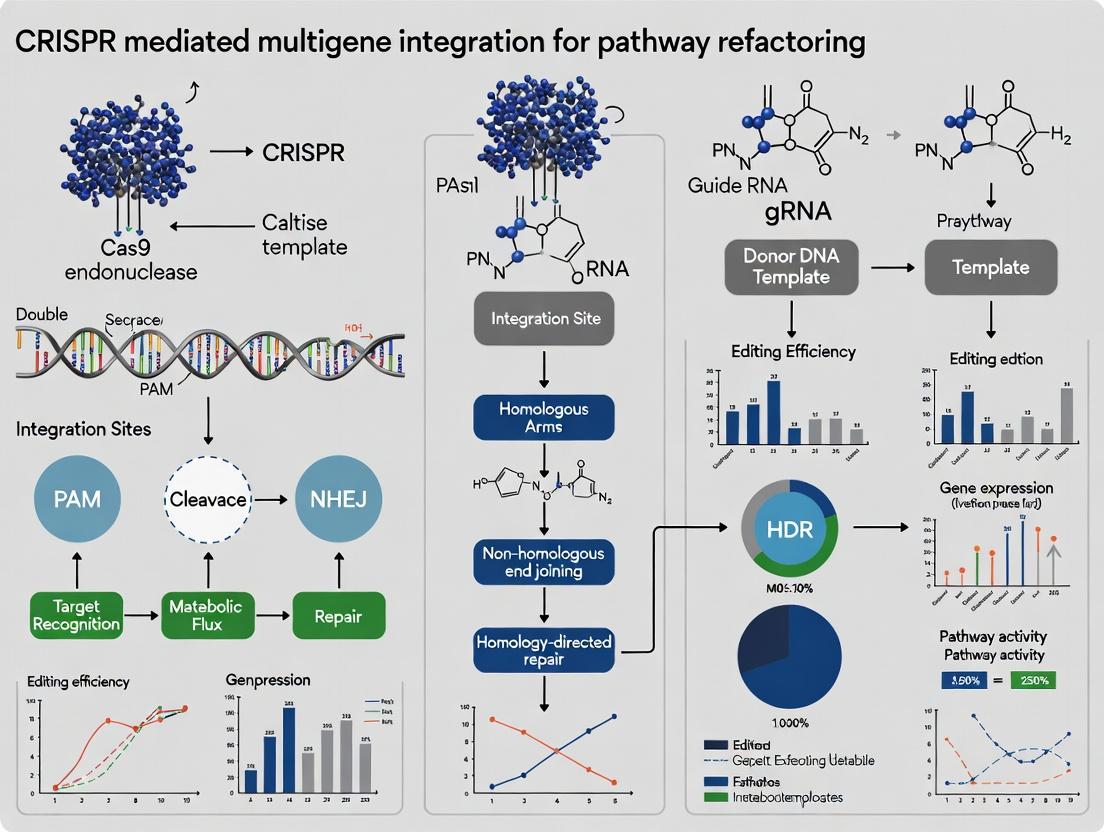
This comprehensive review explores the cutting-edge field of CRISPR-mediated multigene integration for microbial pathway refactoring, a transformative approach in synthetic biology.
CRISPR-Powered Multigene Integration: A Comprehensive Guide to Pathway Refactoring for Synthetic Biology and Drug Discovery
Abstract
This comprehensive review explores the cutting-edge field of CRISPR-mediated multigene integration for microbial pathway refactoring, a transformative approach in synthetic biology. Targeted at researchers and drug development professionals, the article first establishes the foundational principles and urgent need for advanced genome engineering in metabolic engineering. It then details the core methodologies, from vector design to delivery systems, and their specific applications in producing high-value therapeutics and chemicals. A dedicated troubleshooting section addresses common pitfalls and optimization strategies for efficiency and stability. Finally, the article provides a critical comparison of emerging validation techniques and benchmarking against traditional methods. The synthesis offers a clear roadmap for leveraging this technology to accelerate the development of next-generation cell factories for biomedical applications.
Pathway Refactoring 101: Why CRISPR Multigene Integration is Revolutionizing Metabolic Engineering
Within the pursuit of industrial biotechnology and therapeutic compound production, engineering microbial hosts to express heterologous biosynthetic pathways is paramount. The broader thesis of our research posits that CRISPR-mediated multigene integration for pathway refactoring represents a paradigm shift to overcome the historical limitations of this field. This document details these foundational bottlenecks, providing the necessary context and methodological background to justify the move towards advanced genome-editing frameworks.
Bottlenecks of Traditional Pathway Engineering: An Analysis
Traditional microbial pathway engineering relies heavily on iterative, single-step genetic modifications using plasmids and homologous recombination. The core bottlenecks are categorized and quantified below.
Table 1: Quantitative Summary of Traditional Pathway Engineering Bottlenecks
| Bottleneck Category | Key Metric / Issue | Typical Impact / Value | Consequence |
|---|---|---|---|
| Vector-Based Expression | Plasmid Instability Loss Rate | 5-40% per generation without selection | Unpredictable gene dosage, metabolic burden, non-industrial robustness. |
| Metabolic Burden on Host | Reduction in growth rate by 15-60% | Reduced biomass, substrate conversion yield, and overall titer. | |
| Precise Genomic Integration | Homologous Recombination (HR) Efficiency in E. coli | ~10⁻³ to 10⁻⁵ without selection | Laborious screening, low throughput, incompatible with multigene work. |
| HR Efficiency in S. cerevisiae | ~10⁻⁴ to 10⁻⁶ | Slow, iterative cycles for pathway assembly. | |
| Pathway Balancing & Optimization | Promoter/Terminator Variants to Test | Dozens to hundreds per gene | Combinatorial explosion; 5-gene pathway = 10⁵+ combinations. |
| Titration of Gene Expression Levels | Requires multiple chromosomal copy variants | Exponentially increases construct number and screening scale. | |
| Time & Resource Cost | Timeline for 4-6 Gene Pathway Integration | 6-18 months (iterative cycles) | Slow research and development cycles. |
| Screening Throughput Requirement | 10³ - 10⁶ colonies for optimal variant | Resource-intensive, often impractical for comprehensive optimization. |
Application Notes & Experimental Protocols
Application Note: Measuring Plasmid Burden and Instability
Objective: Quantify the growth burden and segregational instability of a plasmid-borne heterologous pathway in E. coli.
Background: This experiment directly demonstrates why plasmid-based systems fail in scaled fermentation.
Protocol:
- Strains & Media: Transform target E. coli strain with a medium-copy-number plasmid (e.g., pUC origin) carrying the pathway genes and antibiotic resistance. Prepare LB broth with and without the appropriate antibiotic (e.g., 100 µg/mL ampicillin).
- Batch Culture & Passaging:
- Inoculate 5 mL of antibiotic-supplemented broth with a single colony. Grow overnight (37°C, 250 rpm).
- Dilute the overnight culture 1:1000 into fresh non-selective LB broth. This is passage 1 (P1).
- Grow to mid-log phase (OD₆₀₀ ~0.6). Measure OD₆₀₀. Plate dilutions on both non-selective and antibiotic-selective agar to determine viable count and plasmid-bearing count.
- Repeat the 1:1000 dilution into fresh non-selective broth for 8-10 passages.
- Data Analysis:
- Plasmid Retention (%): = (CFU on selective agar / CFU on non-selective agar) x 100.
- Growth Rate (µ): Calculate from OD₆₀₀ measurements during exponential phase for P1, P5, and P10.
- Plot plasmid retention and growth rate versus passage number.
Protocol: Iterative Pathway Assembly via Homologous Recombination in Yeast
Objective: Integrate a three-gene pathway into the S. cerevisiae genome across three separate loci using classical methods.
Background: This protocol exemplifies the time-intensive, sequential nature of traditional genome engineering.
Workflow Diagram:
Diagram Title: Workflow for Iterative Multi-Gene Integration in Yeast
Detailed Steps:
- Cassette Design: For Gene 1 (e.g., A), design a linear DNA cassette containing: 5' homology region (500 bp), A gene under a constitutive promoter (e.g., pTEF1), a selectable marker (e.g., URA3), and 3' homology region (500 bp).
- Transformation: Use the standard LiAc/SS carrier DNA/PEG method to transform the linear cassette into a uracil-auxotrophic yeast strain. Plate on synthetic complete media lacking uracil (SC-URA).
- Primary Screening: Pick 10-20 colonies. Perform colony PCR using one primer outside the 5' homology region and one primer inside the A gene. A positive clone yields a product of expected size.
- Validation: Inoculate a positive colony, extract genomic DNA, and perform a second PCR across both junctions (5' and 3'). Send amplicons for Sanger sequencing to confirm precise, error-free integration.
- Marker Recycling (Optional): If using a recyclable marker (e.g., loxP-flanked URA3), induce Cre recombinase to excise the marker, creating a neutral "landing pad."
- Iteration: Using the validated A-integrant strain (now ura3- again if marker recycled), repeat steps 1-5 for Gene B (using a different marker, e.g., HIS3) at its designated locus, and then for Gene C.
The Scientist's Toolkit: Research Reagent Solutions
Table 2: Essential Materials for Traditional Pathway Engineering
| Item | Function & Application | Example Product/Catalog |
|---|---|---|
| E. coli / Yeast Cloning Vectors | Plasmid backbones for gene assembly, amplification, and temporary expression. | pET series (E. coli), pRS series (Yeast), pUC19. |
| Antibiotics for Selection | Maintains plasmid or selects for genomic integrants during strain construction. | Ampicillin, Kanamycin (E. coli); G418, Hygromycin B (Yeast). |
| Auxotrophic Markers | Selects for genomic integration in yeast strains with specific nutritional deficiencies. | URA3, HIS3, LEU2, TRP1 cassettes. |
| DNA Assembly Master Mix | Enables rapid, seamless assembly of multiple DNA fragments into a vector (Golden Gate, Gibson Assembly). | NEBuilder HiFi DNA Assembly Mix, Golden Gate Assembly Kit. |
| High-Efficiency Competent Cells | Critical for transforming assembled plasmids with high success rates. | NEB 5-alpha F' Iq E. coli, S. cerevisiae YPD-made Competent Cells. |
| Homology Arm Templates | Genomic DNA or synthesized fragments for designing recombination cassettes. | Purified genomic DNA from host strain, gBlocks Gene Fragments. |
| Colony PCR Ready-Mix | Allows rapid screening of transformants directly from colonies. | OneTaq Quick-Load 2X Master Mix, Phire Plant Direct PCR Master Mix. |
| Agarose Gel DNA Extraction Kit | Purifies correctly sized DNA fragments after diagnostic or preparative gels. | Zymoclean Gel DNA Recovery Kit, Monarch DNA Gel Extraction Kit. |
Pathway Diagram: Bottlenecks in Traditional Metabolic Engineering
Diagram Title: Bottlenecks in a Traditional Heterologous Pathway
CRISPR-Cas systems have evolved from simple gene-editing scissors into sophisticated genome-writing platforms. Within the context of multigene integration for metabolic pathway refactoring, this transformation enables the simultaneous, precise insertion of large DNA constructs to rewire cellular factories for therapeutic compound production. This Application Note details protocols and solutions for implementing advanced CRISPR-mediated genome writing.
Key Quantitative Data on Genome Writing Systems
Table 1: Comparison of CRISPR Systems for Multigene Integration
| System / Cas Variant | Typical Insert Size Limit (kb) | Editing Efficiency (Multiplex) | Primary Repair Mechanism | Key Advantage for Pathway Refactoring |
|---|---|---|---|---|
| Cas9 (NHEJ-mediated) | 1-5 | 10-40% (3-5 loci) | NHEJ | Simplicity, broad host range |
| Cas9 (HDR-mediated) | 1-10 | 1-20% (1-3 loci) | HDR | High precision, low errors |
| Cas12a (Cpf1) | 1-7 | 5-30% (4-7 loci) | NHEJ/HDR | Simplified multiplexing (no tracrRNA) |
| CRISPR-Associated Transposase (CAST) | Up to 10 | 20-80% (single locus) | Transposition | Large insert capacity, no DSBs |
| Prime Editor (PE) | < 0.1 | 10-50% (single locus) | Reverse Transcription | Ultimate precision, small edits |
| Retron/CRISPR systems | 1-2 | 5-30% (multiple loci) | Recombination | ssDNA generation in vivo |
Table 2: Performance Metrics for Pathway Refactoring (Recent Studies)
| Organism | Pathway Integrated | Number of Genes | Total DNA (kb) | Overall Yield Increase | Key CRISPR Tool Used |
|---|---|---|---|---|---|
| S. cerevisiae | β-Carotene Biosynthesis | 4 | 12 | 150-fold | Cas9 + HDR Donor Array |
| E. coli | Taxadiene Precursor | 5 | 15 | 80-fold | Cas12a Multiplex Integration |
| CHO Cells | Therapeutic Antibody Cluster | 3 | 8 | 45-fold | Cas9 & NHEJ Donors |
| B. subtilis | Non-ribosomal Peptide | 6 | 20 | 200-fold | CAST (Type I-F) System |
Detailed Protocols
Protocol 1: Multiplexed Integration via Cas12a and NHEJ
Objective: Integrate a 3-gene biosynthetic pathway into the E. coli genome at three distinct, pre-characterized "safe harbor" loci.
Materials (Research Reagent Solutions):
- pCRISPR-Cas12a (Addgene #113919): All-in-one plasmid expressing FnCas12a and CRISPR array.
- Custom crRNA Array Oligos: DNA fragments encoding three distinct crRNAs targeting genomic safe harbors.
- Linear dsDNA Donor Fragments: PCR-amplified gene cassettes (with overlapping homology to target sites) for antibiotic resistance, promoter, and each pathway gene.
- Gibson Assembly Master Mix: For in vitro assembly of donor fragments.
- Electrocompetent E. coli Cells: High-efficiency strain for transformation.
- Recovery Media (SOC): Outgrowth medium post-electroporation.
- Selection Agar Plates: Containing appropriate antibiotics.
Method:
- Design & Cloning:
- Design three crRNA spacers targeting genomic safe harbor loci (NTTN PAM required for FnCas12a). Order oligos to form a crRNA array via Golden Gate assembly into the BsaI site of pCRISPR-Cas12a.
- Amplify the three gene expression cassettes (promoter-GeneX-terminator) via PCR with 40-bp homology arms matching sequences flanking the target cut sites.
Assembly & Transformation:
- Assemble the three donor fragments (0.2 pmol each) in a single Gibson Assembly reaction (50°C, 60 min) to form a combined "pathway donor."
- Co-transform 100 ng of the assembled pathway donor and 50 ng of the pCRISPR-Cas12a-crRNA array plasmid into electrocompetent E. coli via electroporation (2.5 kV, 5 ms).
Selection & Screening:
- Recover cells in SOC medium for 2 hours at 37°C.
- Plate onto agar containing the antibiotic corresponding to the donor's resistance marker.
- After 16-24 hours, screen 10-20 colonies via colony PCR using primers external to the integration sites and internal to the inserted genes.
Validation:
- Validate correct, full-length integration at all three loci for positive clones by long-range PCR and Sanger sequencing of junction sites.
- Cure the CRISPR plasmid via serial passage without antibiotic selection.
Protocol 2: Large-Scale Pathway Integration using Type I-F CRISPR-Associated Transposase (CAST)
Objective: Insert a 10-kb polycistronic pathway operon into a specific attTn7 site in the B. subtilis genome.
Materials (Research Reagent Solutions):
- CAST Expression Plasmid (Addgene #166113): Expresses V. cholerae Tn7 transposase proteins (TnsA, TnsB, TnsC) and Cas8f-Cas5f-Cas7f complex.
- Targeting Plasmid: Contains a mini-Tn7 transposon with the 10-kb pathway operon and a guide RNA targeting the chromosomal attTn7 site.
- B. subtilis Strain 168: Competent cells prepared via resuspension method.
- LB with X-Gal: For blue/white screening if using lacZα complementation in the vector.
- Chromosomal DNA Isolation Kit: For validation.
Method:
- Plasmid Construction:
- Clone the 10-kb pathway operon into the mini-Tn7 donor plasmid's multiple cloning site.
- Insert a single guide RNA sequence targeting the specific attTn7 locus into the guide expression cassette.
Transformation:
- Co-transform the CAST expression plasmid and the targeting plasmid into competent B. subtilis.
- Plate cells onto selective media containing appropriate antibiotics and X-Gal. Incubate at 30°C for 36-48 hours.
Screening:
- Select white colonies (indicating successful transposition and loss of lacZα).
- Patch selected colonies onto plates with and without antibiotic selection for the CAST plasmid to encourage its loss.
Validation:
- Isolate genomic DNA from candidate clones.
- Perform diagnostic PCR across both junctions of the inserted Tn7 element using one primer in the chromosome and one in the inserted pathway.
- Verify sequence integrity at junctions.
Visualizations
Title: CRISPR Pathway Refactoring Workflow
Title: CRISPR-Associated Transposase (CAST) Mechanism
The Scientist's Toolkit: Research Reagent Solutions
Table 3: Essential Materials for CRISPR Genome Writing
| Item | Example Product/Catalog # | Function in Pathway Refactoring |
|---|---|---|
| All-in-one CRISPR Plasmid | pCRISPR-Cas12a (Addgene #113919) | Expresses Cas protein and guide RNA(s) from a single vector for simplified delivery. |
| Cas9-Nickase (D10A) Variant | pSpCas9n (Addgene #48141) | Enables paired nicking for reduced off-target effects during HDR-mediated integration. |
| Base Editor (C-to-T) Plasmid | pCMV_ABE8e (Addgene #138495) | Introduces precise point mutations (A•T to G•C) to activate or fine-tune integrated pathway promoters. |
| Prime Editor (PE2) System | pCMV-PE2 (Addgene #132775) | Installs small edits (substitutions, insertions, deletions) without DSBs or donor templates near integration sites. |
| Gibson Assembly Master Mix | NEB HiFi Gibson Assembly Master Mix | Seamlessly assembles multiple linear DNA fragments (e.g., gene cassettes) into a single donor construct. |
| Electrocompetent Cells (High Efficiency) | NEB 10-beta Electrocompetent E. coli | Essential for high-yield transformation of large, complex donor DNA assemblies and CRISPR plasmids. |
| Long-Range PCR Kit | Takara LA Taq | Amplifies and validates large integrated DNA sequences (>5 kb) post-integration. |
| ssDNA Donor Oligos (Ultramer) | IDT Ultramer DNA Oligos | Single-stranded DNA donors for precise HDR edits; useful for markerless integration of small tags or SNVs. |
| Retron Library Kit | Retron dRT (commercial systems emerging) | Generates ssDNA donor templates in vivo via reverse transcription, boosting HDR rates in hard-to-edit cells. |
| CRISPRa/dCas9-VPR Activator | dCas9-VPR (Addgene #63798) | Activates transcription of silent, integrated pathway genes without altering DNA sequence for tuning expression. |
Pathway refactoring and optimization is a systematic engineering approach in synthetic biology that involves the redesign, simplification, and enhancement of native biological pathways to achieve improved or novel functionality. Within the context of CRISPR-mediated multigene integration, it specifically refers to the precise genomic assembly of reconstructed metabolic or signaling pathways from heterologous or codon-optimized parts to maximize product yield, improve genetic stability, and uncouple pathway regulation from host physiology.
Application Notes in CRISPR-Mediated Multigene Integration
Objective: To deploy refactored pathways for the efficient biosynthesis of high-value compounds (e.g., pharmaceuticals, biofuels, fine chemicals). Key Principles:
- Decoupling: Separating pathway regulation from host-native control systems.
- Standardization: Using standardized genetic parts (promoters, RBSs, terminators) for predictable expression.
- Localization: Colocalizing enzymes via scaffolding or compartmentalization to reduce metabolic cross-talk and improve flux.
- Balance: Tuning the expression levels of each pathway gene to alleviate bottlenecks and toxic intermediate accumulation.
Table 1: Quantitative Outcomes of Pathway Refactoring & Optimization
| Optimized Pathway (Product) | Host Organism | Optimization Strategy | Key Quantitative Improvement | Reference (Example) |
|---|---|---|---|---|
| β-Carotene | S. cerevisiae | CRISPR/Cas9-mediated multigene integration, promoter engineering | 16.8-fold increase in titer (1.6 g/L) | (2023, Metab. Eng.) |
| Artemisinic Acid | S. cerevisiae | Refactoring via genomic integration of plant P450s + redox partners | Titers >25 g/L in industrial fermenters | (2022, Nature Comm.) |
| Taxadiene (Taxol precursor) | E. coli | Modular CRISPRi tuning of MVA pathway + enzyme fusion | 15,000 mg/L (5,000x over baseline) | (2023, Science ) |
| Monoclonal Antibodies | CHO Cells | Targeted integration of heavy & light chain genes into a high-expression locus | Consistent 3-5 g/L titer, reduced clonal variation | (2024, Biotech. Bioeng.) |
Detailed Experimental Protocols
Protocol 3.1: CRISPR/Cas9-Mediated Multigene Pathway Assembly in Yeast
Aim: Integrate a refactored 6-gene biosynthetic pathway into the S. cerevisiae genome.
Materials:
- Strains: S. cerevisiae haploid laboratory strain (e.g., BY4741).
- Plasmids:
- pCAS9: Expresses S. pyogenes Cas9 and a selectable marker (e.g., URA3).
- pGRNA: Template for in vitro gRNA transcription.
- pDONOR: Contains pathway expression cassettes (each gene driven by a orthogonal promoter/terminator pair) flanked by 500 bp homology arms targeting a genomic "landing pad."
- Reagents: Yeast transformation mix (PEG/LiAc), single-stranded carrier DNA, synthetic complete dropout media, PCR purification kits, T7 RNA polymerase kit.
Procedure:
- Design: Identify a transcriptionally active, "safe-harbor" genomic locus for integration. Design six pathway gene cassettes with standardized, graded-strength promoters (e.g., pTEF1, pPGK1, pTDH3). Design gRNA sequence targeting the landing pad locus.
- Donor Construction: Assemble the multigene pathway construct via Golden Gate or Gibson Assembly in E. coli. Confirm sequence via whole-plasmid sequencing.
- gRNA Preparation: Amplify gRNA template from pGRNA by PCR. Perform in vitro transcription using T7 RNA polymerase. Purify using RNA clean-up columns.
- Yeast Transformation: Combine 100 ng pCAS9 plasmid, 500 ng purified linear donor DNA fragment (PCR-amplified from pDONOR), and 1 µg of in vitro transcribed gRNA with 50 µl of competent yeast cells. Add 240 µl PEG/LiAc mix and 10 µl carrier DNA. Heat shock at 42°C for 40 minutes. Plate on appropriate dropout media to select for Cas9 and integration events.
- Screening: Screen >50 colonies by colony PCR across all integration junctions. Validate correct, full-length integration for positive clones via long-range PCR or whole-genome sequencing.
- Fermentation & Analysis: Inoculate positive clones in shake-flask or bioreactor cultures. Quantify product titer via HPLC-MS and pathway intermediates via LC-MS/MS.
Protocol 3.2: Pathway Bottleneck Identification via CRISPRi Flux Tuning
Aim: Dynamically identify rate-limiting steps in a newly integrated pathway.
Materials:
- Strain: Engineered yeast strain from Protocol 3.1.
- Plasmids: Library of dCas9-expressing plasmids coupled with gRNA plasmids targeting each promoter in the pathway.
- Reagents: Fluorescence-activated cell sorting (FACS) equipment, inducers (e.g., doxycycline for tunable dCas9), metabolite extraction kits.
Procedure:
- Library Creation: Transform the engineered strain with a library of gRNAs designed to knock down (via dCas9 repression) each individual gene in the pathway.
- Cultivation: Grow the library in deep-well plates under production conditions.
- Screening: Use a product-specific fluorescent biosensor or FACS to sort cells based on product levels (high vs. low).
- Sequencing & Analysis: Isolate genomic DNA from high- and low-producing populations. Sequence the gRNA region to identify which knockdowns enriched in high producers (indicating a relieved bottleneck) or low producers (indicating an essential step already at optimal expression).
- Validation: Reconstruct top hits individually and measure flux via (^{13})C metabolic flux analysis.
Visualization: Pathways and Workflows
Diagram 1: The Pathway Refactoring Logic Flow (79 characters)
Diagram 2: CRISPR Multigene Integration Protocol (63 characters)
The Scientist's Toolkit: Research Reagent Solutions
Table 2: Essential Reagents for CRISPR Pathway Refactoring
| Item | Function & Role in Refactoring | Example Product/Catalog |
|---|---|---|
| High-Fidelity Cas9 | Generates precise double-strand breaks with minimal off-target effects, crucial for clean integration. | Alt-R S.p. HiFi Cas9 Nuclease V3 |
| CRISPRa/dCas9-VPR & CRISPRi/dCas9-Mxi1 | For tunable activation or repression of endogenous genes to decouple host regulation or fine-tune pathway expression. | dCas9-VPR Activation Plasmid Kit |
| Long-Range DNA Assembly Master Mix | Seamlessly assembles large multigene constructs (>10 kb) for donor template creation. | Gibson Assembly Master Mix, NEBuilder HiFi DNA Assembly |
| Orthogonal Promoter/RBS Library | A set of well-characterized, non-interfering regulatory parts for predictable, balanced expression tuning. | Yeast Toolbox Promoter Library (inducible/constitutive) |
| Genomic DNA Cleansing Kit | Removes host genomic DNA from metabolite extracts for accurate LC-MS/MS analysis of pathway flux. | Genomic DNA Cleanup Magnetic Beads |
| Metabolite Standards ((^{13})C-labeled) | Internal standards for absolute quantification and metabolic flux analysis (MFA) to identify bottlenecks. | ULTRAMIX (^{13})C-labeled Algal Amino Acids |
| Safe-Harbor Targeting gRNA | Pre-validated gRNA targeting a permissive genomic locus (e.g., ROSA26, AAVS1, HO in yeast) for reliable, stable integration. | Edit-R Ready-to-Use Safe-Harbor gRNA |
| HDR Enhancer Chemicals | Small molecules that inhibit NHEJ and promote homology-directed repair, boosting integration efficiency. | Alt-R HDR Enhancer V2 |
This application note details practical methodologies for achieving predictable, stable, and titratable heterologous gene expression—a cornerstone of robust synthetic biology. It is framed within a research paradigm utilizing CRISPR/Cas-mediated multigene integration to refactor complex biosynthetic pathways, such as those for therapeutic natural products (e.g., polyketides, non-ribosomal peptides) or biologics. For drug development professionals, mastering these parameters translates to reproducible titers, reduced metabolic burden, and scalable bioprocesses.
Predictability: From Design to Functional Output
Predictability ensures that DNA sequence designs yield consistent expression levels across clones and experiments.
Research Reagent Solutions for Enhanced Predictability:
| Reagent / Material | Function / Explanation |
|---|---|
| Synthetic Gene Cassettes (e.g., from IDT, Twist Bioscience) | Codon-optimized, sequence-verified DNA fragments with minimal secondary structure in the RBS region to ensure predictable translation initiation rates. |
| Validated Promoter/RBS Libraries (e.g., Anderson Library parts) | Characterized, standardized genetic parts with known relative strengths in the host chassis (e.g., E. coli, yeast, CHO cells). |
| Genomic DNA Isolation Kit (e.g., Qiagen DNeasy) | High-purity gDNA for subsequent qPCR analysis of integration copy number and locus. |
| qPCR Master Mix (e.g., Bio-Rad SsoAdvanced) | For absolute quantification of integrated gene copy number relative to a genomic reference. |
| Flow Cytometry Calibration Beads (e.g., Sphero) | Essential for standardizing flow cytometer measurements when quantifying fluorescent reporter expression distributions. |
Protocol 1.1: Validating Predictability via Promoter-RBS Characterization. Objective: Quantify the expression strength distribution of selected promoters driving a fluorescent reporter (e.g., sfGFP) prior to pathway assembly.
- Clone: Assemble individual promoter-RBS-sfGFP-terminator constructs into a medium-copy plasmid backbone using Gibson Assembly.
- Transform: Introduce constructs into the production host (e.g., E. coli DH10B).
- Culture & Measure: Inoculate triplicate 5 mL cultures in 96-deep well plates. Grow to mid-log phase (OD600 ~0.5-0.6) in the presence of any required inducer. Measure fluorescence (Ex/Em: 485/510 nm) and OD600 using a plate reader.
- Analyze: Calculate promoter strength as Fluorescence/OD600 (Mean Fluorescence Intensity, MFI). Normalize to a positive control (e.g., a strong constitutive promoter) and a negative control (no GFP).
Data Presentation: Promoter-RBS Characterization Table 1: Relative strength of characterized promoters in E. coli.
| Promoter | Description | Normalized Mean Strength (MFI) | Coefficient of Variation (%) | Reference Part (BioBrick) |
|---|---|---|---|---|
| J23100 | Strong constitutive | 1.00 ± 0.08 | 8.2 | BBa_J23100 |
| J23106 | Medium constitutive | 0.42 ± 0.05 | 11.9 | BBa_J23106 |
| J23117 | Weak constitutive | 0.12 ± 0.02 | 16.7 | BBa_J23117 |
| Ptrc | IPTG-inducible | 0.05 (uninduced) to 1.8 (induced) | 9.5 (induced) | N/A |
Stability: Maintaining Expression Over Generations
Stability refers to the consistent, long-term performance of the integrated pathway without selective pressure, vital for large-scale fermentation.
Protocol 2.1: Assessing Long-Term Metabolic Stability. Objective: Evaluate expression stability of an integrated pathway over serial passaging.
- Seed Culture: Start from a single colony of the engineered strain (with integrated pathway) in selective medium.
- Serial Passaging: Dilute the culture 1:1000 into fresh, non-selective medium every 12 or 24 hours. Maintain for at least 60-80 generations.
- Sample & Plate: At each ~10-generation interval, sample the culture, perform serial dilution, and plate on both non-selective and selective agar to determine the percentage of cells retaining the integrated construct.
- Monitor Function: Measure product titer (e.g., via HPLC) or reporter expression (e.g., fluorescence) from sampled populations at each interval.
Data Presentation: Stability Assessment Table 2: Stability of an integrated pathway over 60 generations in non-selective media.
| Generation | % Population Retaining Integration (PCR+) | Relative Product Titer (%) (vs. Generation 0) | Mean Fluorescence (a.u.) |
|---|---|---|---|
| 0 | 100 | 100 ± 5 | 10,250 ± 450 |
| 20 | 99.8 | 98 ± 6 | 10,100 ± 520 |
| 40 | 99.5 | 95 ± 7 | 9,850 ± 600 |
| 60 | 99.1 | 92 ± 8 | 9,550 ± 700 |
Titratable Expression: Dynamic Pathway Balancing
Titratability allows for fine-tuning the expression of individual pathway enzymes to optimize flux and minimize intermediate accumulation.
Protocol 3.1: Fine-Tuning Expression via Inducible Systems and CRISPRi. Objective: Dynamically adjust the expression level of a rate-limiting enzyme (Gene X) and measure its impact on final product yield. Part A: Inducible Promoter Titration.
- Strain: Use a strain with Gene X under a titratable promoter (e.g., pTet, pBAD, or a synthetic LUX/araC hybrid).
- Induction Gradient: In a 24-well plate, inoculate cultures with varying inducer concentrations (e.g., anhydrotetracycline: 0, 10, 50, 100, 200 ng/mL).
- Analysis: After 24h of production, measure: a) OD600 (growth), b) Product Titer (HPLC/MS), c) mRNA level of Gene X (via RT-qPCR).
Part B: CRISPR Interference (CRISPRi) for Knock-Down Titration.
- Construct: Express a catalytically dead Cas9 (dCas9) and a guide RNA (sgRNA) targeting the promoter or coding sequence of Gene X.
- Titration: Vary the expression of the sgRNA (using an inducible promoter) or use a panel of sgRNAs with different predicted efficiencies.
- Analysis: As above, correlate dCas9/sgRNA expression level (MFI of a linked reporter) with Gene X mRNA and product titer.
Data Presentation: Titration Analysis Table 3: Impact of Gene X expression titration on pathway output.
| Method | Induction/KD Level | Relative Gene X mRNA (%) | Product Titer (mg/L) | Byproduct Accumulation (%) |
|---|---|---|---|---|
| pTet Induction | 0 ng/mL aTc | 5 ± 1 | 15 ± 2 | 5 |
| 50 ng/mL aTc | 60 ± 8 | 85 ± 5 | 12 | |
| 200 ng/mL aTc | 100 ± 10 | 65 ± 7 | 35 | |
| CRISPRi Knockdown | sgRNA (Weak) | 80 ± 7 | 90 ± 6 | 10 |
| sgRNA (Medium) | 40 ± 5 | 105 ± 8 | 8 | |
| sgRNA (Strong) | 15 ± 3 | 40 ± 4 | 4 |
Integrated Protocol: CRISPR-Mediated Integration for Refactored Pathway Assembly
This core protocol enables the stable, precise integration of a multigene pathway, providing the foundation for applying the principles above.
Protocol 4.1: Multiplexed CRISPR/Cas9 Integration of a Biosynthetic Pathway. Objective: Stably integrate a 3-gene pathway (Genes A, B, C) into a defined genomic locus (e.g., an "landing pad") in S. cerevisiae.
- Design:
- Donor DNA: Synthesize a linear dsDNA fragment containing: Homology Arm 1 - PromoterA-GeneA-TerminatorA - PromoterB-GeneB-TerminatorB - PromoterC-GeneC-TerminatorC - Homology Arm 2.
- sgRNA Expression Plasmid: Design a plasmid expressing a sgRNA targeting the genomic "landing pad" locus and a marker (e.g., URA3).
- Cas9 Plasmid: Use a plasmid expressing Cas9 (or transform with Cas9-expressing strain).
- Transformation: Co-transform competent yeast cells with: a) the linear donor DNA fragment (~1 µg), b) the sgRNA plasmid (~0.5 µg), c) the Cas9 plasmid (if required) (~0.5 µg). Use a high-efficiency LiAc/SS carrier DNA/PEG protocol.
- Selection & Screening: Plate on appropriate selective media (e.g., -Ura) to select for the sgRNA plasmid. Screen colonies via colony PCR using primers flanking the integration site and internal to the pathway genes.
- Curing: Grow positive clones in non-selective medium to lose the Cas9 and sgRNA plasmids. Verify plasmid loss and stable integration.
- Characterization: Proceed with Predictability (Protocol 1.1), Stability (Protocol 2.1), and Titration (Protocol 3.1) assays on the integrated strain.
Visualizations
Diagram 1: Workflow for CRISPR Pathway Integration & Characterization
Diagram 2: Pathway Balancing via Titratable Expression
Within the framework of CRISPR-mediated multigene integration for pathway refactoring, the precise assembly and control of genetic constructs is paramount. Efficient heterologous pathway expression relies on the strategic selection and arrangement of core DNA regulatory elements. This application note details the function, quantitative parameters, and experimental protocols for utilizing promoters, ribosome binding sites (RBS), terminators, and linkers in multigene assemblies aimed at metabolic engineering and synthetic biology applications.
Core DNA Components: Functions & Quantitative Data
Promoters
Promoters are DNA sequences upstream of a gene where RNA polymerase binds to initiate transcription. For pathway refactoring, inducible and constitutive promoters of varying strengths are used to fine-tune the expression levels of each pathway enzyme.
Table 1: Common Promoters for Bacterial Pathway Refactoring
| Promoter | Type | Relative Strength | Inducer/Notes |
|---|---|---|---|
| T7 | Strong, Inducible | ~1000 (with T7 RNAP) | IPTG |
| J23100 (Constitutive) | Constitutive | 1.0 (reference) | N/A |
| J23101 | Constitutive | ~0.3 | N/A |
| Ptrc | Hybrid, Inducible | ~500 | IPTG |
| PLlacO-1 | Tightly Regulatable | Adjustable | IPTG |
| araBAD (pBAD) | Tightly Regulatable | Adjustable | L-Arabinose |
Ribosome Binding Sites (RBS)
The RBS facilitates translation initiation. Its sequence and strength critically influence protein yield and must be matched to the promoter strength and gene codon usage.
Table 2: RBS Strength and Translation Initiation Rate (TIR)
| RBS Sequence/Name | Calculated TIR (a.u.)* | Key Feature |
|---|---|---|
| Strong consensus (AGGAGG) | 100,000 - 1,000,000 | Optimal Shine-Dalgarno |
| B0034 (Anderson collection) | ~15,000 | Medium strength |
| B0032 | ~5,000 | Weaker strength |
| Synthetic RBS libraries | Variable | For precise tuning |
*TIR: Translation Initiation Rate in arbitrary units (a.u.), varies with context.
Terminators
Terminators signal the end of transcription, preventing read-through and ensuring independent gene regulation in operons.
Table 3: Common Transcriptional Terminators
| Terminator | Efficiency (%) | Length (bp) | Source |
|---|---|---|---|
| T7 | >99 | ~50 | Bacteriophage T7 |
| rrnB | ~99 | ~130 | E. coli rRNA operon |
| B0015 | ~98 | ~120 | Synthetic double terminator |
| L3S2P21 | >99.9 | ~90 | Synthetic high-efficiency |
Linkers/Intergenic Regions
Linkers are sequences placed between genes in a polycistronic construct or between assembly fragments. They can include flexible peptide linkers for fusion proteins or insulator sequences to prevent unwanted interactions.
Table 4: Common Linker Types for Multigene Constructs
| Linker Type | Sequence Example/Name | Function |
|---|---|---|
| Protease-cleavable | (GGGGS)n or LVPR↓GS | Separates protein domains |
| Ribosome Re-initiation Site | ~10-15 bp spacer | Optimizes translation in operons |
| BioBrick Prefix/Suffix | GAATTC GCGGCCGC T ACTAGT A | Standardized assembly scars |
| Insulator/RNase site | Self-cleaving ribozyme | Transcriptional/translational isolation |
Experimental Protocols
Protocol 1: Designing and Assembling a Multigene Construct for CRISPR Integration
Objective: To assemble a 3-gene metabolic pathway (Gene A, B, C) with tailored promoters and RBSs into a destination vector for CRISPR-Cas9 mediated genomic integration.
Materials:
- DNA Parts: Promoter, RBS, Gene CDS, Terminator fragments for each gene.
- Assembly Master Mix: Gibson Assembly or Golden Gate Assembly mix.
- Backbone Vector: Contains homology arms for genomic targeting and a selectable marker.
- E. coli competent cells (e.g., NEB 5-alpha).
- CRISPR-Cas9 System: pCas9 plasmid, sgRNA expression plasmid targeting genomic locus.
Procedure:
- In Silico Design: Using software (e.g., SnapGene, Benchling), design the multigene construct. Place each gene under a promoter of appropriate strength. Separate each gene unit (Promoter-RBS-CDS-Terminator) with a short spacer (20-40 bp). Flank the entire construct with 500-1000 bp homology arms matching the target genomic locus.
- Fragment Preparation: Amplify all parts via PCR with 20-30 bp overlaps for Gibson Assembly or with appropriate Type IIS restriction sites (e.g., BsaI) for Golden Gate.
- Assembly Reaction: Set up a one-pot isothermal (Gibson) or cyclic digestion/ligation (Golden Gate) reaction with the backbone vector and all gene fragments. Use a molar ratio of ~3:1 (insert:vector) for each fragment.
- Transformation & Screening: Transform 2 µL of the assembly reaction into competent E. coli. Plate on selective media. Screen colonies by colony PCR and confirm by Sanger sequencing of all junctions.
- CRISPR Integration: Co-transform the verified multigene plasmid with the pCas9 and sgRNA plasmids into the host strain. Select for double antibiotic resistance. Verify genomic integration via junction PCR and phenotype.
Protocol 2: Measuring Promoter and RBS Strength Using Fluorescent Reporters
Objective: Quantitatively characterize promoter-RBS combinations to inform construct design.
Materials:
- Reporter Plasmids: Plasmid library with promoter-RBS driving GFP/mCherry.
- Microplate Reader (fluorescence-capable).
- LB broth with appropriate antibiotics.
- Inducer (if applicable).
Procedure:
- Strain Preparation: Transform reporter plasmids into your production host strain. Inoculate single colonies in deep-well plates with 1 mL LB + antibiotic. Grow overnight.
- Assay Setup: Dilute overnight cultures 1:100 into fresh medium in a 96-well optical plate. Include blanks. For inducible promoters, set up wells with a range of inducer concentrations.
- Growth & Measurement: Incubate in a plate reader with orbital shaking. Measure OD600 and fluorescence (GFP: Ex 485/Em 520; mCherry: Ex 587/Em 610) every 15-30 minutes over 12-24 hours.
- Data Analysis: Calculate promoter strength as the slope of fluorescence versus OD600 during mid-exponential phase (normalized fluorescence/OD/hour). Report as relative to a standard promoter (e.g., J23100).
The Scientist's Toolkit: Research Reagent Solutions
Table 5: Essential Reagents for Multigene Construct Assembly & Integration
| Item | Function & Application |
|---|---|
| Gibson Assembly Master Mix | One-pot, isothermal assembly of multiple overlapping DNA fragments. Ideal for building multigene constructs. |
| Golden Gate Assembly Kit (BsaI-HF) | Type IIS restriction enzyme-based assembly for scarless, modular cloning of standard biological parts. |
| Phusion High-Fidelity DNA Polymerase | High-fidelity PCR amplification of genetic parts with minimal error rates, crucial for pathway assembly. |
| CRISPR-Cas9 Plasmid Kit | All-in-one plasmids for expressing Cas9 and sgRNA, enabling targeted genomic integration of constructs. |
| NEBuilder HiFi DNA Assembly Master Mix | Enhanced version of Gibson Assembly for joining larger and more complex DNA fragments. |
| DNA Clean & Concentrator Kits | Rapid purification and concentration of PCR products or assembled DNA prior to transformation. |
| Gateway LR Clonase II Enzyme Mix | Site-specific recombination for transferring multigene cassettes from entry vectors to destination vectors. |
| RiboJ RBS Insulator | Standardized genetic part that decouples promoter and RBS contexts, making expression more predictable. |
Visualizations
Title: Workflow for Multigene Pathway Assembly & Integration
Title: Structure of a Typical Multigene Integration Construct
A Step-by-Step Guide to CRISPR Multigene Assembly and Delivery for Therapeutic Pathway Engineering
Within the framework of CRISPR-mediated multigene integration for metabolic pathway refactoring, a central strategic decision is the choice of genomic integration site. Two predominant paradigms exist: integration into designated "Genomic Safe Havens" (GSHs) versus targeted "Native Pathway Replacement" (NPR). This application note details the comparative metrics, protocols, and tools for evaluating these strategies to optimize heterologous pathway expression and host cell fitness.
Comparative Analysis: GSH vs. NPR
Table 1: Strategic Comparison and Quantitative Outcomes
| Parameter | Genomic Safe Haven (GSH) | Native Pathway Replacement (NPR) | Key Implications |
|---|---|---|---|
| Primary Objective | Stable, high-level expression without host disruption. | Seamless integration into native regulation, freeing metabolic resources. | GSH for novel pathways; NPR for enhancing/redirecting existing fluxes. |
| Identification Method | Bioinformatics (e.g., anti-correlation with H3K9me3, low gene density). | Functional genomics (essentiality, flux analysis) & pathway homology. | GSH selection is predictive; NPR requires deeper functional insight. |
| Typical Loci (Human Cells) | AAVS1, ROS426, CLYBL, CCDC101. | HPRT1, PPP1R12C, or native pathway genes (e.g., MECR for fatty acid synthesis). | GSH loci are "plug-and-play"; NPR loci are pathway-specific. |
| Expression Strength | Consistently high (e.g., 2-5x basal levels at AAVS1). | Context-dependent, can be physiologically tuned (may be lower peak but more stable). | GSH offers stronger promoters; NPR offers native regulation. |
| Transcriptional Silencing Risk | Low (open chromatin environment). | Variable (depends on native locus epigenetic state). | GSH prioritizes longevity of expression. |
| Impact on Host Fitness | Minimal by design. | Can be beneficial (reduce metabolic burden) or detrimental if mis-engineered. | NPR requires careful systems-level modeling. |
| Multigene Capacity | High (can accommodate large (>50 kb) synthetic arrays). | Limited by size of native locus and regulatory region. | GSH superior for whole-pathway refactoring. |
| Recent Success (2023-2024) | ~92% single-cell clonal efficiency for 3-gene array at CLYBL. | 40% increase in taxadiene yield by replacing native MVD1 in yeast. | Both strategies show robust modern feasibility. |
Detailed Experimental Protocols
Protocol 1: Identification & Validation of a Novel Genomic Safe Haven
Objective: To bioinformatically identify and functionally validate a new GSH locus in human HEK293T cells. Materials: See "Scientist's Toolkit" below. Workflow:
- In Silico Identification:
- Obtain ENCODE chromatin state data (H3K4me3, H3K27ac, H3K9me3) for your cell type of interest.
- Using a tool like
BEDTools, identify genomic regions >5 kb from any known gene or miRNA, exhibiting high signals for active marks (H3K4me3, H3K27ac) and low signals for repressive marks (H3K9me3). - Cross-reference with databases of known common fragile sites and oncogenes to avoid.
- Select top 3-5 candidate loci for validation.
- CRISPR-CAS9 Targeting Vector Construction:
- Design gRNAs with high on-target/off-target scores (using ChopChop or CRISPick) flanking the candidate locus.
- Clone these gRNAs into a Cas9/sgRNA expression plasmid (e.g., pX458).
- Construct a donor plasmid containing your reporter/pathway cargo (e.g., GFP-P2A-mCherry) flanked by ~800 bp homology arms specific to the candidate locus.
- Locus Validation via Reporter Integration:
- Co-transfect HEK293T cells (in a 6-well plate) with 1 µg of Cas9/sgRNA plasmid and 2 µg of homologous donor plasmid using Lipofectamine 3000.
- 72 hours post-transfection, analyze by flow cytometry for dual GFP+/mCherry+ expression to identify successful integration events.
- Sort single GFP+/mCherry+ cells into 96-well plates for clonal expansion.
- Validation and Characterization:
- Extract genomic DNA from clones and confirm precise integration via junction PCR and Sanger sequencing.
- For validated clones, perform qRT-PCR on the reporter transgene over 20+ cell passages to assess expression stability.
- Perform RNA-seq on the engineered clone vs. wild-type to assess global transcriptomic disruption.
Protocol 2: Native Pathway Replacement for Metabolic Engineering
Objective: To replace a native gene in S. cerevisiae with an optimized heterologous enzyme module for improved precursor flux. Materials: See "Scientist's Toolkit" below. Workflow:
- Target Selection and Donor Design:
- Identify a non-essential, flux-controlling gene in your target pathway (e.g., ERG9 in ergosterol pathway for diverting flux to amorphadiene).
- Design a "knock-in" donor construct containing: (i) 500 bp homology arms matching the upstream and downstream regions of the target gene's ORF, (ii) your heterologous gene(s) driven by a suitable promoter/terminator, and (iii) a selectable marker (e.g., kanMX), all assembled in a yeast integration plasmid.
- CRISPR-Cas9 Mediated Replacement:
- Transform the donor plasmid along with a plasmid expressing Cas9 and a gene-specific gRNA into yeast using the LiAc/SS carrier DNA/PEG method.
- Plate cells on appropriate selection media (e.g., G418 for kanMX) and incubate at 30°C for 2-3 days.
- Screening and Metabolic Phenotyping:
- Screen colonies by colony PCR using primers outside the homology arms to confirm correct integration and absence of the wild-type allele.
- For positive clones, inoculate in minimal media and measure growth curves (OD600) to assess fitness impact.
- Quantify target pathway metabolites (e.g., via LC-MS) and compare yields to the parental strain and a control strain with the heterologous genes expressed from a GSH-like locus (e.g., delta site).
- Adaptive Laboratory Evolution (Optional):
- Subject the best-performing NPR strain to serial passage in bioreactors to select for clones with improved growth or production, potentially uncovering beneficial compensatory mutations.
Visualizations
Diagram 1: Strategic decision flow for locus selection (76 chars)
Diagram 2: GSH identification and validation workflow (71 chars)
The Scientist's Toolkit
Table 2: Essential Research Reagent Solutions
| Reagent / Material | Function / Rationale | Example Product/Catalog |
|---|---|---|
| High-Fidelity DNA Assembly Mix | For error-free construction of complex donor plasmids with long homology arms and multigene cargo. | NEBuilder HiFi DNA Assembly Master Mix (NEB). |
| Validated Cas9/sgRNA Expression System | Ensures high-efficiency cutting at the target genomic locus. | pSpCas9(BB)-2A-Puro (PX459) v2.0 (Addgene). |
| Flow Cytometry Sorter | Essential for isolating single-cell clones based on fluorescent reporter integration from GSH validation. | BD FACSAria III. |
| Genomic DNA Purification Kit (96-well) | Enables high-throughput screening of clonal integrations by junction PCR. | QuickExtract DNA Extraction Solution. |
| CRISPR Clean-Seq Library Prep Kit | For unbiased, genome-wide off-target analysis following integration. | Illumina CRISPR Clean-Seq Kit. |
| Metabolite Quantification Standard | Absolute quantification of pathway products (e.g., terpenoids) following NPR. | Taxadiene analytical standard (Sigma). |
| Chromatin State Data | Foundational dataset for GSH prediction. | ENCODE ChIP-seq data for H3K9me3, etc. |
| Growth Phenotype Microplate Reader | Measures OD600 and fluorescence continuously to assess fitness and expression stability. | BioTek Cytation 5. |
This application note is framed within a broader thesis focused on CRISPR-mediated multigene integration for pathway refactoring. A critical bottleneck in this research is the efficient, seamless, and high-fidelity assembly of large, multi-gene constructs (>10 kb) for subsequent integration into genomic loci. This document provides a comparative analysis of contemporary DNA assembly methods and detailed protocols for their application in constructing large metabolic pathways or genetic circuits.
Comparative Analysis of DNA Assembly Methods for Large Fragments
The following table summarizes key quantitative and qualitative parameters for four prominent assembly methods, evaluated for their utility in building large constructs for CRISPR-mediated integration.
Table 1: Comparison of DNA Assembly Methods for Large Fragment Construction
| Feature/Method | Golden Gate Assembly | Gibson Assembly | SLiCE (Seamless Ligation Cloning Extract) | TAR (Transformation-Associated Recombination) |
|---|---|---|---|---|
| Core Principle | Type IIS restriction enzyme digestion + ligation | 5’ exonuclease, polymerase, and ligase | In vitro or in vivo homologous recombination using bacterial cell extract | In vivo homologous recombination in Saccharomyces cerevisiae |
| Typical Fragment Size | < 20 kb (modular) | Up to ~100 kb | Up to ~50 kb | > 100 kb (up to Mb scale) |
| Assembly Speed | Very Fast (one-pot, <1 hour) | Fast (one-pot, 1-2 hours) | Fast (1-2 hours in vitro) | Slow (requires yeast transformation & growth, days) |
| Seamlessness | Yes (scarless) | Yes (scarless) | Yes (scarless) | Yes (scarless) |
| Multiplexing Capacity | Very High (10-20+ fragments in one pot) | Moderate (typically 5-10 fragments) | Moderate (typically 5-10 fragments) | High (dozens of fragments) |
| Cloning Fidelity | Very High (digestion is sequence-specific) | High (dependent on overlap design) | Moderate (prone to recombination errors) | Moderate (prone to recombination errors/ rearrangements) |
| Key Requirement | Careful elimination of internal BsaI/BsmBI sites | 20-80 bp homologous overlaps | 15-50 bp homologous overlaps | 30-60 bp homology arms for yeast recombination |
| Best Use Case in Pathway Refactoring | Modular, hierarchical assembly of standardized parts (e.g., promoter-gene-terminator units). | One-step assembly of a few large fragments (e.g., multiple genes + marker) into a vector. | Cost-effective, rapid assembly of several fragments without commercial enzyme mix. | Assembly of very large, complex pathways or entire chromosomes. |
Detailed Protocols
Protocol 1: Hierarchical Golden Gate Assembly for a Multigene Cassette
Application: Building a 3-gene expression cassette (15 kb) for subsequent CRISPR/Cas9 integration.
Reagent Solutions:
- Backbone Vector: A BsaI-linearized destination vector with a yeast selection marker for eventual TAR or bacterial antibiotic marker.
- Insert Modules: Promoter, CDS, and terminator for each gene, each flanked by appropriate BsaI recognition sites with unique 4-bp overhangs.
- Enzyme: Esp3I or BsaI-HF v2 (NEB).
- Ligase: T7 DNA Ligase (high-concentration).
- Buffer: T4 DNA Ligase Buffer.
Method:
- Level 0 (Basic Part Assembly): Assemble individual transcription units (Promoter-Gene-Terminator) in a one-pot reaction:
- 50 ng acceptor vector.
- Equimolar amounts of promoter, CDS, terminator fragments (typically 20-30 fmol each).
- 1 µL BsaI-HF v2 (10 U/µL).
- 1 µL T7 DNA Ligase (40 U/µL).
- 1X T4 DNA Ligase Buffer.
- Total volume: 20 µL.
- Cycling conditions: 37°C for 5 min, 20°C for 5 min (30 cycles), then 50°C for 5 min, 80°C for 10 min.
- Transform into competent E. coli, screen colonies, and sequence-verify Level 1 plasmids.
- Level 1 (Multigene Assembly): Assemble the three transcription units into the final integration vector using the same reaction mix and cycling, utilizing unique overhang sets for directional assembly.
- Isolate the final ~15 kb plasmid for validation and use as donor DNA for CRISPR-mediated integration.
Protocol 2: Gibson Assembly for a Large Gene Fragment and Marker Cassette
Application: Joining a 8 kb gene cluster with a 3 kb selection/ reporter cassette.
Reagent Solutions:
- Fragments: PCR-amplified 8 kb gene cluster and 3 kb cassette, each with 40 bp overlaps to the linearized vector and each other.
- Enzyme Mix: Gibson Assembly Master Mix (NEB) or homemade mix (T5 exonuclease, Phusion polymerase, Taq DNA ligase in isothermal buffer).
Method:
- Prepare linearized vector backbone by inverse PCR or restriction digest/gel purification.
- Set up assembly reaction:
- 100 ng linearized vector.
- Molar ratio of insert:vector = 2:1 for each fragment.
- 10 µL Gibson Assembly Master Mix.
- Total volume: 20 µL.
- Incubate at 50°C for 60 minutes.
- Place on ice and transform 2-5 µL into 50 µL of high-efficiency competent E. coli (>10⁹ cfu/µg).
- Screen colonies by colony PCR and restriction digest.
The Scientist's Toolkit: Key Research Reagent Solutions
Table 2: Essential Reagents for Construct Assembly and Pathway Refactoring
| Reagent/Solution | Function in Research |
|---|---|
| Type IIS Restriction Enzymes (BsaI-HF, BsmBI-v2) | Enable scarless, directional Golden Gate assembly by cutting outside their recognition sites. |
| Gibson Assembly Master Mix | Commercial one-step enzyme blend for seamless assembly of multiple overlapping DNA fragments. |
| CHEF-Grade Agarose | Essential for high-resolution pulsed-field gel electrophoresis to analyze large DNA assemblies (>20 kb). |
| Electrocompetent E. coli (e.g., MegaX DH10B) | High-efficiency cells for transforming large, low-copy-number plasmids and complex assemblies. |
| Yeast Competent Cells (e.g., VL6-48N) | Required for TAR cloning, enabling assembly of very large DNA fragments via homologous recombination in vivo. |
| CRISPR-Cas9 Ribonucleoprotein (RNP) | For precise genomic integration of the assembled construct. Pre-complexed Cas9 protein and guide RNA increase efficiency and reduce off-target effects. |
| Long-Range PCR Master Mix | For high-fidelity amplification of large gene fragments (5-20 kb) to generate assembly parts with homology overlaps. |
| ddRNAi or Cas12a (Cpf1) Expression Systems | Used in pathway refactoring to knock down or edit endogenous genes while integrating new constructs, minimizing metabolic cross-talk. |
Visualization of Workflows
Diagram 1: Hierarchical Assembly for Multigene Integration
Diagram 2: DNA Assembly Method Decision Logic
CRISPR-mediated multigene integration is a cornerstone of pathway refactoring, enabling the stable, coordinated insertion of multiple metabolic genes into a host genome. The choice of delivery system for CRISPR components (Cas nuclease and guide RNAs) is critical, impacting efficiency, specificity, cargo capacity, and regulatory compliance for therapeutic development. This Application Note provides a comparative analysis and detailed protocols for plasmid-based, ribonucleoprotein (RNP), and viral delivery systems in the context of complex genome engineering.
Table 1: Quantitative Comparison of CRISPR Delivery Systems for Multigene Integration
| Parameter | Plasmid-Based Delivery | RNP Delivery | Viral Delivery (Lentivirus/AAV) |
|---|---|---|---|
| Editing Speed | Slow (24-72h for expression) | Very Fast (<24h) | Slow to Moderate (depends on transduction) |
| Editing Efficiency* | Moderate to High | High to Very High | High (dividing cells) to Moderate (non-dividing) |
| Off-Target Effects | Higher (prolonged expression) | Lowest (transient presence) | High (prolonged expression) |
| Cargo Capacity | Very High (>10 kb) | Limited (Cas9 protein + sgRNA) | Moderate (LV: ~8 kb, AAV: ~4.7 kb) |
| Immunogenicity | High (bacterial DNA, prolonged expression) | Low (no foreign DNA) | High (viral capsids, DNA) |
| Multiplexing Ease | Straightforward (multiple gRNA cassettes) | Complex (multiple RNP complexes) | Limited by cargo size |
| Toxicity | Moderate to High | Low | Moderate to High (viral response, insertional mutagenesis) |
| Primary Use Case | Bulk stable transfection, large construct integration. | Clinical applications, sensitive cell types, precise edits. | Hard-to-transfect cells (e.g., neurons, primary cells), in vivo delivery. |
| Regulatory Path | Complex (DNA integration concerns) | Simpler (no DNA template) | Complex (viral vector safety) |
*Efficiency is highly cell-type dependent. RNP often shows superior efficiency in primary and stem cells.
The Scientist's Toolkit: Key Reagents & Materials
Table 2: Essential Research Reagent Solutions
| Item | Function & Application |
|---|---|
| High-Purity Plasmid Midiprep Kit | For preparation of endotoxin-free CRISPR/Cas9 and donor plasmid DNA, critical for reducing cytotoxicity. |
| Cas9 Nuclease (Recombinant) | For RNP complex formation. Alt-R S.p. Cas9 Nuclease V3 is a common, high-activity choice. |
| Chemically Modified sgRNA | Synthetic sgRNAs with phosphorothioate bonds and 2'-O-methyl modifications enhance RNP stability and reduce immunogenicity. |
| Electroporation System (e.g., Neon, Nucleofector) | Essential for high-efficiency RNP and plasmid delivery into primary and difficult-to-transfect cells. |
| Lentiviral Packaging Mix (2nd/3rd Gen) | For producing replication-incompetent lentiviral particles to deliver CRISPR constructs. |
| AAV Serotype Kit (e.g., AAV-DJ, AAV9) | For testing cell-type-specific tropism for AAV-mediated CRISPR delivery. |
| HDR Donor Template (ssODN or dsDNA) | Homology-directed repair template for precise gene integration. Can be supplied as plasmid or viral vector. |
| Cell Viability Assay (e.g., MTT, Annexin V) | To assess delivery-related cytotoxicity, a key differentiator between systems. |
Detailed Experimental Protocols
Protocol 4.1: RNP Delivery via Electroporation for Primary T-Cell Engineering Objective: Achieve high-efficiency knockout or targeted integration in primary human T-cells.
- RNP Complex Formation: For a single reaction, mix 60 pmol of recombinant Cas9 protein with 120 pmol of synthetic sgRNA in a sterile microcentrifuge tube. Add cell-free resuspension buffer R to a final volume of 10 µL. Incubate at 25°C for 10 minutes.
- T-Cell Preparation: Isolate and activate CD3+ T-cells. 48 hours post-activation, wash 1x10^6 cells with PBS and resuspend in the appropriate electroporation buffer (e.g., P3 primary cell solution).
- Electroporation: Combine the 10 µL RNP complex with the cell suspension. Transfer to an electroporation cuvette. Use a pre-optimized program (e.g., Neon System: 1700V, 20ms, 1 pulse; Nucleofector: Program EH-115).
- Recovery & Analysis: Immediately transfer cells to pre-warmed, serum-rich medium. Analyze editing efficiency via T7E1 assay or NGS at 48-72 hours post-electroporation.
Protocol 4.2: Plasmid-Based Co-transfection for Multigene Integration in HEK293T Objective: Integrate a multigene pathway construct (~8 kb) via homology-directed repair.
- DNA Preparation: Prepare a CRISPR/Cas9 plasmid expressing gRNA targeting the genomic "landing pad" and a donor plasmid containing the multigene cassette flanked by 800 bp homology arms. Ensure DNA is endotoxin-free.
- Transfection: Seed HEK293T cells to reach 70-80% confluency at time of transfection. For a 6-well plate, use a 3:1 mass ratio of donor plasmid to CRISPR plasmid (totaling 2 µg DNA) with a PEI-based transfection reagent. Mix DNA with 150 µL Opti-MEM, add 6 µL PEI (1 mg/mL), vortex, incubate 15 min, and add dropwise to cells.
- Selection & Screening: 48 hours post-transfection, begin puromycin selection (if donor contains a resistance marker) for 5-7 days. Isolate single-cell clones and screen via PCR and Sanger sequencing for correct integration at both junctions.
Protocol 4.3: Lentiviral Delivery of CRISPR Components to Neuronal Cells Objective: Achieve stable knockout in induced pluripotent stem cell (iPSC)-derived neurons.
- Virus Production: Co-transfect Lenti-CRISPRv2 plasmid (expressing Cas9, gRNA, and puromycin resistance) with psPAX2 (packaging) and pMD2.G (envelope) plasmids into HEK293T cells using PEI. Harvest lentiviral supernatant at 48 and 72 hours, concentrate via ultracentrifugation, and titer.
- Transduction: Plate iPSC-derived neural progenitor cells (NPCs) at 50,000 cells/well in a 24-well plate. Add lentivirus at an MOI of 5-10 in the presence of 8 µg/mL polybrene. Centrifuge at 800 x g for 30 min (spinoculation).
- Selection & Differentiation: 48 hours post-transduction, begin puromycin selection for 3-5 days. Differentiate surviving NPCs into mature neurons and validate editing via western blot for target protein loss.
Visualizations
Decision Workflow for CRISPR Delivery Systems
Core Workflows: RNP vs Plasmid Delivery
This application note presents a detailed protocol for the complete biosynthesis of complex plant-derived anticancer compounds, such as vinblastine precursors or paclitaxel, in Saccharomyces cerevisiae. The work is situated within a broader thesis investigating CRISPR-mediated multigene integration for pathway refactoring. The core hypothesis posits that the refactoring and stable genomic integration of large, multi-enzyme plant pathways—replacing native plant regulatory elements with synthetic, orthogonal controls—can overcome the primary bottlenecks of microbial production: genetic instability, imbalanced expression, and toxic intermediate accumulation. This case study demonstrates the iterative design-build-test-learn (DBTL) cycle central to modern metabolic engineering.
Key Pathway Targets and Quantitative Benchmarks
The following table summarizes target compounds, their plant sources, pathway complexity, and recent production titers achieved in engineered yeast, highlighting the scope of the challenge.
Table 1: Target Anticancer Compounds and Biosynthetic Benchmarks in Yeast
| Compound (Class) | Plant Source | Estimated Pathway Steps | Key Challenge Intermediates | Highest Reported Titer in Yeast (Year) | Reference Strain |
|---|---|---|---|---|---|
| Strictosidine (Monoterpene Indole Alkaloid Precursor) | Catharanthus roseus | ~12-15 steps from primary metabolism | Secologanin, Tryptamine | >500 mg/L (2023) | S. cerevisiae (CEN.PK2) |
| Baccatin III (Taxane Core for Paclitaxel) | Taxus spp. | ~20+ steps from GGPP | Taxadiene, Taxadien-5α-ol | 1.1 g/L (2024) | S. cerevisiae (BY4741) |
| (-)-Noscapine (Benzylisoquinoline Alkaloid) | Papaver somniferum | ~25-30 steps | (S)-Reticuline, Scoulerine | 2.2 mg/L (2022) | S. cerevisiae (FY834) |
| β-Amyrin (Triterpene Scaffold) | Various | ~5 steps from Squalene | 2,3-Oxidosqualene | 1.8 g/L (2023) | S. cerevisiae (W303) |
Core Experimental Protocols
Protocol 3.1: CRISPR/Cas9-Mediated Multiplexed Integration of Pathway Genes
Objective: To stably integrate 5-10 heterologous enzyme genes into predefined genomic loci (e.g., ho, ymrW, *ymrC*) in a single transformation. Materials:
- Yeast Strain: S. cerevisiae CEN.PK2-1C (ura3-52, trp1-289, leu2-3_112, his3Δ1, MAL2-8C, SUC2).
- Plasmids:
- pCAS-2A-ADE2 (Constitutive Cas9, ADE2 marker).
- pRS42K-gRNA-Array (Contains 3-5 gRNA expression cassettes targeting genomic "safe havens").
- DNA Assemblies: PCR-amplified donor DNA fragments (500-1000 bp homology arms + gene expression cassette: TEF1 promoter, codon-optimized ORF, CYC1 terminator). Assemble via Gibson Assembly or Yeast Homology Assembly. Procedure:
- Design & Build: Design gRNAs with minimal off-targets using CHOPCHOP. Assemble donor fragments and the gRNA array plasmid.
- Transform: Co-transform 100 ng of pCAS plasmid, 200 ng of gRNA array plasmid, and a 1:1 molar pool of all donor fragments (total ~1-2 µg) into competent yeast cells using the LiAc/SS Carrier DNA/PEG method.
- Selection & Screening: Plate on SC -Ade -Trp to select for both plasmids. After 72h, patch colonies onto 5-FOA plates to counter-select against the pCAS plasmid (Cas9 loss).
- Validation: Screen 10-20 colonies by colony PCR across all integration junctions. Confirm by diagnostic restriction digest and Sanger sequencing. Measure growth rate versus wild-type to assess fitness cost.
Protocol 3.2: Screening for Pathway Balance and Intermediate Toxicity
Objective: Identify strains with optimal flux by detecting and quantifying key pathway intermediates. Materials:
- Engineered yeast strains from Protocol 3.1.
- UPLC-MS/MS system (e.g., Waters ACQUITY with Xevo TQ-S).
- Solid Phase Extraction (SPE) microplates (C18 resin).
- Synthetic standards for key intermediates (e.g., geraniol, loganic acid, strictosidine). Procedure:
- Cultivation: Inoculate strains in 5 mL selective medium in 24-deep well plates. Grow at 30°C, 900 rpm for 48h.
- Quenching & Extraction: At stationary phase, centrifuge plates. Quench cell pellets in cold 50:50 methanol:water. Lyse cells via bead beating. Extract metabolites with 80:20 methanol:water + 0.1% formic acid. Dry extracts under vacuum.
- Analysis: Reconstitute in LC-MS grade methanol. Inject onto UPLC-MS/MS. Use MRM (Multiple Reaction Monitoring) modes specific for each intermediate. Quantify against standard curves.
- Data Interpretation: Plot intermediate concentrations across strains. High accumulation of an intermediate upstream of a low-activity enzyme indicates a bottleneck. Correlate with growth data to identify toxic metabolites.
Visualizing the Workflow and Pathway Logic
Diagram Title: CRISPR-Mediated Pathway Refactoring DBTL Cycle
Diagram Title: Key Biosynthetic Pathway to Strictosidine in Yeast
The Scientist's Toolkit: Research Reagent Solutions
Table 2: Essential Materials for Yeast Pathway Refactoring
| Item | Function/Application | Example Product/Catalog |
|---|---|---|
| Yeast Cas9 Toolkit Plasmid | Enables CRISPR/Cas9 editing; contains Cas9 and selectable marker. | pCAS-2A-ADE2 (Addgene #113261) |
| Modular gRNA Cloning Vector | Allows rapid assembly of multiple gRNA expression cassettes. | pRS42K-gRNA-Array (Addgene #133374) |
| Codon Optimization & Synthesis Service | Optimizes plant gene sequences for yeast expression; crucial for enzyme activity. | IDT gBlocks, Twist Bioscience Gene Fragments |
| Yeast Genomic DNA Isolation Kit | High-quality DNA for PCR screening of integration events. | Zymo Research YeaStar Genomic DNA Kit (D2002) |
| Deep Well Plate Cultivation System | Enables high-throughput parallel culture for screening strains. | 24-well or 96-well deep well plates (Thomson Instrument Co.) |
| Solid Phase Extraction (SPE) Plates | For rapid cleanup and concentration of metabolite samples prior to LC-MS. | Agilent Bond Elut C18 96-well plate (12113024B) |
| LC-MS/MS MRM Standards | Authentic chemical standards for absolute quantification of pathway intermediates. | Sigma-Aldrish (e.g., Strictosidine, SML1640); custom synthesis from vendors like ChemScene. |
| Microplate Spectrophotometer | For high-throughput growth (OD600) and fluorescence/colorimetric assays. | BioTek Synergy H1 or similar. |
This application note details the application of CRISPR-mediated multigene integration for refactoring complex biosynthetic pathways in Escherichia coli. The primary objective is to reconstitute the production of complex polyketide (PKS) and nonribosomal peptide synthetase (NRPS) derived antibiotics—such as erythromycin or daptomycin analogs—in a genetically tractable, fast-growing heterologous host. This refactoring is a core strategy within the broader thesis of "CRISPR-mediated Multigene Integration for Pathway Refactoring," which posits that precise, multiplexed genome engineering can overcome the historical bottlenecks of expressing large, complex gene clusters from slow-growing, genetically recalcitrant native producers (e.g., Streptomyces).
Table 1: Comparison of Native vs. RefactoredE. coliProduction Systems for Select Compounds
| Parameter | Native Streptomyces Producer | Refactored E. coli System (Post-Optimization) | Improvement Factor |
|---|---|---|---|
| Generation Time | 4-6 hours | 20-30 minutes | ~10x faster growth |
| Titer (Erythromycin A precursor) | 50-150 mg/L (in optimized fermentations) | 250-500 mg/L (shaken flask) | ~3-5x increase |
| Pathway Gene Cluster Size | >50 kb (e.g., ery cluster: ~60 kb) | Refactored modules: 20-30 kb integrated | N/A (Designed reduction) |
| Transformation Efficiency | Low, requires conjugation | High (>10⁸ CFU/µg plasmid DNA) | >1000x |
| Time to Engineered Strain | Weeks to months | Days to a week | ~5-10x faster |
Table 2: Performance Metrics for CRISPR-Mediated Integration of Large PKS Modules
| Integration Locus (in E. coli) | Size of Integrated DNA (kb) | CRISPR Efficiency (%) | Correct Assembly Validation Method | Final Strain Productivity (mg/L) |
|---|---|---|---|---|
| attB (Φ80 phage) | 15 | 92 | PCR + Sequencing | 120 |
| attB (Φ80 phage) | 25 | 78 | LHA/RHA PCR + LC-MS | 310 |
| attTn7 | 20 | 85 | Whole-genome sequencing | 275 |
| Multiple loci (3x) | 10 (each) | 65 (all 3) | NGS of integration sites | 480 |
Experimental Protocols
Protocol 3.1: CRISPR-Cas9/λ-Red Mediated Multiplex Integration of Pathway Modules
Objective: Integrate a 20-kb refactored PKS module into a defined E. coli genomic locus. Materials: E. coli strain (e.g., BW25113 ΔendA ΔrecA), pCas9cr4 plasmid, pTargetF integration plasmid, SOC medium, LB + antibiotics (Kanamycin, Spectinomycin), electroporator. Procedure:
- Design & Cloning: Design homology arms (500 bp) flanking the 20-kb pathway module. Clone this construct and a locus-specific sgRNA into the pTargetF plasmid.
- Preparation of Competent Cells: Transform and maintain pCas9cr4 in the target E. coli strain. Induce Cas9 expression with 0.2% L-arabinose at 30°C.
- Electroporation: Make electrocompetent cells from the induced culture. Electroporate with 100 ng of the purified pTargetF plasmid (carrying the pathway module).
- Recovery & Selection: Recover cells in SOC medium for 2 hours at 30°C. Plate on LB agar containing Spectinomycin (for pTargetF) and incubate at 30°C.
- Curing Plasmids: Streak colonies on LB with 0.2% L-rhamnose to induce cas9 counter-selection and cure both plasmids. Screen for antibiotic-sensitive colonies.
- Validation: Validate integration via colony PCR across the two homology junctions and Sanger sequencing.
Protocol 3.2: Analysis of PKS/NRPS Product Titer via LC-MS/MS
Objective: Quantify the production of 6-deoxyerythronolide B (6dEB), a key PKS intermediate. Materials: Ethyl acetate (HPLC grade), 0.1% Formic acid in water, 0.1% Formic acid in acetonitrile, 6dEB standard, C18 reversed-phase column, LC-MS/MS system. Procedure:
- Extraction: Centrifuge 1 mL of E. coli culture (48 hrs post-induction). Resuspend pellet in 500 µL ethyl acetate, vortex for 10 min, and centrifuge at 13,000 rpm for 5 min. Transfer organic layer to a new tube. Evaporate under nitrogen gas and reconstitute in 100 µL methanol.
- LC Conditions: Column temperature: 40°C. Flow rate: 0.4 mL/min. Gradient: 5% to 95% acetonitrile (with 0.1% FA) over 12 min.
- MS/MS Conditions: ESI positive ion mode. MRM transition for 6dEB: m/z 393.2 → 313.2. Collision energy: 18 eV.
- Quantification: Generate a standard curve using pure 6dEB (0.1-100 ng/mL). Integrate peak areas and interpolate sample concentrations from the curve.
Visualization of Pathways & Workflows
Diagram 1: CRISPR-Mediated Pathway Refactoring Workflow
Diagram 2: Refactored Erythromycin Precursor Pathway in E. coli
The Scientist's Toolkit: Key Research Reagent Solutions
| Reagent / Material | Vendor Examples | Function in Refactoring Workflow |
|---|---|---|
| pCas9cr4 Plasmid | Addgene #62655 | Inducible Cas9 and λ-Red proteins for recombination and counter-selection. |
| pTargetF Plasmid | Addgene #62226 | Carries sgRNA and donor DNA template for integration; spectinomycin resistance. |
| Gibson Assembly Master Mix | NEB, Thermo Fisher | One-step, isothermal assembly of multiple DNA fragments for module construction. |
| Phusion HF DNA Polymerase | Thermo Fisher | High-fidelity PCR for amplifying homology arms and pathway genes. |
| Synth. RBS/Promoter Libraries | Twist Bioscience, IDT | Custom DNA parts for refactoring and tuning expression of pathway genes. |
| 6dEB Analytical Standard | Sigma-Aldrich, Cayman Chemical | Quantitative standard for LC-MS/MS calibration and product verification. |
| C18 LC-MS Column | Waters, Agilent | Chromatographic separation of hydrophobic polyketide intermediates. |
| Zymo DNA Clean & Concentrator Kit | Zymo Research | Rapid purification of DNA fragments after PCR or enzymatic assembly. |
Overcoming Hurdles: Troubleshooting Low Efficiency and Instability in CRISPR Multigene Integration
Application Notes
Within a broader thesis on CRISPR-mediated multigene integration for pathway refactoring, achieving high-efficiency, precise integration of large DNA constructs is paramount. Low integration efficiency remains a significant bottleneck, primarily dictated by three interconnected factors: guide RNA (gRNA) design, homology-directed repair (HDR) template architecture (specifically homology arm length), and the competitive cellular repair dynamics between HDR and non-homologous end joining (NHEJ). This document synthesizes current research to provide diagnostic protocols and optimized parameters for pathway-scale engineering.
1. Quantitative Data Summary
Table 1: Impact of gRNA Design Parameters on Integration Efficiency
| Parameter | Optimal Range / Feature | Typical Effect on Integration Efficiency | Rationale & Notes |
|---|---|---|---|
| On-target Efficiency Score | >60 (tools like CRISPOR, IDT) | Positive Correlation | Higher scores predict stronger Cas9 binding and cleavage. Essential but not sufficient for HDR. |
| Off-target Potential | ≤3 predicted sites with high scores | Inverse Correlation | Off-target cleavage dilutes Cas9/gRNA availability and increases genotoxic stress. |
| Cutting Position Relative to Target Locus | Within 10 bp of desired integration site | Critical for HDR | Minimizes the resection gap the HDR template must bridge, favoring precise repair. |
| gRNA Length (spCas9) | 20-nt spacer + NGG PAM | Standard | Truncated gRNAs (tru-gRNAs, 17-18nt) can increase specificity but may reduce on-target activity. |
Table 2: Effect of Homology Arm (HA) Length on HDR-Mediated Integration
| Integration Size | Recommended Symmetric HA Length | HDR Efficiency Range* | Key Consideration |
|---|---|---|---|
| Point Mutation / Short Tag | 35-90 bp | 1-10% | Shorter arms work for small edits; 90bp is often a sweet spot for ssODN templates. |
| Large Cassette (1-5 kb) | 500-1000 bp | 0.1-5% | Longer arms (>800 bp) show diminishing returns but improve precision for large payloads. |
| Multigene Pathway (>10 kb) | 800-1500 bp | 0.01-1% | Critical for stabilizing large circular dsDNA templates. Asymmetric arms (shorter 5', longer 3') can be explored. |
Note: Efficiency ranges are highly cell-type dependent. Values assume optimized gRNA and repair dynamics.
Table 3: Manipulating Cellular Repair Dynamics to Favor HDR
| Intervention | Target Pathway | Typical Effect (HDR:NHEJ Ratio) | Mechanism & Timing |
|---|---|---|---|
| NHEJ Chemical Inhibition (e.g., SCR7) | NHEJ (DNA Ligase IV) | Increase (2-5 fold) | Suppresses the dominant, error-prone repair pathway. Add pre- and post-transfection. |
| HDR Enhancement (e.g., RS-1) | HDR (RAD51) | Increase (1.5-3 fold) | Stabilizes RAD51 filaments, promoting strand invasion. Add during/after transfection. |
| Cell Cycle Synchronization (S/G2 phase) | Endogenous HDR | Increase (3-8 fold) | HDR is active primarily in S/G2 phases. Use drugs like thymidine or nocodazole. |
| Temperature Modulation (32°C) | General Repair | Variable Increase | May slow cell cycle, extend HDR window, and reduce NHEJ activity. |
2. Experimental Protocols
Protocol 1: Systematic Evaluation of gRNA and Homology Arm Combinations Objective: Diagnose the optimal gRNA and HA length pair for a specific target locus and payload size.
- Design: For a single genomic locus, design 3 gRNAs with varying efficiencies (high, medium, low scores) cutting near the integration site.
- Template Construction: For each gRNA, generate dsDNA HDR templates (e.g., via PCR) containing a reporter (e.g., GFP-P2A-Puromycin) flanked by symmetric homology arms of 200 bp, 800 bp, and 1500 bp.
- Delivery: Co-transfect HEK293T cells (or target cell line) with:
- spCas9 expression plasmid (or RNP): 500 ng
- Individual gRNA expression plasmid: 250 ng
- HDR template (dsDNA): 500 ng (molar ratio ~ 1:1 with Cas9) Use a consistent, optimized transfection method.
- Analysis (72 hrs post-transfection):
- Efficiency: Analyze GFP+ cells via flow cytometry. Calculate integration efficiency as (% GFP+ cells in transfected population).
- Precision: Isolate puromycin-resistant clones, expand, and perform genomic PCR and Sanger sequencing across both homology arm junctions.
Protocol 2: Modulating Repair Dynamics to Boost Multigene Integration Objective: Enhance HDR efficiency for large, multigene pathway integration by targeting cellular repair pathways.
- Cell Preparation: Seed target cells (e.g., CHO-S or induced pluripotent stem cells) 24h prior.
- Pre-treatment (Optional Synchronization):
- For S-phase enrichment: Treat with 2 mM thymidine for 18h, release for 9h, then add again for 17h before transfection.
- Transfection with Pharmacological Modulators:
- Prepare the master transfection mix containing Cas9 RNP (complexed with optimal gRNA from Protocol 1) and the large multigene HDR template (e.g., 15 kb pathway).
- Experimental Groups: Include groups with (a) DMSO vehicle control, (b) 1 µM SCR7, (c) 7.5 µM RS-1, (d) SCR7 + RS-1 combination.
- Add modulators to the cell culture medium 1 hour before transfection and maintain them for 48-72 hours post-transfection.
- Outcome Measurement:
- Short-term (96h): Use ddPCR or long-range junction PCR to quantify precise integration events per genome.
- Long-term (2 weeks): Apply selection (if integrated). Pick colonies, expand, and validate via whole-cassette PCR, sequencing, and functional pathway output assays (e.g., metabolite production).
3. Visualizations
Title: Cellular Repair Pathway Competition After CRISPR Cut
Title: Diagnostic & Optimization Workflow for Integration
4. The Scientist's Toolkit: Research Reagent Solutions
Table 4: Essential Materials for Diagnosing Integration Efficiency
| Item | Function & Application | Example Product/Type |
|---|---|---|
| High-Fidelity Cas9 Nuclease | Generates clean DSBs. Protein (RNP) delivery reduces off-targets and toxicity. | Alt-R S.p. Cas9 Nuclease V3 (IDT), TrueCut Cas9 Protein (Thermo) |
| Chemically Modified sgRNA | Enhances stability and reduces immunogenicity in cells. Critical for RNP use. | Alt-R CRISPR-Cas9 sgRNA (IDT), Synthego sgRNA EZ Kit |
| Long-Fragment DNA Assembly Kit | For constructing large, multigene HDR templates with long homology arms. | Gibson Assembly Master Mix (NEB), In-Fusion HD Cloning Plus (Takara) |
| NHEJ Inhibitor | Temporarily suppresses the dominant NHEJ pathway to favor HDR. | SCR7 (pyrazine derivative), NU7026 (DNA-PK inhibitor) |
| HDR Enhancer | Stabilizes RAD51 nucleoprotein filaments to promote strand invasion. | RS-1 (RAD51 stimulator), MLN4924 (inhibits NEDD8, affects repair) |
| Cell Cycle Synchronization Agents | Enriches for S/G2 phase cells where HDR is active. | Thymidine, Nocodazole, Lovastatin |
| Digital Droplet PCR (ddPCR) Assay | Absolute quantification of precise integration events without selection. | ddPCR CRISPR HDR Assay (Bio-Rad), custom TaqMan assays |
| Long-Range PCR Enzyme | Amplifies full-length integrated cassettes for validation of large inserts. | PrimeSTAR GXL (Takara), Q5 High-Fidelity (NEB) |
| Next-Gen Sequencing for Off-Target | Identifies unintended cleavage sites to assess gRNA specificity. | GUIDE-seq, CIRCLE-seq, targeted deep sequencing panels |
CRISPR-mediated multigene integration enables the stable refactoring of complex biosynthetic pathways into host genomes. However, constitutive high-level expression of heterologous enzymes often imposes significant metabolic burden and direct cytotoxicity, leading to reduced host fitness, genetic instability, and suboptimal titers. This application note details practical strategies and protocols to mitigate these issues, ensuring robust pathway function while maintaining host cell health, a critical consideration for therapeutic molecule production.
The table below summarizes core strategies, their mechanisms, and quantitative outcomes from recent studies.
Table 1: Strategies for Mitigating Toxicity and Burden in Pathway Refactoring
| Strategy | Mechanism of Action | Key Performance Metrics | Reported Improvement | Primary Host |
|---|---|---|---|---|
| Dynamic Regulation | Couples pathway expression to host stress responses (e.g., quorum sensing, heat shock). | Product Titer, Host Growth Rate (OD600), Plasmid Retention | Up to 300% increase in titer, 50% higher final cell density vs. constitutive. | E. coli, S. cerevisiae |
| Promoter & RBS Engineering | Uses libraries of tunable promoters (e.g., synthetic, inducible) and ribosome binding sites. | Fluorescence Units (FU), Enzyme Activity (U/mL), Relative Fitness | Fitness cost reduced by 70%; expression noise minimized by 60%. | B. subtilis, Mammalian Cells |
| Orthogonal Expression Systems | Utilizes orthogonal RNA polymerases, ribosomes, or aminoacyl-tRNA synthetases. | Orthogonal Protein Yield, Host Transcriptome Perturbation | 80% reduction in global host transcriptomic changes. | HEK293, CHO Cells |
| Subcellular Compartmentalization | Targets pathway enzymes to organelles (e.g., mitochondria, peroxisomes) or creates synthetic condensates. | Metabolite Concentration, Cytotoxicity Assay (LDH release) | Toxicity markers reduced by 90%; local substrate concentration increased 20-fold. | S. cerevisiae, Y. lipolytica |
| CRISPR-Mediated Genome Editing for "Buffering" | Knocks out competing pathways or upregulates native stress-response and chaperone genes. | Specific Growth Rate (h⁻¹), ATP Pool, NADPH/NADP⁺ Ratio | ATP levels maintained at 85% of wild-type; growth rate deficit recovered. | E. coli, P. pastoris |
Detailed Experimental Protocols
Protocol 3.1: Implementing a Quorum-Sensing-Based Dynamic Controller inE. coli
Objective: To dynamically activate a refactored pathway only at high cell density, decoupling growth from production. Materials: pLasI-Plasmid (constitutive LuxI), pLasR-Plasmid (constitutive LuxR), pLas-Target Pathway Plasmid (with LuxPR-driven genes), DH10β E. coli. Procedure:
- Strain Construction: Use CRISPR/Cas9 to integrate the luxI gene under a weak constitutive promoter and the luxR gene under its native promoter at a neutral genomic locus (e.g., attB).
- Pathway Integration: Integrate the target biosynthetic pathway genes, assembled via Golden Gate, into a second locus under control of the luxPR promoter.
- Cultivation & Induction: Inoculate engineered strain in M9 minimal media. Monitor growth (OD600) and autoinducer (AHL) concentration via HPLC-MS.
- Validation: Sample at OD600 0.5, 2.0, and 5.0. Measure pathway mRNA via RT-qPCR (using Table 2 reagents) and product titer. Compare to a constitutive PJ23100 control strain.
Protocol 3.2: Assessing Host Fitness and Metabolic Burden
Objective: Quantitatively measure the fitness cost of pathway expression. Materials: Engineered strain, isogenic control strain (empty integration), Biolog Phenotype MicroArray plates, flow cytometer. Procedure:
- Competitive Growth Assay: Mix equal CFUs of engineered and fluorescently labeled control strain. Co-culture for 24+ generations. Sample periodically and analyze population ratio via flow cytometry.
- Metabolic Profiling: Use Biolog PM plates to assay carbon source utilization. Inoculate plates according to manufacturer's protocol. Monitor tetrazolium dye reduction kinetically. A significant reduction in metabolic versatility indicates high burden.
- ATP and NADPH Quantification: Use commercial luminescent ATP assay kits and enzymatic cycling assays for NADPH/NADP⁺ on cell lysates from mid-exponential phase. Normalize to total protein.
The Scientist's Toolkit: Research Reagent Solutions
Table 2: Essential Reagents for Toxicity Mitigation Studies
| Reagent / Kit | Supplier Examples | Primary Function in This Context |
|---|---|---|
| CRISPR/Cas9 Gene Editing System (Alt-R, TrueCut) | Integrated DNA Technologies (IDT), Thermo Fisher | Precise multigene integration and host genome "buffering" edits. |
| Golden Gate Assembly Kit (BsaI) | New England Biolabs (NEB) | Modular, scarless assembly of pathway gene cassettes for testing different configurations. |
| Tunable Promoter Libraries (J23100 series, Tet-On) | Addgene, Takara Bio | Systematic titration of individual gene expression levels to find optimal balance. |
| Orthogonal Translation System (OTSy) | GenScript, GRO Bioscience | Enables dedicated, non-burdensome translation of pathway proteins using unnatural amino acids. |
| Cytotoxicity Assay Kit (LDH, ATP) | Promega, Abcam | Quantifies host cell damage and energetic deficit caused by pathway expression. |
| RNA-seq Library Prep Kit | Illumina, PacBio | Transcriptomic analysis of global host response to heterologous pathway expression. |
| Metabolite Analysis Standards | Sigma-Aldrich, Cambridge Isotope Labs | LC-MS/MS quantification of pathway intermediates, products, and key cellular cofactors. |
Visualizations of Strategies and Workflows
Diagram 1: Problem-to-Solution Framework for Pathway Toxicity
Diagram 2: Strain Engineering Workflow with Mitigation Loop
Diagram 3: Metabolic Pathway Showing Burden and Toxicity Nodes
Within CRISPR-mediated multigene integration for metabolic pathway refactoring and therapeutic protein production, long-term transgene stability is a critical, often limiting, factor. Instability manifests primarily through genetic rearrangement (e.g., recombination, excision) and epigenetic silencing (e.g., heterochromatin formation, DNA methylation). These processes lead to progressive loss of expression, rendering engineered cell lines or therapies ineffective. This document provides a consolidated strategy and actionable protocols to mitigate these risks, ensuring durable pathway function.
Table 1: Primary Causes of Instability and Validated Mitigation Strategies
| Instability Mechanism | Primary Cause | Mitigation Strategy | Reported Efficacy (Quantitative Outcome) |
|---|---|---|---|
| Genetic Rearrangement | Homologous recombination between repeated sequences (e.g., identical promoters, terminators). | Use of orthogonal, non-repetitive genetic parts. Integration via site-specific recombination (e.g., Bxb1) into "safe harbor" loci. | ~95% reduction in rearrangement events over 60+ generations vs. repetitive constructs (Lee et al., 2021). |
| Epigenetic Silencing | De novo methylation and heterochromatin spread from integration site. | Targeting genomic loci with inherent open chromatin (e.g., AAVS1, CCR5, hROSA26). Flanking integrated cassettes with ubiquitous chromatin-opening elements (UCOEs). | UCOEs sustain expression in >80% of clones after 2 months vs. <30% for standard constructs in CHO cells (Matthews et al., 2022). |
| Transcriptional Interference | Read-through transcription from adjacent genes or convergent promoters causing RNAi-mediated silencing. | Use of strong, directional insulators (e.g., cHS4). Implementation of self-cleaving peptide (P2A) or intron-based strategies for polycistronic expression to minimize promoter use. | cHS4 insulators increase expression stability by ~3-fold in hematopoietic stem cell models (Felipe et al., 2023). |
| Copy Number Variation | Unequal sister chromatid exchange or DNA replication stress on multi-copy arrays. | Focus on single-copy, precise integration over random, multi-copy concateners. | Single-copy clones show <5% expression variance over time vs. >40% in multi-copy pools (Brewer et al., 2023). |
Core Experimental Protocols
Protocol 3.1: Design and Assembly of a Stabilized Multigene Cassette
Objective: Assemble a pathway expression construct minimizing repetitive elements and incorporating stability features.
Materials:
- DNA Parts: Orthogonal promoters (EF1α, CAG, PGK1 variants), terminators (SV40pA, BGHSVA, rbGlob-pA), coding sequences.
- Stability Elements: Plasmid backbone containing a 1.2kb core cHS4 insulator (or a UCOE, e.g., HNRPA2B1-CBX3).
- Cloning System: Gibson Assembly or Golden Gate MoClo Toolkit.
- Software: Genome editing design tools (e.g., CHOPCHOP, Benchling), sequence alignment tool to check for homology.
Procedure:
- Design: Select a minimum of 3 distinct promoters and terminators for pathways with >3 genes. Avoid sequence identity >20bp between any non-coding parts.
- Ordering: Synthesize gene fragments with codon optimization for your host cell line and modified to remove cryptic splicing or silencing motifs.
- Assembly: a. For a 4-gene pathway, design the construct as: [Insulator] - PromoterA-Gene1-TerminatorA - PromoterB-Gene2-TerminatorB - PromoterC-Gene3-TerminatorC - PromoterD-Gene4-TerminatorD - [Insulator]. b. Use a BsaI-based Golden Gate reaction to assemble parts in a single step into a MoClo-compatible destination vector containing the flanking insulator sequences.
- Validation: Sequence the entire construct via long-read nanopore sequencing to confirm assembly and absence of unintended mutations.
Protocol 3.2: Targeted Integration into a Predicted Open Chromatin Locus
Objective: Integrate the stabilized cassette into a defined "safe harbor" locus using CRISPR/Cas9.
Materials:
- Stabilized Expression Cassette (from Protocol 3.1).
- CRISPR Components: Alt-R S.p. HiFi Cas9 Nuclease V3 (IDT), synthetic sgRNA targeting your chosen safe harbor (e.g., AAVS1: 5’-GGGGCCACTAGGGACAGGAT-3’).
- Donor Template: PCR-amplified linear DNA fragment of your cassette, with 800bp homology arms flanking the AAVS1 cut site.
- Host Cells: HEK293T or relevant mammalian cell line.
- Transfection Reagent: Lipofectamine CRISPRMAX.
- Analysis: Primer pairs for 5’ and 3’ junction PCR; qPCR assay for copy number.
Procedure:
- Nucleofection: For 1e6 cells, prepare a mix containing 30pmol Cas9, 45pmol sgRNA, and 2µg linear donor DNA. Transfect using the appropriate Nucleofector kit/Program.
- Selection & Cloning: 48hrs post-transfection, begin puromycin selection (or relevant antibiotic). After 7 days, isolate single cells by FACS or limiting dilution into 96-well plates.
- Genotypic Screening: a. Expand clones for 2-3 weeks. b. Perform genomic DNA extraction. c. Validate precise integration using junction PCR: One primer outside the homology arm (genomic) and one inside the cassette. Perform a separate PCR for the wild-type allele. d. Confirm single-copy integration via digital PCR using an assay specific to the cassette and a reference genomic locus.
- Culture Expansion: Positively identified clones are expanded for long-term stability studies.
Protocol 3.3: Long-Term Stability & Silencing Assay
Objective: Quantify expression stability and epigenetic status of the integrated pathway over prolonged culture.
Materials:
- Validated Clones (from Protocol 3.2).
- Culture Vessels: T-25 flasks for serial passaging.
- Analysis Tools: Flow cytometer (for fluorescent reporters), HPLC/MS (for metabolites), RT-qPCR kit.
- Epigenetic Analysis: Methylation-specific PCR (MSP) or bisulfite sequencing primers for the integrated promoter; ChIP kit for H3K9me3/H3K27me3 (repressive) and H3K4me3/H3K9ac (active) marks.
Procedure:
- Passaging: Passage three independent positive clones and a negative control cell line at a fixed seeding density (e.g., 1e5 cells/cm²) every 3-4 days for 60-80 generations. Maintain a frozen vial of the "Generation 0" (G0) stock for each clone.
- Sampling: Every 10 generations, sample 1e6 cells for analysis.
- Expression Monitoring: a. Flow Cytometry: If using a fluorescent reporter, analyze 10,000 cells per sample for mean fluorescence intensity (MFI). b. Product Titer: For secreted products, assay conditioned medium by ELISA or functional assay. c. Transcript Level: Use RT-qPCR for each pathway gene, normalized to two stable housekeeping genes.
- Epigenetic Analysis (at G0 and G60): a. DNA Methylation: Perform bisulfite conversion on genomic DNA. Use MSP or sequencing to assess CpG methylation status in the integrated promoter(s). b. Chromatin State: Perform ChIP for H3K9me3 and H3K4me3 at the integration site. Quantify enrichment via qPCR.
- Data Analysis: Plot expression metric (MFI, titer, mRNA) vs. generation number. Calculate the rate of decay. Correlate significant loss of expression with the onset of DNA methylation or repressive histone marks.
Visualizations
Title: Workflow for Ensuring Pathway Stability
Title: Instability Causes and Engineering Solutions
The Scientist's Toolkit: Research Reagent Solutions
Table 2: Essential Reagents for Stable Pathway Integration Studies
| Reagent / Material | Supplier Examples | Function & Rationale |
|---|---|---|
| Alt-R S.p. HiFi Cas9 Nuclease | Integrated DNA Technologies (IDT) | High-fidelity Cas9 variant reduces off-target editing, ensuring integration occurs only at the intended safe harbor locus. |
| CHOPCHOP or Benchling | Open Source / Benchling, Inc. | In silico tools for designing sgRNAs with high on-target scores for safe harbor loci and checking for off-targets in the host genome. |
| Golden Gate MoClo Toolkits | Addgene (e.g., Kit #1000000044) | Standardized, modular assembly system for efficiently building multigene constructs with orthogonal, non-repetitive parts. |
| Ubiquitous Chromatin Opening Element (UCOE) | Merck (e.g., A2UCOE), Oxford Genetics | Genomic elements that resist de novo methylation and maintain an open chromatin state, preventing transcriptional silencing. |
| cHS4 Core Insulator | Addgene (Plasmid #13801) | A well-characterized chromatin insulator that blocks enhancer-promoter interference and heterochromatin spread. |
| Linear Donor DNA Fragment | Integrated DNA Technologies (IDT) gBlocks or Azenta Gene Synthesis | Homology-directed repair (HDR) template with long homology arms (≥800bp) for precise, high-efficiency integration. |
| Digital PCR System (e.g., QIAcuity) | QIAGEN, Bio-Rad | Absolute quantification of transgene copy number in isolated clones, essential for confirming single-copy integration. |
| Methylation-Specific PCR (MSP) Kit | Qiagen (EpiTect MSP Kit) | Enables rapid assessment of CpG island methylation status within integrated promoters, a key marker of silencing. |
| Histone Modification ChIP Kit | Cell Signaling Technology, Abcam | For profiling active (H3K4me3, H3K9ac) and repressive (H3K9me3, H3K27me3) histone marks at the integration site. |
| ClonaCell CHO Supplement | STEMCELL Technologies | Semi-solid medium for single-cell cloning of hard-to-transfect cells like CHO, ensuring clonality for stability studies. |
Within the paradigm of CRISPR-mediated multigene integration for metabolic pathway refactoring, a critical challenge persists: achieving optimal, tunable expression levels of each integrated gene to maximize pathway flux and product yield. Initial integration events, whether via homology-directed repair (HDR) or non-homologous end joining (NHEJ)-mediated targeted insertion, often place genes under static, constitutive promoters. This "one-size-fits-all" approach rarely yields the balanced expression required for efficient, multi-enzyme pathways. CRISPR activation (CRISPRa) and interference (CRISPRi) emerge as a powerful, complementary toolkit for the post-integration fine-tuning of gene expression without altering the underlying genomic DNA sequence.
Core Principle: CRISPRa/i systems utilize a catalytically "dead" Cas9 (dCas9) fused to transcriptional effector domains. dCas9 is guided by a single-guide RNA (sgRNA) to specific DNA sequences near a gene's transcriptional start site (TSS).
- CRISPRa (Activation): dCas9 is fused to transcriptional activators (e.g., VPR, SAM complex). Recruitment to promoters enhances transcription initiation.
- CRISPRi (Interference): dCas9 is fused to transcriptional repressors (e.g., KRAB, Mxi1). Recruitment to the TSS or promoter region sterically hinders RNA polymerase or induces heterochromatin, reducing transcription.
Key Advantages for Pathway Refactoring:
- Multiplexed, Orthogonal Tuning: Libraries of sgRNAs targeting different integrated genes allow for simultaneous, independent adjustment of multiple pathway nodes.
- Reversible & Graded Control: Expression levels can be dialed up or down in a dose-dependent manner based on effector strength and sgRNA design.
- High-Throughput Screening: sgRNA libraries enable rapid identification of optimal expression landscapes for a desired phenotype (e.g., high titer, growth).
- Functional Genomics: Enables rapid testing of how expression variance at each pathway step affects overall output, informing mechanistic models.
Recent Data Insights: A 2023 study optimizing a 4-gene carotenoid pathway in S. cerevisiae demonstrated that post-integration CRISPRa/i tuning increased titers by ~3.2-fold over the constitutively expressed base strain. The optimal expression profile, identified via a combinatorial sgRNA screen, was non-intuitive and could not have been predicted a priori.
Table 1: Common dCas9 Effector Domains for CRISPRa/i
| Effector System | Type | Core Domains | Typical Fold Change | Key Characteristics |
|---|---|---|---|---|
| dCas9-KRAB | Interference | Krüppel-associated box (KRAB) | 10-100x repression | Strong, epigenetic repression via H3K9 trimethylation. |
| dCas9-Mxi1 | Interference | Mxi1 (Sin3 interaction domain) | 5-50x repression | Transcriptional repression via Sin3/HDAC recruitment. |
| dCas9-VPR | Activation | VP64, p65, Rta | 50-1000x activation | Strong synergistic activation. Can cause toxicity at high levels. |
| SAM System | Activation | MS2-p65-HSF1 (recruited via MS2 stem loops in sgRNA) | Up to 100,000x activation | Highly potent, modular. Requires engineered sgRNA (MS2 aptamers). |
Table 2: Comparison of sgRNA Targeting Strategies for Tuning
| sgRNA Target Region | Effect on CRISPRi | Effect on CRISPRa | Recommended Distance from TSS* |
|---|---|---|---|
| Core Promoter (-50 to 0) | Strong repression | Weak/no activation | For CRISPRi: -50 to +300 bp relative to TSS. |
| Upstream Activating Region (-500 to -50) | Variable repression | Strong activation | For CRISPRa: -400 to -50 bp relative to TSS. |
| Within Transcript (Downstream of TSS) | Moderate repression (blocks elongation) | No effect | N/A. Effective for CRISPRi only. |
*Distances based on empirical data in mammalian and yeast cells; optimal spacing is organism-specific.
Detailed Experimental Protocols
Protocol 3.1: Establishing a dCas9-Effector Stable Cell Line for Pathway Tuning
Objective: Generate a mammalian (HEK293T) cell line stably expressing a dCas9-VPR/KRAB fusion protein to serve as a universal host for tuning integrated pathways.
Materials: pLVX-EF1α-dCas9-VPR-T2A-Puro (or dCas9-KRAB) lentiviral plasmid, psPAX2, pMD2.G, HEK293T cells, polyethylenimine (PEI), puromycin.
Method:
- Lentivirus Production: Seed HEK293T cells in a 6-well plate. At 70% confluency, co-transfect with 1 µg pLVX-dCas9-effector, 0.75 µg psPAX2, and 0.25 µg pMD2.G using PEI (3:1 PEI:DNA ratio). Replace medium after 6-8 hours.
- Virus Harvest: Collect supernatant at 48 and 72 hours post-transfection. Pool, filter through a 0.45 µm filter, and concentrate using PEG-it virus precipitation solution per manufacturer's instructions.
- Transduction & Selection: Transduce target cells (e.g., HEK293T with an integrated pathway) with viral supernatant plus 8 µg/mL polybrene. Spinfect at 1000 x g for 60 min at 32°C. After 48 hours, select with 2 µg/mL puromycin for 7 days to establish a polyclonal stable cell line.
- Validation: Confirm dCas9-effector expression via Western blot (anti-FLAG tag on dCas9) and functional assay (transient transfection of control sgRNAs).
Protocol 3.2: Combinatorial sgRNA Library Transfection & Phenotypic Screening
Objective: Identify optimal sgRNA combinations for tuning a 3-gene integrated pathway.
Materials: Stable dCas9-effector cell line, arrayed sgRNA plasmid library (e.g., in a 96-well format), transfection reagent, assay reagents (e.g., HPLC for product, fluorescence if reporter-based).
Method:
- sgRNA Library Design: Design 3-5 sgRNAs per target gene, focusing on regions -400 to -50 bp (for CRISPRa) or -50 to +300 bp (for CRISPRi) relative to each integrated gene's TSS. Clone into a U6-driven expression plasmid with a GFP marker.
- Arrayed Transfection: Seed the stable dCas9 cell line in a 96-well plate. The next day, perform reverse transfections. Each well receives a unique combination of 3 sgRNA plasmids (one targeting each pathway gene) using a robotic liquid handler or multichannel pipette. Include controls (non-targeting sgRNA, single-gene targeting).
- Phenotype Analysis: 72 hours post-transfection, assay for pathway output (e.g., harvest supernatant for LC-MS product quantification). Correlate output with the sgRNA combination identity.
- Hit Validation: Isolate top-performing sgRNA combinations from the screen. Re-transfect individually in triplicate and perform detailed time-course and dose-response analyses.
Visualizations
Diagram 1: CRISPRa/i in the Pathway Refactoring Workflow
Diagram 2: Mechanism of CRISPRa versus CRISPRi Systems
The Scientist's Toolkit: Essential Research Reagents
Table 3: Key Reagent Solutions for CRISPRa/i Tuning Experiments
| Reagent / Material | Function & Role in Experiment | Key Considerations |
|---|---|---|
| dCas9-Effector Plasmids | Express the core dCas9-VPR, dCas9-KRAB, or similar fusion protein. Backbone often includes a selection marker (puromycin, blasticidin). | Choose an appropriate promoter (EF1α for mammalian, strong constitutive for yeast/bacteria). Ensure effector domain is validated for your host cell type. |
| sgRNA Expression Vectors | Express the targeting sgRNA. Typically contain a U6 or other Pol III promoter. May include fluorescent markers for tracking transfection efficiency. | For CRISPRa systems like SAM, vectors must include MS2 aptamer sequences in the sgRNA scaffold. |
| Lentiviral Packaging Mix | For generating stable dCas9 cell lines. Includes plasmids for Gag/Pol (psPAX2) and VSV-G envelope (pMD2.G). | Use 2nd or 3rd generation systems for improved safety and titer. Always follow BSL-2 guidelines. |
| Polybrene / Transduction Enhancers | Cationic polymer that increases viral attachment to cell membranes, boosting transduction efficiency. | Titrate for each cell line; typical working concentration is 4-8 µg/mL. Can be toxic. |
| Puromycin Dihydrochloride | Antibiotic for selecting cells that have stably integrated the dCas9-effector expression construct. | Kill curve assay is essential to determine the minimal effective concentration for your cell line (typically 1-10 µg/mL). |
| Reverse Transfection Reagent | Lipid- or polymer-based reagents for high-efficiency, arrayed delivery of sgRNA plasmids into stable dCas9 cell lines in multi-well plates. | Optimize for minimal cytotoxicity and maximal transfection efficiency in your screening format (96/384-well). |
| NGS Library Prep Kit | For sequencing and deconvolution of pooled sgRNA library screens. | Critical for ensuring uniform sgRNA representation and identifying enriched/depleted guides post-selection. |
| dCas9 Validation Antibodies | Anti-FLAG, anti-HA, or anti-dCas9 antibodies for confirming protein expression via Western blot or immunofluorescence. | Confirm the full fusion protein size is expressed, not just a truncated dCas9. |
1. Introduction & Context Within a CRISPR-mediated multigene integration workflow for pathway refactoring, the generation of polyclonal cell pools is only the first step. The critical bottleneck is the rapid identification and isolation of clonal variants that optimally express all integrated genes, resulting in a balanced, high-titer output (e.g., a therapeutic compound or enzyme). This document details an integrated strategy combining pooled screening and single-cell cloning for optimal clone selection.
2. Key Quantitative Metrics and Benchmarks Table 1: Performance Metrics for High-Throughput Clone Screening Platforms
| Platform/Method | Throughput (Cells/Day) | Key Measured Parameter(s) | Primary Readout | Typical Time to Data (Post-Transfection) |
|---|---|---|---|---|
| Flow Cytometry (FACS) | 10,000 - 50,000 (sorting) | Fluorescence (e.g., GFP/mCherry reporters) | Multiplexed protein expression | 7-14 days (clonal expansion post-sort) |
| Microplate-Based Assay | 1,000 - 10,000 clones | Luminescence, Absorbance, Fluorescence | Enzymatic activity, metabolite titer | 10-21 days (clone picking & growth) |
| Droplet Microfluidics | > 1,000,000 | Secreted product (via encapsulated assay) | Fluorescence per droplet | 3-7 days (including recovery) |
| Raman-Activated Cell Sorting | 1,000 - 3,000 (sorting) | Biochemical fingerprint | Inherent metabolite concentration | 7-14 days (clonal expansion post-sort) |
Table 2: Comparison of Selection & Screening Strategies
| Strategy | Principle | Advantage | Limitation | Integration with CRISPR Integration |
|---|---|---|---|---|
| Fluorescent Reporter Coupling | Gene of interest (GOI) linked to fluorescent protein via P2A or IRES. | Enables live-cell sorting; direct correlation. | May not reflect stability/activity of GOI. | Reporter can be integrated as part of the cargo. |
| Survival/Resistance Selection | Use of antibiotics or auxotrophic markers. | Strong positive pressure; low background. | Does not indicate expression level; only presence. | Standard selection post-transfection. |
| Product-Titer Based Screening | Assay of supernatant or lysate in microplates. | Direct functional readout; gold standard. | Low throughput; requires clone expansion. | Applied after initial pool selection. |
| Biosensor-Based Selection | Intracellular sensor linked to survival or fluorescence upon product detection. | Links cell survival to productivity. | Sensor engineering is complex; dynamic range limits. | Can be genomically integrated via CRISPR. |
3. Detailed Experimental Protocols
Protocol 3.1: FACS-Based Enrichment for Polyclonal Pools Post-CRISPR Integration Objective: Enrich a transfected cell pool for high expressors of a fluorescent reporter linked to the integrated pathway. Materials: See "Scientist's Toolkit" (Section 5). Procedure:
- Transfection & Recovery: Perform CRISPR-mediated multigene integration (e.g., using a donor vector with a constitutive promoter driving a GFP-P2A-GOI1 cassette). Culture cells for 48-72 hours.
- Antibiotic Selection: Apply appropriate antibiotic (e.g., Puromycin) for 5-7 days to select for stable integrants.
- Cell Preparation: Harvest cells, wash with PBS, and resuspend in FACS buffer (PBS + 2% FBS + 1mM EDTA) at ~5x10^6 cells/mL. Pass through a 35µm cell strainer.
- Gating & Sorting: Using a FACS sorter, gate on live, single cells. Set a sorting gate on the top 10-20% of GFP-positive cells. Collect sorted cells into recovery medium.
- Expansion: Expand the sorted polyclonal pool for 5-7 days. This pool is the starting material for single-cell cloning (Protocol 3.2).
Protocol 3.2: Single-Cell Cloning via Limiting Dilution & Microplate Screening Objective: Isolate and rank single-cell clones based on functional output. Materials: 96-well or 384-well plates, conditioned medium, automated imager or plate reader. Procedure:
- Limiting Dilution: Prepare a suspension of the FACS-enriched polyclonal pool at 10 cells/mL. Seed 100 µL/well into ten 96-well plates (theoretically 1 cell/well). Include 50% conditioned medium.
- Clonal Outgrowth: Culture for 10-14 days, visually inspecting weekly for single colonies using a microscope.
- High-Throughput Assay: For a secreted product, transfer 20 µL of supernatant from each clone-containing well to a fresh assay plate. Perform a colorimetric/fluorometric assay specific to the product (e.g., ELISA, enzymatic coupling).
- Data Analysis: Normalize assay signals to cell viability (measured in parallel via resazurin assay). Rank clones by specific productivity (product signal/viability signal).
- Clone Expansion: Select the top 20-30 ranked clones, expand to 24-well, then 6-well format. Re-confirm productivity and cryopreserve master stocks.
4. Visualization of Workflows and Pathways
Title: HTS Clone Selection Workflow Post-CRISPR Integration
Title: Integrated Pathway & Screening Logic
5. The Scientist's Toolkit
Table 3: Essential Research Reagent Solutions for Clone Screening
| Reagent / Material | Function & Application | Key Consideration |
|---|---|---|
| FACS Buffer (PBS + 2% FBS + EDTA) | Maintains cell viability during sorting; prevents clumping. | Must be sterile-filtered and kept cold. |
| Conditioned Medium | Supernatant from untransfected, high-density cultures. | Provides growth factors; increases single-cell cloning efficiency. |
| Puromycin/Blasticidin/G418 | Antibiotics for selection of stable integrants post-CRISPR editing. | Kill curve must be established for each new cell line. |
| Resazurin (Alamar Blue) | Cell-permeable dye for metabolic activity; used for viability normalization. | Incubation time must be standardized for accurate readings. |
| Assay-Specific Substrate (e.g., pNPP, Luciferin) | Enzyme-coupled chromogenic/fluorogenic substrate for product quantification. | Sensitivity and dynamic range must match expected product titers. |
| CloneSelect Imager or equivalent | Automated microscope for confirming single-cell origin of colonies. | Critical for ensuring clonality, a regulatory requirement. |
| Lipofectamine 3000 or Electroporation Kit | Delivery method for CRISPR ribonucleoprotein (RNP) and donor DNA. | Optimization for delivery efficiency minimizes screening burden. |
| Droplet Generation Oil & Surfactant | For microfluidic-based encapsulation and screening. | Enables ultra-high-throughput screening but requires specialized equipment. |
Benchmarking Success: Validation Techniques and Comparative Analysis of CRISPR Integration Platforms
Within a broader thesis on CRISPR-mediated multigene integration for pathway refactoring, a robust validation workflow is paramount. Successful refactoring of metabolic or signaling pathways requires precise integration of multiple genetic cassettes into defined genomic loci. This document details a comprehensive, tiered validation strategy, progressing from confirming genomic integration and sequence fidelity to assessing functional output at the transcript and protein levels. This workflow ensures that engineered cell lines possess the correct genotype and exhibit the expected phenotypic changes, a critical foundation for downstream applications in biotechnology and drug development.
Application Notes and Protocols
Tier 1: Genomic Validation
Application Note: This initial tier confirms the presence, correct locus, and sequence fidelity of the integrated DNA cassettes. It is essential to rule off-target integrations and PCR artifacts.
Protocol 1.1: PCR Genotyping for Integration Site Verification
- Objective: To confirm the site-specific integration of donor DNA cassettes using locus-specific primers.
- Materials:
- Genomic DNA (gDNA) extracted from edited and wild-type control cells.
- Primer sets:
- 5' Junction PCR: Forward primer upstream of the 5' homology arm (genomic-specific) + Reverse primer within the integrated cassette.
- 3' Junction PCR: Forward primer within the integrated cassette + Reverse primer downstream of the 3' homology arm (genomic-specific).
- Internal Positive Control PCR: Primers for a constitutive genomic region.
- High-fidelity DNA polymerase (e.g., Q5 or KAPA HiFi).
- Standard PCR reagents and thermocycler.
- Method:
- Design primers with stringent annealing temperatures (~65-72°C). Amplicon sizes: 500-1500 bp for junctions; 100-300 bp for internal control.
- Set up 25 µL reactions: 50 ng gDNA, 0.5 µM each primer, 1X polymerase buffer, 200 µM dNTPs, 0.5-1 unit polymerase.
- Thermocycling: Initial denaturation: 98°C for 30 sec; 35 cycles: 98°C for 10 sec, 68°C for 15 sec, 72°C for 30 sec/kb; final extension: 72°C for 2 min.
- Analyze products by agarose gel electrophoresis (1.5-2% gel).
- Validation: A clonal line is positive only if both 5' and 3' junction PCRs yield specific bands of expected size, absent in the wild-type control. The internal control must amplify in all samples.
Protocol 1.2: Sanger Sequencing of Integration Junctions and Cassettes
- Objective: To verify the nucleotide-perfect sequence at integration junctions and within the integrated cassettes.
- Materials:
- Purified PCR products from Protocol 1.1.
- Sequencing primers (junction-specific and internal cassette primers).
- Sanger sequencing service or kit.
- Method:
- Purify junction PCR amplicons using a gel extraction or PCR cleanup kit.
- Prepare sequencing reactions for each junction and for at least one internal region of each integrated gene cassette.
- Submit for sequencing. Analyze chromatograms for sharp, single peaks.
- Align sequences to the reference (genomic locus + expected donor sequence) using software (e.g., SnapGene, Benchling). Check for indels, point mutations, or recombination errors at junctions.
Data Presentation: Table 1: Summary of Genomic Validation for a Representative Clone with Three Integrated Genes (A, B, C).
| Locus / Cassette | Junction PCR (Size) | Sanger Sequencing Result | Conclusion |
|---|---|---|---|
| Locus 1 - Gene A | 5' Junction: + (1.2 kb) | Perfect junction; Cassette A: No mutations | Correct Integration |
| 3' Junction: + (0.9 kb) | |||
| Locus 2 - Gene B | 5' Junction: + (1.0 kb) | Perfect junction; Cassette B: Synonymous SNP | Correct Integration |
| 3' Junction: + (1.1 kb) | |||
| Locus 3 - Gene C | 5' Junction: - | N/A | No Integration |
| 3' Junction: - | |||
| Internal Control | + (200 bp) | N/A | gDNA Quality Pass |
Tier 2: Transcriptomic Validation
Application Note: Validates that integrated genes are transcribed correctly and at expected levels, and assesses global transcriptional changes resulting from pathway refactoring.
Protocol 2.1: RT-qPCR for Targeted Transcript Expression
- Objective: Quantify expression levels of integrated genes and key endogenous pathway genes.
- Materials:
- Total RNA from validated clones and controls.
- DNase I, Reverse Transcription kit (oligo-dT and/or random primers).
- qPCR Master Mix (SYBR Green or TaqMan), gene-specific primers/probes.
- Real-time PCR instrument.
- Method:
- Extract high-quality RNA (RIN > 8). Treat with DNase I.
- Synthesize cDNA from 1 µg RNA.
- Design qPCR assays spanning exon-exon junctions of integrated genes to avoid gDNA amplification. Include at least two stable reference genes (e.g., GAPDH, ACTB, HPRT1).
- Perform qPCR in technical triplicates. Use a standard curve or ΔΔCq method for relative quantification.
- Validation: Integrated genes should show significant expression in engineered clones vs. wild-type. Expression ratios should align with promoter strengths used in the cassettes.
Protocol 2.2: RNA-Sequencing for Global Profiling
- Objective: To perform an unbiased assessment of transcriptional changes, confirm expression of integrated transgenes, and identify potential off-target effects or cellular stress responses.
- Materials:
- High-quality total RNA (RIN > 9).
- Stranded mRNA-seq library preparation kit.
- High-throughput sequencer (e.g., Illumina NovaSeq).
- Method:
- Prepare sequencing libraries from poly-A selected RNA following kit protocol.
- Sequence to a depth of 25-40 million paired-end reads per sample.
- Bioinformatics Pipeline: Align reads to a hybrid reference (host genome + donor sequences). Quantify gene expression. Perform differential expression analysis (engineered vs. control). Pathway enrichment analysis (e.g., GO, KEGG).
Data Presentation: Table 2: Transcriptomic Analysis Summary of a Pathway-Refactored Clone.
| Analysis Type | Target | Result | Fold-Change (vs. WT) | Notes |
|---|---|---|---|---|
| RT-qPCR | Integrated Gene A | Detected | 150x | Strong promoter confirmed |
| Integrated Gene B | Detected | 85x | ||
| Endogenous Gene X | Upregulated | 4.5x | Pathway feedback | |
| RNA-Seq | All Integrated Genes | Expressed | >100x (each) | Full-length reads mapped |
| Differential Genes | 345 up, 210 down (p<0.01) | N/A | Enriched in target pathway | |
| Off-target Effects | No significant dysregulation of known stress/apoptosis genes | N/A | Minimal cellular disturbance |
Tier 3: Proteomic and Functional Validation
Application Note: Confirms the presence, size, and function of the expressed proteins, providing the final link between genotype and phenotype.
Protocol 3.1: Western Blot for Protein Detection
- Objective: Detect and semi-quantify proteins expressed from integrated genes.
- Materials:
- Cell lysates from clones and controls.
- SDS-PAGE system, PVDF membrane.
- Primary antibodies specific to proteins A, B, C (and loading control, e.g., β-Actin).
- HRP-conjugated secondary antibodies, chemiluminescent substrate.
- Method:
- Separate 20-30 µg total protein by SDS-PAGE. Transfer to membrane.
- Block, incubate with primary antibody (overnight, 4°C), then HRP-secondary antibody (1 hr, RT).
- Develop with substrate and image. Compare band sizes to expected molecular weight and intensity across samples.
Protocol 3.2: Targeted Proteomics (LC-MS/MS) for Quantification
- Objective: Precisely quantify protein expression levels and confirm peptide sequences.
- Materials:
- Digested peptide samples from cell lysates.
- LC-MS/MS system with triple quadrupole or high-resolution mass spectrometer.
- Synthetic stable isotope-labeled (SIL) peptide standards for target proteins.
- Method:
- Perform tryptic digestion of proteins. Spike in known amounts of SIL peptide standards.
- Perform Multiple Reaction Monitoring (MRM) or Parallel Reaction Monitoring (PRM) on the LC-MS/MS.
- Quantify target peptides by comparing their peak areas to those of their corresponding SIL standards.
- Validation: Provides absolute or relative quantification of pathway enzymes, confirming the proteomic output of the refactored system.
Protocol 3.3: Functional Assay (e.g., Metabolite Profiling)
- Objective: Measure the ultimate functional output of the refactored pathway (e.g., metabolite production).
- Materials:
- Conditioned media or cell extracts.
- LC-MS or GC-MS system for metabolomics.
- Standards for target metabolite(s).
- Method:
- Culture engineered and control cells under defined conditions. Collect supernatant/cells at time points.
- Extract metabolites. Analyze using targeted MS methods.
- Quantify pathway-specific metabolite(s) against a standard curve.
- Validation: Successful pathway refactoring is confirmed by the de novo production or significantly increased yield of the target compound.
Data Presentation: Table 3: Proteomic and Functional Validation Data.
| Assay | Target | Result | Quantification | Functional Output |
|---|---|---|---|---|
| Western Blot | Protein A | Band at 55 kDa | High expression | N/A |
| Protein B | Band at 42 kDa | Medium expression | N/A | |
| LC-MS/MS (PRM) | Protein A | 15 unique peptides | 2,500 fmol/µg lysate | N/A |
| Protein B | 12 unique peptides | 1,100 fmol/µg lysate | N/A | |
| Metabolite Profiling (LC-MS) | Product P | Peak identified | 45 mg/L ± 5.2 (72h) | Pathway is functional |
Diagrams and Visualizations
Title: CRISPR Validation Tiered Workflow
Title: Validation Tiers and Key Questions
The Scientist's Toolkit: Key Research Reagent Solutions
Table 4: Essential Materials and Reagents for the Validation Workflow.
| Category | Item / Solution | Function / Purpose |
|---|---|---|
| Nucleic Acid Analysis | High-Fidelity DNA Polymerase (e.g., Q5, KAPA HiFi) | Reduces PCR errors during genotyping amplicon generation for accurate sequencing. |
| Next-Generation Sequencing Library Prep Kit (Stranded mRNA-seq) | Prepares RNA samples for global transcriptome profiling by RNA-Seq. | |
| DNase I (RNase-free) | Eliminates genomic DNA contamination from RNA samples prior to reverse transcription. | |
| Reverse Transcription Kit with Random Hexamers/Oligo-dT | Converts purified RNA into cDNA for downstream qPCR analysis. | |
| Protein Analysis | Validated Primary Antibodies | Specific detection of target proteins (integrated and endogenous) via Western blot. |
| HRP-Conjugated Secondary Antibodies & Chemiluminescent Substrate | Enables sensitive visualization of antibody-bound proteins on Western blots. | |
| Stable Isotope-Labeled (SIL) Peptide Standards | Internal standards for absolute quantification of target proteins in LC-MS/MS (MRM/PRM). | |
| Functional Analysis | Targeted Metabolite Standards (LC-MS grade) | Calibrants for constructing standard curves to quantify pathway-specific metabolites. |
| General Cell Biology | Gel & PCR Cleanup Kits | Purifies nucleic acid amplicons for sequencing and removes contaminants. |
| Total Protein Assay Kit (e.g., BCA) | Accurately quantifies protein concentration for loading equal amounts in Western blot. | |
| Software & Databases | Sequence Analysis Software (e.g., SnapGene, Benchling) | For primer design, sequence alignment, and visualization of integration events. |
| RNA-Seq Analysis Pipeline (e.g., STAR, DESeq2) | Aligns sequencing reads, quantifies gene expression, and performs differential expression tests. | |
| Mass Spectrometry Data Analysis Software (e.g., Skyline, MaxQuant) | Processes raw MS data for peptide identification and quantification in proteomics/metabolomics. |
Within the broader thesis on CRISPR-mediated multigene integration for pathway refactoring, functional assays are critical for validating engineered strains. This document provides application notes and protocols for quantifying target metabolites and analyzing flux through reconstructed biosynthetic pathways, essential for iterative design-build-test-learn (DBTL) cycles in metabolic engineering.
Application Notes
Note 1: Post-Integration Functional Validation Following CRISPR-mediated integration of a refactored gene cluster (e.g., for a nonribosomal peptide or polyketide), functional assays confirm successful expression and activity. Primary assays quantify the direct product; secondary assays analyze pathway flux to identify potential bottlenecks, such as inefficient enzymes or insufficient precursor supply.
Note 2: Dynamic Flux Analysis for Bottleneck Identification Static metabolite measurements provide a snapshot. Pathway flux analysis, using techniques like 13C-Metabolic Flux Analysis (13C-MFA) or kinetic modeling, reveals the in vivo rates of conversion between pathway intermediates. This is vital for identifying the precise step(s) limiting yield after multigene integration, guiding subsequent rounds of promoter tuning or enzyme engineering.
Note 3: High-Throughput Screening-Compatible Assays For screening libraries of strains with variant integrated pathways, assays must be adaptable to microtiter plates. Coupled enzymatic assays or biosensors linked to fluorescent/colorimetric output enable rapid ranking of strain performance, accelerating the DBTL cycle.
Protocols
Protocol 1: LC-MS/MS Quantification of Target Metabolite from Culture Broth
Objective: To accurately quantify the titer of a target secondary metabolite (e.g., an antibiotic precursor) in clarified fermentation broth.
Materials:
- Clarified cell culture supernatant
- Authentic analytical standard of the target metabolite
- LC-MS/MS system (e.g., UHPLC coupled to triple quadrupole MS)
- Appropriate mobile phases (e.g., 0.1% formic acid in water and acetonitrile)
Methodology:
- Sample Preparation: Centrifuge culture samples at 4,000 x g for 10 min. Filter supernatant through a 0.22 µm syringe filter. Dilute samples into linear range of the standard curve.
- Standard Curve Preparation: Prepare a dilution series of the authentic standard in the relevant matrix (e.g., spent medium).
- LC-MS/MS Analysis:
- Column: C18 reversed-phase (e.g., 2.1 x 50 mm, 1.7 µm).
- Gradient: 5% to 95% organic phase over 5 min.
- MS Detection: Operate in Multiple Reaction Monitoring (MRM) mode. Use optimized precursor > product ion transitions for the target.
- Data Analysis: Integrate peak areas. Plot standard curve (area vs. concentration) and apply linear regression to calculate metabolite concentration in unknown samples.
Protocol 2: 13C-Based Metabolic Flux Analysis (13C-MFA) for Pathway Flux Quantification
Objective: To determine intracellular carbon flux distributions in the engineered strain, particularly through the refactored pathway.
Materials:
- Defined minimal medium with 13C-labeled carbon source (e.g., [1-13C]glucose)
- Bench-top bioreactor or controlled fermentation system
- GC-MS or LC-MS system
- Software for flux estimation (e.g., INCA, Metran)
Methodology:
- Tracer Experiment: Grow the engineered strain with the integrated pathway in a bioreactor. At mid-exponential phase, rapidly switch the feed to an identical medium containing the 13C-labeled substrate.
- Quenching and Metabolite Extraction: Harvest cells at isotopic steady-state (typically after 2-3 residence times). Quench metabolism rapidly (e.g., in -40°C 60% methanol). Extract intracellular metabolites.
- Derivatization and MS Analysis: Derivatize polar metabolites (e.g., amino acids, glycolytic intermediates) for GC-MS analysis (e.g., using TBDMS). Measure mass isotopomer distributions (MIDs).
- Flux Computation: Input the MID data, metabolic network model (including the refactored pathway), and extracellular uptake/secretion rates into flux estimation software. Perform least-squares regression to compute the most probable flux map.
Protocol 3: Coupled Enzymatic Assay for High-Throughput Pathway Intermediate Detection
Objective: To spectrophotometrically quantify a key pathway intermediate (e.g., malonyl-CoA) in cell lysates for rapid strain screening.
Materials:
- Phosphate buffer (100 mM, pH 7.4)
- NADPH
- Purified reporter enzyme (e.g., malonyl-CoA reductase)
- Cell lysate (clarified)
- Microplate reader
Methodology:
- Lysate Preparation: Lyse cells (e.g., by sonication) and centrifuge at 16,000 x g to remove debris.
- Reaction Setup: In a 96-well plate, mix:
- 80 µL phosphate buffer
- 10 µL cell lysate
- 10 µL NADPH (final concentration 0.2 mM)
- Baseline Measurement: Read absorbance at 340 nm (A340) for 5 min.
- Reaction Initiation: Add 10 µL of purified reporter enzyme. Immediately monitor A340 decrease for 15-30 min.
- Calculation: The rate of NADPH consumption (ΔA340/min) is proportional to intermediate concentration, determined via a standard curve.
Data Presentation
Table 1: Comparison of Functional Assay Methods
| Assay Type | Target Readout | Throughput | Key Equipment | Information Gained | Typical Timeframe |
|---|---|---|---|---|---|
| LC-MS/MS Quantification | Metabolite Titer | Medium | LC-MS/MS | Absolute concentration of final product | 1-2 days |
| 13C-MFA | Pathway Fluxes | Low | GC-MS, Bioreactor, Flux Software | In vivo carbon conversion rates, network fluxes | 1-2 weeks |
| Coupled Enzymatic Assay | Pathway Intermediate | High | Microplate Reader | Relative activity of a specific pathway node | 2-4 hours |
| Biosensor/FACS | Promoter/Pathway Activity | Very High | Flow Cytometer | Dynamic, population-level activity distribution | 3-6 hours |
Table 2: Example Flux Data from 13C-MFA of an Engineered Strain
| Metabolic Reaction | Flux (mmol/gDCW/h) | Std. Error | Refactored Pathway Step? |
|---|---|---|---|
| Glucose Uptake | 8.50 | 0.15 | No |
| PEP -> Pyruvate | 12.10 | 0.30 | No |
| Acetyl-CoA -> Malonyl-CoA | 1.05 | 0.10 | Yes (Key Bottleneck) |
| Malonyl-CoA -> Target Intermediate | 0.98 | 0.12 | Yes |
| TCA Cycle Flux | 4.20 | 0.25 | No |
Visualization
Diagram Title: Functional Assays in the CRISPR Refactoring DBTL Cycle
Diagram Title: Pathway Flux Map with 13C-MFA Revealed Bottleneck
The Scientist's Toolkit
Table 3: Key Research Reagent Solutions for Functional Assays
| Item | Function | Example/Notes |
|---|---|---|
| 13C-Labeled Substrates | Tracer for metabolic flux analysis. Enables determination of in vivo reaction rates. | [1-13C]Glucose, [U-13C]Glycerol. Critical for 13C-MFA (Protocol 2). |
| Authentic Analytical Standards | Absolute quantification of metabolites via LC-MS/MS. Serves as a calibration reference. | High-purity target metabolite and key pathway intermediates. Essential for Protocol 1. |
| Stable Isotope-Labeled Internal Standards (SIL-IS) | Normalizes LC-MS/MS data for recovery and ionization efficiency variations. | 13C or 15N-labeled version of the target analyte. Used in Protocol 1 for highest accuracy. |
| Coupled Enzyme Assay Kits | Enable spectrophotometric/fluorometric detection of specific metabolites or cofactors. | Malonyl-CoA assay kit, NADPH/NADP+ assay kit. Useful for Protocol 3 and rapid screens. |
| Quenching Solution | Instantly halts cellular metabolism to capture in vivo metabolite levels. | Cold (-40°C) 60% aqueous methanol. Used in 13C-MFA sample collection (Protocol 2). |
| Derivatization Reagents | Chemically modify polar metabolites for volatile detection by GC-MS. | MSTFA (N-Methyl-N-(trimethylsilyl)trifluoroacetamide) for TMS derivatives. Used in 13C-MFA (Protocol 2). |
| CRISPR Integration-Ready Host Strain | Genetically tractable chassis with high homologous recombination efficiency. | S. cerevisiae BY4741 with ku70Δ, or B. subtilis 168. Foundational for the parent thesis work. |
| Pathway-Specific Biosensors | Transcription factor-based reporters linking metabolite concentration to fluorescence. | Enables high-throughput FACS screening of strain libraries for pathway activity. |
Application Notes
Within the broader thesis on CRISPR-mediated multigene integration for pathway refactoring, the choice of CRISPR-Cas system is a critical determinant of success. Efficient integration of multiple genes into a defined genomic locus is essential for constructing metabolic pathways or engineering complex cellular functions. This document provides a comparative analysis of two widely used systems, Cas9 and Cas12a, focusing on their inherent characteristics that impact multigene integration efficiency.
Core Mechanistic Differences: Cas9 utilizes a dual-guide RNA system (crRNA+tracrRNA or fused sgRNA) and generates blunt-ended double-strand breaks (DSBs). Cas12a employs a single crRNA, processes its own guide array from a single transcript, and creates staggered DSBs with a 5' overhang. This fundamental difference influences strategies for multiplexing and DNA repair template design.
Key Considerations for Pathway Refactoring:
- Multiplexing: Cas12a's native ability to process a single array of crRNAs simplifies the delivery of multiple guides, advantageous for targeting multiple genomic sites simultaneously or excising large genomic regions.
- Editing Fidelity: Cas12a often demonstrates higher reported specificity, potentially reducing off-target effects when integrating large, valuable pathway constructs.
- Repair Template Design: Cas12a's staggered cut can promote asymmetric homology-directed repair (HDR) and may offer directional bias, beneficial for ordered gene assembly. Cas9's blunt cut is more generic.
- Target Site Flexibility: Cas9's G-rich PAM (e.g., SpCas9: NGG) vs. Cas12a's T-rich PAM (e.g., LbCas12a: TTTV) dictates genomic targeting options, influencing ideal integration locus selection.
Quantitative Comparison Summary
Table 1: Comparative Characteristics of Cas9 and Cas12a for Multigene Integration
| Feature | CRISPR-Cas9 | CRISPR-Cas12a (e.g., LbCas12a, AsCas12a) |
|---|---|---|
| Guide RNA | Dual or single guide (sgRNA). | Single crRNA; processes its own array. |
| PAM Sequence | 3' NGG (SpCas9), G-rich. | 5' TTTV (LbCas12a), T-rich. |
| Cleavage Type | Blunt-ended DSB. | Staggered DSB (5' overhang). |
| Multiplex Delivery | Requires multiple sgRNAs or tRNA-gRNA arrays. | Simplified: Single transcript with crRNA array. |
| Reported HDR Efficiency | Variable; can be high but competes with NHEJ. | Often comparable or slightly lower, but with potentially higher fidelity. |
| Ideal Use Case in Pathway Refactoring | Single-gene knock-ins, large construct integration via blunt-ended donors. | Multigene integration where concurrent targeting or ordered assembly is needed. |
Table 2: Example Experimental Outcomes from Recent Studies (2023-2024)
| Study Focus | Cas System | Target Organism | Key Metric | Reported Outcome |
|---|---|---|---|---|
| 3-gene pathway integration | SpCas9 | Mammalian Cells | % of cells with all 3 genes integrated | 8-12% (using co-delivery of 3 ssODN donors) |
| 3-gene pathway integration | LbCas12a | Mammalian Cells | % of cells with all 3 genes integrated | 15-22% (using a single crRNA array & long dsDNA donor) |
| 5-gene cassette assembly | SpCas9 | S. cerevisiae | Correct assembly efficiency | ~30% (using Golden Gate assembly in vivo) |
| 5-gene cassette assembly | AsCas12a | S. cerevisiae | Correct assembly efficiency | ~45% (leveraged crRNA processing for guide co-expression) |
Experimental Protocols
Protocol 1: Concurrent Multigene Integration in Mammalian Cells Using Cas12a and a crRNA Array
Objective: Integrate three expression cassettes (Gene A, B, C) into a defined "landing pad" locus in HEK293T cells.
Materials: See "Research Reagent Solutions" below. Procedure:
- Design:
- Identify a genomic locus with a Cas12a-compatible PAM (e.g., TTTV).
- Design three crRNAs targeting the same locus, spaced 30-50 bp apart. Clone them as a direct repeat-separated array into a Cas12a expression plasmid (e.g., pLbCas12a).
- Design a long dsDNA donor template containing the three gene cassettes, flanked by homology arms (≥800 bp) corresponding to the sequences upstream and downstream of the total cut site region.
- Delivery:
- Co-transfect HEK293T cells with: i) the LbCas12a-crRNA array plasmid, and ii) the linearized dsDNA donor template using a high-efficiency transfection reagent.
- Include a transfection control with a fluorescent marker plasmid.
- Screening & Validation:
- After 72 hours, harvest genomic DNA.
- Perform PCR using one primer outside the homology arm and one inside an integrated gene.
- For clonal analysis, single-cell sort transfected cells (GFP+) into 96-well plates after 48 hours. Expand clones for 2-3 weeks.
- Validate positive clones by junction PCR across all integration boundaries and Sanger sequencing.
Protocol 2: Side-by-Side Comparison of Cas9 vs. Cas12a for Dual Integration
Objective: Quantify and compare the efficiency of integrating two fluorescent reporter genes (BFP, GFP) at two distinct genomic loci.
Procedure:
- Experimental Setup:
- Prepare two experimental groups: Group Cas9 and Group Cas12a.
- For Group Cas9: Use two separate sgRNA expression plasmids targeting distinct loci (Locus1-NGG, Locus2-NGG) and a SpCas9 expression plasmid. Provide two single-stranded oligodeoxynucleotide (ssODN) donor templates, each containing one reporter gene flanked by 100-bp homology arms.
- For Group Cas12a: Use a single plasmid expressing LbCas12a and a crRNA array with two guides targeting distinct loci (Locus1-TTTV, Locus2-TTTV). Provide two dsDNA PCR-amplified donor fragments with ≥500-bp homology arms.
- Transfection & Analysis:
- Transfect each group into parallel cultures of the same cell line under identical conditions.
- At 7 days post-transfection, analyze by flow cytometry.
- Quantify the percentage of cells that are BFP+GFP+ (dual integration) for each group.
- Calculate the ratio of dual-positive cells to singly positive cells to assess co-targeting efficiency.
The Scientist's Toolkit
Table 3: Essential Research Reagent Solutions
| Reagent/Material | Function in Multigene Integration Experiments |
|---|---|
| LbCas12a Expression Plasmid | Drives expression of the Cas12a nuclease. Often includes a mammalian selection marker (e.g., puromycin resistance). |
| crRNA Array Cloning Vector | Plasmid backbone with direct repeats for easy assembly of multiple crRNA sequences into a single transcriptional unit. |
| SpCas9-NLS Expression Plasmid | Drives nuclear localization of the commonly used S. pyogenes Cas9 nuclease. |
| U6-sgRNA Expression Plasmid | Enables high-level expression of single guide RNAs (sgRNAs) for Cas9 in mammalian cells. |
| Long dsDNA Donor Template | PCR-amplified or synthesized linear DNA containing the multigene cargo and long homology arms for HDR with Cas12a. |
| Ultramer ssODN Donors | Long, single-stranded DNA oligonucleotides (up to 200 nt) serving as precise repair templates for Cas9-mediated HDR, ideal for short insertions. |
| High-Efficiency Transfection Reagent | Lipid-based or polymer-based reagent optimized for co-delivery of large plasmid and DNA donor molecules into the target cell line. |
| Homology-Directed Repair (HDR) Enhancers | Small molecule additives (e.g., RS-1, SCR7) that temporarily inhibit NHEJ or promote HDR, potentially increasing integration efficiency. |
Visualizations
Decision Workflow for CRISPR-Cas System Selection
Cas12a crRNA Array & Donor Co-delivery Protocol
This Application Note provides a comparative analysis and detailed protocols for integrating multigene pathways into microbial hosts, a cornerstone of pathway refactoring research. The drive to assemble complex biochemical pathways for metabolite, therapeutic protein, or natural product synthesis necessitates robust DNA integration tools. Framed within a thesis on CRISPR-mediated multigene integration, this document contrasts the established methods of Yeast Homologous Recombination (YHR) and Bacterial Artificial Chromosome (BAC) integration with modern CRISPR-based tools like CRISPR-Cas9 and CRISPR-Cas12a coupled with recombinases. The focus is on throughput, cargo capacity, precision, and applicability in Saccharomyces cerevisiae and other industrially relevant hosts.
Comparative Analysis of Integration Technologies
The table below summarizes the key quantitative and qualitative parameters of the four major integration systems discussed.
Table 1: Comparison of Multigene Integration Technologies
| Parameter | Yeast Homologous Recombination (YHR) | BAC Integration | CRISPR-Cas9 NHEJ/HDR | CRISPR-Assisted Recombinase (e.g., Cas9+RecT) |
|---|---|---|---|---|
| Max Cargo Capacity | ~100 kb (via transformation-associated recombination) | 150 - 350 kb | Typically <10 kb per event (HDR-limited) | 10 - 50+ kb (depends on recombinase system) |
| Integration Efficiency | Low to moderate (~10³ CFU/µg) for large assemblies | Very low (~10¹-10² CFU/µg) | Moderate to high (1-10% editing in yeast) | High (can exceed CRISPR-HDR by 10-100x) |
| Precision | High (sequence-dependent) | High (site-specific recombinases) | High (HDR) to Low (NHEJ) | High (recombinase-mediated) |
| Multiplexing Capacity | Low (sequential or complex assembly) | Very Low (single locus) | High (multiple gRNAs) | High (multiple gRNAs + recombinase tracts) |
| Primary Hosts | S. cerevisiae | Mammalian cells, plants, occasionally yeast | Universal (yeast, bacteria, mammalian) | Prokaryotes primarily, expanding to yeast |
| Key Advantage | Natural proficiency, large assembly in vivo | Extremely large cargo delivery | Versatility, precision, multiplexing | High efficiency for large, precise integrations |
| Key Limitation | Low efficiency, host-restricted | Very low efficiency, complex handling | Limited cargo size, HDR dependency in yeast | System development less mature in eukaryotes |
Detailed Protocols
Protocol 1: Traditional Yeast Homologous Recombination for Pathway Assembly
Objective: Assemble a 20kb biosynthetic pathway from 3-5 overlapping DNA fragments into the ho locus of S. cerevisiae. Reagent Solutions:
- S. cerevisiae BY4741 Δho::KanMX: Engineered strain with a deleted ho locus for targeted integration.
- Linear DNA Fragments (500bp overlap): PCR-amplified pathway parts with 40-50bp homology to the target locus and adjacent fragments.
- PEG/LiOAc Transformation Mix: 40% PEG 3350, 100mM LiOAc, 10mM Tris-HCl, 1mM EDTA, pH 7.5.
- Single-Stranded Carrier DNA: Denatured salmon sperm DNA (2mg/ml).
- Synthetic Drop-out (SD) Agar Plates: Lacking appropriate amino acids for selection.
Procedure:
- Fragment Preparation: Generate 3-5 pathway fragments via PCR or synthesis, each with >40bp of homology to the neighboring fragment and the genomic target site.
- Yeast Preparation: Grow yeast to mid-log phase (OD600 ~0.8). Harvest 1.5ml cells, wash with water, then with 100mM LiOAc.
- Transformation Mix: In a 1.5ml tube, combine: 240µl PEG/LiOAc mix, 36µl carrier DNA (boiled and cooled), up to 1µg total DNA fragments (equimolar mix), and 50µl of cell pellet resuspended in LiOAc.
- Heat Shock: Incubate at 42°C for 40 minutes. Pellet cells, resuspend in 200µl YPD or water, and recover at 30°C for 90 minutes.
- Plating & Screening: Plate on appropriate SD selection plates. Incubate at 30°C for 2-3 days. Screen colonies by colony PCR across integration junctions.
Protocol 2: CRISPR-Cas9 Mediated Multisite Integration in Yeast
Objective: Integrate two expression cassettes (Donor 1 & 2) simultaneously at two distinct genomic loci (Locus A & B). Reagent Solutions:
- Plasmid pCAS-2gRNA: Expresses S. pyogenes Cas9 and two target-specific gRNAs (for Locus A & B) from a yeast vector.
- Linear Donor DNA Fragments: Flanked by 500bp homology arms corresponding to the cut sites at Locus A and B.
- Yeast Strain with Endogenous Repair Machinery: e.g., W303 or BY4741.
- URA3 Selection Marker: On the pCAS-2gRNA plasmid or on a co-transformed repair template.
Procedure:
- gRNA & Donor Design: Design 20bp gRNA sequences proximal to the intended integration sites (Locus A/B). Design donor fragments with homology arms.
- Transformation: Co-transform 100ng of pCAS-2gRNA plasmid and 500ng of each linear donor fragment using the standard LiOAc/PEG method (as in Protocol 1, steps 2-4).
- Selection & Curing: Plate on SD -Ura to select for the Cas9/gRNA plasmid. Incubate 2 days.
- Counter-Selection & Validation: Streak positive colonies on 5-FOA plates to cure the Cas9 plasmid. Validate integration at both loci via multiplex junction PCR and phenotypic assays.
The Scientist's Toolkit: Research Reagent Solutions
Table 2: Essential Materials for Pathway Integration Research
| Reagent / Solution | Function & Application |
|---|---|
| High-Fidelity DNA Polymerase (e.g., Q5, Phusion) | PCR amplification of pathway fragments and donor constructs with minimal errors. |
| Gibson Assembly or Golden Gate Master Mix | Enzymatic assembly of multiple DNA fragments in vitro prior to transformation. |
| Linearized/ Gapped Vector Backbone | For in vivo or in vitro assembly, provides selection marker and replication origin. |
| CRISPR-Cas9 Expression Plasmid (yeast-optimized) | Provides stable, inducible, or constitutive expression of Cas9 and gRNA(s) in the host. |
| Homology-Directed Repair (HDR) Donor Template | DNA template with homology arms for precise editing via CRISPR-Cas9 induced double-strand breaks. |
| Single-Stranded Oligonucleotide (ssODN) | Short donor for point mutations or tag insertions via HDR. |
| Recombinase Protein/Expression System (e.g., RecT, Lambda Beta) | Enhances recombination efficiency of linear dsDNA, used with CRISPR for precise integration. |
| Antibiotic/Auxotrophic Selection Markers | Enables selective growth of successfully transformed cells (e.g., KanMX, URA3, HIS3). |
| Next-Generation Sequencing (NGS) Validation Service | For whole-genome verification of large integrations and off-target analysis. |
Visualizations
Title: Decision Workflow for Choosing a DNA Integration Method
Title: CRISPR-Cas9 Mechanism: NHEJ vs. HDR DNA Repair
Within the dominant framework of CRISPR-mediated multigene integration for pathway refactoring, limitations persist, including cargo size constraints, unpredictable on-target efficiency, and off-target genomic alterations. This necessitates the evaluation of alternative and complementary strategies. Transposon-assisted and site-specific recombinase (SSR) systems offer distinct paradigms for large, precise genetic rearrangements. This Application Note provides a comparative assessment and detailed protocols for integrating these tools into a synthetic biology pipeline focused on complex metabolic pathway engineering.
Comparative Assessment
Table 1: Quantitative Comparison of Integration Strategies
| Parameter | CRISPR/HDR (Baseline) | Transposon-Assisted (e.g., piggyBac) | Site-Specific Recombinase (e.g., Bxb1) |
|---|---|---|---|
| Theoretical Max Cargo Size | Limited by HDR efficiency (~10-20 kb) | >100 kb | 10-50 kb (practical limit) |
| Typical Integration Efficiency | 0.1-10% (highly variable) | 10-40% (in permissive cell lines) | >95% (for attB/attP recombination) |
| Requirement for DSBs | Mandatory | Not required | Not required |
| Genomic Footprint | Indel potential at cut site | TTAA duplication (4 bp) | attB/attP site (~50 bp total) |
| Precision | Subject to NHEJ | Precise cut-and-paste | Precise, reversible exchange |
| Multiplexing Potential | High (via sgRNA arrays) | Moderate (co-delivery of transposons) | High (orthogonal att sites) |
| Primary Applications in Refactoring | Targeted knock-in, allelic replacement | Bulk insertion of large gene clusters | Landing pad systems, reversible logic gates |
Research Reagent Solutions Toolkit
Table 2: Essential Materials for Implementation
| Reagent/Tool | Supplier Examples | Function in Experiment |
|---|---|---|
| piggyBac Transposase mRNA | System Biosciences, Thermo Fisher | Catalyzes excision/insertion from donor plasmid into TTAA sites. mRNA reduces persistent activity. |
| piggyBac Donor Vector (pHyGa) | Addgene (#52334) | Contains gene cargo flanked by ITRs, often with hybrid promoters for robust expression. |
| Bxb1 Serine Integrase | Addgene (#51271) | Recombinase that catalyzes irreversible recombination between attP and attB sites. |
| Genomic attP Landing Pad Cell Line | Custom generated | Engineered cell line with a single, well-characterized attP site for Bxb1-mediated integration. |
| pDONR attB Donor Vector | Thermo Fisher, Custom | Donor plasmid containing cargo flanked by attB sites for recombination with genomic attP. |
| TransIT-X2 Dynamic Delivery System | Mirus Bio | High-efficiency transfection reagent for sensitive cell lines and large plasmid/mRNA co-delivery. |
| Puromycin Dihydrochloride | Sigma-Aldrich, Thermo Fisher | Selection antibiotic for vectors containing puromycin resistance (PuroR) cassettes. |
| Nextera Flex for Enrichment | Illumina | NGS library prep for targeted sequencing of integration junctions and off-site analysis. |
Detailed Protocols
Protocol 4.1:piggyBac-Mediated Large Cluster Integration
Aim: Integrate a 30 kb biosynthetic gene cluster into a mammalian cell line (e.g., HEK293T) for pathway reconstruction.
Materials:
- piggyBac donor plasmid (30 kb cargo).
- piggyBac transposase mRNA (200 ng/µL).
- HEK293T cells.
- TransIT-X2 transfection reagent.
- DMEM + 10% FBS.
- Puromycin (2 µg/mL).
Procedure:
- Day 0: Seed HEK293T cells in a 6-well plate at 4x10^5 cells/well in 2 mL antibiotic-free media.
- Day 1: Prepare transfection complexes:
- Solution A: Dilute 2 µg of piggyBac donor plasmid and 500 ng of transposase mRNA in 250 µL of serum-free DMEM.
- Solution B: Mix 6 µL of TransIT-X2 reagent in 250 µL serum-free DMEM. Incubate 5 min.
- Combine Solutions A & B, mix gently, incubate 20 min at RT.
- Add complexes dropwise to cells. Gently swirl plate.
- Day 2: Replace media with fresh complete growth media.
- Day 3: Begin selection with puromycin (2 µg/mL). Maintain selection for 7-10 days, replacing media every 2-3 days.
- Analysis: Harvest pooled populations or single-cell clones. Validate integration by junction PCR (primers: genomic-TTAA-fwd & cargo-rev) and digital droplet PCR for copy number.
Protocol 4.2: Bxb1 Integrase-Mediated Site-Specific Landing Pad Integration
Aim: Insert a 15 kb polycistronic pathway into a pre-engineered HEK293 attP Landing Pad cell line.
Materials:
- attB-Donor plasmid (15 kb cargo with attL and attR flanking).
- pCMV-Bxb1 expression plasmid.
- HEK293 attP Landing Pad cells.
- Polyethylenimine (PEI Max, 1 mg/mL).
- Blasticidin (5 µg/mL) for counter-selection.
Procedure:
- Day 0: Seed attP Landing Pad cells in a 6-well plate at 3x10^5 cells/well.
- Day 1: Prepare DNA-PEI complexes:
- Dilute 1.5 µg attB-Donor and 0.5 µg pCMV-Bxb1 in 150 µL Opti-MEM.
- Dilute 6 µL PEI Max in 150 µL Opti-MEM. Incubate 5 min.
- Combine, vortex, incubate 20 min at RT.
- Add complexes to cells. Centrifuge plate at 1000 x g for 20 min (optional, boosts efficiency).
- Day 2: Replace media.
- Day 3: Passage cells and begin dual selection with puromycin (for donor) and blasticidin (for attP site retention). Surviving cells have undergone successful recombinase-mediated cassette exchange (RMCE).
- Validation: Perform split reporter (e.g., GFP reconstitution) flow cytometry and Sanger sequencing across the novel attL and attR junctions.
Visualization & Workflow Diagrams
Diagram Title: Strategy Selection Workflow for Large DNA Integration
Diagram Title: piggyBac Transposition Mechanism
Diagram Title: Bxb1 RMCE at a Genomic Landing Pad
Conclusion
CRISPR-mediated multigene integration has matured from a conceptual breakthrough into a robust, indispensable platform for pathway refactoring. By mastering the foundational principles, methodological nuances, and optimization strategies outlined, researchers can reliably construct and tune complex biochemical pathways in microbial hosts. This capability directly translates to accelerated engineering of cell factories for the sustainable, on-demand production of novel therapeutics, vaccines, and high-value chemicals—key goals in modern biomedicine and green manufacturing. Future directions will focus on increasing the scale and precision of integration, developing novel CRISPR-associated integrases, and creating machine-learning models to predict optimal genomic architecture. As these tools evolve, they promise to further blur the line between natural and synthetic metabolism, unlocking new frontiers in drug development and industrial biotechnology.