CRISPR-Cas9 for BGC Cloning: Methods, Optimization, and Applications in Natural Product Discovery
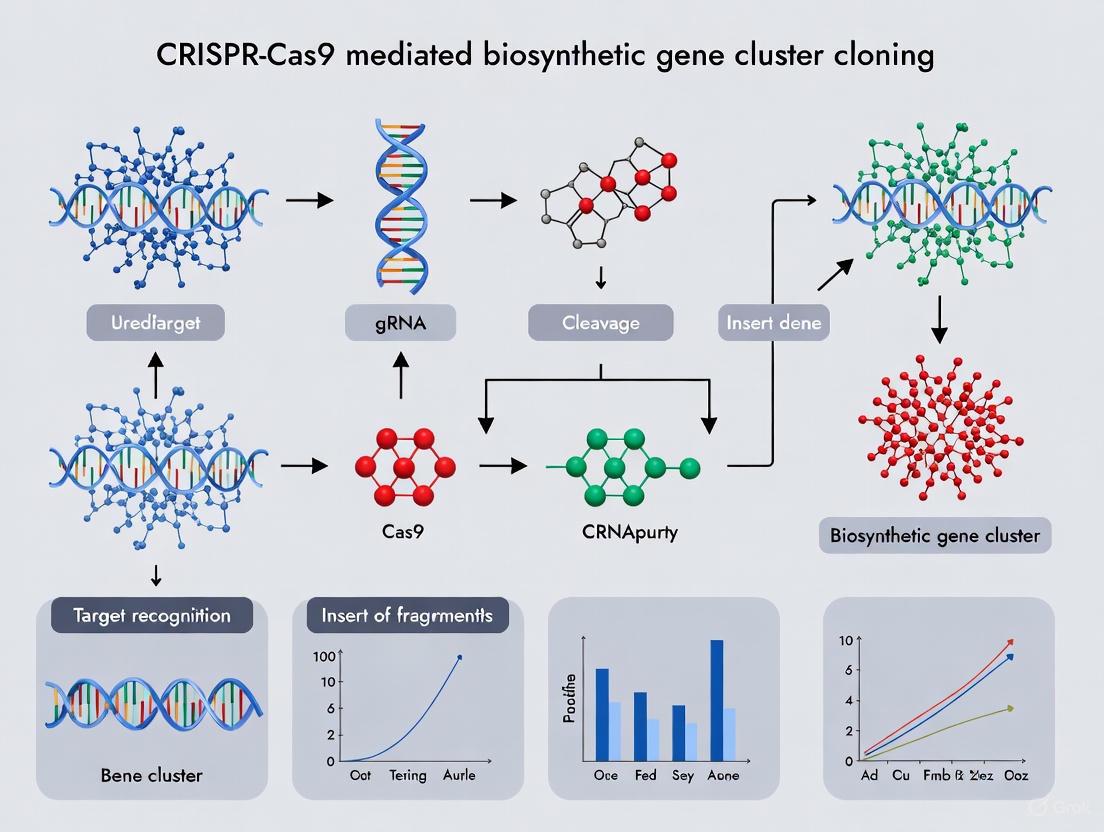
This article provides a comprehensive overview of CRISPR-Cas9 technologies for cloning and manipulating biosynthetic gene clusters (BGCs) from microbial genomes.
CRISPR-Cas9 for BGC Cloning: Methods, Optimization, and Applications in Natural Product Discovery
Abstract
This article provides a comprehensive overview of CRISPR-Cas9 technologies for cloning and manipulating biosynthetic gene clusters (BGCs) from microbial genomes. It covers foundational principles, established methods like CATCH and in vitro editing, and addresses critical challenges including off-target effects in high-GC content organisms like Streptomyces. The content explores recent advances in Cas9 engineering, specificity optimization, and emerging approaches utilizing endogenous CRISPR systems. Designed for researchers and drug development professionals, this guide synthesizes current methodologies with practical troubleshooting insights to facilitate efficient natural product discovery and metabolic engineering.
Understanding CRISPR-Cas9 Fundamentals for BGC Cloning
CRISPR-Cas9 represents a transformative genome editing tool that functions as programmable molecular scissors, enabling precise modifications to DNA sequences across diverse biological systems. This technology originates from an adaptive immune system in prokaryotes, where bacteria capture fragments of viral DNA to recognize and cleave subsequent infections [1]. The system's core components include the Cas9 nuclease enzyme and a guide RNA (gRNA), which programmably directs DNA cleavage at specific genomic locations [2]. For biosynthetic gene cluster (BGC) cloning research, this programmable specificity allows researchers to precisely isolate large genomic regions encoding valuable natural products, facilitating drug discovery and metabolic engineering efforts [3] [4].
The revolutionary capability of CRISPR-Cas9 lies in its simplicity and precision compared to earlier gene-editing technologies like zinc finger nucleases (ZFNs) and transcription activator-like effector nucleases (TALENs). While these earlier systems required complex protein engineering for each new DNA target, CRISPR-Cas9 achieves specificity through simple RNA-DNA base pairing, making it significantly more accessible and efficient for genetic manipulation [1]. This programmability makes it particularly valuable for targeting BGCs, which are often large, complex, and difficult to manipulate with conventional methods.
Molecular Components of the CRISPR-Cas9 System
Core Functional Elements
The CRISPR-Cas9 system requires two fundamental molecular components to function as programmable DNA scissors:
- Cas9 Nuclease: A multi-domain enzyme (typically 1368 amino acids from Streptococcus pyogenes) that acts as the catalytic "scissor" component. The REC lobe (REC1 and REC2 domains) binds guide RNA, while the nuclease (NUC) lobe contains RuvC and HNH domains that cleave the non-complementary and complementary DNA strands, respectively, along with a PAM-interacting domain that initiates target recognition [1].
- Guide RNA (gRNA): A synthetic RNA molecule combining two natural RNA components: crispr RNA (crRNA), which provides target specificity through an 18-20 base pair sequence complementary to the target DNA, and trans-activating crispr RNA (tracrRNA), which serves as a binding scaffold for the Cas9 protein [1].
The PAM Requirement
A critical requirement for Cas9 function is the presence of a Protospacer Adjacent Motif (PAM) sequence immediately downstream of the target site in the DNA. For the most commonly used Cas9 from Streptococcus pyogenes, the PAM sequence is 5'-NGG-3', where "N" can be any nucleotide [1]. This sequence requirement can present challenges when targeting GC-rich regions, such as those frequently found in Streptomyces genomes and their BGCs, though engineered Cas9 variants are helping to address this limitation [5].
Table 1: Core Components of the CRISPR-Cas9 System
| Component | Type | Function | Key Features |
|---|---|---|---|
| Cas9 Nuclease | Protein (Enzyme) | DNA cleavage | Contains HNH and RuvC nuclease domains; requires PAM sequence for activation |
| Guide RNA (gRNA) | RNA molecule | Target recognition | Combines crRNA (targeting) and tracrRNA (scaffold) functions |
| PAM Sequence | DNA sequence | System activation | 5'-NGG-3' for SpCas9; varies for other Cas orthologs |
The Core Mechanism: Recognition, Cleavage, and Repair
The CRISPR-Cas9 mechanism operates through three sequential stages that enable its programmable DNA editing function, each critically important for precise manipulation of biosynthetic gene clusters.
Target Recognition and Complex Assembly
The process initiates with the formation of the Cas9-gRNA ribonucleoprotein complex. The gRNA directs Cas9 to search the genome for complementary DNA sequences adjacent to a PAM sequence [1]. Once Cas9 identifies a potential PAM site, it triggers local DNA melting, allowing the gRNA to form an RNA-DNA hybrid through complementary base pairing with the target strand [1]. This PAM-dependent recognition provides the initial specificity checkpoint that ensures precise targeting—a crucial feature when working with valuable BGCs where off-target effects could be detrimental.
DNA Cleavage Mechanism
Following successful recognition and binding, the Cas9 enzyme undergoes a conformational change that activates its nuclease domains. The HNH domain cleaves the DNA strand complementary to the gRNA, while the RuvC domain cleaves the non-complementary strand [1]. This coordinated action generates a precise double-strand break (DSB) in the DNA backbone 3 base pairs upstream of the PAM sequence [1]. The result is a predominantly blunt-ended DSB that activates the cell's innate DNA repair machinery.
DNA Repair Pathways
Cellular repair of CRISPR-induced DSBs occurs primarily through two distinct mechanisms that enable different editing outcomes:
- Non-Homologous End Joining (NHEJ): An error-prone repair pathway active throughout the cell cycle that directly ligates broken DNA ends. This often results in small insertions or deletions (indels) that can disrupt gene function, useful for gene knockout applications [1].
- Homology-Directed Repair (HDR): A precise repair mechanism that uses a donor DNA template with homology to the regions flanking the break site. This pathway enables precise gene insertions, replacements, or modifications when a repair template is provided [1].
For BGC cloning and engineering, HDR provides the mechanism for precise promoter insertions, gene replacements, and other sophisticated manipulations essential for activating silent gene clusters or optimizing biosynthetic pathways [4].
Quantitative Performance Data for BGC Cloning
The application of CRISPR-Cas9 for biosynthetic gene cluster research requires understanding key performance metrics, including editing efficiency, fragment size capabilities, and fidelity across different experimental approaches.
Table 2: Performance Metrics of CRISPR-Cas9 Methods for DNA Manipulation
| Method/Application | Maximum Fragment Size | Efficiency/Fidelity | Key Advantage | Reference |
|---|---|---|---|---|
| CRISPR/Cas9 + Gibson Assembly | 77 kb | 46-100% fidelity (near 100% for <50 kb) | Fast (2.5 days); technically simple; high fidelity | [3] |
| CRISPR-Cas9 Knock-in (Streptomyces) | N/A | Significantly enhanced vs. no CRISPR | Enables promoter insertion for silent BGC activation | [4] |
| Engineered Cas9-BD (Streptomyces) | >100 kb | 98.1% editing efficiency; reduced cytotoxicity | Reduced off-target effects in high-GC genomes | [5] |
| TAR-CRISPR | - | <35% fidelity | Suitable for large genomic regions | [3] |
| CATCH | ~150 kb | 2-90% fidelity | Suitable for large genomic regions | [3] |
Experimental Protocols for BGC Research
Protocol: Large-Fragment DNA Cloning via CRISPR-Cas9 and Gibson Assembly
This protocol enables direct capture and cloning of large DNA fragments (30-77 kb) from various host genomes, achieving near 100% cloning fidelity for fragments below 50 kb [3].
Materials Required:
- Purified Cas9 nuclease (commercially available or purified as in [3])
- In vitro transcribed sgRNA targeting flanking regions of target BGC
- Gibson Assembly Master Mix (commercial)
- Appropriate vector backbone
- Source genomic DNA (high molecular weight)
Procedure:
sgRNA Design and Synthesis:
- Design 20 bp oligonucleotides complementary to sequences flanking the target BGC using established resources (e.g., Zhang lab design tool)
- Generate double-stranded transcription template DNA by PCR annealing
- Perform in vitro transcription using T7 High Yield RNA Transcription Kit
- Purify sgRNA using clean beads [3]
Cas9 Protein Preparation:
- Express Cas9 gene in E. coli BL21(DE3) using appropriate expression vector
- Induce protein expression with 0.4 mM IPTG at 16°C for 20 hours
- Purify recombinant protein using affinity chromatography [3]
Genomic DNA Preparation:
- Culture source organisms under optimal conditions
- Harvest cells and resuspend in SET buffer with lysozyme
- Incubate at 37°C for 1 hour, then add proteinase K and SDS
- Incubate at 50°C until solution clears
- Recover genomic DNA through phenol-chloroform-isoamyl alcohol extraction [3]
Targeted Digestion and Assembly:
- Mix purified genomic DNA with Cas9-sgRNA ribonucleoprotein complex
- Incubate at 37°C for 2 hours to allow targeted cleavage
- Combine digested DNA with linearized vector backbone in Gibson Assembly reaction
- Incubate at 50°C for 60 minutes for seamless assembly [3]
Transformation and Verification:
- Transform assembly reaction into appropriate E. coli strain
- Select on appropriate antibiotic plates
- Verify positive clones by colony PCR and restriction analysis
- Confirm fidelity by Sanger sequencing of insertion sites
Protocol: CRISPR-Cas9-Mediated Promoter Knock-in for Silent BGC Activation
This protocol describes strategic promoter insertion to activate silent biosynthetic gene clusters in native Streptomyces hosts, enabling production of unique metabolites [4].
Materials:
- pCRISPomyces-2 plasmid or similar Streptomyces-optimized CRISPR vector
- Donor DNA containing strong constitutive promoter (e.g., kasO*p) with homology arms
- Target Streptomyces strain with silent BGC of interest
Procedure:
Vector Construction:
- Design sgRNA targeting insertion site upstream of BGC biosynthetic operon or pathway-specific activator
- Clone sgRNA expression cassette into CRISPR plasmid
- Prepare donor DNA containing strong constitutive promoter flanked by 1-2 kb homology arms corresponding to sequences upstream and downstream of target insertion site [4]
Transformation:
- Introduce CRISPR plasmid and donor DNA into target Streptomyces strain via conjugal transfer or protoplast transformation
- Select exconjugants on apramycin-containing plates (for pCRISPomyces-2 system) [4]
Screening and Validation:
- Screen for successful promoter insertion by colony PCR across integration junctions
- Verify promoter insertion by DNA sequencing
- Analyze metabolite production of engineered strains compared to wild type using HPLC or LC-MS
- Confirm BGC expression by RT-PCR analysis of biosynthetic genes [4]
Research Reagent Solutions for BGC Engineering
Table 3: Essential Research Reagents for CRISPR-Cas9 BGC Manipulation
| Reagent/Category | Specific Examples | Function/Application | Technical Notes |
|---|---|---|---|
| CRISPR Plasmids | pCRISPomyces-2, pCRISPomyces-2BD | Streptomyces-optimized vectors for genome editing | Cas9-BD variant reduces cytotoxicity in high-GC genomes [5] |
| Cas9 Variants | Wild-type SpCas9, Cas9-BD, FnCas12a | DNA cleavage with different PAM specificities | Cas9-BD reduces off-target effects; FnCas12a recognizes -NTTT PAM [5] |
| Assembly Systems | Gibson Assembly Master Mix | Seamless cloning of large DNA fragments | Enables one-step assembly of Cas9-digested fragments [3] |
| Promoter Elements | kasOp, ermE | Strong constitutive promoters for BGC activation | Used for CRISPR-mediated knock-in to activate silent clusters [4] |
| Visual Screening | FveMYB10 reporter system | Visual identification of transgenic lines in plants | Native reporter for efficient screening without external markers [6] |
| Bioinformatics Tools | CHOPCHOP, CRISPResso, Cas-OFFinder | gRNA design, efficiency prediction, off-target analysis | Essential for designing specific gRNAs for unique BGC targets [7] |
Technical Considerations for BGC Applications
Successful application of CRISPR-Cas9 for biosynthetic gene cluster research requires addressing several technical challenges specific to these complex genomic regions:
GC-Rich Genome Considerations: Streptomyces genomes and their BGCs typically exhibit high GC content (70-74%), which presents challenges for CRISPR-Cas9 applications. The widely used SpCas9 recognizes 5'-NGG-3' PAM sequences that are abundant in high-GC genomes, potentially increasing off-target effects [5]. Recent engineering efforts have developed Cas9-BD, featuring polyaspartate residues at N- and C-termini, which significantly reduces off-target cleavage while maintaining high on-target efficiency in Streptomyces species [5].
Large Fragment Manipulation: Cloning large BGCs (often 30-150 kb) requires specialized approaches. The combination of CRISPR-Cas9 with Gibson assembly has demonstrated efficient cloning of fragments up to 77 kb with high fidelity [3]. For even larger fragments, methods like CATCH and CAT-FISHING can capture fragments up to 145-150 kb, though with potentially lower fidelity and more complex protocols [3].
Minimizing Cytotoxicity: High Cas9 expression can cause significant cytotoxicity in Streptomyces, limiting editing efficiency. Strategies to address this include:
- Using engineered Cas9-BD with reduced off-target activity [5]
- Employing inducible expression systems to control Cas9 timing and duration
- Utilizing Cas12a variants with different PAM requirements for specific applications [5]
Multiplexed Editing: Advanced BGC engineering often requires multiple simultaneous modifications. CRISPR-Cas9 systems enable multiplexed editing through:
- Delivery of multiple sgRNAs targeting different genomic locations
- Combinatorial promoter refactoring of multiple BGCs
- Simultaneous deletion of competing pathways and activation of target BGCs [5]
Biosynthetic Gene Clusters (BGCs) represent vast reservoirs of untapped chemical diversity, encoding the production of specialized metabolites with potential applications in medicine and agriculture. However, a significant bottleneck in natural product discovery is the inability to express these clusters in their native hosts under laboratory conditions, as many remain silent or cryptic [4]. Furthermore, many potential source microorganisms are uncultivable using standard techniques, locking away their genetic potential [8]. Heterologous expression—cloning and expressing BGCs in genetically tractable host organisms—has emerged as a powerful strategy to bypass these limitations. The precision of the cloning method is paramount, as it directly influences the integrity of the captured genetic material and, consequently, the success of downstream discovery efforts. Within this field, CRISPR-Cas systems have evolved from simple gene-editing tools into versatile platforms that enable the precise targeted cloning of large and complex BGCs [9].
The Critical Need for Precision in BGC Cloning
Precise cloning is not merely a technical requirement but a fundamental determinant for the accurate reconstruction of biosynthetic pathways. Inaccurate cloning can lead to:
- Truncated or Chimeric Clusters: Resulting in non-functional pathways or the production of incorrect metabolites.
- Disruption of Regulatory Elements: Silent BGCs often require their native regulatory context for activation; imprecise cloning can destroy these subtle controls.
- Failed Heterologous Expression: The heterologous host may lack the machinery to correct errors introduced during cloning.
Advanced cloning methods, particularly those leveraging CRISPR-Cas systems, address these challenges by enabling sequence-specific excision of BGCs from complex genomic DNA, ensuring that the boundaries of the cloned fragment exactly match the bioinformatically predicted cluster [9].
Application Note: CAPTURE - A CRISPR-Cas12a Based Cloning Protocol
The Cas12a-assisted precise targeted cloning using in vivo Cre-lox recombination (CAPTURE) method exemplifies how CRISPR technology can be harnessed for high-efficiency, precise cloning of large BGCs [9].
Principle and Workflow
The CAPTURE method utilizes the programmable nuclease Cas12a to excise the target BGC from purified genomic DNA. The excised linear fragment is then assembled with a specialized vector system and circularized in vivo using Cre-loxP site-specific recombination, a process far more efficient than in vitro ligation for large DNA molecules [9].
The workflow for this targeted cloning approach is illustrated below:
Detailed Experimental Protocol
Step 1: In Vitro Cas12a Digestion of Genomic DNA
- Design Cas12a guide RNAs (crRNAs): Design two crRNAs that target sequences immediately flanking the BGC of interest. The target sites should define the precise start and end of the cluster.
- Prepare genomic DNA: Isolate high-quality, high-molecular-weight genomic DNA from the producer organism and embed it in low-melt agarose plugs to prevent mechanical shearing.
- Perform Cas12a digestion: Set up a reaction containing the genomic DNA plug, purified Cas12a enzyme, and the synthesized crRNAs. Incubate to allow for specific cleavage, which releases the target BGC as a large linear DNA fragment.
Step 2: Preparation of DNA Receivers by PCR
- Amplify receiver fragments: Perform PCR to amplify two DNA "receiver" fragments from a universal receiver plasmid. These receivers contain:
- An origin of replication (
ori) for E. coli. - A selectable marker (e.g., an antibiotic resistance gene).
loxPsites at their termini for subsequent recombination.- Elements for heterologous expression (e.g., origins for conjugation, integration sites, or strong promoters).
- An origin of replication (
- Purify PCR products: Gel-purify the amplified receiver fragments to ensure high concentration and purity.
Step 3: T4 Polymerase Exo + Fill-in DNA Assembly
- Set up assembly reaction: Combine the Cas12a-released BGC fragment with the two purified DNA receivers.
- Add T4 DNA polymerase: Initiate the assembly using T4 DNA polymerase, which possesses both exonuclease and fill-in synthesis activities. This creates complementary single-stranded overhangs on all fragments, facilitating their annealing into a single linear molecule.
Step 4: In Vivo Circularization via Cre-lox Recombination
- Transform assembly product: Introduce the linear assembly product into an E. coli strain harboring a helper plasmid. This plasmid constitutively expresses Cre recombinase and the phage lambda Red Gam protein (which protects linear DNA from degradation) [9].
- Select for clones: Plate the transformation on selective media. Within the E. coli cells, the Cre recombinase catalyzes site-specific recombination between the
loxPsites on the linear molecule, efficiently circularizing it into a stable plasmid. - Validate clones: Screen resulting colonies by colony PCR or restriction digest to confirm the correct clone. The helper plasmid can be easily cured due to its temperature-sensitive origin of replication.
Performance Data
The CAPTURE method has demonstrated remarkable efficiency and robustness, as shown in the following performance summary:
Table 1: Performance Metrics of the CAPTURE Cloning Method [9]
| Metric | Performance | Experimental Details |
|---|---|---|
| Cloning Efficiency | ~100% | Successfully cloned 47 out of 47 targeted BGCs |
| BGC Size Range | 10 - 113 kb | Demonstrates capability for very large clusters |
| Host Organisms | Actinomycetes & Bacilli | Applicable across different bacterial taxa |
| Key Discovery | 15 novel natural products | Includes antimicrobial bipentaromycins A-F |
Advanced CRISPR-Cas Strategies for BGC Activation and Editing
Beyond direct cloning, CRISPR-Cas systems can be deployed to activate and edit BGCs directly in their native hosts.
CRISPR-Cas9-Mediated Promoter Knock-in
For silent BGCs, a powerful one-step strategy involves using CRISPR-Cas9 to insert strong, constitutive promoters upstream of key biosynthetic genes or pathway-specific activators [4].
- Procedure: A donor DNA template containing a strong promoter (e.g.,
kasOp*) is co-introduced with a Cas9-sgRNA complex designed to create a double-strand break near the target integration site. The cell's homology-directed repair (HDR) machinery uses the donor DNA to repair the break, thereby integrating the promoter. - Outcome: This method has been used to activate diverse silent BGCs in Streptomyces species, leading to the production of unique metabolites, including a novel pentangular type II polyketide [4].
Engineered Cas9 Systems for Improved Editing in GC-Rich Hosts
A significant challenge in editing actinomycete genomes (which have high GC content) is Cas9 cytotoxicity and off-target cleavage. Recent work has addressed this by engineering the Cas9 protein itself.
- Cas9-BD: A modified Cas9 with polyaspartate tags added to its N- and C-termini shows dramatically reduced off-target cleavage while maintaining high on-target activity [5].
- Application: Cas9-BD was successfully used for multiplexed genome editing in Streptomyces and facilitated the development of an in vivo BGC capturing method for clusters larger than 100 kb, showcasing its versatility and reduced toxicity [5].
The Scientist's Toolkit: Essential Reagents for CRISPR-Based BGC Cloning
Table 2: Key Research Reagents and Their Applications
| Reagent / Tool | Function | Example Use Case |
|---|---|---|
| Cas12a (Cpf1) Nuclease | Programmable nuclease for precise genomic DNA digestion; often requires a T-rich PAM site. | Precise excision of BGCs from genomic DNA in the CAPTURE protocol [9]. |
| Cre-lox Recombination System | Site-specific recombination system for efficient circularization of linear DNA fragments in vivo. | Final plasmid assembly step in the CAPTURE method, greatly improving efficiency for large DNA fragments [9]. |
| Engineered Cas9-BD | A modified Cas9 with reduced off-target effects and cytotoxicity in high-GC content hosts. | Multiplexed genome editing and large BGC capture in Streptomyces without significant cell death [5]. |
| T4 DNA Polymerase | Enzyme with exonuclease and fill-in synthesis activities for seamless DNA assembly. | Used in the CAPTURE method to join the BGC fragment with vector pieces without the need for homologous overlaps [9]. |
| Helper Plasmids (e.g., pBE14) | Plasmid providing transient expression of Cre recombinase and Red Gam proteins in E. coli. | Essential for the in vivo circularization and stability of the cloned BGC construct [9]. |
| Heterologous Expression Platforms (e.g., Micro-HEP) | Engineered chassis strains and systems for BGC modification, transfer, and expression. | Platform using recombinase-mediated cassette exchange (RMCE) for efficient expression of foreign BGCs in S. coelicolor [10]. |
The convergence of precise cloning technologies and CRISPR-Cas systems has created a powerful paradigm for natural product discovery. Methods like CAPTURE demonstrate that large BGCs can be cloned with near-perfect efficiency, directly enabling the discovery of novel chemical entities [9]. The continued evolution of these tools—including engineered nucleases with higher fidelity and advanced heterologous expression platforms—promises to further accelerate the unlocking of Nature's chemical repertoire, paving the way for new therapeutics and agrochemicals. The precision of the initial clone is and will remain the critical first step on the path from genetic sequence to valuable molecule.
The discovery that a bacterial immune mechanism could be repurposed into a programmable genome engineering tool represents one of the most significant breakthroughs in modern biotechnology. The Clustered Regularly Interspaced Short Palindromic Repeats (CRISPR) and CRISPR-associated protein 9 (Cas9) system is derived from an adaptive immune system in bacteria that captures and stores genetic memories of past viral infections [11] [12]. When confronted with subsequent infections, bacteria transcribe these stored sequences into RNA molecules that guide Cas nucleases to cleave the DNA of invading viruses, thus disabling them [12]. This natural system was adapted for genome editing by engineering a single guide RNA (sgRNA) that directs the Cas9 nuclease to a specific DNA sequence in a cell's genome, resulting in a targeted double-stranded break (DSB) [13]. The simplicity, cost-effectiveness, and high efficiency of this two-component system—Cas9 enzyme and guide RNA—have made it a revolutionary tool in genetic engineering, surpassing previous technologies like zinc finger nucleases (ZFNs) and transcription activator-like effector nucleases (TALENs) [14] [13].
This article details the application of CRISPR-Cas9 technology specifically for biosynthetic gene cluster (BGC) cloning, a critical process in natural product discovery and synthetic biology. BGCs are stretches of DNA that encode the production of biologically active compounds, such as antibiotics, and often span tens to hundreds of kilobases [3]. Their large size makes traditional cloning methods challenging. We provide a detailed protocol for a CRISPR-Cas9-mediated large-fragment assembly method that efficiently clones these substantial DNA segments for heterologous expression and research [15] [3].
Application Notes: CRISPR-Cas9 in BGC Cloning
The Challenge of Large DNA Fragment Cloning
The cloning of large DNA fragments, such as those encompassing entire biosynthetic gene clusters, is fundamental to both basic and applied research, including synthetic genome construction and natural product discovery [3]. Conventional cloning methods face significant limitations when dealing with fragments over 10 kb. Techniques like Transformation-Associated Recombination (TAR) and Exonuclease combined with RecET recombination (ExoCET) often suffer from technical complexity, low efficiency, long cycling times, and reliance on specific restriction sites [3]. The CRISPR-Cas9-mediated large-fragment assembly method overcomes these hurdles by combining the precision of CRISPR with the seamless assembly capability of Gibson assembly, enabling direct capture and cloning of large genomic regions up to 77 kb with high fidelity and in a shorter timeframe [15] [3].
Comparative Analysis of Large-Fragment Cloning Methods
Table 1: Comparison of Large-Fragment DNA Cloning Methods
| Method | Maximum DNA Fragment Size | Fidelity | Cycle Time | Key Advantages | Key Limitations |
|---|---|---|---|---|---|
| CRISPR-Cas9 + Gibson (This Method) | ~80 kb | 46–100% | ~2.5 days | Technically easier; high fidelity; short cycle; can clone fragments from different sources [3] | Fidelity decreases for larger fragments [3] |
| LLHR | ~52 kb | <~50% | ~3 days | Technically easier; suitable for small- and mid-sized BGCs [3] | High false positive rate; difficult for large BGCs [3] |
| ExoCET | ~106 kb | 4–100% | ~3 days | Technically easier; uses short homologous arms [3] | Low efficiency for cloning large-size BGCs [3] |
| TAR-CRISPR | - | <35% | ~7 days | Cas9-facilitated; suitable for large genomic regions [3] | Technically challenging; uses yeast spheroplasts; false positives [3] |
| CATCH | ~150 kb | 2–90% | ~4 days | Suitable for cloning large genomic regions [3] | Requires careful preparation of genomic DNA in gel [3] |
| CAT-FISHING | ~145 kb | 8–55% | 3–4 days | Suitable for regions with high GC content [3] | Low efficiency [3] |
Quantitative Performance of the CRISPR-Cas9 Method
The efficacy of the CRISPR-Cas9 assembly method has been quantitatively demonstrated for DNA fragments of varying sizes. The table below summarizes the cloning fidelity achieved for different fragment lengths, showcasing its reliability for a wide range of applications [3].
Table 2: Cloning Fidelity of the CRISPR-Cas9 Large-Fragment Assembly Method
| DNA Fragment Size | Cloning Fidelity |
|---|---|
| 15 kb | Near 100% |
| 30 kb | Near 100% |
| 50 kb | Near 100% |
| 60 kb | 46% |
| 77 kb | 46% |
Diagram 1: Evolution from immunity to tool.
Experimental Protocols
CRISPR-Cas9-Mediated Large-Fragment Assembly
This protocol describes a fast and efficient platform for the direct capture and cloning of large DNA fragments (30-77 kb) from genomic DNA, achieving near 100% fidelity for fragments below 50 kb [3]. The entire process can be completed in approximately 2.5 days.
sgRNA Design and In Vitro Transcription
- sgRNA Design: Design 20 bp oligonucleotides specific to the flanks of the target genomic region using established design resources (e.g., from the Zhang lab: https://www.zlab.bio/Resources-guidedesign) [3]. Two sgRNAs are required to excise the large fragment of interest.
- Template Generation: Generate the double-stranded DNA template for sgRNA transcription via PCR annealing. Use primer sgRNA-E-F with a T7 promoter sequence and sgRNA-scaffold-R to amplify the scaffold [3].
- In Vitro Transcription: Perform in vitro transcription using a commercial T7 High Yield RNA Transcription Kit according to the manufacturer's instructions [3].
- RNA Purification: Purify the transcribed sgRNA using clean beads (e.g., VAHTS RNA Clean Beads) following the kit's protocol. The purified sgRNA can be stored at -80°C [3].
Expression and Purification of Cas9 Protein
- Vector Construction: Clone the Cas9 gene into a protein expression vector (e.g., pET28a) using standard molecular biology techniques, ensuring it is flanked by the appropriate restriction sites (e.g., SalI and NcoI) [3].
- Transformation and Expression: Transform the constructed plasmid into an E. coli expression strain like BL21(DE3). Grow a 1 L culture and induce protein expression with 0.4 mM IPTG when the OD600 reaches 0.6-0.8. Induce at 16°C for 20 hours [3].
- Protein Purification: Purify the recombinant Cas9 protein using a standard chromatography system (e.g., AKTA). Confirm purity and concentration, and store in a suitable buffer [3].
Preparation of Genomic DNA
- Cell Culture and Lysis: Culture the source organism (e.g., Streptomyces ceruleus or B. subtilis) in appropriate media. Harvest cells by centrifugation and resuspend in SET buffer. Add lysozyme and incubate at 37°C for 1 hour, followed by the addition of proteinase K and SDS, incubating at 50°C until the solution clears [3].
- DNA Extraction and Precipitation: Add 5 M NaCl to the lysate. Extract the genomic DNA using phenol-chloroform-isoamyl alcohol and recover the aqueous phase. Precipitate the DNA with ethanol and sodium acetate, and wash the pellet with 75% ethanol [3]. The resulting high-quality, high-molecular-weight genomic DNA is crucial for success.
In Vitro Cleavage and Gibson Assembly
- Cas9 Cleavage Reaction: Set up a reaction mixture containing the purified genomic DNA, the two purified sgRNAs, and the Cas9 nuclease in a suitable reaction buffer. Incubate to allow for precise cleavage at the target sites, thereby excising the large fragment of interest [3].
- Gibson Assembly: Combine the Cas9-cleaved DNA fragment with a linearized cloning vector. Use a commercial Gibson Assembly Master Mix to seamlessly assemble the fragment and vector. This isothermal assembly method uses a 5' exonuclease, a DNA polymerase, and a DNA ligase to join the pieces with high efficiency [3].
- Transformation and Screening: Transform the assembled product into competent E. coli cells. Screen the resulting colonies by colony PCR and/or restriction digestion to identify positive clones containing the correct large DNA insert [3].
Diagram 2: BGC cloning workflow.
The Scientist's Toolkit: Research Reagent Solutions
Table 3: Essential Reagents for CRISPR-Cas9-Mediated Large-Fragment Cloning
| Reagent / Material | Function / Role in the Protocol | Example / Specification |
|---|---|---|
| Cas9 Nuclease | The engine of the system; creates double-stranded breaks at the target DNA site specified by the sgRNA [11] [3]. | Recombinantly expressed and purified S. pyogenes Cas9. |
| sgRNAs | Provides the targeting specificity; a synthetic fusion of crRNA and tracrRNA that directs Cas9 to the intended genomic locus [11] [16] [14]. | In vitro transcribed (IVT) using a T7 High Yield RNA Transcription Kit [3]. |
| T7 High Yield RNA Transcription Kit | Generates large quantities of sgRNA from a DNA template for in vitro use [3]. | Commercial kit (e.g., from Vazyme). |
| VAHTS RNA Clean Beads | Purifies transcribed sgRNA, removing unincorporated nucleotides and enzymes, which is critical for downstream efficiency [3]. | Solid-phase reversible immobilization (SPRI) beads. |
| Gibson Assembly Master Mix | Enables seamless, one-pot assembly of multiple DNA fragments (the excised BGC and the linearized vector) without relying on restriction sites [15] [3]. | Contains a 5' exonuclease, DNA polymerase, and DNA ligase. |
| pET28a Vector | A common protein expression vector used for the heterologous expression of the Cas9 protein in E. coli [3]. | Plasmid with T7 lac promoter, kanamycin resistance. |
| E. coli BL21(DE3) | A robust bacterial strain designed for high-level protein expression from vectors containing the T7 lac promoter [3]. | Competent cells for transformation and protein production. |
The repurposing of the prokaryotic CRISPR-Cas immune system into a precise genome engineering tool has fundamentally transformed genetic research. The CRISPR-Cas9-mediated large-fragment assembly method detailed herein provides researchers with a powerful, efficient, and reliable strategy to clone large biosynthetic gene clusters. This capability is indispensable for accelerating the discovery and production of novel natural products, functional genomics studies, and the construction of synthetic genomes. As the field progresses, further refinements in guide RNA design, Cas protein engineering, and delivery methods will continue to expand the boundaries of what is possible with this versatile technology.
The cloning and manipulation of biosynthetic gene clusters (BGCs) are critical for accessing the vast potential of natural products for drug discovery and development. Traditional methods for BGC cloning, such as Transformation-Associated Recombination (TAR) and Exonuclease combined with RecET recombination (ExoCET), have been limited by complex operational procedures, dependence on restriction sites, and challenges in scaling [17]. The advent of CRISPR-Cas9 technology has revolutionized this field by offering a fundamentally different approach based on RNA-guided DNA recognition, providing unprecedented advantages in specificity, versatility, and scalability for BGC research. This Application Note details these advantages within the context of biosynthetic gene cluster cloning and provides validated protocols for implementing CRISPR-Cas9 in your research workflow.
Comparative Analysis: CRISPR-Cas9 vs. Traditional Methods
The table below summarizes the key differences between CRISPR-Cas9 and traditional gene editing platforms, highlighting the transformative advantages of CRISPR-Cas9 for BGC cloning.
Table 1: Comparison of Gene Editing Platforms for BGC Cloning
| Feature | CRISPR-Cas9 | Traditional Methods (ZFNs, TALENs) | BGC Cloning Relevance |
|---|---|---|---|
| Targeting Mechanism | RNA-guided (gRNA) [18] | Protein-based (engineered zinc fingers/TALE repeats) [18] [19] | Simple gRNA redesign for different BGCs vs. complex protein re-engineering |
| Ease of Design & Use | Simple, rapid gRNA design (days) [18] | Complex, labor-intensive protein engineering (weeks-months) [18] | Accelerates pipeline from genomic DNA sequence to cloned construct |
| Multiplexing Capacity | High (multiple gRNAs simultaneously) [18] | Limited (labor-intensive and costly) [18] | Enables simultaneous cloning or editing of multiple BGCs or regions within a large BGC |
| Precision & Specificity | Moderate to high; subject to off-target effects [18] | High; well-validated, lower off-target risks [18] [19] | Critical for obtaining intact, unmodified BGCs; improved Cas9 variants (e.g., Cas9-BD) mitigate this issue [20] |
| Scalability & Throughput | High; ideal for high-throughput experiments [18] | Limited [18] | Enables library-scale cloning of BGCs from metagenomic or genomic DNA |
| Cost Efficiency | Low [18] | High [18] | Makes large-scale BGC cloning projects financially viable |
For BGC cloning, the simple guide RNA (gRNA) design is a paramount advantage over traditional methods. Researchers can quickly design gRNAs to target the flanks of a BGC of interest, whereas traditional methods like ZFNs and TALENs require intricate protein engineering for each new target, a process that is both time-consuming and expensive [18]. Furthermore, CRISPR-Cas9's multiplexing capability allows for the simultaneous targeting of multiple genomic loci, enabling the cloning of large BGCs as a single fragment or the coordinated manipulation of multiple genetic elements within a cluster [18] [20].
Key Advantages in BGC Research
Enhanced Specificity with Engineered Cas Variants
A primary concern in BGC cloning is the precise excision of the entire cluster without internal damage. While early CRISPR-Cas9 systems showed some off-target activity, advanced engineered variants now offer superior fidelity. For instance, Cas9-BD, a modified Cas9 engineered for use in high-GC content genomes like those of Streptomyces, demonstrates decreased off-target binding and cytotoxicity compared to the wild-type protein [20]. This is crucial for accurately cloning BGCs from actinomycetes, a major source of bioactive natural products, without introducing unwanted mutations that could disrupt biosynthetic pathways.
Unparalleled Versatility in Application
CRISPR-Cas9's utility in BGC research extends far beyond simple knockout or excision. Its versatility enables a wide range of applications:
- Direct BGC Cloning: Methods like the one described by [17] combine in vitro Cas9 cleavage of genomic DNA with Gibson assembly to directly clone large fragments (30-77 kb) into vectors with high fidelity.
- BGC Refactoring and Activation: The ACTIMOT (Advanced Cas9-mediaTed In vivo MObilization and mulTiplication of BGCs) technology uses CRISPR-Cas9 to mobilize and amplify cryptic BGCs, providing access to untapped chemical diversity from bacterial genomes [21].
- Multiplexed Genome Editing: Engineered Cas9 systems can be used for simultaneous BGC deletions, refactoring, and gene activation in a single experiment, dramatically accelerating strain engineering for improved metabolite production [20].
Superior Scalability for High-Throughput Workflows
The simplicity of programming CRISPR-Cas9 with custom gRNAs makes it inherently scalable. This allows researchers to move from cloning single BGCs to undertaking projects aimed at capturing entire BGC libraries. The ability to process multiple samples in parallel using a standardized molecular workflow makes CRISPR-based methods ideal for high-throughput functional genomics screens and the systematic exploration of biosynthetic diversity [18] [17]. This scalability is a significant advantage over traditional methods, which are difficult and costly to parallelize.
Experimental Protocol: CRISPR-Cas9-Mediated Large-Fragment BGC Cloning
This protocol, adapted from [17], details a robust method for cloning large BGCs (e.g., 40 kb) from genomic DNA using CRISPR-Cas9 cleavage followed by Gibson assembly.
Diagram 1: BGC cloning workflow.
Research Reagent Solutions
Table 2: Essential Reagents for CRISPR-Cas9 BGC Cloning
| Item | Function/Description | Example/Source |
|---|---|---|
| Cas9 Nuclease | Engineered protein for targeted DNA cleavage. | Purified S. pyogenes Cas9 (e.g., NEB). For high-GC content hosts, use engineered variants like Cas9-BD [20]. |
| gRNA | Synthetic RNA guiding Cas9 to target DNA sequences. | Synthesized via in vitro transcription from a DNA template [17]. |
| Gibson Assembly Master Mix | Enzymatic mix for seamless, simultaneous assembly of multiple DNA fragments. | Commercial kit (e.g., NEB HiFi Gibson Assembly). |
| Vector Backbone | Cloning vector with appropriate homology arms and selection marker. | Designed with 20-40 bp homology arms matching the ends of the target BGC fragment [17]. |
| Host Genomic DNA | High-quality, high-molecular-weight DNA from the source organism. | Prepared using standard phenol-chloroform extraction [17]. |
Step-by-Step Procedure
Step 1: gRNA Design and Synthesis
- Design gRNAs targeting ~20 bp sequences immediately flanking the BGC of interest using bioinformatics tools (e.g., from the Zhang lab:
https://www.zlab.bio/Resources-guidedesign) [17]. - Synthesize gRNAs via in vitro transcription. Generate the DNA template by PCR annealing, then perform transcription using a commercial kit (e.g., T7 High Yield RNA Transcription Kit, Vazyme). Purify the resulting sgRNA using clean beads [17].
Step 2: Cas9 Protein Expression and Purification
- Clone the Cas9 gene into an expression vector (e.g., pET28a) and transform into an E. coli expression strain like BL21(DE3).
- Induce protein expression with 0.4 mM IPTG when OD600 reaches 0.6-0.8. Incubate at 16°C for 20 hours.
- Purify the Cas9 protein using a standard affinity chromatography system (e.g., ÄKTA) [17].
Step 3: Preparation of High-Molecular-Weight Genomic DNA
- Culture the source organism (e.g., Streptomyces) under optimal conditions.
- Harvest cells and lyse using a combination of lysozyme, proteinase K, and SDS.
- Purify genomic DNA through phenol-chloroform-isoamyl alcohol extraction and recover via ethanol precipitation [17].
Step 4: In Vitro Cas9 Cleavage of Genomic DNA
- Set up the cleavage reaction:
- 800 nM purified Cas9 protein
- 400 nM of each sgRNA (flanking the BGC)
- 1x NEB Buffer 3.1
- Recombinant ribonuclease inhibitor
- 0.02-0.04 nM genomic DNA
- Incubate at 37°C for 2 hours to allow for targeted cleavage and release of the BGC fragment from the genome [17].
Step 5: Purification of Cleaved DNA Fragment
- Add an equal volume of phenol-chloroform-isoamyl alcohol to the cleavage reaction.
- Centrifuge and collect the aqueous supernatant.
- Precipitate the DNA by adding 3 M sodium acetate and anhydrous ethanol.
- Wash the pellet with 75% ethanol, air-dry, and resuspend in nuclease-free water [17].
Step 6: Gibson Assembly
- Combine the following in a single tube:
- Purified BGC fragment (from Step 5)
- Linearized vector backbone (with homology arms matching the BGC fragment ends)
- Gibson Assembly Master Mix
- Incubate at 50°C for 30-60 minutes to assemble the BGC fragment into the vector [17].
Step 7: Transformation and Validation
- Transform the assembly reaction into a competent E. coli strain suitable for large plasmid maintenance.
- Screen colonies by colony PCR and/or restriction digest to confirm correct insertion.
- Validate positive clones by Sanger sequencing across the assembly junctions and, if possible, by whole-plasmid sequencing to ensure BGC integrity [17].
CRISPR-Cas9 technology represents a paradigm shift in the cloning and study of biosynthetic gene clusters. Its specificity, enhanced by novel Cas variants, its versatility in enabling cloning, refactoring, and multiplexed editing, and its inherent scalability for high-throughput projects provide a powerful and streamlined toolkit that outperforms traditional methods. The protocols outlined herein offer a reliable pathway for researchers to leverage these advantages, accelerating the discovery and engineering of novel natural products for therapeutic applications.
Practical Guide: CRISPR-Cas9 Methods for BGC Capture and Assembly
Cas9-Assisted Targeting of Chromosome Segments for Large Fragments
The cloning of large DNA segments, particularly biosynthetic gene clusters (BGCs), is fundamental to synthetic biology and natural product discovery [22] [3]. These clusters, which can span tens to hundreds of kilobases, encode the production of valuable compounds, including pharmaceuticals, antibiotics, and biofuels [3] [17]. Traditional cloning methods, such as PCR-based amplification and restriction enzyme digestion, face significant limitations when applied to large genomic targets. Standard PCR struggles with fragments exceeding 10-35 kb, while restriction enzyme approaches depend on the availability of unique flanking sites, which are often absent in complex genomes [22] [3].
The Cas9-Assisted Targeting of CHromosome segments (CATCH) method overcomes these hurdles by leveraging the programmability of the CRISPR-Cas9 system for the precise excision of large genomic regions directly from native chromosomes [22] [23] [24]. This technique enables the one-step targeted cloning of sequences up to 100-150 kb, providing a powerful tool for capturing extensive gene clusters that are otherwise expensive to synthesize or difficult to isolate using conventional techniques [22]. The application of CATCH within a broader CRISPR-Cas9 framework significantly accelerates the cloning and heterologous expression of BGCs, thereby streamlining the pathway to novel bioactive compound discovery [3] [5].
CATCH Cloning Workflow
The following diagram illustrates the streamlined CATCH cloning procedure, from guide RNA design to the generation of a clone harboring the target large DNA fragment.
Key Research Reagent Solutions
The successful implementation of CATCH cloning relies on a suite of specialized reagents and materials. The following table details the essential components and their functions within the protocol.
| Reagent/Material | Function in CATCH Protocol | Key Details |
|---|---|---|
| Cas9 Nuclease | Executes precise double-strand breaks at chromosomal target sites. | Requires final concentration of 0.02–0.1 mg/ml for in-gel digestion [22]. A modified version (Cas9-BD) reduces off-target cleavage in high-GC genomes [5]. |
| sgRNAs | Guides Cas9 to specific flanking genomic loci. | Critical to use >30 ng/μl final concentration. Designed using 20 bp protospacers complementary to target flanks [22] [3]. |
| Low-Melting Point Agarose | Protects high-molecular-weight genomic DNA from mechanical shearing. | Cells are lysed, and DNA is purified within gel plugs [22] [24]. |
| BAC Cloning Vector | Provides backbone for propagation and selection of cloned insert. | Vector is engineered with 30 bp terminal sequence overlaps for Gibson assembly with the target DNA [22]. |
| Gibson Assembly Master Mix | Seamlessly ligates the excised genomic fragment to the vector. | Contains T5 5'–3' exonuclease, Taq DNA ligase, and a high-fidelity polymerase [22] [3]. |
Detailed Experimental Protocol
sgRNA Design and Preparation
- Design: Select two target sites that flank the genomic region of interest. Each target requires a 20-nucleotide protospacer sequence adjacent to a 5'-NGG-3' Protospacer Adjacent Motif (PAM). The PAM sites should be oriented outward relative to the target segment [22].
- Synthesis: Generate double-stranded DNA templates via PCR annealing. Synthesize sgRNAs using a T7 High Yield RNA Transcription Kit, followed by purification with clean beads [3] [17].
Genomic DNA Preparation in Agarose Plugs
- Embed Cells: Resuspend bacterial cells at an optimal concentration of ~5 × 10⁸ cells/mL in low-melting-point agarose and form plugs.
- Lysis: Treat plugs successively with lysozyme and proteinase K to lyse cells and digest proteins, leaving intact genomic DNA protected within the agarose matrix [22] [3].
- Washing: Wash plugs thoroughly with buffer to remove cellular debris and enzymes [22].
In-gel Cas9 Digestion
- Pre-assemble Cas9-sgRNA Complex: Incubate Cas9 nuclease with the pair of sgRNAs (each at 400 nM) in an appropriate reaction buffer at 37°C for 20 minutes to form ribonucleoprotein (RNP) complexes [3] [17].
- Digest Genomic DNA: Soak the agarose plug containing the genomic DNA in the RNP complex solution. Incubate at 37°C for 1-2 hours to allow for Cas9 diffusion and targeted excision of the DNA fragment [22].
DNA Recovery and Vector Ligation
- Recover DNA: Melt the digested plug, treat with agarase, and purify the DNA via ethanol precipitation [22]. Alternative methods using phenol-chloroform extraction can also be employed [17].
- Gibson Assembly: Mix the purified, cleaved DNA fragment with a linearized BAC vector containing 30 bp homologous overlaps in a Gibson assembly reaction. Incubate at 50°C for 15–60 minutes [22] [3].
Transformation and Clone Validation
- Transformation: Introduce the assembly mixture into electrocompetent E. coli cells via electroporation.
- Selection and Screening: Plate cells on selective media (e.g., containing chloramphenicol). Screen resulting colonies for correct inserts using methods such as PCR and junction sequencing [22].
- Final Validation: Purify BAC DNA from positive clones and validate the insert size by pulsed-field gel electrophoresis (PFGE) after linearization [22].
Performance and Fidelity Data
The performance of CATCH cloning is highly dependent on the size of the target DNA fragment. The table below summarizes key experimental outcomes, highlighting the relationship between insert size and cloning success.
| Target DNA Size | Cloning Efficiency | Key Applications Demonstrated | Reference |
|---|---|---|---|
| 30 - 50 kb | High efficiency (50-100 colonies); near 100% fidelity for <50 kb fragments. | Cloning of lacZ from E. coli; fengycin cluster from B. subtilis [22] [3]. | [22] [3] |
| 75 - 100 kb | Moderate efficiency; positive clones obtained for 100 kb targets. | Targeted cloning of large bacterial genomic segments [22]. | [22] |
| >150 kb | Low efficiency; upper limit demonstrated is ~150 kb (1 positive clone) to 200 kb (0 clones). | Demonstration of method's maximum capacity [22]. | [22] |
| 40 kb (from Streptomyces) | Successfully cloned with high fidelity. | Capture of BGCs from high-GC content actinomycetes [3]. | [3] |
Discussion and Implementation
The CATCH method represents a significant leap in large-fragment cloning technology. Its primary advantage lies in its independence from restriction enzymes, allowing for the targeted cloning of near-arbitrary sequences from bacterial genomes with high specificity [22] [24]. The entire procedure can be completed in 1-2 days with approximately 8 hours of hands-on bench time, offering a rapid and cost-effective alternative to de novo gene synthesis for large constructs [22].
When implementing this protocol, several factors are critical for success. The preparation of high-quality, high-molecular-weight DNA within agarose plugs is essential to minimize shearing. The concentration and activity of the Cas9-sgRNA complex are also crucial; insufficient sgRNA can lead to incomplete digestion [22]. Recent advancements have simplified the workflow by replacing traditional gel extraction with automated DNA size selection systems [24], and have enhanced specificity for challenging genomes, such as those of Streptomyces, through engineered Cas9 variants (e.g., Cas9-BD) that reduce off-target cleavage [5].
A notable limitation of the original CATCH protocol is the decreasing efficiency for fragments larger than 150 kb. Furthermore, the initial requirement for in-gel digestion and PFGE, though mitigated by newer extraction methods, can be technically demanding [3] [24]. For cloning in eukaryotic systems or for in vivo applications, alternative methods like TAR cloning or the novel CloneSelect system, which uses base editing for precise clone isolation, may be more suitable [25] [26].
In conclusion, CATCH cloning is an powerful molecular tool that has been robustly adopted for capturing BGCs from both model organisms and genetically complex bacteria. Its integration into the synthetic biology pipeline greatly facilitates the exploration and exploitation of natural product diversity for drug discovery and bioproduction.
The refactoring of biosynthetic gene clusters (BGCs) is a critical process in synthetic biology for activating and optimizing the production of valuable natural products, such as antibiotics and anticancer agents. In Vitro CRISPR Editing (ICE) represents a transformative methodology that combines the precision of the CRISPR-Cas system with the power of in vitro DNA assembly to directly capture and reassemble large DNA fragments from genomic sources. This approach effectively addresses a significant challenge in natural product discovery: the difficulty in cloning large BGCs, which often span tens to hundreds of kilobases [3]. Traditional cloning methods face limitations due to restricted enzyme sites and operational complexity, but the ICE method enables efficient, seamless construction of large DNA constructs from diverse and distant biological sources. When framed within the broader thesis of CRISPR-Cas9 applications for BGC cloning, ICE emerges as a robust, rapid, and high-fidelity platform that accelerates the prototyping of genetic designs for drug discovery and development.
Key Principles and Advantages of the ICE Workflow
The fundamental innovation of the ICE protocol lies in its integration of CRISPR-mediated cleavage with Gibson assembly. This combination creates a highly specific and efficient pipeline for isolating large genomic fragments and inserting them into suitable vectors for heterologous expression. The process begins with the design of guide RNAs (gRNAs) that flank the target BGC. The Cas9 nuclease, complexed with these gRNAs, performs precise double-strand breaks at the designated sites, excising the entire gene cluster from the native genome [3]. The resulting linear fragment is then purified and subsequently assembled into a linearized vector using an in vitro recombination system, which seamlessly joins the homologous ends.
This methodology offers several distinct advantages over conventional techniques, as detailed in Table 1.
Table 1: Comparison of Large-Fragment DNA Cloning Methods
| Method | Maximum DNA Fragment Size | Fidelity (Success Rate) | Time Cycle | Key Advantages | Key Limitations |
|---|---|---|---|---|---|
| ICE (This Method) | ~80 kb | 46% - 100% (Near 100% for <50 kb) | ~2.5 days | Technically easier; short cycle; high fidelity; no agarose gel embedding required [3]. | Efficiency decreases for fragments >50 kb [3]. |
| CATCH | ~150 kb | 2% - 90% | ~4 days | Suitable for very large genomic regions [3]. | Requires careful preparation of genomic DNA in gel; technically challenging [3]. |
| CAT-FISHING | ~145 kb | 8% - 55% | 3-4 days | Suitable for cloning regions with high GC content [3]. | Low overall efficiency [3]. |
| ExoCET | ~106 kb | 4% - 100% | ~3 days | Technically easier; uses short homologous arms for recombination [3]. | Low efficiency for cloning large-size BGCs; limited by restriction sites [3]. |
| TAR-CRISPR | - | <35% | ~7 days | Cas9-facilitated high-efficiency cloning in yeast [3]. | Technically challenging; requires yeast spheroplasts; some false positives [3]. |
The quantitative data from Table 1 underscores the operational efficiency of the ICE method. Its capability to clone fragments up to 77 kb with high fidelity, coupled with a significantly shorter turnaround time of approximately 2.5 days, makes it a superior choice for rapid prototyping of BGCs [3].
Detailed ICE Protocol for BGC Refactoring
Reagent and Material Preparation
The following toolkit is essential for the execution of the ICE protocol. Critical reagents must be molecular biology grade, and nuclease-free water should be used for all enzymatic reactions.
Table 2: Research Reagent Solutions for ICE
| Item | Function/Description | Key Details/Specifications |
|---|---|---|
| Cas9 Nuclease | CRISPR-associated endonuclease for targeted DNA cleavage. | Purified S. pyogenes Cas9 protein. Can be expressed and purified in-house from E. coli BL21(DE3) using a pET28a vector [3]. |
| sgRNA | Synthetic guide RNA that directs Cas9 to specific genomic loci. | Designed using resources like the Zhang lab (zlab.bio). Synthesized via in vitro transcription and purified with RNA clean beads [3]. |
| Gibson Assembly Master Mix | Enzyme mix for seamless, in vitro assembly of multiple DNA fragments. | Contains exonuclease, polymerase, and ligase. Commercial kits are available. |
| Vector Backbone | Plasmid for harboring the cloned BGC, enabling selection and propagation. | Must be linearized and contain 5' overhangs homologous to the ends of the target BGC fragment. |
| Genomic DNA (gDNA) | Source DNA containing the target BGC. | High-quality, high-molecular-weight gDNA is critical. Isolated via phenol-chloroform extraction [3]. |
| T7 High Yield RNA Transcription Kit | For high-efficiency synthesis of sgRNAs. | Used according to manufacturer's instructions [3]. |
sgRNA Design and Synthesis
- Design: Identify two target sequences (approximately 20 nucleotides each) that flank the BGC of interest. These targets must be adjacent to a Protospacer Adjacent Motif (PAM), typically NGG for SpCas9 [14]. Tools from the Zhang Lab (https://www.zlab.bio/Resources-guidedesign) are recommended for design [3].
- Template Preparation: Obtain the double-stranded DNA template for sgRNA transcription via PCR annealing. Use a forward primer containing the T7 promoter sequence followed by the target-specific 20 nt sequence, and a universal reverse primer that binds to the sgRNA scaffold [3].
- Transcription & Purification: Perform in vitro transcription using a commercial T7 High Yield RNA Transcription Kit. After the reaction, purify the resulting sgRNA using VAHTS RNA Clean Beads or a similar solid-phase reversible immobilization (SPRI) bead-based method to remove unincorporated nucleotides and enzymes [3].
Cas9 Protein Expression and Purification
- Expression: Clone the Cas9 gene into an expression vector like pET28a and transform it into an E. coli expression strain such as BL21(DE3). Induce protein expression with 0.4 mM IPTG when the OD600 reaches 0.6-0.8, and incubate at 16°C for 20 hours [3].
- Purification: Lyse the cells and purify the recombinant Cas9 protein using affinity chromatography (e.g., Ni-NTA for His-tagged Cas9) followed by a polishing step with a system like AKTA pure to ensure high purity and nuclease-free conditions [3].
In Vitro CRISPR Cleavage and Gibson Assembly
- Cleavage Reaction: Set up the CRISPR cleavage reaction by combining the following components and incubating at 37°C for 2 hours:
- Purified genomic DNA (100-500 ng)
- Purified Cas9 protein (e.g., 2 µg)
- sgRNA(s) targeting both flanks (e.g., 1 µg each)
- Appropriate reaction buffer This step will linearize the vector and release the target BGC fragment from the genomic DNA [3].
- Gibson Assembly: Without purifying the cleavage products, directly add a portion of the reaction mixture (e.g., 2 µL) to the Gibson Assembly Master Mix along with the linearized vector backbone. The assembly reaction typically runs for 1 hour at 50°C, seamlessly joining the BGC fragment into the vector via homologous recombination [3].
- Transformation and Verification: Transform the entire assembly reaction into a highly competent E. coli strain. Screen resulting colonies by colony PCR and restriction digestion to identify correct clones. Validate positive clones by Sanger sequencing across the insertion sites.
The following workflow diagram, titled "ICE BGC Cloning Workflow", illustrates the entire protocol from start to finish.
Analysis and Validation of CRISPR Edits
Following the cloning and propagation of the refactored BGC, it is crucial to verify the integrity of the CRISPR-edited construct. The ICE (Inference of CRISPR Edits) analysis tool, developed by Synthego, provides a robust solution for this validation step [27] [28]. This software uses Sanger sequencing data from the cloned construct to deliver quantitative, next-generation sequencing (NGS)-quality analysis, offering a ~100-fold cost reduction compared to full NGS [27] [29].
To use the ICE tool, researchers upload their Sanger sequencing files (.ab1), input the gRNA target sequence(s) used for cloning, and select the nuclease (e.g., SpCas9). The algorithm then compares the edited sample trace to a control trace (if available) and calculates key metrics, summarized in Table 3.
Table 3: Key Output Metrics from ICE Analysis
| Metric | Description | Interpretation |
|---|---|---|
| Indel Percentage | The editing efficiency; percentage of sequences with non-wild type indels [27] [29]. | For BGC cloning, a high percentage may indicate efficient cleavage but imperfect repair, which could be undesirable. A low percentage is ideal for precise cloning. |
| Knock-in Score (KI Score) | The proportion of sequences with the desired, precise knock-in edit [27] [29]. | The primary metric for BGC cloning success. A high KI Score indicates a high percentage of correct assemblies. |
| Model Fit (R²) | Indicates how well the sequencing data fits the predicted model for indel distribution [27] [29]. | A higher R² value (close to 1.0) provides greater confidence in the accuracy of the ICE results. |
| Alignment Visualization | Visual overlay of sequencing traces from edited and control samples [28]. | Allows for manual inspection of the sequencing chromatogram around the cut site to confirm clean, precise editing. |
The logical relationship between the experimental workflow and its subsequent validation is captured in the following analysis diagram, titled "Experiment to Analysis Flow".
The ICE methodology for seamless refactoring of gene clusters establishes a new benchmark for efficiency and accessibility in large DNA fragment cloning. By integrating the precision of CRISPR-Cas9 with the simplicity of Gibson assembly, this protocol enables researchers to directly capture and reassemble BGCs up to 80 kb in under three days with high fidelity [3]. This streamlined workflow, coupled with the powerful and cost-effective ICE analysis tool for validation, provides a complete and robust pipeline from concept to verified clone. For the field of drug development, where accessing and engineering natural product pathways is paramount, the ICE protocol offers a powerful tool to accelerate the discovery and optimization of novel therapeutics. Its application promises to unlock previously inaccessible chemical diversity, paving the way for new treatments for a range of diseases.
The cloning of large DNA fragments, such as those encompassing biosynthetic gene clusters (BGCs), is a critical but challenging endeavor in synthetic biology and natural product discovery. These fragments, often spanning tens to hundreds of kilobases, have traditionally been difficult to clone using conventional methods due to limitations with restriction sites, low efficiency, and operational complexity [17]. In response to these challenges, a novel method that combines the programmable precision of the CRISPR/Cas9 system with the seamless assembly capability of Gibson assembly has been developed [17]. This platform enables the direct capture and cloning of large genomic fragments ranging from 30 to 77 kb with high fidelity, providing a streamlined and efficient tool for researchers aiming to heterologously express entire gene clusters for functional studies or therapeutic compound production [17] [15]. This protocol details the application of this combined technology within the broader context of CRISPR-Cas9-driven biosynthetic gene cluster cloning research.
Principle of the Method
The core innovation of this method lies in its two-step enzymatic process: CRISPR/Cas9-mediated excision of the target DNA fragment from genomic DNA, followed by in vitro Gibson assembly to ligate the fragment into a vector backbone.
- CRISPR/Cas9 Cleavage: The method utilizes the Cas9 nuclease, complexed with two synthetic single-guide RNAs (sgRNAs) that are designed to flank the target genomic region. This complex introduces precise double-strand breaks at the boundaries of the desired fragment, liberating it from the chromosome in a predetermined and restriction enzyme-free manner [17].
- Gibson Assembly: The linearized vector is prepared using the same sgRNAs to ensure homologous ends. The excised genomic fragment and the prepared vector are then mixed with Gibson assembly master mix, an isothermal single-reaction mixture containing a 5' exonuclease, a DNA polymerase, and a DNA ligase. The exonuclease creates single-stranded 3' overhangs that facilitate the annealing of the fragment and vector via their homologous ends. The polymerase fills in the gaps, and the ligase seals the nicks, resulting in a circular, recombinant plasmid ready for transformation [17].
Table 1: Key Advantages Over Traditional Large-Fragment Cloning Methods
| Method | Principle | Key Limitations | Advantages of CRISPR/Gibson |
|---|---|---|---|
| Transformation-Associated Recombination (TAR) | Homologous recombination in yeast | Difficult plasmid extraction from yeast; complex restriction analysis [17] | Simplified E. coli-based system; straightforward analysis [17] |
| ExoCET | RecET recombination & exonuclease | Dependent on restriction enzymes to release BGCs [17] | Restriction-site independent; uses programmable sgRNAs [17] |
| CATCH | CRISPR/Cas9 cleavage from agarose-embedded DNA | Complex operation due to agarose embedding [17] | Simplified solution-based reaction [17] |
Applications in Biosynthetic Gene Cluster Research
This combined CRISPR/Gibson assembly method is particularly powerful for the study of biosynthetic gene clusters (BGCs), which are co-localized groups of genes responsible for the production of bioactive natural products. Its utility has been demonstrated in practical applications:
- Cloning from Streptomyces: A 40 kb DNA fragment was successfully cloned from Streptomyces ceruleus A3(2), a bacterium renowned for being rich in BGCs for natural products [17].
- Heterologous Expression of Bioactive Compounds: The 40 kb fengycin synthetic gene cluster from B. subtilis 168 was cloned using this method. Fengycins are lipopeptides with potent bioactivity, and this achievement underscores the method's capability to capture functional pathways for heterologous expression and product discovery [17] [15].
The technology provides efficient and simple opportunities for assembling large DNA constructs from diverse organisms, thereby accelerating the exploration of previously inaccessible natural product reservoirs [17].
Materials and Reagents
The Scientist's Toolkit: Essential Research Reagents
Table 2: Key Reagents and Their Functions in the CRISPR/Gibson Workflow
| Category | Reagent/Kit | Function in the Protocol |
|---|---|---|
| sgRNA Preparation | T7 High Yield RNA Transcription Kit [17] | Generates sgRNA via in vitro transcription. |
| VAHTS RNA Clean Beads [17] | Purifies transcribed sgRNA. | |
| Cas9 Protein | Recombinant Cas9 from S. pyogenes [17] | Nuclease that, complexed with sgRNA, cleaves genomic DNA at target sites. |
| Molecular Cloning | Gibson Assembly Master Mix | Executes the seamless in vitro assembly of the fragment and vector. |
| Host Strain | E. coli BL21(DE3) [17] | Expression host for Cas9 protein production and transformation of recombinant plasmids. |
| General Reagents | Phenol-chloroform-isoamyl alcohol [17] | Purifies genomic DNA and post-CRISPR reaction mixtures. |
| SalI and NcoI Restriction Enzymes [17] | Used for cloning the Cas9 gene into an expression vector (e.g., pET28a). |
Step-by-Step Protocol
sgRNA Design and Synthesis
- Design: Design two 20 bp oligonucleotides complementary to the genomic sequences that immediately flank the target BGC. These protospacers must be adjacent to a 5'-NGG-3' Protospacer Adjacent Motif (PAM) [17] [16]. Resources from the Zhang lab (zlab.bio) can be used for guide design [17].
- Template Preparation: Generate the double-stranded DNA template for sgRNA synthesis by PCR annealing using a universal reverse primer (sgRNA-scaffold-R) and a forward primer containing the T7 promoter and the 20 bp target-specific sequence [17].
- Transcription and Purification: Perform in vitro transcription using a commercial kit (e.g., Vazyme). Purify the resulting sgRNA using RNA Clean Beads [17].
Cas9 Protein Expression and Purification
- Cloning: Clone the Cas9 gene into the pET28a vector using SalI and NcoI restriction sites [17].
- Expression: Transform the constructed plasmid into E. coli BL21(DE3). Grow a 1 L culture and induce protein expression with 0.4 mM IPTG when OD600 reaches 0.6-0.8. Induce at 16°C for 20 hours [17].
- Purification: Purify the recombinant Cas9 protein using a standard affinity chromatography system (e.g., ÄKTA) [17].
Preparation of Genomic DNA
Extract high-quality, high-molecular-weight genomic DNA from the source organism (e.g., Streptomyces, B. subtilis) using a standard phenol-chloroform-isoamyl alcohol extraction protocol. For Gram-positive bacteria, include a lysozyme digestion step [17].
In Vitro Cas9 Cleavage of Genomic DNA
- Pre-complex Cas9 and sgRNAs: In a 300 µL reaction, combine 800 nM Cas9, 400 nM of each sgRNA, 1x NEB Buffer 3.1, and a recombinant ribonuclease inhibitor (RRI). Incubate at 37°C for 20 minutes [17].
- Initiate Cleavage: Add 0.02-0.04 nM genomic DNA to the pre-formed complex. Incubate at 37°C for 2 hours [17].
Purification of Cleaved DNA Fragment
- Add an equal volume (300 µL) of phenol-chloroform-isoamyl alcohol (pH 8.0) to the cleavage reaction. Centrifuge and collect the aqueous supernatant [17].
- To 200 µL of the supernatant, add 20 µL of 3 M sodium acetate and 1.2 mL of anhydrous ethanol to precipitate the DNA. Wash the pellet with 75% ethanol, air-dry, and resuspend in 100 µL of ddH2O [17].
Vector Preparation and Gibson Assembly
- Vector Linearization: Prepare the receiving vector by digesting it with Cas9 complexed with the same sgRNAs used for genomic DNA cleavage, ensuring homologous ends for Gibson assembly.
- Assembly Reaction: Mix the purified target DNA fragment and the linearized vector in a 1:1 molar ratio with Gibson assembly master mix. Incubate at 50°C for 15-60 minutes.
- Transformation and Screening: Transform the assembly reaction into competent E. coli. Screen resulting colonies by colony PCR and/or restriction digestion to identify positive clones. Validate final constructs by Sanger sequencing across the assembly junctions [17].
Performance and Validation
The method's performance has been quantitatively assessed for fragments of various sizes, demonstrating its robustness for large-scale cloning projects.
Table 3: Quantitative Cloning Performance of the CRISPR/Gibson Method
| Size of DNA Fragment | Cloning Efficiency | Cloning Fidelity | Demonstrated Example |
|---|---|---|---|
| 15 kb | High | Not specified | Standard fragment [17] |
| 30 kb | Successful cloning | Near 100% (<50 kb) [17] | Standard fragment [17] |
| 40 kb | Successful cloning | Near 100% (<50 kb) [17] | Fengycin cluster from B. subtilis [17] |
| 50 kb | Successful cloning | Near 100% (<50 kb) [17] | Standard fragment [17] |
| 60 kb | Successful cloning | Fidelity decreases for >50 kb [17] | Standard fragment [17] |
| 77 kb | Successful cloning (max reported) | Fidelity decreases for >50 kb [17] | Standard fragment [17] |
| 100 kb | Not successfully cloned | Not applicable | Target size attempted [17] |
Workflow and Mechanism
The following diagram summarizes the experimental workflow, from sgRNA design to the final recombinant clone.
Troubleshooting
- Low Cleavage Efficiency: Ensure sgRNAs are highly specific and active by testing them in vitro before use. Verify the purity and concentration of both Cas9 protein and sgRNAs.
- Poor Assembly/Transformation Efficiency: Optimize the molar ratio of insert to vector in the Gibson assembly reaction (typically 2:1). Ensure the purified DNA fragment is intact and free of contaminants like salts or phenol.
- High Background (Empty Vector): Increase the efficiency of genomic DNA cleavage to maximize the concentration of the correct insert. Use a vector with a negative selection marker (e.g., ccdB) to counter-select against non-recombinant vectors [30].
In Vivo BGC Capture Using Engineered Cas9 Systems
Biosynthetic Gene Clusters (BGCs) contain sets of co-localized genes that encode pathways for synthesizing specialized metabolites, many of which form the basis of clinically valuable compounds including antibiotics, anticancer agents, and immunosuppressants [31]. The cloning and heterologous expression of these BGCs represent a powerful strategy for natural product discovery and engineering. However, efficient capture of large BGCs, particularly from organisms with high GC-content genomes like Streptomyces, has remained technically challenging [31] [15].
The CRISPR-Cas9 system has emerged as a precision tool for genome manipulation, but its application for BGC capture in complex genomes has been limited by significant obstacles. Wild-type Cas9 from Streptococcus pyogenes (SpCas9) exhibits substantial off-target cytotoxicity in high GC-content genomes due to frequent occurrence of its NGG protospacer adjacent motif (PAM) sequences, leading to unintended cleavage and cell death [31]. Additionally, conventional in vitro cloning methods face limitations in efficiently capturing large BGC fragments exceeding 50 kb [15].
This Application Note presents innovative solutions to these challenges through engineered Cas9 systems and corresponding methodological advances. We detail the development and application of modified Cas9 variants with reduced off-target effects, describe robust protocols for in vivo BGC capture, and provide practical tools for implementation in high GC-content actinomycetes.
Engineered Cas9 Systems for BGC Capture
Cas9-BD: A Modified Cas9 with Reduced Off-Target Effects
To address the critical limitation of off-target cytotoxicity in high GC-content genomes, researchers have developed Cas9-BD, a strategically engineered Cas9 variant created by adding polyaspartate tags (DDDDD) to both the N- and C-termini of the wild-type SpCas9 protein using flexible glycine-serine linkers [31].
The mechanistic rationale behind this modification lies in the charge-charge interaction between Cas9 and DNA. The native Cas9 protein contains numerous basic residues that interact with the phosphate backbone of target DNA. The addition of negatively charged polyaspartate tags interferes with these interactions specifically at off-target sites, where Cas9 binding affinity is naturally weaker, while maintaining strong binding to on-target sequences [31].
Experimental validation through circular dichroism spectroscopy confirmed that the polyaspartate modification does not disrupt the secondary structural conformation of Cas9 or its ability to bind sgRNA [31]. Importantly, in vitro cleavage assays demonstrated that while Cas9-BD maintains approximately 80% of the on-target cleavage efficiency of wild-type Cas9, it shows dramatically reduced cleavage at off-target sites, particularly those with non-PAM sequences containing -NGA or -NGT [31].
In vivo performance assessment in Streptomyces coelicolor M1146 revealed that Cas9-BD expression under the strong rpsL promoter resulted in significantly less cytotoxicity and improved colony formation compared to wild-type Cas9, confirming reduced off-target activity in high GC-content genomic contexts [31].
Alternative Cas9 Variants and Orthologs
While Cas9-BD represents a significant advancement for BGC capture in actinomycetes, other Cas variants offer complementary capabilities:
Cas12a (Cpf1): This type V effector recognizes T-rich PAM sequences (e.g., "TTTV") and generates staggered ends distal to the recognition site [32]. Its different PAM requirement provides an advantage for targeting genomic regions where NGG PAMs are suboptimally positioned. However, the T-rich PAM recognition limits its application in high GC-content genomes where such sequences are less frequent [31].
Cas12b: A dual-RNA-guided nuclease with a compact size suitable for viral delivery, Cas12b recognizes relatively simple PAM sequences and represents a promising alternative for certain applications [32].
Table 1: Comparison of Engineered Cas Systems for BGC Capture
| System | PAM Requirement | Key Advantages | Limitations | Ideal Application Context |
|---|---|---|---|---|
| Cas9-BD | NGG | Reduced off-target cleavage in high GC genomes; Maintains high on-target efficiency | Still requires NGG PAM sites | BGC capture from Streptomyces and other high GC-content actinomycetes |
| Wild-type SpCas9 | NGG | Well-characterized; Extensive toolkit available | High cytotoxicity in high GC genomes | General use in low GC-content organisms |
| Cas12a (Cpf1) | TTTV | Staggered cuts; Minimal off-targets in T-rich regions | Limited by T-rich PAM in GC-rich genomes | BGC capture from low GC-content genomes |
| xCas9 3.7 | NG, GAA, GAT | Expanded PAM recognition | Potential reduced efficiency | Targeting regions with suboptimal NGG PAMs |
| SpCas9-NG | NG | Relaxed PAM requirement | Not yet validated for BGC capture | Applications requiring flexible PAM recognition |
Experimental Protocols
In Vivo BGC Capture Using Cas9-BD
This protocol describes a method for capturing large BGCs (>100 kb) from Streptomyces and other high GC-content actinomycetes using the engineered Cas9-BD system, combining CRISPR cleavage with in vivo DNA assembly [31].
Reagent Preparation
- Cas9-BD Expression Plasmid: Utilize pCRISPomyces-2BD or similar vector with codon-optimized Cas9-BD under control of the rpsL promoter or other strong, constitutive promoters suitable for actinomycetes [31].
- Dual-sgRNA Construct: Design and clone paired sgRNAs targeting flanking regions of the target BGC into an appropriate delivery vector (see Section 3.2 for sgRNA design guidelines).
- Capture Vector: Prepare a linearized vector containing:
- Selection markers (e.g., apramycin resistance)
- Origin of replication functional in the heterologous host
- Homology arms (40-60 bp) complementary to sequences immediately outside the BGC flanking regions
- Elements for conjugation or transformation
- Bacterial Strains: Prepare competent cells of both the donor Streptomyces strain and an appropriate heterologous expression host (e.g., S. coelicolor M1152 or S. lividans).
Step-by-Step Procedure
Strain Preparation (Day 1-3)
- Cultivate the donor Streptomyces strain in appropriate medium until mid-exponential growth phase.
- Prepare protoplasts or electrocompetent cells according to standard protocols for the specific Streptomyces species.
Co-transformation (Day 4)
- Co-transform the competent donor cells with:
- 500 ng Cas9-BD expression plasmid
- 500 ng dual-sgRNA construct
- 300 ng linearized capture vector
- For protoplast transformation: Use polyethylene glycol-mediated transformation.
- For electrocompetent cells: Use optimized electroporation parameters.
- Co-transform the competent donor cells with:
In Vivo Cleavage and Assembly (Day 5-7)
- Allow transformed cells to recover in non-selective medium for 16-24 hours at 30°C.
- Plate recovered cells on selective medium containing appropriate antibiotics.
- Incubate at 30°C for 3-5 days until colonies appear.
Screening and Validation (Day 8-14)
- Pick 20-50 colonies and screen by colony PCR using primers specific to the BGC-capture vector junctions.
- For positive clones, verify the intact BGC by:
- Restriction digest analysis
- PCR walking across the entire cluster
- If necessary, whole plasmid sequencing
Heterologous Expression (Day 15-25)
- Introduce the validated capture vector containing the BGC into the heterologous expression host.
- Cultivate under appropriate conditions for metabolite production.
- Analyze secondary metabolite production using HPLC, LC-MS, or bioactivity assays.
Diagram 1: Workflow for in vivo BGC capture using engineered Cas9 systems
CRISPR-Cas9-Mediated Large-Fragment Assembly Method
This protocol adapts an in vitro method combining CRISPR and Gibson Assembly for direct capture of large DNA fragments (30-77 kb) from various host genomes, achieving near 100% cloning fidelity for fragments below 50 kb [15].
Key Reagents and Equipment
- Cas9 Protein: Wild-type SpCas9 or Cas9-BD (commercially available or purified in-house)
- In Vitro Transcription Kit: For sgRNA synthesis
- Gibson Assembly Master Mix: Commercial preparation or custom formulation
- Target Genomic DNA: High molecular weight DNA (>100 kb) from donor organism
- Electroporator and Cuvettes: For transformation of large constructs
Procedure
sgRNA Design and Synthesis
- Design two sgRNAs targeting sequences immediately flanking the target BGC.
- Synthesize sgRNAs using in vitro transcription with T7 RNA polymerase.
- Purify sgRNAs using RNA clean-up kits.
In Vitro CRISPR Cleavage
- Set up 50 μL cleavage reaction containing:
- 2 μg high molecular weight genomic DNA
- 2 μg Cas9 or Cas9-BD protein
- 1 μg each of the two sgRNAs
- 1X Cas9 reaction buffer
- Incubate at 37°C for 2 hours.
- Run reaction on pulse-field gel electrophoresis to separate the excised BGC fragment.
- Set up 50 μL cleavage reaction containing:
BGC Fragment Purification
- Excise the gel slice containing the target BGC fragment.
- Purify DNA using gel extraction kits optimized for large fragments.
- Quantify DNA concentration using Qubit or similar fluorometric methods.
Capture Vector Preparation
- Design capture vector with 20-40 bp homology arms matching sequences outside the BGC flanking regions.
- Linearize the capture vector using restriction enzymes or PCR.
- For CRISPR-based vector linearization, design sgRNAs targeting sites within the multiple cloning site.
Gibson Assembly
- Set up 20 μL Gibson Assembly reaction containing:
- 100 ng purified BGC fragment
- 50 ng linearized capture vector
- 1X Gibson Assembly Master Mix
- Incubate at 50°C for 60 minutes.
- Set up 20 μL Gibson Assembly reaction containing:
Transformation and Screening
- Transform 5 μL of assembly reaction into electrocompetent E. coli or other suitable cloning host.
- Plate on selective medium and incubate overnight.
- Screen colonies by colony PCR and restriction digest.
- Validate positive clones by sequencing across the insertion sites.
Table 2: Troubleshooting Guide for Common Issues in BGC Capture
| Problem | Potential Causes | Solutions | Preventive Measures |
|---|---|---|---|
| No colonies after transformation | Cas9 cytotoxicity; Inefficient assembly; Vector issues | Use Cas9-BD instead of wild-type Cas9; Optimize homology arm length (40-60 bp); Verify vector selection markers | Include positive control for transformation efficiency; Titrate Cas9 amount |
| Incorrect assembly products | Off-target cleavage; Non-specific recombination | Verify sgRNA specificity with Cas9-BD; Include negative selection markers; Use recombinase-deficient hosts | Perform bioinformatic off-target analysis; Use high-fidelity assembly enzymes |
| Truncated BGCs | Internal cleavage; DNA shearing | Check for Cas9 PAM sites within BGC; Use gentle DNA handling techniques; Increase DNA fragment size selection | Design sgRNAs avoiding BGC interior; Use pulse-field gel electrophoresis |
| Poor heterologous expression | Incorrect regulation; Missing regulatory elements | Include native promoters; Co-express pathway-specific regulators; Use different expression hosts | Analyze BGC for regulatory elements; Test multiple heterologous hosts |
The Scientist's Toolkit: Essential Research Reagents
Table 3: Key Research Reagent Solutions for Cas9-Mediated BGC Capture
| Reagent Category | Specific Examples | Function | Implementation Notes |
|---|---|---|---|
| Engineered Cas9 Variants | Cas9-BD; xCas9 3.7; SpCas9-NG | Target DNA cleavage with reduced off-target effects | Cas9-BD specifically recommended for high GC-content genomes |
| Specialized Vectors | pCRISPomyces-2BD; BAC vectors; Conjugative plasmids | Delivery of editing machinery; BGC cloning and maintenance | Select vectors based on BGC size and host compatibility |
| sgRNA Design Tools | CHOPCHOP; CRISPRscan; Cas-OFFinder | Design of high-efficiency sgRNAs with minimal off-target potential | Verify absence of off-targets in conserved modular enzymes |
| Assembly Systems | Gibson Assembly; Golden Gate Assembly; Yeast Assembly | In vitro or in vivo assembly of large DNA fragments | Gibson Assembly works well for fragments up to 50 kb |
| Delivery Methods | PEG-mediated protoplast transformation; Electroporation; Conjugation | Introduction of editing components into difficult hosts | Conjugation often most effective for actinomycetes |
| Validation Tools | PCR walking; Next-generation sequencing; PFGE analysis | Verification of BGC integrity and correct assembly | Combine multiple methods for comprehensive validation |
The development of engineered Cas9 systems, particularly Cas9-BD with reduced off-target effects, has significantly advanced the field of BGC capture from genetically intractable microorganisms. The protocols presented here for in vivo and in vitro BGC capture provide researchers with robust methodologies for accessing the valuable biosynthetic potential encoded in microbial genomes.
When implementing these systems, careful attention to sgRNA design, appropriate selection of Cas9 variants, and thorough validation of captured clusters are critical for success. The reduced cytotoxicity of Cas9-BD in high GC-content organisms like Streptomyces enables more efficient manipulation of these industrially relevant hosts, opening new avenues for natural product discovery and engineering.
As CRISPR technology continues to evolve, further improvements in precision, efficiency, and delivery will undoubtedly expand the scope of BGCs accessible through these approaches, accelerating the discovery of novel bioactive compounds for therapeutic applications.
Within the burgeoning field of synthetic biology, the cloning of large biosynthetic gene clusters (BGCs) is a critical step for the heterologous production and engineering of valuable antibiotics and bioactive compounds. This application note details a significant advancement in this area: the use of a modified CRISPR-Cas9 system for the efficient capture and refactoring of BGCs from bacteria with high GC-content genomes, such as Streptomyces. The development of the Cas9-BD nuclease, which exhibits dramatically reduced cytotoxicity, enables previously challenging genetic manipulations in these industrially vital but genetically stubborn organisms [31]. These protocols are framed within a broader thesis that posits CRISPR-Cas9 systems can be optimized to overcome the primary bottlenecks in BGC research, thereby accelerating natural product discovery and development.
Key Application: Cas9-BD for BGC Cloning in High GC-Content Genomes
The following table summarizes a key study that successfully applied a modified CRISPR-Cas9 system for the manipulation of biosynthetic gene clusters.
Table 1: Summary of CRISPR-Cas9 Application for BGC Cloning in Streptomyces
| Application Feature | Description |
|---|---|
| Technology | Engineered Cas9-BD Nuclease [31] |
| Core Innovation | Polyaspartate tags (DDDDD) added to N- and C-termini of Cas9, connected via a flexible glycine-serine linker [31] |
| Primary Benefit | Significant reduction in off-target cleavage and cellular cytotoxicity while maintaining high on-target efficiency [31] |
| Demonstrated Utility | Simultaneous BGC refactoring, multiple BGC deletions, multiplexed gene expression modulation, and capture of large BGCs (>100 kb) using an in vivo cloning method [31] |
| Quantitative Improvement | Cas9-BD showed substantially lower toxicity in S. coelicolor M1146, allowing colony formation where wild-type Cas9 was severely inhibitory [31] |
| Relevance to Thesis | Provides a versatile and efficient tool for strain engineering of actinomycetes, directly addressing the challenge of cloning BGCs from high GC-content genomes. |
Detailed Experimental Protocol
This section provides a detailed methodology for implementing the Cas9-BD system for genome editing in high GC-content bacteria, based on the principles demonstrated in the featured research and related studies.
Protocol: Cas9-BD Mediated Genome Editing for BGC Manipulation
Primary Goal: To perform precise genetic manipulations, such as gene knockout or BGC refactoring, in Streptomyces or other high GC-content bacteria using the high-fidelity Cas9-BD nuclease.
Materials and Reagents:
- Plasmid System: pCRISPomyces-2BD (or similar), a plasmid containing the codon-optimized Cas9-BD gene under a strong promoter like rpsLp [31].
- Cloning Reagents: Enzymes for Golden Gate assembly (e.g., SapI, BsmBI) or Gibson Assembly to insert sgRNA sequences into the expression vector [33].
- Bacterial Strains: E. coli DH5α or similar for plasmid propagation. The target Streptomyces strain.
- Culture Media: Appropriate liquid and solid media for E. coli (e.g., LB) and the target Streptomyces strain (e.g., Middlebrook 7H9/7H10 for mycobacteria, or TSB for Streptomyces) [33].
- Antibiotics: For selection of plasmid-containing strains (e.g., Kanamycin, Zeocin) [33].
- Inducer: If using an inducible system (e.g., anhydrotetracycline, aTc) for Cas9 or sgRNA expression [33].
Procedure:
sgRNA Design and Cloning:
- Design: Identify a 20-nucleotide target sequence adjacent to a 5'-NGG-3' PAM sequence in your gene or BGC of interest. Use online tools (e.g., CHOPCHOP) to maximize on-target efficiency and minimize predicted off-target sites [34] [16].
- Cloning: Synthesize oligonucleotides corresponding to your target and clone them into the sgRNA expression cassette of your pCRISPomyces-2BD plasmid using a restriction-ligation method (e.g., Golden Gate assembly with BsmBI) [31] [33].
Strain Preparation and Transformation:
- Propagate and purify the constructed plasmid in E. coli.
- Prepare competent cells of your target Streptomyces strain. This often involves growing the culture to mid-log phase and treating with glycine to weaken the cell wall [33].
- Introduce the plasmid into the Streptomyces competent cells via electroporation (e.g., 2.5 kV, 25 μF, 1000 Ω) or conjugation from E. coli [33].
Selection and Screening:
- Allow the cells to recover in a non-selective liquid medium for several hours.
- Plate the transformation mixture on solid media containing the appropriate antibiotic to select for plasmid-containing exconjugants.
- Incubate at the optimal temperature (e.g., 37°C for M. abscessus, 30°C for many Streptomyces) until colonies appear [33].
Induction and Mutant Validation:
- For inducible systems, grow positive clones and induce Cas9/sgRNA expression by adding the inducer (e.g., 500 ng/mL aTc) [33].
- Screen colonies for the desired genetic modification. This can be done via PCR amplification of the target locus followed by Sanger sequencing to confirm indels or precise edits [16].
- For gene knockouts, phenotypic assays (e.g., loss of antibiotic production) can provide functional validation.
The workflow for this protocol, from design to validation, is outlined in the following diagram:
Diagram 1: Cas9-BD Genome Editing Workflow
The Scientist's Toolkit: Essential Research Reagents
Table 2: Key Research Reagent Solutions for CRISPR-Cas9 BGC Cloning
| Reagent / Tool | Function / Explanation |
|---|---|
| High-Fidelity Cas9 Variants (e.g., Cas9-BD, eSpCas9, SpCas9-HF1) | Engineered nucleases with reduced off-target activity, crucial for editing genomes with high sequence homology like BGCs [31] [14]. |
| Dual-sgRNA Plasmid Systems | Vectors expressing two sgRNAs to facilitate large-fragment deletions by targeting the flanking regions of a BGC [33]. |
| Conditional Promoters (e.g., Ptet, anhydrotetracycline-inducible) | Allow controlled expression of Cas9 or sgRNAs, mitigating constitutive expression toxicity and improving editing efficiency [33]. |
| Fluorescent Reporters (e.g., mScarlet, eGFP) | Enable visual screening and enrichment of successfully transformed cells, streamlining the isolation of desired clones [35] [33]. |
| Codon-Optimized Cas9 | Cas9 gene sequences optimized for the host's codon usage bias are essential for high-level expression in non-native bacterial hosts [31]. |
| Modular Cloning Vectors (e.g., pCRISPomyces-2, pQL033) | Specialized plasmids designed for easy assembly of sgRNA expression cassettes and stable maintenance in actinomycetes [31] [33]. |
The successful application of the Cas9-BD system for cloning large BGCs from Streptomyces represents a paradigm shift in the genetic manipulation of industrially relevant microorganisms. This protocol directly supports the broader thesis by demonstrating that CRISPR-Cas9 toxicity, a major barrier to its use in high GC-content bacteria, can be overcome through rational protein engineering. The resulting increase in editing efficiency and the ability to perform multiplexed manipulations opens the door to systematic exploration and engineering of the vast untapped reservoir of natural products. Future directions will likely involve the integration of AI-designed CRISPR systems [36] and further engineering to expand PAM compatibility, ultimately creating a universal and highly efficient toolkit for BGC discovery and sustainable drug development.
Overcoming Challenges: Optimizing Specificity and Efficiency in Complex Genomes
Clustered Regularly Interspaced Short Palindromic Repeats (CRISPR)-Cas9 technology has revolutionized genetic engineering, offering unprecedented capabilities for precise genome modification. However, its application in cloning and engineering biosynthetic gene clusters (BGCs)—particularly those with high guanine-cytosine (GC) content found in producer organisms such as Streptomyces—presents significant challenges. High-GC genomes often exhibit complex secondary structures and repetitive sequences that exacerbate the risk of off-target effects, where unintended genomic modifications occur due to non-specific CRISPR activity. These effects can confound experimental results, introduce safety concerns in therapeutic development, and hinder the efficient isolation of desired clones. This application note details evidence-based strategies to predict, detect, and minimize off-target effects specifically in high-GC genomic contexts, providing researchers with practical protocols to enhance editing precision in BGC research.
Understanding Off-Target Effects in CRISPR-Cas9 Systems
Mechanisms and Risks
CRISPR off-target editing refers to the non-specific activity of the Cas nuclease at genomic sites other than the intended target, leading to unintended double-strand breaks (DSBs). This occurs because wild-type CRISPR systems maintain a degree of tolerance for mismatches between the guide RNA (gRNA) and the target DNA sequence. For instance, the commonly used Streptococcus pyogenes Cas9 (SpCas9) can tolerate between three and five base pair mismatches, enabling potential cleavage at sites with sequence similarity to the intended target, provided they also contain a correct protospacer adjacent motif (PAM) [37]. In high-GC genomes, the stability of DNA-RNA hybrids can increase the likelihood of such promiscuous binding, elevating off-target risks.
The consequences of off-target effects are particularly pronounced in BGC cloning and editing. In functional genomics applications, off-target mutations can obscure genotype-phenotype relationships, making it difficult to determine whether observed traits result from the intended edit or collateral damage [37]. For therapeutic development, off-target edits in protein-coding regions or regulatory elements can pose critical safety risks, including the potential activation of oncogenes or disruption of tumor suppressor genes [37] [38]. Recent studies have revealed that CRISPR-induced DNA damage can extend beyond small insertions or deletions (indels) to include large structural variations (SVs)—such as chromosomal translocations, megabase-scale deletions, and complex rearrangements—which raise substantial concerns for clinical translation [38].
Strategic Framework for Mitigating Off-Target Effects
A multi-layered approach is essential to address off-target effects in high-GC genomes. The following integrated framework combines proactive design, advanced tool selection, and rigorous validation.
Diagram 1: A multi-pronged strategic framework for minimizing off-target effects in high-GC genome editing, incorporating computational design, nuclease engineering, delivery optimization, and comprehensive detection.
Computational gRNA Design and Optimization
The foundation of specific editing lies in the careful design of gRNAs. For high-GC genomes, specificity is paramount due to the increased risk of stable off-target binding.
- Leverage Specialized Design Tools: Utilize bioinformatic platforms like CRISPOR to select gRNAs with optimal on-target to off-target activity ratios. These tools employ algorithms to rank potential gRNAs based on predicted specificity, favoring those with minimal similarity to other genomic sites [37].
- Optimize gRNA Sequence Properties:
- GC Content: Aim for gRNAs with higher GC content (e.g., 40-60%) in the spacer region. This stabilizes the DNA:RNA duplex at the intended on-target site, enhancing on-target efficiency and reducing off-target binding [37].
- Length: Consider truncating gRNAs to 17-18 nucleotides. Shorter gRNAs exhibit reduced tolerance for mismatches, thereby lowering the risk of off-target activity while potentially retaining on-target potency [37].
- Chemical Modifications: Incorporate synthetic modifications such as 2'-O-methyl analogs (2'-O-Me) and 3' phosphorothioate bonds (PS) into gRNAs. These modifications enhance nuclease resistance, improve editing efficiency, and significantly reduce off-target editing events [37].
Selection of Advanced CRISPR Systems
Moving beyond wild-type SpCas9 to engineered or alternative nucleases can dramatically improve editing fidelity.
- High-Fidelity Cas Variants: Use engineered Cas9 variants like HiFi Cas9, which are designed through mutagenesis to have reduced non-specific interactions with DNA, thereby lowering off-target cleavage while maintaining robust on-target activity [37] [38].
- Alternative Cas Effectors: Explore nucleases with inherent higher specificity, such as Cas12a, which has different PAM requirements and produces staggered DNA ends, potentially reducing off-target rates in complex genomes [37].
- AI-Designed Editors: Leverage artificial intelligence-generated editors such as OpenCRISPR-1. This de novo-designed nuclease, created using protein language models trained on vast CRISPR sequence diversity, demonstrates comparable or improved activity and specificity relative to SpCas9 despite being highly divergent in sequence, offering a novel solution for precise editing [36].
- Nickase Systems and Base Editing: Employ Cas9 nickases (nCas9) that create single-strand breaks instead of DSBs. A dual-guide nickase system requires two adjacent gRNAs to generate a DSB, dramatically increasing specificity. Alternatively, base editors (which use catalytically impaired Cas fused to deaminase enzymes) or prime editors can achieve precise nucleotide changes without introducing DSBs, thereby largely avoiding the off-target concerns associated with conventional CRISPR cleavage [37] [39].
Delivery and Expression Control
The method and duration of CRISPR component delivery directly influence off-target effects.
- Transient Expression Systems: Prioritize delivery strategies that ensure short-term expression of Cas9 and gRNA. Prolonged presence of editing components increases the window for off-target activity. Techniques such as electroporation of ribonucleoprotein (RNP) complexes (pre-assembled Cas9-gRNA) are highly effective as they enable rapid editing and rapid degradation of the components [40] [37].
- Inducible Systems: For in vivo applications, especially in microbial hosts like Streptomyces, implement inducible expression cassettes. For example, a study successfully used a theophylline-inducible riboswitch (E) to regulate Cas9 expression in *Streptomyces venezuelae. This approach minimized basal Cas9 cytotoxicity and allowed controlled induction, thereby enhancing editing efficiency and reducing the cumulative risk of off-target effects [41].
- Vector Considerations: When using viral vectors, be mindful of size constraints. The large size of SpCas9 often exceeds the packaging capacity of adeno-associated viruses (AAVs), necessitating the use of compact alternatives like Staphylococcus aureus Cas9 (SaCas9) or the aforementioned AI-designed OpenCRISPR-1 [40] [36].
Experimental Protocols for Detection and Validation
Rigorous detection of off-target effects is non-negotiable for validating edits in high-GC BGCs. The following protocols outline key methodologies.
Protocol: Candidate Site Sequencing for Off-Target Screening
This method is targeted and cost-effective for validating edits at predicted off-target loci.
- In Silico Prediction: Using your selected gRNA sequence, run an analysis with a tool like CRISPOR or Cas-OFFinder to generate a list of top potential off-target sites in the host genome based on sequence similarity and mismatch tolerance.
- PCR Amplification: Design primers to flank each of the predicted off-target sites (typically 10-20 top sites). Perform PCR amplification on genomic DNA extracted from both edited and wild-type control cells.
- Sequencing and Analysis: Purify the PCR amplicons and subject them to Sanger sequencing or next-generation sequencing (NGS). Analyze the resulting sequences by aligning them with the wild-type reference sequence to identify any insertions, deletions, or point mutations at these loci.
- Data Interpretation: A low frequency of indels at the candidate sites suggests minimal off-target activity for the given gRNA. This method is highly specific but may miss unpredicted off-target sites [37].
Protocol: Genome-Wide off-target Detection using CIRCLE-Seq
For a more comprehensive, unbiased screen, CIRCLE-Seq is a highly sensitive in vitro method.
- Genomic DNA Isolation and Fragmentation: Extract high-molecular-weight genomic DNA from the target organism. Shear the DNA enzymatically or mechanically to an average size of 1-2 kb.
- Circularization: Dilute the sheared DNA to promote intramolecular ligation using a circligase enzyme. This step circularizes the DNA fragments.
- In Vitro Cleavage: Incubate the circularized DNA library with the pre-assembled Cas9-gRNA RNP complex. Any site susceptible to cleavage by the RNP will be linearized.
- Library Preparation and Sequencing: Treat the reaction with an exonuclease to degrade all linear DNA (including the newly linearized fragments), thereby enriching for cleaved fragments. Prepare an NGS library from the exonuclease-resistant DNA and sequence it.
- Bioinformatic Analysis: Map the sequenced reads back to the reference genome. Sites with significant read enrichments represent bona fide off-target cleavage sites for the tested gRNA [37].
Table 1: Comparison of Key Off-Target Detection Methods
| Method | Scope | Key Principle | Advantages | Limitations |
|---|---|---|---|---|
| Candidate Sequencing [37] | Targeted | Sequencing of in silico predicted sites | Cost-effective; simple data analysis | Can miss unpredicted off-targets |
| CIRCLE-Seq [37] | Genome-wide | In vitro cleavage & circularization of genomic DNA | Highly sensitive; works on any genome | In vitro conditions may not reflect cellular context |
| GUIDE-seq [37] | Genome-wide | Integration of a double-stranded oligodeoxynucleotide tag at DSB sites | In vivo context; captures cellular repair | Requires delivery of a synthetic dsODN tag |
| Whole Genome Sequencing (WGS) [37] [38] | Genome-wide | Ultra-deep sequencing of the entire genome | Most comprehensive; detects SVs and chromosomal rearrangements | Expensive; computationally intensive; requires high coverage |
Case Study: CRISPR-Cas9 Editing inStreptomyces venezuelae
A study on Streptomyces venezuelae, which possesses a high-GC genome, provides a successful blueprint for applying these strategies to edit the pikromycin BGC [41].
Challenge: To replace 4.4-kb modules within the repetitive, high-GC pikromycin synthase gene without introducing deleterious off-target effects or genomic rearrangements.
Implemented Strategies:
- Controlled Cas9 Expression: The researchers constructed a system (pMKR08) using a constitutive ermE* promoter and a modified theophylline-inducible riboswitch E* to co-regulate Cas9 expression. This minimized cytotoxic effects from prolonged Cas9 activity and allowed precise temporal control, reducing the chance of off-target accumulation [41].
- Specialized Vector Backbone: The system utilized the pIJ101 replicon, known for its segregational instability in Streptomyces. This helped prevent undesirable genetic rearrangements often encountered when editing large, repetitive PKS genes, as the plasmid is naturally lost from the population after editing is complete [41].
- Efficient Delivery: The CRISPR components were delivered via a plasmid optimized for conjugation and replication in Streptomyces.
Outcome: The approach enabled efficient and precise module-swapping, leading to the production of two new macrolide antibiotics with minimal reported off-target effects or genomic instability, demonstrating the efficacy of a carefully optimized system for high-GC BGC engineering [41].
Diagram 2: Workflow of the inducible CRISPR-Cas9 system used for precise module-swapping in Streptomyces venezuelae, highlighting the key role of the riboswitch in controlling nuclease expression.
The Scientist's Toolkit: Essential Reagents and Solutions
Table 2: Key Research Reagents for High-GC Genome Editing
| Reagent / Tool | Function | Application Note |
|---|---|---|
| High-Fidelity Cas9 (e.g., HiFi Cas9) [37] [38] | Engineered nuclease with reduced off-target activity | Preferred over wild-type SpCas9 for applications in GC-rich, repetitive genomes to maintain high on-target efficiency with lower risk. |
| AI-Designed Editor (e.g., OpenCRISPR-1) [36] | De novo-generated nuclease with high specificity | A novel alternative showing comparable or improved specificity; useful when conventional Cas9 variants exhibit off-target effects. |
| Chemically Modified sgRNA [37] | Synthetic guide RNA with 2'-O-Me and PS bonds | Increases stability and editing efficiency while reducing off-target effects; ideal for sensitive applications like gene therapy. |
| Theophylline-Inducible Riboswitch [41] | Regulatory RNA element for controlling Cas9 expression | Mitigates Cas9 cytotoxicity and limits off-target accumulation by providing temporal control over nuclease expression, especially in microbial hosts. |
| CIRCLE-Seq Kit [37] | Comprehensive off-target detection kit | Provides a genome-wide, unbiased profile of off-target sites for a given gRNA, crucial for preclinical safety assessment. |
The successful application of CRISPR-Cas9 for engineering high-GC biosynthetic gene clusters hinges on a systematic and multi-faceted approach to mitigate off-target effects. By integrating computationally optimized gRNA design, advanced high-fidelity or AI-designed nucleases, tightly controlled delivery systems, and rigorous genome-wide validation methods, researchers can significantly enhance editing precision. The continuous development of more specific CRISPR tools, guided by AI and deep learning, promises to further overcome the current limitations, paving the way for more reliable cloning of BGCs and accelerating the discovery of novel bioactive compounds.
The CRISPR-Cas9 system has emerged as a powerful genome-editing tool in biotechnology and synthetic biology. However, its application in industrially important microorganisms, particularly actinomycetes like Streptomyces species, has been severely limited by a critical issue: Cas9-induced cytotoxicity [5]. This cytotoxicity primarily stems from off-target cleavage events, where Cas9 binds and cuts DNA at unintended sites with sequences similar to the target site [5]. The problem is particularly pronounced in organisms with high GC-content genomes, such as Streptomyces (typically exceeding 70% GC), because the widely-used SpCas9 from Streptococcus pyogenes recognizes '-NGG' as its protospacer adjacent motif (PAM) sequence, which occurs frequently in GC-rich DNA [5]. This frequent PAM occurrence, combined with the presence of similar sequences in the modular enzymes of biosynthetic gene clusters (BGCs), generates numerous off-target cleavage sites, leading to cellular damage and drastically reduced editing efficiency [5]. To address these limitations, researchers have developed Cas9-BD, an engineered variant featuring polyaspartate modifications that significantly reduce off-target effects while maintaining high on-target editing efficiency.
The Cas9-BD Innovation: Molecular Design and Mechanism
Rational Engineering of Cas9 with Polyanionic Additions
The Cas9-BD variant represents a strategic engineering approach to mitigate the charge-charge interactions between Cas9 and DNA backbone that contribute to non-specific binding. Researchers systematically modified the wild-type Cas9 protein by adding polyaspartate (DDDDD) chains to both its N- and C-termini using flexible glycine-serine linkers [5]. This created three distinct variants:
- Cas9-ND: Polyaspartate at the N-terminus only
- Cas9-CD: Polyaspartate at the C-terminus only
- Cas9-BD: Polyaspartate at both termini (the most effective variant) [5]
The addition of negatively charged aspartate residues was designed to electrostatically repel the phosphate backbone of DNA, thereby increasing the energy barrier for non-specific binding events while preserving the strong binding to perfectly matched on-target sites [5]. Structural analysis via circular dichroism spectroscopy confirmed that these polyaspartate additions did not disrupt the overall protein folding or the ability to bind single-guide RNA (sgRNA), ensuring the core functionality remained intact [5].
Molecular Mechanism: Selective Inhibition of Off-Target Binding
The modified Cas9 variants operate through a sophisticated mechanism that leverages the differential binding affinity between on-target and off-target sites:
The polyaspartate modifications create an electrostatic shield that preferentially disrupts the weaker binding interactions characteristic of off-target sites, while the strong binding energy of perfectly matched on-target sites remains sufficient to overcome this repulsive effect [5]. This selective inhibition dramatically reduces off-target cleavage while preserving on-target activity, addressing the fundamental source of Cas9 cytotoxicity in high-GC content bacteria.
Performance Analysis: Quantitative Assessment of Cas9-BD
In Vitro Cleavage Efficiency and Specificity
The engineered Cas9 variants were rigorously tested in vitro to quantify their cleavage activity and specificity:
Table 1: In Vitro Cleavage Efficiency of Cas9 Variants
| Cas9 Variant | On-Target Cleavage Efficiency | Off-Target Cleavage Efficiency | Specificity Index |
|---|---|---|---|
| Wild-Type Cas9 | 100% (reference) | 100% (reference) | 1.0 |
| Cas9-ND | >80% | ~30% | ~2.7 |
| Cas9-CD | >85% | ~45% | ~1.9 |
| Cas9-BD | >80% | ~20% | ~4.0 |
Data derived from in vitro cleavage assays with various DNA substrates [5].
The results demonstrated that Cas9-BD achieved the most favorable balance, reducing off-target cleavage to approximately 20% of wild-type levels while maintaining over 80% of on-target efficiency [5]. Particularly notable was its effectiveness against DNA with non-PAM sequences, especially those containing '-NGA' or '-NGT', which are common sources of off-target events in high-GC genomes [5].
In Vivo Editing Efficiency and Cytotoxicity Reduction
The practical performance of Cas9-BD was evaluated in Streptomyces coelicolor M1146, a model actinomycete:
Table 2: In Vivo Genome Editing Performance in Streptomyces coelicolor
| Parameter | Wild-Type Cas9 | Cas9-BD | Improvement Factor |
|---|---|---|---|
| Exconjugant Formation | Minimal colonies | Robust colony growth | 77-fold increase |
| matAB Deletion Efficiency | Not reliably measurable | 98.1 ± 1.40% | >50-fold increase |
| Off-Target Mutations | Frequent (WGS confirmed) | Rare (WGS confirmed) | Dramatically reduced |
| Cellular Toxicity | Severe | Minimal | Enables multiplex editing |
Comparative analysis of pCRISPomyces-2 (wild-type Cas9) versus pCRISPomyces-2BD (Cas9-BD) in S. coelicolor M1146 [5].
The dramatic 77-fold improvement in exconjugant formation directly correlates with reduced cellular toxicity, enabling previously challenging or impossible genetic manipulations [5]. Whole-genome sequencing (WGS) of edited strains further confirmed a significant reduction in off-target mutations with Cas9-BD compared to wild-type Cas9 [5].
Application Notes: Practical Implementation for BGC Engineering
Experimental Protocol: Cas9-BD Mediated Genome Editing
The following detailed protocol enables efficient genome editing in Streptomyces and other high-GC content bacteria using the Cas9-BD system:
Phase 1: Vector Construction and sgRNA Design
- Platform Selection: Utilize the pCRISPomyces-2BD backbone or similar Streptomyces-optimized CRISPR plasmid containing Cas9-BD under control of the rpsL promoter [5].
- sgRNA Design:
- Identify 20-nt target sequences adjacent to 5'-NGG-3' PAM sites
- Avoid targets with significant homology to other genomic regions
- For multiplex editing, design tRNA-sgRNA arrays for simultaneous processing [5]
- Donor Template Construction: For homology-directed repair, design donor DNA with ≥1 kb homology arms flanking the desired modification [5].
Phase 2: Strain Transformation and Induction
- Transformation: Introduce the constructed plasmid into the Streptomyces host via conjugation from E. coli ET12567/pUZ8002 or protoplast transformation [5].
- Selection: Plate exconjugants on apramycin-containing media (or appropriate antibiotic selection) and incubate at 30°C for 5-7 days [5].
- Screening: Isolate individual colonies and screen for desired edits via PCR verification and sequencing.
Phase 3: Plasmid Curing and Strain Validation
- Curing: Passage positive clones through antibiotic-free media to facilitate plasmid loss.
- Verification: Confirm plasmid curing by patching onto antibiotic-containing and antibiotic-free media.
- Validation: Perform whole-genome sequencing to verify on-target editing and assess potential off-target effects [5].
Advanced Applications: BGC Refactoring and Metabolite Engineering
The Cas9-BD system enables sophisticated engineering approaches for natural product discovery and development:
Biosynthetic Gene Cluster (BGC) Refactoring: Implement multiplexed promoter replacements to activate silent BGCs or enhance expression of poorly expressed clusters. The reduced cytotoxicity of Cas9-BD enables simultaneous editing of multiple loci, which is particularly valuable for large BGCs with complex regulation [5].
Multiplex BGC Deletion: Delete competing BGCs to redirect metabolic flux toward desired compounds. The high specificity of Cas9-BD minimizes unintended damage to adjacent genomic regions, which is crucial when working with clustered secondary metabolite genes [5].
CRISPR Interference (CRISPRi): Employ dCas9-BD (catalytically dead Cas9-BD) for targeted repression of specific genes without DNA cleavage. This enables fine-tuning of metabolic pathways and investigation of essential genes without introducing lethal mutations [5].
In Vivo BGC Capture: Utilize Cas9-BD to precisely excise large BGCs (>100 kb) for transfer to heterologous expression hosts. This approach facilitates the characterization of BGCs from genetically intractable strains and enables combinatorial biosynthesis [5].
The Scientist's Toolkit: Essential Research Reagents
Table 3: Key Reagents for Cas9-BD Mediated Genome Editing
| Reagent / Tool | Function | Application Notes |
|---|---|---|
| pCRISPomyces-2BD | Expression vector for Cas9-BD | Contains codon-optimized Cas9-BD, sgRNA scaffold, and apramycin resistance [5] |
| dCas9-BD | Catalytically dead variant for CRISPRi | Gene repression without cleavage; fused to repression domains [5] |
| tRNA-sgRNA Arrays | Multiplexed guide RNA expression | Enables simultaneous targeting of multiple genomic loci [5] |
| Polyaspartate Linker | Electrostatic repulsion module | (DDDDD) with Gly-Ser linker; reduces off-target binding [5] |
| Theophylline Riboswitch | Inducible Cas9 expression | E* riboswitch variant for temporal control of Cas9-BD expression [42] |
| pIJ101 Replicon | Unstable plasmid maintenance | Facilitates plasmid curing after editing; reduces genetic instability [42] |
The development of Cas9-BD represents a significant advancement in CRISPR-Cas technology for microbial engineering. By addressing the fundamental issue of off-target cytotoxicity through polyaspartate-mediated electrostatic repulsion, this engineered variant enables efficient and precise genome editing in previously challenging high-GC content bacteria. The substantial improvement in editing efficiency (77-fold increase in exconjugants) and high specificity (98.1% editing efficiency) positions Cas9-BD as a critical tool for biosynthetic gene cluster engineering, synthetic biology, and natural product discovery in actinomycetes.
Future developments will likely focus on further optimizing the polyanionic modifications, creating orthogonal Cas9-BD systems with altered PAM specificities, and integrating this technology with emerging approaches such as artificial intelligence-guided sgRNA design and base editing systems. The Cas9-BD platform establishes a foundation for increasingly ambitious genome engineering projects in industrially important microorganisms, accelerating the development of novel biopharmaceuticals and bio-based products.
Optimizing sgRNA Design and Delivery for Efficient Cleavage
The Clustered Regularly Interspaced Short Palindromic Repeats (CRISPR)-Cas9 system has revolutionized genetic engineering, offering unprecedented precision in genomic modifications. For researchers focused on biosynthetic gene cluster (BGC) cloning, optimizing single-guide RNA (sgRNA) design and delivery is paramount to successfully accessing and manipulating the biosynthetic pathways that produce specialized metabolites. Efficient cleavage depends on both the selection of highly active sgRNAs and the effective delivery of CRISPR components into target cells. This application note provides a structured framework and detailed protocols for optimizing these critical parameters, with particular emphasis on applications in high-GC content actinomycetes like Streptomyces, which are renowned for their rich BGC diversity.
The challenge is particularly pronounced in BGC research, where cluster refactoring, deletion, and mobilization often require high editing efficiency to overcome the genetic complexity and secondary metabolite defenses of native producers. Recent advances in algorithm-guided sgRNA selection and modified Cas9 enzymes have significantly improved success rates. Furthermore, the development of specialized delivery methods, including optimized electroporation and lipofection techniques, has enhanced editing efficiency while maintaining cell viability. This document synthesizes the latest methodological breakthroughs to equip researchers with practical tools for accelerating their BGC cloning workflows.
sgRNA Design Optimization
Algorithm Selection and Guide Efficacy
The foundation of efficient CRISPR-Cas9 cleavage lies in the rational design of sgRNAs. Computational algorithms predict sgRNA on-target activity and minimize off-target effects. A recent benchmark comparison of publicly available genome-wide sgRNA libraries provides critical insights for algorithm selection [43].
The study evaluated multiple algorithms and found that Vienna Bioactivity CRISPR (VBC) scores demonstrated a strong negative correlation with the log-fold changes of guides targeting essential genes, making it a reliable predictor of sgRNA efficacy [43]. Furthermore, the Rule Set 3 scoring system also showed significant predictive capability [43]. When comparing the performance of different libraries, guides selected using the top VBC scores ("top3-VBC") exhibited the strongest depletion curves in essentiality screens, outperforming guides from other commonly used libraries [43].
Table 1: Benchmark Performance of sgRNA Design Algorithms and Libraries
| Algorithm/Library | Key Characteristics | Performance in Essentiality Screens | Advantages for BGC Research |
|---|---|---|---|
| VBC Score | Strong negative correlation with log-fold changes of essential gene targeting guides [43] | Top3-VBC guides showed strongest depletion curves [43] | High predictive accuracy for guide efficacy |
| Rule Set 3 | Significant predictive capability for sgRNA efficiency [43] | Correlates negatively with log-fold changes [43] | Reliable on-target activity prediction |
| Brunello | Genome-wide library design [43] | Intermediate performance in benchmark studies [43] | Well-established resource |
| Croatan | Dual-targeting library approach [43] | One of the best performing libraries in benchmarks [43] | Enhanced knockout efficiency |
| Yusa v3 | Average of 6 guides per gene [43] | Consistently lower effect sizes in resistance screens [43] | Comprehensive coverage |
For biosynthetic gene cluster research in Streptomyces and other high-GC content bacteria, the standard sgRNA design parameters require modification. A recently developed Cas9-BD variant, featuring polyaspartate additions to its N- and C-termini, demonstrates reduced off-target binding and cytotoxicity in high-GC genomes compared to wild-type Cas9 [20]. This modification is particularly valuable for BGC engineering in actinomycetes.
Dual-Targeting Strategies
Dual-targeting approaches, where two sgRNAs are designed to target the same gene, can significantly enhance knockout efficiency for BGC manipulation. Benchmark studies reveal that dual-targeting guide pairs produce stronger depletion of essential genes compared to single-targeting guides [43]. This strategy is believed to produce more effective knockouts through deletion of the genomic segment between the two cleavage sites.
However, researchers should note that dual-targeting approaches also exhibited a modest fitness reduction even in non-essential genes, possibly due to an increased DNA damage response from creating twice the number of double-strand breaks [43]. The distance between gRNA pairs did not show a clear impact on efficiency in recent studies [43].
Table 2: Performance Comparison of Single vs. Dual-Targeting sgRNA Strategies
| Parameter | Single-Targeting | Dual-Targeting | Research Implications |
|---|---|---|---|
| Knockout Efficiency | Strong depletion with high-efficacy guides [43] | Stronger average depletion of essential genes [43] | Dual-targeting enhances complete knockout rates |
| Effect on Non-essentials | Minimal fitness impact [43] | Weaker enrichment (log2-fold change delta of -0.9) [43] | Potential DNA damage response concern |
| Library Size | 3-6 guides per gene for good coverage [43] | Pairs of guides per gene [43] | Dual-targeting enables smaller, more efficient libraries |
| Screening Cost | Higher reagent and sequencing costs [43] | More cost-effective for complex models [43] | Significant cost savings for genome-wide screens |
| BGC Application | Suitable for single gene knockouts | Ideal for deleting entire BGCs | Enables large DNA fragment deletion |
The following workflow diagram illustrates the optimized sgRNA selection process for BGC research:
Figure 1: Optimized sgRNA Design Workflow for BGC Research. This diagram outlines the key decision points in selecting and optimizing sgRNAs for efficient cleavage, including algorithm selection and dual-targeting strategies.
Delivery Optimization for Efficient Cleavage
Delivery Methods and Efficiency Parameters
Effective delivery of CRISPR-Cas9 components is equally critical as sgRNA design for achieving efficient cleavage. Multiple delivery approaches have been systematically evaluated across different biological systems, with efficiency varying significantly based on method and optimization.
In bovine embryo studies, three transfection approaches were compared for delivering CRISPR Cas9-sgRNA ribonucleoproteins (RNPs) into zygotes [44]. The results demonstrated a clear trade-off between editing efficiency and embryo viability, highlighting the need for careful parameter optimization [44].
Table 3: Delivery Method Efficiency Comparison for CRISPR-Cas9 RNP Delivery
| Delivery Method | Editing Efficiency | Cell Viability/Blastocyst Rate | Key Optimization Parameters |
|---|---|---|---|
| Lipofection (CRISPRMAX) | Up to 30% PRLR-edited blastocysts (8% homozygous) [44] | 93% cleavage rate, 39% blastocyst rate [44] | Lipid-to-RNP ratio, incubation time |
| NEPA21 Electroporation | Up to 47.6% transfected embryos with PRLR deletion [44] | 62% cleavage rate, 18% blastocyst rate [44] | Voltage, pulse length, number of pulses |
| Neon Electroporation | 65.2% PRLR-edited blastocysts (21% homozygous) [44] | 50% cleavage rate, 10% blastocyst rate [44] | Voltage, pulse length, number of pulses |
| Combined Approach | 50% editing (23% homozygous) with NEPA21 + CRISPRMAX [44] | 64% cleavage rate, 18% blastocyst rate [44] | Method sequencing and timing |
For Streptomyces and other bacteria with high-GC content genomes, standard Cas9 systems face challenges with cytotoxicity caused by off-target cleavage [20]. The engineered Cas9-BD variant, with polyaspartate additions, addresses this by reducing off-target binding while maintaining efficient editing capability [20]. This modified Cas9 has been successfully employed for simultaneous BGC refactoring, multiple BGC deletions, and multiplexed gene expression modulation in Streptomyces [20].
In human pluripotent stem cells (hPSCs), optimized delivery protocols using doxycycline-inducible spCas9-expressing cells (hPSCs-iCas9) have achieved remarkable efficiency: 82-93% stable INDELs for single-gene knockouts, over 80% for double-gene knockouts, and up to 37.5% homozygous knockout efficiency for large DNA fragment deletions [45]. Key optimization parameters included cell tolerance to nucleofection stress, transfection methods, sgRNA stability, nucleofection frequency, and cell-to-sgRNA ratio [45].
Advanced Delivery Systems for BGC Research
For biosynthetic gene cluster research, specialized delivery systems have been developed to address unique challenges. The ACTIMOT (Advanced Cas9-mediaTed In vivo MObilization and mulTiplication of BGCs) system represents a breakthrough approach for accessing untapped chemical diversity from bacteria [21]. This technology enables efficient mobilization and multiplication of BGCs, offering new avenues to exploit bacterial biosynthetic potential.
Lipid nanoparticles (LNPs) have emerged as a particularly promising delivery vehicle for in vivo applications. LNPs have a natural affinity for the liver and can be administered systemically via IV infusion [46]. Unlike viral vectors, LNPs don't trigger the same immune responses, allowing for potential redosing - as demonstrated in clinical cases where patients safely received multiple doses to increase editing percentages [46]. This delivery advantage is relevant for metabolic engineering applications where sustained editing is required.
The following workflow illustrates the optimized delivery protocol for CRISPR components:
Figure 2: CRISPR Delivery Optimization Workflow. This diagram outlines the process for selecting and optimizing delivery methods based on research priorities, particularly for challenging systems like Streptomyces.
Experimental Protocols
Protocol 1: Optimized sgRNA Design and Validation for High-GC Content Bacteria
This protocol is specifically adapted for Streptomyces species and other high-GC content bacteria commonly studied in BGC research.
Materials:
- Target genomic sequence of BGC
- sgRNA design algorithms (Benchling, VBC score, Rule Set 3)
- Cas9-BD expression vector [20]
- Streptomyces strains with high-GC content genome
- Custom sgRNA synthesis reagents
Procedure:
Target Identification: Identify specific target sites within the BGC for editing. For gene knockouts, target early exons; for promoter editing, target regulatory regions.
sgRNA Design:
- Input target sequences into multiple algorithms (VBC score, Rule Set 3)
- Select top 3-5 candidates based on prediction scores
- For large deletions, design dual sgRNAs with 100-1000 bp spacing
- Check for potential off-target sites using CCTop or similar tools [45]
GC Content Optimization:
- For high-GC targets (>65%), prioritize sgRNAs with 40-60% GC content
- Consider using modified Cas9-BD for reduced cytotoxicity [20]
sgRNA Synthesis:
- Chemically synthesize sgRNAs with 2'-O-methyl-3'-thiophosphonoacetate modifications at both ends to enhance stability [45]
- Alternatively, use in vitro transcription with EnGen sgRNA Synthesis Kit
Validation:
- Clone sgRNAs into appropriate expression vectors
- Test editing efficiency in model systems before proceeding to target strains
- For critical applications, validate sgRNA efficacy using Western blot to confirm protein knockout, not just INDEL formation [45]
Protocol 2: RNP Delivery via Electroporation in Streptomyces
This protocol describes the delivery of CRISPR-Cas9 ribonucleoproteins into Streptomyces species for efficient BGC editing.
Materials:
- Purified Cas9 or Cas9-BD protein [20]
- Chemically modified sgRNAs
- Streptomyces strains cultured in appropriate media
- Electroporation system (NEPA21 or similar)
- Electroporation enhancer reagent
- Recovery media
Procedure:
RNP Complex Preparation:
- Combine 5μg Cas9/Cas9-BD protein with 2μg sgRNA at 3:1 molar ratio
- Incubate at 25°C for 15 minutes to form RNP complexes
Cell Preparation:
- Culture Streptomyces strains to mid-exponential phase
- Harvest cells and wash with ice-cold 10% glycerol
- Concentrate cells 100x in electroporation buffer
Electroporation:
- Mix 100μL cell suspension with RNP complexes
- Transfer to 2mm electroporation cuvette
- For NEPA21 system: Optimize parameters starting with 1,750 V, 5 pulses, 5% decay rate [44]
- Include commercial electroporation enhancer if needed
Post-Electroporation Recovery:
- Immediately add 1mL recovery media
- Transfer to culture tube and incubate with shaking at 30°C for 24 hours
- Plate on selective media for clone isolation
Efficiency Assessment:
- After 3-5 days, harvest cells for genomic DNA extraction
- PCR-amplify target region and analyze by Sanger sequencing
- Use ICE (Inference of CRISPR Edits) algorithm or TIDE analysis to quantify editing efficiency [45]
The Scientist's Toolkit: Research Reagent Solutions
Table 4: Essential Reagents for Optimized sgRNA Design and Delivery
| Reagent/Resource | Supplier Examples | Application Function | Optimization Tips |
|---|---|---|---|
| Cas9-BD Protein | Custom purification [20] | Reduced cytotoxicity in high-GC genomes | Polyaspartate modifications decrease off-target binding [20] |
| Chemically Modified sgRNAs | GenScript, IDT | Enhanced stability in cells | 2'-O-methyl-3'-thiophosphonoacetate at both ends [45] |
| CRISPRMAX | Thermo Fisher | Lipofection reagent for RNP delivery | Generates up to 30% edited blastocysts with good viability [44] |
| Electroporation Systems | NEPA21, Neon | Physical delivery method | Increasing voltage/pulses boosts efficiency but reduces viability [44] |
| EnGen sgRNA Synthesis Kit | New England Biolabs | In vitro sgRNA transcription | Cost-effective for high-throughput applications |
| Inducible Cas9 Systems | Various (Addgene) | Tunable nuclease expression | Doxycycline-inducible systems achieve 82-93% INDELs [45] |
| ICE Analysis Tool | Synthego | Quantifying editing efficiency | More accurate than T7EI assay; validates sgRNA efficacy [45] |
| ACTIMOT System | Research literature [21] | BGC mobilization and multiplication | Accesses untapped chemical diversity from bacteria [21] |
Optimizing sgRNA design and delivery represents a critical pathway to enhancing CRISPR-Cas9 cleavage efficiency in biosynthetic gene cluster research. The integration of algorithm-guided sgRNA selection using VBC scores or Rule Set 3, combined with engineered Cas9 variants like Cas9-BD for high-GC content genomes, provides a robust framework for improving editing outcomes. Furthermore, the systematic optimization of delivery methods, particularly RNP-based approaches using optimized electroporation parameters, balances the competing demands of high efficiency and cell viability.
For researchers focused on BGC cloning and engineering, these optimized protocols offer tangible solutions to persistent challenges in manipulating complex bacterial systems. The ability to efficiently refactor, delete, or mobilize entire biosynthetic gene clusters using these CRISPR-Cas9 optimization strategies accelerates the discovery and development of novel bioactive compounds with therapeutic potential.
PAM Sequence Limitations and Expanding Targeting Range with New Cas Variants
The Protospacer Adjacent Motif (PAM) sequence represents a fundamental constraint in CRISPR-Cas genome editing systems. For the most commonly used Streptococcus pyogenes Cas9 (SpCas9), the requirement for a 5'-NGG-3' PAM sequence immediately downstream of the target site restricts the targetable genomic space [47]. In biosynthetic gene cluster (BGC) cloning research, where scientists seek to capture and manipulate large DNA fragments encoding natural product pathways, this limitation poses significant challenges for precise genome engineering [15]. The complex polyploid nature of many microbial genomes further exacerbates these constraints, necessitating CRISPR tools with expanded targeting capabilities [48]. Recent advances in Cas variant development have dramatically increased the targetable genomic landscape, enabling more flexible and precise manipulation of BGCs for natural product discovery and engineering.
PAM Limitations in CRISPR-Cas9 Systems
The PAM serves critical functions in CRISPR-Cas systems, including self versus non-self DNA discrimination, Cas protein binding, target DNA unwinding, and proper positioning of nuclease domains for DNA cleavage [47]. For SpCas9, the 5'-NGG-3' PAM requirement means that only sequences followed by this specific motif can be targeted, substantially limiting potential editing sites. Computational analyses reveal that SpCas9 can theoretically target only 10.44-11.97% of genomic sites in complex plant genomes [48], with similar constraints expected in microbial genomes relevant to BGC research. This restriction becomes particularly problematic when targeting specific regions within large BGCs where PAM sites may be suboptimally positioned for precise editing operations.
Engineered Cas Variants with Expanded PAM Recognition
Naturally Occurring and Engineered Cas9 Variants
Researchers have developed numerous Cas variants to overcome PAM limitations through both discovery of natural orthologs and protein engineering approaches:
Table 1: Cas Variants with Expanded PAM Recognition Capabilities
| Cas Variant | Origin/Type | PAM Sequence | Targeting Scope | Applications in BGC Research |
|---|---|---|---|---|
| SpCas9 | Streptococcus pyogenes | 5'-NGG-3' | ~11% of sites [48] | Standard editing where NGG sites are available |
| SaCas9 | Staphylococcus aureus | 5'-NNGRRT-3' [49] | Expanded beyond SpCas9 | BGC engineering in AAV delivery systems [49] |
| ScCas9 | Streptococcus canis | 5'-NNG-3' [49] | ~2x SpCas9 sites | Broad targeting across BGC regions |
| Cas9-NG | Engineered SpCas9 | 5'-NG-3' [48] | ~2x SpCas9 sites [48] | Targeting AT-rich BGC regions |
| SpG | Engineered SpCas9 | 5'-NGN-3' [48] | ~2x SpCas9 sites [48] | Increased flexibility in BGC editing |
| SpRY | Engineered SpCas9 | 5'-NRN>NYN-3' [48] | Near PAM-less [48] | Maximum targeting flexibility for BGC manipulation |
| hfCas12Max | Engineered Cas12i | 5'-TN-3' [49] | Broad targeting | Therapeutic BGC engineering with high fidelity |
Quantitative Performance Comparison
Table 2: Editing Efficiencies of Cas Variants at Non-Canonical PAM Sites
| Cas Variant | NGA PAM Efficiency | NGT PAM Efficiency | NGC PAM Efficiency | NAN PAM Efficiency | NYN PAM Efficiency |
|---|---|---|---|---|---|
| Cas9-NG | 2.12-8.56% [48] | Lower efficiency | Lower efficiency | Not reported | Not reported |
| SpG | Similar to Cas9-NG [48] | 1.67-2.79x > Cas9-NG [48] | 1.67-2.79x > Cas9-NG [48] | Not reported | Not reported |
| SpRY | High efficiency [48] | High efficiency [48] | High efficiency [48] | 6.37-7.78% [48] | 0.92-10.33% [48] |
Experimental Protocols for Cas Variant Evaluation
Protocol 1: Assessing Cas Variant Activity in Protoplast Systems
This protocol adapts established methods from plant research [48] for microbial BGC engineering applications.
Materials:
- pBSE401 backbone vector or similar CRISPR expression system
- Cas variant plasmids (Cas9-NG, SpG, SpRY)
- Target-specific sgRNAs with varying PAM contexts
- Microbial protoplasts or competent cells
- PCR reagents for amplification
- Next-generation sequencing platform
Procedure:
- Clone Cas9-NG, SpG, and SpRY variants into the pBSE401 backbone vector using appropriate restriction enzymes or Gibson assembly [48].
- Design and construct sgRNA expression cassettes targeting genes of interest with NGN, NAN, and NYN PAM contexts (see Table S2 in supplementary materials of [48] for design principles).
- Co-transform CRISPR vectors into microbial protoplasts using PEG-mediated transformation or electroporation.
- Incubate transformed protoplasts for 48-72 hours under appropriate regeneration conditions.
- Harvest cells and extract genomic DNA using standard protocols.
- Amplify target regions by PCR using specific primers flanking the edited sites.
- Quantify editing efficiency through next-generation sequencing of PCR amplicons or T7E1 assay.
- Analyze indel mutation frequencies and patterns for each Cas variant across different PAM contexts.
Expected Results:
- Cas9-NG and SpG should show robust editing at NGN PAMs (2-15% efficiency)
- SpG typically outperforms Cas9-NG at NGT and NGC PAMs by 1.67-2.79 fold [48]
- SpRY should demonstrate efficient editing across all PAM contexts, with highest efficiency at NRN sites
Protocol 2: Direct BGC Capture Using CRISPR-Cas9 Assisted Cloning
This protocol enables cloning of large biosynthetic gene clusters using CRISPR-Cas9 facilitated homology assembly [15].
Materials:
- CRISPR-Cas9 system with appropriate Cas variant
- Donor vector with homologous arms
- Gibson assembly master mix
- Source genomic DNA containing target BGC
- Recipient strain for heterologous expression
Procedure:
- Identify target BGC boundaries and design sgRNAs targeting regions flanking the cluster using Cas variants with appropriate PAM recognition.
- Prepare Cas9 ribonucleoprotein (RNP) complexes by incubating Cas protein with synthesized sgRNAs.
- Digest source genomic DNA with RNP complexes to release target BGC fragments.
- Generate donor vector with homologous arms complementary to the BGC flanking regions.
- Perform Gibson assembly to combine the released BGC fragment with the linearized donor vector [15].
- Transform assembled products into suitable cloning host (e.g., E. coli).
- Screen positive clones by colony PCR and sequence verification.
- Transfer verified constructs into heterologous expression hosts for natural product production.
Expected Outcomes:
- Successful capture of BGC fragments ranging from 30-77 kb [15]
- Near 100% cloning fidelity for fragments below 50 kb [15]
- Functional expression of captured BGCs in heterologous hosts
The Scientist's Toolkit: Essential Reagents for Cas Variant Research
Table 3: Key Research Reagents for Expanding CRISPR Targeting Range
| Reagent/Category | Specific Examples | Function/Application | Considerations for BGC Research |
|---|---|---|---|
| Cas Expression Plasmids | pBSE-Cas9-NG, pBSE-SpG, pBSE-SpRY [48] | Provide Cas variant expression | Ensure compatibility with host systems |
| sgRNA Cloning Systems | Modular sgRNA vectors | Target-specific guide RNA expression | Design for specific PAM contexts |
| Delivery Vehicles | AAV, LNPs, electroporation systems | Introduce CRISPR components into cells | Consider size constraints (SaCas9: 1053 aa) [49] |
| Assembly Reagents | Gibson assembly mix [15] | Assemble large DNA fragments | Essential for BGC cloning after editing |
| Editing Detection Tools | T7E1 assay, NGS platforms | Quantify editing efficiency | Critical for protocol optimization |
| Fidelity-Optimized Variants | eSpOT-ON, hfCas12Max [49] | Reduce off-target effects | Important for precise BGC engineering |
| Base Editing Systems | SpRYn-ABE8e [48] | Introduce precise point mutations | Enable precise mutagenesis in BGCs |
Visualization of Cas Variant PAM Expansion and Workflows
PAM Recognition Spectrum of Cas Variants
Experimental Workflow for BGC Cloning Using Advanced Cas Variants
Applications in Biosynthetic Gene Cluster Research
The development of Cas variants with expanded PAM recognition has direct implications for BGC cloning and engineering. The near PAM-less targeting capability of SpRY enables researchers to target virtually any location within a BGC, facilitating precise manipulations such as promoter replacements, module exchanges, or inactivation of specific domains [48]. For silent BGCs that are poorly expressed in native hosts, these tools allow refactoring of regulatory elements or direct capture for heterologous expression [50].
The combination of CRISPR-Cas9 with Gibson assembly has demonstrated particular utility in direct cloning of large DNA fragments from various host genomes, achieving high fidelity for fragments up to 50 kb [15]. This approach provides efficient opportunities for assembling large DNA constructs from diverse sources, accelerating natural product discovery and engineering. Furthermore, base editing tools such as SpRYn-ABE8e enable precise nucleotide conversions within BGCs without requiring double-strand breaks, expanding the toolbox for pathway optimization and functional studies [48].
The constraints imposed by PAM sequences in canonical CRISPR-Cas9 systems represent a significant limitation in biosynthetic gene cluster research. The development of engineered Cas variants with expanded PAM compatibility has dramatically increased the targetable genomic space, enabling more flexible and precise manipulation of BGCs for natural product discovery. As these tools continue to evolve with improved fidelity and expanded targeting ranges, they will undoubtedly accelerate the cloning, engineering, and functional characterization of diverse biosynthetic pathways, ultimately expanding access to novel bioactive compounds with therapeutic potential.
The precision of CRISPR-Cas9 genome editing is paramount for advanced applications in biosynthetic gene cluster (BGC) cloning and therapeutic development. While CRISPR-Cas9 enables targeted DNA cleavage, the inherent DNA repair processes often yield unintended on-target alterations, including large deletions and chromosomal translocations, posing significant safety and efficacy challenges [51]. This application note details two advanced strategies to enhance editing accuracy: T4 DNA Polymerase-mediated repair (CasPlus) and Homology-Independent Targeted Integration (HITI). We frame these methodologies within the specific context of BGC cloning, providing detailed protocols and quantitative data to support their implementation in research and drug development.
T4 DNA Polymerase (CasPlus) for Enhanced Repair Fidelity
Mechanism and Rationale
The CasPlus system augments standard CRISPR-Cas9 editing by co-expressing a phage-derived T4 DNA polymerase. This enzyme influences the DNA repair pathway choice at the Cas9-induced double-strand break (DSB). It enhances the fill-in synthesis of 5' overhangs, favoring repair via the non-homologous end joining (cNHEJ) pathway. This promotes precise 1-2 base pair (bp) insertions and concurrently suppresses the microhomology-mediated end joining (MMEJ) pathway, which is responsible for generating large, deleterious on-target deletions and chromosomal translocations [51].
Diagram 1: CasPlus (T4 DNA Polymerase) enhances precise repair by promoting cNHEJ and suppressing MMEJ.
Quantitative Performance Data
Table 1 summarizes the performance enhancements observed with the CasPlus system across various cell types, demonstrating its significant reduction of on-target damage while maintaining or improving editing efficiency [51].
Table 1: Performance of CasPlus vs. Standard Cas9 Editing
| Cell Type / Application | Editing Efficiency (CasPlus vs. Cas9) | Reduction in Large Deletions | Key Outcome |
|---|---|---|---|
| HEK293T Reporter Cell Line | Increased proportion of precise 1-2 bp insertions (~38% 2-bp insertions with T4 Pol) | Substantially fewer on-target large deletions | Shift in repair outcome profile towards precise small insertions [51] |
| DMD Correction (Human Cardiomyocytes) | High efficiency in correcting frameshift mutations; restored higher dystrophin expression | Induced substantially fewer on-target large deletions | Improved safety and functional protein restoration [51] |
| Mouse Germline Editing | Maintained high editing efficiency | Greatly reduced frequency of on-target large deletions | Safer model generation [51] |
| Multiplex Editing (Primary Human T Cells) | Gene disruption efficiency higher or comparable to Cas9-alone | Greatly repressed chromosomal translocations | Enhanced safety for cell therapies [51] |
Detailed Experimental Protocol
Protocol: CasPlus Genome Editing in Mammalian Cells
I. Materials
- Plasmids:
- System A (Co-transfection):
- Plasmid 1: Expresses Cas9, BFP, and target-specific sgRNA.
- Plasmid 2: Expresses MCP-tagged T4 DNA Polymerase and GFP.
- System B (All-in-one):
- Single plasmid expressing Cas9, sgRNA, and MCP-tagged T4 DNA Polymerase.
- System A (Co-transfection):
- Cell Lines: Stable HEK293T reporter cell line (e.g., tdTomato-del151A for functional assays) or target primary cells (e.g., human cardiomyocytes, T cells).
- Culture Media: Standard DMEM or RPMI-1640, supplemented with FBS and antibiotics.
- Transfection Reagent: PEI Max or Lipofectamine 3000, suitable for the cell type.
- Analysis: Flow cytometer, Next-generation sequencing (NGS) platform, genomic DNA extraction kit.
II. Methodology
- Cell Seeding and Transfection:
- Seed HEK293T cells (or target cells) in a 6-well plate to reach 70-80% confluency at the time of transfection.
- For System A, co-transfect 1.5 µg of the Cas9/sgRNA/BFP plasmid and 1.5 µg of the T4 DNA Polymerase/GFP plasmid. For System B, transfect with 2.5 µg of the all-in-one plasmid.
- Use an appropriate transfection reagent according to the manufacturer's protocol.
- Include a control transfection with a Cas9-only plasmid.
Cell Sorting and Analysis (for System A):
- Harvest cells 48-72 hours post-transfection.
- Use fluorescence-activated cell sorting (FACS) to isolate double-positive (BFP+/GFP+) cells, ensuring analysis is restricted to cells expressing both Cas9 and the T4 DNA Polymerase.
Assessment of Editing Outcomes:
- Extract genomic DNA from sorted or transfected cell populations.
- Amplify the target locus by PCR using high-fidelity DNA polymerase (e.g., KOD Multi & Epi).
- Subject the purified PCR amplicons to NGS.
- Analyze the resulting sequencing data using tools like CRISPResso2 or ExCas-Analyzer to quantify the spectrum of indels, with particular attention to the frequency of precise 1-2 bp insertions and large deletions (>100 bp) [52].
Homology-Independent Targeted Integration (HITI) for BGC Cloning
Mechanism and Rationale
Homology-Independent Targeted Integration (HITI) is a robust knock-in strategy that leverages the non-homologous end joining (NHEJ) DNA repair pathway. Unlike homology-directed repair (HDR), HITI is active in both dividing and non-dividing cells, making it particularly suitable for manipulating large biosynthetic gene clusters (BGCs) and for therapeutic applications in post-mitotic cells [53] [54]. The method involves the co-delivery of a Cas9 nuclease, a guide RNA (sgRNA) targeting the genomic locus of interest, and a donor vector that contains the payload (e.g., a corrected gene sequence or a BGC) flanked by sgRNA target sites. Upon Cas9 cleavage of both the genome and the donor vector, the linearized donor is integrated into the genomic DSB via the NHEJ machinery.
Quantitative Performance and Applications
Table 2: HITI Performance in Various Systems
| Application / System | Target / Payload | Integration Efficiency / Outcome | Key Finding / Advantage |
|---|---|---|---|
| Bietti Corneoretinal Dystrophy (BCD) Therapy [54] | CYP4V2 gene (intron 6); donor with exons 7-11 | Precise integration achieved in iPSCs and in vivo; restored protein function and viability of patient-derived RPE cells. | Demonstrated therapeutic potential for hereditary retinal diseases; effective in non-dividing cells. |
| Large-Fragment DNA Assembly [3] | 30-77 kb fragments from various hosts (e.g., Streptomyces) | Near 100% fidelity for fragments <50 kb; ~46-100% fidelity overall. | Fast (~2.5 days) and efficient method for cloning large DNA constructs, valuable for BGC exploration. |
| SLC26A4 Gene Correction [53] | c.919-2A>G variant correction in HEK293T cells | Very low HITI efficiency (0.15% of reads). | Highlights that target site context is critical for HITI success; careful sgRNA selection is mandatory. |
Diagram 2: HITI uses NHEJ to integrate a donor vector, cleaved by the same Cas9/sgRNA, into a genomic double-strand break.
Detailed Experimental Protocol
Protocol: HITI-Mediated Gene Integration for BGC Cloning
I. Materials
- Nuclease: Purified S. pyogenes Cas9 protein or expression plasmid.
- Guide RNA Design: sgRNAs targeting the desired genomic locus. For BGC cloning, design two sgRNAs to excise and capture the entire cluster [3].
- HITI Donor Construct: A vector containing the payload (e.g., a synthetic BGC or a corrective cDNA). The payload must be flanked by the same sgRNA target sequences used for genomic cleavage, oriented to allow correct integration.
- Cells: HEK293T cells for initial validation; human iPSCs or specialized bacterial/eukaryotic hosts (e.g., Streptomyces) for BGC expression [3].
- Delivery Tools: Electroporator or transfection reagents for plasmid/nucleoprotein complex delivery.
II. Methodology
- sgRNA and Donor Construction:
- Design and synthesize sgRNAs targeting the genomic locus of interest and the corresponding sites flanking the payload in the HITI donor vector.
- Clone the payload (e.g., BGC) into the HITI donor vector, ensuring the flanking sgRNA sites are in the correct orientation for proper integration post-cleavage.
Cell Transfection/Electroporation:
- For mammalian cells, co-transfect the Cas9 expression plasmid (or Cas9 RNP), the sgRNA expression plasmid (or synthetic sgRNA), and the HITI donor plasmid. For primary or hard-to-transfect cells, electroporation of Cas9 RNP alongside the donor plasmid is recommended.
- For BGC cloning from complex genomes, perform in vitro cleavage of genomic DNA and the HITI donor vector with pre-assembled Cas9 RNP, followed by Gibson assembly to ligate the fragments [3].
Validation of Integration:
- Harvest cells 5-7 days post-transduction/transformation.
- Extract genomic DNA.
- Perform PCR with primers outside the integrated sequence and within the payload to confirm correct 5' and 3' junctions.
- For quantitative assessment, use NGS (amplicon sequencing) to determine the percentage of alleles with correct HITI integration. Analyze sequences for the presence of precise junctions and any indels at the integration site [53].
The Scientist's Toolkit: Essential Research Reagents
Table 3: Key Reagents for Implementing High-Accuracy Editing Tools
| Research Reagent / Tool | Function / Application | Example / Note |
|---|---|---|
| T4 DNA Polymerase (Phage) | Core component of CasPlus system; promotes precise cNHEJ repair. | Use human-codon-optimized version for mammalian cell expression [51]. |
| High-Fidelity DNA Polymerase (KOD Multi & Epi) | Accurate long-range PCR for amplicon sequencing and analysis of editing outcomes, minimizing amplification bias. | Superior performance in amplifying ~10-15 kb fragments for NGS detection of large deletions [52]. |
| Cas9 Nickase (nCas9, D10A) | Base for advanced editors (BE, PE, Click Editing) that reduce DSB-associated risks. | Generates a single-strand break, significantly lowering large deletion frequencies compared to wild-type Cas9 [52]. |
| HUH Endonuclease (e.g., PCV2) | "Click" chemistry domain for covalent ssDNA tethering in Click Editing. | Enables recruitment of "click DNA" (clkDNA) templates for DSB-free editing [55]. |
| Long-Range Amplicon Sequencing (Illumina) | Gold-standard method for simultaneous detection of small indels and large deletions (>100 bp). | Combined with ExCas-Analyzer software for precise quantification of editing byproducts [52]. |
| Virus-Like Particles (VLPs) | Efficient protein delivery tool for hard-to-transfect cells (e.g., neurons, primary T cells). | VSVG/BRL-pseudotyped VLPs can achieve >95% transduction efficiency in human iPSC-derived neurons [56]. |
Validation and Technology Assessment: Ensuring Fidelity and Choosing the Right Tool
Methods for Validating BGC Integrity After Cloning
Within the broader scope of utilizing CRISPR-Cas9 for biosynthetic gene cluster (BGC) cloning, verifying the structural integrity of cloned DNA constructs is a critical step that directly determines downstream success in natural product discovery and characterization. The process of cloning large BGCs—often spanning tens to hundreds of kilobases—introduces significant risks of rearrangements, truncations, or other artifacts, particularly when employing CRISPR-based methods for fragment excision and assembly. This Application Note details established and emerging validation methodologies, providing researchers with a structured framework to ensure cloned BGC fidelity before proceeding to heterologous expression and compound isolation. The protocols herein are designed to integrate seamlessly with CRISPR-Cas9-mediated cloning workflows, enabling a streamlined pipeline from genome mining to functional characterization.
Core Validation Strategies
Analytical and Functional Techniques
A multi-tiered approach to validation, incorporating complementary techniques, provides the most robust assessment of BGC integrity.
- Restriction Fragment Analysis: This traditional method involves digesting the cloned construct and the native genomic DNA with the same restriction enzymes and comparing the resulting fragment patterns via gel electrophoresis. A matching banding profile confirms the clone's structural correctness. While this method is accessible and low-cost, its resolution is limited for very large clones, and it may not detect small internal errors.
- Comprehensive Sequencing: The most definitive validation method involves determining the complete nucleotide sequence of the cloned insert. For large BGCs, a combination of long-read sequencing technologies (e.g., PacBio, Oxford Nanopore) and short-read sequencing (Illumina) is ideal. Long-read platforms can span repetitive regions and provide a complete scaffold, while short-read data offers high accuracy for base-level verification. This approach identifies all single-nucleotide polymorphisms (SNPs), indels, and structural variations but can be costlier and require more complex bioinformatic analysis.
- Functional Validation through Heterologous Expression: This strategy directly tests the biological functionality of the cloned BGC by introducing it into a heterologous host that supports its expression. The production of the expected natural product, detected via analytical chemistry (e.g., LC-MS, NMR), serves as ultimate proof of an intact and functional pathway. As demonstrated in several studies, successful expression of cloned BGCs has led to the discovery of novel compounds, such as marinolactam A and bipentaromycins [57] [9].
Quantitative Validation Data from Representative Studies
The table below summarizes key performance metrics from recent studies that employed direct cloning and validation of BGCs, illustrating the achievable fragment sizes and success rates with various methods.
Table 1: Representative BGC Cloning and Validation Outcomes from Recent Studies
| Cloning Method | Maximum Cloned BGC Size | GC Content of Source DNA | Validation Method(s) Cited | Key Outcome / Compound Discovered |
|---|---|---|---|---|
| CRISPR-Cas9 + Gibson Assembly [17] | 77 kb | Not Specified | Cloning Fidelity Assessment | Near 100% fidelity for fragments below 50 kb |
| CAT-FISHING (Cas12a) [57] | 145 kb | ~75% | Heterologous Expression, LC-MS/NMR | Marinolactam A (a novel macrolactam) |
| CAPTURE (Cas12a + Cre-lox) [9] | 113 kb | High (Actinomycetes) | Heterologous Expression, Compound Isolation | Bipentaromycins A-F (antimicrobial compounds) |
Detailed Experimental Protocols
Protocol 1: Validation by Diagnostic PCR and Sequencing
This protocol provides a cost-effective initial screening to confirm the presence and correct assembly of key regions within the cloned BGC.
1. Reagents and Equipment
- Cloned BGC plasmid DNA
- Primer pairs designed to span cloning junctions and internal critical genes
- High-fidelity DNA polymerase
- dNTPs
- Agarose gel electrophoresis system
- Sanger sequencing reagents or services
2. Procedure 1. Primer Design: Design multiple primer pairs targeting: - Junction Regions: One primer binding to the vector backbone and another binding to the very start/end of the inserted BGC. This confirms correct insertion. - Internal Critical Genes: Primers for unique, essential biosynthetic genes (e.g., polyketide synthases, non-ribosomal peptide synthetases) spaced throughout the cluster to check for internal deletions. - Repetitive Regions: If applicable, design primers to flank known repetitive sequences to check for rearrangements. 2. PCR Amplification: Set up PCR reactions using the cloned plasmid as a template. Use a high-fidelity polymerase to minimize amplification errors. Include a positive control (if native genomic DNA is available) and a negative control (no template). 3. Gel Electrophoresis: Analyze PCR products on an agarose gel. Compare the sizes of the amplified fragments to their expected sizes. The presence of correctly sized bands for all primer pairs indicates a high likelihood of an intact clone. 4. Sanger Sequencing: Purify PCR products from key reactions (especially junction amplifications) and submit for Sanger sequencing. Align the resulting sequences to the expected reference sequence to confirm perfect matches at the nucleotide level.
3. Data Interpretation
- Successful amplification of all target regions with the expected fragment sizes suggests the BGC is intact.
- Missing or size-altered PCR products indicate potential deletions, insertions, or incorrect assembly.
- Sanger sequencing chromatograms should be clean, and the sequences must match the reference perfectly at junctions.
Protocol 2: Validation by Restriction Fragment Length Polymorphism (RFLP)
This method compares the fingerprint of the cloned BGC with that of the original genome to detect large-scale structural discrepancies.
1. Reagents and Equipment
- Cloned BGC plasmid DNA
- Original genomic DNA (from which the BGC was cloned)
- A panel of restriction enzymes (6-8 bp cutters recommended for large fragments)
- Agarose gel equipment suitable for resolving large DNA fragments
2. Procedure 1. In Silico Digestion: Use bioinformatics software to perform an in silico restriction digest of the expected, correct BGC sequence. Select 3-5 enzymes that generate a distinctive and well-distributed pattern of 10-30 fragments. 2. Wet-Lab Digestion: Digest approximately 1-2 µg of the cloned plasmid and the native genomic DNA separately with each selected restriction enzyme. 3. Gel Electrophoresis: Run the digested samples on a high-quality agarose gel (0.6-0.8%), alongside a high-molecular-weight DNA ladder. Use conditions that allow for good separation of large fragments. 4. Imaging and Analysis: Stain the gel with ethidium bromide or a safer alternative and image under UV light.
3. Data Interpretation
- The banding pattern of the cloned BGC should be identical to the corresponding bands in the genomic DNA digest for the enzymes used.
- The presence of the vector band(s) in the plasmid digest is expected and serves as an internal control.
- Any missing, extra, or size-shifted bands in the cloned sample indicate a potential structural anomaly that requires further investigation by sequencing.
Protocol 3: Functional Validation via Heterologous Expression
This is the ultimate validation, confirming that the cloned BGC is not only physically intact but also functional.
1. Reagents and Equipment
- Validated cloned BGC plasmid (from Protocols 1 or 2)
- Suitable heterologous expression host (e.g., Streptomyces albus, E. coli)
- Appropriate culture media
- LC-MS system
2. Procedure 1. Host Transformation: Introduce the cloned BGC plasmid into a genetically tractable heterologous host that is known to support the expression of similar pathways and is preferably "cluster-free" or has a minimized secondary metabolome [57] [4]. 2. Culture Fermentation: Inoculate multiple independent transformants into appropriate liquid media and cultivate under conditions known to induce secondary metabolism. 3. Metabolite Extraction: Harvest culture broths and mycelia (if applicable) at various time points. Extract metabolites using organic solvents suitable for the expected chemical class of the natural product. 4. Chemical Analysis: Analyze the crude extracts using Liquid Chromatography-Mass Spectrometry (LC-MS). Compare the metabolic profiles of the engineered strains with that of the wild-type heterologous host carrying an empty vector.
3. Data Interpretation
- The appearance of new, unique chromatographic peaks (with specific UV profiles and mass ions) in the extract of the engineered strain that are absent in the control strain indicates successful heterologous expression.
- High-resolution mass spectrometry (HRMS) can be used to determine the molecular formula of the new compound(s).
- For novel compounds, subsequent large-scale fermentation, purification, and nuclear magnetic resonance (NMR) spectroscopy are required for full structural elucidation [57] [9].
The Scientist's Toolkit
Table 2: Key Research Reagent Solutions for BGC Validation
| Reagent / Material | Function in Validation | Specific Examples / Notes |
|---|---|---|
| High-Fidelity DNA Polymerase | Accurate amplification of BGC regions for PCR-based validation. | KAPA HiFi, Q5 Hot Start. Essential for minimizing errors during amplification of large or GC-rich templates. |
| Restriction Endonucleases | Enzymatic fragmentation of DNA for RFLP analysis. | 6-8 bp cutters (e.g., NotI, PacI) are preferred for generating a manageable number of large fragments for mapping. |
| Heterologous Expression Host | A surrogate microbial host for functional expression of the cloned BGC. | Streptomyces albus J1074 [57], Bacillus subtilis [9]. Chosen for its genetic tractability and minimal native metabolome. |
| Sequencing Services | Determining the nucleotide sequence of the entire cloned insert. | PacBio SMRT, Oxford Nanopore. Long-read technologies are crucial for resolving repetitive regions and obtaining complete BGC sequences. |
| LC-MS Instrumentation | Detecting and analyzing metabolites produced by the heterologously expressed BGC. | UHPLC coupled to a high-resolution mass spectrometer. Used for metabolite profiling and putative identification based on mass. |
Workflow Visualization
The following diagram illustrates the logical progression and decision points in a comprehensive BGC validation pipeline, integrating the methods described above.
In the field of biosynthetic gene cluster (BGC) cloning and engineering, the precision of CRISPR-Cas9 is paramount. Unintended modifications at off-target sites can compromise the fidelity of cloned pathways and the functionality of resulting natural products. Accurate off-target assessment ensures that engineered microbial hosts maintain genetic stability and produce target compounds without undesirable mutations. This application note details three principal methods—GUIDE-seq, Digenome-seq, and targeted sequencing—providing structured protocols and comparative analyses to guide researchers in selecting and implementing appropriate off-target profiling strategies for BGC research.
Comparative Analysis of Off-Target Assessment Methods
The table below summarizes the core characteristics, advantages, and limitations of GUIDE-seq, Digenome-seq, and targeted sequencing.
Table 1: Comparison of Key Off-Target Assessment Methods
| Feature | GUIDE-Seq | Digenome-Seq | Targeted Sequencing |
|---|---|---|---|
| Principle | Captures DSBs in living cells via NHEJ-mediated integration of a dsODN tag [58] | In vitro Cas9 nuclease digestion of purified genomic DNA, followed by whole-genome sequencing (WGS) [59] [60] | Deep sequencing of PCR amplicons from computationally predicted off-target sites [34] |
| Context | In vivo (cellular; native chromatin) | In vitro (cell-free; no chromatin) | In silico prediction followed by in vitro validation |
| Sensitivity | High (detects sites with ≥0.2% indel frequency in vivo) [61] | Very High (can detect indels at 0.1% frequency or lower) [60] | Limited to pre-selected sites |
| Genome Coverage | Unbiased, genome-wide | Unbiased, genome-wide | Biased, focused on predicted sites |
| Throughput | High | Moderate (requires high sequencing depth) | High for a limited number of sites |
| Key Advantage | Reflects true cellular activity including chromatin effects [62] | Highly sensitive; does not require living cells or delivery [59] | Cost-effective for validating suspected sites |
| Primary Limitation | Requires efficient delivery of dsODN into cells [34] | May overestimate cleavage due to lack of cellular context [63] [60] | Can miss unexpected/novel off-target sites [58] [34] |
Detailed Experimental Protocols
Protocol for GUIDE-seq
GUIDE-seq enables genome-wide profiling of off-target DNA double-stranded breaks (DSBs) in living cells by tagging them with a double-stranded oligodeoxynucleotide (dsODN) [58].
Workflow Diagram: GUIDE-seq Experimental Procedure
Stage I: Tag Integration into DSBs
- Cell Culture and Transfection: Culture adherent cells (e.g., U2OS, HEK293) to 70-80% confluency.
- Co-transfection: Co-transfect cells with plasmids encoding Cas9 and the target sgRNA, along with the proprietary 34 bp dsODN tag (e.g., 100 nM final concentration). The dsODN is blunt-ended, 5' phosphorylated, and contains phosphorothioate modifications at the terminal 5' and 3' nucleotides on both strands to enhance stability and integration efficiency [58].
- Incubation: Incubate cells for 48-72 hours to allow for CRISPR cutting, DSB repair, and dsODN tag integration via non-homologous end joining (NHEJ).
Stage II: Library Preparation and Sequencing
- Genomic DNA Extraction: Harvest cells and extract high-molecular-weight genomic DNA.
- DNA Shearing: Fragment DNA by sonication or enzymatic digestion to an average size of ~500 bp.
- Adapter Ligation: Ligate "single-tail" sequencing adapters to the sheared DNA fragments.
- STAT-PCR (Single-Tail Adapter/Tag PCR): Perform PCR amplification using:
- A primer specific to the integrated dsODN tag.
- A primer that anneals to the single-tailed sequencing adapter. This strategy enables unbiased, unidirectional amplification of genomic sequences adjacent to the dsODN tag [58]. Incorporate an 8 bp random molecular barcode during this step to correct for PCR bias.
- Sequencing: Purify the PCR amplicons and perform high-throughput sequencing on an Illumina platform.
Protocol for Digenome-seq
Digenome-seq is a highly sensitive, cell-free method that identifies Cas9 cleavage sites on purified genomic DNA [59] [60].
Workflow Diagram: Digenome-seq Experimental Procedure
Stage I: In Vitro Cleavage of Genomic DNA
- DNA Preparation: Extract high-molecular-weight genomic DNA from the target organism or cell line of interest.
- RNP Complex Formation: Pre-assemble the Cas9 ribonucleoprotein (RNP) complex by incubating purified Cas9 protein (e.g., 300 nM) with the target sgRNA (e.g., 900 nM) for 15-30 minutes at 25°C [62].
- Digestion Reaction: Incubate the purified genomic DNA (1-5 µg) with the pre-assembled RNP complex in an appropriate reaction buffer for ~12 hours at 37°C.
- Reaction Cleanup: Purify the digested DNA to remove proteins and enzymes.
Stage II: Sequencing and Data Analysis
- Library Preparation and Sequencing: Prepare a WGS library from the cleaved DNA and sequence on an Illumina platform. This method requires high sequencing coverage (e.g., 400-500 million reads for the human genome) to detect cleavage sites with high sensitivity [60].
- Bioinformatic Analysis:
- Alignment: Align sequence reads to the reference genome (e.g., hg19, GRCh38).
- Cleavage Site Identification: Use specialized algorithms (e.g., Digenome v2.0) to scan the aligned reads for sites with an unusual pattern of "vertical alignments," indicating a concentration of DSBs at a specific genomic coordinate [62].
- Scoring: Assign a DNA cleavage score to each potential site. Sites with scores above a defined threshold (e.g., 0.1 for Digenome v2.0) are considered valid off-target candidates [62].
Protocol for Targeted Sequencing
Targeted sequencing is a biased but efficient method to screen a predefined set of potential off-target sites for Cas9-induced indel mutations [34].
Stage I: In Silico Prediction of Off-Target Sites
- Tool Selection: Use computational tools to generate a list of potential off-target sites. Common tools include:
- Site Selection: Select the top candidate sites (e.g., up to 100 sites) based on computed scores or mismatch patterns for experimental validation.
Stage II: Experimental Validation by Amplicon Sequencing
- Cell Editing: Perform CRISPR-Cas9 editing on the target cells (e.g., transfect with Cas9 and sgRNA).
- Genomic DNA Extraction: Harvest cells and extract genomic DNA 3-7 days post-editing.
- PCR Amplification: Design and optimize PCR primers to generate 200-400 bp amplicons encompassing each predicted off-target locus.
- Library Preparation and Deep Sequencing: Pool the PCR amplicons, prepare a sequencing library, and perform deep sequencing (recommended coverage >100,000x per site) to detect low-frequency indels.
- Data Analysis: Use bioinformatic tools (e.g., CRISPResso2, BATCH-GE) to quantify the percentage of sequencing reads with insertions or deletions (indels) at each target site relative to an unedited control.
The Scientist's Toolkit: Research Reagent Solutions
Table 2: Essential Reagents for Off-Target Profiling
| Reagent / Solution | Function / Description | Key Considerations |
|---|---|---|
| Phosphorothioate-Modified dsODN (for GUIDE-seq) | Blunt-ended, double-stranded tag integrated into DSBs via NHEJ. Phosphorothioate linkages at 5' and 3' ends prevent exonuclease degradation and enhance integration [58]. | Critical for efficiency; standard dsODNs without modification integrate poorly. |
| Cas9 Nuclease (Wild-type or HiFi) | Creates DSBs at target genomic sites. HiFi Cas9 variants (e.g., SpCas9-HF1, eSpCas9) have point mutations that reduce off-target activity while maintaining robust on-target cleavage [64] [34]. | HiFi Cas9 is recommended for therapeutic development to minimize off-targets [64]. |
| Purified Genomic DNA (for Digenome-seq) | Substrate for in vitro Cas9 cleavage reactions. | Use DNA from the relevant cell type or organism to capture sequence polymorphisms. |
| Mismatch-Specific Endonucleases (for Screening) | Enzymes like T7 Endonuclease I or CEL-I detect and cleave heteroduplex DNA formed at sites with indel mutations. Used for initial, lower-throughput screening before targeted sequencing [34]. | Less quantitative and sensitive than sequencing. |
| PCR Reagents & NGS Library Prep Kits | For amplification and preparation of sequencing libraries from genomic DNA or specific amplicons. | Use high-fidelity polymerases to minimize PCR errors during library construction. |
The choice of off-target assessment method depends on the research stage and objectives. The following diagram outlines a recommended decision workflow.
Workflow Diagram: Off-Target Method Selection Guide
For a comprehensive analysis in biosynthetic gene cluster research, a tiered strategy is most effective. Begin with in silico prediction to filter sgRNAs with high sequence uniqueness. For critical BGC constructs, employ an unbiased method like GUIDE-seq in a physiologically relevant cell type to account for chromatin accessibility, which significantly influences Cas9 off-target activity [62]. Finally, use targeted sequencing to routinely screen the validated off-target sites across multiple experimental replicates and batches. This multi-faceted approach ensures the genetic integrity of engineered pathways, a cornerstone of successful and reproducible biosynthetic engineering.
Within the realm of natural product discovery, biosynthetic gene clusters (BGCs) in Streptomyces represent a treasure trove of potential pharmaceuticals, encoding pathways for antibiotics, anticancer agents, and immunosuppressants [65] [66]. However, a significant challenge persists: the majority of these BGCs are silent or poorly expressed under standard laboratory conditions [65] [66]. Cloning and heterologous expression of these BGCs is a primary strategy to access their encoded chemical diversity, but the high GC-content and large cluster size (often 30-100 kb) make genetic manipulation notoriously difficult [5] [17].
The advent of CRISPR-Cas technology has revolutionized this field. Among the available tools, the Class 2 Type II system (Cas9) and Type V systems (Cas12a/b) have emerged as the most prominent for genome editing in actinomycetes [65] [67]. This application note provides a comparative analysis of these two systems, focusing on their practical application for BGC cloning and engineering in Streptomyces, to guide researchers in selecting the optimal tool for their projects.
Key Characteristics and Comparative Performance
The choice between Cas9 and Cas12a involves a trade-off between several biochemical and practical factors. The table below summarizes the core characteristics of these two systems relevant to Streptomyces engineering.
Table 1: Fundamental Characteristics of Cas9 and Cas12a in Streptomyces Editing
| Feature | Cas9 (S. pyogenes) | Cas12a (e.g., FnCas12a, LbCas12a) |
|---|---|---|
| PAM Sequence | 5'-NGG-3' [65] | 5'-TTTV-3' (where V is A, G, or C) [65] [68] |
| PAM Availability in GC-rich Genomes | High (Frequently found) [5] | Lower (AT-rich) [5] |
| DSB Cleavage Pattern | Blunt ends [68] | Sticky ends (4-5 bp overhang) [68] |
| Guide RNA | Single guide RNA (sgRNA, ~100 bp) [66] | CRISPR RNA (crRNA, ~42-44 bp) [65] |
| Multiplexing Capability | Requires multiple sgRNAs [65] | Native processing of crRNA arrays [65] [68] |
| Reported Mutational Pattern | Smaller indels [68] | More and larger deletions [68] |
Beyond these fundamental characteristics, the practical editing efficiency and cytotoxicity of these nucleases are critical for successful strain engineering. Recent studies provide quantitative insights into their performance.
Table 2: Comparative Editing Efficiencies and Toxicity in Streptomyces
| Parameter | Cas9 | Cas12a | Notes |
|---|---|---|---|
| Editing Efficiency | Up to 100% in model strains [67] | 75-95% in model strains [67] | Highly strain-dependent [67] |
| Cytotoxicity (Off-target) | High (notable toxicity with strong promoters) [5] | Generally lower [67] | An engineered Cas9-BD variant showed reduced toxicity [5]. |
| Transformation Efficiency | Lower in some strains [67] | Higher in some strains [67] | Cas12j, a compact Cas12a subfamily, showed higher transformation rates than SpCas9 [67]. |
| Performance in Recalcitrant Strains | Limited access in some strains (e.g., Streptomyces sp. A34053) [67] | Superior access in some Cas9-limited strains [67] | Cas12j demonstrated improved editing over both Cas9 and Cas12a in Streptomyces sp. A34053 [67]. |
Experimental Protocols for BGC Engineering
Protocol 1: CRISPR-Cas Mediated Promoter Knock-in for BGC Activation
This protocol details the steps for inserting a strong constitutive promoter upstream of a silent BGC to activate its expression, a common application in natural product discovery [67].
Research Reagent Solutions Table 3: Essential Reagents for CRISPR Editing in Streptomyces
| Reagent / Tool | Function | Example / Note |
|---|---|---|
| pCRISPomyces-2 Plasmid | All-in-one vector for Cas and guide RNA expression [5] [67] | Available at Addgene (#61737). Can be modified with different Cas genes. |
| Cas9-BD Plasmid | Engineered Cas9 with reduced off-target effects [5] | Modified pCRISPomyces-2 expressing Cas9 with polyaspartate tags. |
| Methylase-deficient E. coli | Conjugal Donor Strain | Essential for intergeneric conjugation with Streptomyces (e.g., strain WM3780) [67]. |
| Homology-Directed Repair (HDR) Template | DNA template for precise genome editing | Contains the desired promoter flanked by ~1-2 kb homology arms. |
| sgRNA/crRNA Cloning Vector | Plasmid for expressing guide RNA | Can be part of the all-in-one plasmid or a separate system. |
Step-by-Step Procedure:
- sgRNA/crRNA Design and Cloning: Design a guide RNA targeting the genomic region immediately upstream of the BGC's biosynthetic genes. For Cas9, the target site must be adjacent to a 5'-NGG-3' PAM; for Cas12a, a 5'-TTTV-3' PAM is required [65] [16]. Clone the oligonucleotide duplex into the CRISPR plasmid using Golden Gate assembly (e.g., with BbsI for Cas9) [67].
- HDR Template Construction: Synthesize or clone a linear DNA fragment containing your selected strong promoter (e.g., rpsLp, ermE*p) [5]. This promoter must be flanked by homology arms (approximately 1-2 kb each) that are homologous to the sequences upstream and downstream of the Cas cleavage site.
- Plasmid Transformation and Conjugation: Introduce the finalized CRISPR plasmid into a methylase-deficient E. coli donor strain [67]. Perform intergeneric conjugation with spores of your target Streptomyces strain.
- Exconjugant Selection and Screening: Select exconjugants on apramycin-containing media (or the relevant antibiotic for your plasmid). Screen colonies via PCR to verify the correct integration of the promoter. Positive clones should be further validated by Sanger sequencing [67].
The following workflow diagram illustrates the key steps in this protocol:
Protocol 2: Cas9-Mediated Large-Fragment Cloning of BGCs for Heterologous Expression
This protocol describes an in vitro method for directly capturing and cloning large BGCs (30-77 kb) from genomic DNA, combining CRISPR/Cas9 with Gibson assembly for heterologous expression [17].
Step-by-Step Procedure:
- sgRNA and Vector Preparation:
- Design two sgRNAs that flank the target BGC. The PAM sites must face outward from the cluster to be cloned.
- Perform in vitro transcription to produce sgRNAs [17].
- Prepare the destination vector by linearizing it with the same Cas9 enzyme, creating ends homologous to the BGC flanks for Gibson assembly.
In Vitro Cas9 Cleavage of Genomic DNA:
- Isolate high-quality, high-molecular-weight genomic DNA from the producer Streptomyces strain.
- Set up a cleavage reaction containing:
- 800 nM purified Cas9 protein [17]
- 400 nM of each sgRNA
- 0.02-0.04 nM genomic DNA
- Appropriate reaction buffer (e.g., NEB Buffer 3.1)
- Incubate at 37°C for 2 hours to release the target BGC fragment from the genome.
DNA Purification and Gibson Assembly:
- Purify the cleavage reaction using phenol-chloroform extraction and ethanol precipitation [17].
- Assemble the purified BGC fragment with the linearized vector using Gibson assembly master mix.
Transformation and Validation:
- Transform the assembly reaction into a competent E. coli host.
- Screen resulting clones using restriction enzyme analysis and PCR to confirm the correct insertion of the large BGC fragment.
- The finalized clone can then be introduced into a heterologous Streptomyces host for expression.
The conceptual diagram for this cloning method is outlined below:
The comparative data and protocols presented here underscore that there is no single "best" nuclease for all BGC cloning applications in Streptomyces. The decision between Cas9 and Cas12a should be strategic, based on the specific requirements of the project.
Cas9 is preferable when targeting efficiency is paramount in a well-characterized model strain, and when the target sites are abundant due to its 5'-NGG-3' PAM. Its ability to induce blunt ends can also be suitable for certain editing outcomes. However, its tendency for higher cytotoxicity and off-target effects is a significant drawback [5]. The development of engineered variants like Cas9-BD, which shows dramatically reduced off-target cleavage and cellular toxicity, presents a powerful optimization of this system [5].
Cas12a is the tool of choice for manipulating BGCs located in AT-rich genomic regions, for applications requiring multiplexed editing via crRNA arrays, and for creating "sticky ends" that may facilitate specific cloning strategies. It generally exhibits lower cytotoxicity, which can be a decisive advantage in recalcitrant strains [65] [67]. The recent exploration of even more compact variants like Cas12j, which shows promising transformation efficiency and success in strains where SpCas9 fails, highlights the ongoing expansion and refinement of the CRISPR toolbox for actinomycetes [67].
In conclusion, both Cas9 and Cas12a systems are mature and highly effective for BGC cloning and engineering in Streptomyces. By understanding their distinct characteristics and leveraging their unique advantages, researchers can more effectively unlock the vast potential of silent biosynthetic pathways for the discovery of novel therapeutic agents.
Within the field of natural product discovery and therapeutic development, the targeted cloning of biosynthetic gene clusters (BGCs)—which often span 30 to 100 kilobases (kb)—presents a formidable challenge. The advent of CRISPR-Cas9 technology has introduced a powerful tool for precise genomic manipulations, enabling researchers to excise and capture these large genetic elements. However, the efficiency and fidelity of cloning such large fragments can vary significantly based on the specific CRISPR-Cas9 approach employed.
This Application Note details a standardized protocol for benchmarking the efficiency of CRISPR-Cas9-mediated cloning of large genomic fragments, framed within a broader research thesis on BGC cloning. We provide quantitative data comparing single and dual guide RNA (gRNA) strategies, a detailed experimental workflow, and a validated method for absolute quantification of cloning success using digital PCR. The protocols and metrics herein are designed to empower researchers in the systematic evaluation of their cloning pipelines, ultimately accelerating the reliable capture of BGCs for drug discovery applications.
Quantitative Benchmarking of Cloning Strategies
The choice of CRISPR-Cas9 strategy is critical for the successful cloning of large fragments. A benchmark study comparing single-targeting and dual-targeting sgRNA libraries demonstrated that the strategic design of guide RNAs can significantly enhance efficiency, even with smaller libraries [43].
Table 1: Benchmarking Data for CRISPR-Cas9-Mediated Large Fragment Deletion
| CRISPR-Cas9 Approach | Target Size | Reported Efficiency | Key Metric | Reference Cell Line/System |
|---|---|---|---|---|
| Dual gRNAs (High-Fidelity Cas9) | ~4.2 kb provirus | 69% | Deletion efficiency quantified by dPCR | Chicken Primordial Germ Cells (PGCs) [69] |
| Dual gRNAs (Wildtype Cas9) | ~4.2 kb provirus | 29% | Deletion efficiency quantified by dPCR | Chicken Primordial Germ Cells (PGCs) [69] |
| Dual-Targeting sgRNA Library | Genome-wide | Stronger essential gene depletion | Chronos gene fitness estimate | HCT116, HT-29, A549 cell lines [43] |
| Vienna-single (top3 VBC) Library | Genome-wide | Performance comparable to best larger libraries | Chronos gene fitness estimate | HCT116, HT-29, RKO, SW480 cell lines [43] |
Key findings from this quantitative data include:
- Dual gRNA Strategy Superiority: The use of two gRNAs flanking the target region consistently results in higher efficiency for large deletions compared to single-guide approaches [43] [69].
- Impact of Cas9 Variant: The use of a high-fidelity Cas9 variant can more than double the deletion efficiency for a large fragment compared to the wildtype enzyme, as demonstrated by the absolute quantification provided by digital PCR [69].
- Library Size is Not Paramount: Smaller, well-designed libraries (e.g., 3 guides per gene based on principled criteria like VBC scores) can perform as well as or better than larger libraries with more guides per gene, highlighting the importance of guide RNA quality over quantity [43].
Experimental Protocol for Assessing Cloning Fidelity
This protocol provides a step-by-step methodology for excising a large genomic fragment (30-100 kb) and quantifying the fidelity of the process.
Stage 1: Guide RNA Design and Cloning
- Target Selection: Identify two non-coding genomic regions that flank the 30-100 kb BGC of interest. Ideal target sites should be located approximately 100 bp away from splice junctions to avoid disrupting mRNA processing [70].
- gRNA Design: Design two gRNAs with high predicted on-target activity and minimal off-target effects using established online tools (e.g., CHOPCHOP, CRISPR Design Tool) [16]. The seed sequence and Protospacer Adjacent Motif (PAM; NGG for S. pyogenes Cas9) must be located within the flanking regions [69].
- Cloning into Expression Vector: Clone the selected gRNA sequences into a CRISPR-Cas9 expression plasmid (e.g., pSpCas9(BB)-2A-GFP/Addgene #48138) [71] [69].
- Synthesize and anneal sense and antisense DNA oligonucleotides for each gRNA.
- Ligate the annealed oligos into a BsmBI-digested Cas9 expression plasmid.
- Transform the ligated product into chemically competent E. coli, select on ampicillin plates, and verify plasmid sequences by Sanger sequencing using the U6-Fwd primer [71].
Stage 2: Cell Transfection and Selection
- Culture Preparation: Plate an appropriate cell line (e.g., HCT116, HEK293T, or specialized primordial germ cells) and culture until they reach 70-80% confluence [71] [69].
- Co-transfection: Co-transfect the cells with the two gRNA/Cas9 plasmids and a donor DNA template if performing knock-in. For large fragment excision, the donor may not be required.
- Selection: 48 hours post-transfection, apply puromycin selection (if the plasmid contains a puromycin resistance gene) to enrich for successfully transfected cells. Continue selection for 3-5 days [69].
Stage 3: Genomic DNA Extraction and Analysis
- gDNA Isolation: Extract high-molecular-weight genomic DNA from the selected cell population using a commercial kit. Ensure DNA concentration and purity are measured spectrophotometrically [16].
- Primary Efficiency Analysis (T7EI Assay): Perform a T7 Endonuclease I (T7EI) assay as an initial, cost-effective screen for editing efficiency [69].
- PCR-amplify the target regions flanking the predicted deletion using specific primers.
- Hybridize the PCR products to form heteroduplexes.
- Digest the heteroduplexes with T7EI enzyme and analyze the fragments by agarose gel electrophoresis. Cleaved bands indicate successful Cas9-induced mutations [69].
Stage 4: Absolute Quantification by Digital PCR
For absolute and precise quantification of deletion efficiency, a digital PCR (dPCR) assay is recommended [69].
- Assay Design: Design two dPCR assays: one targeting a sequence within the deleted region (e.g., the BGC) and a second targeting a reference gene elsewhere in the genome that is unaffected by the editing.
- Partitioning and Amplification: Mix the genomic DNA with the assay mix and partition it into thousands of individual reactions in a nanofluidic chip. Perform end-point PCR amplification.
- Fluorescence Reading and Analysis: Count the number of positive (fluorescent) partitions for each assay. The deletion efficiency is calculated based on the reduced abundance of the target assay relative to the reference assay, allowing for absolute quantification of the edited alleles without the need for standard curves [69].
Diagram 1: Workflow for CRISPR Fidelity Benchmarking
The Scientist's Toolkit: Essential Research Reagents
Successful execution of the benchmarking protocol requires the following key reagents and tools.
Table 2: Essential Reagents and Tools for CRISPR Cloning Fidelity Assessment
| Reagent / Tool | Function | Example / Specification |
|---|---|---|
| High-Fidelity Cas9 | Engineered nuclease variant with reduced off-target activity; significantly improves deletion efficiency [69]. | eSpCas9(1.1) or SpCas9-HF1 |
| gRNA Expression Plasmid | Vector for co-expression of gRNA and Cas9 nuclease, often including a selection marker. | pSpCas9(BB)-2A-GFP/Puro (PX458) [71] |
| Digital PCR System | Absolute quantification of editing efficiency without standard curves; highly sensitive for detecting large deletions [69]. | Nanofluidic chip-based systems (e.g., QuantStudio) |
| T7 Endonuclease I | Mismatch-specific nuclease for initial, cost-effective screening of indel mutations at the target site [69]. | Commercial assay kits |
| Electroporation System | Effective method for delivering CRISPR components into a wide range of cell types, including hard-to-transfect cells. | Neon Transfection System (for HCT116, HEK293T) [71] |
| Reference Genomic DNA | Essential control for dPCR and other assays; provides a baseline for copy number quantification. | DNA from wildtype, unedited cells [69] |
Concluding Remarks
The rigorous benchmarking of CRISPR-Cas9 efficiency is a critical step in developing a robust pipeline for cloning large biosynthetic gene clusters. The data and protocols presented here demonstrate that a dual-gRNA strategy, coupled with a high-fidelity Cas9 variant and quantified by digital PCR, provides a highly efficient method for excising genomic fragments in the 30-100 kb range. By adopting these standardized application notes, researchers can systematically optimize their experimental parameters, improve the fidelity of their cloning outcomes, and reliably generate the high-quality constructs necessary for downstream functional analysis and drug development.
The discovery and engineering of natural products from Streptomyces represent a critical frontier in drug discovery, as these bacteria are prolific producers of antibiotics, anticancer agents, and immunosuppressants [72] [5]. A significant challenge in this field involves activating cryptic biosynthetic gene clusters (BGCs)—the hidden reservoirs of potential novel compounds that are not expressed under standard laboratory conditions [72]. While Class 2 CRISPR systems (e.g., Cas9) have revolutionized genetic engineering, their application in Streptomyces has been hampered by significant limitations, including cytotoxicity, off-target effects, and restricted functionality across diverse strains [5] [73] [74].
This context has driven the exploration of endogenous Class 1 systems as a promising alternative. Notably, bioinformatic analyses have revealed that the majority of Streptomyces strains naturally harbor Class 1, specifically type I-E CRISPR-Cas systems [72] [73]. Unlike the single-protein effector of Class 2 systems, type I-E systems utilize a multi-subunit effector complex known as Cascade (CRISPR-associated complex for antiviral defense) for DNA targeting, with a separate Cas3 protein for cleavage [72]. Repurposing this native molecular machinery provides a strategic path to overcome the barriers of heterologous Cas9 expression and enables the development of sophisticated genetic tools tailored to the unique biology of actinomycetes. This protocol details the methodology for leveraging these endogenous type I-E systems for transcriptional activation and genome editing, facilitating the activation of silent BGCs for natural product discovery.
Key Advantages and Performance Metrics of Type I-E Systems
The shift from heterologous Class 2 to endogenous Class 1 systems is justified by several key operational advantages and superior performance metrics in high-GC content Streptomyces.
Table 1: Performance Comparison of CRISPR Systems in Streptomyces
| Feature | Class 2 (Cas9-based) | Endogenous Type I-E |
|---|---|---|
| Prevalence in Streptomyces | Low (heterologous) | High (native system in most strains) [72] [73] |
| PAM Sequence | 5'-NGG-3' [5] | 5'-AAN-3' [73] [74] |
| Effector Complex | Single protein (Cas9) | Multi-protein Cascade [72] |
| Reported Editing Efficiency | Variable, often limited by toxicity | >92% for chromosomal deletions [73] [74] |
| Deletion Capacity | Typically smaller fragments | Up to 100 kb [73] [74] |
| Multiplexing Capability | Moderate | High (native crRNA processing) [72] |
| Cytotoxicity | Often high due to off-target cleavage [5] | Lower, due to endogenous compatibility [72] |
The quantitative efficacy of the repurposed type I-E system is demonstrated by its high efficiency in generating a range of genomic edits. As shown in Table 1, the system has been used to achieve targeted chromosomal deletions from 8 bp to 100 kb with efficiencies exceeding 92% [73] [74]. Furthermore, its application in activating cryptic BGCs has proven successful, with one study reporting the activation of 13 out of 21 targeted BGCs across nine phylogenetically distant Streptomyces strains, leading to the identification and characterization of several novel natural products, including polyketides, RiPPs, and alkaloids [72].
Experimental Protocols
Protocol 1: Developing a CRISPR-Based Transcriptional Repressor (CTR 1.0)
This protocol describes the construction of a CRISPR-based transcriptional repressor using a cas3-free type I-E system to block the transcription of target genes, which is useful for studying essential genes or regulatory elements [72].
1. Plasmid System Design:
- Cascade Expression Plasmid: Construct a plasmid containing the core Cascade genes (e.g., casA, casB, casC, casD, casE) from a native Streptomyces type I-E system (e.g., from S. avermitilis). Clone this operon under the control of a strong, constitutive Streptomyces promoter (e.g., kasOp). Incorporate an apramycin resistance gene and the ΦC31 attachment site (attP*) for genomic integration [72].
- crRNA Expression Plasmid: Design a second, smaller plasmid containing a crRNA cassette. This cassette consists of a direct repeat (DR) sequence, a spacer sequence (complementary to the target DNA), and another DR. Use a neutral site-specific recombination system (e.g., BT1 attB) for integration to allow for stable maintenance alongside the Cascade plasmid. Include a thiostrepton resistance marker [72].
2. Strain Engineering:
- Conjugate the Cascade expression plasmid into the chosen Streptomyces host (e.g., S. coelicolor) and select for apramycin-resistant exconjugants. Integrate the plasmid into the chromosome via ΦC31 attB/attP recombination to generate a stable strain constitutively expressing the Cascade complex [72].
- Subsequently, conjugate the crRNA plasmid targeting a specific gene (e.g., actII-ORF4 for actinorhodin production) into the engineered strain and select with both apramycin and thiostrepton.
3. Functional Validation:
- Assess repression efficiency by analyzing phenotypic changes. For example, successful repression of actII-ORF4 will result in a loss of the blue pigment actinorhodin, turning colonies brown [72].
- Quantify repression by reverse transcription-quantitative PCR (RT-qPCR) to measure the reduction in target mRNA levels, which has been shown to reach up to 98% [72].
Protocol 2: Targeted Gene Deletion Using the Endogenous Type I-E System
This protocol outlines the steps for performing precise gene deletions, which is fundamental for functional genomics and BGC refactoring [73] [74].
1. System Engineering:
- For genome editing, the full system, including the cas3 nuclease, is required. Clone the entire functional type I-E locus (Cascade genes + cas3) into an "Editor Donor" plasmid. This plasmid should also contain a homologous repair template (HRT) flanking a selectable marker. The HRT is designed with arms homologous to the regions upstream and downstream of the target deletion site, thereby omitting the target gene [73].
2. Editing Procedure:
- Design a crRNA spacer that is complementary to the genomic region targeted for deletion, ensuring the presence of a cognate 5'-AAN-3' PAM sequence [73] [74].
- Co-conjugate the "Editor Donor" plasmid and the crRNA plasmid into the Streptomyces host.
- Inside the cell, the Cascade-crRNA complex binds to the target DNA, and Cas3 is recruited to introduce a double-stranded break.
- The cell repairs this break using the homologous repair template from the "Editor Donor" plasmid, resulting in the replacement of the target sequence with the selectable marker.
3. Screening and Verification:
- Select for exconjugants using the appropriate antibiotic.
- Screen colonies by PCR using primers that flank the deletion site to identify successful mutants, which will show a smaller PCR product compared to the wild-type strain.
- For clean deletions (excision of the marker), express a site-specific recombinase (e.g., Cre) to catalyze recombination between loxP sites engineered into the HRT [73].
The following diagram illustrates the logical workflow and key components for implementing these protocols.
The Scientist's Toolkit: Essential Research Reagents
Successful implementation of these protocols requires a specific set of molecular tools and reagents. The following table catalogs the essential components.
Table 2: Research Reagent Solutions for Type I-E CRISPR in Streptomyces
| Reagent / Tool | Function / Description | Example or Note |
|---|---|---|
| Type I-E Cascade Expression Plasmid | Stable expression of the multi-protein DNA-targeting complex. | Contains casA, casB, casC, casD, casE from S. avermitilis or S. T1-5 under a strong promoter [72]. |
| crRNA Expression Plasmid | Expresses the guide RNA (spacer flanked by direct repeats). | Spacer sequence (20-30 nt) must be complementary to target with a 5'-AAN-3' PAM [72] [73]. |
| Editor Donor Plasmid | Provides homology template for repair and the Cas3 nuclease. | Used for deletion/insertion; contains homologous arms and a selectable marker [73]. |
| Conjugation Donor E. coli Strain | Facilitates transfer of plasmids into Streptomyces. | e.g., E. coli WM6026 [75]. |
| PAM Identification Assay | Determines the functional Protospacer Adjacent Motif for the system. | Essential for spacer design; identified as 5'-AAN-3' for Streptomyces systems [73] [74]. |
| Strong Constitutive Promoters | Drives high-level expression of Cascade components in Streptomyces. | e.g., kasOp, *gapdhp(EL) [72] [75]. |
| Site-Specific Integration Systems | Enables stable genomic integration of constructs. | ΦC31 attB/attP for Cascade; BT1 attB for crRNA plasmid [72]. |
The repurposing of endogenous type I-E CRISPR-Cas systems marks a significant evolution in the genetic toolbox available for Streptomyces research. By leveraging the native cellular machinery, scientists can overcome the persistent challenges of cytotoxicity and limited efficacy associated with heterologous Class 2 systems. The detailed application notes and protocols provided here—for both transcriptional regulation and high-efficiency genome editing—empower researchers to systematically activate and manipulate cryptic biosynthetic gene clusters. This approach dramatically accelerates the discovery and characterization of novel natural products, opening new avenues for drug development and expanding our understanding of bacterial biochemistry. As these tools see broader adoption, they are poised to unlock the vast, untapped chemical potential encoded within Streptomyces genomes.
Conclusion
CRISPR-Cas9 has revolutionized BGC cloning by providing precise, programmable tools for capturing large DNA fragments essential for natural product discovery. While foundational methods like CATCH and in vitro editing enable efficient cloning of fragments up to 100 kb, persistent challenges in specificity—particularly for high-GC organisms—are being addressed through engineered Cas9 variants and optimization strategies. The future of BGC cloning lies in developing high-precision Cas enzymes with reduced off-target effects, creating efficient delivery systems, and establishing standardized validation frameworks. As these technologies mature, they will accelerate the discovery of novel bioactive compounds and advance synthetic biology applications in biomedical research and therapeutic development.
References
- 1. Mechanism and Applications of CRISPR/Cas-9-Mediated ... [https://pmc.ncbi.nlm.nih.gov/articles/PMC8388126/]
- 2. How do CRISPR-Cas9 genetic scissors work? [https://worldoceanreview.com/en/wor-7/the-race-for-the-oceans-genetic-diversity/marine-derived-active-compounds/how-do-crispr-cas9-genetic-scissors-work/]
- 3. A CRISPR-Cas9-Mediated Large-Fragment Assembly Method ... [https://pmc.ncbi.nlm.nih.gov/articles/PMC11279360/]
- 4. CRISPR-Cas9 strategy for activation of silent Streptomyces ... [https://pmc.ncbi.nlm.nih.gov/articles/PMC5634907/]
- 5. Engineered CRISPR-Cas9 for Streptomyces sp. genome ... [https://www.nature.com/articles/s41467-025-56278-y]
- 6. A native visual screening reporter-assisted CRISPR/Cas9 ... [https://molhort.biomedcentral.com/articles/10.1186/s43897-025-00151-5]
- 7. CRISPR-Cas9 and Its Bioinformatics Tools: A Systematic ... [https://pmc.ncbi.nlm.nih.gov/articles/PMC12109910/]
- 8. Bioprospecting Through Cloning of Whole Natural Product ... [https://pmc.ncbi.nlm.nih.gov/articles/PMC7290108/]
- 9. Cas12a-assisted precise targeted cloning using in vivo Cre ... [https://www.nature.com/articles/s41467-021-21275-4]
- 10. A highly efficient heterologous expression platform to facilitate ... [https://pmc.ncbi.nlm.nih.gov/articles/PMC12076808/]
- 11. Gene Editing - CRISPR/Cas9 [https://crisprtx.com/gene-editing]
- 12. What are genome editing and CRISPR-Cas9? [https://medlineplus.gov/genetics/understanding/genomicresearch/genomeediting/]
- 13. Application of CRISPR-Cas9 genome editing technology in ... [https://pmc.ncbi.nlm.nih.gov/articles/PMC10916045/]
- 14. CRISPR Guide [https://www.addgene.org/guides/crispr/]
- 15. A CRISPR-Cas9-Mediated Large-Fragment Assembly ... [https://pubmed.ncbi.nlm.nih.gov/39065230/]
- 16. Comprehensive protocols for CRISPR/Cas9-based gene ... [https://pmc.ncbi.nlm.nih.gov/articles/PMC4988528/]
- 17. A CRISPR-Cas9-Mediated Large-Fragment Assembly ... [https://www.mdpi.com/2076-2607/12/7/1462]
- 18. Comparing Gene Editing Platforms: CRISPR vs. Traditional ... [https://blog.crownbio.com/comparing-gene-editing-platforms-crispr-vs-traditional-methods]
- 19. Advancing CRISPR genome editing into gene therapy clinical ... [https://pmc.ncbi.nlm.nih.gov/articles/PMC12094669/]
- 20. Engineered CRISPR-Cas9 for Streptomyces sp. genome ... [https://pubmed.ncbi.nlm.nih.gov/39833194/]
- 21. Activating cryptic biosynthetic gene clusters via ACTIMOT [https://www.sciencedirect.com/science/article/pii/S2667370325000025]
- 22. Cas9-Assisted Targeting of CHromosome segments ... [https://www.nature.com/articles/ncomms9101]
- 23. Cas9-Assisted Targeting of CHromosome segments ... [https://pubmed.ncbi.nlm.nih.gov/26323354/]
- 24. CATCH Method Targets Large Repetitive DNA Elements [https://bitesizebio.com/40631/catch-targets-large-repetitive-dna-elements/]
- 25. Applications of high-resolution clone tracking technologies ... [https://pmc.ncbi.nlm.nih.gov/articles/PMC8658740/]
- 26. A multi-kingdom genetic barcoding system for precise ... [https://www.nature.com/articles/s41587-025-02649-1]
- 27. How To Use ICE: A Detailed Guide for Analyzing CRISPR ... [https://www.synthego.com/guide/how-to-use-crispr/ice-analysis-guide/]
- 28. Analyzing CRISPR Editing Results with ICE from Synthego [https://blog.addgene.org/analyzing-crispr-editing-results-with-ice-from-synthego]
- 29. Step-by-Step Guide for Analyzing CRISPR Editing Results ... [https://www.editco.bio/step-by-step-ice-guide]
- 30. A comparative review of DNA assembly strategies [https://www.sciencedirect.com/science/article/pii/S2452014425002493]
- 31. - Engineered for Streptomyces sp. genome editing to... CRISPR Cas 9 [https://pmc.ncbi.nlm.nih.gov/articles/PMC11747077/]
- 32. Application of the CRISPR / Cas -based gene editing technique in basic... 9 [https://molecular-cancer.biomedcentral.com/articles/10.1186/s12943-021-01431-6]
- 33. A CRISPR/Cas9-based system using dual-sgRNAs for ... [https://www.frontiersin.org/journals/microbiology/articles/10.3389/fmicb.2025.1608274/full]
- 34. Methods for Optimizing CRISPR-Cas9 Genome Editing ... [https://pmc.ncbi.nlm.nih.gov/articles/PMC4976696/]
- 35. Protocol to rapidly screen CRISPR-Cas9 gene editing ... [https://pmc.ncbi.nlm.nih.gov/articles/PMC12282252/]
- 36. Design of highly functional genome editors by modelling ... [https://www.nature.com/articles/s41586-025-09298-z]
- 37. CRISPR Off-Target Editing: Prediction, Analysis, and More [https://www.synthego.com/blog/crispr-off-target-editing/]
- 38. The hidden risks of CRISPR/Cas: structural variations and ... [https://www.nature.com/articles/s41467-025-62606-z]
- 39. Harnessing artificial intelligence to advance CRISPR ... [https://www.nature.com/articles/s41576-025-00907-1]
- 40. Challenges and Opportunities in the Application of CRISPR ... [https://pmc.ncbi.nlm.nih.gov/articles/PMC12503735/]
- 41. A CRISPR-Cas9 system for knock-out and knock-in of high ... [https://microbialcellfactories.biomedcentral.com/articles/10.1186/s12934-025-02741-w]
- 42. A CRISPR-Cas9 system for knock-out and knock-in of high ... [https://pmc.ncbi.nlm.nih.gov/articles/PMC12117839/]
- 43. A benchmark comparison of CRISPRn guide-RNA design ... [https://bmcgenomics.biomedcentral.com/articles/10.1186/s12864-025-11386-3]
- 44. Optimizing the delivery of CRISPR/Cas9 ... [https://pubmed.ncbi.nlm.nih.gov/40780629/]
- 45. Optimization of gene knockout approaches and sgRNA ... [https://www.nature.com/articles/s41598-025-24184-4]
- 46. CRISPR Clinical Trials: A 2025 Update [https://innovativegenomics.org/news/crispr-clinical-trials-2025/]
- 47. CRISPR-Cas9 PAM Resources [https://bioinnovatise.com/articles/crispr-cas9-pam/]
- 48. Expanding the targeting scope of CRISPR/Cas9-mediated ... [https://pmc.ncbi.nlm.nih.gov/articles/PMC11224048/]
- 49. How to Choose the Right Cas Variant for Every CRISPR ... [https://www.synthego.com/guide/how-to-use-crispr/cas-nuclease-variants/]
- 50. Recent advances in the direct cloning of large natural ... [https://www.sciencedirect.com/science/article/pii/S2667370323000176]
- 51. T4 DNA polymerase prevents deleterious on-target ... [https://pmc.ncbi.nlm.nih.gov/articles/PMC11377749/]
- 52. Large DNA deletions occur during DNA repair at 20-fold ... [https://www.nature.com/articles/s41551-024-01277-5]
- 53. Low Efficiency of Homology-Independent Targeted ... [https://pmc.ncbi.nlm.nih.gov/articles/PMC12155412/]
- 54. In vivo genome editing via CRISPR/Cas9-mediated ... [https://www.nature.com/articles/s41467-024-48092-9]
- 55. Click editing enables programmable genome writing using ... [https://pmc.ncbi.nlm.nih.gov/articles/PMC11751136/]
- 56. Characterizing and controlling CRISPR repair outcomes in ... [https://www.nature.com/articles/s41467-025-66058-3]
- 57. Activating cryptic biosynthetic gene cluster through a CRISPR ... [https://pmc.ncbi.nlm.nih.gov/articles/PMC8989516/]
- 58. GUIDE-Seq enables genome-wide profiling of off-target ... [https://pmc.ncbi.nlm.nih.gov/articles/PMC4320685/]
- 59. Off-target effects in CRISPR/Cas9 gene editing - PMC [https://pmc.ncbi.nlm.nih.gov/articles/PMC10034092/]
- 60. Off-target effects in CRISPR/Cas9 gene editing [https://www.frontiersin.org/journals/bioengineering-and-biotechnology/articles/10.3389/fbioe.2023.1143157/full]
- 61. Genome-wide detection of CRISPR editing in vivo using ... [https://www.nature.com/articles/s41467-022-28135-9]
- 62. DIG-seq: a genome-wide CRISPR off-target profiling ... [https://pmc.ncbi.nlm.nih.gov/articles/PMC6280750/]
- 63. BLOG: Selecting the Right Gene Editing Off-Target Assay [https://seqwell.com/guide-to-selecting-right-gene-editing-off-target-assay/]
- 64. Comparative analysis of CRISPR off-target discovery tools ... [https://pmc.ncbi.nlm.nih.gov/articles/PMC10124080/]
- 65. CRISPR-aided genome engineering for secondary ... [https://pmc.ncbi.nlm.nih.gov/articles/PMC10949845/]
- 66. CRISPR/Cas9-Based Editing of Streptomyces for ... [https://www.frontiersin.org/journals/microbiology/articles/10.3389/fmicb.2018.01660/full]
- 67. Application of Cas12j for Streptomyces Editing - PMC [https://pmc.ncbi.nlm.nih.gov/articles/PMC11048056/]
- 68. Comparison of Cas12a and Cas9-mediated mutagenesis ... [https://www.nature.com/articles/s41598-024-55088-4]
- 69. Quantitative analysis of CRISPR/Cas9-mediated provirus ... [https://www.nature.com/articles/s41598-022-19861-7]
- 70. An optimized CRISPR/Cas9 approach for precise genome ... [https://elifesciences.org/articles/65202]
- 71. qEva-CRISPR: a method for quantitative evaluation of ... [https://pmc.ncbi.nlm.nih.gov/articles/PMC6158505/]
- 72. Repurposing endogenous type I-E CRISPR-Cas systems ... [https://www.nature.com/articles/s41467-024-54196-z]
- 73. Harnessing the Streptomyces-originating type I-E CRISPR ... [https://link.springer.com/article/10.1007/s11427-024-2677-4]
- 74. Harnessing the Streptomyces-originating type I-E CRISPR ... [https://pubmed.ncbi.nlm.nih.gov/39821831/]
- 75. High-Efficiency Genome Editing of Streptomyces Species ... [https://www.sciencedirect.com/science/chapter/bookseries/abs/pii/S0076687916001269]