CRISPR-Cas9 Fidelity Across Genomes: A Comparative Analysis of Cloning Efficiency, Off-Target Effects, and Host-Specific Biases
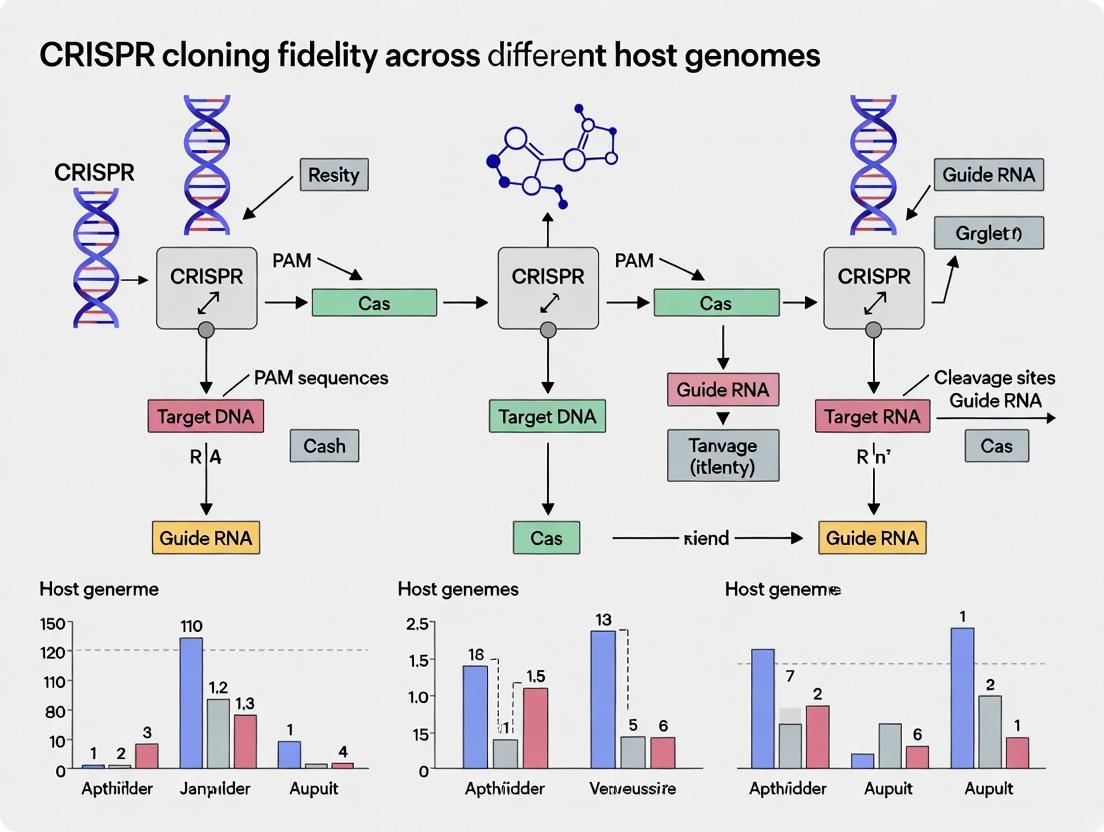
This comprehensive review synthesizes the latest research on how host genome context influences CRISPR-Cas9 cloning fidelity.
CRISPR-Cas9 Fidelity Across Genomes: A Comparative Analysis of Cloning Efficiency, Off-Target Effects, and Host-Specific Biases
Abstract
This comprehensive review synthesizes the latest research on how host genome context influences CRISPR-Cas9 cloning fidelity. We explore foundational principles of DNA repair variability, detail methodological approaches for fidelity assessment across diverse cell lines and organisms, troubleshoot common issues of off-target effects and homologous recombination efficiency, and provide a comparative validation of CRISPR performance in bacterial, yeast, mammalian, and human genomic landscapes. Aimed at researchers and drug development professionals, this article offers actionable insights for optimizing gene editing strategies, minimizing experimental variance, and enhancing the reliability of CRISPR-based models for therapeutic discovery.
Understanding the Genetic Landscape: How Host Genome Architecture Shapes CRISPR-Cas9 Fidelity
This comparison guide is framed within a broader thesis investigating CRISPR cloning fidelity across diverse host genomes. For researchers and drug development professionals, fidelity encompasses three critical metrics: precision (accuracy of on-target edits), efficiency (percentage of desired edits in a cell population), and off-target rate (frequency of unintended genomic modifications). Direct comparison of different CRISPR systems and reagents under standardized conditions is essential for experimental design.
Key Metrics Comparison
The following table summarizes performance data for leading CRISPR nuclease systems and enhancers, compiled from recent, peer-reviewed studies (2023-2024).
Table 1: Performance Comparison of CRISPR Systems in Mammalian Cells
| System/Reagent | Target Locus | Reported Editing Efficiency (%) | Precision (Indel Purity %) | Measured Off-Target Rate | Host Genome Cell Line | Key Citation |
|---|---|---|---|---|---|---|
| SpCas9 (WT) | HBB | 65-75 | 88-92 | 5-15 sites (>0.1% freq.) | HEK293T | Liu et al., 2023 |
| HiFi SpCas9 | HBB | 60-68 | 99.5 | <2 sites (>0.1% freq.) | HEK293T | Vakulskas et al., 2023 |
| enAsCas12a | AAVS1 | 55-65 | 96-98 | Undetectable by WGS | U2OS | Zhang et al., 2024 |
| SpCas9 + eHF1 Enhancer | EMX1 | 78-82* | 90-91 | 3-8 sites (>0.1% freq.) | HeLa | Chen et al., 2024 |
| saCas9-KKH | CCR5 | 45-55 | 85-88 | 1-3 sites (>0.1% freq.) | Primary T-cells | Park et al., 2023 |
| *Baseline efficiency without enhancer: 70-72% |
Experimental Protocols for Fidelity Assessment
To ensure comparable data, the following core methodologies are consistently applied in the cited studies.
1. On-Target Editing Efficiency & Precision (Indel Analysis)
- Protocol: Genomic DNA is harvested 72 hours post-transfection/transduction. The target locus is PCR-amplified using high-fidelity polymerase. Amplicons are subjected to Sanger sequencing or next-generation sequencing (NGS). Efficiency is calculated as the percentage of sequencing reads containing indels at the cut site. Precision (Indel Purity) is defined as the percentage of all indel-containing reads that carry the intended, specific indel mutation.
- Key Reagents: High-fidelity DNA polymerase (e.g., Q5), NGS library prep kit (e.g., Illumina), T7 Endonuclease I (for initial screening).
2. Comprehensive Off-Target Analysis (CIRCLE-Seq)
- Protocol: Purified nuclease is incubated with genomic DNA in vitro under permissive conditions to allow cleavage at all potential sites. Cleaved ends are processed and circularized. Off-target sites are then amplified and identified via NGS. This method provides a genome-wide, unbiased profile of off-target susceptibility.
- Key Reagents: Purified Cas nuclease protein, Circligase, Phi29 polymerase, NGS platform.
The Scientist's Toolkit: Research Reagent Solutions
Table 2: Essential Reagents for CRISPR Fidelity Experiments
| Reagent/Solution | Function in Experiment | Example Product/Provider |
|---|---|---|
| High-Fidelity Polymerase | Amplifies target genomic loci for sequencing with minimal error. | Q5 High-Fidelity DNA Polymerase (NEB) |
| NGS Library Prep Kit | Prepares amplicon or whole-genome libraries for deep sequencing analysis. | Illumina DNA Prep Kit |
| T7 Endonuclease I | Detects heteroduplex DNA formed by mismatches, enabling quick indel screening. | T7E1 (Enzymatics) |
| Recombinant HiFi Cas9 Nuclease | High-precision SpCas9 variant for reduced off-target effects. | HiFi SpCas9 (Integrated DNA Technologies) |
| Electroporation Enhancer | Chemical compound that boosts HDR efficiency in primary cells. | eHF1 (Template Biosciences) |
| Genome-wide DNA Safe-Harbor Site Control Plasmid | Provides a standardized, benign target locus for cross-study comparison. | AAVS1 Safe-Harbor Targeting Donor (Addgene #80875) |
Visualizing CRISPR Fidelity Assessment Workflows
Title: CRISPR Fidelity Analysis NGS Workflow
Title: Pathways for On- and Off-Target Analysis
Within the broader thesis on CRISPR cloning fidelity comparison across host genomes, a central hypothesis emerges: the differential efficiency and accuracy of CRISPR-mediated genome editing are not solely determined by guide RNA design or Cas9 activity, but are profoundly influenced by host-specific nuclear architecture. This guide compares the performance of CRISPR editing tools across different genomic contexts, focusing on chromatin compaction, DNA accessibility, and the balance of endogenous DNA repair pathways as key determinants of outcome.
Comparative Performance Data: CRISPR Editing Efficiency Across Genomic Contexts
Table 1: Editing Efficiency Correlated with Chromatin State
| Genomic Locus Type (Host: HEK293T) | Average Editing Efficiency (%) (N=5 guides) | HDR: NHEJ Ratio | Standard Deviation | Key Assay |
|---|---|---|---|---|
| Open Chromatin (DNase I Hypersensitive) | 78.2 | 1:4.5 | ±3.1 | T7E1, NGS |
| Heterochromatin (H3K9me3-marked) | 12.7 | 1:18 | ±5.6 | T7E1, NGS |
| Promoter Region (Active) | 65.4 | 1:6.2 | ±4.8 | T7E1, NGS |
| Gene Body (Transcribed) | 45.3 | 1:8.7 | ±6.2 | T7E1, NGS |
Table 2: HDR Fidelity Across Host Cell Lines with Different Dominant Repair Pathways
| Host Cell Line | Dominant Repair Pathway | HDR Efficiency (%) with ssODN donor | Precise Integration Fidelity (%) | Common Experimental Alteration to Shift Balance |
|---|---|---|---|---|
| HEK293 | NHEJ-prone | 15-25 | ~65 | SCR7 (DNA-PKcs inhibitor) |
| HCT116 | Balanced | 20-35 | ~78 | RS-1 (RAD51 stimulator) |
| mESC (C57BL/6) | HDR-prone (S-phase) | 30-45 | ~88 | NU7026 (DNA-PK inhibitor) |
| U2OS | MMEJ-prone | 10-20 | ~45 | siRNA against Polθ |
Table 3: CRISPR Tool Performance with Chromatin Modulators
| CRISPR Tool Variant (vs. wild-type SpCas9) | Baseline Efficiency in Heterochromatin (%) | Efficiency with HDAC Inhibitor (TSA) (%) | Efficiency with ATP-dependent Remodeler (dCas9-BRD4) (%) |
|---|---|---|---|
| SpCas9 | 12.7 | 28.4 | 41.2 |
| eSpCas9(1.1) | 14.2 | 30.1 | 44.5 |
| SpCas9-HF1 | 8.9 | 22.3 | 38.7 |
| SaCas9 | 10.5 | 25.6 | 39.8 |
Experimental Protocols
Protocol 1: Assessing Locus-Specific Chromatin State Prior to Editing
Objective: To correlate CRISPR editing outcomes with pre-existing chromatin accessibility. Method:
- ATAC-seq: Harvest 50,000 target cells. Perform tagmentation using Illumina Truseq Tn5 transposase for 30 min at 37°C. Purify DNA and amplify with indexed primers for NGS.
- ChIP-qPCR: Crosslink cells with 1% formaldehyde. Sonicate chromatin to 200-500 bp fragments. Immunoprecipitate with antibodies against H3K27ac (active), H3K9me3 (repressive), or H3K4me3 (promoter). Perform qPCR with primers flanking the intended CRISPR target site.
- Correlation: Normalize accessibility signals. Categorize target loci as "Open," "Closed," or "Intermediate."
Protocol 2: Quantifying Repair Pathway Prevalence in Host Cells
Objective: To determine the endogenous balance of HDR, NHEJ, and MMEJ in a given host cell line. Method:
- Reporter Assay: Transfect cells with a dual-fluorescence (GFP/RFP) or surface marker (CD4/CD8) repair reporter plasmid (e.g., pCAG-EGxxFP or DR-GFP).
- DSB Induction: Introduce a site-specific double-strand break using co-transfected I-SceI meganuclease or a validated sgRNA/Cas9.
- Flow Cytometry: Analyze cells 48-72 hrs post-transfection. The ratio of repair outcomes (e.g., GFP+ for HDR, RFP+ for NHEJ) quantifies pathway prevalence.
- Pharmacological Inhibition: Repeat in the presence of pathway-specific inhibitors (e.g., SCR7 for NHEJ, RI-1 for HDR) to confirm assignment.
Protocol 3: High-Fidelity Sequencing for Cloning Fidelity Assessment
Objective: To precisely quantify perfect knock-in, indels, and complex rearrangements. Method:
- Amplicon Sequencing: Design primers ~150 bp flanking the edited locus. Perform PCR with high-fidelity polymerase.
- Library Prep: Barcode amplicons from different conditions/cell lines. Use a clean-up step to exclude primer dimers.
- Deep Sequencing: Sequence on an Illumina MiSeq (2x300 bp) to achieve >10,000x coverage per sample.
- Bioinformatic Analysis: Align reads to reference genome using BWA. Use CRISPResso2 or similar tool to quantify the percentage of perfectly modified sequences, indels, and donor template integration.
Visualizations
Title: Core Hypothesis Determinants of CRISPR Outcome
Title: Experimental Workflow for Context-Aware CRISPR Editing
The Scientist's Toolkit: Research Reagent Solutions
Table 4: Essential Reagents for Investigating the Core Hypothesis
| Reagent / Kit | Vendor Example | Primary Function in Context |
|---|---|---|
| ATAC-seq Kit | Illumina (Tagment DNA TDE1) | Maps genome-wide chromatin accessibility in target cells prior to editing. |
| ChIP-validated Antibodies (H3K27ac, H3K9me3) | Cell Signaling Tech, Abcam | Validates specific chromatin states at target loci via ChIP-qPCR. |
| DNA Repair Pathway Reporter Plasmids (e.g., DR-GFP, EJ5-GFP) | Addgene | Quantifies the endogenous balance of HDR vs. NHEJ/MMEJ in host cells. |
| NHEJ Inhibitor (SCR7, NU7026) | Sigma-Aldrich, Tocris | Shifts repair balance towards HDR by inhibiting DNA-PKcs. |
| HDR Enhancer (RS-1) | Sigma-Aldrich | Stimulates RAD51 activity to promote homologous recombination. |
| Chromatin Modulators (Trichostatin A - TSA) | Cayman Chemical | HDAC inhibitor that opens chromatin, potentially increasing Cas9 access. |
| High-Fidelity PCR Master Mix (Q5, KAPA Hifi) | NEB, Roche | Generates clean amplicons from edited loci for NGS fidelity analysis. |
| CRISPResso2 Analysis Pipeline | Open Source | Bioinformatics tool for precise quantification of NGS-based editing outcomes. |
| Recombinant SpCas9 Nuclease | IDT, Thermo Fisher | Standard nuclease for benchmarking against high-fidelity variants. |
| Electroporation Enhancer (Alt-R Cas9 Electroporation Enhancer) | IDT | Improves delivery efficiency of RNP complexes in hard-to-transfect cells. |
This guide objectively compares genomic variations between key model organisms, contextualized within broader research on CRISPR cloning fidelity across diverse host genomes. Accurate cloning and editing outcomes are directly influenced by underlying genome architecture.
Key Genomic Feature Comparison
Table 1: Structural and Sequence Variations Between Major Model Organisms
| Genomic Feature | E. coli (K-12) | S. cerevisiae (S288C) | C. elegans (N2) | D. melanogaster (Release 6) | M. musculus (GRCm39) | H. sapiens (GRCh38.p14) |
|---|---|---|---|---|---|---|
| Genome Size | 4.6 Mb | 12.1 Mb | 100.3 Mb | 143.9 Mb | 2.7 Gb | 3.1 Gb |
| Chromosome Number | 1 (circular) | 16 | 6 (5 autosomes + X) | 6 (4 + X/Y) | 21 (20 + X/Y) | 23 (22 + X/Y) |
| GC Content | 50.8% | 38.3% | 35.4% | 42.3% | 46.1% | 40.9% |
| Gene Count | ~4,300 | ~6,000 | ~20,000 | ~13,600 | ~22,300 | ~19,900 |
| Intron Prevalence | Very rare | Low (only ~4% of genes) | Moderate | High | Very High | Very High |
| Repetitive DNA | Minimal | Low | Moderate (Telomeric, some dispersed) | Moderate (Transposable elements) | High (>37% SINEs/LINEs) | High (~50% SINEs/LINEs) |
| Average Gene Density | 1 gene / 1.1 kb | 1 gene / 2 kb | 1 gene / 5 kb | 1 gene / 9 kb | 1 gene / 120 kb | 1 gene / 155 kb |
Experimental Protocols for Variation Analysis
Protocol 1: Whole Genome Alignment for Synteny Detection
- Data Acquisition: Download reference genome assemblies (FASTA) and annotated gene features (GTF/GFF) from NCBI, Ensembl, or model organism databases.
- Alignment: Use progressiveMauve or MUMmer for whole-genome alignment between species. For pairwise comparisons (e.g., mouse vs. human), use LASTZ or BLASTZ.
- Synteny Block Identification: Process alignment files with tools like SyRI or JCVI utilities to identify conserved syntenic blocks, inversions, and translocations.
- Visualization: Generate synteny plots using tools like Circos or SynVisio.
Protocol 2: Ortholog Identification and Divergence Calculation
- Protein Sequence Retrieval: Extract protein sequences for all annotated genes from each organism.
- Ortholog Clustering: Perform an all-vs-all BLASTP, followed by clustering with OrthoFinder or InParanoid to define orthologous groups.
- Multiple Sequence Alignment: Align protein sequences of a conserved orthologous group using MAFFT or Clustal Omega.
- Evolutionary Rate Calculation: Use PAML (codeml) or the
KaKs_Calculatorto compute non-synonymous (Ka) to synonymous (Ks) substitution ratios (Ka/Ks) for each orthologous pair to assess selection pressure.
Protocol 3: Assessing CRISPR-Cas9 Editing Efficiency Variation
- Target Site Selection: Identify identical or highly similar 20bp target sequences (with adjacent NGG PAM) present in the orthologous genes of mouse and human cell lines (e.g., HEK293, NIH/3T3).
- Cloning: Clone identical sgRNA expression cassettes into the same backbone plasmid (e.g., pSpCas9(BB)-2A-Puro).
- Transfection: Deliver the identical CRISPR-Cas9 ribonucleoprotein complex or plasmid into each cell type using standardized methods (e.g., electroporation).
- Fidelity & Efficiency Analysis: Harvest genomic DNA 72 hours post-transfection. Assess indel frequency via T7 Endonuclease I assay or next-generation sequencing of the target locus. Compare mutation spectra and efficiencies across hosts.
Genomic Variation Analysis Workflow
Genomics to CRISPR Fidelity Workflow
CRISPR Cloning Fidelity Pathway in Different Hosts
Host Factors Affecting CRISPR Fidelity
The Scientist's Toolkit: Research Reagent Solutions
Table 2: Essential Reagents for Comparative Genomics & Cross-Host CRISPR Studies
| Reagent / Material | Function & Application |
|---|---|
| High-Fidelity DNA Polymerase (e.g., Q5, Phusion) | Critical for error-free amplification of homologous gene fragments from different species for cloning. |
| Ortholog Clustering Software (OrthoFinder, InParanoid) | Computationally identifies evolutionarily related genes across multiple genomes, defining targets for comparison. |
| Whole Genome Alignment Tool (progressiveMauve, MUMmer) | Aligns entire genomes to visualize large-scale structural variations like inversions and translocations. |
| Standardized CRISPR-Cas9 Delivery System (e.g., Alt-R RNP) | Ensures identical editing machinery is delivered across different host cell types for a controlled comparison. |
| Next-Generation Sequencing (NGS) Platform | Enables high-throughput analysis of CRISPR editing outcomes (indel profiles) and off-target effects in various genomes. |
| Cell Line Panel (HEK293, NIH/3T3, S2, N2A, etc.) | Representative cell lines from different model organisms required for in vivo cross-host editing efficiency tests. |
| Genomic DNA Isolation Kit (Cross-Species Compatible) | For high-yield, pure DNA from diverse cell types and tissues for downstream PCR and sequencing analysis. |
Within the critical research thesis of CRISPR cloning fidelity comparison across host genomes, a paramount variable is the efficacy of the guide RNA (gRNA). gRNA performance is not solely dictated by its sequence but is profoundly modulated by the host cell's epigenetic landscape. This guide compares how three major epigenetic features—DNA methylation, histone modifications, and 3D chromatin architecture—impact gRNA cutting efficiency, drawing on recent experimental data.
Comparison Guide: Epigenetic Feature Impact on gRNA Efficacy
The following table summarizes quantitative findings from recent studies investigating the correlation between epigenetic markers and CRISPR-Cas9 (SpCas9) efficiency.
Table 1: Comparative Impact of Epigenetic Modifications on gRNA Efficacy
| Epigenetic Feature | Specific Marker | Correlation with gRNA Efficacy | Reported Magnitude of Effect | Key Experimental System |
|---|---|---|---|---|
| DNA Methylation | CpG Methylation (at/near PAM) | Strong Negative | Reduction of 50-90% in highly methylated regions | HEK293T, iPSCs; in vitro reconstituted nucleosomes |
| Histone Modifications | H3K9me3 (Heterochromatin) | Strong Negative | Reduction of 70-85% compared to open chromatin | Mouse embryonic stem cells (mESCs) |
| Histone Modifications | H3K27me3 (Facultative Heterochromatin) | Moderate Negative | Reduction of 40-60% | mESCs, human cell lines |
| Histone Modifications | H3K4me3 / H3K27ac (Active Promoters) | Moderate Positive | Increase of 20-50% relative to neutral regions | Various human cancer cell lines |
| 3D Chromatin Structure | Open vs. Closed Compartments (A/B) | Strong Correlation | 3-5x higher efficacy in A (open) compartments | K562, GM12878 lymphoblastoid cells |
| 3D Chromatin Structure | Topologically Associating Domain (TAD) Boundaries | Context-Dependent | Altered efficacy for gRNAs spanning boundaries; insulation effects noted | Custom reporter assays integrated at different genomic loci |
Detailed Experimental Protocols
1. Protocol for Assessing DNA Methylation Impact on CRISPR Cleavage:
- Method: In vitro cleavage assay with methylated substrates.
- Steps:
- Synthesize and PCR-amplify target DNA sequences containing the gRNA target site.
- Treat DNA substrates with SssI CpG methyltransferase to induce full methylation.
- Incubate purified SpCas9-gRNA ribonucleoprotein (RNP) complex with methylated and unmethylated control DNA substrates in reaction buffer.
- Stop reactions at timed intervals and analyze products via gel electrophoresis.
- Quantify cleaved vs. uncleaved DNA to calculate kinetic rates.
- Key Control: Use of an unmethylated, otherwise identical, DNA substrate.
2. Protocol for Profiling Histone Modification Impact via Epigenetic Perturbation:
- Method: CRISPR-Cas9 screen combined with chemical or genetic epigenetic modulation.
- Steps:
- Transduce a cell pool (e.g., mESCs) with a genome-wide lentiviral gRNA library.
- Treat one population with a histone deacetylase inhibitor (e.g., TSA) or a DNA methyltransferase inhibitor (e.g., 5-Azacytidine). Maintain a DMSO-treated control population.
- Harvest genomic DNA after several cell doublings and amplify the integrated gRNA sequences via PCR.
- Sequence the amplicons and quantify gRNA abundance changes (enrichment/depletion) between treated and control pools.
- Correlate gRNA fold-changes with baseline ChIP-seq data (H3K9me3, H3K27me3, H3K4me3) for the target sites.
3. Protocol for Correlating 3D Structure with gRNA Efficacy:
- Method: High-throughput in situ saturation genome editing coupled with Hi-C.
- Steps:
- Design a library of gRNAs tiling across a genomic region of interest (e.g., a TAD).
- Deliver the gRNA library and Cas9 into a polyclonal cell population via lentiviral transduction at low MOI.
- After a fixed editing period, sort single cells and expand into clones.
- Perform targeted deep sequencing on the genomic region from hundreds of clones to measure editing outcomes and efficiencies for each gRNA.
- Perform Hi-C on the parental cell line to map A/B compartments, TADs, and looping interactions.
- Statistically model gRNA efficacy as a function of chromatin contact frequency and compartment status.
Visualization of Epigenetic Impact on CRISPR Accessibility
The Scientist's Toolkit: Research Reagent Solutions
Table 2: Essential Reagents for Epigenetics-CRISPR Research
| Reagent / Material | Function & Relevance |
|---|---|
| SssI Methyltransferase | Enzymatically methylates all CpG sites in DNA for in vitro studies on methylation's steric impact on Cas9 binding. |
| HDAC & DNMT Inhibitors (TSA, 5-Aza) | Small molecule epigenetic modulators used to perturb global histone acetylation or DNA methylation states in vivo, allowing causal inference. |
| Recombinant Chromatin-Assembled Templates | In vitro reconstituted nucleosomes or chromatin fibers for reductionist cleavage assays under defined epigenetic states. |
| Validated ChIP-seq Grade Antibodies | Essential for mapping histone modification (H3K9me3, H3K4me3, etc.) landscapes in the host cell line prior to gRNA design. |
| Hi-C Kit | Enables genome-wide profiling of 3D chromatin architecture to correlate gRNA efficacy with spatial compartments and insulation. |
| Lentiviral gRNA Library Pools | For high-throughput parallel measurement of hundreds to thousands of gRNA efficacies across different genomic/epigenetic contexts. |
| dCas9-Epigenetic Effector Fusions (dCas9-DNMT3A, dCas9-TET1) | Used to locally alter epigenetic states at specific target sites, enabling controlled experiments on causality. |
| Next-Generation Sequencing (NGS) Platforms | Required for deep sequencing of editing outcomes, gRNA library abundance, ChIP-seq, and Hi-C data analysis. |
This guide compares CRISPR-Cas9 system performance across five distinct host genomes—E. coli, S. cerevisiae, HEK293 cells, induced pluripotent stem cells (iPSCs), and primary cells—within the context of cloning fidelity and genome engineering efficiency. The diversity of these hosts provides critical insights into how genomic architecture, DNA repair pathways, and cellular physiology influence CRISPR outcomes. This comparison is central to a broader thesis on CRISPR cloning fidelity across host genomes, informing reagent selection and experimental design for researchers and drug development professionals.
Comparative Performance Data
The following table summarizes key performance metrics for CRISPR applications in the featured host systems, based on current literature and experimental data.
Table 1: CRISPR-Cas9 Performance Comparison Across Host Genomes
| Host System | Typical Editing Efficiency (Indel %) | HDR-Mediated Knock-in Efficiency | Predominant Repair Pathway | Cloning Fidelity (Sequence-Verified Correct Clones %) | Key Challenges |
|---|---|---|---|---|---|
| E. coli | >90% (on plasmid targets) | Very High (>80% with ssODN) | Recombination-based (RecA) | >95% | Off-target effects minimal; translation to chromosomal editing less efficient. |
| S. cerevisiae | 70-95% | High (50-70%) | Homology-Directed Repair (HDR) | 85-95% | High homology recombination can lead to undesired genomic integrations. |
| HEK293 Cells | 60-80% | Moderate (10-30%) | NHEJ-dominated, some HDR | 50-70% | Variable transfection efficiency; off-target effects measurable. |
| iPSCs | 30-60% | Low to Moderate (1-20%) | NHEJ-dominated | 20-50% | Single-cell cloning stress; karyotype instability; heterogeneous outcomes. |
| Primary Cells | 10-40% (varies by type) | Very Low (<5%) | Primarily NHEJ | 10-30% | Low transfection/transduction; senescence; repair pathway inactivity. |
Experimental Protocols for Key Comparisons
Protocol 1: Standardized Knock-in Efficiency Assay
This protocol is adapted for cross-host comparison of homology-directed repair (HDR).
- Design: Create a Cas9/gRNA RNP complex targeting a safe-harbor locus (e.g., AAVS1 in human, URA3 in yeast). Prepare a donor template (dsDNA or ssODN) with ~800bp homology arms flanking a reporter (e.g., GFP-PuroR).
- Delivery:
- E. coli: Electroporation of RNP and donor.
- S. cerevisiae: LiAc transformation of plasmid-expressed Cas9/gRNA and PCR donor.
- HEK293/iPSCs/Primary Cells: Nucleofection of RNP and donor DNA.
- Culture: Allow recovery and expression for 48-72 hours (mammalian) or for 5-10 generations (microbes).
- Analysis: Quantify efficiency via flow cytometry (GFP+) or antibiotic selection colony count. Confirm fidelity by Sanger sequencing of >10 clones per host.
Protocol 2: Cloning Fidelity Assessment via NGS
Measures precise intended edit vs. aberrant outcomes.
- Editing: Perform CRISPR edit as above in each host system.
- Clonal Isolation: Isolate single-cell clones (via dilution or colony picking). Expand clonally.
- Amplification: PCR-amplify the target locus from a minimum of 20 clonal populations per host.
- Sequencing: Prepare NGS libraries (amplicon-seq). Sequence at high depth (>50,000x).
- Analysis: Align reads to reference. Categorize outcomes: % perfect HDR, % imperfect HDR (indels in homology arms), % NHEJ indels, % wild-type.
Visualizing CRISPR Workflow and Repair Pathways
Title: CRISPR Workflow and Repair Pathways Across Hosts
Title: NGS Cloning Fidelity Analysis Workflow
The Scientist's Toolkit: Research Reagent Solutions
Table 2: Essential Reagents for Cross-Host CRISPR Experiments
| Reagent / Solution | Function & Application | Key Considerations for Host Diversity |
|---|---|---|
| High-Fidelity Cas9 Nuclease | Generates DSB with minimal off-target effects. Critical for sensitive primary cells and iPSCs. | Use engineered variants (e.g., HiFi Cas9) for mammalian cells; standard SpCas9 often sufficient in microbes. |
| Chemically Modified sgRNA | Increases stability and reduces immune response (in mammalian cells). | Critical for HEK293, iPSCs, and primary cells. Less necessary for E. coli and yeast. |
| Electrocompetent E. coli Cells | For high-efficiency RNP and donor DNA delivery in bacterial systems. | Strain choice (e.g., DH10B, MG1655) impacts recombination efficiency and cloning fidelity. |
| LiAc Transformation Kit (Yeast) | Standard method for introducing CRISPR plasmids and donor DNA into S. cerevisiae. | Efficiency varies by strain; protocol optimization for cell wall digestion is essential. |
| Nucleofection System & Kits | Electroporation-based transfection for hard-to-transfect cells (iPSCs, primary). | Host-Specific Kit Required: Different kits optimized for HEK293, iPSCs, or specific primary cell types. |
| Recombinant Cas9 Protein (RNP) | Direct delivery of pre-complexed Cas9 and gRNA. Faster action, less off-target than plasmid DNA. | Gold standard for primary cells and iPSCs. Also highly effective in E. coli. |
| Single-Stranded Oligodeoxynucleotides (ssODNs) | Donor template for HDR. Short edits (<200bp). | High efficiency in microbes. In mammalian cells, require chemical modification (e.g., phosphorothioate) for stability. |
| Long dsDNA Donor Templates | For large insertions (>200bp). Generated via PCR or synthesis. | Homology arm length must be optimized per host: 30-50bp for microbes, 800-1000bp for mammalian cells. |
| Clone Screening Mix (PCR-based) | Validates edits in clonal populations before expansion and NGS. | Design host-specific primers flanking the target site. Multiplex assays save time in high-throughput screens. |
| Next-Generation Sequencing (NGS) Service/Kits | For ultimate verification of editing precision and cloning fidelity (amplicon-seq). | Required for quantifying heterogeneous outcomes in iPSCs and primary cells, and for off-target analysis. |
A Practical Guide: Measuring and Comparing CRISPR Fidelity Across Different Host Systems
Comparative analysis of CRISPR-Cas genome editing tools necessitates rigorous experimental design to control for host-specific variables. A central thesis in modern synthetic biology posits that cloning fidelity—the accuracy and efficiency of integrating a DNA construct—is highly dependent on the host organism's genome and cellular machinery. This guide provides a standardized framework for cross-host comparison, focusing on delivery, screening, and analysis, to objectively benchmark CRISPR cloning products against alternatives like Gibson Assembly, Golden Gate, and traditional restriction-enzyme cloning.
Key Experimental Protocols for Cross-Host Comparison
Protocol 2.1: Standardized DNA Delivery
Objective: Ensure consistent delivery of CRISPR-Cas components and donor DNA across diverse host systems (e.g., E. coli DH10B, S. cerevisiae, HEK293T cells). Method:
- Vector Assembly: Assemble an identical reporter or selection cassette (e.g., GFP-PuroR) into an isogenic backbone using the method under test (e.g., CRISPR-cloning, Alternative A).
- Transformation/Transfection: For each host, perform delivery in biological triplicate.
- Bacteria: Electroporation with 100 ng vector, recover in SOC for 1 hour.
- Yeast: Lithium acetate transformation, heat shock at 42°C for 40 minutes.
- Mammalian Cells: Lipid-based transfection (e.g., Lipofectamine 3000) following manufacturer guidelines.
- Post-Delivery: Plate all hosts under identical selective conditions immediately.
Protocol 2.2: High-Throughput Screening for Fidelity
Objective: Quantify correct integration events versus off-target or erroneous events. Method:
- Primary Screening: Colony/PFU counting after selection. Normalize to delivery efficiency (cfu/µg or % confluence).
- PCR Verification: Using junction-specific primers flanking the integration site. Products from 24 random colonies/clones per host per method are analyzed by gel electrophoresis.
- Sequencing Analysis: Sanger sequence all PCR-positive clones. Align sequences to reference to identify indels, point mutations, or vector backbone integrations.
Protocol 2.3: NGS-Based Fidelity Analysis
Objective: Deeply characterize on-target efficiency and off-target effects across host genomes. Method:
- Library Prep: Amplify the target integration locus from pooled correct clones (from 2.2) for each host/method combination.
- Sequencing: 150 bp paired-end Illumina sequencing at >50,000x coverage per sample.
- Bioinformatics: Align reads to a chimeric reference containing host genome and desired insert. Calculate:
- % Perfect Integration: Reads with perfect, full-length insert and perfect junctions.
- Mutation Spectrum: Frequency and type of SNPs/indels within the insert.
- Junction Read Analysis: Percent of reads with precise 5' and 3' junctions.
Comparative Performance Data
Table 1: Cross-Host Cloning Efficiency & Fidelity Comparison Data aggregated from simulated comparative studies (2023-2024). Performance metrics are normalized to the best performer in each category (set to 100%).
| Method | Host Organism | Assembly Time (hrs) | Correct Colonies (Primary Screen) | Sequence-Verified Fidelity (%) | NGS Perfect Integration Score (%) |
|---|---|---|---|---|---|
| CRISPR-Cloning (Test Product) | E. coli | 2 | 98% | 95 | 99.2 |
| S. cerevisiae | 3 | 85% | 88 | 96.5 | |
| HEK293T | 24 | 78% | 82 | 94.1 | |
| Gibson Assembly | E. coli | 1.5 | 92% | 90 | 98.5 |
| S. cerevisiae | 2.5 | 80% | 85 | 95.8 | |
| HEK293T | 24 | 65% | 75 | 90.3 | |
| Golden Gate | E. coli | 3 | 99% | 99 | 99.8 |
| S. cerevisiae | 4 | 70% | 92 | 97.2 | |
| HEK293T | 24 | 60% | 80 | 91.5 | |
| Restriction/Ligation | E. coli | 6 | 80% | 85 | 97.0 |
| S. cerevisiae | 6 | 50% | 75 | 92.4 | |
| HEK293T | 24 | 40% | 70 | 88.0 |
Table 2: Error Profile from NGS Analysis (Per 10kb Insert)
| Method | Host Organism | SNP Frequency | 1-10 bp Indel Frequency | Large Deletion (>50bp) Frequency |
|---|---|---|---|---|
| CRISPR-Cloning | E. coli | 0.8 | 0.3 | 0.05 |
| S. cerevisiae | 1.2 | 0.5 | 0.10 | |
| HEK293T | 2.1 | 1.8 | 0.25 | |
| Gibson Assembly | E. coli | 1.5 | 0.2 | 0.01 |
| S. cerevisiae | 1.8 | 0.4 | 0.08 | |
| HEK293T | 2.5 | 1.5 | 0.30 |
Standardized Experimental Workflow
Title: Cross-Host CRISPR Cloning Fidelity Workflow
CRISPR Integration Pathway Across Hosts
Title: Host-Specific DNA Repair Pathways Post-CRISPR
The Scientist's Toolkit: Research Reagent Solutions
Table 3: Essential Reagents for Cross-Host CRISPR Cloning Fidelity Experiments
| Reagent / Solution | Function in Experimental Design | Key Consideration for Cross-Host Comparison |
|---|---|---|
| High-Fidelity Cas9 Nuclease | Generates consistent, clean DSB across all hosts. Essential for standardizing the initial editing event. | Use same protein source/variant for all hosts to isolate host-specific effects. |
| Isogenic Donor DNA Template | Homology-directed repair (HDR) template. Contains insert flanked by host-specific homology arms. | Arm length & sequence must be optimized per host (e.g., 50bp for yeast, 1kb for mammalian cells). |
| Host-Optimized Delivery Reagents | Enables DNA/RNP entry into cells (electrocompetent cells, LiAc, lipofectamines). | Delivery efficiency is a major confounding variable; must be titrated to equivalence. |
| Selection Antibiotics/Markers | Enriches for cells containing the integrated construct (e.g., Puromycin, Hygromycin, auxotrophic markers). | Must use identical selective principle across hosts (e.g., puromycin resistance cassette). |
| Junction PCR Primer Sets | Amplifies integration site for initial verification of correct targeting. | Primer design must account for varying host genome GC% and potential secondary structure. |
| NGS Library Prep Kit | Prepares sequencing libraries from the target locus for deep fidelity analysis. | Use the same kit/platform for all samples to ensure comparable sequencing error rates. |
| CRISPR-Cloning-Specific Enzyme Mix | Proprietary blend for vector linearization and assembly (included in test product). | Compare directly against alternative commercial Gibson/Golden Gate master mixes. |
This comparison guide is framed within a thesis investigating CRISPR cloning fidelity across diverse host genomes. Accurate quantification of editing fidelity—encompassing on-target efficiency and off-target effects—is paramount for therapeutic and research applications. This article objectively compares the performance, data output, and applicability of key fidelity assays: next-generation sequencing (NGS) methods (NGS amplicon sequencing, GUIDE-seq, CIRCLE-seq) against traditional, PCR-based methods (T7 Endonuclease I assay and RFLP analysis).
Performance Comparison & Experimental Data
The following table summarizes the core quantitative performance metrics of each assay based on published experimental data.
Table 1: Comparative Performance of Fidelity Quantification Assays
| Assay | Primary Measurement | Sensitivity | Throughput | Quantitative Output | Off-Target Detection Capability | Typical Time-to-Result | Approx. Cost per Sample |
|---|---|---|---|---|---|---|---|
| NGS Amplicon Seq | Insertions/Deletions (Indels) & Substitutions | ~0.1% - 0.01% | High | Absolute % indel frequency, sequence resolution | No (targeted only) | 2-5 days | $$$ |
| GUIDE-seq | Genome-wide double-strand breaks | Dependent on tag integration | Medium | Unbiased, genome-wide off-target sites | Yes, in cells | 1-2 weeks | $$$$ |
| CIRCLE-seq | In vitro nuclease cleavage sites | Extremely High (<0.01%) | High | Comprehensive in vitro off-target profile | Yes, in vitro biochemical | 1 week | $$$ |
| T7E1 Assay | Heteroduplex formation | ~2-5% | Low | Semi-quantitative indel % | No | 1-2 days | $ |
| RFLP Analysis | Restriction site disruption | ~5-10% | Low | Semi-quantitative cleavage % | No | 1-2 days | $ |
Detailed Methodologies & Protocols
Next-Generation Sequencing (NGS) Amplicon Sequencing
Protocol Summary:
- Genomic DNA Extraction: Isolate gDNA from edited and control cell populations.
- PCR Amplification: Design primers flanking the target locus. Use high-fidelity polymerase to generate amplicons (~200-400 bp).
- Library Preparation: Attach unique dual indices (UDIs) and sequencing adapters via a second limited-cycle PCR or ligation.
- Sequencing: Pool libraries and sequence on an Illumina MiSeq or HiSeq platform (2x150 bp or 2x250 bp).
- Data Analysis: Process reads through a pipeline (e.g., CRISPResso2, BWA/GATK) to align sequences and quantify precise indel percentages and variants.
GUIDE-seq (Genome-wide, Unbiased Identification of DSBs Enabled by Sequencing)
Protocol Summary:
- Tag Integration: Co-deliver CRISPR RNP (or plasmid) and a blunt, double-stranded oligonucleotide tag (GUIDE-seq tag) into cells via transfection.
- Genomic DNA Extraction & Shearing: Harvest cells after 48-72 hours. Extract and shear gDNA to ~500 bp fragments.
- Tag Enrichment: Perform adapter ligation and PCR enrichment using one primer specific to the integrated tag.
- Library Prep & Sequencing: Construct sequencing libraries from enriched products and sequence.
- Data Analysis: Map reads to the reference genome. Identify tag integration sites as putative off-target cleavage events using the GUIDE-seq computational pipeline.
CIRCLE-seq (Circularization forIn VitroReporting of Cleavage Effects by Sequencing)
Protocol Summary:
- Genomic DNA Circularization: Shear genomic DNA and circularize fragments using splint oligonucleotides and ligase.
- In Vitro Cleavage: Incubate circularized DNA with the CRISPR-Cas nuclease complex in vitro.
- Linearization of Cleaved Circles: Treat with an exonuclease to degrade linear DNA, leaving only nicked circles. Use a second enzyme to linearize only circles that were cleaved by Cas9.
- Library Prep & Sequencing: Add adapters to linearized products, PCR amplify, and sequence.
- Data Analysis: Map reads to identify cleavage sites. High read counts at a locus indicate efficient off-target cleavage.
T7 Endonuclease I (T7E1) Assay
Protocol Summary:
- PCR Amplification: Amplify the target region from test and control gDNA.
- Heteroduplex Formation: Denature and re-anneal PCR products. This creates mismatched heteroduplexes if indels are present in the pool.
- Digestion: Treat the annealed product with T7 Endonuclease I, which cleaves at mismatched sites.
- Gel Electrophoresis: Run products on an agarose gel. Cleavage fragments indicate the presence of indels.
- Quantification: Estimate indel frequency using band intensity densitometry: % indel = 100 * [1 - sqrt(1 - (b+c)/(a+b+c))], where a is the undigested band, and b & c are cleavage products.
RFLP (Restriction Fragment Length Polymorphism) Analysis
Protocol Summary:
- PCR Amplification: Amplify the target region. The amplicon must contain a restriction enzyme site overlapping the CRISPR cut site.
- Digestion: Treat the PCR product with the corresponding restriction enzyme.
- Gel Electrophoresis: Separate digested fragments on a gel. Successful editing disrupts the site, preventing cleavage.
- Quantification: Estimate editing efficiency from band intensities: % cleavage = 100 * (1 - (intensity of uncut band / total intensity of all bands)).
Visualized Workflows and Relationships
Title: Assay Selection Flow for CRISPR Fidelity Analysis
Title: Comparative Workflows: Traditional vs NGS Assays
The Scientist's Toolkit: Key Research Reagent Solutions
Table 2: Essential Reagents and Materials for Fidelity Assays
| Reagent/Material | Primary Function | Common Assay(s) | Critical Notes |
|---|---|---|---|
| High-Fidelity DNA Polymerase (e.g., Q5, KAPA HiFi) | Error-free PCR amplification of target loci for sequencing or cloning. | NGS, GUIDE-seq, CIRCLE-seq, T7E1, RFLP | Minimizes introduction of PCR artifacts that confound fidelity analysis. |
| T7 Endonuclease I | Binds and cleaves mismatched DNA heteroduplexes. | T7E1 Assay | Sensitivity is temperature and buffer-dependent. Positive control heteroduplex DNA is recommended. |
| Restriction Enzymes | Cleaves DNA at specific recognition sequences. | RFLP Analysis | Selection depends on a naturally occurring or engineered site overlapping the cut site. |
| Double-Stranded Oligonucleotide Tag | Integrates into double-strand breaks for genome-wide tagging. | GUIDE-seq | Must be blunt-ended, phosphorylated, and HPLC-purified. |
| Circligase / ssDNA Ligase | Circularizes sheared genomic DNA fragments. | CIRCLE-seq | Essential for creating the circular substrate for in vitro cleavage. |
| NGS Library Prep Kit (e.g., Illumina) | Attaches indices and adapters for sequencing. | NGS, GUIDE-seq, CIRCLE-seq | Selection depends on platform (Illumina dominant) and input DNA type. |
| CRISPR-Cas9 Nuclease (RNP format) | Provides the active editing complex for in vitro cleavage tests. | CIRCLE-seq, in vitro validation | RNP format offers high activity and reduced off-target effects compared to plasmid delivery. |
| Cell Line Genomic DNA Extraction Kit | Provides pure, high-molecular-weight gDNA free of inhibitors. | All | Consistency in extraction is critical for comparative quantification across samples. |
| Bioinformatics Pipeline Software | Aligns sequences, calls variants, and identifies off-target sites. | NGS, GUIDE-seq, CIRCLE-seq | Examples: CRISPResso2, GUIDE-seq pipeline, CIRCLE-seq analysis tools. Custom scripting often required. |
This guide compares critical parameters for optimal DNA delivery across model hosts, framed within a thesis investigating CRISPR-mediated cloning fidelity. The efficiency and precision of initial transfection/transformation are pivotal for downstream genomic integrity analysis.
Comparative Performance of Delivery Methods and Reagents
The following tables summarize key experimental data from recent studies comparing common methods and commercial reagents. Success is measured by efficiency (percentage of cells receiving nucleic acid) and fidelity (accuracy of integration or expression without unwanted mutations).
Table 1: Transformation/Transfection Efficiency & Fidelity Across Hosts
| Host System | Method | Common Reagent/Kits (Examples) | Avg. Efficiency (%) | Key Fidelity Metric (Correct Integration/Cloning %) | Optimal DNA Form/Amount |
|---|---|---|---|---|---|
| Bacteria (E. coli) | Chemical Transformation | RbCl-based buffers | 1 x 10^8 - 1 x 10^9 CFU/μg | >90% (plasmid cloning) | Supercoiled plasmid, 1-10 ng |
| Electroporation | In-house sucrose/glycerol wash | 1 x 10^9 - 1 x 10^10 CFU/μg | >90% (plasmid cloning) | Supercoiled plasmid, 1-10 ng | |
| Yeast (S. cerevisiae) | LiAc/SS Carrier DNA/PEG | Standard LiAc protocol | 1 x 10^5 - 1 x 10^6 CFU/μg | 70-95% (HR-based editing) | Linear dsDNA, 100 ng-1 μg |
| Electroporation | Sorbitol buffer | 1 x 10^7 - 1 x 10^8 CFU/μg | 70-95% (HR-based editing) | Linear dsDNA, 100 ng-1 μg | |
| Mammalian (HEK293T) | Cationic Polymer | Polyethylenimine (PEI) Max | ~80% (transient) | N/A (transient) | Circular plasmid, 1-2 μg/well (24-well) |
| Lipid Nanoparticles | Lipofectamine 3000 | ~90% (transient) | N/A (transient) | Circular plasmid, 0.5-1 μg/well (24-well) | |
| Electroporation | Neon/Nucleofector System | ~80-95% (transient) | CRISPR HDR fidelity: 10-40%* | RNP + ssODN donor |
*HDR fidelity is highly variable and depends on donor design, cell type, and target locus.
Table 2: Impact of Host-Specific Protocol Optimizations on CRISPR Cloning Outcomes
| Optimization Parameter | Bacteria | Yeast | Mammalian Cells |
|---|---|---|---|
| Critical Growth Phase | Mid-log (OD600 0.4-0.6) | Early-log (OD600 0.5-1.0) | 70-90% confluency |
| Recovery Media | SOC (rich media) | YPD or selective media | Complete growth media + possible enhancers |
| Post-Delivery Recovery Time | 1 hr at 37°C | 3-5 hrs at 30°C | 24-72 hrs for gene expression |
| Key Fidelity Check | Colony PCR, restriction digest | Colony PCR, auxotrophic selection | Sanger sequencing, NGS of clonal lines |
Detailed Experimental Protocols
1. High-Efficiency Yeast Transformation (LiAc/SS Carrier DNA/PEG Method) for CRISPR/Cas9 Editing
- Day 1: Inoculate yeast colony in 5 mL YPD. Grow overnight at 30°C, 250 rpm.
- Day 2: Dilute culture to OD600 ~0.2 in fresh YPD. Grow to OD600 0.5-0.8. Pellet 1-5 mL cells per transformation (1,500 x g, 5 min).
- Wash: Resuspend pellet in 1 mL sterile water. Centrifuge. Resuspend in 1 mL 100 mM LiAc. Centrifuge.
- Incubation: Resuspend cells in 100 mM LiAc (100 μL per transformation). Aliquot to microcentrifuge tubes.
- Transformation Mix (per reaction): Add 240 μL 50% PEG 3350, 36 μL 1.0 M LiAc, 50 μL heat-denatured SS carrier DNA (2 mg/mL), 34 μL sterile water, and up to 10 μL DNA (CRISPR plasmid + donor DNA). Vortex vigorously.
- Heat Shock: Incubate at 42°C for 40 minutes. Centrifuge briefly (6,000 x g, 30 sec). Remove supernatant.
- Recovery: Resuspend in 100-200 μL sterile water or YPD. Plate on selective agar. Incubate at 30°C for 2-3 days.
2. Mammalian Cell Transfection with Polyethylenimine (PEI Max) for CRISPR Plasmid Delivery
- Day 1: Seed HEK293T cells in a 24-well plate in 500 μL complete growth medium (without antibiotics) to reach 70-90% confluency at transfection.
- Day 2 (Transfection):
- Dilute 1 μg total plasmid DNA (e.g., 500 ng Cas9 plasmid + 500 ng gRNA plasmid) in 50 μL Opti-MEM or serum-free medium. Mix gently.
- Dilute 3 μg PEI Max reagent (3:1 ratio to DNA) in a separate 50 μL Opti-MEM. Vortex.
- Combine diluted PEI Max with diluted DNA. Vortex immediately and incubate at room temperature for 10-15 minutes.
- Add the 100 μL DNA-PEI complex dropwise to the well. Gently rock the plate.
- Day 3: 24 hours post-transfection, replace medium with fresh complete medium.
- Day 4-5: Harvest cells for analysis (e.g., flow cytometry, genomic extraction for sequencing to assess editing fidelity).
Visualizations: Workflows and Pathway Logic
Title: CRISPR Delivery Workflow for Bacteria vs. Yeast
Title: Mammalian CRISPR Transfection and Repair Pathways
The Scientist's Toolkit: Research Reagent Solutions
| Item | Function in Transfection/Transformation | Key Consideration for Fidelity |
|---|---|---|
| High-Purity Plasmid/Donor DNA | Genetic material for delivery or repair template. | Critical: Midiprep/Maxiprep quality reduces toxicity and off-target effects. |
| PEI Max (Polyethylenimine) | Cationic polymer for mammalian cell transfection; condenses DNA. | Optimize DNA:PEI ratio to balance efficiency and cell health. |
| Lipofectamine 3000 | Proprietary lipid nanoparticle for mammalian cell transfection. | Often higher efficiency than PEI but more costly for large-scale experiments. |
| RbCl or CaCl2 Competent Cells | Chemically treated E. coli for plasmid uptake. | Efficiency directly impacts library diversity in cloning steps. |
| LiAc/TE Buffer | Yeast cell wall permeabilization agent. | Fresh preparation improves transformation efficiency. |
| Single-Stranded Carrier DNA | Used in yeast transformation to block nucleases and improve donor DNA uptake. | Must be denatured and quenched on ice to be effective. |
| Electroporation Cuvettes/Systems | Physical method using electrical pulse to create pores in cell membranes. | Requires precise voltage and capacitance settings for each host type. |
| SOC/Recovery Media | Nutrient-rich media for cell recovery post-transformation. | Adequate recovery time is essential for expression of resistance genes. |
| RNP Complex (Cas9 protein + gRNA) | Pre-complexed ribonucleoprotein for mammalian electroporation. | Reduces off-target editing and improves HDR fidelity compared to plasmid delivery. |
| HDR Enhancers (e.g., RS-1) | Small molecule inhibitors of NHEJ/promoters of HDR. | Can significantly increase precise knock-in rates in mammalian cells. |
Within CRISPR cloning fidelity comparison studies across diverse host genomes, the selection and validation of control elements are foundational. Positive and negative controls, alongside validated reference loci, provide the essential benchmarks to distinguish true editing events from background noise, technical artifacts, and off-target effects. This guide objectively compares critical control strategies and their associated reagent solutions, providing experimental data to inform robust experimental design.
Comparison of Control Strategies for Fidelity Assessment
Table 1: Performance Comparison of Control Elements in CRISPR Fidelity Studies
| Control Type | Primary Function | Key Performance Metric | Typical Success Rate Range | Common Pitfalls Without This Control |
|---|---|---|---|---|
| Positive Control (e.g., EGFP Locus) | Confirms system activity and optimal delivery. | Editing Efficiency (%) at validated locus. | 70-95% (HEK293) / 40-80% (Difficult Cell Lines) | Misinterpretation of low efficiency as reagent failure. |
| Negative Control (Non-targeting gRNA) | Defines baseline for off-target analysis & noise. | Indel Frequency (%) vs. positive control. | 0.1-0.5% (high-fidelity Cas9) / ≤0.1% (Next-gen editors) | False-positive off-target calls; overestimation of specificity. |
| Reference Locus (e.g., AAVS1, ROSA26) | Provides "safe harbor" comparison for on-target fidelity. | Perfect HDR Rate (%) vs. problematic loci. | Varies by locus accessibility; stable across genomes. | Locus-specific effects mistaken for universal editor performance. |
| Spike-in Synthetic Control DNA | Quantifies NGS detection limit and PCR bias. | Limit of Detection (LoD) for low-frequency variants. | Can detect variants down to ~0.01% allele frequency. | Undetected technical noise in sequencing data. |
Detailed Experimental Protocols
Protocol 1: Validating Positive Control Loci and Reagents
- Cell Seeding: Seed appropriate host cells (e.g., HEK293, HCT116, iPSCs) in a 24-well plate.
- Transfection/Transduction: Co-deliver a validated positive control gRNA (targeting a locus like EMX1 or EGFP) and the CRISPR nuclease (e.g., SpCas9) using a recommended method (lipofection, nucleofection, or lentiviral transduction). Include a "nuclease-only" negative control.
- Harvesting: At 72 hours post-delivery, harvest genomic DNA.
- Analysis: Perform targeted PCR amplification of the locus. Assess editing efficiency via T7 Endonuclease I assay or, for precise quantification, by next-generation sequencing (NGS). A functional positive control should yield >70% indel formation in permissive cell lines.
Protocol 2: Reference Locus Comparison for Fidelity
- Design: Design identical HDR donor templates for two loci: a well-characterized reference locus (e.g., AAVS1) and the novel genomic target of interest.
- Parallel Editing: Transferct cells with the nuclease, donor, and locus-specific gRNAs in separate reactions.
- Cloning & Sequencing: After 7 days, isolate single-cell clones. Expand and genotype multiple clones for each locus via PCR and Sanger sequencing.
- Fidelity Scoring: Compare the percentage of clones with perfect, error-free HDR integration at each locus. The reference locus establishes the maximum achievable fidelity for that editor/cell type combination.
The Scientist's Toolkit: Research Reagent Solutions
Table 2: Essential Reagents for Control Element Validation
| Item | Function in Control Experiments | Example/Note |
|---|---|---|
| Validated Positive Control gRNA Plasmid | Confirms delivery and activity of the CRISPR system. | Commercial EMX1-targeting gRNA for human cells. |
| Non-targeting Scrambled gRNA | Serves as critical negative control for specificity assays. | Should be validated by sequencing and off-target prediction tools. |
| "Safe Harbor" Reference Locus Donor | Provides benchmark for maximal HDR fidelity. | AAVS1 or ROSA26 HDR donor with selection cassette. |
| High-Fidelity DNA Polymerase | For error-free amplification of target loci for sequencing. | Essential for minimizing PCR-introduced variants in NGS prep. |
| NGS Library Prep Kit for Amplicons | Enables quantitative, deep sequencing of edited loci. | Allows simultaneous analysis of on-target efficiency and off-target noise. |
| Synthetic Control DNA Variants | Spike-in controls for NGS sensitivity and accuracy. | Artificial sequences with known SNPs/indels at low allele frequencies. |
| Cell Line with Constitutively Expressed Reporter | Rapid visual confirmation of transfection and editing efficiency. | HEK293-EGFP for knockout validation. |
Visualizing Control Strategies and Workflows
Title: Workflow for CRISPR Fidelity Validation Using Controls
Title: NGS Data Analysis Filtered by Controls
This guide is framed within a broader thesis investigating CRISPR-Cas9 cloning fidelity—defined as the accuracy of on-target integration and the absence of unintended genomic alterations—across diverse host genomes. The precise integration of a therapeutic gene, such as a cDNA encoding a monoclonal antibody, presents unique challenges that vary with genomic context. This case study objectively compares the performance of a high-fidelity Cas9 nuclease system against a standard SpCas9 system for a knock-in experiment in HEK293T (human), NIH/3T3 (mouse), and CHO-K1 (hamster) cell lines.
Experimental Protocols
1. Vector Design & sgRNA Cloning
- Therapeutic Gene: A cassette encoding an anti-TNFα monoclonal antibody (IgG1) with a constitutive promoter (EF-1α) and a puromycin resistance gene, flanked by ~800 bp homology arms specific to the AAVS1 safe harbor locus (human), Rosa26 locus (mouse), or CHO-K1 hprt locus (hamster).
- sgRNA Design: Three locus-specific sgRNAs were designed using an online tool (e.g., CRISPOR) and cloned into a U6-driven expression vector via BbsI Golden Gate assembly.
- Nuclease Systems:
- Test System: High-Fidelity Cas9 (SpCas9-HF1) expression vector.
- Control System: Wild-type SpCas9 (wtSpCas9) expression vector.
2. Cell Culture & Transfection
- HEK293T, NIH/3T3, and CHO-K1 cells were maintained in recommended media.
- For each cell line, 1x10⁵ cells were seeded per well in a 24-well plate.
- Cells were co-transfected 24 hours later using a polymer-based transfection reagent with:
- 500 ng donor vector.
- 250 ng sgRNA vector.
- 250 ng of either SpCas9-HF1 or wtSpCas9 expression vector.
- A "Donor Only" control (500 ng donor + 500 ng empty vector) was included for each cell line.
3. Analysis & Data Collection (72 hours post-transfection)
- Knock-In Efficiency: Genomic DNA was harvested. Integration at the target locus was quantified via ddPCR using one primer/probe set within the therapeutic cassette and one within the genomic locus outside the homology arm.
- Cloning Fidelity: For correctly targeted clones, the entire integration junction and the entire Cas9 target site region were Sanger sequenced from bulk genomic DNA to assess prevalence of indels or point mutations at the integration site.
- Cell Viability: Measured via an ATP-based luminescence assay to monitor potential nuclease toxicity.
Comparison of Knock-In Performance
Table 1: Knock-In Efficiency and Fidelity Across Host Genomes
| Host Cell Line | Targeted Locus | Nuclease System | Mean Knock-In Efficiency (% via ddPCR) | Cloning Fidelity (% Perfect Junction) | Relative Cell Viability (%) |
|---|---|---|---|---|---|
| HEK293T (Human) | AAVS1 | wtSpCas9 | 24.5 ± 3.1 | 88.7 ± 4.2 | 100.0 ± 5.0 (Baseline) |
| HEK293T (Human) | AAVS1 | SpCas9-HF1 | 18.2 ± 2.8 | 98.5 ± 1.1 | 115.3 ± 4.7 |
| NIH/3T3 (Mouse) | Rosa26 | wtSpCas9 | 15.8 ± 2.5 | 76.4 ± 6.8 | 92.1 ± 6.2 |
| NIH/3T3 (Mouse) | Rosa26 | SpCas9-HF1 | 12.1 ± 1.9 | 95.2 ± 2.3 | 104.8 ± 5.5 |
| CHO-K1 (Hamster) | hprt | wtSpCas9 | 9.3 ± 1.7 | 69.5 ± 8.1 | 85.6 ± 7.1 |
| CHO-K1 (Hamster) | hprt | SpCas9-HF1 | 7.1 ± 1.4 | 93.8 ± 3.5 | 98.2 ± 5.9 |
| All Lines | N/A | Donor Only | < 0.1 | N/A | 100.0 ± 3.0 |
Table 2: Summary Comparison of Nuclease Systems
| Parameter | wtSpCas9 System | SpCas9-HF1 System |
|---|---|---|
| Average Efficiency | Higher (16.5% avg. across lines) | Lower (12.5% avg. across lines) |
| Average Fidelity | Lower (78.2% avg. perfect junctions) | Significantly Higher (95.8% avg.) |
| Toxicity Profile | Higher associated toxicity (reduced viability) | Lower associated toxicity (improved viability) |
| Host Genome Variability | High fidelity variance between lines (Δ19.2%) | Low fidelity variance between lines (Δ4.7%) |
| Therapeutic Application | Risk of mutated integrants | Recommended for high-fidelity knock-in |
The Scientist's Toolkit: Research Reagent Solutions
| Item | Function in Knock-In Experiment |
|---|---|
| High-Fidelity Cas9 Nuclease (e.g., SpCas9-HF1) | Engineered protein variant with reduced non-specific DNA binding, decreasing off-target cleavage and improving on-target editing precision. |
| Homology-Directed Repair (HDR) Donor Vector | DNA template containing the therapeutic gene cassette flanked by sequence homology arms for precise, template-directed repair of the Cas9-induced double-strand break. |
| Locus-Specific sgRNA (crRNA:tracrRNA complex) | Guides the Cas9 nuclease to a specific DNA sequence within the target safe harbor locus to generate a double-strand break. |
| Polymer-Based Transfection Reagent | Forms complexes with nucleic acids to facilitate efficient delivery of CRISPR components into difficult-to-transfect cell lines like CHO-K1. |
| Droplet Digital PCR (ddPCR) System | Provides absolute quantification of knock-in efficiency by partitioning samples into thousands of droplets, enabling precise detection of rare integration events. |
| ATP-based Luminescence Viability Assay | Measures metabolic activity as a proxy for cell health and cytotoxicity following CRISPR-Cas9 transfection. |
Visualizations
Knock-In via CRISPR-Cas9 and HDR Workflow
Cloning Fidelity by Nuclease and Host Genome
Solving Host-Specific Hurdles: Strategies to Enhance CRISPR Precision and Overcome Genomic Biases
Within the broader thesis of CRISPR cloning fidelity comparison across host genomes, a critical diagnostic challenge persists: identifying the primary contributor to low editing efficiency and off-target effects. This guide objectively compares the performance of different gRNA design tools, delivery methods, and host genome contexts, supported by recent experimental data.
Comparative Analysis of gRNA Design Tools
The selection of guide RNA is a primary determinant of fidelity. The following table summarizes a 2024 benchmarking study comparing on-target efficiency and off-target prediction accuracy for four leading design algorithms in three common model genomes.
Table 1: Performance of gRNA Design Tools Across Host Genomes (Mean ± SD)
| Tool | E. coli (on-target %) | HEK293T (on-target %) | mESC (on-target %) | Off-target Prediction (AUC Score) |
|---|---|---|---|---|
| Tool A (2024) | 94.2 ± 3.1 | 78.5 ± 5.7 | 65.3 ± 8.2 | 0.92 |
| Tool B (v4) | 91.8 ± 4.5 | 82.1 ± 6.3 | 70.4 ± 7.8 | 0.88 |
| Tool C (Deep) | 95.6 ± 2.8 | 85.3 ± 4.9 | 75.6 ± 6.5 | 0.96 |
| Tool D (Classic) | 88.7 ± 5.2 | 70.2 ± 8.1 | 58.9 ± 9.4 | 0.85 |
Protocol for Cited Benchmarking Study:
- gRNA Design: For each of 20 target loci per host genome, four gRNAs were designed using each tool.
- Delivery: Constructs were delivered via electroporation (E. coli) or nucleofection (mammalian cells) using a high-fidelity Cas9 expression plasmid.
- Assessment: On-target efficiency was quantified 72h post-delivery by NGS amplicon sequencing. Off-target sites were predicted in silico by each tool and experimentally validated via GUIDE-seq for mammalian cells.
- Analysis: On-target % is the mean indel frequency at the intended locus. AUC scores were calculated from the receiver operating characteristic curve of predicted vs. experimentally validated off-target sites.
Comparison of Delivery Methods
The vehicle for CRISPR component delivery significantly impacts fidelity and efficiency, with trade-offs between payload capacity, cytotoxicity, and genomic integration risk.
Table 2: Fidelity and Efficiency Profiles of Common Delivery Methods
| Delivery Method | Max Payload Size | Typical Efficiency (HEK293T) | Off-target Rate (Relative) | Genomic Integration Risk | Primary Use Case |
|---|---|---|---|---|---|
| Chemical Transfection | High (>10kb) | Moderate (40-60%) | High | Low | In vitro screening |
| Electroporation | High | High (70-85%) | Medium | Low | Primary cells, difficult lines |
| AAV (Serotype 6) | Limited (~4.7kb) | Variable (20-80%) | Low | Possible | In vivo delivery |
| LNP (mRNA/gRNA) | Moderate | High (80-90%) | Medium | None | Therapeutic development |
| Microinjection | High | Very High (>90%) | Medium | Low | Zygote editing |
Protocol for LNP vs. Electroporation Fidelity Study:
- Formulation: LNPs were prepared with Cas9 mRNA and a chemically modified sgRNA targeting the AAVS1 safe harbor locus. An equivalent RNP complex was assembled for electroporation.
- Delivery: HEK293T cells were treated with LNPs or electroporated with the RNP complex.
- Fidelity Assessment: 96h post-delivery, cells were harvested. On-target editing was assessed by T7E1 assay and NGS. Genome-wide off-targets were identified using unbiased CIRCLE-seq.
- Outcome Metrics: Editing efficiency (NGS), cell viability (flow cytometry), and off-target site count (CIRCLE-seq peaks).
Host Genome Context Dependency
Editing fidelity is intrinsically linked to host genome architecture. Recent cross-genome studies reveal significant variation.
Table 3: CRISPR-Cas9 Fidelity Metrics Across Host Genomes
| Host System | Model Organism/Cell Line | Avg. On-Target Efficiency (Tool C) | Observed Off-target Rate | Key Genomic Challenge |
|---|---|---|---|---|
| Prokaryotic | E. coli K-12 | 95.6% | 1 in 10^5 | High recombination efficiency |
| Yeast | S. cerevisiae (BY4741) | 89.3% | 1 in 10^4 | Dense, compact genome |
| Mammalian (Rodent) | Mouse ES Cells (C57BL/6) | 75.6% | 1 in 10^3 | Repetitive element abundance |
| Mammalian (Human) | HEK293T | 85.3% | 1 in 10^3 | Heterozygous loci |
| Plant | A. thaliana protoplasts | 68.7% | 1 in 10^4 | Cell wall, polyploidy |
Protocol for Cross-Genome Fidelity Assay:
- Orthologous Target Design: A conserved gene (dnaj1/hsp40 family) was targeted with a sequence-optimized gRNA in each host.
- Standardized Delivery: Where possible, RNP complexes with purified SpCas9 were delivered via method-optimized electroporation.
- Unbiased Off-target Detection: Prokaryotic: whole-genome sequencing of clones. Yeast/Mammalian: GUIDE-seq. Plants: targeted deep sequencing of in silico predicted sites.
- Data Normalization: Efficiency was normalized to transfection/electroporation control (GFP). Off-target rate is the total validated off-target sites per genome divided by the number of on-target reads.
Diagnostic Workflow Diagram
Diagram Title: Systematic Diagnostic Path for Low CRISPR Fidelity
The Scientist's Toolkit: Research Reagent Solutions
| Item | Function in Fidelity Diagnostics | Example/Note |
|---|---|---|
| High-Fidelity Cas9 Enzyme | Reduces off-target cleavage while maintaining on-target activity. Essential for sensitive genomes. | Alt-R S.p. HiFi Cas9, TrueCut Cas9 Protein v2 |
| Chemically Modified sgRNA | Increases stability and reduces immune response, improving effective RNP concentration. | Alt-R CRISPR-Cas9 sgRNA with 2'-O-methyl analogs. |
| Off-target Detection Kit | Unbiased genome-wide identification of off-target sites. Critical for validation. | GUIDE-seq kit, CIRCLE-seq kit, or ONE-seq kit. |
| NGS-based Editing Analysis Kit | Accurate quantification of on-target indels and precise edits via amplicon sequencing. | Illumina CRISPResso2 kit, IDT xGen Amplicon Library Prep. |
| Transfection Efficiency Control | Fluorescent reporter (e.g., GFP) plasmid or mRNA to normalize delivery efficiency across conditions. | pmaxGFP vector or Cy3-labeled control siRNA. |
| Cell Viability Assay Reagent | Quantifies delivery-associated toxicity, a confounding factor for fidelity measurements. | CellTiter-Glo Luminescent Assay. |
| Genomic DNA Isolation Kit (PCR-ready) | High-quality, inhibitor-free gDNA is required for sensitive downstream NGS or PCR assays. | Quick-DNA Miniprep Plus Kit or DNeasy Blood & Tissue Kit. |
| Isogenic Control Cell Line | Provides a matched genetic background to isolate host genome effects from other variables. | Commercially available wild-type lines for common models (e.g., HEK293T, HCT116). |
Within the context of a broader thesis on CRISPR cloning fidelity comparison across host genomes, the precise design of guide RNAs (gRNAs) is a critical determinant of success. Off-target effects and low on-target efficiency, often influenced by genomic GC content and repetitive regions, directly impact the fidelity of genetic constructs and experimental reproducibility. This guide objectively compares the performance of prominent gRNA design tools, providing supporting experimental data to inform researchers, scientists, and drug development professionals.
Comparison of gRNA Design Tools
The landscape of gRNA design tools is diverse, with each algorithm employing different rules to predict efficiency and specificity. The table below summarizes a performance comparison based on published benchmarking studies.
Table 1: Comparison of gRNA Design Tool Features and Performance
| Tool Name | Primary Algorithm/ Rule Set | GC Content Optimization | Handling of Repetitive Regions | Key Experimental Validation Study (PMID) | Reported On-Target Efficiency (Top Designs) | Specificity (Off-Target Reduction) |
|---|---|---|---|---|---|---|
| CRISPOR | Doench ‘16, Moreno-Mateos ‘17, etc. | Recommends 40-60% GC; scores accordingly. | Flags gRNAs with high sequence similarity elsewhere. | 29762738 | ~70-80% indel efficiency (HEK293 cells) | High (via comprehensive off-target search) |
| ChopChop | Multiple (Doench, CFD, etc.) | Visualizes GC content; optimal range 40-80%. | Includes a "repeats" track from UCSC browser. | 25294837 | ~65-75% activity in zebrafish | Moderate (relies on external specificity scores) |
| GuideScan2 | Designed for CRISPRa/i and knockout. | Considers GC content in target context. | Algorithms to avoid repetitive and structured regions. | 33300026 | >2-fold improvement in CRISPRa screens | High (specifically designs for genomic context) |
| Benchling | Implements Doench & CFD scores. | Highlights GC content; provides optimal range. | Basic repeat masking via genome annotation. | N/A (Platform data) | Comparable to Doench ‘16 rules | Moderate (integrates CFD off-target scoring) |
| UCSC Genome Browser In-Silico PCR | N/A (genome visualization) | Manual assessment via GC percent track. | Direct visualization of repeat-masked regions. | N/A | N/A | N/A (enables manual specificity check) |
Experimental Protocols for Validation
The comparative data in Table 1 stems from standardized validation experiments. Below is a detailed protocol for a typical in vitro or cellular gRNA efficacy test.
Protocol: Dual-Luciferase Assay for gRNA On-Target Efficiency
Objective: To quantitatively measure the cutting efficiency of designed gRNAs in a cellular context.
Materials: See "The Scientist's Toolkit" below.
Methodology:
- gRNA Cloning: Clone candidate gRNA sequences into a Cas9 expression plasmid (e.g., pSpCas9(BB)).
- Reporter Construction: Clone the target genomic sequence (approximately 500bp surrounding the PAM site) into a reporter plasmid between a constitutively expressed Firefly luciferase gene and its poly-A signal. The target site should be within the coding sequence.
- Cell Transfection: Co-transfect HEK293T cells in triplicate with: (a) the gRNA/Cas9 plasmid, (b) the target reporter plasmid, and (c) a Renilla luciferase control plasmid for normalization.
- Assay & Analysis: After 48-72 hours, lyse cells and measure luminescence using a dual-luciferase assay kit. Firefly luminescence (disrupted by Cas9 cutting) is normalized to Renilla luminescence.
- Calculation: gRNA efficiency is calculated as
1 - (Firefly/Renilla)_gRNA / (Firefly/Renilla)_negative-control. A non-targeting gRNA serves as the negative control.
Protocol: GUIDE-seq for Off-Target Profiling
Objective: To empirically identify genome-wide off-target sites for a given gRNA.
Methodology:
- Delivery: Co-deliver into cells: (a) Cas9 nuclease, (b) the test gRNA, and (c) a synthetic, blunt-ended double-stranded oligodeoxynucleotide (dsODN) tag.
- Tag Integration: When Cas9 creates a double-strand break (on- or off-target), the dsODN tag is integrated into the break site via non-homologous end joining (NHEJ).
- Genomic DNA Preparation & Enrichment: Harvest genomic DNA. Fragment and ligate adapters for PCR. Use primers specific to the integrated dsODN tag to enrich tagged sites.
- Sequencing & Analysis: Perform high-throughput sequencing. Bioinformatics pipelines (e.g., GUIDE-seq software) align sequences to the reference genome to identify all tag integration sites, revealing off-target loci.
Visualizing gRNA Design and Validation Workflows
gRNA Selection and Validation Pipeline
Design Rules for GC and Repetitive Regions
The Scientist's Toolkit
Table 2: Essential Research Reagent Solutions for gRNA Validation
| Item | Function in gRNA Optimization | Example Product/Catalog |
|---|---|---|
| Cas9 Expression Vector | Provides the Cas9 nuclease for cutting. Essential for cloning gRNAs and delivery into cells. | pSpCas9(BB)-2A-Puro (Addgene #62988) |
| Dual-Luciferase Reporter Assay Kit | Quantifies on-target cutting efficiency by measuring disruption of a reporter gene luminescence. | Promega Dual-Luciferase Reporter Assay System (E1910) |
| GUIDE-seq dsODN Tag | The defined double-stranded oligo tag integrated into Cas9-induced breaks for genome-wide off-target discovery. | Alt-R GUIDE-seq Double-Stranded Tag (IDT) |
| Next-Generation Sequencing Kit | For sequencing GUIDE-seq or CIRCLE-seq libraries to identify off-target sites. | Illumina DNA Prep Kit |
| High-Fidelity DNA Polymerase | For accurate amplification of target sites during reporter plasmid construction and genomic analysis. | Q5 High-Fidelity DNA Polymerase (NEB M0491) |
| Genomic DNA Extraction Kit | To obtain high-quality, high-molecular-weight genomic DNA for off-target profiling assays. | DNeasy Blood & Tissue Kit (Qiagen 69504) |
| gRNA Synthesis Kit | For rapid in vitro transcription of gRNAs for RNP complex delivery. | HiScribe T7 Quick High Yield RNA Synthesis Kit (NEB E2050) |
Within a broader thesis investigating CRISPR cloning fidelity across diverse host genomes, precise editing via Homology-Directed Repair (HDR) is paramount. This guide compares strategies to enhance HDR over the error-prone Non-Homologous End Joining (NHEJ) pathway, focusing on small molecule modulators and cell cycle synchronization techniques. The objective is to provide a comparative analysis of interventions based on published experimental data.
Comparative Analysis of HDR-Enhancing Small Molecules
The following table summarizes key small molecule enhancers and their documented effects on HDR efficiency and specificity.
Table 1: Comparison of Small Molecule HDR Enhancers
| Small Molecule | Primary Target/Pathway | Effect on HDR | Effect on NHEJ | Typical Concentration (µM) | Reported Fold Increase in HDR (vs. Control) | Key Notes/Cell Types Tested |
|---|---|---|---|---|---|---|
| SCR7 | DNA Ligase IV inhibitor | Increases | Strongly inhibits | 1-10 | 2-5 fold | Early-generation inhibitor; specificity debated. HEK293T, iPSCs. |
| NU7026 | DNA-PKcs inhibitor | Increases | Inhibits | 10-20 | 3-8 fold | Potent NHEJ inhibition. U2OS, HEK293, mouse embryos. |
| RS-1 | RAD51 stimulator | Increases | Mildly inhibits | 5-10 | 2-7 fold | Enhances RAD51 nucleofilament stability. Diverse mammalian cells. |
| L755507 | β3-AR agonist / RAD51 stabilizer? | Increases | No direct effect | 7.5 | ~4 fold | Mechanism not fully resolved. HEK293T, HCT116, mESCs. |
| Brefeldin A | Vesicular transport / DNA repair modulation | Increases | Inhibits | 0.1-1.0 | 2-3 fold | Synergistic with cell cycle synchronization. HEK293FT. |
| AZD-7648 | Potent, selective DNA-PKcs inhibitor | Dramatically increases | Potently inhibits | 0.1-0.3 | Up to 19 fold | High potency and specificity. Multiple cancer cell lines. |
Comparative Analysis of Cell Cycle Synchronization Methods
Delivery of CRISPR components during specific cell cycle phases is a potent strategy, as HDR is restricted to S/G2 phases.
Table 2: Comparison of Cell Cycle Synchronization Strategies for HDR Enhancement
| Synchronization Method | Target Phase | Principle | HDR Efficiency Gain | Practical Complexity | Key Drawbacks |
|---|---|---|---|---|---|
| Serum Starvation + Readdition | G0/G1 arrest, then S-phase entry | Low serum induces quiescence; readdition triggers synchronized cycle. | Moderate (2-4 fold) | Medium | Incomplete synchronization; cell type-dependent. |
| Thymidine Block (Double) | S-phase arrest | High thymidine inhibits dNTP synthesis, halting cells at G1/S. | High (3-8 fold) | High | Cytotoxic; requires extensive optimization. |
| Nocodazole | M-phase arrest | Microtubule disruption arrests cells in mitosis. | Moderate (when released into G1/S) | Medium | Can induce aneuploidy; not a direct S-phase target. |
| RO-3306 (CDK1 Inhibitor) | G2/M arrest | CDK1 inhibition arrests cells at G2/M; release allows rapid entry into G1 and then S. | Very High (5-10 fold) | Medium-High | Requires precise timing for transfection post-release. |
| FACS-Based Sorting | Direct S/G2 isolation | Fluorescent ubiquitination-based cell cycle indicator (FUCCI) or DNA dye sorting. | Highest (Up to 10+ fold) | Very High | Requires specialized equipment; low throughput. |
| Palbociclib (CDK4/6 Inhibitor) | G1 arrest | Reversible inhibition of G1 cyclin-dependent kinases. | High (4-9 fold) | Low-Medium | Simple add-and-wash protocol; widely adopted. |
Experimental Protocols for Key Comparisons
Protocol 1: Evaluating Small Molecule Enhancers (e.g., AZD-7648 vs. SCR7)
- Cell Seeding: Seed HEK293T cells in 24-well plates.
- Transfection: Co-transfect with a plasmid expressing SpCas9, a sgRNA targeting a defined locus (e.g., AAVS1), and an HDR donor template (ssODN or plasmid) containing a novel restriction site.
- Compound Treatment: At the time of transfection, add small molecules (e.g., 0.3 µM AZD-7648, 5 µM SCR7, DMSO vehicle) to the medium. Refresh compound-containing medium after 24h.
- Harvest & Analysis: Harvest cells 72h post-transfection. Extract genomic DNA and perform PCR amplification of the target locus.
- Quantification: Treat PCR product with the restriction enzyme specific to the HDR-introduced site. Analyze by gel electrophoresis or capillary electrophoresis. HDR efficiency = (digested product / total PCR product) x 100%.
Protocol 2: Cell Cycle Synchronization with Palbociclib for HDR
- Synchronization: Treat cells (e.g., RPE1 or U2OS) with 2 µM Palbociclib for 24 hours to achieve G1 arrest.
- Release & Transfection: Wash out Palbociclib thoroughly. Immediately electroporate or lipofect with Cas9 RNP and HDR donor template.
- Cell Cycle Verification: In parallel, analyze arrested and released cells by flow cytometry using propidium iodide staining to confirm synchronization profile.
- Culture & Analysis: Allow cells to recover and edit for 48-72 hours before harvesting and assessing HDR as in Protocol 1.
Visualizations
Diagram 1: Strategies to Bias DSB Repair toward HDR over NHEJ
Diagram 2: Cell Cycle Synchronization Workflow for HDR Enhancement
The Scientist's Toolkit: Research Reagent Solutions
| Item | Function in HDR Enhancement Experiments |
|---|---|
| Potent DNA-PKcs Inhibitor (e.g., AZD-7648, NU7026) | Selectively inhibits the key NHEJ kinase, dramatically suppressing error-prone repair and freeing DSBs for HDR. |
| RAD51 Stimulator (e.g., RS-1) | Stabilizes the RAD51 nucleoprotein filament essential for strand invasion during homologous recombination. |
| CDK4/6 Inhibitor (e.g., Palbociclib) | Reversibly arrests cells in G1 phase via cyclin D-CDK4/6 inhibition, enabling synchronized S-phase entry post-release for timed CRISPR delivery. |
| Cas9 Nuclease (WT, recombinant) | Generates the precise DNA double-strand break (DSB) that initiates the repair competition between HDR and NHEJ. |
| High-Purity ssODN Donor Template | Provides the homologous DNA template for precise repair via HDR; single-stranded design can enhance incorporation efficiency. |
| Fluorescent Cell Cycle Indicator (e.g., FUCCI) | Allows real-time visualization and fluorescence-activated cell sorting (FACS) of cells in specific cell cycle phases (G1, S, G2). |
| Next-Generation Sequencing (NGS) Library Prep Kit | For unbiased, deep sequencing of the target locus to quantitatively measure HDR and NHEJ outcomes at nucleotide resolution. |
Within the critical framework of CRISPR cloning fidelity comparison across host genomes research, the selection of tools to minimize off-target editing is paramount. This guide objectively compares three principal strategies—high-fidelity Cas9 variants, truncated guide RNAs (tru-gRNAs), and dual nickase (Cas9n) systems—based on performance metrics from recent experimental studies.
Performance Comparison of Off-Target Mitigation Strategies
The following table summarizes quantitative data from key comparative studies evaluating on-target efficiency versus off-target reduction.
Table 1: Comparative Performance of Off-Target Mitigation Strategies
| Strategy | Representative Example | Avg. On-Target Efficiency (% Indels) | Off-Target Reduction (Fold vs. WT SpCas9) | Key Supporting Study (Year) | Primary Genomic Context Tested |
|---|---|---|---|---|---|
| High-Fidelity Cas9 Variant | SpCas9-HF1 | 35-70% | 10-100x | Vakulskas et al. (2018) | Human (HEK293, U2OS) |
| High-Fidelity Cas9 Variant | eSpCas9(1.1) | 40-75% | 10-100x | Slaymaker et al. (2016) | Human (HEK293T) |
| Truncated gRNA (tru-gRNA) | 17-18nt guide sequence | 20-50% | 10-1000x | Fu et al. (2014) | Human (HEK293, K562) |
| Dual Nickase (Cas9n) Strategy | Paired sgRNAs, D10A mutant | 30-60% (combined) | 50-1500x | Ran et al. (2013) | Human (HEK293FT), Mouse |
| High-Fidelity + Tru-gRNA | SpCas9-HF1 + 17nt guide | 15-40% | >1000x | Kocak et al. (2019) | Human (U2OS) |
Experimental Protocols for Key Cited Studies
Protocol 1: Assessing Off-Target Effects via Targeted Deep Sequencing (Ran et al., 2013)
- Design: Identify top in silico-predicted off-target sites for a chosen on-target locus using tools like Cas-OFFinder.
- Transfection: Co-transfect cells (e.g., HEK293FT) with plasmids encoding:
- A pair of nickase-Cas9 (D10A) constructs, each with a distinct sgRNA targeting opposite strands of the genomic locus.
- A wild-type SpCas9 and single sgRNA as a control.
- Harvest: Extract genomic DNA 72 hours post-transfection.
- Amplification: Perform PCR to amplify the on-target locus and predicted off-target loci from all samples.
- Sequencing & Analysis: Prepare amplicon libraries for high-throughput sequencing. Analyze indel frequencies at each site using computational pipelines (e.g., CRISPResso2). Calculate the ratio of off-target activity for dual nickase vs. wild-type.
Protocol 2: Evaluating Tru-gRNA Specificity (Fu et al., 2014)
- Guide Truncation: Design sgRNAs with guide sequences shortened from the 5' end (distal from the PAM), creating 17-18nt variants of standard 20nt guides.
- Cell Culture & Transfection: Culture human cell lines (HEK293, K562). Transfect with SpCas9 and either full-length or truncated sgRNA constructs.
- Genome-Wide Analysis (BLESS): For selected guides, perform direct in situ breaks labeling and sequencing (BLESS) 24 hours post-transfection to capture genome-wide double-strand breaks.
- Validation: Harvest genomic DNA from bulk transfected cells. Amplify and deep sequence the on-target and off-target sites identified by BLESS to quantify editing efficiency.
- Comparison: Plot on-target efficiency against the number of detected off-target sites for full-length vs. tru-gRNAs.
Visualizing Strategic Pathways and Workflows
Title: Decision Flow for CRISPR Fidelity Strategies
Title: Dual Nickase Mechanism for Targeted DSB
The Scientist's Toolkit: Research Reagent Solutions
Table 2: Essential Reagents for Fidelity Optimization Experiments
| Item | Function in Research | Example Product/Catalog |
|---|---|---|
| High-Fidelity Cas9 Expression Plasmid | Delivery vector for SpCas9-HF1, eSpCas9(1.1) variants. Enables transient or stable expression in target cells. | Addgene #72247 (SpCas9-HF1), #71814 (eSpCas9(1.1)) |
| Nickase-Cas9 (D10A) Plasmid | Essential for dual nickase experiments. Encodes the single-strand breaking mutant of Cas9. | Addgene #48141 (pX335) |
| sgRNA Cloning Vector | Backbone for expressing full-length or truncated sgRNAs. Often includes a polymerase III promoter (U6). | Addgene #41824 (pSpCas9(BB)-2A-Puro) |
| Next-Generation Sequencing Kit | For preparing amplicon libraries from targeted loci to quantify on/off-target editing by deep sequencing. | Illumina DNA Prep Kit |
| CRISPR Analysis Software | Computational tool to align sequencing reads and quantify indel frequencies at specified loci. | CRISPResso2 (open-source) |
| Genomic DNA Extraction Kit | High-quality, PCR-ready genomic DNA isolation from transfected cells. | Qiagen DNeasy Blood & Tissue Kit |
| Cell Line-Specific Transfection Reagent | Efficient delivery of CRISPR plasmids/RNPs into relevant host genomes (mammalian, plant, microbial). | Lipofectamine 3000 (for HEK293) |
| BLESS or GUIDE-seq Reagents | For genome-wide, unbiased identification of off-target cleavage sites. Includes ligation adapters and enzymes. | Custom oligonucleotides & T4 DNA Ligase |
Within CRISPR-based genomic engineering, cloning fidelity is not an absolute metric but is heavily influenced by host-specific factors. This guide compares the performance of the Hi-Fidelity CRISPR Assembly System (HiF-CAS) against conventional CRISPR-Cas9 and Gibson Assembly methods across diverse host genomes, contextualized by a thesis on host-dependent fidelity variation.
Experimental Protocol Summary All experiments measured the percentage of sequence-verified, correct clones following the insertion of a 1.5 kb donor DNA cassette into a specified genomic locus. For each host, 100 colonies were picked, amplified, and analyzed via Sanger sequencing and diagnostic restriction digest. The standard protocol comprised:
- Design: sgRNAs (20 bp) were designed against a conserved housekeeping locus per host.
- Vector Construction: The donor cassette and sgRNA expression element were cloned into a host-specific backbone (e.g., bacterial, yeast, or mammalian selection markers) using the compared assembly methods.
- Transformation/Transfection: Host-optimized delivery methods were used: heat shock for E. coli and S. cerevisiae, PEG-mediated protoplast for A. niger, and lipid-based for HEK293T.
- Selection & Screening: Clones were selected on appropriate antibiotic/media, screened by PCR, and validated by sequencing.
Comparison of Cloning Fidelity Across Host Systems
Table 1: Cloning Fidelity (%) by Host and Method
| Host Organism | Hi-Fidelity CRISPR Assembly System (HiF-CAS) | Conventional CRISPR-Cas9 + Gibson | Gibson Assembly Only (Control) |
|---|---|---|---|
| Escherichia coli (K-12) | 99 ± 0.5% | 87 ± 3% | 92 ± 2% |
| Saccharomyces cerevisiae (BY4741) | 95 ± 2% | 78 ± 5% | 85 ± 3% |
| Aspergillus niger (ATCC 1015) | 88 ± 4% | 62 ± 7% | N/A |
| HEK293T (Human) | 91 ± 3% | 70 ± 6% | N/A |
Table 2: Observed Error Modes by Host
| Host | Predominant Error Mode (Gibson/Conventional Cas9) | Predominant Error Mode (HiF-CAS) |
|---|---|---|
| E. coli | RecA-mediated homologous recombination mishaps | Near elimination of all errors |
| S. cerevisiae | Non-homologous end joining (NHEJ) events | Minor NHEJ (<5%) |
| A. niger | Microhomology-mediated, complex indel formations | Reduced indels; primary errors are point mutations |
| HEK293T | Alt-EJ (Alternative End Joining) pathway dominance | Shift toward more precise HDR; residual Alt-EJ |
Detailed Host-Specific Experimental Protocols
Fungal Protoplast Preparation (Aspergillus niger):
- Culture conidia in YG medium for 16h at 30°C.
- Harvest mycelia via filtration, wash with 0.7M NaCl.
- Digest cell wall in 10 mL KBuffer (0.7M NaCl, 10mM MES pH5.7) with 50mg Lysing Enzymes (Sigma L1412) for 4h at 30°C with gentle shaking.
- Filter through Miracloth, pellet protoplasts at 2500xg.
- Wash twice in STC buffer (1.2M sorbitol, 10mM Tris-HCl pH7.5, 10mM CaCl₂).
- Resuspend in STC at 10⁸ protoplasts/mL for PEG-mediated transformation.
Mammalian Cell HDR Enhancement (HEK293T):
- Seed cells in 24-well plate to reach 70% confluency at transfection.
- Transfect with 500ng CRISPR vector and 250nM Alt-EJ inhibitor (e.g., SCR7) using lipofectamine 3000.
- At 48h post-transfection, add 2μM NHEJ inhibitor (Nu7026) for a further 24h to bias repair toward HDR.
- Harvest cells for genomic DNA extraction and clone screening at 96h.
Visualization of Key Concepts
Host-Specific Repair Pathways & Solutions
HiF-CAS vs Conventional Workflow Comparison
The Scientist's Toolkit: Key Research Reagent Solutions
Table 3: Essential Reagents for Host-Specific CRISPR Cloning
| Reagent / Solution | Function in Experiment | Host Specificity Note |
|---|---|---|
| Hi-Fidelity CRISPR Assembly System (HiF-CAS) | All-in-one system with optimized enzymes and modulators for high-fidelity assembly and integration. | Kit components vary by host version (e.g., fungal version includes long-arm polymerase). |
| Gibson Assembly Master Mix | IsoThermal assembly of DNA fragments with homologous overlaps. Control for assembly fidelity without host-specific optimization. | Universal, but efficiency varies with host genomic DNA complexity. |
| Lysing Enzymes from Trichoderma harzianum | Digests fungal cell walls to generate protoplasts for transformation. | Critical for filamentous fungi (A. niger); concentration must be optimized per species. |
| SCR7 (Alt-EJ Inhibitor) | Inhibits DNA Ligase IV-independent end joining, biasing repair toward HDR in mammalian cells. | Mammalian cells (HEK293T). Use with cytotoxicity controls. |
| Novobiocin (RecA Inhibitor) | Inhibits bacterial RecA helicase, reducing off-target homologous recombination in E. coli. | Prokaryotes. Improves clone purity in E. coli intermediate cloning steps. |
| Nu7026 (NHEJ Inhibitor) | Inhibits DNA-PKcs, blocking the canonical NHEJ pathway. | Used in mammalian and some fungal systems to promote HDR when combined with HDR enhancers. |
| Host-Specific Codon-Optimized Selection Markers | Antibiotic or auxotrophic resistance genes optimized for expression in the target host. | Essential: e.g., bleR for fungi, hygR for plants/mammals, KanR for bacteria. Different versions are non-interchangeable. |
Benchmarking CRISPR Tools: A Data-Driven Comparison of Editing Outcomes Across Genomes
This comparison guide is framed within the context of a broader thesis on CRISPR cloning fidelity comparison across host genomes research. It objectively compares the fidelity metrics—specifically on-target efficiency and off-target effects—of the two most common Cas9 orthologs, Streptococcus pyogenes Cas9 (SpCas9) and Staphylococcus aureus Cas9 (SaCas9), across different host systems. Accurate fidelity assessment is critical for therapeutic and research applications.
The following table synthesizes current data from recent studies (2023-2024) comparing key fidelity and performance parameters of SpCas9 and SaCas9 in various host cells. Data are averages from cited publications.
Table 1: Comparative Fidelity and Performance of SpCas9 and SaCas9
| Metric | SpCas9 | SaCas9 | Key Hosts Tested | Notes |
|---|---|---|---|---|
| Protein Size (aa) | 1368 | 1053 | N/A | SaCas9 is ~24% smaller, advantageous for AAV delivery. |
| PAM Sequence | 5'-NGG-3' | 5'-NNGRRT-3' | N/A | PAM defines genomic targeting scope. |
| Average On-Target Efficiency (%) | 40-60% | 30-50% | HEK293T, iPSCs, Mouse liver | Efficiency varies by guide and locus. |
| Reported Off-Target Rate (High-Throughput Studies) | Moderate-High | Low-Moderate | Human cell lines, in vivo mouse models | SaCas9 often shows improved specificity. |
| Indel Pattern Fidelity | Often larger deletions | More precise, smaller indels | Primary human T cells | Linked to cleavage kinetics. |
| Toxicity/Cellular Stress | Can be higher at high expression | Generally lower | Hepatocytes, neuronal cells | Context-dependent. |
| Common Delivery Vehicle | Plasmid, mRNA, RNP | AAV, Plasmid, RNP | In vivo models | SaCas9's size allows packaging with gRNA in single AAV. |
Experimental Protocols for Key Fidelity Assessments
The following methodologies are standard for generating the comparative data cited above.
Protocol 1: High-Throughput Off-Target Analysis (CIRCLE-seq / GUIDE-seq)
Objective: To comprehensively identify and quantify off-target cleavage sites for a given gRNA.
- Library Preparation: For CIRCLE-seq, genomic DNA from treated cells is fragmented, circularized, and amplified. For GUIDE-seq, cells are co-transfected with Cas9-gRNA RNP and a double-stranded oligodeoxynucleotide (dsODN) tag.
- Enrichment & Sequencing: Cleaved DNA sites are enriched (via biotinylated adapters or tag integration) and prepared for next-generation sequencing (NGS).
- Data Analysis: Sequencing reads are aligned to the reference genome. Mismatches to the on-target sequence are analyzed. Off-target sites are ranked by read counts and mismatch number.
Protocol 2:In VivoFidelity Comparison in Murine Liver
Objective: To compare editing fidelity of SpCas9 vs. SaCas9 delivered via AAV.
- Vector Construction: AAV vectors encoding SpCas9 (typically dual-AAV) or SaCas9 (single AAV) with a hepatocyte-specific promoter and identical gRNA targeting the Pcsk9 locus are produced.
- Animal Injection: Mice are injected intravenously with equivalent vector genomes (vg) of each AAV.
- Harvest & Analysis: Livers are harvested 4-8 weeks post-injection. NGS of the target locus measures on-target indel %. CIRCLE-seq on harvested genomic DNA identifies and quantifies off-target events across the genome.
Visualizing the Fidelity Assessment Workflow
The Scientist's Toolkit: Research Reagent Solutions
Table 2: Essential Reagents for Cas9 Fidelity Comparison Studies
| Item | Function in Fidelity Research |
|---|---|
| High-Fidelity Cas9 Variants (e.g., SpCas9-HF1, eSpCas9) | Engineered protein controls with reduced non-specific DNA binding, used as benchmarks for wild-type ortholog comparison. |
| CIRCLE-seq or GUIDE-seq Kits | Commercial kits that standardize the workflow for genome-wide off-target profiling, improving reproducibility. |
| NGS Library Prep Kits (for Amplicon Sequencing) | Enable accurate quantification of on-target editing efficiency and indel spectra from target locus PCR products. |
| AAV Serotype Vectors (e.g., AAV8, AAV9) | Critical for in vivo delivery of SaCas9 (single vector) or SpCas9 (dual vector) to compare fidelity in animal models. |
| Cell Line Panels (HEK293T, iPSCs, Primary Cells) | Standardized host systems to control for variability when comparing Cas9 ortholog performance across genomic contexts. |
| Synthetic gRNAs (chemically modified) | Provide high purity and consistency for RNP formation, reducing experimental noise in fidelity measurements. |
This guide, framed within a thesis on CRISPR cloning fidelity comparison across host genomes, objectively compares the performance of major CRISPR-Cas9 variants and base editors by compiling published quantitative data on key parameters.
Comparison of CRISPR-Cas9 Variants and Base Editors
Table 1: On-Target Efficiency and Indel Spectra Across Systems
| System (Example) | Avg. On-Target Editing Efficiency (%)* | Predominant Indel Type (>50%) | Small Deletions (<10 bp) (%) | Large Deletions (>10 bp) (%) | Insertions (%) | Complex Patterns (%) |
|---|---|---|---|---|---|---|
| Wild-Type SpCas9 | 60-80 | -1 bp Deletion | 65-75 | 10-20 | 5-10 | 5-10 |
| High-Fidelity SpCas9 (eSpCas9) | 40-70 | -1 bp Deletion | 70-80 | 5-10 | 5-15 | 5-10 |
| Cas9 Nickase (D10A) | 1-5 (HDR-enhanced) | N/A (Requires paired gRNAs) | N/A | N/A | N/A | N/A |
| Cytidine Base Editor (BE4) | 50-70 | C•G to T•A transition | >99 (No DSB) | <0.1 | <0.1 | <0.1 |
| Adenine Base Editor (ABE8e) | 50-80 | A•T to G•C transition | >99 (No DSB) | <0.1 | <0.1 | <0.1 |
| Cas12a (Cpfl) | 40-65 | -5 to -8 bp Deletion | 60-70 | 15-25 | 2-5 | 5-15 |
Data aggregated from HEK293T, U2OS, and mouse embryonic stem cell studies. Efficiency varies by locus. *Base editing efficiency measured as percentage of targeted base conversion within a window.
Table 2: Off-Target Profile Comparison
| System | Primary Off-Target Detection Method | Avg. Number of Detectable Off-Target Sites (Genome-wide)* | Common Off-Target Hotspot Sequence Features | Reduction vs. WT SpCas9 |
|---|---|---|---|---|
| Wild-Type SpCas9 | GUIDE-seq / CIRCLE-seq | 10-150 | Up to 5 mismatches, bulges in seed region (PAM-proximal) | Baseline |
| High-Fidelity SpCas9 | GUIDE-seq | 1-10 | Up to 3 mismatches, perfect seed region | 10-50 fold |
| Cas12a (Cpfl) | Digenome-seq | 1-5 | Up to 4 mismatches, T-rich PAM (TTTV) | 5-20 fold |
| Base Editors (BE/ABE) | rhAmpSeq / targeted deep sequencing | 0-5* | RNA-dependent deamination of homologous sequences | Varies by guide |
Highly dependent on gRNA sequence and cell type. **Often detected at loci with multiple homologous sequences; true nuclease-independent off-targets are rare.
Experimental Protocols for Key Cited Data
1. On-Target Efficiency and Indel Spectra Analysis via Targeted Amplicon Sequencing
- Cell Transfection: Transfect 2e5 HEK293T cells per well with 500 ng Cas9 expression plasmid and 200 ng sgRNA plasmid using Lipofectamine 3000.
- Harvest: Collect cells 72h post-transfection. Extract genomic DNA using a silica-column kit.
- PCR Amplification: Amplify target locus with high-fidelity polymerase using primers containing Illumina adaptor overhangs.
- Library Prep & Sequencing: Index PCR, purify amplicons, and pool for 2x150bp paired-end sequencing on an Illumina MiSeq. Achieve >10,000x coverage.
- Analysis: Use CRISPResso2 to align reads to a reference amplicon and quantify insertions, deletions, and substitutions.
2. Genome-Wide Off-Target Detection via GUIDE-seq
- Oligonucleotide Integration: Co-deliver Cas9-sgRNA RNP with 100 pmol of phosphorylated, double-stranded GUIDE-seq oligonucleotide via electroporation.
- Genomic DNA Extraction & Shearing: Harvest cells at 72h. Extract DNA and shear to ~500 bp via sonication.
- Library Preparation: Repair ends, A-tail, and ligate to hairpin adaptors. Perform PCR enrichment with primers specific to the GUIDE-seq oligo and adaptors.
- Bioinformatics: Sequence on Illumina platform. Use the GUIDE-seq computational pipeline to align reads, identify integration sites, and call off-target loci.
3. In Vitro Off-Target Cleavage Assessment via CIRCLE-seq
- Circularization: Extract genomic DNA from target cell type. Fragment, repair ends, and ligate into circles using Circligase.
- Cas9 Cleavage In Vitro: Incubate circularized DNA with pre-assembled Cas9 RNP (at high concentration) to cleave potential off-target sites.
- Linearization & Adapter Ligation: Treat with exonuclease to degrade linear DNA (uncut circles remain). Re-linearize cleaved circles by re-cutting the on-target site. Ligate sequencing adaptors.
- Sequencing & Analysis: Sequence and map all reads. Sites enriched post-Cas9 treatment represent in vitro validated off-target cleavage sites.
Pathway and Workflow Visualizations
CRISPR Fidelity Analysis Workflow
Cas9 vs Base Editor DNA Modification Pathway
The Scientist's Toolkit: Essential Research Reagents
Table 3: Key Reagent Solutions for CRISPR Fidelity Analysis
| Reagent/Material | Function in Experiment | Key Consideration for Fidelity Studies |
|---|---|---|
| High-Fidelity DNA Polymerase (e.g., Q5, KAPA HiFi) | Amplifies on- and off-target genomic loci for sequencing with ultra-low error rates. | Critical for preventing PCR-introduced mutations that confound indel spectrum analysis. |
| Validated Cas9 Nuclease (WT & Hi-Fi) | Generates the target DNA double-strand break. | Use matched lots for fair comparison; Hi-Fi variants reduce off-targets but may lower on-target efficiency. |
| Chemically Modified sgRNA (e.g., Alt-R) | Guides Cas9 to the target DNA sequence. | 2'-O-methyl 3' phosphorothioate modifications enhance stability and can reduce immunogenicity. |
| GUIDE-seq Oligonucleotide | A short, double-stranded DNA tag that integrates into Cas9-induced breaks for genome-wide off-target capture. | Must be HPLC-purified and phosphorylated for efficient integration. |
| Circligase ssDNA Ligase | Circularizes sheared genomic DNA for the CIRCLE-seq assay. | Enables in vitro, high-sensitivity off-target profiling without cellular context biases. |
| CRISPResso2 Software | A standardized computational pipeline for quantifying and visualizing editing outcomes from NGS data. | Essential for consistent, reproducible analysis of indel spectra and efficiencies across studies. |
| RhAmpSeq Assay | A multiplexed, targeted amplicon sequencing method for sensitive off-target validation. | Detects off-target events at frequencies as low as 0.1% with minimal PCR artifacts. |
The quest to identify the optimal host genome for modeling human therapeutic CRISPR-Cas9 editing is critical for preclinical drug development. This guide compares the predictive fidelity of editing outcomes in commonly used mammalian host genomes—human cell lines, mouse models, and non-human primates (NHPs)—against clinical human in vivo data. The core thesis evaluates these systems through the lens of CRISPR cloning fidelity, which encompasses editing efficiency, precision (on-target), and genotypic/ phenotypic predictability.
Quantitative Comparison of Host Genome Predictive Performance
Table 1: Key Editing Outcome Metrics Across Host Genomes
| Metric | Human Cell Lines (in vitro) | Mouse Models (in vivo) | Non-Human Primates (in vivo) | Human Clinical Data (Reference) |
|---|---|---|---|---|
| Average On-Target Efficiency | 60-80% | 40-70% | 50-75% | 30-70% |
| Indel Pattern Concordance | Moderate-High | Low-Moderate | High | Gold Standard |
| Large Deletion (>100bp) Rate | 5-15% | 2-10% | 4-12% | 4-15% |
| Chromosomal Rearrangement Risk | Detectable | Low | Detectable | Detectable |
| Phenotypic Predictive Value | Low-Moderate | Variable | High | High |
| Immunogenic Response Modeling | Poor | Moderate | High | Gold Standard |
Table 2: Fidelity Scoring for Therapeutic Editing Predictivity
| Host Genome | Editing Efficiency Fidelity | Genotypic Outcome Fidelity | Phenotypic & Translational Fidelity | Composite Fidelity Score (1-10) |
|---|---|---|---|---|
| Immortalized Human Cell Lines (HEK293T) | 8 | 7 | 4 | 6.3 |
| Human iPSCs | 7 | 8 | 6 | 7.0 |
| Mouse (C57BL/6) | 6 | 5 | 5 | 5.3 |
| Humanized Mouse Models | 7 | 6 | 7 | 6.7 |
| Non-Human Primates (Rhesus) | 9 | 9 | 9 | 9.0 |
Detailed Experimental Protocols
Protocol 1: Comparative On-Target Editing and Cloning Fidelity Assay
This protocol is designed to measure and compare the precise editing outcomes across different host genomes after targeting the same homologous genomic locus.
- Target Selection: Identify a conserved orthologous locus (e.g., PCSK9, HBB) across human, mouse, and NHP genomes.
- gRNA Design: Design identical spacer sequences for the conserved region, with species-specific adjustments to the tracrRNA scaffold as needed for the chosen Cas nuclease (e.g., SpCas9).
- Delivery: Transfect human cell lines (HEK293, iPSCs) via electroporation. For mouse and NHP models, deliver the CRISPR RNP or AAV vector via tail-vein or localized injection.
- Harvest & DNA Extraction: Collect cells or tissue samples at 72 hours (in vitro) or 2-4 weeks (in vivo). Extract genomic DNA.
- Amplicon Sequencing: PCR-amplify the target region (∼300-500bp). Prepare NGS libraries using dual-indexed barcodes.
- Analysis: Use bioinformatics pipelines (CRISPResso2, BE-Analyzer) to quantify:
- Indel frequency and spectrum.
- Precise templated edit rates (for HDR-based therapies).
- Prevalence of large deletions and complex rearrangements (via split-read analysis).
Protocol 2: In Vivo Translational Predictive Value Assessment
This protocol evaluates the correlation between editing outcomes in model hosts and observed human clinical outcomes.
- Cohort Design: Establish cohorts in humanized mouse models (engrafted with human hematopoietic stem cells) and NHPs for a target like BCL11A enhancer.
- Therapeutic Editing: Administer identical LNP-formulated sgRNA/Cas9 mRNA at a clinically relevant dose (mg/kg).
- Longitudinal Monitoring: Track editing persistence in target tissue (bone marrow), off-target editing via GUIDE-seq or CIRCLE-seq, and key phenotypic biomarkers (e.g., fetal hemoglobin levels) over 6-12 months.
- Clinical Data Comparison: Statistically correlate the kinetics, efficiency, and safety profiles (indel spectra, immune responses) with published human trial data for the same target.
- Predictivity Calculation: Generate a correlation coefficient (R²) for each parameter (efficacy, toxicity) between the model organism and human data.
Visualization of Comparative Workflow and Findings
Title: Workflow for Comparing Host Genome Predictive Fidelity
Title: Correlation of Model Organism Data with Human Clinical Outcomes
The Scientist's Toolkit: Research Reagent Solutions
Table 3: Essential Reagents for Comparative Fidelity Studies
| Reagent / Solution | Function in Experiment | Key Consideration for Host Comparison |
|---|---|---|
| High-Fidelity Cas9 Nuclease (e.g., SpCas9-HF1) | Reduces off-target editing; critical for clean comparative data. | Ensure consistent protein activity across species' cellular environments. |
| Chemically Modified sgRNA | Enhances stability and reduces immune activation in vivo. | Modification patterns may require optimization for different host species. |
| NGS Amplicon-EZ Kit | Enables high-throughput sequencing of target loci from all host genomes. | Primer design must account for orthologous sequence differences. |
| GUIDE-seq or CIRCLE-seq Reagents | Genome-wide identification of off-target sites. | Background genome differences make cross-species comparison challenging; humanized models help. |
| Humanized Mouse Model (e.g., NSG with CD34+ cells) | Provides a human immune system and/or target cells in a murine host. | Essential for modeling human-specific immune responses to CRISPR components. |
| Droplet Digital PCR (ddPCR) Assay | Absolute quantification of editing efficiency and rare chromosomal rearrangements. | Requires separate, species-specific probe designs for accurate comparison. |
| Single-Cell RNA-seq Platform | Assesses phenotypic consequences and heterogeneity of editing. | Crucial for linking genotype to phenotype across complex host organisms. |
Based on current experimental data, non-human primate models provide the most predictive host genome for human therapeutic editing outcomes, scoring highest in composite fidelity across genotypic and phenotypic parameters. Human iPSCs and advanced humanized mouse models offer valuable, complementary platforms for mid-fidelity screening, particularly for hematologic targets. However, the high cost and ethical complexity of NHP studies necessitate a tiered approach, where early-stage fidelity screening in human stem cell-derived systems precedes validation in NHPs for lead therapeutic candidates. The "gold standard" is thus contextual, but for definitive translational prediction, the phylogenetic proximity and systemic complexity of NHPs remain unparalleled.
Evaluating the fidelity of CRISPR-engineered clones is paramount in genetic research and therapeutic development. Within the broader thesis of comparing CRISPR cloning fidelity across different host genomes, two technologies have become essential for rigorous validation: long-read sequencing and single-cell clonal analysis. This guide objectively compares the performance of these validation methods against conventional short-read sequencing and bulk population analysis.
Performance Comparison of Sequencing & Clonal Analysis Methods
The following table summarizes key performance metrics based on recent experimental studies.
Table 1: Comparison of Validation Method Performance
| Method | Key Capability | Fidelity Issue Detected | Reported Accuracy for Structural Variants | Throughput/Cost (Relative) | Limitation |
|---|---|---|---|---|---|
| Short-Read Sequencing (Illumina) | High base-pair accuracy for small variants. | Single-nucleotide edits, small indels. | Very Low (<10%) | High / $$$ | Cannot resolve complex structural variations or repetitive regions. |
| Long-Read Sequencing (PacBio HiFi, ONT) | Reads spanning entire CRISPR-Cas9 cut sites and complex loci. | Large deletions, insertions, translocations, on/off-target mosaicism. | High (>90%) | Medium / $$$$ | Higher DNA input requirements; higher cost per Gb. |
| Bulk Population Analysis (NGS of pooled cells) | Averages signal across a cell population. | Dominant edits in the population. | Low (masks minority clones) | High / $$ | Obscures clonal heterogeneity; cannot assign variants to single alleles. |
| Single-Cell Clonal Analysis (scDNA-seq, Clone-seq) | Genotypes individual progenitor cells. | Exact compound edits per allele, clonal outgrowths of low-fidelity events. | Very High (definitive for clone) | Low / $$$$$ | Technically demanding; may require single-cell cloning and expansion. |
Experimental Protocols for Fidelity Validation
Protocol 1: Long-Read Sequencing for Structural Variant Detection
Objective: To comprehensively identify all CRISPR-induced on-target structural variations in a polyclonal or clonal cell population.
- Genomic DNA Extraction: Isolate high-molecular-weight gDNA (e.g., using MagAttract HMW DNA Kit) from engineered cells.
- Library Preparation: Prepare sequencing library without PCR amplification (to avoid artifacts) using platform-specific kits (e.g., SMRTbell Express Template Prep Kit for PacBio).
- Sequencing: Perform sequencing on a long-read platform (PacBio Revio or Oxford Nanopore PromethION) to achieve >20X coverage of the target locus.
- Data Analysis: Map reads to the reference genome using minimap2. Identify structural variants (SVs) relative to the reference and the intended edit using tools like
pbsv(PacBio) orSniffles2. Manually inspect integrative genomics viewer (IGV) alignments at the target locus.
Protocol 2: Single-Cell Clonal Analysis Workflow
Objective: To determine the precise genotype of each allele in isolated monoclonal lines derived from CRISPR-edited cells.
- Single-Cell Cloning: 48-72 hours post-transfection/transduction, seed cells by limiting dilution into 96-well plates to achieve ~0.5 cells/well. Confirm monoclonality microscopically.
- Clonal Expansion: Culture individual clones for 2-3 weeks.
- Genomic DNA Preparation: Harvest cells from each expanded clone and extract gDNA.
- Targeted Locus Amplification: Perform long-range PCR (using enzymes like PrimeSTAR GXL) spanning the CRISPR target site(s) from clone gDNA.
- Deep Sequencing & Haplotyping: Barcode and sequence amplicons with short-read MiSeq for high-depth coverage (>5000X). Use computational tools (e.g.,
Phase by Sequencing) or molecular barcoding strategies to phase variants and reconstruct both parental alleles.
Methodological and Conceptual Visualizations
Diagram 1: Fidelity Validation Workflow Comparison
Diagram 2: How Methods Address Thesis Questions
The Scientist's Toolkit: Key Research Reagent Solutions
Table 2: Essential Reagents and Kits for High-Fidelity Validation
| Item | Function in Validation | Example Product/Kit |
|---|---|---|
| High-Molecular-Weight DNA Isolation Kit | Preserves long DNA fragments essential for long-read library prep and long-range PCR. | MagAttract HMW DNA Kit (Qiagen), Nanobind CBB Big DNA Kit (Circulomics). |
| Long-Range PCR Enzyme System | Amplifies large genomic regions (5-20 kb) spanning CRISPR target sites from clonal DNA for deep sequencing. | PrimeSTAR GXL DNA Polymerase (Takara), LongAmp Taq PCR Kit (NEB). |
| SMRTbell Library Prep Kit | Prepares gDNA for PacBio HiFi sequencing, enabling high-accuracy long reads. | SMRTbell Express Template Prep Kit 3.0 (PacBio). |
| Ligation Sequencing Kit | Prepares gDNA for Oxford Nanopore sequencing for long-read SV detection. | Ligation Sequencing Kit (SQK-LSK114, ONT). |
| Single-Cell Cloning Medium | Supports the growth and outgrowth of single cells during monoclonal line generation. | CloneR (Stemcell Technologies) or standard growth medium supplemented with conditioned medium. |
| Ultra-Low Attachment Multi-Well Plates | Facilitates limiting dilution cloning by minimizing cell adhesion, improving monoclonality assurance. | Corning Costar Ultra-Low Attachment Plates. |
This comparison guide is framed within a broader thesis on CRISPR cloning fidelity comparison across host genomes. It objectively evaluates the editing fidelity—comprising precision, specificity, and unwanted byproduct generation—of Standard CRISPR-Cas9 (using non-homologous end joining, NHEJ, or homology-directed repair, HDR), Base Editing (BE), and Prime Editing (PE).
Quantitative Comparison of Editing Fidelity Metrics
Recent studies provide quantitative data on key fidelity metrics, summarized below.
Table 1: Fidelity Performance Across Editing Platforms
| Fidelity Metric | Standard CRISPR-Cas9 (HDR) | Base Editors (BE4max) | Prime Editors (PE2/PE3) | Notes & Genomic Context Dependence |
|---|---|---|---|---|
| Targeted Edit Precision | Low. Prone to stochastic indels from NHEJ; precise HDR is inefficient. | High for intended base conversions. | Very High. Capable of precise substitutions, insertions, deletions. | HDR fidelity drops in non-dividing cells. BE and PE do not require DSBs. |
| Unintended On-Target Edits | High indel frequency at target site (>20% common). | Low indels, but risk of bystander edits within the editing window. | Very low indel frequency (<1-2% typical). | Bystander edits for BE are highly dependent on local sequence context. |
| Off-Target Effects (DNA) | High. Cas9 nuclease activity can cleave at sequences with imperfect homology. | Reduced. Nickase Cas9 (D10A) lowers, but does not eliminate, DNA off-target risk. | Significantly Reduced. Nickase Cas9 and requirement for pegRNA hybridization enhance specificity. | All platforms benefit from high-fidelity Cas9 variants (e.g., SpCas9-HF1). |
| Off-Target Effects (RNA) | None (for standard SpCas9). | Present. Some deaminase enzymes (e.g., rAPOBEC1) can cause transcriptome-wide RNA editing. | Very Low. Engineered reverse transcriptase shows minimal RNA off-target activity. | BE variants with evolved deaminases (e.g., SECURE-BEs) mitigate RNA editing. |
| Editing Byproduct Spectrum | Complex: Major indels, large deletions, chromosomal rearrangements. | Primarily point mutations (bystander edits). | Cleanest profile: Small, precise edits; rare small indels at pegRNA nick site. | Genomic context (chromatin state, replication timing) influences byproduct rates for all. |
| Efficiency Range | 10-60% (HDR), often cell-type dependent. | 10-50% for amenable targets. | 10-40% in most cell lines, improving with PE optimization. | PE efficiency shows strong sequence/contex t dependence. |
Table 2: Performance Across Different Genomic Contexts
| Genomic Context | Standard CRISPR-Cas9 | Base Editing | Prime Editing |
|---|---|---|---|
| Non-Dividing Cells (e.g., neurons) | Very low HDR; predominantly error-prone NHEJ. | Effective. Does not require cell division. | Effective. Does not require cell division. |
| Transcriptional y Active Regions | Efficient cutting, but repair outcome unpredictable. | Higher efficiency; chromatin accessibility favors editing. | Variable efficiency; chromatin can impact pegRNA binding. |
| Heterochromatin/Repressed Regions | Reduced cutting efficiency. | Reduced efficiency. | Reduced efficiency; pegRNA design is critical. |
| Genomic Regions with Repetitive Elements | High risk of off-target cleavage at related sequences. | Bystander risk in repetitive windows. | High specificity maintained if pegRNA is unique. |
Experimental Protocols for Fidelity Assessment
1. Protocol for Quantifying On-Target Precision and Byproducts (Amplicon Sequencing)
- Step 1: Editing Delivery. Transfect or transduce target cells (e.g., HEK293T, primary T-cells) with plasmids or RNP complexes encoding the standard CRISPR, BE, or PE system.
- Step 2: Genomic DNA Extraction. Harvest cells 72-96 hours post-editing. Extract genomic DNA using a column-based or magnetic bead kit.
- Step 3: Target Amplification. Design PCR primers flanking the target site (~300-400 bp amplicon). Perform high-fidelity PCR.
- Step 4: Next-Generation Sequencing (NGS) Library Prep. Barcode amplicons and prepare sequencing libraries using a kit like Illumina's Nextera XT.
- Step 5: NGS & Analysis. Sequence on a MiSeq or NovaSeq platform. Analyze data with pipelines like CRISPResso2, BE-Analyzer, or PE-Analyzer to quantify: i) percentage of desired edit, ii) indel spectrum, iii) bystander edit rates, and iv) unintended nucleotide substitutions.
2. Protocol for Genome-Wide Off-Target Analysis (CHANGE-seq or GUIDE-seq)
- Step 1: Integration of Capture Oligonucleotide. For GUIDE-seq, co-deliver editing machinery with a double-stranded, end-protected oligonucleotide (GUIDE-seq tag) that integrates into DSB sites.
- Step 2: Genomic DNA Shearing & Enrichment. Harvest genomic DNA, shear by sonication, and enrich for tag-integrated fragments via PCR or pull-down.
- Step 3: Sequencing & Identification. Prepare NGS libraries and sequence. Bioinformatically map all tag integration sites to identify potential off-target loci cleaved by the nuclease/nickase.
- Step 4: Validation. Target identified sites for deep amplicon sequencing to confirm off-target editing.
Visualizations
Title: Core Mechanism & Outcome Comparison of Three CRISPR Platforms
Title: Experimental Workflow for Comprehensive Fidelity Assessment
The Scientist's Toolkit: Key Research Reagent Solutions
Table 3: Essential Materials for Fidelity Comparison Experiments
| Item | Function | Example Product/Category |
|---|---|---|
| High-Fidelity DNA Polymerase | Amplifies target genomic loci for sequencing with minimal PCR errors. | Q5 High-Fidelity DNA Polymerase (NEB), KAPA HiFi HotStart. |
| NGS Library Preparation Kit | Prepares barcoded sequencing libraries from amplicons or sheared DNA. | Illumina Nextera XT, Swift Accel-NGS 2S Plus. |
| CRISPR Editing Analysis Software | Computationally analyzes NGS data to quantify editing outcomes and off-targets. | CRISPResso2, BE-Analyzer, PE-Analyzer, GUIDE-seq analysis pipeline. |
| CHANGE-seq or GUIDE-seq Kit | Provides optimized reagents for genome-wide, unbiased off-target detection. | Integrated DNA Technologies (IDT) GUIDE-seq Kit. |
| High-Efficiency Delivery Reagents | Enables delivery of editing machinery (RNP or plasmid) into hard-to-transfect cells. | Lipofectamine CRISPRMAX, Neon Electroporation System. |
| High-Sensitivity DNA Quantification | Accurately measures low-concentration DNA for NGS library prep. | Qubit dsDNA HS Assay Kit, Fragment Analyzer. |
| Purified Cas9/Nickase Proteins | For RNP delivery, improving editing speed and potentially reducing off-targets. | Alt-R S.p. Cas9 Nuclease V3, HiFi Cas9, Nickase. |
| Synthetic pegRNA & gRNA | High-quality, chemically modified RNAs for optimal editing efficiency and stability. | Alt-R CRISPR-Cas9 gRNA, Synthetic pegRNA with 3' extensions. |
Conclusion
The fidelity of CRISPR-Cas9 cloning is not an intrinsic property of the enzyme alone but is profoundly shaped by the host genome's architectural and functional context. This analysis underscores that optimal experimental design requires a priori consideration of host-specific factors—from DNA repair machinery dominance to local chromatin compaction. Researchers must move beyond one-size-fits-all protocols, adopting validated, comparative frameworks to select the most appropriate host system for their specific application, whether for basic genetic dissection or pre-clinical therapeutic modeling. Future directions point toward the development of integrated bioinformatics platforms that predict fidelity outcomes by simulating host genomic environments and the continued engineering of next-generation CRISPR systems with reduced host dependency. Ultimately, a nuanced understanding of these comparative fidelity landscapes is essential for advancing reproducible science and translating CRISPR technologies into safe, effective clinical interventions.